
The Dictatorship
Trump’s transportation department withdraws grants for bike lanes and trails


CHICAGO (AP) — President Donald Trump’s transportation department has been pulling back grants already announced for recreational trails and bicycle lanes, telling local officials their projects fail to promote road capacity or are “hostile to motor vehicles.”
The department recently sent letters to local governments in at least six states — Alabama, California, Connecticut, Illinois, Massachusetts and New Mexico — informing them it was withdrawing money awarded under the $1.1 trillion infrastructure law former President Joe Biden signed in 2021.
The reversals are among the clearest signals yet of the drastic shift from the Biden administration’s emphasis on alternative transportation, such as transit and biking, to the Trump administration’s focus on preserving and expanding lanes for cars and trucks.
While the new grants Trump’s transportation department announced this year reflect that change, it’s practically unprecedented for an administration to claw back grants awarded by a predecessor without a compelling reason, such as potential environmental harms. However, the latest recalled projects didn’t have fully funded grant agreements in place, which would have made reversing them far trickier.
The transportation department’s press office didn’t respond to emails requesting comment.
Prioritizing roads, not trails
Connecticut won a $5.7 million federal grant last summer to help design segments of a 44-mile (71-kilometer) recreational trail connecting several communities along the Naugatuck River.
Rick Dunne, executive director of the Naugatuck Valley Council of Governments, said the grant’s final details were being negotiated when the U.S. Department of Transportation sent a letter this month to inform local officials that the project wouldn’t move forward. The agency wants “multimodal grant programs” to focus on “projects that promote vehicular travel,” the letter explained.
“They’re defining quality of life for Americans as enhancing automobile operations,” Dunne said.
The same reason was given in a letter sent to Albuquerque, New Mexico, pulling $11.5 million in funding for a leg of a rail trail cutting through the city’s core. It was among the first active transportation projects awarded under the infrastructure law, with funding announced in 2022, but it was still going through the approval process.
“We are going to stand up for Albuquerque and prevent the Trump Administration from pulling money from a project the people of Albuquerque want,” Mayor Tim Keller said in a press release. “We will see you in court.”
Kevin Mills, vice president of policy for the Rails to Trails Conservancy, called the cuts “an affront to the priorities set by Congress and Americans’ demands for safer, more convenient walking and biking routes.”
DOT also withdrew a $20 million grant awarded in 2022 to transform three streetscapes in Boston. The reversal was based in part on the project’s electric vehicle charging stations, which the administration said contradicted its preference for promoting “traditional forms of energy and natural resources,” the Boston Globe reported.
No project too small to cut
Some of the withdrawn projects were relatively small in dollars and scope but still targeted for reversal due to the department’s changing priorities.
One applied to just a single block in San Diego County, California, where the community wanted to test whether it could improve safety without disrupting traffic flow. It sought to employ “creative roadway features” such as roundabouts in place of traffic signals, with plans to expand the approach to other intersections if the model proved successful, said Donna Durckel, spokesperson for the county’s Land Use and Environment Group.
But Trump’s transportation officials flagged it as “hostile to motor vehicles” in a letter sent Sept. 9 because the project included a so-called road diet that would have reduced the stretch from four lanes to two.
On the same day, McLean County in central Illinois got a similar letter recalling federal funding awarded last year to help design a final 9-mile segment of a bike and pedestrian trail along Route 66. County engineer Jerry Stokes said the project wouldn’t affect motor vehicle travel but would promote safety by getting bicyclists and pedestrians off the road.
“We’re kind of at a standstill now until new funding sources become available,” he said.


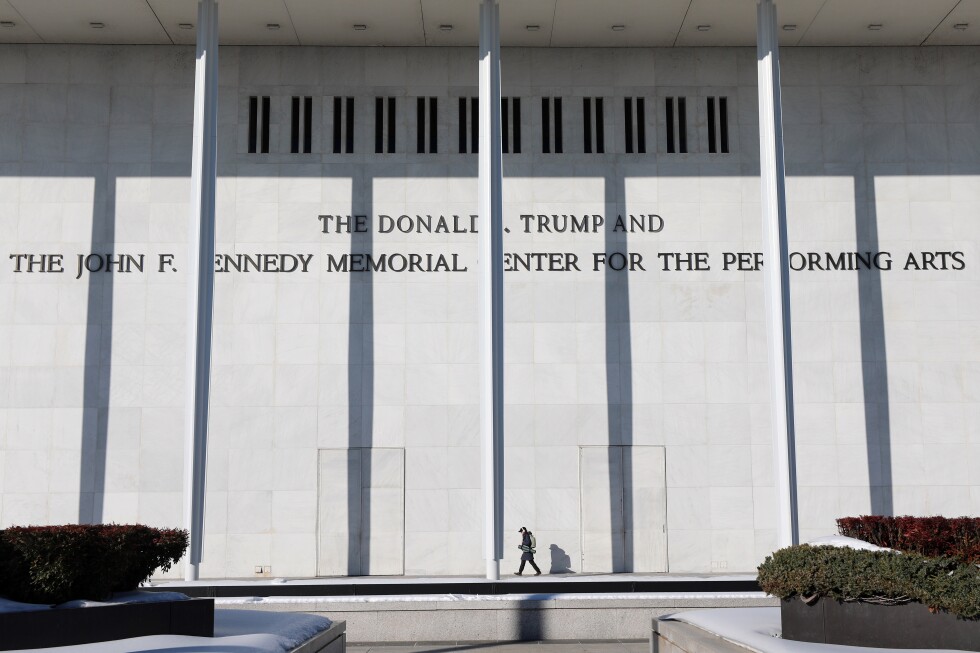
WASHINGTON (AP) — A Democratic lawmaker is asking a federal judge to force the Kennedy Center to block and reverse efforts to attach President Donald Trump’s name to the historic performing arts venue.
In a motion filed Wednesday, Rep. Joyce Beatty of Ohio argues that Congress was clear in its intent that the Kennedy Center is named for the late President John F. Kennedy — and no one else.
“Renaming the Kennedy Center for President Trump — without any authorization from Congress — undermines the Center’s raison d’être, and frustrates its purpose as the only memorial to President Kennedy in Washington, D.C.,” the motion argues.
Trump’s handpicked board of directors voted in December to rename the venue as the Trump-Kennedy Center, arguing the Republican president deserved the recognition for his efforts to renovate the institution, which was named for the Democratic president assassinated in 1963. But the move immediately drew protest from Democrats and some in the Kennedy family along with questions from scholars and historians about whether the move was legally permissible.
Beatty’s motion argues that lawmakers have made clear at various points throughout the Kennedy Center’s history that no other name should appear on the building.
“Congress was particularly sensitive that no other names appear on the Center’s exterior walls, other than the signage designating the institution as a memorial for President Kennedy,” according to the motion.
A day after the board’s December decision, Trump’s name was added to the Kennedy Center’s facade, an iconic part of Washington’s cityscape that rests on the banks of the Potomac River. The name change has also been reflected on the Kennedy Center’s website and social media channels.
“We are asking the court to enforce the law and reverse this illegal renaming,” said Beatty’s lawyers, Norm Eisen, a board member at Democracy Defenders Action, and Nathaniel Zelinsky, senior counsel at the Washington Litigation Group, in a statement. “This abuse of power is an attack on the rule of law and the memory of John Kennedy and cannot stand.”
A central part of the capital’s arts scene since it opened in 1971, the Kennedy Center is being closed by Trump this summer for a renovation that’s expected to last for about two years. That is the subject of a separate legal effort as a coalition of eight cultural and historic preservation groups is suing to block further physical changes to the Kennedy Center.
Through her position in Congress, Beatty is an ex officio member of the Kennedy Center’s board. A federal judge ruled earlier this month that she could participate in a board meeting but didn’t force the board to allow her to vote on the closure.
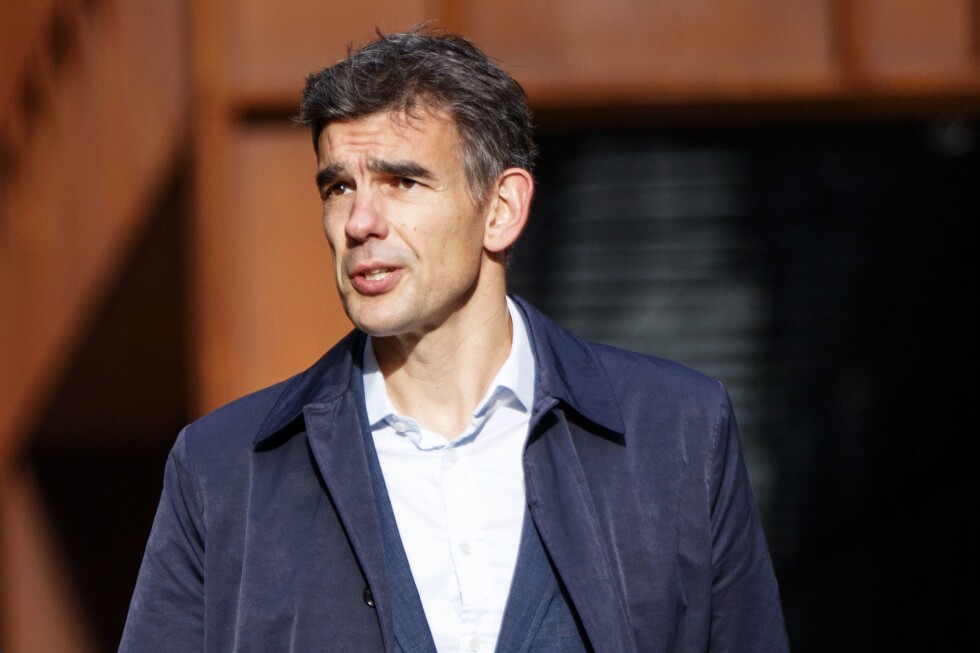
LONDON (AP) — Former Google executive Matt Brittin was named as the BBC’s new director-general on Wednesday, taking the helm at the U.K.’s national broadcaster as it faces an uncertain future and a $10 billion lawsuit from U.S. President Donald Trump.
Brittin, 57, who has a background in tech, rather than traditional broadcasting, spent almost two decades at Google, becoming the company’s president in Europe, the Middle East, and Africa. He is also a former consultant at management consultancy McKinsey,
BBC Chairman Samir Shah said Brittin brings a “deep experience of leading a high-profile and highly complex organization through transformation” and arrives as the BBC faces “radical reform.”
Brittin said the 104-year-old BBC is “an extraordinary, uniquely British asset.”
“Now, more than ever, we need a thriving BBC that works for everyone in a complex, uncertain and fast changing world,” he said in a statement.
Brittin, who will start his new role on May 18, succeeds Tim Davie, who resigned in November over criticism of how the broadcaster edited a speech Trump made on Jan. 6, 2021, before some of the president’s supporters stormed the U.S. Capitol.
A BBC documentary aired days before the 2024 presidential election spliced together three quotes from the speech into what appeared to be one quote in which Trump urged supporters to march with him and “fight like hell.”
Trump is suing the broadcaster for defamation in a Florida court, accusing the BBC of broadcasting a “false, defamatory, deceptive, disparaging, inflammatory, and malicious depiction” of him, and of “a brazen attempt to interfere in and influence” the 2024 presidential election.
Shah has apologized to Trump over the edited speech, admitting that it gave “the impression of a direct call for violent action.” But the BBC rejects claims it defamed the president and has asked the federal court in the Southern District of Florida to dismiss the suit, arguing that the case could have a “chilling effect” on robust reporting on public figures and events. It also says the case should be thrown out because the documentary was never aired in Florida or the U.S.
The broadcaster is also facing a once-a-decade process of renewing its governing charter, which sets out how much public money it will receive. The BBC is funded by an annual license fee — currently set at 174.50 pounds ($230) — which is paid by all U.K. households who watch live TV or any BBC content.
The license fee has long had opponents, not least rival commercial broadcasters, and they have grown louder in an era of digital streaming when many people no longer have television sets or follow traditional TV schedules.
The center-left Labour government says it will ensure the BBC has “sustainable and fair” funding but has not ruled out replacing the license fee with another funding model.
Brittin said the BBC faces “a moment of real risk, yet also real opportunity.”
He added: “The BBC needs the pace and energy to be both where stories are, and where audiences are. To build on the reach, trust and creative strengths today, confront challenges with courage, and thrive as a public service fit for the future. I can’t wait to start this work.”
Founded in 1922 as a radio service, the BBC operates 15 U.K. national and regional TV channels, several international channels, 10 national radio stations, dozens of local radio stations, the globe-spanning World Service radio and copious digital output, including the iPlayer streaming service.
It broadcasts reams of sports and entertainment programming, including shows such as “Doctor Who,” “EastEnders,” “The Traitors” and “Strictly Come Dancing.”
But it’s the BBC’s news output that draws the most scrutiny. The broadcaster is bound by the terms of its charter to be impartial in its output and is frequently a political football, with conservatives seeing a leftist slant in its news programs and some liberals accusing it of having a conservative bias.
The BBC is seeking a new chief executive to lead its news and current affairs division after Deborah Turness quit alongside Davie in November.
Transgender women will be barred from participating in women’s events at the next Olympics, according to a policy the International Olympic Committee announced Thursday.
The decision follows a demand for such a rule from U.S. President Donald Trump, and comes despite objections from researchers and advocates for trans athletes.
The policy change, announced ahead of the 2028 Los Angeles Olympics, aligns with an executive order Trump issued last year directing Secretary of State Marco Rubio to “use all appropriate and available measures” to ensure the IOC “amends the standards governing Olympic sporting events to promote fairness, safety, and the best interests of female athletes by ensuring that eligibility for participation in women’s sporting events is determined according to sex and not gender identity or testosterone reduction.”
The policy will apply to the 2028 Games and all others going forward and is not retroactive, the IOC said. In a video statement announcing the news, IOC President Kirsty Coventry cast the decision as a matter of fairness.
“At the Olympic Games, even the smallest margins can be the difference between victory and defeat,” she said. “So, it is absolutely clear that it would not be fair for biological males to compete in the female category. In addition, in some sports it would simply not be safe.”
As a result of the new IOC policy, eligibility for participation in the female category will be determined by a one-time gene test — the same one World Athletics, the international governing body for track and field, introduced last year. The IOC says the test is highly accurate and nonintrusive, requiring only a cheek swab or blood test.
The policy says athletes who are deemed ineligible to complete in the female category can compete in either the male category or in sports that do not classify athletes by sex, such as equestrian.

But who the policy will actually affect, and how, remains to be seen. There have been few openly trans athletes at the Olympics, Michael Waters, author of “The Other Olympians: Fascism, Queerness, and the Making of Modern Sports,” told MS NOW.
Only one openly transgender woman, Laurel Hubbard, a weightlifter from New Zealand, has ever competed at the Summer Games.
Waters said he sees the IOC’s decision as “a culmination of a broader cultural and political backlash that’s been brewing” regarding the participation of trans people in sports. The U.S. Olympic and Paralympic Committee also banned trans athletes from competing in the women’s category last summer, he noted, and the international skiing and boxing federations have also implemented mandatory gene testing for the same purpose.
That test has also been a source of controversy.
The test is meant to determine the presence or absence of the SRY gene, found on the Y chromosome, which triggers male reproductive development. But cisgender women and intersex people can also have the gene. At the 1996 Olympics in Atlanta, Waters pointed out, eight women failed the SRY gene test before later being reinstated.
“That was one of many reasons why these tests were banned in the first place,” he said. “They were quite inaccurate, in addition to being discriminatory.”
Andrew Sinclair, the Australian researcher who discovered the SRY gene in 1990said last year that he disagreed with World Athletics’ decision to use the test to determine biological sex, calling it an “overly simplistic assertion.”
“Using SRY to establish biological sex is wrong because all it tells you is whether or not the gene is present,” wrote Sinclair, a professor at the University of Melbourne. “It does not tell you how SRY is functioning, whether a testis has formed, whether testosterone is produced and, if so, whether it can be used by the body.”
Sinclair also wrote that a male lab technician could inadvertently contaminate a test, producing a false positive.
The IOC previously mandated “gender verification” for female athletes from 1968 to 1998, but removed the requirement ahead of the 2000 Olympics in Sydney on a “trial basis.” Sinclair wrote that decision came after he and other experts persuaded the IOC to drop it.
Prior to the most recent change, IOC guidelines released in 2021 said there should not be a “presumption of advantage due to biological sex,” leaving eligibility decisions to each sport’s international governing body.
The announcement of the new policy followed an IOC review of the issue beginning in September 2024, which the body says included consultations with a range of experts and an online survey of 1,100 athletes. It marks the highest-profile decision by Coventry, a former Olympic swimmer from Zimbabwe who was elected president of the IOC last March.
It also comes as the Trump administration and its Republican allies have made a pet issue of excluding trans people — and trans women specifically — from public life, women’s sports and American history.
Trump and congressional Republicans are currently aiming to exclude trans women from the forthcoming Smithsonian American Women’s History Museum, as MS NOW recently reported. The president has also signed executive orders stating the government would only recognize biological sex rather than gender identity, that transgender troops could not serve in the military and that minors should not receive gender-affirming care. (Those orders are all the subject of ongoing litigation.)
Trump allies celebrated the IOC decision.
“President Trump’s Executive Order protecting women’s sports made this happen!” White House press secretary Karoline Leavitt wrote on X.
Advocates for LGBTQ athletes predicted the decision would lead to discrimination.
A group that represents intersex youth, interACT, said the decision could harm intersex women athletes, despite the IOC’s assurances that it will not.
“Sex testing invades all women’s privacy, forcing them to give up their personal medical and genetic information for the IOC to determine if they are ‘woman enough’ to compete,” the group’s executive director, Erika Lorshbough, said in a statement. “Any policy that intends to discriminate against transgender athletes also harms intersex women, especially those with chromosomal and hormonal variations. All women deserve the chance to pursue their Olympic dreams.”
The new policy “invites confusion, stigma and invasive scrutiny rather than clarity or safety,” said Brian Dittmeier, director of LGBTQI equality at the National Women’s Law Center.
“At a moment when women athletes continue to face real and persistent inequities — including unequal funding, fewer opportunities and pervasive harassment and abuse — it is deeply harmful to prioritize exclusion over meaningful progress,” Dittmeier added.
Julianne McShane is a breaking news reporter for MS NOW who also covers the politics of abortion and reproductive rights. You can send her tips from a non-work device on Signal at jmcshane.19 or follow her on X or Bluesky.
- Senate agrees to end shutdown for most of DHS
- Andy Beshear’s 2028 playbook: How a Democrat wins in Trump Country

- Judge is asked to take Trump’s name off Kennedy Center

- BBC says former Google executive will be its new director-general
- Brian Fitzpatrick delivers a warning on GOP reconciliation redo
- John Thune says he’s aiming to land DHS deal Thursday
- Collins meets the Problem Solvers
- Brian Fitzpatrick delivers a warning on GOP reconciliation redo
- Rubio touts progress in Iran talks, ‘but that’s an ongoing and fluid process’
- Maduro defense, prosecutors argue over blocked funds to pay for legal team

-

 The Dictatorship1 year ago
Luigi Mangione acknowledges public support in first official statement since arrest
-

 Politics1 year ago
Former ‘Squad’ members launching ‘Bowman and Bush’ YouTube show
-

 Politics1 year ago
Former Kentucky AG Daniel Cameron launches Senate bid
-

 Politics1 year ago
Blue Light News’s Editorial Director Ryan Hutchins speaks at Blue Light News’s 2025 Governors Summit
-

 The Dictatorship7 months ago
Mike Johnson sums up the GOP’s arrogant position on military occupation with two words
-

 The Dictatorship1 year ago
Pete Hegseth’s tenure at the Pentagon goes from bad to worse
-
Uncategorized1 year ago
Bob Good to step down as Freedom Caucus chair this week
-

 Politics11 months ago
Democrat challenging Joni Ernst: I want to ‘tear down’ party, ‘build it back up’