
The Dictatorship
Trump’s shifting strategy on the Strait of Hormuz drives criticism


WEST PALM BEACH, Fla. (AP) — At war with Iran, President Donald Trump is cycling through an increasingly desperate list of options as he searches for a solution to the crisis in the Strait of Hormuz. He has jumped from calls to secure the waterway through diplomatic means to lifting sanctions and now escalating to a direct threat against civilian infrastructure in the Islamic Republic.
Trump and his allies insist they were always prepared for Iran to block the strait, yet the Republican president’s erratic strategy has fueled criticism that he is grasping for answers after going to war without a clear exit plan. On Saturday came his latest attempt, via an ultimatum to Iran: Open the strait within 48 hours or the United States will “obliterate” the country’s power plants.
Trump’s aides defended the threat as a hard-edged tactic to press Iran into submission. Opponents framed it as the failure of a president who miscalculated what it would take to get out of a geopolitical mire.
“Trump has no plan to reopen the Strait of Hormuz, so he is threatening to attack Iran’s civil power plants,” said Sen. Ed Markey, D-Mass, adding: “This would be a war crime.”
“He’s lost control of the war and he is panicking,” said Sen. Chris Murphy, D-Conn., responding to Trump’s post.
Over the course of about a week, Trump has repeatedly shifted his approach on the crucial waterway for global oil and gas transport. There is growing urgency for Trump as soaring oil prices rattle global markets and pinch American consumers months before pivotal midterm elections.
Trump and diplomacy
Trump tried his hand at a diplomatic solution last weekend when he called for a new international coalition to send warships to the strait.
Allies turned him down. Trump then said the U.S. could manage on its own. On Friday he suggested other countries would have to take over as the U.S. eyes an exit. Hours later he indicated the waterway would somehow “open itself.”
“You can’t all of a sudden walk away after you’ve kind of created the event and expect other people to pick it up,” Sen. Thom Tillis, R-N.C. told ABC’s “This Week.”
Trump’s Treasury Department on Friday made its latest attempt to get a handle on soaring gas prices, by lifting sanctions on some Iranian oil for the first time in decades. That relieved some of the pressure that Washington traditionally has used as leverage against Tehran.
The goal was to send millions more barrels of oil into the global market. It is not clear, however, how much of a dent that would make in lowering pump prices or how the administration could prevent Iran from cashing in on the renewed sales.
The administration earlier temporarily lifted sanctions on some Russian oil.
An ultimatum to Iran
Trump’s ultimatum, conveyed while he spent the weekend in Florida, carries a threat of remarkable aggression. His previous messaging mostly focused on U.S. success in hitting Iran’s air force, navy and missile production. This time, the threatened target is the energy infrastructure that powers hospitals, homes and more.
His social media post — 51 words, much of it in capital letters — did not have the appearance of a message that underwent the careful legal scrutiny needed to justify an attack on civilian infrastructure, said Geoffrey Corn, a law professor at Texas Tech University and a retired lieutenant colonel in the Army who served as a military lawyer.
“It certainly has a feeling of ready, fire, aim,” Corn said of Trump’s moving strategy.
“He overestimated his ability to control the events once he unleashed this torrent of violence.”
That type of widespread attack would probably be a war crime, Corn said. For military leaders, it could force a choice between obeying an order to carry out a war crime or refusing and facing criminal sanction for willful disobedience, he said.
Laws governing warfare do not explicitly forbid attacks on power plants, but the tactic is allowed only if an analysis finds that the military advantages outweigh the civilian harm, legal scholars say. It is seen as a high bar to clear because the rules of war are, at their core, designed to separate civilian and military targets.
Iran’s U.N. ambassador, in a letter to the Security Council, warned that the deliberate targeting of power plants would be inherently indiscriminate and a war crime, according to the state-run IRNA news agency.
The White House has already faced intense backlash after the U.S. was blamed for a missile strike on an Iranian elementary school that killed more than 165 people.
Trump aides justify latest attempt to rein in the crisis
Trump provided scant detail on which plants might be targeted and how. He gave Iran until Monday to reopen the strait or else the U.S. will strike “various POWER PLANTS, STARTING WITH THE BIGGEST ONE FIRST!”
Trump’s team came to his defense Sunday, offering justification for striking Iran’s energy grid.
Mike Waltz, the U.S. ambassador to the United Nations, said Iran’s Revolutionary Guard controls much of the country’s infrastructure and is using it to power the war effort. He said potential targets include “gas-fired thermal power plants and other types of plants.”
Speaking on Fox News, Waltz said he wanted to get ahead of “hand-wringing” from the global community, calling the Revolutionary Guard a terrorist organization. “The president is not messing around,” he said.
NATO’s secretary-general, Mark Rutte, who has allied himself closely to Trump, tried to calm tensions. He said he understood Trump’s anger and stressed that more than 20 countries are “coming together to implement his vision” of making the strait navigable as soon as possible.
Israel’s ambassador to Washington, Yechiel Leiter, cautioned against an all-out attack like the one Trump threatened. “We want to leave everything in the country intact, so that the people who come after this regime are going to be able to rebuild and reconstitute,” he told BLN’s ”State of the Union.”
Trump’s threat could prove counterproductive: If it’s carried out, Iranian leaders said they would completely close the strait and retaliate against U.S. and Israeli infrastructure.
___
Associated Press writer Seung Min Kim in Washington contributed to this report.


The Dictatorship
Monday’s Campaign Round-Up, 6.22.26: Why Trump backed both Republicans in a key S.C. race
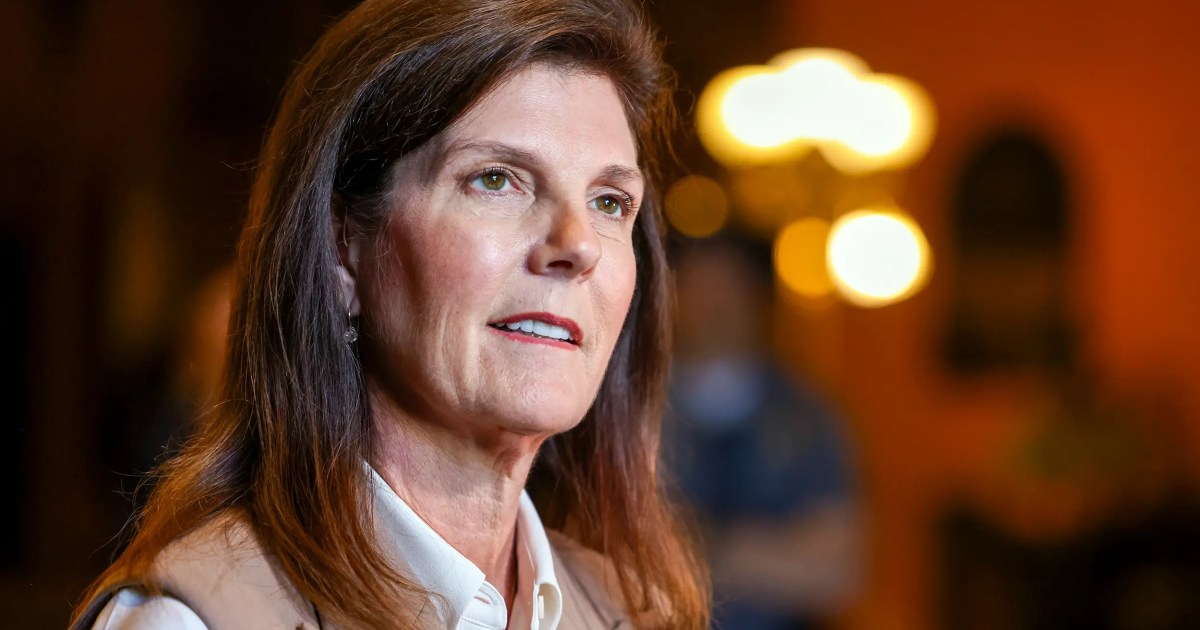
Today’s installment of campaign-related news items from across the country.
* In South Carolina’s gubernatorial raceDonald Trump endorsed Lt. Gov. Pam Evette last month. Last week, however, ahead of this week’s primary runoff election in the race, the president published an online item telling voters that “you can’t go wrong” with either Evette or state Attorney General Alan Wilson.
If this sounds at all familiar, it’s because Trump has done this before. Around this time two years ago, for example, he endorsed both Republicans running in a congressional primary in Arizona. And two years before that, he endorsed two leading contenders in a Senate primary in Missouri.
Only the president can say for sure why he ended up endorsing Evette and Wilson in the South Carolina race, though it’s worth emphasizing for context that GOP primary voters have already ignored his direction into two gubernatorial primaries this month, and it stands to reason that he hoped to avoid a third.
* We’re one day away from a variety of notable racesincluding but not limited to South Carolina’s gubernatorial race. There are also some congressional primaries in a handful of statesincluding Maryland, New York and Utah.
* In took a while, but the ballots have been tallied under Maine’s ranked-choice systemand we now know that Democrat Hannah Pingree, the former state House speaker, will face off against Republican Bobby Charles, who worked at the State Department during the Bush-Cheney era.
* As for Maine’s closely watched congressional racestate Auditor Matt Dunlap won the Democratic nomination in the battleground 2nd District, defeating state Sen. Joe Baldacci, who enjoyed the backing of the Democratic Congressional Campaign Committee. Dunlap will run in the fall against a familiar figure: former Republican Gov. Paul LePage, who had moved to Florida a few years ago, but who returned to run for Congress.
* In California’s congressional special electiontwo Democratic candidates — state Sen. Aisha Wahab and Melissa Hernandez, a Bay Area Rapid Transit director — have advanced to an Aug. 18 special general election. The winner will fill the vacancy left by disgraced former Rep. Eric Swalwell, who resigned in April.
* In a new commercial shared first with MS NOWDemocrat James Talarico has launched his campaign’s first multimillion-dollar ad buy in Texas’ gubernatorial race. In the 30-second spot, Talarico focuses on affordability and the cost of living. The state lawmaker will face scandal-plagued state Attorney General Ken Paxton in the fall.
* And in New Jersey, Republican Rep. Tom Kean Jr.who has been missing from Capitol Hill since early March, will reportedly return to work on June 30according to a statement from his spokesperson. Neither Kean nor his office have offered any public information about why he has been away.
Steve Benen is a producer for “The Rachel Maddow Show,” the editor of MaddowBlog and an MS NOW political contributor. He’s also the bestselling author of “Ministry of Truth: Democracy, Reality, and the Republicans’ War on the Recent Past.”
The Dictatorship
Trump tries dual endorsement in South Carolina as his pick for governor flounders in polls
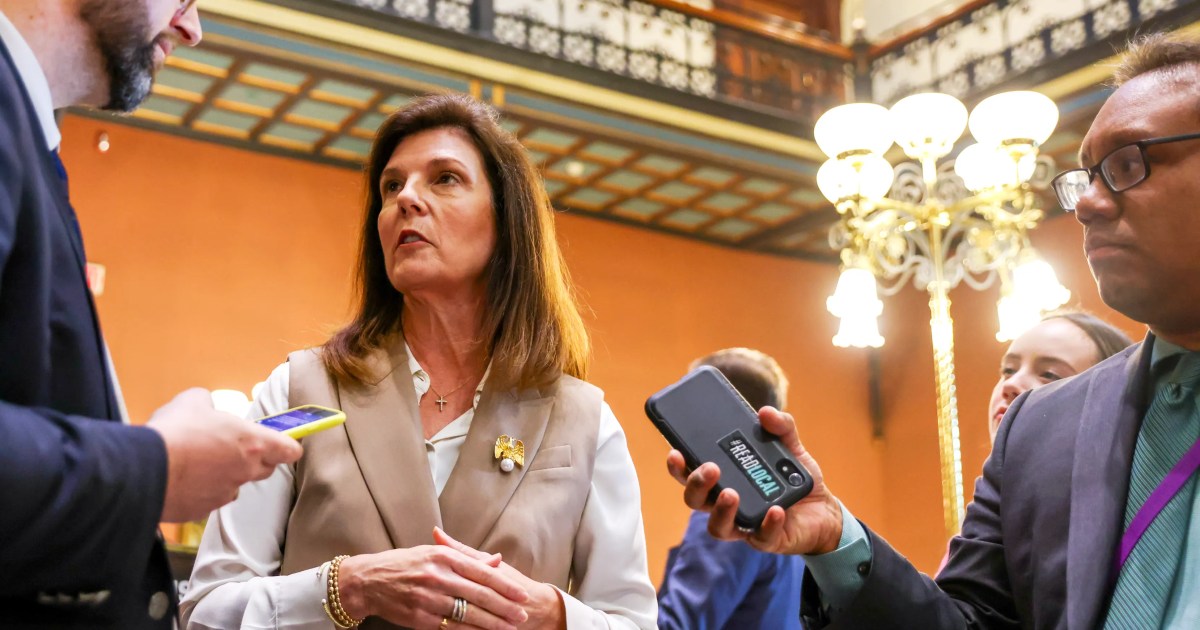
After President Donald Trump’s pick for governor in Iowa lost in the Republican primary earlier this month, the president argued that he “would have endorsed the other person” if he had “the proper information.”
Trump is taking no chances in the South Carolina gubernatorial primary. Over the weekend he rescinded his exclusive endorsement of Pamela Evette, the lieutenant governor, announcing instead that he would support both Evette and her runoff opponent, Alan Wilson, the state’s attorney general.
The move put Evette’s political future in jeopardy: Even before Trump’s dual endorsement, she trailed in limited public polling and was seen by political observers in South Carolina as a weak candidate with little to show besides the president’s coveted endorsement.
“Her chief distinction from Alan Wilson was that Trump endorsed her,” said Dr. Dubose Kapeluck, a professor of political science at the Citadel Military College of South Carolina.
Trump’s dual endorsement “was a kiss of death,” he told MS NOW.
Evette, who moved to South Carolina from Ohio to found a successful payroll and HR company in 2000, has been lieutenant governor since 2019, serving under Gov. Henry McMaster, who is term-limited.
In office, she has pursued meaningful but little-celebrated policies, like a key tort reform bill, according to Gil Gatch, a Republican member of the South Carolina state House and an Evette supporter.
But voters could be forgiven for knowing little about Evette besides the fact that Trump endorsed her, which he did just days before the June 9 primary. Visitors to her campaign website are greeted with a full-screen message labeling Evette as “Trump-endorsed.” The first line in her X bio states the same. Pro-Evette television ads are quick to tout the endorsement.
An accomplishment like tort reform, while noted on Evette’s website, “maybe could have been something that was highlighted more heavily,” Gatch told MS NOW.
The political makeup of South Carolina nearly guarantees the next governor will be whoever emerges on Tuesday between Evette and Wilson. They survived a crowded primary field on June 9, and nearly every challenger who fell short of the runoff publicly endorsed the attorney general.
“She’s just not a good candidate,” Josh Kimbrell, a state senator who failed to make the runoff and has since said he’d back Wilson, said of Evette.
“She kind of assumed this was a coronation, and that was never going to go over that well,” he added.
Even some pro-Trump voters were confused by the president’s initial endorsement of Evette, whom he called “a good friend, fighter, and WINNER” in a social media post in May.
“I have no clue why Trump would endorse Pamela Evette,” Leland Lemmons, a 30-year-old Trump supporter told MS NOW as he exited a polling site in the Greenville suburb of Easley on June 9.
“She’s served, you know, a decent time. I just haven’t seen much fruition of what she’s done in office,” he added.
In a post on Truth Social Friday announcing his dual endorsement, Trump wrote, “I can’t hurt one of them by only Endorsing the other, so, therefore, I am going to Endorse, for Governor of South Carolina, both Pam Evette and Alan Wilson!”
In a subsequent statement on X, Evette said, “I was proud to come in first as [Trump’s] endorsed candidate for Governor on June 9th. Looking forward to doing it again on June 23rd.”
After The Washington Post foreshadowed the dual endorsement last Tuesday, allies of Evette were quick to denounce the possibility.
“I would guess that’s fake news,” Suzanne Pucci, a member of Evette’s finance committee, told MS NOW of the chance Trump would also endorse Wilson. “She’s probably not real worried about it.”
Another close ally and supporter told MS NOW at the time the report was “a total, fabricated lie.”
“[Trump] is invested in Pamela Evette because she invested in him. He’s a loyal guy. That kind of stuff is important to him,” added the supporter, who spoke on condition of anonymity.
“With or without Trump, I think she is going to win,” they said.
On Thursday, a senior campaign aide, who spoke on condition of anonymity, brushed off the idea of a dual endorsement, telling MS NOW in a statement, “Pamela Evette has earned the complete and total endorsement of President Trump. She is the only Trump-endorsed candidate in this race and we look forward to delivering a big win for the president on Tuesday.”
Roughly 24 hours later, Trump retracted the exclusive endorsement.
Will McDuffie is a reporter for MS NOW.
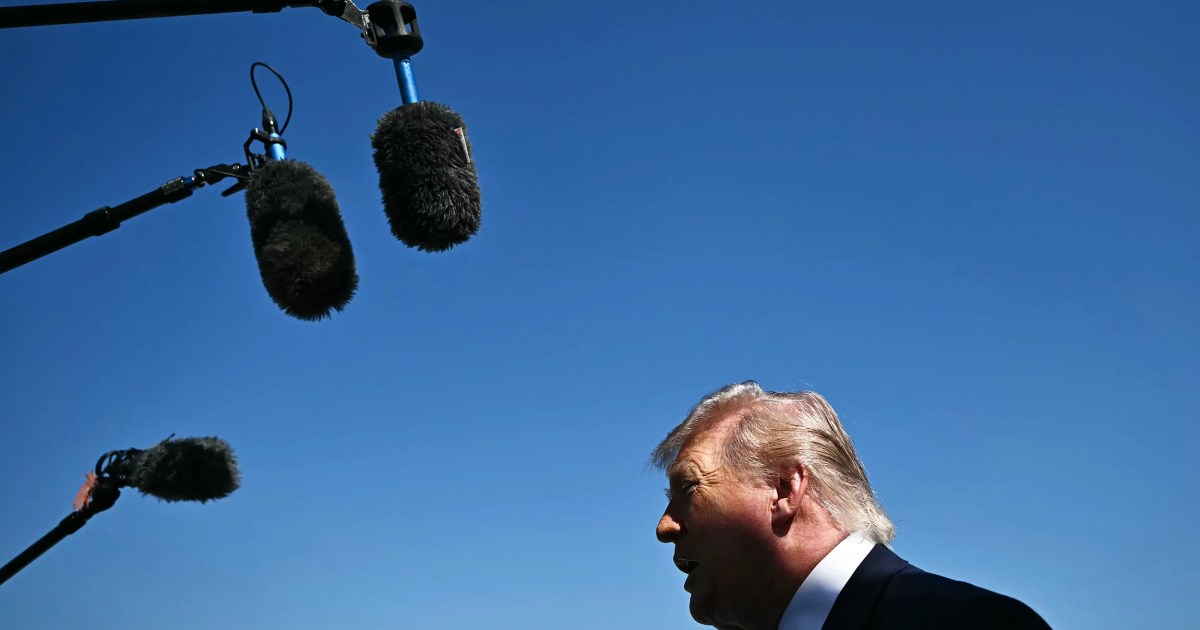
As last week’s G7 summit in France got underway, a reporter asked Donald Trump whether his purported deal with Iran was final. “No, it’s not final,” the president replied. Later that day — during a visit to Versaillesof all places — he signed the framework anyway.
But moments after signing his name to the memorandum of understanding, Trump offered an unsubtle hint about what he was thinking at the time. Amid applause from those around him, the American president pointed down and then up while saying“Oil down, stocks up.”
In other words, Trump’s focus had nothing to do with natural security and everything to do with the economy. What’s more, the four-word phrase was part of a larger and underappreciated pattern. The Washington Post reported:
In the more than 100 days since President Donald Trump launched a war with Iran, he has offered a shifting list of reasons for why he started the conflict. But in explaining his push for peace, he named a priority much closer to home: protecting the stock market.
“I didn’t want to see economic catastrophe,” Trump told reporters gathered in the Alpine spa town of Évian-les-Bains, France, after the Group of Seven summit.
As the summit wrapped up, the Republican similarly said“I’ve studied presidents, some good, some bad, some great. Not too many are great and some really bad. … And the one president I did not want to be was the late, great Herbert Hoover. I didn’t want that and who knows what would have happened.”
He pushed the same point in an interview with Axios, which was released over the weekend.
“If I went further, the stock market would be much lower,” the president said. “Now think of this: I have one primary wish as president, in terms of people: I never want to be the late, great Herbert Hoover.”
The comments came days after Trump similarly argued“The alternative to this deal was a global recession. There are stupid people who want to see a global recession. They are just stupid people.”
Whether the president fully appreciates the implications of his own rhetoric, this string of comments doesn’t just shed light on his motivations for accepting a defeat, it also suggests he saw his failed policy in Iran as pushing the global economy toward a dangerous cliff.
In other words, based on Trump’s own comments, the war he started was poised to create an “economic catastrophe,” which he was desperate to avoid — and which led him to accept a framework that empowered Iran to get what it wanted in exchange for effectively no concessions at all.
Steve Benen is a producer for “The Rachel Maddow Show,” the editor of MaddowBlog and an MS NOW political contributor. He’s also the bestselling author of “Ministry of Truth: Democracy, Reality, and the Republicans’ War on the Recent Past.”
- Monday’s Campaign Round-Up, 6.22.26: Why Trump backed both Republicans in a key S.C. race
- Trump tries dual endorsement in South Carolina as his pick for governor flounders in polls
- Fears of an ‘economic catastrophe’ helped push Trump toward an Iran deal
- In back-to-back reversals, the Trump administration folds under pressure
- Vance touts ‘successful’ first round of U.S.-Iran talks after Trump threatens new attacks
- Turek leads Hinson in Iowa Senate poll of likely general election voters
- Capitol agenda: House GOP races to make Recon 3.0 real
- A rising populist tide is threatening New York’s powerful incumbents
- Poll: Americans draw a new line in the betting bonanza sweeping over Wall Street — politics.
- Exclusive: Spanish soccer boss pushes for 2030 World Cup final as pressure grows from Morocco
-

 Politics1 year ago
Former ‘Squad’ members launching ‘Bowman and Bush’ YouTube show
-

 The Dictatorship1 year ago
Luigi Mangione acknowledges public support in first official statement since arrest
-

 Politics1 year ago
Former Kentucky AG Daniel Cameron launches Senate bid
-
Uncategorized2 years ago
Bob Good to step down as Freedom Caucus chair this week
-

 The Dictatorship1 year ago
Pete Hegseth’s tenure at the Pentagon goes from bad to worse
-

 The Josh Fourrier Show2 years ago
DOOMSDAY: Trump won, now what?
-

 Politics1 year ago
Blue Light News’s Editorial Director Ryan Hutchins speaks at Blue Light News’s 2025 Governors Summit
-

 The Dictatorship10 months ago
Mike Johnson sums up the GOP’s arrogant position on military occupation with two words