
The Dictatorship
Trump’s Russia-Ukraine peace talks are a thinly veiled attempt to mask the disturbing truth

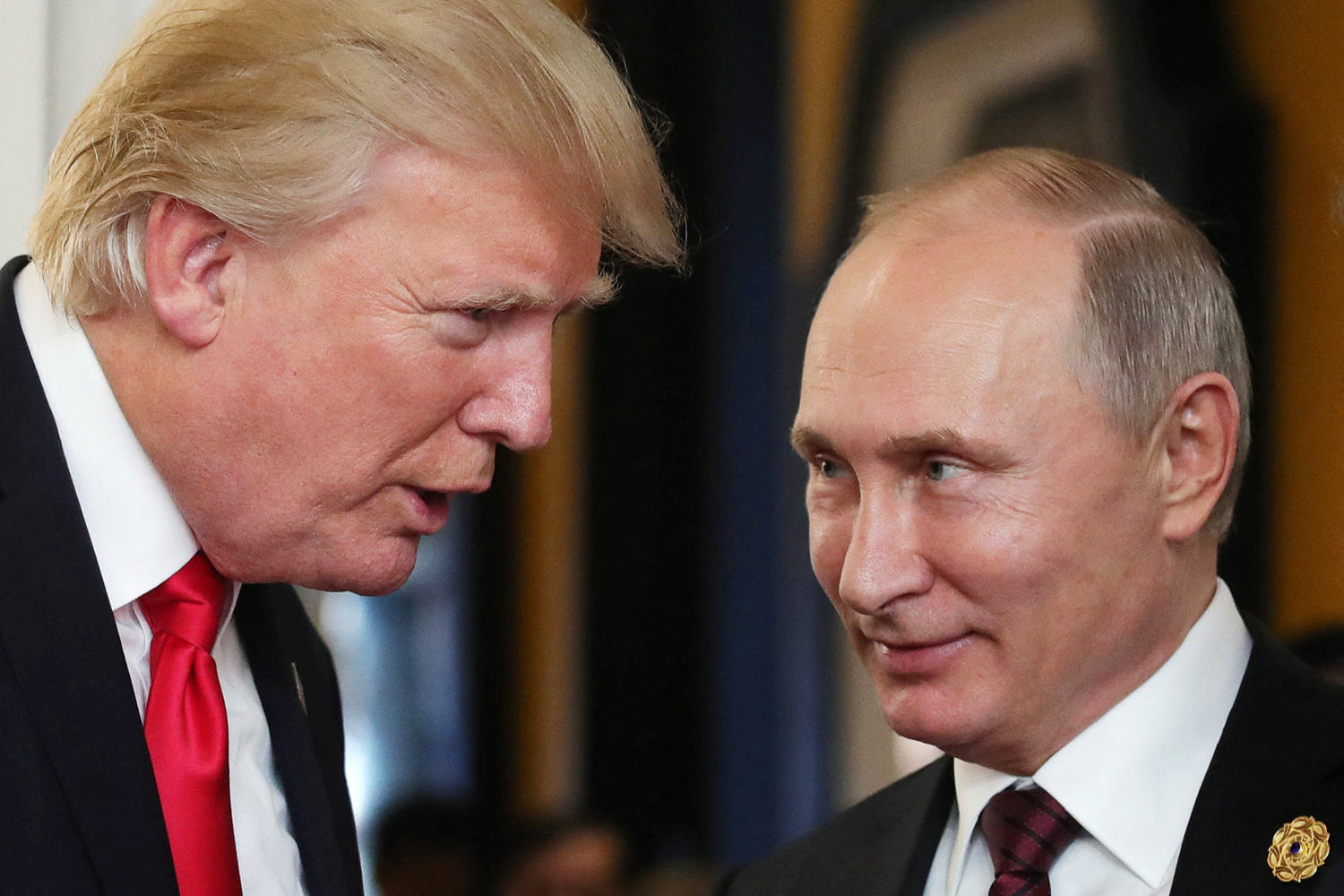
UPDATE (May 17, 2025; 12:00 p.m. ET): On Saturday, Trump said he was planning to speak separately with both Volodymyr Zelenskyy and Vladimir Putin on Monday in an effort to finally secure a ceasefire.
Secretary of State Marco Rubio recently lamented that people who were alive in Ukraine are dead today “because this war continues.”
Not exactly. They’re dead because Russia killed them in an ongoing attempt to subjugate their country. The war isn’t a natural disaster out of anyone’s control, like, say, a hurricane. Russian leader Vladimir Putin chose to aggressively attack Ukraine, and decided every day since then to keep attacking while making extensive demands.
That’s the central truth of the war, but Russia has always denied it, and under President Donald Trump, the United States denies it as well. That denial renders peace negotiations a farce.
Russian leaders have long said they’re open to peace talks, but consistently show that they mean, “We’ll accept your surrender at any point.”
If war-ending talks such as this week’s summit in Turkey can’t even acknowledge the main reason the war continues, they’re guaranteed to fail.
Russian leaders have long said they’re open to peace talks, but consistently show that they mean, “We’ll accept your surrender at any point.” Last year, Putin responded to peace efforts by demanding that Ukraine first withdraw forces from all parts of Ukraine that Russian forces occupy and formally commit to never joining NATO. This year, Putin demanded that the United States officially recognize all Ukrainian territory Russia has taken since 2014 as Russia’s, and commit to keeping U.S. peacekeepers out of Ukraine. In exchange, Putin offers nothing besides his word that Russia will stop attacking.
He’s also announced brief ceasefires, such as an “Easter truce” this year, during which Russia kept bombing. And Putin got concessions from Ukraine in exchange for an end to hostilities in 2014, but subsequently broke that deal multiple times, as well as a 1994 treaty called the Budapest Memorandum.
Despite Putin’s record, America’s current leaders place the onus for peace on Ukraine, blaming the victim for the war.
In addition to Trump, there’s Vice President JD Vance, who opposed aid for Ukraine when he was a senator, and at a White House meeting with Ukrainian President Volodymyr Zelenskyy this March berated Zelenskyy for showing insufficient gratitude. (Zelenskyy has thanked the U.S. many times.) Secretary of Defense Pete Hegseth haphazardly canceled some U.S. military support for Ukraine and gave a speech in Europe telling NATO countries that the U.S. would be less committed to European security and wouldn’t provide security guarantees to backstop a peace agreement in Ukraine.
At an April 25 meeting in Paris, the U.S. presented European countries with a document of terms that “represent the final offer from the United States to both sides.” It is predominantly concessions to Putin, including Ukraine forfeiting land and the right to decide its own foreign relations, plus the removal of international sanctions on Russia. The only thing it calls for Russia to do is stop shooting.
With months of this farcical effort going nowhere, Trump and Vance have started expressing some irritation with Russia. This month, Vance said that Russia is “asking for too much.” After a brief meeting with Zelenskyy at the Vatican in late April, Trump acknowledged that “maybe [Putin] doesn’t want to stop the war.” But it never comes with demands that Russia make concessions, nor a renewed commitment to Ukraine’s defense that could force Russia into a real deal. And it quickly snapped back to Trump excusing Putin.
Russia’s leader didn’t bother going to this month’s summit in Turkey— advertised as the first direct talks between the warring parties —nor did Russian Foreign Minister Sergey Lavrov. Zelenskyy went, as did Rubio and White House special envoy Steve Witkoff. Trying to excuse Putin’s nonattendance and the apparent lack of progress, Trump said this: “Nothing’s going to happen until Putin and I get together, OK? And obviously he wasn’t going to go. He was going to go, but he thought I was going to go.”
It’s worth unpacking how much absurdity is in that one statement. Trump frames the war entirely as the U.S. and Russia settling spheres of influence, as if Ukraine and Europe don’t have any say. Russian propaganda uses the same frame, in part as a “look what you made me do” excuse for Putin’s aggression.
Trump claims peace can be achieved only when he and Putin get together, except he claimed the same thing would end the war months ago, and he’s been in contact with Putin a lot. Witkoff traveled to Russia and met with Putin in February, March and April. Witkoff was so solicitous that he didn’t follow diplomatic protocol and bring a Russian translator, instead relying on the Kremlin’s. Additionally, Trump has conducted at least two phone calls with Putin: one in February, which Trump promoted as the start of peace negotiationsand another in March.
On top of all that, Trump says Putin would have attended the peace summit in Turkey if Trump had attended. If we take the president’s comments at face value, he claims he could have ended the 21st century’s biggest interstate war simply by flying to Turkey, but didn’t feel like it.
Except we’re not supposed to take the president seriously, like the leader of a powerful country conducting high-stakes diplomacy. Not this president, at least. Many media outlets made Trump’s “until Putin and I get together” their headlinewith the fact that he and Putin have communicated many times on the war buried deep in the story, or not mentioned at all.
Russia pretends it’s interested in peace to perpetuate the absurd narrative that Russia’s war isn’t Russia’s fault.
At the summit in Turkey, the Russian delegation announced “we have agreed that each side will present its vision of a possible future ceasefire.” Why they couldn’t do that before the summit, or why months of Trump administration efforts haven’t gotten things even to the preliminary present-your-vision stage, Russia did not say.
When Russia presented its vision, it demanded Ukraine fully withdraw from the parts of Ukraine that Russia wants to keep as a precondition for a ceasefire. In other words, “give in first, then we’ll talk.” Ukraine called that unrealistic — its vision starts with a ceasefire — and the talks collapsed, with both parties agreeing to some prisoner swaps and to communicate again in the future.
So here’s where things stand as the Turkey summit fails for the same predictable reasons:
Russia pretends it’s interested in peace to perpetuate the absurd narrative that Russia’s war isn’t Russia’s fault.
The U.S. pretends Russia is interested in peace to perpetuate the absurd narrative that Trump is pursuing peace and advancing American interests, rather than hoping to see Russia’s aggression succeed as his actions indicate.
And Ukraine pretends the Trump administration is pursuing a just peace to counter the absurd narrative that Ukraine is somehow the obstacle to peace, hoping that the umpteenth failure of peace talks will convince America and enough of the world that the obstacle now is what it has been the whole time: Putin and Russia.
Nicholas Grossman is a political science professor at the University of Illinois, editor of Arc Digital and the author of “Drones and Terrorism.”


It’s been a rough start to the year for the U.S. attorney’s office in Washington. Jeanine Pirrothe Fox News host turned top federal prosecutor, has endured a string of embarrassing setbacks since January. According to the most recent reports, Pirro’s office shelved its effort to indict former President Joe Biden for his use of an autopen to sign executive actions while in office. Her office reportedly couldn’t assemble anything even resembling a criminal case.
The autopen inquiry, such as it was, was just the latest collapsed effort from Pirro to punish President Donald Trump’s enemies. Her failures are a sign that even as the Justice Department has fallen under the White House’s control, the law still doesn’t automatically bend to his will. And Trump’s vendettas remain stalled out. The limits to his power have become a little clearer.
Her failures are a sign that even as the Justice Department has fallen under the White House’s control, the law still doesn’t automatically bend to his will.
As if in the market for a new conspiracy, some Republicans have attempted to make hay out of Biden’s autopen usage. In short, Trump and others have claimed without evidence that Biden aides essentially forged the former president’s signature on executive orders toward the end of his term. House Oversight Committee Chair James Comer, R-Ky., went so far as to claim last year that “Biden Autopen Presidency will go down as one of the biggest political scandals in U.S. history.” The supposed scandal has even become something of a meme within the Trump White House, as showcased on the recently installed so-called Wall of Fame where Trump replaced Biden’s portrait with an autopen.
Trump was anything but subtle about his demands that Biden be investigated for, well, something autopen-related. In June, he issued a memo to Attorney General Pam Bondi demanding the Justice Department investigate whether the autopen was part of a grand plot to hide the former president’s alleged cognitive decline. (Biden has denied Trump’s claims, saying last year in a statement, “Let me be clear: I made the decisions during my presidency.”)

The U.S. attorney for the District of Columbia has jurisdiction over federal crimes committed within Washington, making it an obvious choice of venue for this fishing expedition. Pirro’s predecessor, acting U.S. attorney Ed Martinopened an investigation into Biden last spring, according to The New York Timesand it continued after Pirro was confirmed to her role in August. But the probe reportedly suffered, the Times reports, because:
Investigators were never quite clear what crime, if any, had been committed by the Biden administration’s use of the autopen.
It was also unclear whether investigators should focus their attention on the actions of Mr. Biden’s aides or on Mr. Biden himself, given that the United States Supreme Court, in a landmark ruling in 2024, granted broad immunity to presidents for most acts undertaken as part of their official duties.
In recent months, prosecutors determined that despite Mr. Trump’s desire to seek vengeance against Mr. Biden and his aides, there was no credible case to bring, the people said. The prosecutors never brought a potential indictment before a grand jury.
It’s hard to tell whether the autopen case never making it to a grand jury makes it more or less of an embarrassment than other recent fiascos. Last month, federal prosecutors from Pirro’s office failed to persuade a grand jury to indict six Democratic members of Congress on charges of seditious conspiracy. Their alleged crime: filming a video in which lawmakers reminded members of the military and intelligence community that they have an obligation not to follow illegal orders. Speaking of those lawmakers and their video, Trump said in an interview last year that “in the old days, if you said a thing like that, that was punishable by death.” The grand jury’s refusal to indict, though, is a good sign its members disagree.
Pirro has managed at times to be a bit too gung-ho about working toward Trump’s implied goals. In January, Federal Reserve Board Chair Jerome Powell revealed that the Justice Department had opened an investigation into him over renovations to the independent agency’s Washington headquarters. Pirro approved the inquiry last fall, according to the Timeswhich prompted the normally staid Powell to go public after receiving a subpoena from her office. Trump denied any knowledge of the investigation, distancing himself from what Pirro might have hoped would win her praise.
It is for the best that Pirro’s efforts have languished. It is good that the justice system continues to rely on facts and evidence. But her failure to deliver on carrying out Trump’s vindictive agenda can’t overshadow the fact that she felt the need to try at all — and will likely try again.
Hayes Brown is a writer and editor for MS NOW. He focuses on politics and policymaking at the federal level, including Congress and the White House.
Recent media reports suggesting the U.S. and Israel are considering support for Kurdish militant groups operating along Iran’s western frontier carry a disturbing echo for those of us who have spent years reporting from and on the region.
In 1991, at the end of the Persian Gulf War, President George H. W. Bush called on Iraqis to rise up against the regime of Saddam Hussein. Kurds in the north and Shiites in the south heard the message. They believed the world’s most powerful military had signaled support for them.
They rebelled.
Shortly after, Saddam’s forces regrouped, and Iraqi helicopter gunships and armored units crushed the American-induced uprising. Tens of thousands were killed. Hundreds of thousands of civilians fled toward the mountains and flooded across borders in scenes that shocked the world.

Some Western geopolitical gambles in the Middle East have been calculated risks. Others were more like reckless experiments that left entire societies shattered.
Too often, actions to empower ethnic or sectarian movements to weaken a hostile government fail to consider the broader chaos that is also unleashed. There is a moral weight to encouraging rebellion with life-and-death risks, a responsibility that policymakers often underestimate.
That’s the backdrop to the idea of arming the Kurdswhich media reports suggest could be an effort to further destabilize or topple the regime in Tehran. Now imagine, amid our conflicting rationales for military action and evolving objectives, if an uprising were attempted inside Iran today.
There is a moral weight to encouraging rebellion with life-and-death risks, a responsibility that policymakers often underestimate.
Iran’s Kurdish population — several million people concentrated largely in the country’s northwest — has long faced political and economic marginalization under the Islamic Republic. For decades, Kurdish militant groups operating along with the rugged border with Iraq have periodically clashed with Iranian security forces.
In the context of the current military action, those internal tensions could swiftly escalate. Tehran has already signaled it would respond forcefully to any externally supported insurgency. Iran’s foreign minister said in an interview Thursday that “we are ready for them,” warning that Iran would confront armed Kurdish groups should they attempt to rise up.
That should not be dismissed as rhetoric. Iran’s security establishment has deployed overwhelming force against internal threats over the years. Iran has killed thousands of demonstrators who took to the streets in recent months over dire political and economic conditions. Any Kurdish efforts to destabilize Iran would almost certainly provoke a swift and violent crackdown.
But the consequences would not be limited to Iran. One country that would be watching a Kurdish insurgency with alarm: Turkey.
For decades, Turkish officials have fought Kurdish militant movements they believe threaten the country’s territorial integrity. Turkish President Recep Tayyip Erdogan has launched numerous military operations against Kurdish forces in neighboring Syria, even when those groups were receiving U.S. support in Washington’s fight against the Islamic State group and the regime of Bashar al-Assad.
Turkey — a NATO ally — views armed Kurdish movements as terrorists, whether they are in Iran, Syria, Iraq or inside Turkey’s own borders. If Kurdish fighters inside Iran suddenly gained foreign backing, Turkish leaders might interpret that as an expansion of Kurdish militancy across the region. That perception alone could trigger new military confrontations beyond Iran’s borders.
But the more troubling question is whether instability in Iran has become part of the strategic calculation.
In the recent history of the Middle East, the collapse of central authority in countries from Libya to Yemen to Syria did not lead to stability or democracy. Instead, those states fragmented into battlegrounds for militias, foreign powers and proxy wars. Millions of people have paid the price.
The implication is stark: What happens to Iran in the long run may not be America’s or Israel’s primary concern.
After all, President Donald Trump said Friday that he doesn’t care if Iran doesn’t become democratic. He would be open to Iran retaining a religious leaderTrump said, so long as he can choose that person. Such assertions dispel any notion that the U.S. is seeking to establish a secular, democratic Iran that represents all of its citizens.
The implication is stark: What happens to Iran in the long run may not be America or Israel’s primary concern.
Equally important in the strategic calculus is that Iran is not a small state whose collapse would remain contained. It is a country of more than 90 million people, with deep ethnic, religious and cultural diversity. If its central government were to fracture — whether along Kurdish, Arab or Baloch lines — with no clear alternative, the consequences would ripple across the region.
Energy markets would be shaken; refugees would surge into neighboring countries, which in turn could be drawn into new proxy conflicts. The Middle East would inherit yet another fractured state.
Twenty-five years ago, after Saddam crushed the Kurdish uprising,the U.S. intervened with humanitarian aid and helped establish a no-fly zone that began to fracture Iraq along ethnic lines while establishing an autonomous Iraqi Kurdistan. For many Kurds, the enduring memory is not the later protection but the initial U.S. abandonment. Meanwhile, Saddam remained in power for 10 more years, terrorizing his people.
Perhaps the architects of Western strategies understand the risks. Perhaps what some policymakers ultimately seek is not a stable, democratic Iran but a broken one.
Fomenting an insurgency is one thing. Living with the disastrous consequences is something else entirely.
Ayman Mohyeldin is a host of “‘The Weekend: Primetime” and an MS NOW political analyst.
ByDavid Rohde
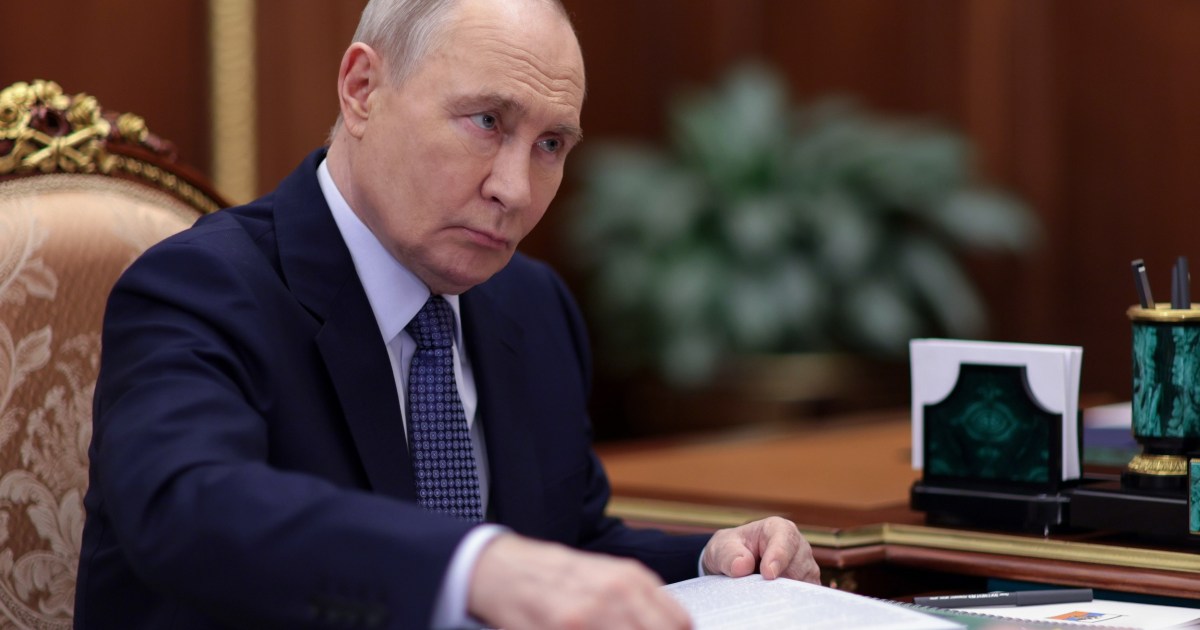
Russia has provided Iran with information that could help Iranian forces strike American ships, aircraft and bases in the region, two U.S. officials with knowledge of the matter tell MS NOW.
“Russia is providing intelligence help to Iran,” said one of the U.S. officials.
Both officials said that U.S. intelligence agencies have not uncovered evidence that Moscow is directing Iranian officials or forces regarding what to do with the information.
“I’ve seen nothing that suggests that Russia is playing a strategic or tactical combat role,” said one. Both officials spoke on condition of anonymity, citing the sensitive nature of the issue.
President Donald Trump on Friday chastised a Fox News reporter for asking him if Russia was helping Iran target U.S. forces.
“That’s an easy problem compared to what we’re doing here,” Trump said during a White House event on the future of college sports., before adding, “What a stupid question that is to be asking at this time.”
Speaking separately at the White House on Friday, Press Secretary Karoline Leavitt played down the importance of the Russian activity. “It clearly is not making any difference with respect to the military operations in Iran because we are completely decimating them,” she said.
And Defense Secretary Pete Hegsteth said in a 60 Minutes interview on Friday that President Trump is aware of “anything that shouldn’t be happening” and it “is being confronted and confronted strongly.”
He added that the Russian activity was not a concern. “We’re not concerned about that,” Hegseth said. “But the only ones that need to be worried right now are Iranians that think they’re gonna live.”
Democrats have accused Trump of failing to criticize actions that Russian President Vladimir Putin has taken against the U.S. interests and for failing to adequately support Ukraine’s effort to defend itself from Russia’s invasion.
Congressional Republicans have also expressed alarm. Rep. Michael McCaul, R-Texas, former chairman of the House Foreign Affairs Committee, told MS NOW, “Russia and Iran are locked in an unholy alliance.”
The Washington Post and The Associated Press first reported on the Russian information sharing with Iran.

David Rohde
David Rohde is the senior national security reporter for MS NOW. Previously he was the senior executive editor for national security and law for NBC News.
- Pam Bondi’s in trouble with Republicans on Capitol Hill
- Massive war price tag could be a massive problem for GOP leaders
- Jeanine Pirro’s failure to indict Biden speaks to something bigger
- Why arming Kurdish militants against Iran would be playing with fire
- Russia gave Iran information that could harm U.S. forces, officials say
- America can’t afford Trump’s war with Iran for long
- Christina Applegate’s honest answer to the worst question you can ask

- Jeanine Pirro’s failure to indict Biden speaks to something bigger
- Pam Bondi’s in trouble with Republicans on Capitol Hill
- Israeli strikes pound Iran and Lebanon as USA warns attacks will intensify…
-

 The Dictatorship1 year ago
Luigi Mangione acknowledges public support in first official statement since arrest
-

 Politics1 year ago
Former ‘Squad’ members launching ‘Bowman and Bush’ YouTube show
-

 Politics1 year ago
Blue Light News’s Editorial Director Ryan Hutchins speaks at Blue Light News’s 2025 Governors Summit
-

 The Dictatorship6 months ago
Mike Johnson sums up the GOP’s arrogant position on military occupation with two words
-

 Politics1 year ago
Former Kentucky AG Daniel Cameron launches Senate bid
-

 The Dictatorship1 year ago
Pete Hegseth’s tenure at the Pentagon goes from bad to worse
-
Uncategorized1 year ago
Bob Good to step down as Freedom Caucus chair this week
-

 Politics11 months ago
Democrat challenging Joni Ernst: I want to ‘tear down’ party, ‘build it back up’