
The Dictatorship
Trump’s deadly strike on a boat from Venezuela was an act of war


On Tuesday, President Donald Trump said the U.S. military blew up a vessel in the Caribbeankilling 11 people. The administration said the boat had departed from Venezuela and described the operation as a narco-trafficking bust against Tren de Aragua gang members. To anyone who knows the tragic history of U.S. interventionism in Latin America, it was an act of war.
This isn’t the first time a mysterious explosion at sea has been used to shape American public opinion and drum up pro-war sentiments. In 1898, the battleship USS Maine blew up in Havana Harborkilling more than 260 sailors. The cause was never proven, but American newspapers exploited the ambiguity to blame Spain, stoking outrage that fueled the Spanish-American War. Within months, the United States had radically recast power in the Caribbean, a grip it has maintained ever since, even when such power was challenged during the Cold War.
The timing of the attack, which experts are calling a violation of international law, is no coincidence.
The strike on what U.S. officials insist was a drug boat carries the same kind of ambiguity. The Trump administration quickly produced a blurry video of the explosion, but the images don’t prove who was aboard, what they were doing or whether drugs were even present. The White House has offered no hard evidence that the dead were members of a gang. “Pentagon officials were still working Wednesday on what legal authority they would tell the public was used to back up the extraordinary strike in international waters,” The New York Times reported.
But for a president who has promised to “pursue our manifest destiny,” this is part of a larger script already in motion. “In the Trump era, a new manifest destiny is here, accelerating protectionism and expansionism at the cost of the powerless,” I wrote at the start of Trump’s second term. This worldview, shaped by a 19th-century ideology that also fueled the war against Spain 127 years ago, treats the Western Hemisphere as territory still to be controlled.
Under Trump, as in recent decades, the so-called war on drugs provides the cover. Never mind that America remains an incredibly lucrative drug market — fighting trafficking has been good for American interventionism. Plan Colombia poured billions into militarization that fueled displacement and bloodshed. The Mérida initiative coincided with record homicides and human rights abuses in Mexico. In the Caribbean, counternarcotics has long served as the rationale for an expanded U.S. naval presence, including the current deployment of warships off the coast of Venezuela.
The timing of the attack, which experts are calling a violation of international lawis no coincidence. Trump has built his return to power on projecting American strength abroad, and Venezuela offers a ready stage. The United States has deployed more than 4,500 sailors and Marines, along with seven warships, in the Caribbean. Casting the South American country as a narco-state justifies force, rallies his base and signals to the region that Washington still wants to dictate the rules to Latin America.
And the messenger matters. Fully supporting Trump is Marco Rubio, the country’s first secretary of state of Latino descent. Defending the decision to reporters in Mexico City on Wednesday, Rubio said that “instead of interdicting it, on the president’s orders, we blew it up — and it’ll happen again.” He argued that ordinary seizures don’t deter traffickers, adding, “What will stop them is if you blow them up. The president is going to wage war on narco-terrorist organizations.”
Maduro isn’t popular, but the left-wing authoritarian knows history and how to use it.
Rubio’s words were less a policy blueprint than a posture. They reflected Cuban exile politics that have long pushed Washington toward confrontation in the region and that Rubio, as a longtime senator from Florida, is deeply familiar with. And that posture does have an audience, particularly among U.S. Latinos. Social media analysis from the Digital Democracy Institute of the Americas (DDIA) notes that “online discourse among U.S. Latino communities this week continues to be dominated by escalating U.S.-Venezuela tensions, with prominent social media accounts driving narratives of imminent military action and growing calls for [Venezuelan President Nicolás] Maduro’s Venezuela to be designated a narco-terrorist state.” In fact, Venezuela doesn’t really produce that much cocainealthough The New York Times reports that “U.S. indictments and leaked Colombian records describe Venezuelan security forces as overseeing drug shipments worth billions of dollars.”
As expected, Venezuela has made sure to paint Trump and the United States as Yankee imperialist warmongers. Maduro isn’t popular, but the left-wing authoritarian knows history and how to use it. He said the U.S. buildup “threatens the entire region,” and warned he would declare a “republic in arms” if American troops crossed into Venezuelan territory.
As far-fetched as that may seem, the Trump administration is ramping up the tension, instead of toning it down. History shows how quickly moments like this can escalate. The Maine in 1898, U.S. troops in the Dominican Republic in 1965, Grenada in 1983, Panama in 1989 — each framed as defensive, each ending in military intervention. This week’s strike carries the same risk, wrapped in similar justifications.
The question isn’t whether a corrupt, authoritarian figure leads Venezuela. It’s whether the United States is again using a familiar script to justify actions that will destabilize a hemisphere, with Latino communities in the U.S. now serving as both amplifiers and targets of the narrative.
This week’s strike was an act of war. To pretend otherwise is to ignore history and to blind ourselves to what the United States has done time and again in Latin America and the Caribbean. If we are serious about learning from the past, we should call it what it is.

Julio Ricardo Varela is an award-winning journalist and the founder of The Latino Newsletter.


The Dictatorship
Why Judge Boasberg’s ruling on DOJ’s Jerome Powell investigation is bigger than one case
The most important part of Chief Judge James Boasberg’s ruling quashing Justice Department subpoenas served on the Federal Reserve was not simply that he blocked them.
It was that he refused to suspend common sense. He read the subpoenas against the public record that produced them. He took President Donald Trump at his word. That is what made the opinion so important.
Judge Boasberg did not begin with dry procedural throat-clearing. He began with Trump’s own attacks on Federal Reserve Chair Jerome Powell and the broader campaign of presidential and White House pressure on the Federal Reserve to cut interest rates.
For too long, courts have often maintained an artificial separation between presidential rhetoric and executive action.
He quoted Trump calling Powell “TOO ANGRY, TOO STUPID, & TOO POLITICAL, to have the job of Fed Chair.” He cited another post calling Powell “one of the dumbest, and most destructive, people in Government.” He noted Trump’s statement that “Powell’s termination cannot come fast enough!” and his threat that if the Fed did not cut rates, “I may have to force something.”
That was not decoration; it was the architecture of the opinion. From page one, Judge Boasberg made clear that motive was not some side issue here. Motive was the case. The subpoenas arose from a Justice Department investigation into supposed cost overruns in the Federal Reserve’s multiyear headquarters renovation project and into Powell’s congressional testimony touching on those renovations. On paper, that was the inquiry. In reality, Judge Boasberg concluded, something else was going on.
Judge Boasberg wrote that there was “abundant evidence” that the dominant, if not sole, purpose of the subpoenas was to harass and pressure Powell either to yield to the president or resign and make way for someone who would. On the other side of the scale, he said the government had offered “no evidence whatsoever” that Powell committed any crime other than displeasing the president. By the end of the opinion, that judgment hardened even further: The government had produced “essentially zero evidence” of criminality, and its stated justifications looked like “a convenient pretext” for another unstated purpose.
That is an extraordinary thing for a federal judge to say about the Department of Justice.

This was not a close call. It was not a case in which prosecutors pushed the envelope and got reined back in. It was a finding that criminal process had been used as pressure rather than law enforcement.
And the way Judge Boasberg got there was the real story. He did not invent improper purpose. Rather, he looked at what was already in plain view. Trump spent months attacking Powell, demanding lower rates and making his desired outcome unmistakable. He said, “Anybody that disagrees with me will never be the Fed Chairman!” He said, “I want to get him out.” He said he would “love to fire his ass.” He said Powell “should resign.”
A political appointee then floated the Fed renovation issue as a path toward investigation and possible removal. After that, the U.S. Attorney’s Office opened a criminal investigation on that very theory and served subpoenas on the Federal Reserve.
Judge Boasberg looked at that sequence and refused to act naive.
He was right to.
For too long, courts have often maintained an artificial separation between presidential rhetoric and executive action. The president says what he says. Prosecutors do what they do. Judges examine the narrower legal record and resist attributing too much significance to the political atmosphere outside the courthouse. But there comes a point where that posture stops looking disciplined and starts looking unserious.
From page one, Judge Boasberg made clear that motive was not some side issue here. Motive was the case.
When a president has repeatedly identified the official he wants pressured or removed, made his desired outcome unmistakable and then his Justice Department shows up with a paper-thin theory aimed at that same target, a court does not have to pretend those events are unrelated. Judge Boasberg’s opinion suggested that at least some courts may be losing patience with that formalism.
What made the opinion important was not just that Judge Boasberg drew that inference here. It was that he did so openly, in a way that may signal a broader judicial willingness to read executive motive more realistically in politically saturated cases.
That is not judicial activism. It is common sense.
And Trump’s response since the ruling only reinforced the point. In a post after the decision, Trump attacked Judge Boasberg personally, called him a “Wacky, Nasty, Crooked, and totally Out of Control Judge,” said he has been “‘after’ my people, and me, for years,” claimed the ruling had “little to do with the Law, and everything to do with Politics,” and said Judge Boasberg should be removed from cases involving Trump and his administration.
That mattered because it underscored the precise interpretive move Judge Boasberg made in the opinion. The judge treated Trump’s public words not as background noise, but as evidence reasonably bearing on motive and pretext. Trump’s reaction did not undercut that reasoning. It strengthened it.
It also said something larger and more troubling about the DOJ.

The government was given the chance to substantiate its claims and chose not to. Judge Boasberg was left, as he put it, with “no credible reason” to think prosecutors were investigating suspicious facts as opposed to targeting a disfavored official.
That is not just a loss. It is a collapse of confidence.
And it matters all the more because of what a subpoena is. A subpoena is the point where political pressure becomes legal compulsion. It is the government bringing the authority of criminal process into the room.
That is why misuse of subpoena power is so dangerous. It can impose burden, stigma, cost and fear long before any indictment, and it can intimidate even when no charges are ever filed. Judge Boasberg understood that. He did not treat these subpoenas as some technical skirmish over records. He treated them as part of an effort to pressure the chair of an independent central bank and, in his words, to “bulldoz[e] the Fed’s statutory independence.”
That is why this ruling matters beyond Powell and beyond the Federal Reserve.
Judge Boasberg did not just quash subpoenas.
He modeled a more realistic way for courts to evaluate politically freighted exercises of state power.
And if more judges start doing the same, this opinion will be remembered as more than a rebuke in one ugly case. It will be remembered as an early sign that courts were no longer willing to separate presidential coercion from the legal machinery deployed to carry it out.
Duncan Levin is a criminal defense attorney and former federal prosecutor who serves as a Lecturer on Law at Harvard Law School and is a frequent contributor to MS NOW.
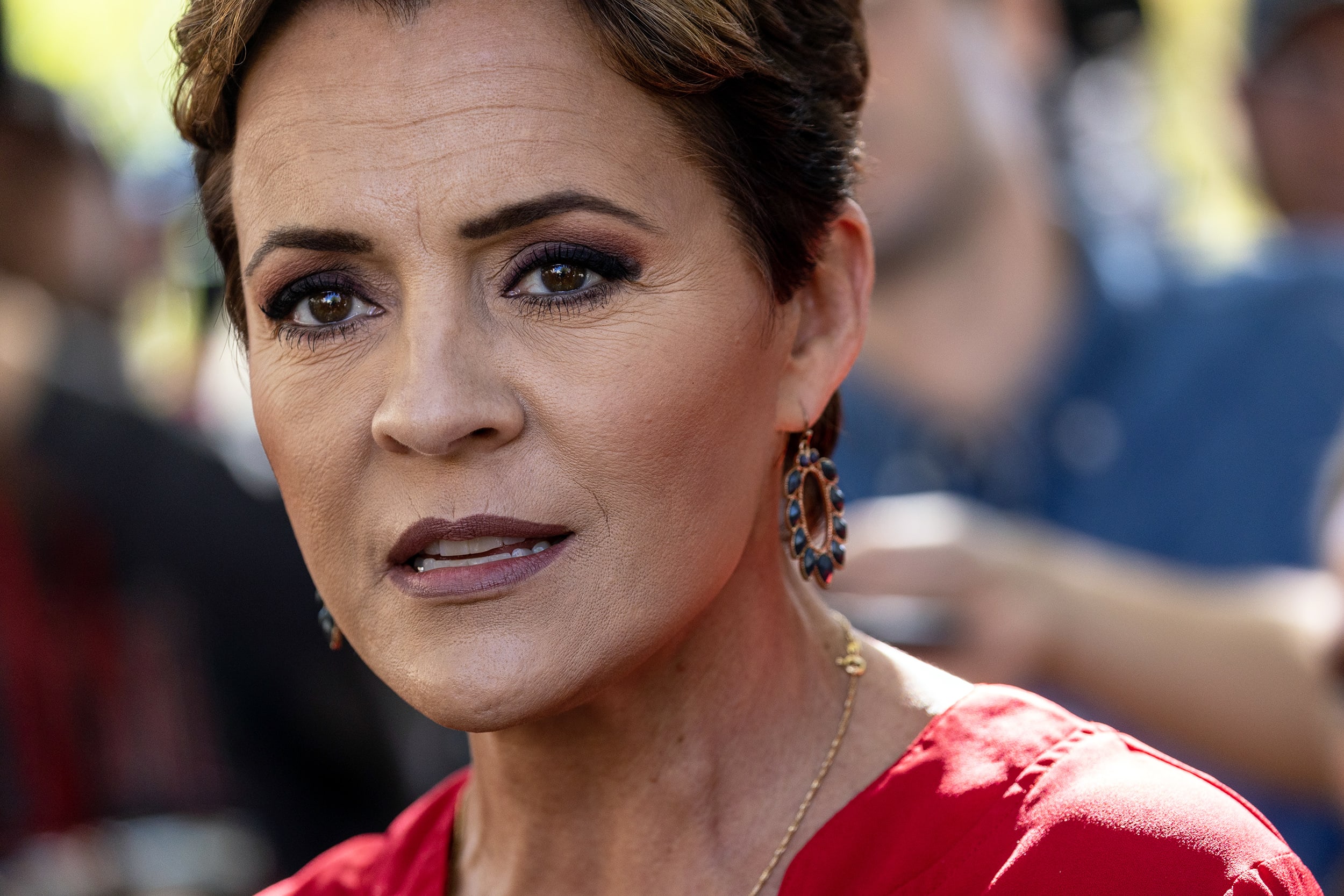
Kari Lake“repeatedly thumbed her nose” at legal requirements as the Trump administration dismantled Voice of America.
A federal judge made that observation on Tuesday about the Donald Trump ally, when he ordered the setting aside of unlawful government actions at the agency, including the placement of more than 1,000 employees on administrative leave.
U.S. District Judge Royce Lamberth’s ruling restoring some of the administration’s destruction follows his previous ruling explaining why Lake wasn’t lawfully overseeing the international broadcaster, which started as an effort to counter Nazi propaganda during World War II.
In his latest rulingthe Reagan-appointed judge wrote that Lake had said that she “has no opinion about which countries censor and repress their people — or even the basic question of which regions of the world qualify as significant, as would be required just tofeigncompliance” with the law.
Lamberth noted that Trump had issued an executive orderlast year to reduce the “bureaucracy.” The order directed several agencies, including the one overseeing Voice of America, to reduce their functions to the minimum required by law.
But, as the judge explained, the government proceeded to immediately wind the agency down to “skeletal operations,” including placing nearly all staff on paid administrative leave, before determining what its minimum legal obligations were.
The judge called out the government’s “arbitrary and capricious” actions and its “hasty, indiscriminate approach.”
Notably, in light of the war in Iranamong the failures listed by Lamberth is that Voice of America was unable to operate its service in that country at current staffing levels, despite it being legally required to do so.
The judge ordered thatall employees placed on leave pursuant to a government directive last year return to work by March 23.
Subscribe to the Deadline: Legal Newsletter for expert analysis on the top legal stories of the week, including updates from the Supreme Court and developments in the Trump administration’s legal cases.
Jordan Rubin is the Deadline: Legal Blog writer. He was a prosecutor for the New York County District Attorney’s Office in Manhattan and is the author of “Bizarro,” a book about the secret war on synthetic drugs. Before he joined MS NOW, he was a legal reporter for Bloomberg Law.
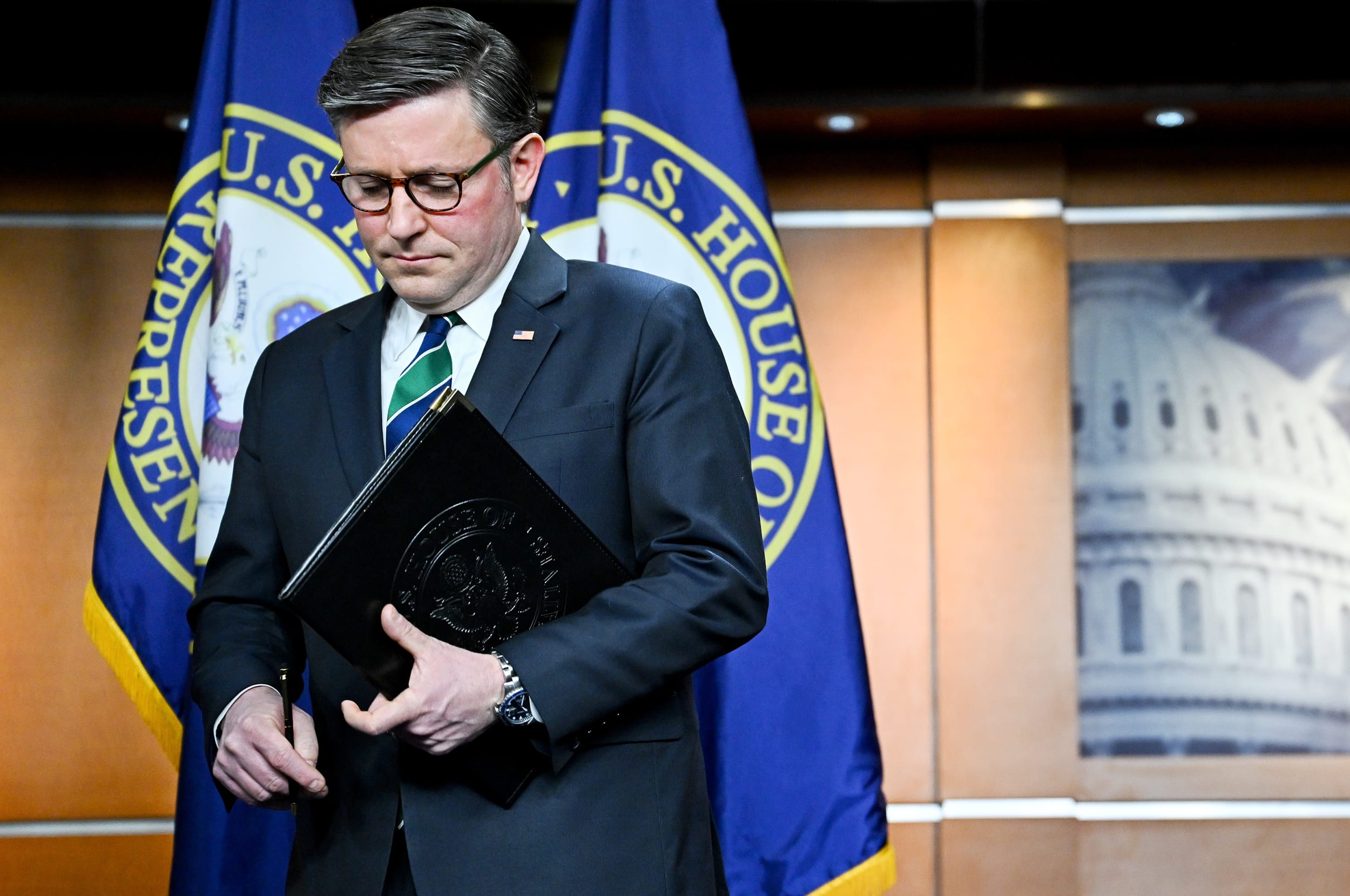
House Speaker Mike Johnson’s, R-La., refusal, or perhaps inability, to name a single example of voter fraud that would have been prevented by Republicans’ SAVE Act, which has the potential to disenfranchise millions of eligible votersprovided a revealing kickoff to the Senate’s debate on the legislation.
At a Tuesday press conference pegged to the Senate beginning debate on the bill, Johnson was asked to provide an example of previously committed voter fraud that the SAVE Act would have stopped. Johnson dismissed the question saying, “We’re not gonna litigate that,” before going on with his talking points.
Considering any act of actual voter fraud warrants being litigated, both in actual court and in the court of public opinion, it was an interesting choice of words.
Q: Can you give one example of fraud in a previous election that the SAVE America Act would stop?
MIKE JOHNSON: Look, we’re not gonna litigate all that pic.twitter.com/rLuEn4PJOx
—Aaron Rupar (@atrupar)”https://twitter.com/atrupar/status/2033918330269053434?ref_src=twsrc%5Etfw”>March 17, 2026
Note the little trick Johnson used after declining to provide an example, because it’s a trick many Republicans are using these days. He said polling suggests a broad majority of Americans support requiring a photo ID to vote and that this amounts to support for the SAVE Act, which, beyond requiring a photo ID, would authorize other disenfranchising policies, such as limiting mail-in voting. It’s also worth noting Republicans have not proposed corresponding changes to make it easier for people to obtain the IDs they’d require, which is why many of the bill’s critics have said the SAVE Act is essentially a poll tax reminiscent of Jim Crow.
As for the polling equating to support for the bill, that isn’t always a measure of a policy’s efficacy or constitutionality. U.S. history is replete with examples in which broad public opinion has been at odds with civil rights.
But Johnson’s evasion is what’s most notable here. It’s remarkable that the MAGA movement, whose membership embraced slogans such as “facts over feelings,” seems bereft of facts to support claims that the SAVE Act is anything other than a ploy to help Republicans commandeer the electoral process and help the party win races.
Trump himself exposed the true motive behind this voter suppression effort. As he’s faced growing unpopularitythe president has called for his administration to “take over” elections in areas where Democrats have won and has pressured Republican lawmakers to pass the SAVE Act.
“He promised Republican lawmakers last week that passing the bill would ‘guarantee the midterms’ for the GOP,” the Washington Post reported Wednesday.
Even the conservative Wall Street Journal editorial board denounced the bill, arguing “a pyrrhic victory isn’t worth busting the Senate filibuster.”
“Although Mr. Trump insists that voter fraud is endemic, his big claims aren’t backed by hard evidence,” the editors wrote. They also warn the bill’s restrictions on absentee voting risk overruling conservative-led states. The SAVE Act, they pointed out, “wouldn’t turn blue states red, and it can’t save Republicans from voter anger at unpopular policies.”
Ja’han Jones is an MS NOW opinion blogger. He previously wrote The ReidOut Blog.
- Why Judge Boasberg’s ruling on DOJ’s Jerome Powell investigation is bigger than one case
- Judge writes Kari Lake ‘repeatedly thumbed her nose’ at legal requirements

- In touting SAVE Act, Johnson refuses to cite any fraud it would have prevented
- ‘Warrants or bust’: House hard-liners deliver ultimatum ahead of spy powers vote
- House Ethics will forge ahead with Cherfilus-McCormick trial
- Stephanie Ruhle rips Trump official for downplaying war’s economic impact

- The Tea, Spilled by Morning Joe: ‘The SAVE Act is horrible legislation’
- House rejects effort to force a balanced budget in the US
- Inside the White House plan to sell the Iran war online
- Estonia ‘ready to talk’ on Strait of Hormuz backup
-

 The Dictatorship1 year ago
Luigi Mangione acknowledges public support in first official statement since arrest
-

 Politics1 year ago
Former ‘Squad’ members launching ‘Bowman and Bush’ YouTube show
-

 Politics1 year ago
Blue Light News’s Editorial Director Ryan Hutchins speaks at Blue Light News’s 2025 Governors Summit
-

 Politics1 year ago
Former Kentucky AG Daniel Cameron launches Senate bid
-

 The Dictatorship6 months ago
Mike Johnson sums up the GOP’s arrogant position on military occupation with two words
-

 The Dictatorship1 year ago
Pete Hegseth’s tenure at the Pentagon goes from bad to worse
-

 Politics11 months ago
Democrat challenging Joni Ernst: I want to ‘tear down’ party, ‘build it back up’
-
Uncategorized1 year ago
Bob Good to step down as Freedom Caucus chair this week