
Congress
Trump’s agenda is about to hit a make-or-break moment

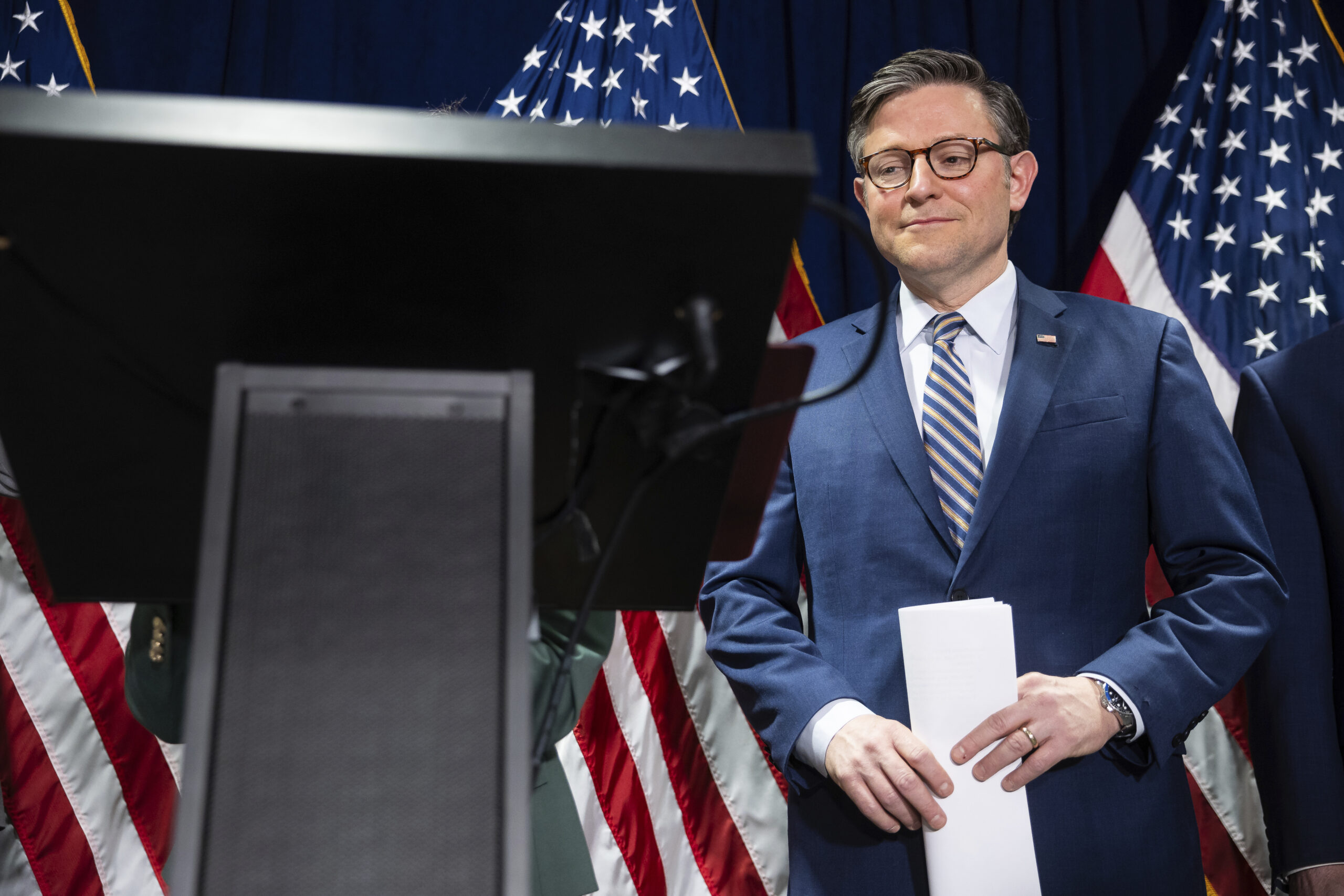
House Republicans are heading to President Donald Trump’s Miami-area resort for their annual policy retreat. They’re not going there for the weather.
Speaker Mike Johnson and GOP members have major decisions to make over the coming days that will determine whether Trump and Republicans can deliver on their sweeping legislative agenda before the 2026 midterms. They’re already running behind.
The biggest task for the gathering at Trump National Doral: Finalize a budget blueprint plan for the massive, party-line bill they’re planning, touching energy, border security and tax policy.
But to do that, Republicans need to decide what will go in that package — with the price tag of Trump’s priorities reaching $10 trillion over 10 years — versus what might be included in a separate, bipartisan government funding bill that will be negotiated with Democrats over the next seven weeks. The fate of a necessary debt ceiling increase is top of mind.
Johnson has been carefully collecting member feedback for weeks while privately debating a host of options with GOP leaders. But House Republicans are growing impatient and want to know the game plan.
“We need to have a sense of urgency with the debt ceiling coming,” said Rep. Barry Moore (R-Ala.), a member of the hard-right Freedom Caucus. “I hope there’s options at this point.”
The House Budget Committee is set to meet and take up the fiscal blueprint for the GOP agenda when lawmakers return to Washington next week. Adopting an identical blueprint in the House and Senate is a prerequisite for unlocking the budget reconciliation process that allows Republicans to sidestep a filibuster by Democrats.
Johnson last week indicated he’s planning to present more detailed plans to GOP members and discuss the reconciliation package, government funding for fiscal 2025, a debt-limit hike, California wildfire aid, border security money “and more” — including a potential bipartisan deal with Democrats that could encompass multiple parts of that puzzle.
“We’re looking at all options,” Johnson said of a larger funding deal with Democrats, adding that no decisions have been made.
But many Republicans are skeptical they’ll leave the retreat with concrete plans in hand. Some GOP members initially planned to skip the gathering, opting instead for an official trip to Africa, but those plans ended up getting canceled, according to two people granted anonymity to talk about planning for the closed-door event.
The planned retreat discussions have been tailored to show attending members the possibilities for the way forward and to take their temperatures on potential spending cuts, according to three Republicans with direct knowledge of the planning. Leaders will have to carefully balance sometimes competing interests from various GOP factions.
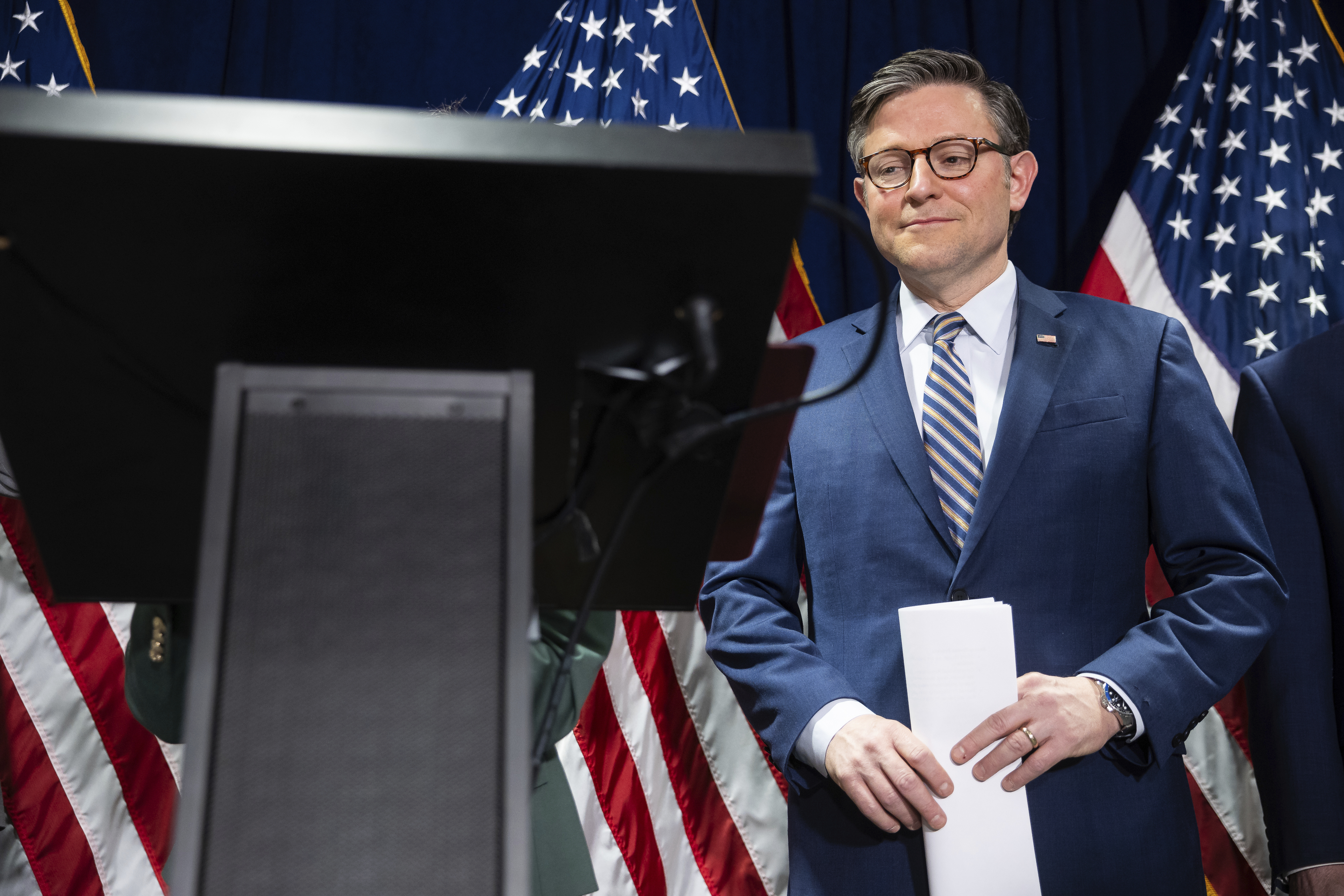
Committee chairs will present their proposals for the reconciliation package and answer member questions during a series of breakout sessions Tuesday.
The reconciliation process will be the subject of a plenary session hosted by House Majority Leader Steve Scalise and chairs on Wednesday morning. They’re set to then pile into buses and head back to the airport just before noon Wednesday.
“In my world, there’s some, ‘All right, this can be part of reconciliation, this can’t be part.’ And then once you get what the doable is, then you start figuring out what the legislative language is,” said Energy and Commerce Chair Brett Guthrie (R-Ky.).
Republicans can expect to get a message of urgency Monday night, when Trump himself will address them at his resort.
“That will certainly be a highlight for us,” said Rep. Richard Hudson (R-N.C.), head of the party campaign committee, adding that Trump’s “fun to be around” and that retreats generally allow Republicans to “get together away from all the chaos” in Washington.
But he acknowledged it’s not just another GOP gathering.
“This one is particularly important because we have to hammer out what our plan is on reconciliation,” Hudson said. “So I’m hopeful we can get to a point where we can all agree and get ready to get back here and go to work.”
Beyond being a team-building exercise, party retreats can also serve as an early-warning system for potential threats to the agenda.
Eight years ago, Republicans gathered in Philadelphia to plot out their plan to repeal the Affordable Care Act and replace it with a more conservative alternative. In one contentious closed-door session — one that was secretly recorded and leaked to media outlets — members expressed serious trepidations about how leaders were planning to go about it.
Seven months later, the push for the health care overhaul imploded when the party could not unite around a plan. Leaders ended up having to abandon it and move on to a package of tax cuts — one they now have to renew.
This year, there aren’t the same sort of fundamental objections to core agenda items. But there are serious disagreements that members have to work through — most of them over how to pay for the massive bill.
For example, Republicans on the Armed Services Committee are deeply opposed to Guthrie’s proposal to restore the spectrum auction authority of the Federal Communications Commission as they try to balance the promise of advanced wireless technology and the needs of the military. Guthrie said he planned to use the retreat to work through the impasse. And there are some members — especially on Johnson’s right flank — who are expecting trillions of dollars in spending cuts. They’re also wary that his plan for one huge bill comes at the cost of delays and the risk the entire package could blow up.
“I was kind of in favor, honestly, of doing two separate bills. I think that would have been the way to play this,” Moore said, adding he just wants a “good game plan” out of the retreat.
Centrists are also relaying their concerns to GOP leaders about some committees’ plans to target pieces of the Affordable Care Act, Medicaid and the Supplemental Nutrition Assistance Program that provides food aid benefits for more than 40 million low-income Americans.
Republicans are discussing enacting Medicaid work requirements for the first time and adding additional SNAP work requirements for parents with children over 7 years old.
Those proposals are relatively more palatable for GOP lawmakers in competitive districts than the massive cuts to current benefits some conservatives would prefer. But they’re still politically divisive and could provide Democrats major campaign fodder in blue and purple districts ahead of the 2026 midterms.


President Donald Trump announced the next chief for the White House’s Capitol Hill strategy on Saturday night, picking Katie Bailey, a former Republican Hill staffer.
Bailey will replace James Braid in the role of director of the Office of Legislative Affairs, which oversees nominations and confirmations of Cabinet roles, relationships on Capitol Hill and the White House’s legislative priorities. Braid left the job in September.
Bailey has served as deputy director of the Office of Legislative Affairs since the beginning of the summer. She formerly worked for Republican Sen. Mike Braun of Indiana and former Sen. Tom Coburn of Oklahoma, and served in roles on multiple committees.
Trump commended Bailey for assisting with the confirmations of Homeland Security Secretary Markwayne Mullin, Director of National Intelligence Jay Clayton and Labor Secretary Keith Sonderling, saying she has “already delivered strong results.”
“After previously working on Capitol Hill, Katie understands how the Executive and Legislative Branches of Government can most effectively work together to achieve Great Success for the American People,” the president wrote in a social media post Saturday night.
Bailey takes over the role ahead of the midterm elections, which could alter the power dynamics in Washington substantially if Democrats seize control of either chamber of Congress. The result, which the White House has begun preparing for, could include congressional subpoenas, depositions and investigations, as happened during the latter half of Trump’s first term in office, when Democrats flipped the House.
Trump’s approval continues to sag amid soaring gas and diesel prices driven by the war with Iran, leaving Democrats bullish that the map will continue to grow for them.
SYRACUSE, New York — President Donald Trump came to New York on Friday to help a Republican win an uphill race for governor. But his visit was also a reminder of the complicated role he plays in his party’s fight to keep control of Congress.
Trump rallied alongside GOP gubernatorial nominee Bruce Blakeman, calling on New Yorkers to fire Gov. Kathy Hochul and, referring to the state attorney general, “her totally corrupt sidekick, Letitia ‘Peekaboo’ James.”
“Your city and state are dirty, filthy places, and everybody wants to leave,” he told some 5,000 attendees at a convention center in downtown Syracuse — which, he noted, was “a short distance from the beautiful shores of Lake America.”
“You gotta get your act together, and I tell you what, Bruce Blakeman will get your act together,” Trump said.
For Republicans, the president’s appearance underscored a political dilemma that extends beyond New York: Even as Trump increasingly appears to be a drag on their ticket, they need his loyal supporters to energize their base. While voters have soured on the president’s handling of the economy and costs, he remains a potent force in turning out MAGA voters — even in an otherwise Democratic-dominated state.
“The targeting of where the president goes is not a random exercise,” Marist University pollster Lee Miringoff said. “They’re looking to stir the base without stirring the opposition. They’re picking and choosing, that’s not uncommon. For him to come to New York to help the turnout upstate is a positive for the Republicans and his base.”
Blakeman, the Nassau County executive, hasn’t distanced himself from the president — nor have most of the top officials in New York’s GOP. Nearly every Republican running a competitive congressional race in this half of the state came to Friday’s rally, eager to make their presence known.
“I’m always happy to be with the president,” said Anthony Constantino, who’s running in a nearby red district that’s inched into toss-up territory. “He’s the leader of the free world, and I’m excited to have a great relation with him.”
Some GOP operatives, however, have quietly grumbled that their candidates need to start creating some distance from the president. Republicans from other parts of the state like Rep. Mike Lawler decided that campaigning in their districts was more valuable than trekking to be seen with Trump — as did several down-ballot candidates in Central New York. Democrats, notably, have been just as eager to highlight the visit.
“This is supposed to be a swing district. And the feedback I get is that the president is very unpopular,” said Democratic Rep. John Mannion, who represents Syracuse and the surrounding Central New York area. “He still certainly will have his core base of supporters, but I do think he’s lost support here compared to what he had around the 2024 election.”
Blakeman, for his part, isn’t worried about Trump’s drop in popularity.
“Kathy Hochul should be worried about her drop in popularity,” he said before taking the stage in Syracuse. “She’s the most unpopular governor in the history of the state of New York.”
Trump’s visit came against the backdrop of a darkening political environment for New York Republicans.
Immigration and Customs Enforcement shot a man in Manhattan on Thursday afternoon, stirring fresh condemnation of Trump’s aggressive deportation policies. New York City Mayor Zohran Mamdani, a democratic socialist who has a surprisingly warm relationship with the president, called on him to cease all ICE activity in the five boroughs. Hochul stressed that the shooting took place with a five-year-old child present and demanded that federal authorities “provide answers.”
Immigration is one of several areas where Blakeman has hewed close to the Trump wing of the party throughout his campaign.
“I’m outraged with Kathy Hochul for taking sides with somebody who was a convicted felon, someone who was an alleged drug dealer, a gang member,” he said Friday about the shooting in Manhattan.
While Trump’s speech repeatedly careened back to the rhetoric one could expect from any of his rallies — boasts about the stock market, complaints about ‘Dumocrats’ — he did manage to seamlessly blend almost all of Blakeman’s oft-used talking points into his stump speech.
“Since Hochul took office, she’s raised your utility rates 48 times, and energy prices in New York have skyrocketed 100 percent,” Trump said. “If Bruce Blakeman gets in, he will cut your electric bills by 70, 80, 90 percent.”
The climate outside of deep blue New York City is also turning increasingly hostile to the GOP. Constantino, who’s running to succeed Rep. Elise Stefanik in upstate New York, trails his Democratic foe Blake Gendebien by 4 points, a Siena Research Institute survey released Friday morning found. A Blue Light News poll showed that nationally one in four Trump voters believe Republican candidates should break from the president in order to win in November.
The wisdom of appearing with Trump has been debated by Republicans throughout the country at a time when gas prices are high and a foreign war drags on. And New York Democrats aren’t viewing the presidential visit as a concern.
Much of Hochul’s messaging this year has focused on making sure New Yorkers know Blakeman and Trump are friends. Her most-aired TV commercial features a puppeteer saying one Republican would do the other’s bidding.
“Puppets are my life. You tell them what to say, they say it,” the narrator says. “But that’s not what you want in a governor.”
Earlier in the day during an MSNOW interview, Hochul dismissed the rally.
“It’s obviously a very political event,” she said. “It seems like a last-ditch effort to breathe some life into a campaign that’s on life support.”
Despite his low approval ratings with voters, Trump’s visit stands to light up a Republican base that Blakeman will need to turn out next month to help him defeat Hochul.
Polling has shown the governor leading the GOP nominee by as much as 18 points in this deep blue state. Yet some Trump supporters maintain the president can help generate much-needed enthusiasm for Blakeman, especially in areas of upstate New York where the Long Island native is not well known.
“We actually have the ability to win these elections, but I just don’t see the enthusiasm out there,” Conservative Party Chair Gerard Kassar said. “Hochul has won the day as far as being a terrible governor, but now we’ve got to get our people out to vote.”
Winning is still a tall order for Blakeman — especially in a tough national political environment where polls show GOP candidates in red states like Texas, Ohio and Kansas struggling against Democratic challengers.
Republicans have not won statewide in New York since George Pataki secured a third term in 2002. Since then, the GOP has lost all levers of statewide power, and Trump’s tariffs as well as his decision to launch a war in Iran have not helped him fulfill his campaign pledge of addressing voters’ cost concerns.
The president’s political woes aren’t going unnoticed.
Privately, Republican operatives grumbled that the president’s visit put swing seat candidates in an uncomfortable spot.
“There’s a lot of commiserating between folks within the party structure — why is this happening? Why is he doing this?” said one Republican operative who was granted anonymity to freely discuss the dynamic. “Then you’ve got the blind loyalists who say, ‘Yay Trump’s coming’ — people who are too politically dumb to understand the ramifications of it.”
Yet the head of the Republican party kept his message very much in line with Hochul’s.
“Please pretend I’m on the ballot,” Trump told Central New Yorkers.
Sen. Chris Murphy wants Democrats to go big for Angie Nixon in Florida’s Senate race — and he’s pushing to raise some “serious money” to help.
“I do believe that we’d make a big mistake if we slept on Florida,” the Connecticut Democrat told Blue Light News on Friday. “I know it feels like a longer shot, but I just think this year is looking exceptional.”
Murphy plans to hit the trail with Nixon as part of a campaign swing for Senate candidates over the next three weeks that will take him through North Carolina and Florida, as well as events with Abdul El-Sayed in Michigan, Peggy Flanagan in Minnesota and Chris Pappas in New Hampshire. Murphy will serve as a surrogate for El-Sayed in the spin room at his next debate, and said he’s “just a big believer” in the Michigan Senate nominee.
Murphy’s bullishness about a blue wave comes as Senate Democrats are pushing the boundaries of a midterm battle map that is shifting further into red territory. The Chuck Schumer-aligned Senate Majority PAC has dropped roughly $5 million apiece into Texas and Kansas over recent days, and the minority leader has included Kansas and Mississippi in his pitches to donors.
“If I were in charge, I would definitely put some resources in Florida,” Murphy said. “When you have an exciting candidate like this, it’s a good long-term investment” in growing Democrats’ activist base.
Still, Murphy stressed he’s “not making any formal recommendations” on where Schumer or top Democratic campaign groups should move their money.
“They’ve got so many mouths to feed,” Murphy said. “That’s why I’m going to try to step up and do some work on my own.”
Murphy, who is considered a potential 2028 presidential contender, has spread roughly $2.5 million across candidates, campaign arms and other organizations this cycle. That includes transferring more than $500,000 to Democrats’ three top campaign arms and 25 state parties.
Prominent Democrats have been ramping up their attention on Florida. Sen. Bernie Sanders (I-Vt.) has funneled $250,000 toward Nixon’s campaign, along with other resources. Sen. Ruben Gallego (D-Ariz.) also told Blue Light News he hopes to campaign with Nixon.
But Democrats across suddenly competitive red states are clamoring for more cash and Florida is an expensive state, complicating the chances of a significant investment from national groups.
Nixon also faces an uphill battle against GOP Sen. Ashley Moody in the Sunshine State. A progressive state lawmaker, Nixon aligned herself with the Democratic Socialists of America over the summer in a state where many voters, especially those with ties to Cuba, reject such an ideology. Also, Republicans in Florida have a 1.5 million voter registration advantage over Democrats.
-

 Politics2 years ago
Former ‘Squad’ members launching ‘Bowman and Bush’ YouTube show
-
Uncategorized2 years ago
Bob Good to step down as Freedom Caucus chair this week
-

 The Josh Fourrier Show2 years ago
DOOMSDAY: Trump won, now what?
-

 The Dictatorship2 years ago
Pete Hegseth’s tenure at the Pentagon goes from bad to worse
-

 Politics2 years ago
Former Kentucky AG Daniel Cameron launches Senate bid
-

 The Dictatorship2 years ago
Luigi Mangione acknowledges public support in first official statement since arrest
-

 Politics2 years ago
Blue Light News’s Editorial Director Ryan Hutchins speaks at Blue Light News’s 2025 Governors Summit
-

 The Dictatorship1 year ago
Mike Johnson sums up the GOP’s arrogant position on military occupation with two words