
Congress
Trump’s agenda is about to hit a make-or-break moment

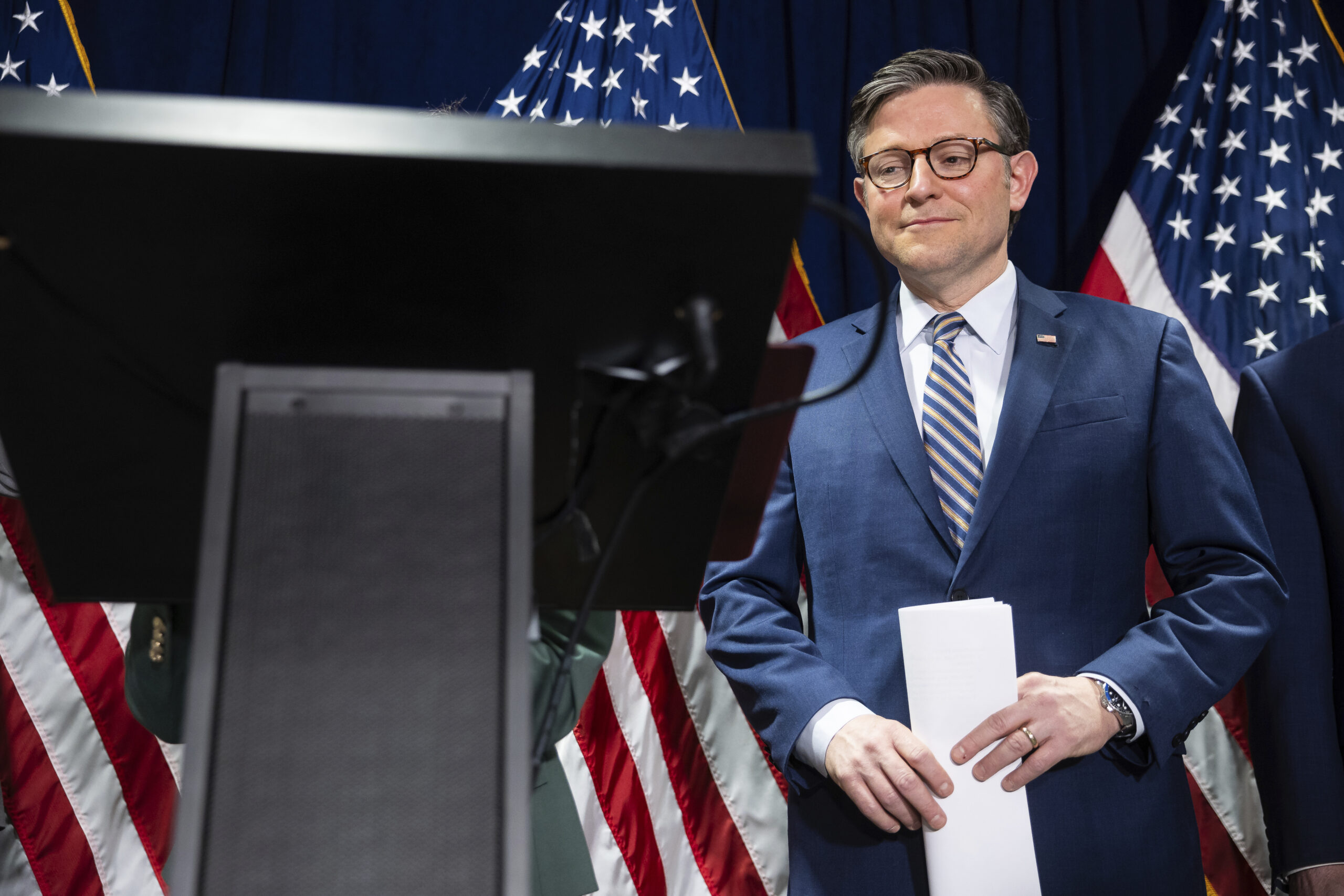
House Republicans are heading to President Donald Trump’s Miami-area resort for their annual policy retreat. They’re not going there for the weather.
Speaker Mike Johnson and GOP members have major decisions to make over the coming days that will determine whether Trump and Republicans can deliver on their sweeping legislative agenda before the 2026 midterms. They’re already running behind.
The biggest task for the gathering at Trump National Doral: Finalize a budget blueprint plan for the massive, party-line bill they’re planning, touching energy, border security and tax policy.
But to do that, Republicans need to decide what will go in that package — with the price tag of Trump’s priorities reaching $10 trillion over 10 years — versus what might be included in a separate, bipartisan government funding bill that will be negotiated with Democrats over the next seven weeks. The fate of a necessary debt ceiling increase is top of mind.
Johnson has been carefully collecting member feedback for weeks while privately debating a host of options with GOP leaders. But House Republicans are growing impatient and want to know the game plan.
“We need to have a sense of urgency with the debt ceiling coming,” said Rep. Barry Moore (R-Ala.), a member of the hard-right Freedom Caucus. “I hope there’s options at this point.”
The House Budget Committee is set to meet and take up the fiscal blueprint for the GOP agenda when lawmakers return to Washington next week. Adopting an identical blueprint in the House and Senate is a prerequisite for unlocking the budget reconciliation process that allows Republicans to sidestep a filibuster by Democrats.
Johnson last week indicated he’s planning to present more detailed plans to GOP members and discuss the reconciliation package, government funding for fiscal 2025, a debt-limit hike, California wildfire aid, border security money “and more” — including a potential bipartisan deal with Democrats that could encompass multiple parts of that puzzle.
“We’re looking at all options,” Johnson said of a larger funding deal with Democrats, adding that no decisions have been made.
But many Republicans are skeptical they’ll leave the retreat with concrete plans in hand. Some GOP members initially planned to skip the gathering, opting instead for an official trip to Africa, but those plans ended up getting canceled, according to two people granted anonymity to talk about planning for the closed-door event.
The planned retreat discussions have been tailored to show attending members the possibilities for the way forward and to take their temperatures on potential spending cuts, according to three Republicans with direct knowledge of the planning. Leaders will have to carefully balance sometimes competing interests from various GOP factions.
Committee chairs will present their proposals for the reconciliation package and answer member questions during a series of breakout sessions Tuesday.
The reconciliation process will be the subject of a plenary session hosted by House Majority Leader Steve Scalise and chairs on Wednesday morning. They’re set to then pile into buses and head back to the airport just before noon Wednesday.
“In my world, there’s some, ‘All right, this can be part of reconciliation, this can’t be part.’ And then once you get what the doable is, then you start figuring out what the legislative language is,” said Energy and Commerce Chair Brett Guthrie (R-Ky.).
Republicans can expect to get a message of urgency Monday night, when Trump himself will address them at his resort.
“That will certainly be a highlight for us,” said Rep. Richard Hudson (R-N.C.), head of the party campaign committee, adding that Trump’s “fun to be around” and that retreats generally allow Republicans to “get together away from all the chaos” in Washington.
But he acknowledged it’s not just another GOP gathering.
“This one is particularly important because we have to hammer out what our plan is on reconciliation,” Hudson said. “So I’m hopeful we can get to a point where we can all agree and get ready to get back here and go to work.”
Beyond being a team-building exercise, party retreats can also serve as an early-warning system for potential threats to the agenda.
Eight years ago, Republicans gathered in Philadelphia to plot out their plan to repeal the Affordable Care Act and replace it with a more conservative alternative. In one contentious closed-door session — one that was secretly recorded and leaked to media outlets — members expressed serious trepidations about how leaders were planning to go about it.
Seven months later, the push for the health care overhaul imploded when the party could not unite around a plan. Leaders ended up having to abandon it and move on to a package of tax cuts — one they now have to renew.
This year, there aren’t the same sort of fundamental objections to core agenda items. But there are serious disagreements that members have to work through — most of them over how to pay for the massive bill.
For example, Republicans on the Armed Services Committee are deeply opposed to Guthrie’s proposal to restore the spectrum auction authority of the Federal Communications Commission as they try to balance the promise of advanced wireless technology and the needs of the military. Guthrie said he planned to use the retreat to work through the impasse. And there are some members — especially on Johnson’s right flank — who are expecting trillions of dollars in spending cuts. They’re also wary that his plan for one huge bill comes at the cost of delays and the risk the entire package could blow up.
“I was kind of in favor, honestly, of doing two separate bills. I think that would have been the way to play this,” Moore said, adding he just wants a “good game plan” out of the retreat.
Centrists are also relaying their concerns to GOP leaders about some committees’ plans to target pieces of the Affordable Care Act, Medicaid and the Supplemental Nutrition Assistance Program that provides food aid benefits for more than 40 million low-income Americans.
Republicans are discussing enacting Medicaid work requirements for the first time and adding additional SNAP work requirements for parents with children over 7 years old.
Those proposals are relatively more palatable for GOP lawmakers in competitive districts than the massive cuts to current benefits some conservatives would prefer. But they’re still politically divisive and could provide Democrats major campaign fodder in blue and purple districts ahead of the 2026 midterms.


President Donald Trump on Saturday threatened to send federal immigration agents to airports across the country on Monday if Democrats don’t agree to end the Department of Homeland Security shutdown, now approaching five weeks.
“If the Radical Left Democrats don’t immediately sign an agreement to let our Country, in particular, our Airports, be FREE and SAFE again, I will move our brilliant and patriotic ICE Agents to the Airports where they will do Security like no one has ever seen before, including the immediate arrest of all Illegal Immigrants who have come into our Country,” he wrote.
“Illegal Immigrants who have come into our Country, with heavy emphasis on those from Somalia” would be targeted with an especially firm hand, the president wrote on Truth Social.
Shortly thereafter, Trump followed up to say he plans to send ICE to airports in just days.
“I look forward to moving ICE in on Monday, and have already told them to, ‘GET READY.’ NO MORE WAITING, NO MORE GAMES!” he wrote in a separate Truth Social post on Saturday.
It’s his latest bid to push Democrats, who have refused to greenlight DHS funding without changes to how it carries out immigration enforcement, pointing to deadly incidents as Immigration and Customs Enforcement agents descended en masse on major American cities. Increased callouts among TSA agents and airport staffers are expected to roil airports in the coming weeks, with major interruptions to airport procedure likely to follow.
Both sides have seemingly made progress in recent days toward ending the shutdown. The White House made several concessions on immigration enforcement policies in a proposal shared with Senate Democrats on Friday. But the ICE agent masking ban Democrats are seeking in exchange for their support on a funding package remains a bridge too far, Republicans argue.
Trump’s latest threat isn’t likely to make the prospects of a truce any more viable, especially given his focus on Minnesota, where tensions flared after federal immigration agents killed two protesters during a major surge of personnel in January.
In a post on X following Trump’s threat, Rep. Lauren Boebert said, “The airport in Minnesota is about to be a ghost town.”
The president’s threat Saturday lands squarely in the middle of a confirmation fight over his pick to run DHS, Sen. Markwayne Mullin (R-Okla.), a process that has quickly become a proxy battle over the future of ICE itself.
At his hearing this week, Mullin tried to strike a more measured tone than in some of his past remarks, pledging to rein in some enforcement tactics and lower the agency’s public profile. But he repeatedly defended ICE agents amid mounting scrutiny, including backing officers involved in high-profile civilian deaths and arguing Democrats are tying the agency’s hands.
Republicans — including Mullin — have instead pushed to expand ICE’s resources and authority, framing the standoff as a fight over public safety.
The backdrop is the messy ouster of Kristi Noem, whose tenure was defined by aggressive deportation policies, costly PR campaigns and a series of controversies that ultimately led Trump to push her out after a bruising round of congressional hearings.
The enforcement-heavy approach Trump threatened Saturday sets up a preview for what Mullin will perhaps be asked to defend — and potentially formalize — as the next head of DHS.
ICE and the Transportation Security Administration did not immediately respond to requests for comment from Blue Light News.
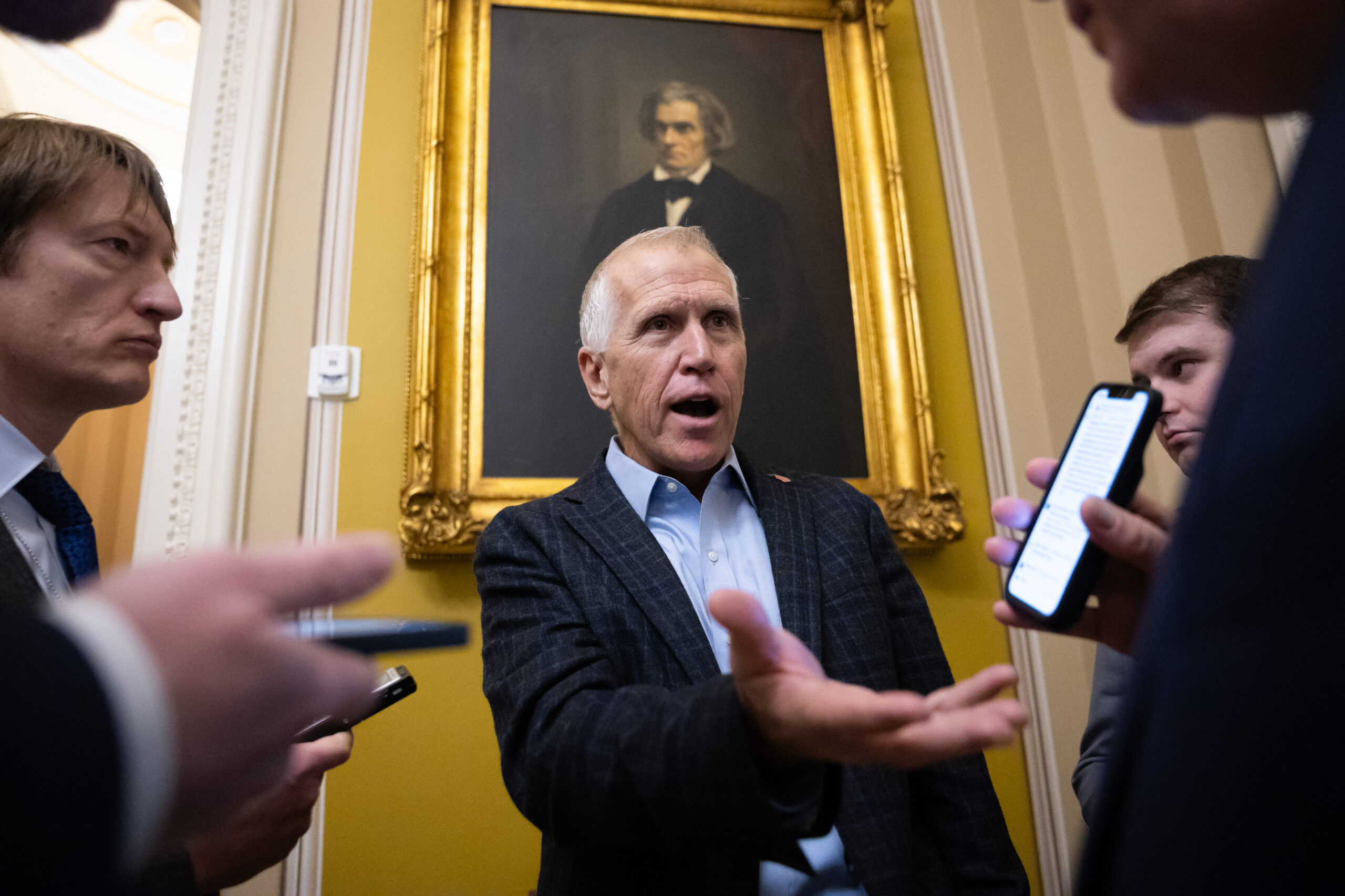
Among online activists and in some corners of the Republican Party, Mike Lee is being heralded as a MAGA champion willing to pressure his own party to embrace hardball tactics or risk political suicide.
But inside the Senate, the Utahn’s scorched-earth, hyper-online methods are sparking a wave of mostly private animosity from GOP colleagues who believe his plan to push through legislation overhauling how federal elections are conducted is ill-conceived and potentially harmful to the party’s chances in the midterms.
They believe he doesn’t have a realistic path to passing the SAVE America Act, and they view him as seeking personal attention at the cost of sparking an ongoing intraparty feud, according to five Republicans granted anonymity to speak candidly about their colleague.
“That seems to be a self-serving attempt at elevating yourself at the expense of your Republican colleagues, and I don’t have any patience for that sort of stuff,” Sen. Thom Tillis (R-N.C.) said in an interview about Lee’s social media strategy. Tillis, a retiring lawmaker who is not one of the five who spoke privately, lamented a lack of “strategic clarity” from Lee on the endgame for the elections debate.
Lee, however, shows no hint of self-doubt in news conferences and floor speeches — and, more importantly, late-night X streams and a constant stream of social-media posts — that the SAVE America Act is anything less than a make-or-break moment for American democracy.
“It would be a suicidal move for us as Senate Republicans, for Republicans in general, if we don’t put everything we’ve got into this,” Lee said at a news conference this week. ”We need to debate this as long as it takes to get it done.”
Lee’s office did not respond to a request for an interview with the senator or a detailed message seeking comment about the criticism he’s facing from colleagues.
‘He’s hurting us’
The inside-outside split that has emerged in recent weeks is the culmination of a long political evolution for Lee’s persona. He was once viewed as a bookish conservative with a libertarian bent but has now emerged as the Senate GOP’s most inveterate social-media poster — and a darling of the online right.
But it’s his strategy around the elections bill, which President Donald Trump has called his “No. 1 priority,” that has soured some of his relationships inside the Senate. Some Republican colleagues compared him to Sen. Rand Paul — the Kentucky gadfly who also has a history of sparking frustration within the Senate GOP ranks.
Republicans have circulated Lee’s online posts, including one saying that if a senator doesn’t support his tactics to pass the elections bill “you might need to replace them.” That kind of talk has some suggesting that Lee, who was part of a bipartisan coalition that helped pass a criminal justice bill during Trump’s first term, will have a hard time getting legislation passed in the future.
Frustrations have grown to the point that some GOP senators are privately wondering if they could remove him as chair of the Energy and Natural Resources Committee, according to two Republicans. Several other colleagues dismissed the talk as blowing off steam.
“He’s hurting us,” one of the two Republicans said.
Lee appeared to distance himself from the social media tactics when a Blue Light News reporter asked him during a news conference this week about concerns from his Republican colleagues and whether any had approached him directly.
“Every time I talk to activists, people who support this, I’m like a broken record telling them, you catch more flies with honey than with vinegar, and I recommend encouragement and focusing on the positive elements of the bill,” Lee said. “They do what they do. It is what it is.”
Tillis brushed off Lee’s answer: “You’re telling people to be nice when you post a statement that says you should challenge them in primaries? How does that work?”
With a swath of GOP senators dead-set against bypassing the 60-vote filibuster threshold, Lee has argued that forcing Democrats into a “talking filibuster” will ultimately force them to negotiate and capitulate. That doesn’t make sense to many of his colleagues, who don’t see the Democrats ever providing enough votes to pass the bill.
And they fear Lee is selling a fantasy to his online followers, who believe failure should be at least partially pinned on the weakness of Republicans, not the opposition of Democrats.
“It’s the clicks,” one Republican senator said in an interview when asked what Lee wants to accomplish. “He goes too far. … He has almost no self-awareness.”
‘Maximum success in the Senate’
But Lee’s supporters believe his push has gotten at least some results. Senate Majority Leader John Thune agreed to call up the bill and start debate without a clear end date — something that is next to unheard-of in the modern Senate. And GOP ears perked up this week when Minority Leader Chuck Schumer told reporters that Democrats weren’t opposed to photo ID requirements.
Rachel Bovard, a former Lee staffer who is now a vice president at the Conservative Partnership Institute, said her former boss is seeking to “represent a part of the base that feels unheard.”
“It’s encouraging I think for a lot of people to see that a single United States senator can still speak for them, the Senate still speaks for them,” she said.
Lee himself credited pressure from his army of online supporters for Thune’s decision to keep the Senate working through this weekend. He has credited the majority leader so far for implementing a version of the talking filibuster.
“Bullcrap if anyone says X isn’t real,” he said during a late-night stream hosted on the social-media platform this week.
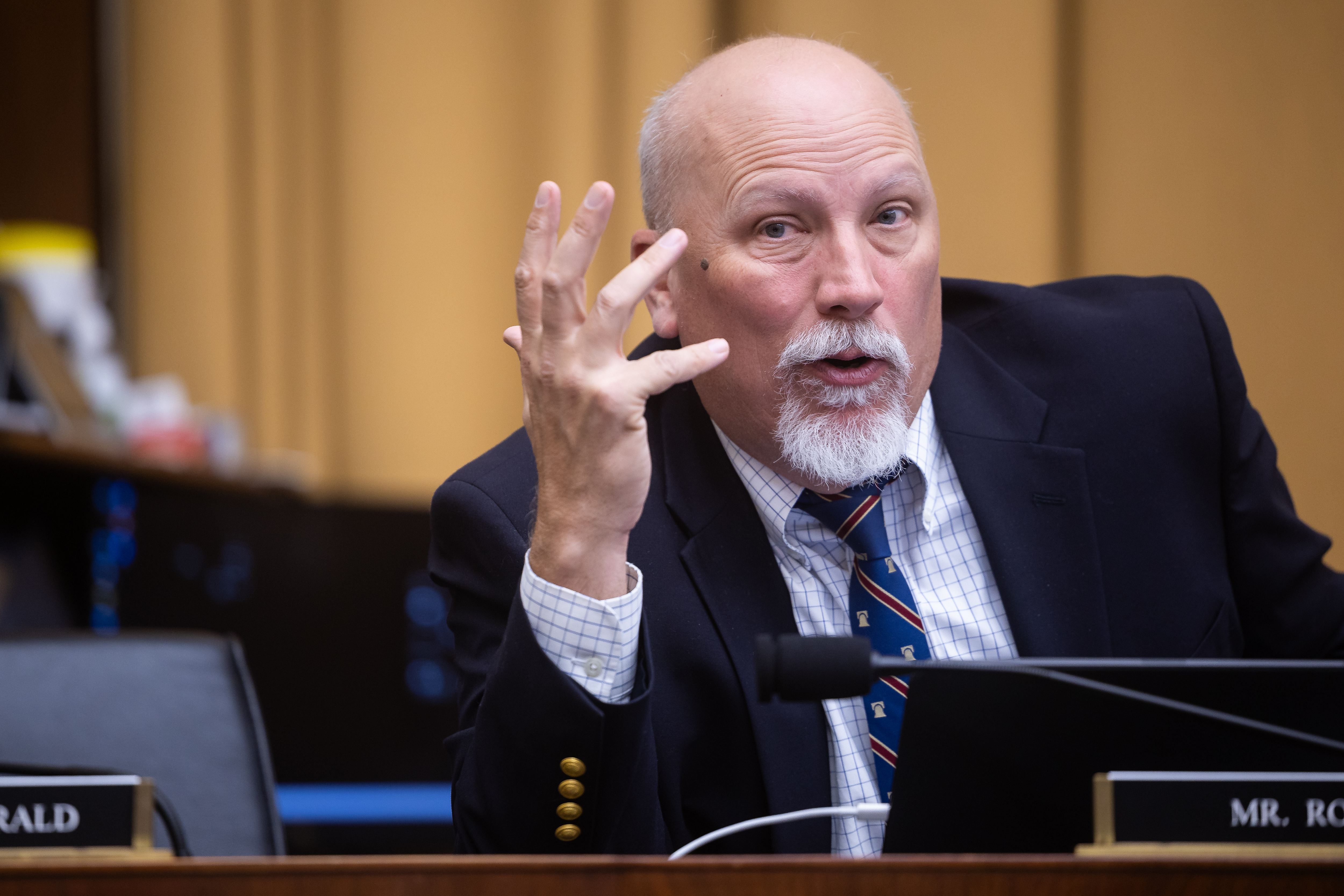
Rep. Chip Roy (R-Texas), who authored the SAVE America Act in the House, said he and Lee worked together to set the bill up for “maximum success in the Senate procedurally — and now Mike is single-handedly trying to make the U.S. Senate actually work and debate.”
“To those Senators saying Mike Lee is doing this for attention — it’s utter bullshit and they should have the cajones to call the President and tell him that,” he added in a text message. “But it’s the Senate, so.”
Several Senate Republicans have praised Lee online and as they’ve appeared alongside him at news conferences this week. But many other Republican colleagues have kept their distance, not understanding how he intends to bring the fight to a close. A sixth GOP senator granted anonymity was not personally critical of Lee but described the process he unleashed as a “very chaotic situation.”
“He gets stuck on things,” the senator said, describing Lee as an adamant believer in the policy he is pushing.
As Thune outlined his plans for the bill during a closed-door Senate GOP lunch last week — which were widely understood to involve eventually subjecting it to a 60-vote hurdle — Lee was largely silent, according to three people with knowledge of the meeting.
Leadership ambitions?
Thune and Lee have kept in close touch behind the scenes as the Senate has taken up the bill.
“I think the key is to keep people’s expectations realistic and not overpromise. And that’s what I’m trying to do,” Thune said in an interview about how he felt Lee was handling the debate. He declined to comment on whether Lee was doing that.
While Lee has repeatedly asserted this week that he and his allies are winning, he also acknowledged that it would not be “good for the movement” if he started “planning for failure now.”
“If we do our job, and … Republican senators do their jobs, we will win,” he added.
Some of those Republican senators have spent time recently wondering about Lee’s motivations.
Four of the GOP senators said they believed Lee has higher ambitions. He once flirted with a leadership bid, something some colleagues believe he still aspires to, while others pointed to a potential Cabinet spot as his ultimate goal. Some of Lee’s most fervent online supporters have floated a run for Senate majority leader, with one raising the Supreme Court as a landing spot during a recent online meetup.
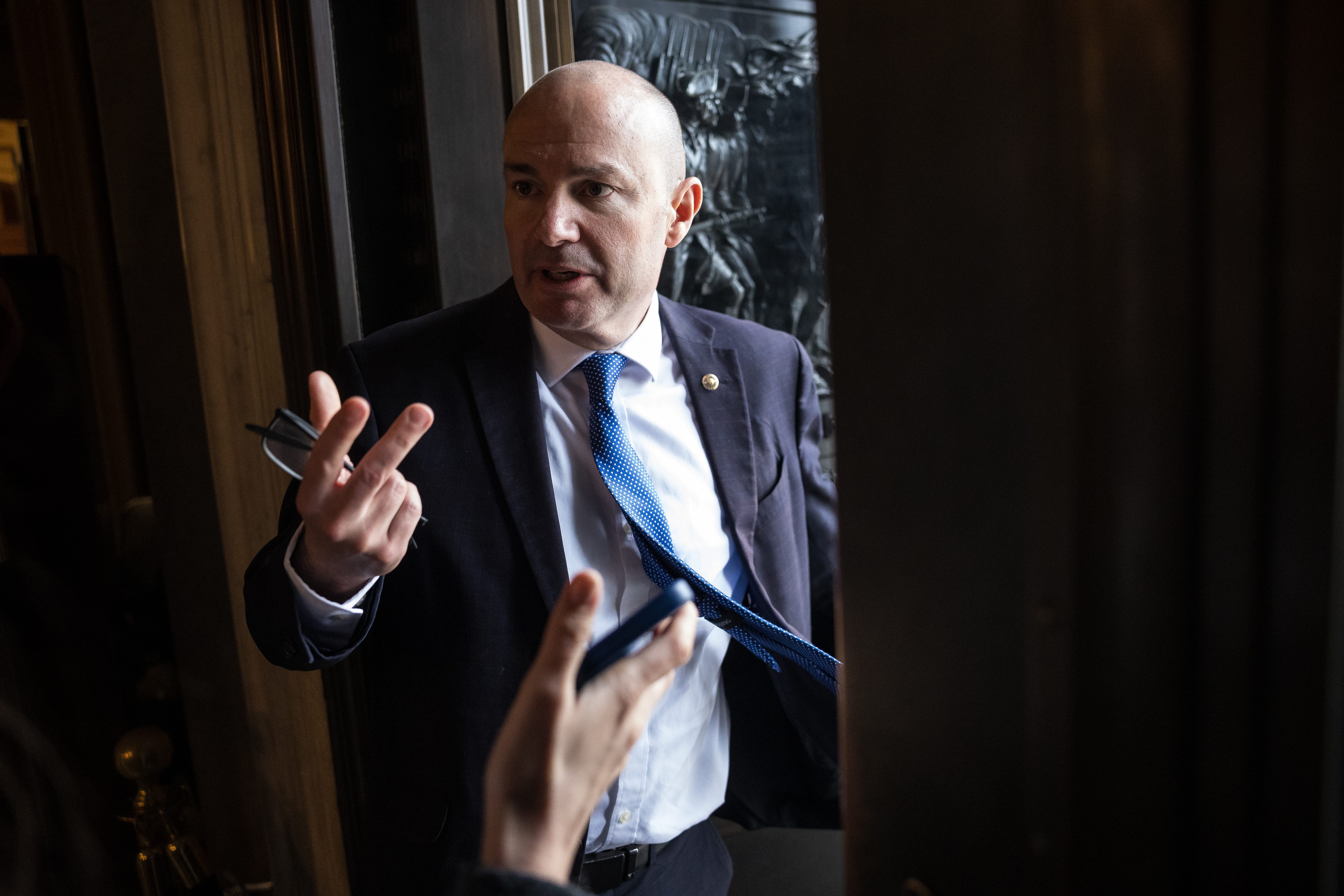
“I think he’s frankly very frustrated that he’s not more than he is, that he feels like he’s passed over,” the first GOP senator said. Another added, “I think he looks in the mirror and thinks he’s leadership.”
While Lee has retweeted negative commentary about Thune from other users on social media, he has also encouraged his online followers to presume Thune is well-intentioned and told them that Thune was “handling this very well right now.”
Bovard was among several Republicans who dismissed the idea that Lee is using the elections fight as a political springboard.
“It’s kind of hilarious, because the Senate is so dead … and it’s so broken that if any senator leans into something and actually cares about something, the assumption is [it’s] because they’re running” for another office, Bovard said, adding that being the majority leader “seems like kind of a miserable job.”
Three Republicans said the point is moot. Given the way he’s operated inside the GOP conference, they predicted, Lee cannot win a leadership race. But during an X stream shortly after midnight Friday supporters told Lee that majority leader is exactly the job they wanted him to have.
“Look,” he said, “let’s just get the bill passed.”
The White House offered additional immigration enforcement concessions to Democrats Friday evening as border czar Tom Homan met a second time with a bipartisan group of senators seeking to end the Homeland Security shutdown, according to lawmakers who attended.
Leaving the private meeting, Republican senators said they hope Democrats respond over the weekend to the Trump administration’s bolstered proposal of immigration enforcement changes meant to address Democratic demands for funding DHS.
“We need to get the government back open,” Homan said as he left the meeting. “It was a good discussion. That is all I’m going to say.”
Washington Sen. Patty Murray, the Senate’s top Democratic appropriator, was in attendance, along with Democratic Sens. Maggie Hassan of New Hampshire, Catherine Cortez Masto of Nevada and Angus King of Maine, an independent who caucuses with Democrats.
Those senators declined to comment as they left the confab. But a Democratic aide familiar with the meeting said there is “a ways to go” in the ongoing negotiations “to secure the significant reforms that Democrats have laid out for weeks and that are necessary to earn the support of the Democratic caucus.”
Sen. John Hoeven (R-N.D.), who also attended, said afterward he thinks the group “made some more progress” toward a deal as the DHS shutdown approaches five weeks. Senate Appropriations Chair Susan Collins (R-Maine) said the White House had made “a very fair, reasonable offer.”
“I think Democrats need to come back to us now and talk to us about what they’re willing to do,” Hoeven added. “We’ve put so many things on the table and put them out.”
An ongoing complaint about the negotiations from Democrats has been that Republicans and the White House have offered their proposals in recent weeks without legislative text. But Republicans offered fresh draft legislation Friday, put together by the White House, according to Hoeven.
He characterized the latest GOP offer as “building” on a letter the White House sent earlier this week and “providing more detail on it and providing legislative text on it.”
Sen. Katie Britt (R-Ala.), chair of the Homeland Security funding panel, said as she left the meeting that a deal to reopen DHS needs to be clinched by next week “one way or the other.”
“There has to be a pathway forward,” she said
The group of lawmakers is hoping to meet again over the weekend, with the Senate planning to be in session both Saturday and Sunday working on other legislative priorities. But Republicans said timing will be up to Democrats, who are now expected to respond with a counteroffer.
Democrats have insisted on requiring judicial warrants for immigration raids, and that remains unsettled, but Hoeven said there was room for agreement over creating “serious” criminal penalties for “doxxing” and harassing law enforcement.
That could help ease concerns about requiring DHS officers to identify themselves and their agency when conducting immigration enforcement operations, though Hoeven said the masking ban Democrats want remains a nonstarter.
“ICE is going to have to be able to wear masks the same way other law enforcement does,” he said.
- Maher outlines ways US ‘f—-ed up’ Iran conflict strategy

- DHS funding deal stalls in Congress amid continuing negotiations
- Sunday shows preview: Iran conflict persists as DHS funding fight snarls travel

- Cruz proposes splitting ICE from Homeland Security funding bill to end airport chaos

- Cornyn, Paxton lock into Texas Senate GOP runoff still seeking Trump’s nod
- Judge sides with NYT against policy limiting reporters’ Pentagon access

- ‘Shamefully stupid’: Critics blast U.S. move to lift Iran oil sanctions

- Trump threatens to deploy ICE to run airport security during shutdown

- Former FBI director and special counsel Robert Mueller has died
- Audi Crooks plays for Iowa State — and for all those who’ve been told their body is too big

-

 The Dictatorship1 year ago
Luigi Mangione acknowledges public support in first official statement since arrest
-

 Politics1 year ago
Former ‘Squad’ members launching ‘Bowman and Bush’ YouTube show
-

 Politics1 year ago
Blue Light News’s Editorial Director Ryan Hutchins speaks at Blue Light News’s 2025 Governors Summit
-

 Politics1 year ago
Former Kentucky AG Daniel Cameron launches Senate bid
-

 The Dictatorship6 months ago
Mike Johnson sums up the GOP’s arrogant position on military occupation with two words
-

 The Dictatorship1 year ago
Pete Hegseth’s tenure at the Pentagon goes from bad to worse
-
Uncategorized1 year ago
Bob Good to step down as Freedom Caucus chair this week
-

 Politics11 months ago
Democrat challenging Joni Ernst: I want to ‘tear down’ party, ‘build it back up’