
The Dictatorship
Trump tries yet again to enact an unpopular ban on AI regulation

Happy Tuesday! Here’s your Tuesday Tech Drop, the past week’s top stories from the intersection of technology and politics.
Trump’s AI obsession
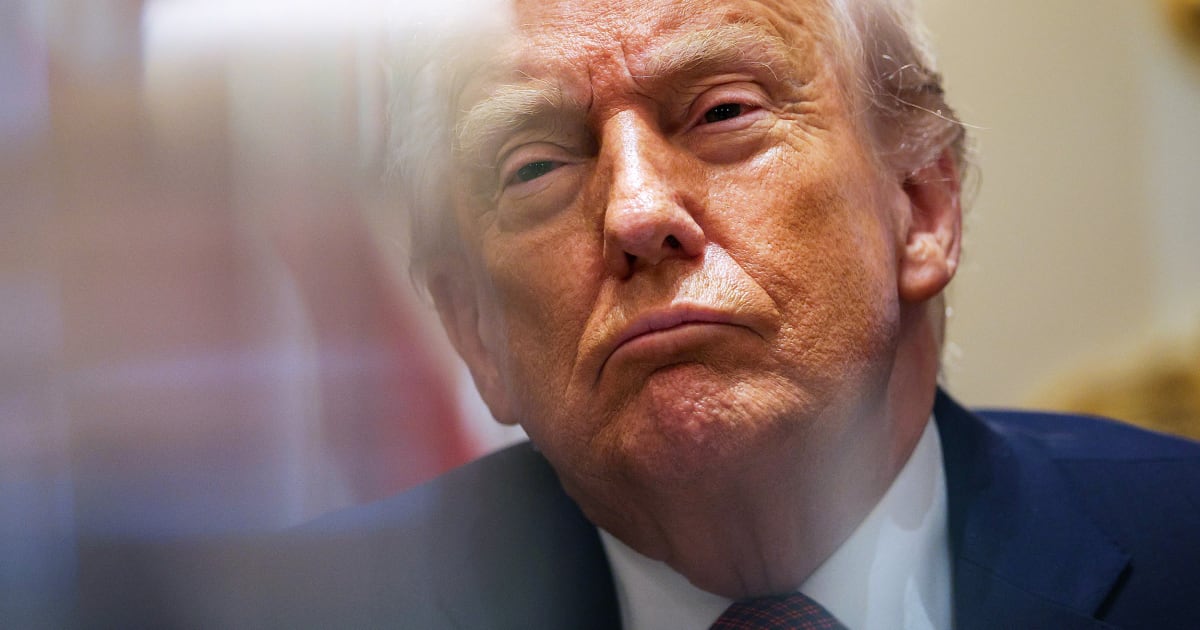
Donald Trump is once again trying to resuscitate one of his more unpopular proposals. The president announced Monday that he will sign an executive order to prohibit states from regulating artificial intelligence tools, after failing twice – including just last week – to attach such a ban to federal legislation. It seems Trump really wants to insulate Big Tech companies – many of which are led by people who have showered him with money and gifts.
It’s worth noting, however, that it’s highly questionable whether such an executive order is even legal or enforceable. Florida Gov. Ron DeSantis is already saying that Trump’s impending order can’t stop states from passing their own laws.
Read more at USA Today.
ICEBlock creator fights back
The creator of ICEBlock, an app used to help track U.S. Immigration and Customs Enforcement activity amid Trump’s racist anti-immigration crackdownis suing the Trump administration after the Justice Department pressured Apple to remove ICEBlock from its app store. A Department of Homeland Security spokesperson said in a statement that such apps endanger law enforcement officers, though no evidence has been provided to support that claim.
Read more at NBC News.
Cities seek surveillance partners
A new report from Truthout warns that city leaders in Nashville, Tennessee, are leveraging a local nonprofit to build a powerful infrastructure for police surveillance, adding to a disturbing trend of cities relying on private — and often controversial —entities for such efforts.
Read more at Truthout.
The mad men of Palantir
I just wrote about how recent public outbursts have revealed the violent, hypermasculine ethos that appears to be the driving force behind the founders of Palantir, a tech company that’s aiding Trump’s anti-immigration agenda.
Read more at MS NOW.
Trump lets China dip into the U.S. chip supply
Trump announced Monday that his administration is reversing course on a Biden-era policy restricting sales of powerful computer chips to China. Citing national security concerns, the Biden administration had restricted companies’ ability to sell the chips, which are used to construct artificial intelligence tools. Rush Doshi, who served on President Joe Biden’s National Security Council, warned that the reversal stands to “increase the odds the world runs on Chinese AI.”
This is a big deal. Essentially a reversal of the US export control policy on advanced chips. Possibly decisive in the AI race. Compute is our main advantage — China has more power, engineers, and the entire edge layer — so by giving this up we increase the odds the world runs on… pic.twitter.com/33YDpgZ2pi
— Rush Doshi (@RushDoshi)”https://twitter.com/RushDoshi/status/1998152087251902903?ref_src=twsrc%5Etfw”>December 8, 2025
Conservative cash clash
Pro-Trump influencer Alex Bruesewitz is teaming up with a pro-Trump online marketplace to launch a digital fundraising platform called Impact that will compete with WinRed, a fundraising platform that helps raise money for conservative candidates and causes.
Read more at Axios.
DHS launches site to help its spin
The Department of Homeland Security has launched a website purportedly targeting the “worst of the worst” immigrants, in response to data showing that many of the people swept up in the Trump administration’s crackdown had no criminal record when arrested.
Read more at Louisiana’s WWL-TV.
Epstein’s Silicon Valley allies
Years after he pleaded guilty to procuring a minor for prostitution, the late financier Jeffrey Epstein exchanged disturbing ideas about society with AI researchers known to promote racist pseudoscience and eugenics, according to emails turned over to the House Oversight Committee.
Read more at MS NOW.
Hegseth’s AI announcement
Defense Secretary Pete Hegseth announced plans for the Defense Department to team up with Google on an AI-based platform that will be used by its employees.
“At the click of a button, AI models on GenAI can be utilized to conduct deep research, format documents and even analyze video or imagery at unprecedented speed,” Hegseth said in a video posted Tuesday.
The announcement comes as Hegseth and the Trump administration defend themselves against allegations that the U.S.’ bombings of alleged drug boats off the coast of South America constitute war crimes.
Ja’han Jones is an MS NOW opinion blogger. He previously wrote The ReidOut Blog.


The Dictatorship
Trump fires Homeland Security Secretary Noem after mounting criticism over her leadership
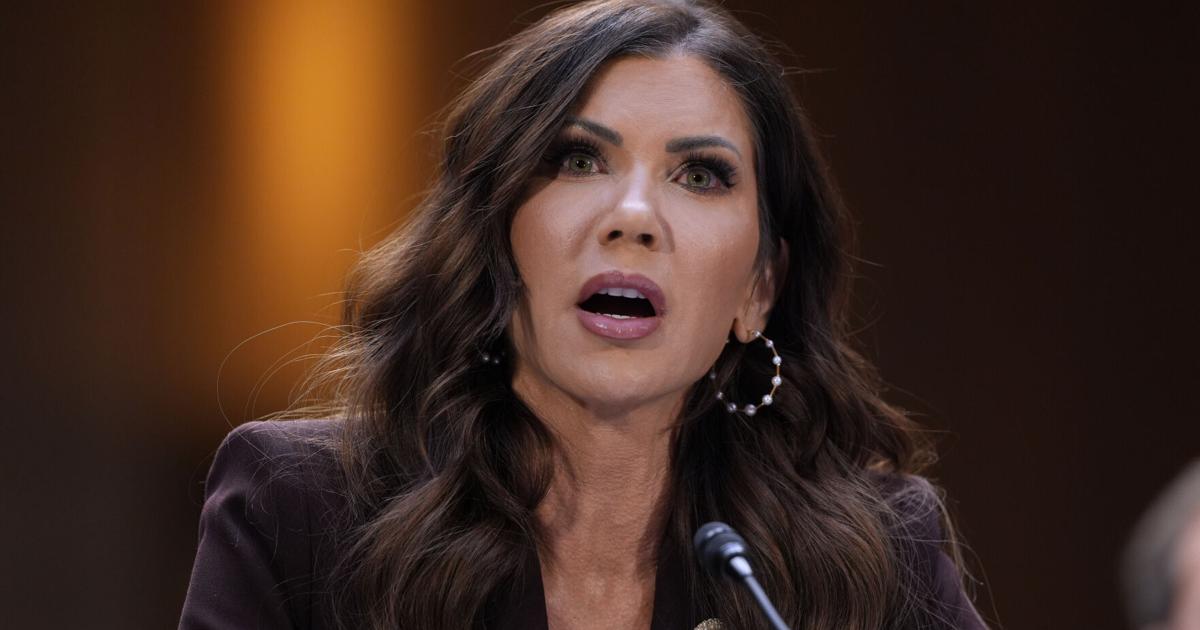
WASHINGTON (AP) — President Donald Trump on Thursday fired his embattled Homeland Security Secretary Kristi Noemafter mounting criticism over her leadership of the department, including the handling of the administration’s immigration crackdown and disaster response.
Trump, who said he would nominate Oklahoma Republican Sen. Markwayne Mullin in her place, made the announcement on social media after Noem faced a two-day grilling on Capitol Hill this week from GOP members as well as Democrats.
Noem’s departure marks a stunning turnaround for a close ally to the president who was tasked with steering his centerpiece policy of mass deportations. But she appeared to increasingly become a liability for Trump, with questions arising over her spending at her department and over her conduct in the aftermath of the shooting deaths of two protesters in Minneapolis earlier this year.
Trump said Noem “has served us well, and has had numerous and spectacular results (especially on the Border!).” He said he was making her a “Special Envoy for The Shield of the Americas,” a new security initiative that he said would focus on the Western Hemisphere.
Noem, who appeared at a law enforcement event in Nashville, Tennessee, moments after Trump’s announcement, did not address her ouster there. She read from prepared remarks and was not asked by attendees about the development.
Republican presidential nominee former President Donald Trump and South Dakota Gov. Kristi Noem dance to the song “Y.M.C.A.” at a campaign town hall at the Greater Philadelphia Expo Center & Fairgrounds, Oct. 14, 2024, in Oaks, Pa. (AP Photo/Matt Rourke, File)
Republican presidential nominee former President Donald Trump and South Dakota Gov. Kristi Noem dance to the song “Y.M.C.A.” at a campaign town hall at the Greater Philadelphia Expo Center & Fairgrounds, Oct. 14, 2024, in Oaks, Pa. (AP Photo/Matt Rourke, File)
Later, in a social media post, she thanked Trump for the new appointment and touted her accomplishments as secretary.
“We have made historic accomplishments at the Department of Homeland Security to make America safe again,” she wrote.
White House press secretary Karoline Leavitt said the administration will work with the GOP-led Senate to get Mullin, whom she called “extraordinarily qualified,” confirmed to lead DHS “as soon as possible.”
The administration’s immigration crackdown faced criticism, especially in Minnesota
Homeland Security Secretary Kristi Noem appears for an oversight hearing before the Senate Judiciary Committee, at the Capitol in Washington, March 3, 2026. (AP Photo/J. Scott Applewhite, File)
Homeland Security Secretary Kristi Noem appears for an oversight hearing before the Senate Judiciary Committee, at the Capitol in Washington, March 3, 2026. (AP Photo/J. Scott Applewhite, File)
Noem is the first Cabinet secretary to leave during Trump’s second term. Her tenure looked increasingly short-lived after hearings in Congress this week where she faced rare but blistering criticism from Republican lawmakers. One particular point of scrutiny was a $220 million ad campaign featuring Noem that encouraged people in the country illegally to leave voluntarily.
Noem told lawmakers that Trump was aware of the campaign in advance, but Trump disputed that in an interview Thursday with Reuters, saying he did not sign off on the ad campaign.
Noem has faced waves of criticism as she’s overseen Trump’s immigration crackdown, especially since the shooting deaths of the two protesters in Minneapolis at the hands of immigration enforcement officers. In the immediate aftermath of the deaths of Renee Good and Alex PrettiNoem portrayed both of them as aggressors, contradicting widely viewed videos and descriptions of their deaths from bystanders. She declined to apologize for her description over two days of Congressional testimony.
The former South Dakota governor was also criticized over the way her department has spent billions of dollars allocated to it by Congress.
Her department, DHS, has been at the center of a funding battle in Congress over immigration enforcement tactics and has been shut down for 20 days, although many of the employees are continuing to work, often without pay.
Even before Noem’s appearance before key congressional committees this week, Republican lawmakers had been anticipating the secretary’s eventual ouster, particularly after her handling of the immigration enforcement crackdown in Minneapolis.
As they tried to end the ongoing Homeland Security shutdown, Senate Republicans had noted privately to Democratic senators that Noem was likely on her way out and that that should prompt Democrats to move forward with agreeing to fund the department again, according to two people familiar with the discussions.
Democrats did not see that as an actual concession by Republicans, considering Noem was becoming a political liability for the GOP, said the people, who spoke on condition of anonymity to discuss private negotiations.
Aside from immigration, Noem also faced criticism — including from Republicans — over the pace of emergency funding approved through the Federal Emergency Management Agency and for the Trump administration’s response to disasters.
Critics welcomed Noem’s departure. Minneapolis Mayor Jacob Frey wrote “good riddance” on social media, a sentiment echoed by Senate Democratic Leader Chuck Schumer.
Some immigration activists questioned whether her departure would change the execution of an immigration agenda that they fundamentally disagree with.
“This is not accountability, just a reshuffling of the enablers of the agenda of President Trump,” said Vanessa Cárdenas, Executive Director of America’s Voice, an advocacy group. She said Noem’s tenure was “marked by cruelty.”
Gregory Bovino, a Border Patrol official who was elevated under Noem’s watch to lead immigration crackdowns in cities including Los Angeles, Chicago and Minneapolis, was one of the few who applauded Noem’s tenure.
“She is the best Secretary I ever worked for, period. The others weren’t even close. Noem is the ultimate patriot,” Bovino told The Associated Press.
DHS leadership changes come at a pivotal time
Sen. Markwayne Mullin, R-Okla., speaks with reporters on the steps at the Capitol in Washington, Thursday, March 5, 2026. (AP Photo/J. Scott Applewhite)
Sen. Markwayne Mullin, R-Okla., speaks with reporters on the steps at the Capitol in Washington, Thursday, March 5, 2026. (AP Photo/J. Scott Applewhite)
Mullin would need to be confirmed by the Senate, but under a federal law governing executive branch vacancies, he would be allowed to serve as an acting Homeland Security secretary as long as his nomination is formally pending.
Voting in the Senate just after Trump’s announcement, Mullin said he has “no idea” how quickly his nomination will move.
“The president and I are good friends. So we look forward to working closer with the White House, and obviously I’m gonna be over there a lot more,” he said.
Mullin would take over the third-largest department in government that has responsibility for carrying out Trump’s hardline immigration agenda. And he would assume the role at a pivotal time for that agenda.
Sen. Markwayne Mullin, R-Okla. speaks during a Senate Armed Services Committee hearing, Jan. 14, 2025, on Capitol Hill in Washington. (AP Photo/Jacquelyn Martin, File)
Sen. Markwayne Mullin, R-Okla. speaks during a Senate Armed Services Committee hearing, Jan. 14, 2025, on Capitol Hill in Washington. (AP Photo/Jacquelyn Martin, File)
Immigration enforcement during the first year of Trump’s administration was largely defined by high-profile, made-for-social-media operations with flashy names, often led by Bovino, who reported directly to Noem. Noem herself often went out on those operations, riding along with officers when they went out to make arrests.
But those high-profile operations in places like Los Angeles, Chicago and Minneapolis often led to clashes with activists and protesters that were captured on video and drove opposition to the president’s immigration agenda.
That culminated with the shooting deaths in Minneapolis after which Trump shuffled leadership of the operation. The number of officers there was drawn down shortly after.
___
Associated Press writer Mary Clare Jalonick contributed.
Kristi Noem’s tenure”https://www.ms.now/news/kristi-noem-out-as-homeland-security-secretary”>atop the Department of Homeland Security ended abruptly Thursday after months of speculation about her future. Noem spent years crafting herself into the perfect avatar of political womanhood in the age of MAGA ascendance. Noem now finds herself plummeting back toward Earth, relegated to a sinecure position that keeps her beholden to President Donald Trump, but far removed from the lofty heights of power and influence that she’d reached.
There is little to praise of Noem’s time at DHS that isn’t likewise damning. She successfully positioned herself to be the figurehead of the president’s central policy, the mass deportation of millions of immigrants while their rights were summarily trampled. And she oversaw a massive influx of funding for her still burgeoning department, even as she reportedly micromanaged spending it with the controversial assistance of her rumored paramour slash chief advisorCorey Lewandowski. (Both have repeatedly denied having a relationship, despite numerous reports to the contrary.)
There is little to praise of Noem’s time at DHS that isn’t likewise damning.
An absurd focus on style over substance is a hallmark across the Trump administration, but Noem took that disparity to another level. For years, Noem has placed burnishing her own image over the work of governing. She transformed herself into a national figure, while governor of South Dakota, using the position as a megaphone for parroting the Trump agenda in hopes of going viral. Once tapped to lead DHS, she quickly became a laughingstock for her camera-ready appearancesincluding her trip down to the notorious CECOT prison in El Salvador to appear in front of incarcerated men while wearing a $50,000 Rolex.
Just months into the job last year, she already appeared over her head at the sprawling department she managed. As I wrote at the time: “As homeland security secretary, Noem wields powers that range all the way from immigration to natural disaster reliefto cybersecurity. It would be a lot of responsibility for one person who is supremely well-versed in all those areas. Noem is not that person.” She did little to make up that ground in the time since, instead whipsawing from crisis to crisismany of her own making, especially those contained internally within DHS.

The most generous read of Noem’s focus on appearances is that it was in some ways preordained. Her power was always limited in some ways by the authority White House deputy chief of staff Stephen Miller holds over immigration policy. While she held the purse strings to the billions of dollars funneled towards DHS last year, Noem was in many ways little more than a figurehead for Miller’s vision. But even if we were to judge her solely on that role, there were far more missteps than successes.
It was Noem who signed off on a farcical, English-language ad campaign urging self-deportation for undocumented immigrants. It was Noem who repeatedly defied court orders to release detainees like Kilmar Abrego Garcia that Immigrations and Customs Enforcement arrested in their sweeping raids. It was Noem who joined Lewandowski in tapping Border Patrol chief Greg Bovino to lead the aggressive deportation operations that ran amuck in city after city. It was Noem who callously smeared dead Americans as “domestic terrorists” after agents under her authority shot and killed them in Minneapolis. All of this has helped tank Trump’s approval rating on immigration, once considered his top issue.
Being fully fired might have been more of a kindness, as it would have freed her up to carve a new path — or at least write a tell-all book.
Meanwhile, Noem made enemies of the lawmakers whose states rely on the disaster aid that she’s curtailed and hamstrung through her aborted attempt to dismantle the Federal Emergency Management Agency. DHS’ inspector general recently said the department “systematically obstructed” his work during her reign. She’s reportedly taken to flying around the country in a plane purchased for deporting immigrants alongside Lewandowski. And she reportedly questioned DHS staffers under polygraph exam for potentially leaking her behavior to the media, a baffling choice for someone who seems so obsessed with public perception.
And yet, reportedly it was none of that that doomed Noem. It was instead her willingness to defend herself when pressed by putting Trump in the hot seat. When asked about her $220 million dollar ad campaign, Noem told senators Tuesday that the president himself had signed off on the expenditures. Trump denied doing so in an interview with Reuters and reportedly was unhappy with being used as a cover. Blaming Trump for taking an unpopular action is a one-way ticket to excommunication in the best of times, let alone when he’s spent months considering her fate and weighing potential replacement.
True to form, Trump’s Truth Social post announcing her departure cast her as an afterthought compared to his effusive praise for her replacement, Sen. Markwayne Mullin, R-Okla. Noem, Trump said, would be instead shunted to the soon-to-be-announced “Shield of the Americas” security initiative as special envoy. Being fully fired might have been more of a kindness, as it would have freed her up to carve a new path — or at least write a tell-all book.
Instead, Noem finds herself powerless and tethered to the man whose coattails she hoped to ride no matter how much devastation she caused in his name. She leaves behind a department less poised to handle threats like terrorism and cyberattacks it was hastily cobbled together to address and a less secure homeland overall. Noem’s transformation into a MAGA darling may have gotten her the job, but it was her lack of competence in even the narrowed scope she was cast in that ultimately doomed her.
Hayes Brown is a writer and editor for MS NOW. He focuses on politics and policymaking at the federal level, including Congress and the White House.
The Dictatorship
What’s exposed by the Justice Department’s reversal on Trump’s campaign against law firms
ByMary McCord
The Department of Justice both embarrassed and exposed itself this week in its handling of the appeals of federal court orders striking down presidential executive orders against four high-profile law firms.
First, the department embarrassed itself by reversing course and moving Tuesday morning to withdraw motions it had filed Monday evening to dismiss its appeals. Four different judges had held that the executive orders violated the First Amendment because they retaliated against the law firms for representing people and causes President Donald Trump dislikes.
Second, the department exposed itself as a purely political actor because every lawyer in the department knows that the federal court rulings were correct and that the executive orders are indefensible.
The department exposed itself as a purely political actor because every lawyer in the department knows that the federal court rulings were correct and that the executive orders are indefensible.
The administration’s efforts and the resulting judicial orders are worthy of careful review. The president began blacklisting law firms last March — using executive orders to, among other things, direct federal departments and agencies to prevent the firms’ lawyers from entering federal government buildings and engaging with federal employees; to revoke their lawyers’ security clearances; and to cancel contracts with companies that do business with the firms. Four law firms subject to the orders filed suit.
Four judges appointed by Republican and Democratic presidents swiftly issued temporary restraining orders barring the provisions that made it nearly impossible for the firms to continue to represent clients that had business with the federal government, threatening their very existence. Two of those emergency orders were issued within hours of the law firms seeking them; the other two within a day. The cases all proceeded quickly to final judgment with the same result: All judges concluded that the orders violated the First Amendment rights of the law firms.
(Shamefully, other law firms that wanted to avoid being blacklisted entered into agreements with the administration to provide hundreds of millions of dollars’ worth of pro bono work to causes favored by the president, raising ethical issues for the lawyers at those firms and the appearance of pay-to-play.)

The judges who ruled in the law firms’ favor didn’t mince words. Judge John Bates, a George W. Bush appointee, wrotequoting a recent Supreme Court case: “[R]etaliating against firms for the views embodied in their legal work — and thereby seeking to muzzle them going forward — violates the First Amendment’s central command that government may not ‘use the power of the State to punish or suppress disfavored expression.’” He also warned, “More subtle but perhaps more pernicious is the message the order sends to the lawyers whose unalloyed advocacy protects against governmental viewpoint becoming government-imposed orthodoxy. This order, like the others, seeks to chill legal representation the administration doesn’t like, thereby insulating the Executive Branch from the judicial check fundamental to the separation of powers.”
Judge Beryl Howella Barack Obama appointee, put it even more succinctlyborrowing from Shakespeare: “In a cringe-worthy twist on the theatrical phrase ‘Let’s kill all the lawyers,’” the executive order “takes the approach of ‘Let’s kill the lawyers I don’t like,’ sending the clear message: lawyers must stick to the party line, or else.”
Judges, like all lawyers, know why this is so important. As Judge Richard Leon, a George W. Bush appointee, put it“The cornerstone of the American system of justice is an independent judiciary and an independent bar willing to tackle unpopular cases, however daunting.” Without lawyers to advocate for people and causes a president disfavors, even obviously unlawful executive actions could go unchallenged.
With the court decisions stacked so overwhelmingly against the government, one could wonder why the department appealed the lower court rulings in the first place.
With the court decisions stacked so overwhelmingly against the government, one could wonder why the department appealed the lower court rulings in the first place. But it isn’t unusual for the Department of Justice to file a notice of appeal of an adverse ruling even while it is still considering whether to go forward. Decisions like these, at least when I was in the department, were not made by line-level attorneys. The decision to appeal, especially in high-profile cases, would be made by the solicitor general. Today that’s John Sauer, a former personal attorney to President Trump.
Sauer is a seasoned advocate. He famously won Trump v. United Statesthe 2024 case in which the Supreme Court gave Trump immunity from criminal prosecution for exercising “core constitutional powers” — including directing the Department of Justice to launch “sham” investigations into election fraud — and at least “presumptive” immunity for other official acts.
Whoever made the decision to dismiss the appeals, you can bet that in this administration it would have been considered at the highest levels. That means it likely would have been blessed by Deputy Attorney General Todd Blanche — another former personal attorney to Trump — and Attorney General Pam Bondi, who represented Trump in his first impeachment trial. Although the Justice Department has, under their leadership, become a tool for enforcing the president’s political whims, Blanche, Bondi and Sauer are all experienced enough to know that appealing the district court decisions was a sure loser.
Until the recent tariff decisionthe Trump administration has had a winning record at the Supreme Court, and Justice Department leadership presumably preferred to keep it that way. With no hope of winning in the D.C. Circuit — which would have been the next stop for the four cases — and no reason to want to seek review in the Supreme Court and risk losing there, the smart move was to cut their losses and dismiss the appeals. Another reason to think department leadership recognized this: They had already made the decision last spring not to ask the Supreme Court to stay the district courts’ temporary injunctions, something they have done in so many other cases.
They knew then, as we all know now, that the blacklisting orders were textbook First Amendment retaliation.
So what happened to cause this legal about-face? Was it the headlines calling out the decision to dismiss the appeal? A call from the president or fear of a call from the president? Whatever the specific motivation, there is no reason to think that Justice Department leadership saw the legal merits of the cases change overnight. Instead, the department has embarrassed and exposed itself yet again.

Mary McCord
Mary B. McCord is an MS Now legal and national security contributor, and co-host of the MS Now podcast “Main Justice.”She is executive director of Georgetown Law’s Institute for Constitutional Advocacy and Protection. She previously served as the acting assistant attorney general for national security at the Department of Justice and was an assistant U.S. attorney in the District of Columbia for nearly 20 years.
- FDA vaccines chief who ran afoul of pharma to depart
- Trump fires Homeland Security Secretary Noem after mounting criticism over her leadership

- Former President Barack Obama speaks during final public tribute to the late Rev. Jesse Jackson
- House committee advances kids’ online safety and privacy proposals
- Kristi Noem’s ouster isn’t moving Democrats off their Homeland Security funding demands
- Why Kristi Noem’s ouster could mean trouble for Pam Bondi
- House committee advances kids’ online safety and privacy proposals
- Trump’s surgeon general pick is taking heat from both advocates and opponents of vaccines
- Warren Davidson is a rare hard-line Republican questioning the Middle East war
- House committee advances kids’ online safety and privacy proposals
-

 The Dictatorship1 year ago
Luigi Mangione acknowledges public support in first official statement since arrest
-

 Politics1 year ago
Former ‘Squad’ members launching ‘Bowman and Bush’ YouTube show
-

 Politics1 year ago
Blue Light News’s Editorial Director Ryan Hutchins speaks at Blue Light News’s 2025 Governors Summit
-

 The Dictatorship6 months ago
Mike Johnson sums up the GOP’s arrogant position on military occupation with two words
-

 Politics1 year ago
Former Kentucky AG Daniel Cameron launches Senate bid
-

 The Dictatorship1 year ago
Pete Hegseth’s tenure at the Pentagon goes from bad to worse
-
Uncategorized1 year ago
Bob Good to step down as Freedom Caucus chair this week
-
 Politics11 months ago
Democrat challenging Joni Ernst: I want to ‘tear down’ party, ‘build it back up’