
The Dictatorship
Trump threatens tariffs on any country selling oil to Cuba

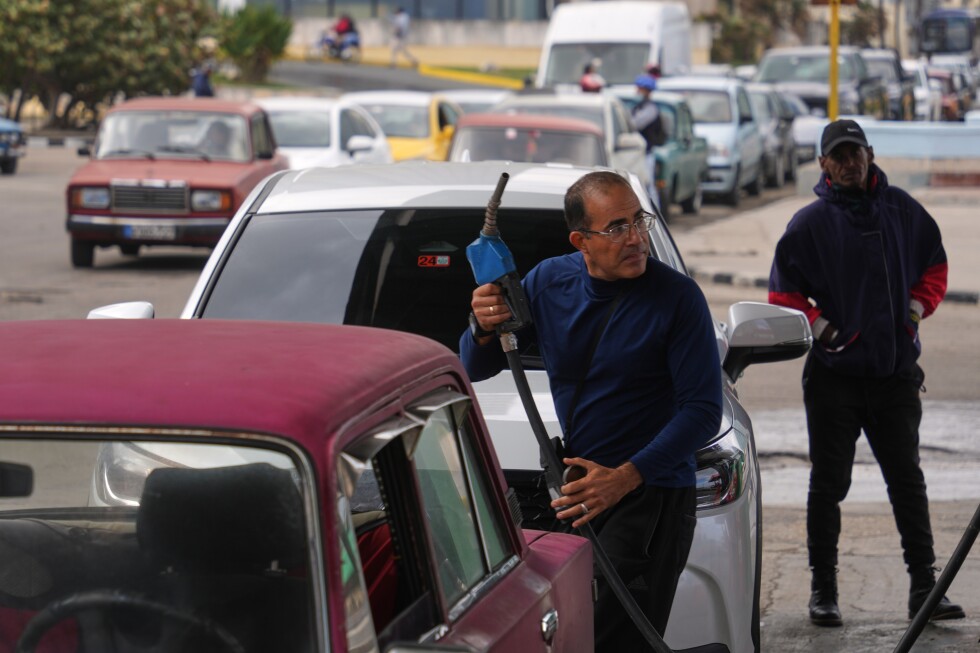
WASHINGTON (AP) — President Donald Trump on Thursday signed an executive order that would impose a tariff on any goods from countries that sell or provide oil to Cuba, a move that could further cripple an island plagued by a deepening energy crisis.
The order would primarily put pressure on Mexico, a government that has acted as an oil lifeline for Cuba and has constantly voiced solidarity for the U.S. adversary even as Mexican President Claudia Sheinbaum has sought to build a strong relationship with Trump.
Trump was asked by a reporter Thursday whether he was trying to “choke off” Cuba, which he called a “failing nation.”
“The word ‘choke off’ is awfully tough,” Trump said. “I’m not trying to, but, it looks like it’s something that’s just not going to be able to survive.”
Cuban Foreign Minister Bruno Rodríguez and a number of other Cuban officials condemned Trump’s executive order. Rodríguez called it a “brutal act of aggression against Cuba and its people … who are now threatened with being subjected to extreme living conditions.”
He accused the U.S. of resorting to “blackmail and coercion to try to force other countries to join its universally condemned blockade policy against Cuba.”
Cuba relies on allies for energy
This week has been marked by speculation that Mexico would slash oil shipments to Cuba under mounting pressure by Trump to distance itself from the Cuban government.
In its deepening energy and economic crisis, fueled in part by strict economic sanctions by the U.S., Cuba has relied heavily on foreign assistance and oil shipments from allies like Mexico, Russia and Venezuela before a U.S. military operation ousted former Venezuelan President Nicolás Maduro.
Since the Venezuela operation, Trump has said no more Venezuelan oil will go to Cuba and the Cuban government is ready to fall.
In its most recent report, Mexico’s state-owned oil company Pemex said it shipped nearly 20,000 barrels of oil per day to Cuba from January through Sept. 30, 2025. That month, U.S. Secretary of State Marco Rubio visited Mexico City. Afterward, Jorge Piñon, an expert at the University of Texas Energy Institute who tracks shipments using satellite technology, said the figure had fallen to about 7,000 barrels.
Uncertainty simmers in Mexico
Sheinbaum has been incredibly vague about where her country stood, and this week has given roundabout and ambiguous answers to inquiries about the shipments, and dodged reporters questions in her morning press briefings.
On Tuesday, Sheinbaum said Pemex had at least temporarily paused some oil shipments to Cuba. But she struck an ambiguous tone, saying the pause was part of general fluctuations in oil supplies and a “sovereign decision” not made under pressure from the U.S. Sheinbaum has said Mexico would continue to show solidarity with Havana, but didn’t clarify what kind of support Mexico would offer.
On Wednesday, the Latin American leader claimed she never said Mexico has completely “suspended” shipments and “humanitarian aid” to Cuba would continue and decisions about shipments to Cuba were determined by Pemex contracts.
“So the contract determines when shipments are sent and when they are not sent,” Sheinbaum said.
Trump and Sheinbaum spoke by phone Thursday morning. Sheinbaum said they did not discuss Cuba.
“We didn’t address the issue of Cuba,” Sheinbaum said, adding that Mexico’s foreign affairs secretary had discussed with U.S. Secretary of State Marco Rubio that it was “very important” for Mexico to maintain its humanitarian aid to Cuba and Mexico was willing to serve as an intermediary between the U.S. and Cuba.
‘Under threat of tariff coercion’
The lack of clarity from the leader has underscored the extreme pressure Mexico and other Latin American nations are under as Trump has grown more confrontational following the Venezuelan operation.
It remains unclear what the Thursday order by Trump will mean for Cuba, which has been roiled by crisis for years and a U.S. embargo. Anxieties were already simmering on the Caribbean island as many drivers sat in long lines this week for gasoline, many unsure of what would come next.
On Cuban state television, commentator Jorge Legañoa, who usually expresses views aligned with the government, asserted “Cuba was not a threat,” but rather that the island’s authorities were fighting gangs and preventing regional drug trafficking with their zero-tolerance policy.
Cuban Deputy Minister of Foreign Affairs Carlos F. de Cossio wrote on social media platform X that the U.S. is tightening its Cuban blockade after “the failure of decades of relentless economic warfare” and attempting to “force sovereign states to join the embargo.”
“Under threat of tariff coercion, they must decide whether to forgo their right to export their own fuel to Cuba,” he wrote.
___
Janesky reported from Mexico City. Andrea Rodríguez and Danica said.


The United States once prided itself on being the final destination of people around the world seeking refuge from war and strife. The State Department reports that America has welcomed a total of more than 3.1 million refugees to its shores since the U.S. refugee program was established in 1980. But President Donald Trump has decimated the number of applicants who were granted refugee status — and those who made it through are overwhelmingly the beneficiaries of an insidious shift in policy to favor white South Africans.
Of the 4,999 refugees admitted, 4,496 were from South Africa; the remaining three newcomers were from Afghanistan.
Last November, the Trump administration announced it would be putting the lowest cap on the number of refugees that would be admitted in the refugee program’s decadeslong history. Only 7,500 applicants will be provided refugee status in fiscal 2026. That’s a 94% drop from the 125,000 cap the Biden administration had in place for each of the two fiscal years before Trump’s second term began.
The latest numbers from the State Department’s Bureau of Population, Refugees, and Migration only add insult to injury. As of March 31, there have been 4,499 refugees admitted to the U.S., more than half the annual cap. Of those, 4,496 were from South Africa; the remaining three newcomers were from Afghanistan.
“The largest share of South African refugees — over 500 — have arrived in Texas, followed by Florida and California,” The Christian Science Monitor reported last week. The bureau’s data doesn’t include race or ethnicity. But the memo in the Federal Register establishing the 7,500-person cap also required that those slots “primarily be allocated among Afrikaners from South Africa … and other victims of illegal or unjust discrimination in their respective homelands.” It’s no great leap then to presume the South African arrivals this year are all white.
While Trump’s war on undocumented immigrants has hogged the spotlight since January 2025, the administration’s campaign against legal immigration has been no less pernicious. The White House’s chief anti-immigration hard-linerdeputy chief of staff Stephen Millerhas been busy both removing protections for those who have already made it to the U.S. and discouraging those who are hoping to gain entry.

The Guardian reported last fall that Miller, who is also the White House homeland security adviser, has made significant inroads into influencing operations at Foggy Bottom. A top anti-immigration ally, Christopher Landau, is second-in-command at the State Department. Much like his past calls haranguing Department of Homeland Security staffers about deportations and arrests, Miller has also reportedly instated daily calls “to drill the diplomats on visa and immigration issues.”
White South Africans have been one major loophole to Miller’s immigration gatekeeping. Trump has been yelling about the supposed plight of the country’s minority for years now, buying fully into far-right claims that a “genocide” is being carried out against Afrikaner farmers. The truth is that white farmers control about 75% of the country’s farmland and still make up the vast majority of senior positions in South African corporations. As the Rev. Nontombi Naomi Tutu wrote for MS NOW last year“If white South Africans are experiencing genocide, then it is truly an enviable genocide.”
Concerned for white South Africans’ imagined hardship, in the face of a new law that replaced an apartheid-era ruleTrump issued an executive order in February 2025 cutting off foreign aid to South Africa. He also directed his government to “prioritize humanitarian relief, including admission and resettlement through the United States Refugee Admissions Program, for Afrikaners in South Africa who are victims of unjust racial discrimination.” Three months later, even while busy stripping parolees awaiting asylum claims of their legal status, the first several dozen white South Africans landed in the U.S.
The cruelty of this racist policy is only exacerbated when you consider the compounded effect of the other actions Trump has taken.
The cruelty of this racist policy is only exacerbated when you consider the compounded effect of the other actions Trump has taken. The administration slashed the foreign aid budget to ribbons, leading to a projected spike in deaths worldwide. Thousands of applicants from the Global South who were told to wait in line have been shunted to the back in favor of an unoppressed minority whose skin just happens to be the right color for this administration.
None of this is meant to directly shame the white South African immigrants who have taken advantage of this policy. The opportunity to emigrate to the U.S. is a dream shared by millions across the world, so it is hard to fault them for taking an opportunity when presented to them. Their new communities should welcome them with open arms, as all newly arrived immigrants should be. It’s hard not to hope, however, that there is a twinge of introspection in the back of their minds when they tell the story of how they came to be so fortunate as to find themselves in America.
Hayes Brown is a writer and editor for MS NOW. He focuses on politics and policymaking at the federal level, including Congress and the White House.
High-stakes peace negotiations between the United States and Iran resulted in failure to end the war early Sunday morning local time in Islamabad after U.S. military warships crossed the Strait of Hormuz in a risky effort to open the waterway.
Vice President JD Vance, who led the U.S. delegation, announced that American negotiators were leaving Pakistan after giving the Iranians their “final and best offer,” which suggested his team had given Tehran a deadline.
“We’ll see if the Iranians accept it,” the vice president said during a brief news conference. U.S. delegates, he said, “could not get to a situation where the Iranians were willing to accept our terms.”
The failure of the face-to-face talks after 21 hours presented President Donald Trump with a stark choice: He can continue negotiations and play for time as part of an effort to stabilize soaring U.S. energy prices and plummeting markets, or he can wage new air strikes to try to reopen the strait by force.
As the two sides met in a marathon session, the U.S. military announced two of its warships had transited the strait and operated in the Persian Gulf as part of a broader operation to clear the vital trade corridor of sea mines that were laid by Iran’s Islamic Revolutionary Guards Corps.
Iranian forces have threatened to fire on ships that try to transit the strait without their permission. There were no immediate reports of Iranian forces firing on the two U.S. Navy destroyers.
Mark Hertling, a former U.S. Army general and MS NOW contributor, said it appeared the Trump administration was “testing Iran” to see whether its forces would dare fire on U.S. ships during peace talks.
Gregory Brew, a senior Iran and energy analyst with the Eurasia Group, a geopolitical risk consulting firm, said the U.S. military move was dangerous but he predicted, “I don’t think the Iranians will fire on them.”
Vance led the highest-level face-to-face meeting between the two warring adversaries since 1979. Parliamentary Speaker Mohammad Bagher Ghalibaf initially said his country would not negotiate unless two key measures — a ceasefire in Lebanon and the release of Iran’s heavily sanctioned assets — were met first.

Sal Mercogliano, a professor at the U.S. Merchant Marine Academy and Campbell University, said the U.S. demining operation was a key step in restoring confidence among oil tanker owners that they can move through the strait safely.
“It is also an effort to alleviate the security concerns of the crews, ships and owners stuck in the Persian Gulf,” said Mercogliano, who criticized the administration for failing to send enough U.S. ships to protect the strait.
The Islamic Republic regime is seeking to retain full sovereignty over the strait — it’s greatest strategic advantage — and has plans to charge oil tankers with hefty fees for safe passage.
A foreign diplomat inside Tehran who is close to the talks being held in Islamabad told MS NOW that Iranians felt as though they had the upper hand.
Experts agreed. Nicole Grajewski, an assistant professorat Sciences Po in Paris and an associate at the Harvard Kennedy School’s Belfer Center, told MS NOW that the Iranian delegation is pleased Vance is leading the talks because they see him as opposing U.S. wars in the Middle East.
“Iran isn’t expecting much but are pleased about Vance,” Grajewski told MS NOW. She said the Iranian delegation is under pressure to secure an agreement regarding Israel’s attacks on Lebanon and she noted that Ghalibaf, a former commander of Iran’s missile forces, is unlikely to agree to reduce Iran’s missile arsenal, a priority for the U.S. and Israel.

Trump said Friday that the U.S. military was readying warships to strike Iran if the negotiations failed.
Iranian officials have demanded that ships each pay a toll of up to $2 millionto pass safely through the strait, which could generate up to $100 billion a year. The revenue would benefit the Islamic Revolutionary Guard Corps, which operates Iran’s ballistic missile arsenal.
Hundreds of ships trying to pass through the strait remain stranded. After announcing the two-week ceasefire, Trump indicated the U.S. would be willing to ease primary and secondary sanctions on Iran. He had previously floated the idea of joining Iran in collecting tolls from vessels in the strait, but later walked those comments back, telling reporters “we’re not gonna let that happen.”
Israeli Prime Minister Benjamin Netanyahu said he instructed the Israeli Cabinet to begin direct negotiations with Lebanon in Washington next week after Trump instructed him to scale back the assault on Lebanon amid U.S.-Iranian negotiations and a temporary cease-fire agreement reached on Tuesday. The deal was struck after Trump threatened to end Iranian civilizationstirring MAGA revolt.
But heavy Israeli strikes have continued in Lebanon. Israel struck more than 200 Hezbollah targets across Lebanon overnight, according to The Associated Press. Pakistani Prime Minister Shehbaz Sharif asked all warring countries to adhere to the ceasefire amid Israel’s continued bombardment of Lebanon and reports earlier this week of Iranian attacks on countries including Qatar, the UAE and Kuwait.
Vance is joined in Islamabad by special envoy Steve Witkoff and Jared Kushner, the president’s son-in-law, along with Andrew Baker, Trump’s deputy national security advisor, and Michael Vance, the vice president’s national security advisor. Ghalibaf is joined by Iranian Foreign Minister Abbas Araghchi.
Julia Jester and Emily Hung contributed to this report.
Sydney Carruth is a breaking news reporter covering national politics and policy for MS NOW. You can send her tips from a non-work device on Signal at SydneyCarruth.46 or follow her work on X and Bluesky.

David Rohde
David Rohde is the senior national security reporter for MS NOW. Previously he was the senior executive editor for national security and law for NBC News.
Jake Traylor is a White House correspondent for MS NOW.
The Dictatorship
U.S. Vice President JD Vance says talks with Iran ended after 21 hours without reaching agreement
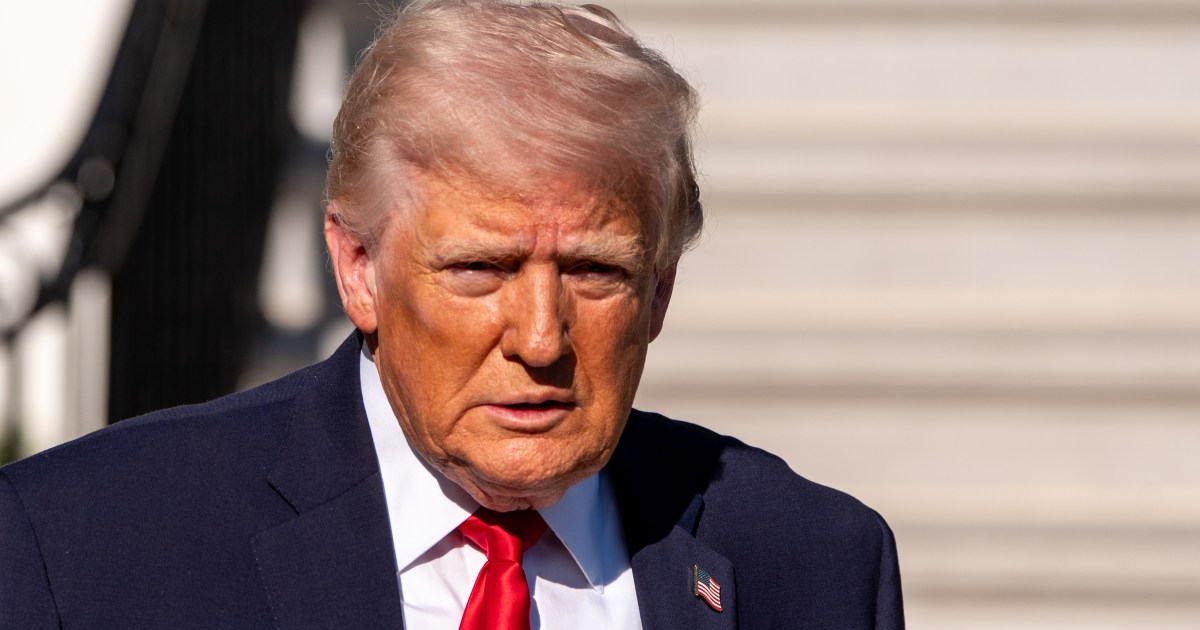
ISLAMABAD (AP) — U.S. Vice President JD Vance said negotiations ended early Sunday between the United States and Iran without a peace deal after the Iranians refused to accept American terms to not develop a nuclear weapon.
The high-stakes talks ended after 21 hours, Vance said, with the vice president in constant communication with U.S. President Donald Trump and others in the administration.
“But the simple fact is that we need to see an affirmative commitment that they will not seek a nuclear weapon, and they will not seek the tools that would enable them to quickly achieve a nuclear weapon,” Vance told reporters. “That is the core goal of the president of the United States. And that’s what we’ve tried to achieve through these negotiations.”
The vice president said he spoke with Trump “a half dozen times, a dozen times, over the past 21 hours” and also spoke with Secretary of State Marco Rubio, Treasury Secretary Scott Bessent and Adm. Brad Cooper, head of the United States Central Command.
“We were constantly in communication with the team because we were negotiating in good faith,” Vance said, speaking at a podium in front of a pair of American flags with special envoy Steve Witkoff and Jared Kushner to his side. “And we leave here, and we leave here with a very simple proposal, a method of understanding that is our final and best offer. We’ll see if the Iranians accept it.”
Trump had said he would suspend attacks against Iran for two weeks. Vance’s comments did not indicate what will happen after that time period expires or if the ceasefire will remain in place.
War enters seventh week
The historic talks ended days after a fragile, two-week ceasefire was announced, as the warthat has killed thousands of people and shaken global markets entered its seventh week. Two Pakistani officials said discussions between the heads of the delegations will resume after a break.
Some technical personnel from both teams are still meeting, said the officials, who spoke on condition of anonymity because they were not authorized to brief the press.
Meanwhile, the U.S. military said two destroyers transited the Iran-gripped Strait of Hormuzahead of mine-clearing work, a first since the war began. Iran’s state media, however, said the joint military command denied that.
“We’re sweeping the strait. Whether we make a deal or not makes no difference to me,” Trump told journalists as talks continued and the time approached 2 a.m. in Islamabad. He called negotiations “very deep.” Iranian state TV noted what it called “serious” differences.
The U.S. delegation led by Vanceand the Iranian one led by Parliament Speaker Mohammad Bagher Qalibafdiscussed with Pakistan how to advance the ceasefire already threatened by deep disagreements and Israel’s continued attacks against the Iranian-backed Hezbollah in Lebanonwhose health ministry said the death toll has surpassed 2,000.
Since the Islamic Revolution in Iran in 1979, the most direct U.S. contact had been in 2013 when President Barack Obama called newly elected President Hassan Rouhani to discuss Iran’s nuclear program. Obama’s secretary of state, John Kerry, and counterpart Mohammad Javad Zarif later met during negotiations toward the 2015 Iran nuclear deal — a process that lasted well over a year.
Now the far broader talks feature Vance, a reluctant to defendof the war who has little diplomatic experience and warned Iran not to “try and play us,” and Qalibaf, a former commander with Iran’s powerful Revolutionary Guard who has issued some of Iran’s most fiery statements since fighting began.
Iran sets ‘red lines’ including compensation for strikes
Iran’s state-run news agency said the three-party talks began after Iranian preconditions, including a reduction in Israeli strikes on southern Lebanon, were met.
Iran’s delegation told state television it had presented “red lines” in meetings with Pakistani Prime Minister Shehbaz Sharif, including compensation for damage caused by U.S.-Israeli strikes that launched the war on Feb. 28 and releasing Iran’s frozen assets.
The war has killed at least 3,000 people in Iran, 2,020 in Lebanon, 23 in Israel and more than a dozen in Gulf Arab states, and caused lasting damage to infrastructure in half a dozen Middle Eastern countries. Iran’s grip on the Strait of Hormuz has largely cut off the Persian Gulf and its oil and gas exports from the global economy, sending energy prices soaring.
Reflecting the high stakes, officials from the region said Chinese, Egyptian, Saudi and Qatari officials were in Islamabad to indirectly facilitate talks. The officials spoke on condition of anonymity to discuss the sensitive matter.
In Tehran, residents told The Associated Press they were skeptical yet hopeful after weeks of airstrikes left destruction across their country of some 93 million people.
“Peace alone is not enough for our country because we’ve been hit very hard, there have been huge costs,” 62-year-old Amir Razzai Far said.
In his strongest words yet, Pope Leo XIV denouncedthe “delusion of omnipotence” fueling the war.
US sending forces to help mine-clearing on the strait
Iran’s closure of the Strait of Hormuz has proved its biggest strategic advantage in the war. Around a fifth of the world’s traded oil had typically passed through on over 100 ships a day. Only 12 have been recorded transiting since the ceasefire.
On Saturday, Trump said on social media that the U.S. had begun “clearing out” the strait.
“Today, we began the process of establishing a new passage and we will share this safe pathway with the maritime industry soon,” U.S. Central Command commander Adm. Brad Cooper later said. The U.S. statement about the destroyers added: “Additional U.S. forces, including underwater drones, will join the clearance effort in the coming days.”
Iranian Foreign Minister Abbas Araghchi had said Tehran was entering negotiations with “deep distrust” after strikeson Iran during previous talks. Araghchi, part of Iran’s delegation in Pakistan, said Saturday that his country was prepared to retaliate if attacked again.
Iran’s 10-point proposal ahead of the talks called for a guaranteed end to the war and sought control over the Strait of Hormuz. It included ending fighting against Iran’s “regional allies,” explicitly calling for a halt to Israeli strikes on Hezbollah.
The United States’ 15-point proposal includes restricting Iran’s nuclear program and reopening the strait.
Israel and Lebanon will have direct negotiations
Israel pressed ahead with strikes in Lebanon after saying there is no ceasefire there. Iran and Pakistan have disagreed.
Negotiations between Israel and Lebanon are expected to begin Tuesday in Washington, Lebanese President Joseph Aoun’s office has said, after Israel’s surprise announcement authorizing talksdespite the countries lack of official relations.
But as thousands in Lebanon protested the planned negotiations on Saturday, Prime Minister Nawaf Salam said he had postponed a planned trip to Washington “in light of the current internal circumstances.” His absence should not affect talks as the first round is expected to be at the ambassadorial level.
Israel wants Lebanon’s government to assume responsibility for disarming Hezbollah, much like was envisaged in a November 2024 ceasefire. But the militant group has survived efforts to curb its strength for decades.
Hezbollah joined the war in support of Iran in the opening days. Israel followed with airstrikes and a ground invasion.
The day the Iran ceasefire deal was announced, Israel pounded Beirut with airstrikeskilling more than 300 people in the deadliest day in Lebanon since the war began, according to the country’s Health Ministry.
- IMF managing director: ‘Everybody feels the pinch of prices going up’
- ‘It would be catastrophic’: A Supreme Court decision could upend Alaska’s crucial Senate race
- Vance says no headway in ceasefire talks: ‘I think that’s bad news for Iran’
- China preparing delivery of new air defense systems to Iran, report says
- White House ballroom construction can continue, federal appeals court says
- Sunday shows preview: Ceasefire on shaky ground as US, Iran hold direct talks in Pakistan
- Ex-diplomat ranks US-Vatican tensions as ‘maybe a 23’ on a 1-10 scale of unusual
- The MAGA loyalist working to grow the foreign guest-worker program

- Trump’s white supremacy refugee policy is in full effect
- Peace talks fail after U.S. warships launch risky Strait of Hormuz action
-

 Politics1 year ago
Former ‘Squad’ members launching ‘Bowman and Bush’ YouTube show
-

 The Dictatorship1 year ago
Luigi Mangione acknowledges public support in first official statement since arrest
-

 Politics1 year ago
Former Kentucky AG Daniel Cameron launches Senate bid
-

 The Dictatorship1 year ago
Pete Hegseth’s tenure at the Pentagon goes from bad to worse
-

 Politics1 year ago
Blue Light News’s Editorial Director Ryan Hutchins speaks at Blue Light News’s 2025 Governors Summit
-

 The Dictatorship7 months ago
Mike Johnson sums up the GOP’s arrogant position on military occupation with two words
-
Uncategorized1 year ago
Bob Good to step down as Freedom Caucus chair this week
-

 Politics12 months ago
Democrat challenging Joni Ernst: I want to ‘tear down’ party, ‘build it back up’