
Congress
Trump thrashes European leaders in wide-ranging interview: ‘I think they’re weak’

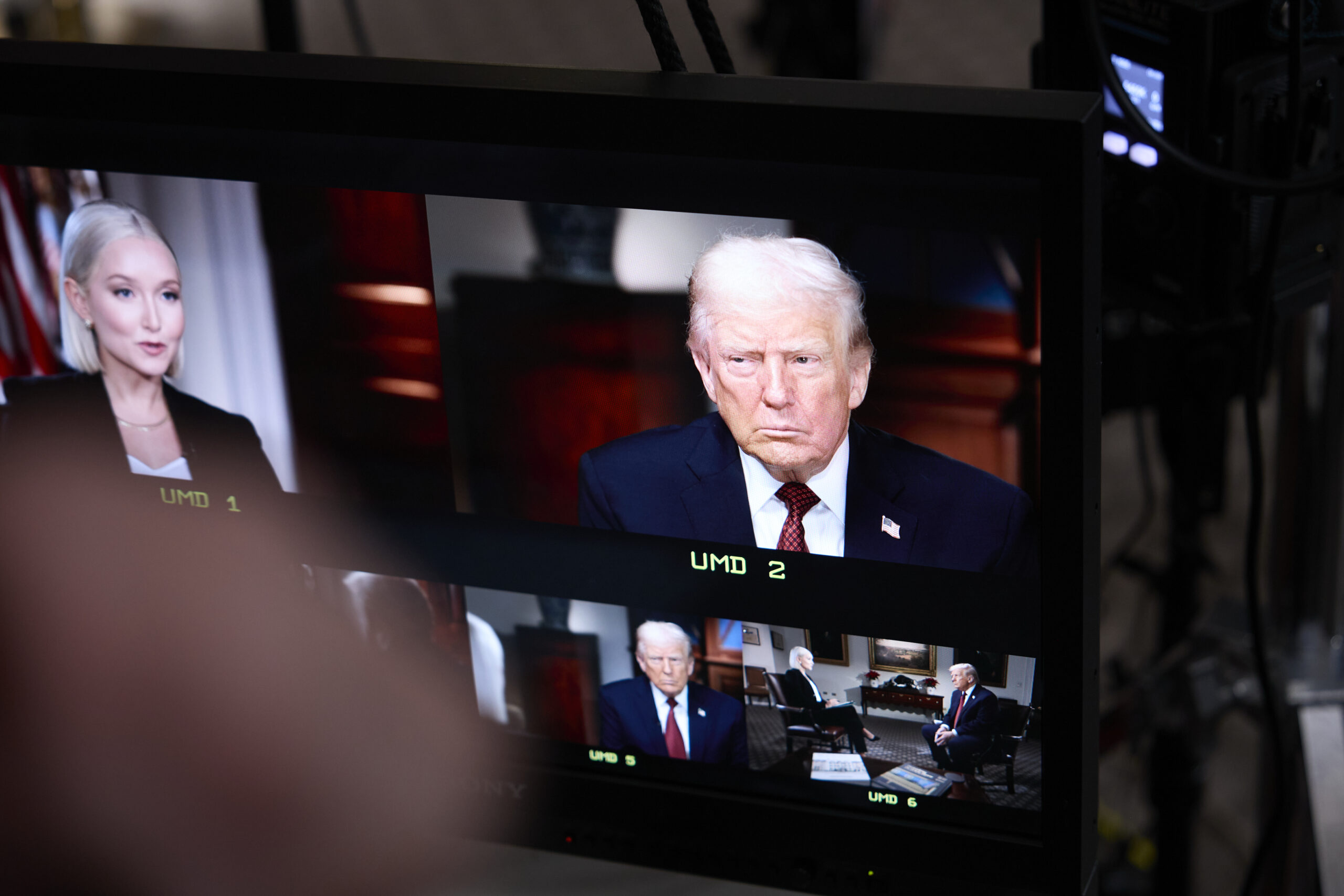
President Donald Trump denounced Europe as a “decaying” group of nations led by “weak” people in an interview with Blue Light News, belittling the traditional U.S. allies for failing to control migration and end the Russia-Ukraine war, and signaling that he would endorse European political candidates aligned with his own vision for the continent.
The broadside attack against European political leadership represents the president’s most virulent denunciation to date of these Western democracies, threatening a decisive rupture with countries like France and Germany that already have deeply strained relations with the Trump administration.
“I think they’re weak,” Trump said of Europe’s political leaders. “But I also think that they want to be so politically correct.”
“I think they don’t know what to do,” he added. “Europe doesn’t know what to do.”
Trump matched that blunt, even abrasive, candor on European affairs with a sequence of stark pronouncements on matters closer to home: He said he would make support for immediately slashing interest rates a litmus test in his choice of a new Federal Reserve chair. He said he could extend anti-drug military operations to Mexico and Colombia. And Trump urged conservative Supreme Court Justices Samuel Alito and Clarence Thomas, both in their 70s, to stay on the bench.
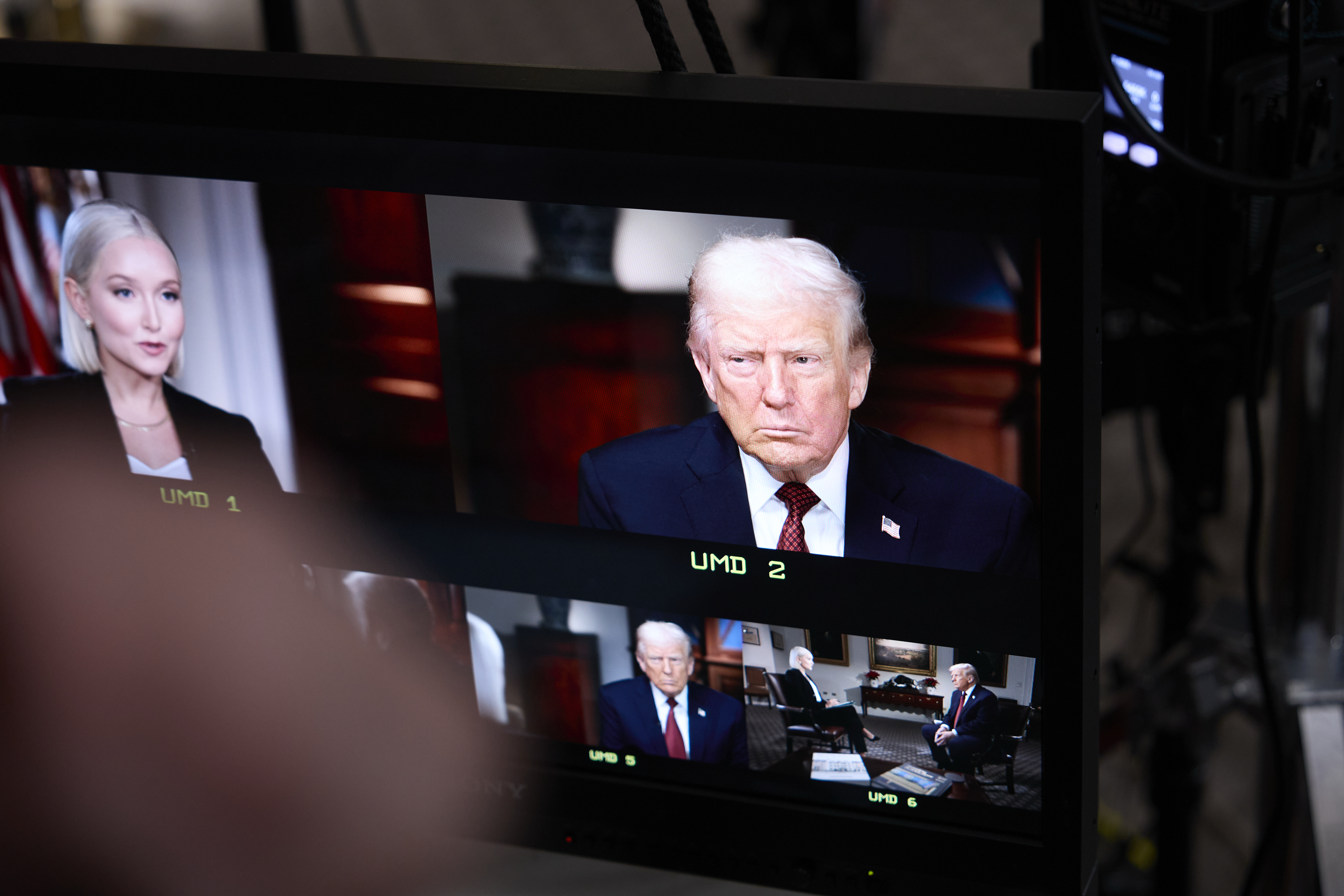
Trump’s comments about Europe come at an especially precarious moment in the negotiations to end Russia’s war in Ukraine, as European leaders express intensifying alarm that Trump may abandon Ukraine and its continental allies to Russian aggression. In the interview, Trump offered no reassurance to Europeans on that score and declared that Russia was obviously in a stronger position than Ukraine.
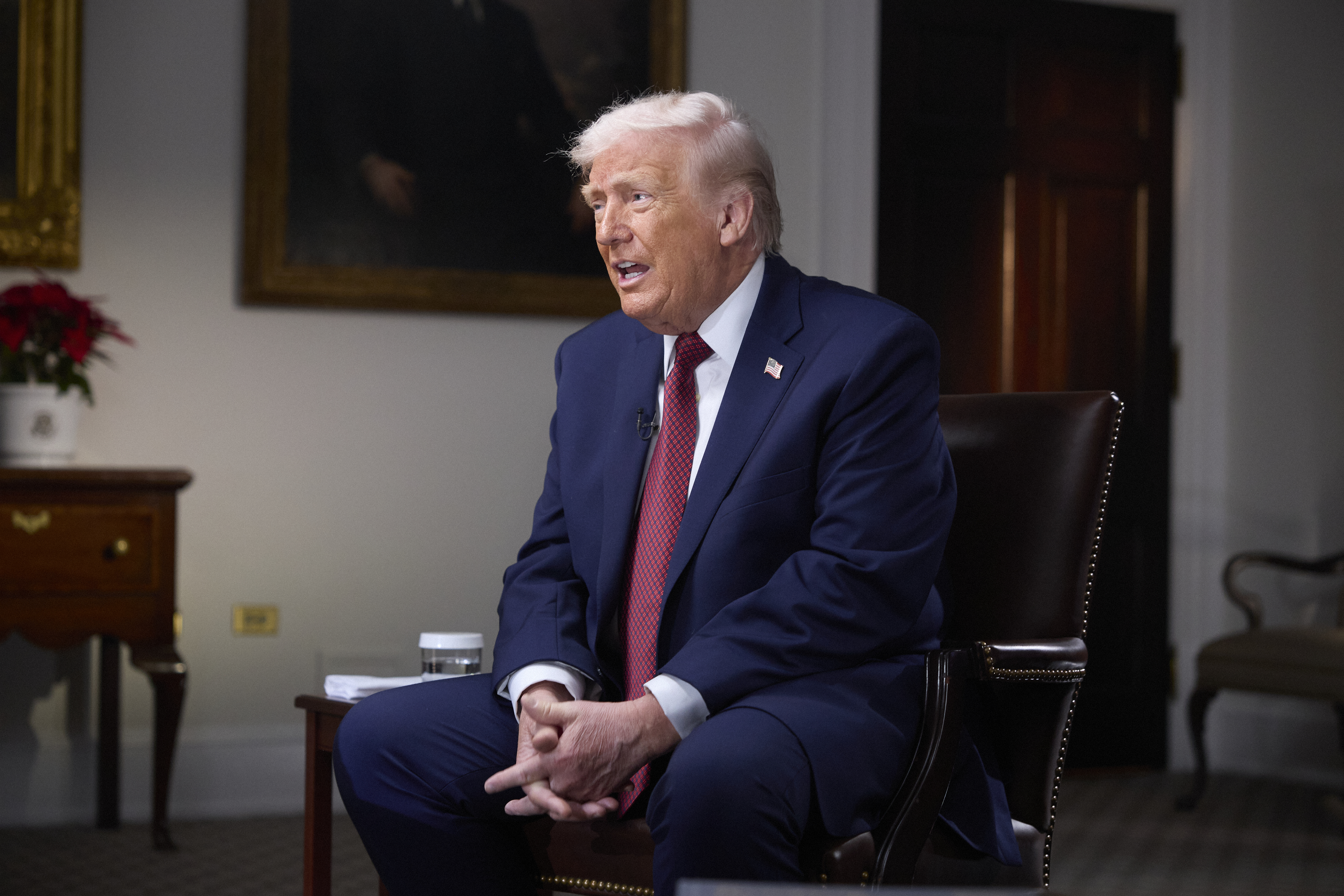
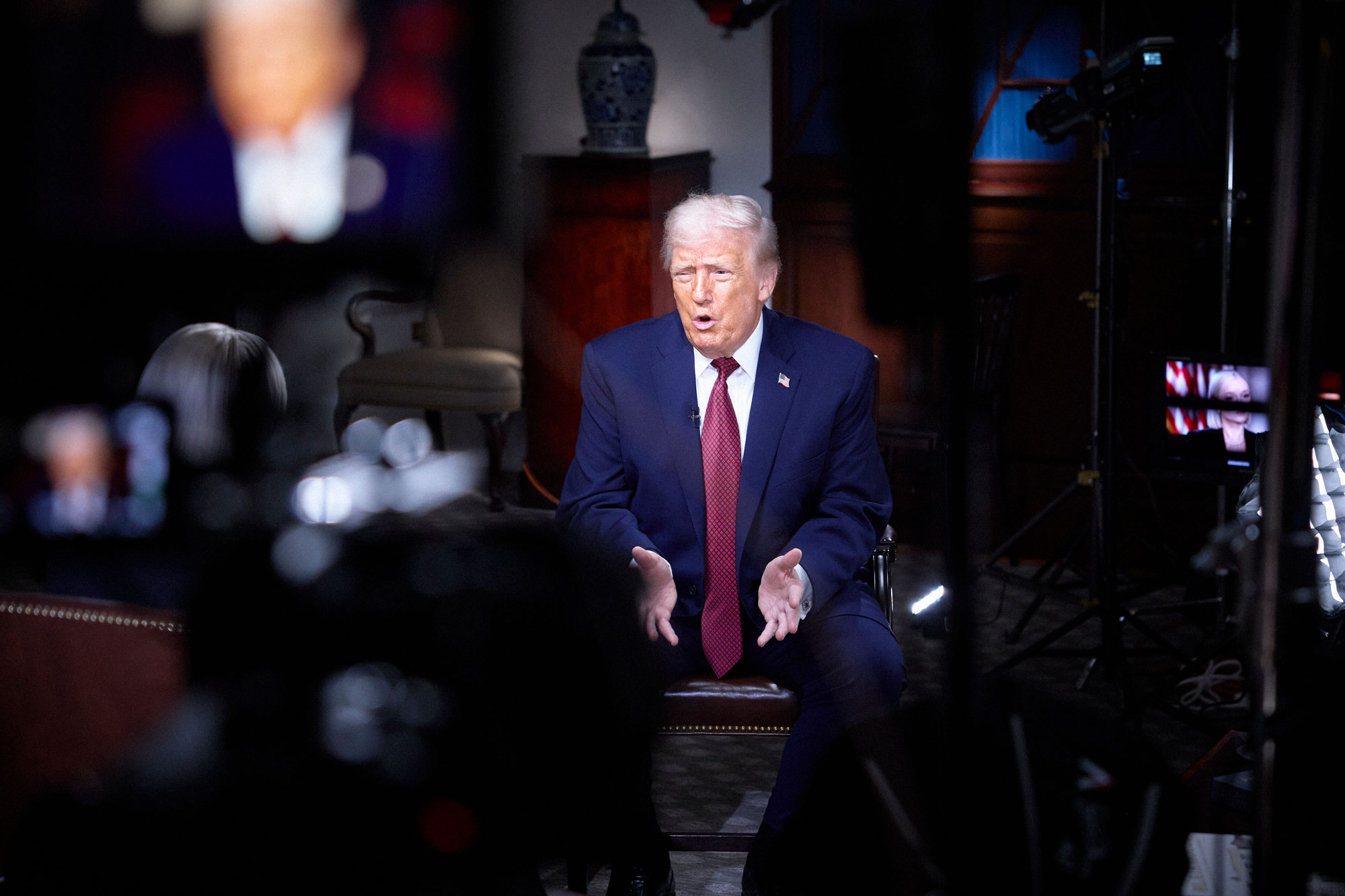
Trump spoke on Monday at the White House with Blue Light News’s Dasha Burns for a special episode of The Conversation. Blue Light News on Tuesday named Trump the most influential figure shaping European politics in the year ahead, a recognition previously conferred on leaders including Ukrainian President Volodymyr Zelenskyy, Italian Prime Minister Giorgia Meloni and Hungarian Prime Minister Viktor Orbán.
Trump’s confident commentary on Europe presented a sharp contrast with some of his remarks on domestic matters in the interview. The president and his party have faced a series of electoral setbacks and spiraling dysfunction in Congress this fall as voters rebel against the high cost of living. Trump has struggled to deliver a message to meet that new reality: In the interview, he graded the economy’s performance as an “A-plus-plus-plus-plus-plus,” insisted that prices were falling across the board and declined to outline a specific remedy for imminent spikes in health care premiums.
Even amid growing turbulence at home, however, Trump remains a singular figure in international politics.
In recent days, European capitals have shuddered with dismay at the release of Trump’s new National Security Strategy, a highly provocative manifesto that cast the Trump administration in opposition to the mainstream European political establishment and vowed to “cultivate resistance” to the European status quo on immigration and other politically volatile issues.
In the interview, Trump amplified that worldview, describing cities like London and Paris as creaking under the burden of migration from the Middle East and Africa. Without a change in border policy, Trump said, some European states “will not be viable countries any longer.”
Using highly incendiary language, Trump singled out London’s left-wing mayor, Sadiq Khan, the son of Pakistani immigrants and the city’s first Muslim mayor, as a “disaster” and blamed his election on immigration: “He gets elected because so many people have come in. They vote for him now.”
The president of the European Council, António Costa, on Monday rebuked the Trump administration for the national security document and urged the White House to respect Europe’s sovereignty and right to self-government.
“Allies do not threaten to interfere in the democratic life or the domestic political choices of these allies,” Costa said. “They respect them.”
Speaking with Blue Light News, Trump flouted those boundaries and said he would continue to back favorite candidates in European elections, even at the risk of offending local sensitivities.
“I’d endorse,” Trump said. “I’ve endorsed people, but I’ve endorsed people that a lot of Europeans don’t like. I’ve endorsed Viktor Orbán,” the hard-right Hungarian prime minister Trump said he admired for his border-control policies.
It was the Russia-Ukraine war, rather than electoral politics, that Trump appeared most immediately focused on. He claimed on Monday that he had offered a new draft of a peace plan that some Ukrainian officials liked, but that Zelenskyy himself had not reviewed yet. “It would be nice if he would read it,” Trump said.
Zelenskyy met with leaders of France, Germany and the United Kingdom on Monday and continued to voice opposition to ceding Ukrainian territory to Russia as part of a peace deal.
The president said he put little stock in the role of European leaders in seeking to end the war: “They talk, but they don’t produce, and the war just keeps going on and on.”
In a fresh challenge to Zelenskyy, who appears politically weakened in Ukraine due to a corruption scandal, Trump renewed his call for Ukraine to hold new elections.
“They haven’t had an election in a long time,” Trump said. “You know, they talk about a democracy, but it gets to a point where it’s not a democracy anymore.”
Latin America
Even as he said he is pursuing a peace agenda overseas, Trump said he might further broaden the military actions his administration has taken in Latin America against targets it claims are linked to the drug trade. Trump has deployed a massive military force to the Caribbean to strike alleged drug runners and pressure the authoritarian regime in Venezuela.
In the interview, Trump repeatedly declined to rule out putting American troops into Venezuela as part of an effort to bring down the strongman ruler Nicolás Maduro, whom Trump blames for exporting drugs and dangerous people to the United States. Some leaders on the American right have warned Trump that a ground invasion of Venezuela would be a red line for conservatives who voted for him in part to end foreign wars.
“I don’t want to rule in or out. I don’t talk about it,” Trump said of deploying ground troops, adding: “I don’t want to talk to you about military strategy.”
But the president said he would consider using force against targets in other countries where the drug trade is highly active, including Mexico and Colombia.
“Sure, I would,” he said.
Trump scarcely defended some of his most controversial actions in Latin America, including his recent pardon of the former Honduran President Juan Orlando Hernández, who was serving a decades-long sentence in an American prison after being convicted in a massive drug-trafficking conspiracy. Trump said he knew “very little” about Hernández except that he’d been told by “very good people” that the former Honduran president had been targeted unfairly by political opponents.
“They asked me to do it and I said, I’ll do it,” Trump acknowledged, without naming the people who sought the pardon for Hernández.
Health Care and the Economy
Asked to grade the economy under his watch, Trump rated it an overwhelming success: “A-plus-plus-plus-plus-plus.” To the extent voters are frustrated about prices, Trump said the Biden administration was at fault: “I inherited a mess. I inherited a total mess.”
The president is facing a forbidding political environment because of voters’ struggles with affordability, with about half of voters overall and nearly 4 in 10 people who voted for Trump in 2024 saying in a recent Blue Light News Poll that the cost of living was as bad as it had ever been in their lives.
Trump said he could make additional changes to tariff policy to help lower the price of some goods, as he has already done, but he insisted overall that the trend on costs was in the right direction.
“Prices are all coming down,” Trump said, adding: “Everything is coming down.”
Prices rose 3 percent over the 12 months ending in September, according to the most recent Consumer Price Index.
Trump’s political struggles are shadowing his upcoming decision on a nominee to chair the Federal Reserve, a post that will shape the economic environment for the balance of Trump’s term. Asked if he was making support for slashing interest rates a litmus test for his Fed nominee, Trump answered with a quick “yes.”
The most immediate threat to the cost of living for many Americans is the expiration of enhanced health insurance subsidies for Obamacare exchange plans that were enacted by Democrats under former President Joe Biden and are set to expire at the end of this year. Health insurance premiums are expected to spike in 2026, and medical charities are already experiencing a marked rise in requests for aid even before subsidies expire.
Trump has been largely absent from health policy negotiations in Washington, while Democrats and some Republicans supportive of a compromise on subsidies have run into a wall of opposition on the right. Reaching a deal — and marshaling support from enough Republicans to pass it — would likely require direct intervention from the president.
Yet asked if he would support a temporary extension of Obamacare subsidies while he works out a large-scale plan with lawmakers, Trump was noncommittal.
“I don’t know. I’m gonna have to see,” he said, pivoting to an attack on Democrats for being too generous with insurance companies in the Affordable Care Act.
A cloud of uncertainty surrounds the administration’s intentions on health care policy. In late November, the White House planned to unveil a proposal to temporarily extend Obamacare subsidies only to postpone the announcement. Trump has promised on and off for years to unveil a comprehensive plan for replacing Obamacare but has never done so. That did not change in the interview.
“I want to give the people better health insurance for less money,” Trump said. “The people will get the money, and they’re going to buy the health insurance that they want.”
Reminded that Americans are currently buying holiday gifts and drawing up household budgets for 2026 amid uncertainty around premiums, Trump shot back: “Don’t be dramatic. Don’t be dramatic.”
Supreme Court
Large swaths of Trump’s domestic agenda currently sit before the Supreme Court, with a generally sympathetic 6-3 conservative majority that has nevertheless thrown up some obstacles to the most brazen versions of executive power Trump has attempted to wield.
Trump spoke with Blue Light News several days after the high court agreed to hear arguments concerning the constitutionality of birthright citizenship, the automatic conferral of citizenship on people born in the United States. Trump is attempting to roll back that right and said it would be “devastating” if the court blocked him from doing so.
If the court rules in his favor, Trump said, he had not yet considered whether he would try to strip citizenship from people who were born as citizens under current law.
Trump broke with some members of his party who have been hoping that the court’s two oldest conservatives, Clarence Thomas and Samuel Alito, might consider retiring before the midterm elections so that Trump can nominate another conservative while Republicans are guaranteed to control the Senate.
The president said he’d rather Alito, 75, and Thomas, 77, the court’s most reliable conservative jurists, remain in place: “I hope they stay,” he said, “’cause I think they’re fantastic.”


Sen. Jon Ossoff is honing a new line of attack against his opponent for reelection, GOP Rep. Mike Collins, by zeroing in on an ongoing House Ethics Committee investigation into allegations that Collins’ congressional office misused taxpayer dollars.
“Congressman Collins must cooperate with this investigation, he must commit to testifying and he must explain to the public and the press why he has refused to cooperate, why he has obstructed, and why he has stonewalled this investigation to date,” Ossoff, a Georgia Democrat, said during a Tuesday morning press conference.
His comments come at a pivotal moment on two fronts. On the campaign trail, the midterms are fast approaching and Ossoff is fighting to hang onto his seat — and Democrats, in turn, are counting on the incumbent to help the party reclaim the Senate majority in one of this election cycle’s most closely-watched races.
Meanwhile, on Capitol Hill, there’s been a renewed focus in recent months on the need to hold members accountable for misconduct, and a bipartisan effort to overhaul the congressional ethics process is currently underway.
The Office of Congressional Conduct — a nonpartisan, quasi-independent entity tasked with vetting and reviewing ethics complaints to then pass onto the House Ethics Committee — in January released a report saying it found “substantial reason to believe” that Collins’ office used official funds for unauthorized purposes. Those purposes, according to the report, included appearing to hire and pay “a district intern who had a preexisting personal romantic relationship with the office of chief of staff who did not perform duties commensurate with her compensation.”
Collins’ chief of staff at the center of the accusations, Brandon Phillips, is no longer on payroll.
The Office of Congressional Conduct further noted in its report that Collins “refused to cooperate” with its review and recommended the House Ethics Committee issue the lawmaker with a subpoena. Ossoff on Tuesday argued that Collins needs to “cooperate fully with this matter” and that “this is not going away.”
A Collins’ campaign spokesperson, Meyer Siegfriend, said in a statement Tuesday afternoon that “Rep. Collins has fully cooperated with the House Ethics Committee on this bogus, politically motivated complaint and looks forward to the committee fully clearing him in short order” — something Ossoff “would know if [he] weren’t too busy abandoning Georgia to suck up to liberal activist donors in the Hamptons.”
The Office of Congressional Conduct did not immediately respond to a request for comment and the Ethics Committee, which is now conducting its own inquiry, does not comment on pending cases.
ALBANY, New York — Gov. Kathy Hochul wants to prove she can be a strong top of the ticket this year to sweep down-ballot Democrats into office and help her party regain control of the House.
The stakes are high for the moderate Democrat, who took office five years ago Monday and has worked to build an anemic state party apparatus into something more formidable. Yet she must also contend with the success of candidates backed by the Democratic Socialists of America who have defeated institutional Democrats this year — victories that stand to upend the establishment’s plans to compete in purple areas of New York.
Unlike some moderate Democrats who are trying to halt the socialists’ advance, Hochul has taken a big-tent view of the party.
“I think the party is broad. It’s vast, but there are still a lot of people outside our urban areas who would view themselves as more traditional Democrats in the sense of FDR and Kennedy and Carter and Clinton and Obama and Biden,” she told Blue Light News in an interview Monday. “But if, in certain districts, the democratic socialist brand is more appealing, and they think it stands for something that they want to support, my job is to make it all work out. I work with everybody, whoever the voters want.”
Hochul sat down with Blue Light News Monday to discuss her five years in office, how she’s pushing for House Democrats and the role New York City Mayor Zohran Mamdani will play in her reelection bid.
This interview has been edited for length and clarity.
What has been your biggest challenge in the last five years?
Overcoming inertia here in Albany. There have been so many times when I want to just be, you know, take bold action and do what’s right, and not have institutional opposition to so many of our grand plans. I’ve had to work through that. Overall, I’d say the biggest challenge is just having to navigate, and then also to have breakthroughs, and that sometimes leads to conflict.
I don’t mind conflict if the result is better for New Yorkers than the status quo. So I think it’s partially my impatience and my desire to shake up the status quo — felt sometimes it was running into a brick wall, and then I had to dismantle that brick wall.
Who’s to blame for that institutional inertia at this point? Is it part of the climate?
There’s all kinds of lobbyists and advocates and interest groups and legislators with specific agendas, and it’s the whole ecosystem of Albany. There have been dramatic improvements since it was labeled probably the most — what did they call it?
The most dysfunctional in the country.
The most dysfunctional in the country, and I think the two [legislative] leaders that we have now have worked hard to eliminate that reputation. But beyond just elected officials, there’s just a lot of institutional, strong interests out there that conspire against changing the status quo, and I am hardwired to drive for change. I’m not complaining. I did it, but if I thought about what was a challenge, that was a challenge. But we’re overcoming it. We have overcome it in many specific instances.
I know the car insurance changes were part of that frustration. Anything else kind of fell under that inertia?
Anything we wanted to do with the State Education Department. We wanted to change how we teach literacy, and it was 20 years of a debunked theory that other states had walked away from, but it was not walked away from here.
My cell phone ban — that was not embraced by institutional interests here, and there’s organizations that at first were very resistant. Teachers were on board, teachers came on board, and I was happy with that. But there’s just the administrative roles, and the parents were anxious. There’s all sorts of groups representing everybody, and I look at that as one of our greatest accomplishments. That has had the most immediate result, and of anything we could have done, that had the most immediate impact in a positive way.
That was kind of a signature policy, fair to say?
That and overall taking care of families, whether it’s making sure no child goes hungry, there’s not a single child in the state of New York who doesn’t get two out of three meals now provided by the state, breakfast and lunch. That is huge.
That and other tax credits for families have really helped drive down poverty rates among children. Proud of that. Our work in social media has been nation leading, putting in guardrails where there had been none to protect our children. So a lot of it centers around family, whether it’s what’s happening in schools, what’s happening for parents who have to pay the bills, grocery prices, the largest middle-class tax rate cut in 70 years, taking on taxes, taking on utility bills with our utility rebate, taking on costs of groceries with our inflation rebate.
We put $5,000 back in a family’s pocket with covering the school meals for your family of two kids. School meals, $1,000 tax break for children under the age of four, $500 for higher. All this combined to say, I hear you. So I think the number one issue I took on was affordability, but specifically focused on families that are struggling because that was my life story. That was my early, early years, and then, as even a young parent, it’s one income in the house. It was hard, and those experiences have really focused me on my priorities, have driven my priorities because I know that those priorities will help New Yorkers.
Is there anything that you would have done differently looking back on the last five years? Any mistakes, any regrets that you have?
I would say I wish that the rules hadn’t been changed in the process for nominating chief judges. You know, we were trying to really help make history and have the first Latino chief judge. This person had tremendous judicial temperament and passed with flying colors. I was surprised that then the rules were changed in committees here to make it more challenging. So I would say that was frustrating for me. But what would I have done differently? I wish I had won. I wish I had won on that, wish my candidate had been able to get the fair hearing and be successful. But again, a lot of interests conspired against him, and that was probably the one big loss.
Lieutenant governor selections have also been kind of tough.
The selection isn’t tough. You do what [you can] with all the information you have at that moment. You do what you think is right. So the process isn’t flawed. Obviously becoming governor unexpectedly five years ago today required me to have a very, very shortened process to identify an individual that could be supportive. I had a relationship with Brian Benjamin. I thought he was an ideal candidate. I had no idea that charges would be brought and then later dropped against him. How do you foresee that when you’re going through a process and selecting someone? So there’s nothing to change there.
Antonio Delgado. I didn’t know him well. I did not know that loyalty was such a problem for him, or understanding the role is not that of the governor, and he understood later. Probably too late. But I function very well now. Having been lieutenant governor, I would say I’ve been performing lieutenant governor and governor simultaneously, which is why I do what I need to do in the Capitol. I spend a lot of time going out around the state and touching people and listening directly — literally in Rochester the other day, sitting in a diner talking to young people very anxious about data centers. These are the best conversations I have. Just sitting down, randomly starting to have conversations with people, and I learn a lot. I perform both roles for now, and am looking forward to having a new lieutenant governor who understands the role and has tremendous experience in government. I’d say it’s been handicapped not having a number two the way my predecessor had a hardworking number two.
What would you say is the biggest difference between how you’re approaching the job today versus how you initially thought it would go this time five years ago?
I’ve learned that it’s important to build coalitions around that idea. I initially thought if an idea was meritorious, that it would prevail on the merits, and that’s not how it works here.
Building coalitions, outside support, doing a lot more legwork, even on the cell phones, for example. I took a year to go around and build support for it and overcome the opposition from anxious parents or school boards that didn’t want to have opposition from their community. They just wanted to be left alone. But me spending the time and then listening more to young people about how they were struggling, it made me feel even more emboldened in the cause, brought people along with me.
I wanted to be bold and ambitious on housing. I wanted to overcome years and years of resistance to building more housing because I knew it was a huge driver of expenses for families, young people being denied the opportunity to have that first home, if ever. Maybe they’ll afford a decent apartment sharing with five people from college. So that first [housing] plan was bold. It was rejected because we didn’t have a chance to explain ourselves, and it was weaponized politically. That became an issue in a place like Long Island — government-paid-for literature going to everybody’s house, showing giant skyscrapers in a nice little multi-million dollar neighborhood. So, those are things that we couldn’t have foreseen in our first months on the job when I put together this bold agenda. But round two, the next year, we were very successful. So that was a learning curve there, but definitely have overcome it. And everything I set out to do in this year’s budget, for example, many of which I was told were dead on arrival, they all happened. We know the path.
Has the Democratic Party in the last five years gone too far to the left for the comfort of many voters — the very same voters you’ll need this year?
I have a broad perspective of the Democratic Party in this state, having been in every corner many times and understanding that the politics really is local.
Someone who gets elected in a particular Congressional district in New York City would never get elected in the North Country, or the Southern Tier, or perhaps even Western New York. I understand that. My job as the leader of the party in New York is to allow the locals to decide who they want as their candidates, and be as supportive as I can.
[That] does not mean I embrace a particular philosophy, and it doesn’t mean the rest of the party, outside of certain districts, should be labeled with that either. But it doesn’t mean that there aren’t people in a district that want a certain brand of candidate and a label. And I’m not going to stand here as a leader of the party [and] say no. I need to win in November. Let’s stay focused on the prize. It is taking back our country, one Congressional seat at a time, and that’s why I’ve invested a lot of political capital, and fundraising time and effort, and calling candidates and helping them work through the challenges.
I was that candidate in 2011 who took a shot at a longshot run. People said I would never win, but I knew there was a path because people were fed up with what was happening in Washington. Medicare was under attack. I knew this could win in a Republican district. I didn’t have any help from the state party. My predecessor literally sent someone to Buffalo, my home in Hamburg, to tell me not to run, because the state party would not be there for me, and the national party [the Democratic Congressional Campaign Committee] was not there for a long time. So I said I’m not letting that happen to people. [The] state party should be a vehicle to help all of our candidates who get through a process selected by primary or designee, as I was in a special election. I feel really good about the efforts we’ve undertaken.
I think the party is broad. It’s vast, but there are still a lot of people outside our urban areas who would view themselves as more traditional Democrats in the sense of FDR and Kennedy and Carter and Clinton and Obama and Biden. But if, in certain districts, the democratic socialist brand is more appealing, and they think it stands for something that they want to support, my job is to make it all work out. I work with everybody, whoever the voters want. My job is to make it work out.
Why do you think so many younger voters are choosing a socialist candidate, or are open to socialism? We’ve seen polling show that they’re rejecting capitalism.
The world is changing so rapidly around them. It’s a frightening time. You don’t know whether AI is going to take a job that you were told you should go to school for and study STEM and study computer science and get a degree that’ll position you for the rest of your life. The rug has been pulled out from under a lot of young people for a variety of reasons. They didn’t ask for the pandemic. Everything got so expensive. Their lives were disrupted. If they had little kids, the little kids were learning from home, and they’re trying to keep it all together while they have their jobs. Mom stayed home.
This has been a wildly disruptive time for young people starting out, whether just getting out of school or a young family. And there’s a lot of anxiety. Will the jobs they thought were going to be there? Why can’t I afford to get an apartment? My parents were able to get an apartment. My parents could even buy a home in some cases. Why is that American dream on hold for me? I didn’t do anything wrong. I did everything I was asked to do by society.
I feel that deeply as a parent who sees young people struggling like that, and why even child care, which was an issue when I was having babies, why is it still a problem today? Why can’t we as a society, do more to help lift this burden off of families? Why can’t we do more to stand up for them against high utility bills? Why can’t we be supportive of them? I have incredible empathy for people who are just feeling very unsettled and anxious about the future, and I think that drives them to listen to voices that are offering more. But at the end of the day, I feel the same concern. I’m a moderate Democrat who is responding to their same anxieties, and maybe they don’t see that, but that is hardcore what I’m all about — fighting for families, reducing the burdens they have on childcare and school lunches and cost of living.
Our interests are more aligned than people believe. I don’t think it’s a socialism versus capitalism debate. Most people are not thinking that. The vast majority of New York Democrats are not caught up in that struggle, and they’re just not. They don’t have the luxury of even having those thoughts. They’re trying to pay the bills at the end of the month and see whether or not their job is going to be there, or are they going to be replaced by AI?
Do you expect the mayor to be campaigning with you? Have you talked to him about campaigning? Will he be helpful on the trail?
I think he’ll be helpful. Like I said, I really carved out a very different path in this role. People understand I get the job done. I’m here to get a job done, not to look for glory for myself, or get into fights with the mayor of New York and show I can win the battle because I’m bigger state government. It’s never been about battling egos here. So many people have told me they appreciate — whether or not they support the mayor — they appreciate the fact that I understand my role is to make New York City successful. That’s why I am making the relationship work. As is he — he is working with me to build a relationship where we’re both putting New York City first, and that is something that this state has not seen, perhaps ever. If you go back through history, there’s always conflict between the governor and the mayor, almost universally. I wanted to end that, and we did with Bill de Blasio, Eric Adams, Zohran Mamdani.
How eager are you to prove Nancy Pelosi wrong this year after her comments from four years ago saying that New York didn’t come through for House Democrats?
Forgot about it. Don’t even think about it. I didn’t have the luxury of time in ‘22 to build out a state party. I inherited a skeleton. I took two solid years to bulk it up. In 2024, I already proved that I’m a leader, and I know how to win races. We won five out of seven battleground races with money that I raised, opening up 42 field offices, hiring an additional 100 staffers, and that’s how we win. So I already established I know how to win. Give me two years. Now I’ve got four. We’re going to do it again.
Thanks for your time.
Democrats are readying a long list of investigations they want to launch into Donald Trump.
Reps. Robert Garcia and Jamie Raskin, who would lead the Oversight and Judiciary committees, respectively, if the party takes back the House, said they’re wasting no time in preparing an all-out oversight campaign targeting Trump, his family, and his administration.
Both know that House Dems’ efforts now could provide a backbone for the accountability message the party intends to continue into the 2028 presidential election season.
“We are going to be looking at systems of bribery, kickback and financial corruption and opportunities for disgorgement and restitution to the American people,” Raskin said. “That would be No. 1.”
Topping their long list of controversies they want to probe: Trump’s acceptance of a Qatari jet for use as his new Air Force One, and his family’s massively profitable cryptocurrency investments.
Raskin also said he intends to probe what he deems “fraudulent and vindictive prosecutions,” including those of former FBI Director James Comey and New York Attorney General Leticia James. Garcia, meanwhile, said he is determined to fill in gaps he sees in the GOP-led investigation into the late convicted sex offender Jeffrey Epstein.
White House spokesperson Olivia Wales responded to Democrats’ plans by stating the president “will continue to draw a sharp contrast with his commonsense agenda and radical Democrats who want to massively raise taxes, defund the police, and are soft on crime.”
Garcia and Raskin’s preparations in some ways resemble how their predecessors planned ahead of the 2018 midterms. But that year, Democrats tiptoed around the prospect of impeachment for fear of alienating voters, then launched a flurry of investigations aimed at Trump once they were in power.
Now, after two impeachments that failed to remove Trump from office and with a party base intent on pulling no punches, House Democrats are reluctant to take anything off the table — while also recognizing the limitations of impeachment as a check on Trump’s power.
“Nobody on the Democratic side is afraid of impeachment,” Raskin said this week, adding that he considers it a “tool in the toolbox.”
What else we’re watching:
— SCANDAL-PLAGUED CANDIDATES TEST PARTIES’ LIMITS: Democrats and Republicans this election cycle keep playing whack-a-mole as candidate after candidate becomes embroiled in controversies ranging from domestic violence to sexual misconduct. Neither party has developed a clear playbook yet for when to step in or what counts as disqualifying. But identifying that line could become a key effort in determining who controls the next Congress, as several races with problematic candidates have been or could become battlegrounds.
— LAWMAKERS BRISTLE OVER POCKET RECISSION SEASON: With less than 45 days left in the fiscal year, the time is right for pocket rescissions — the controversial tactic Trump used last year to cancel billions of dollars in foreign aid without Congress’ consent. If the White House takes that tack again, it will not be well received on Capitol Hill, where lawmakers in both parties continue to bristle over Trump’s ongoing assault on their funding power.
Chris Marquette, Riley Rogerson, Erin Doherty, Andrew Howard, Alec Hernandez and Jennifer Scholtes contributed to this report.
-

 The Josh Fourrier Show2 years ago
DOOMSDAY: Trump won, now what?
-

 Politics2 years ago
Former ‘Squad’ members launching ‘Bowman and Bush’ YouTube show
-

 The Dictatorship2 years ago
Luigi Mangione acknowledges public support in first official statement since arrest
-
Uncategorized2 years ago
Bob Good to step down as Freedom Caucus chair this week
-

 Politics2 years ago
Former Kentucky AG Daniel Cameron launches Senate bid
-

 The Dictatorship2 years ago
Pete Hegseth’s tenure at the Pentagon goes from bad to worse
-

 Politics2 years ago
Blue Light News’s Editorial Director Ryan Hutchins speaks at Blue Light News’s 2025 Governors Summit
-

 The Dictatorship12 months ago
Mike Johnson sums up the GOP’s arrogant position on military occupation with two words