
The Dictatorship
Trump has other tariff options after Supreme Court strikes down his worldwide import taxes

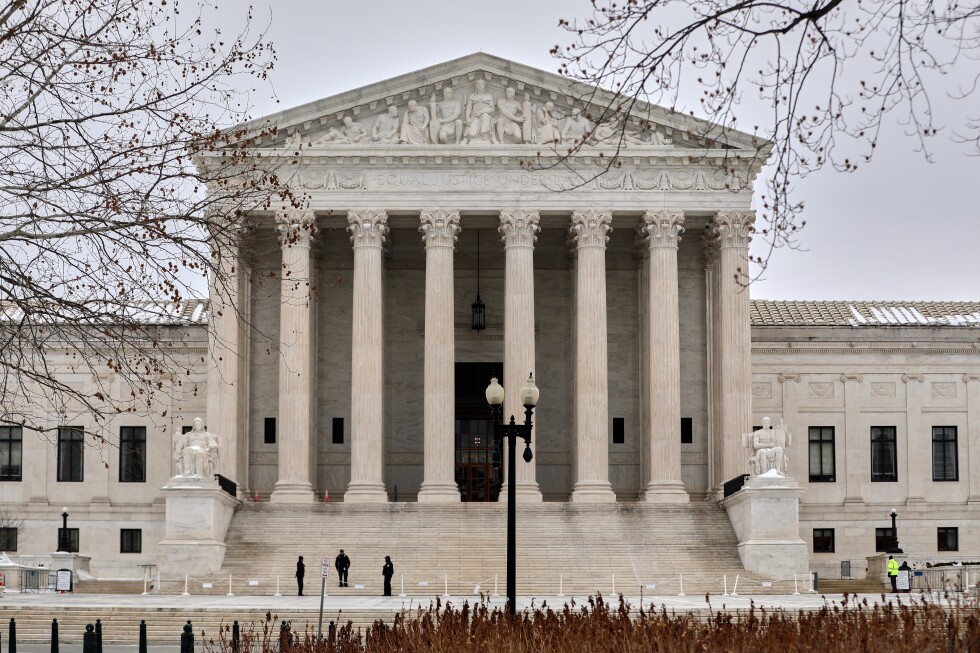
WASHINGTON (AP) — President Donald Trump still has options to keep taxing imports aggressively even after the Supreme Court struck down the tariffs he imposed last year on nearly every country on earth.
The Justices didn’t buy the president’s sweeping claims of authority to impose tariffs as he sees fit. But Trump can re-use tariff powers he deployed in his first term and can reach for others, including one that dates back to the Great Depression.
“Their decision is incorrect,” Trump said Friday, calling the Supreme Court justices who ruled against his tariffs “fools and lapdogs” during a press conference. “But it doesn’t matter because we have very powerful alternatives.”
Indeed, the president has already said he will impose a 10% global tariff under a trade law that allows such duties for 150 days. After that, they can only be extended by Congress.
Trump also said he would use a range of other laws and regulations to impose new tariffs, though most of those statutes would require a legal process before duties could be imposed. And he pointed to his ability to use licenses to restrain imports, but offered few details.
Trump had claimed nearly boundless authority to impose tariffs under 1977 International Emergency Economic Powers Act (IEEPA). But opponents argued before the Supreme Court that that power wasn’t necessary because Congress delegated tariff power to the White House in several other statutes — though it carefully limited the ways the president could use the authority.
Tariffs have been a cornerstone of Trump’s foreign and economic policy in his second term, with double-digit “reciprocal” tariffs imposed on most countries, which he has justified by declaring America’s longstanding trade deficits a national emergency.
The average U.S. tariff has gone from 2.5% when Trump returned to the White House in January to nearly 17% a year later, the highest since 1934, according to calculations by Yale University’s Budget Lab.
The president acted alone even though the U.S. Constitution specifically gives the power to tax – and impose tariffs – to Congress.
“The Good News is that there are methods, practices, Statutes, and other Authorities, as recognized by the entire Court and Congress, that are even stronger than the IEEPA TARIFFS, available to me as President of the United States of America,” Trump posted on his social media site.
Countering unfair trade practices
The United States has long had a handy cudgel to wallop countries it accuses of engaging in “unjustifiable,” “unreasonable” or “discriminatory” trade practices. That is Section 301 of the Trade Act of 1974.
And Trump has made aggressive use of it himself — especially against China. In his first term, he cited Section 301 to impose sweeping tariffs on Chinese imports in a dispute over the sharp-elbowed tactics that Beijing was using to challenge America’s technological dominance. The U.S. is also using 301 powers to counter what it calls unfair Chinese practices in the shipbuilding industry.
There are no limits on the size of Section 301 tariffs. They expire after four years but can be extended.
But the administration’s trade representative must conduct an investigation and typically hold a public hearing before imposing 301 tariffs. On Friday, Trump also said the administration would initiate several more Section 301 investigations.
Experts have said Section 301 is useful in taking on China. But it has drawbacks when it comes to dealing with the smaller countries that Trump has hammered with reciprocal tariffs.
“Undertaking dozens and dozens of 301 investigations of all of those countries is a laborious process,” Veroneau said.
Targeting trade deficits
In striking down Trump’s reciprocal tariffs in May, the U.S. Court of International Trade ruled that the president couldn’t use emergency powers to combat trade deficits.
That is partly because Congress had specifically given the White House limited authority to address the problem in another statute: Section 122, also of the Trade Act of 1974. That allows the president to impose tariffs of up to 15% for up to 150 days in response to unbalanced trade. The administration doesn’t even have to conduct an investigation beforehand.
But Section 122 authority has never been used to apply tariffs, and there is some uncertainty about how it would work.
Protecting national security
In both of his terms, Trump has made aggressive use of his power — under Section 232 of Trade Expansion Act of 1962 — to impose tariffs on imports that he deems a threat to national security.
In 2018, he slapped tariffs on foreign steel and aluminum, levies he’s expanded since returning to the White House. He also plastered Section 232 tariffs on autos, auto parts, copper, lumber.
In September, the president even levied Section 232 tariffs on kitchen cabinets, bathroom vanities and upholstered furniture.
Section 232 tariffs are not limited by law but do require an investigation by the U.S. Commerce Department. It’s the administration itself that does the investigating – also true for Section 301 cases — “so they have a lot of control over the outcome,” Veroneau said.
Reviving Depression-era tariffs
Nearly a century ago, with the U.S. and world economies in collapse, Congress passed the Tariff Act of 1930, imposing hefty taxes on imports. Known as the Smoot-Hawley tariffs (for their congressional sponsors), these levies have been widely condemned by economists and historians for limiting world commerce and making the Great Depression worse. They also got a memorable pop culture shoutout in the 1986 movie “Ferris Bueller’s Day Off.”
Section 338 of the law authorizes the president to impose tariffs of up to 50% on imports from countries that have discriminated against U.S. businesses. No investigation is required, and there’s no limit on how long the tariffs can stay in place.
Those tariffs have never been imposed — U.S. trade negotiators traditionally have favored Section 301 sanctions instead — though the United States used the threat of them as a bargaining chip in trade talks in the 1930s.
In September, Treasury Secretary Scott Bessent told Reuters that the administration was considering Section 338 as a Plan B if the Supreme Court ruled against Trump’s use of emergency powers tariffs.
____
Associated Press Staff Writer Lindsay Whitehurst contributed to this story.


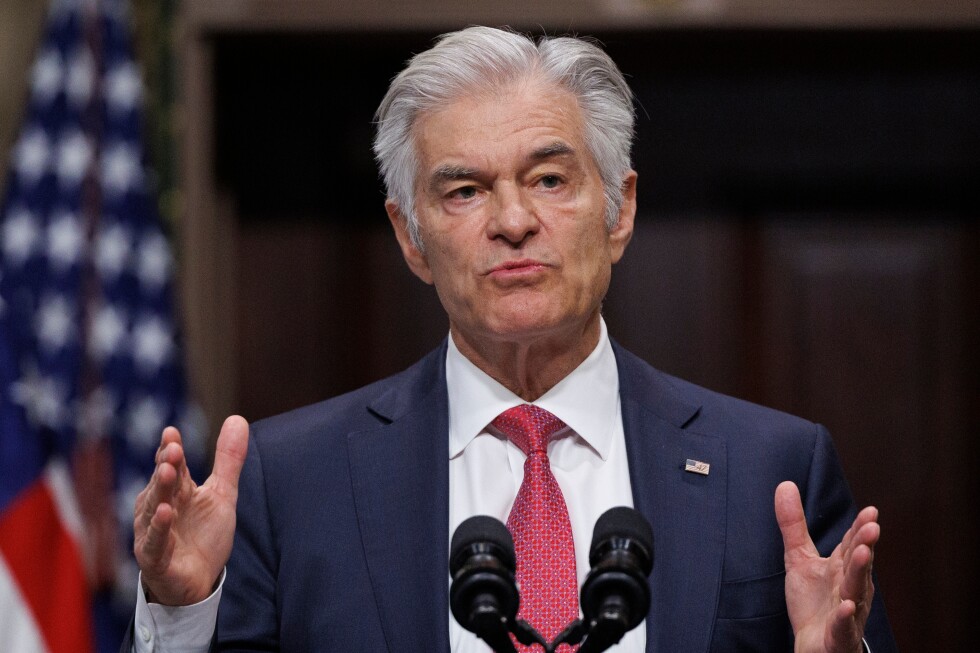
NEW YORK (AP) — President Donald Trump’s administration this week acknowledged it made a significant error in figures it used to help justify a fraud probe into New York’s Medicaid program, a glaring mistake that undercuts a federal campaign to tackle waste, mostly in Democratic-led states.
The error, which the administration admitted first to The Associated Press, prompted health analysts to question how many of the Republican administration’s sweeping anti-fraud efforts around the country were based on faulty findings. One of a few mischaracterizations it made about New York’s Medicaid program, it also reflected a common criticism that’s been made of Trump’s second administration — that it tends to attack first and confirm the facts later.
“These numbers could have been cleared up in a phone call, so it’s really slapdash,” said Fiscal Policy Institute senior health policy adviser Michael Kinnucan, whose recent analysis called attention to the Trump administration’s inaccurate claim.
The mistake appeared in comments made last month by Dr. Mehmet Ozthe administrator of the Centers for Medicare & Medicaid Services, in a social media video and in a letter to New York’s Democratic governor announcing the fraud investigation.
Oz claimed that New York’s Medicaid program last year provided some 5 million people with personal care services, which assist people in need with basic activities like bathing, grooming and meal preparation. That would add up to nearly three-fourths of the state’s 6.8 million Medicaid enrollees.
“That level of utilization is unheard of,” Oz said in the video, adding in his post that New York needs to “come clean about its Medicaid program.”
But the real number of New Yorkers who used those services last year was about 450,000, or between 6% and 7% of total enrollees, CMS spokesman Chris Krepich told the AP this week. He said the agency misidentified New York’s approach to applying billing codes and had since refined its methodology.
“CMS is committed to ensuring its analyses fully reflect state-specific billing practices and will continue to work closely with New York to validate data and strengthen program integrity oversight,” he said in an emailed statement.
Krepich said the probe was ongoing as the administration still has concerns with New York’s oversight of personal care services and the Medicaid program and is reviewing the state’s response to last month’s letter. CMS had raised other flags about New York’s program, including that it spends more per beneficiary and per resident than the average state, has high personal care spending and employs so many personal care aides that the job category is now the largest in the state.
Health analysts said the state’s high spending reflected both high costs for services in New York and a policy choice to provide robust at-home care. Cadence Acquaviva, senior public information officer for the New York Department of Health, called Oz’s initial mischaracterizations “a targeted attempt to obscure the facts.”
“New York State remains committed to protecting and preserving vital Medicaid programs that deliver high-quality services to New Yorkers who depend on them,” she said.
In a statement, a spokesperson for Gov. Kathy Hochul said, “The initial claim by CMS was patently false, and we are glad they now admit it.”
“Governor Hochul has been clear that New York has zero tolerance for waste, fraud and abuse in Medicaid, or any other state programs, and will continue her efforts to root out bad actors, protect taxpayer dollars, and safeguard the critical programs that New Yorkers rely on,” spokesperson Nicolette Simmonds said.
New York probe is part of a larger crackdown
The Trump administration’s investigation into New York comes as it has similarly approached at least four other states, including California, FloridaMaine and Minnesota, with investigations into potential health care fraud. The anti-fraud effort appears to be expanding as voters in the upcoming midterm elections say they’re concerned about affordability.
Trump last month signed an executive order to create an anti-fraud task force across federal benefit programs led by Vice President JD Vance. As part of that project, Vance announced the administration would temporarily halt $243 million in Medicaid funding to Minnesota over fraud concerns, a move over which the state has since sued.
Kinnucan, the analyst with expertise in New York’s Medicaid program, said he’s concerned that the Trump administration’s adversarial approach to targeting fraud in some states “politicizes” a conversation that should be a team effort.
“We want to think collaboratively among all the stakeholders in the program about how we can actually fix it,” Kinnucan said. “We don’t want to have fraud be this political football.”
Oz made other claims New York advocates say are inaccurate
In his video, Oz made at least two other claims about New York that Medicaid advocates and beneficiaries say distorted the facts.
In one instance, he said the state recently made its screening for personal care eligibility “more lenient by allowing problems like being ‘easily distracted’ to qualify for a personal care assistant.”
Rebecca Antar, director of the health law unit at the Legal Aid Society, said the opposite was true — that the state in a rule change that went into effect last September instead made its program requirements more stringent. She said being “easily distracted” doesn’t appear anywhere among them.
Krepich said the administrator was referring to whether New York’s standard for personal care services was “sufficiently rigorous.”
“When standards are overly permissive, it risks diverting resources away from individuals with the highest levels of need and placing long-term pressure on the sustainability of the Medicaid program,” he said.
Oz in the video also referred to personal care services as “something that our families would normally do for us, like carrying groceries.”
Kathleen Downes, a 33-year-old who has quadriplegic cerebral palsy and uses personal care services in New York’s Nassau County, said she was offended by the notion that all Medicaid beneficiaries have family members who are willing and able to help.
Downes, who has been disabled since birth and needs personal care help for things like showering, using the toilet and eating, said she hires both her mother and outside assistants for personal care services, so her aging mother doesn’t have to take on those tasks full time. She said her mother did the labor unpaid for years, precluding her from pursuing other career opportunities.
“He’s assuming that everybody wants to and can just do it for free forever,” Downes said. “And that’s not feasible for a lot of people.”
___
Associated Press writer Anthony Izaguirre contributed to this story.
Friday’s splashdown of the Artemis II crew, the first to travel to the moon since the Apollo program ended in 1972, is a moment of celebration for all of us on Earth.
But it’s also an important reminder that, despite this success, the current administration’s Office of Management and Budget is proposing budget cuts that will all but dismantle much of NASA. It’s surprising, illogical and very troubling.
The proposed cuts would terminate 53 NASA Science missions, throwing away more than $13 billion in taxpayer investment.
The proposed cuts would terminate 53 NASA Science missions, throwing away more than $13 billion in taxpayer investment and halting the development of nearly every future NASA Science mission.
These cuts would be an insult to our astronauts and entire NASA workforce. Astronauts and their colleagues are civil servants who work hard, accomplish nearly impossible things and represent our country to the world.
It’s an odd choice from an administration that has pledged to put America first, to be sure. But stranger still, and quite personal to me, is the OMB’s proposal to completely end NASA’s STEM (Science, Technology, Engineering, and Math) outreach program, which supports students and teachers nationwide. Programs like this have helped the United States be a world leader in science and technology.
We cannot allow this.
The U.S. has many great institutions, but NASA is a unique part of the American story. NASA is the best brand our nation has. When people around the world think of the U.S. at its best, they think of astronauts exploring the moon, telescopes opening new windows on the cosmos and spacecraft making profound discoveries on other worlds. NASA is who we are when we’re curious, bold and united.

There is also a growing consensus in Washington that we are in a new space race, this time, with the China National Space Administration, which, by the way, is planning to have taikonauts walk on the Moon in 2030. If the race is on, why abandon so much? Why cede the lead? The U.S. cannot be first in space if it is second in science and technology.
The administration proposed almost the same draconian cuts to NASA last year. When it did, we the people fought back. The Planetary Society, along with more than 300 advocates and 19 other partner organizations, went to Washington and organized the largest grassroots advocacy outreach for space science in history. Tens of thousands of citizens from every state and congressional district wrote, called and made their case to their elected officials. Together, we successfully saved NASA.
Now, this year, we have no choice but to fight back. On April 20, we will return to Washington, where people can join in person or join our Save NASA Science campaign online.
Science is not a luxury. It is a responsibility. Our founders knew it; you will find “Science” cited in Article 1, Section 8 of the Constitution. Only a public space agency can sustain decades-long investments in the kind of science that tells us whether life ever existed on Mars, that tracks the asteroids that could threaten every living thing on Earth and that reveals the story of our origin.
NASA’s science program is a bargain for Americans. It accounted for one-tenth of 1% of the nation’s expenditures last year, a tenth of a penny of every tax dollar.
Cutting science would not just delay discovery; it would destroy it. It would shatter our STEM talent pipeline. It would abandon our international partners. And, it would cede U.S. leadership in space science to China and other nations.
NASA’s science program is a bargain for Americans. It accounted for one-tenth of 1% of the nation’s expenditures last year, a tenth of a penny of every tax dollar. And for every dollar spent, three come back into the economy. Every year, NASA generates $75 billion of economic growth and supports over 300,000 jobs in all 50 states.
Members of Congress and the Senate agree: NASA is a remarkable investment. I’ve met with both Republicans and Democrats, all of whom support space science. And last year, an overwhelming bipartisan majority rejected these same cuts.
NASA is what makes America great. It represents our best values: curiosity, determination, tenacity, and global cooperation. It proves that we are capable of extraordinary things. When we invest in scientific exploration, we invest in ourselves — in our economy, security and future.
If we concede and retreat from the frontier of space after a half century of leadership, it would be an unworthy choice. If Artemis II has showed us anything, it’s that the public, across the political spectrum, strongly supports space exploration, scientific discovery and a deeper understanding of the universe and our place within it.
Bill Nye is the chief ambassador at The Planetary Society, the world’s largest space interest organization.

After making history as the farthest journey into space humans have ever made, NASA’s Artemis II mission returned to Earth on Friday, splashing down off the coast southwest of San Diego.
The Artemis II crew splashed down successfully at 5:07:47 p.m. PT. The Orion spacecraft launched last weekfrom the Kennedy Space Center in Florida, the first crewed flight to the moon in more than 50 years. The entire mission from liftoff took a total of nine days, one hour, 31 minutes and 35 seconds, which NASA rounds up, to call it a 10-day mission.
In the buildup to the mission, questions about the craft’s heat shield led to concerns among some experts about whether Orion would hold up on reentry to the Earth’s atmosphere, the most perilous part of any crewed mission. A NASA-commissioned panel ultimately deemed the ship safewith the astronauts themselves endorsing it ahead of time.
The four-member crew — NASA astronauts Reid Wiseman, Victor Glover and Christina Koch, along with Canadian Space Agency astronaut Jeremy Hansen — embarked on the 10-day mission to fly around the moon, setting the stage for future missions aimed at establishing a permanent lunar base.
After splashdown, NASA administrator Jared Isaacman praised the crew, calling them “wonderful communicators, almost poets,” during an interview Friday evening.
“These were the ambassadors from humanity to the starts that we sent out there,” Isaacman said.
He also emphasized that this mission set the stage for a future moon landing — and base.
“This is not a once in a lifetime … This is just the beginning,” he said during the interview. “We are going to get back into doing this with frequency, sending missions to the moon, until we land on it in 2028 and start building our base.”
On April 6, the spacecraft reached 252,756 miles from Earth, the farthest distance traveled by humans. Artemis II broke the Apollo 13crew’s record of 248,655 miles, set in 1970.
The crew conducted a seven-hour lunar flyby, coming within about 4,000 miles of the moon’s surface and seeing areas of the moon never before seen by the naked eye. In addition to testing the spacecraft, the astronauts studied the far side of the moon during a solar eclipse and observed lunar geological features and color variations.
Now back on Earth, the astronauts will undergo medical evaluations before heading to shore and traveling to NASA’s Johnson Space Center in Houston.
The next such mission, Artemis IIIis expected to launch next year.
Erum Salam is a breaking news reporter for MS NOW, with a focus on how global events and foreign policy shape U.S. politics. She previously was a breaking news reporter for The Guardian.
- Trump administration admits error in New York health care fraud probe

- Trump’s budget hawk is still trying to slash medical research. Congress is saying no.
- RFK Jr. has turned corporate America’s name to mud, Blue Light News Poll finds
- 2028 Democrats say anyone can win. Voters aren’t so sure.
- Jeffries, Pelosi and other Democrats call on Eric Swalwell to end governor campaign
- Trump endorses ‘focused’ immigration enforcement funding bill
- These Republican-on-Republican disputes are keeping Congress frozen
- Trump’s proposed cuts to NASA are an insult to astronauts like the Artemis crew
- Artemis II mission splashes down, returning to Earth

- Former staffer accuses Rep. Eric Swalwell of sexual assault, reports say

-

 Politics1 year ago
Former ‘Squad’ members launching ‘Bowman and Bush’ YouTube show
-

 The Dictatorship1 year ago
Luigi Mangione acknowledges public support in first official statement since arrest
-

 Politics1 year ago
Former Kentucky AG Daniel Cameron launches Senate bid
-

 The Dictatorship1 year ago
Pete Hegseth’s tenure at the Pentagon goes from bad to worse
-

 The Dictatorship7 months ago
Mike Johnson sums up the GOP’s arrogant position on military occupation with two words
-

 Politics1 year ago
Blue Light News’s Editorial Director Ryan Hutchins speaks at Blue Light News’s 2025 Governors Summit
-
Uncategorized1 year ago
Bob Good to step down as Freedom Caucus chair this week
-

 Politics12 months ago
Democrat challenging Joni Ernst: I want to ‘tear down’ party, ‘build it back up’