
The Dictatorship
Trump announces 100% tariff on some patented drugs


NEW YORK (AP) — United States President Donald Trump signed an executive order Thursday that could impose tariffs of up to 100% on some patented medicines from companies that do not reach agreements with his government in the coming months.
Companies that have signed a “most favored nation” pricing agreement and are actively building facilities in the United States to move production of patented drugs and their ingredients there will have a 0% tariff. For those that do not have a price agreement but are building projects of this type in the United States, a 20% tariff will apply, although it will increase to 100% in four years.
A senior government official told reporters on a conference call that companies still have months to negotiate before the 100% tariffs take effect: 120 days for the largest companies and 180 days for everyone else. The official, who spoke on condition of anonymity to preview the executive order before it was issued, did not identify any companies or drugs that were at risk of receiving the tariff increase, but noted that the government had already reached 17 pricing agreements with big pharma, 13 of which have already been signed.
In the order, Trump wrote that he considered these measures necessary “to address the potential deterioration of national security posed by imports of pharmaceutical products and pharmaceutical ingredients.” The order was announced on the first anniversary of Trump’s so-called “Liberation Day,” when the president unveiled new tariff rates on imports on nearly every country in the world, rocking the stock market. Those tariffs were among the levies that the Supreme Court struck down in February.
Some warned of the consequences of the tariffs announced Thursday. Stephen J. Ubl, chief executive of the pharmaceutical industry trade group PhRMA, said taxes “on cutting-edge drugs will increase costs and could put billions in U.S. investments at risk.” He noted the already extensive presence of the United States in biopharmaceutical production and noted that drugs obtained from other countries “the vast majority come from reliable allies of the United States.”
Trump has launched a barrage of new tariffs on America’s trading partners since the start of his second term, and has repeatedly promised sky-high levies on medicines made abroad. But the government has also used the threat of new tariffs to strike deals with big companies — such as Pfizer, Eli Lilly and Bristol Myers Squibb — over the past year, with promises of lower prices for new drugs.
Beyond company-specific rates, a handful of countries have reached trade frameworks with the United States to further limit tariffs on medicines. The United States will apply a 15% tariff on patented drugs to the European Union, Japan, South Korea and Switzerland, matching previously agreed rates for most goods, and will impose a 10% tariff rate on the United Kingdom, which, Thursday’s order noted, “will then be reduced to zero” under future trade agreements. The United Kingdom had previously said it had secured a 0% tariff rate on all medicines exported to the United States for at least three years.
Trump also presents an update on metal tariffs
Also on Thursday, Trump released an update on his 50% tariffs on steel, aluminum and copper. Starting Monday, tariff rates on those metals will be calculated based on the “full customs value” of what customers in the United States pay when purchasing foreign metal, according to the latest order, which government officials said will prevent importers from other countries from avoiding higher payments.
Products made entirely of steel, aluminum and copper will continue to be subject to a 50% tariff for most countries. But the government will also change the way it calculates tariffs for derived metals — or finished goods that contain some of these metals, but are not made entirely of them.
For a product whose metal makes up less than 15% of its total weight (such as the lid of a perfume bottle), only country-specific tariffs will now apply, officials told reporters Thursday. But for products with more metal, such as a mostly steel washing machine, they indicated that a tariff of 25% will be applied to the total value.
More sectoral taxes accumulate
Thursday’s orders are another example of Trump’s use of sectoral levies. The president used Section 232 of the Trade Expansion Act of 1962 to impose the tariffs, the same authority he cited to impose taxes on imports of automobiles, lumber and even kitchen cabinets. And many expect to see more product-specific tariffs later.
That’s because a Supreme Court ruling struck down blanket tariffs that Trump imposed using the International Emergency Economic Powers Act of 1977.
Although the February 20 court decision represented a significant blow to Trump’s economic agenda, the president still has many options to continue taxing imports aggressively. In addition to the sectoral levies, Trump also imposed a 10% tariff on all imports under another legal authority, just hours after the Supreme Court ruling, but that levy can only last 150 days. About two dozen states have already challenged the new tariffs.
Trump has maintained that his new taxes on imports are necessary to recover the wealth that was “stolen” from the United States. He claims they will reduce the decades-long U.S. trade deficit and bring manufacturing back to the country. But Trump has also resorted to tariffs over personal grudges or in response to political critics. And disrupting the global supply chain has proven costly for businesses and households already under pressure from rising prices.
___
This story was translated from English by an AP editor with the help of a generative artificial intelligence tool.


The Dictatorship
Newly created Polymarket accounts bet big on US-Iran ceasefire in hours before Trump’s announcement
NEW YORK (AP) — A group of new accounts on the prediction market Polymarket made highly specific, well-timed bets on whether the U.S. and Iran would reach a ceasefire on April 7, resulting in hundreds of thousands of dollars in profits for these new customers.
These bets were made even though, in the hours before a two-week ceasefire was announced on Tuesday, President Donald Trump’s rhetoric had escalated sharply and there were few signals that a ceasefire deal was imminent. Early in the day Trump had issued a warning on social media that “a whole civilization will die tonight” if Iran did not meet his demand to open the Strait of Hormuz by his 8 p.m. ET deadline.
An analysis of publicly available blockchain data from Polymarket, using the crypto analytics platform Dune, shows that at least 50 accounts, or wallets, placed substantial “Yes” bets Tuesday before Trump announced the ceasefire in a Truth Social post at around 6:30 pm ET. These were the first bets made by these particular wallets.
One of these wallets, created Tuesday around 10 am ET, placed roughly $72,000 in bets at an average price of 8.8 cents. The buy-in for each betting event ranges from $0 to $1 each, reflecting a 0% to 100% chance of what users think could happen. This Polymarket user then cashed out for a profit of $200,000.
Another, which joined the platform on April 6 and traded on this exact event, shows a win of $125,500.
Another wallet, created 12 minutes before Trump’s post, made $31,908 of “Yes” bets at 33.7 cents, and is estimated to have earned a profit of $48,500. The higher price for “Yes” at that time may have reflected the efforts late Tuesday by the government of Pakistan to get Trump to extend his deadline by two weeks.
There is also the possibility that these individual Polymarket users placed their bets expecting Trump to back down, given his habit during his second term to make bold threats only to retreat — a phenomenon his critics have derided as “Trump Always Chickens Out,” or TACO.
While some users took handsome profits, others must wait for payouts because Polymarket has labeled the April 7 Iran-U.S. ceasefire contract as “disputed,” given that Iran was still placing restrictions on ships passing through the Strait of Hormuz and missile attacks in the region continued. That dispute could take 48 hours to resolve.
Public blockchain data cannot identify who controls the new wallets. Polymarket uses proxy smart contract wallets, meaning a single user can create multiple accounts. Only Polymarket has the internal data needed to determine whether these were new users or existing users opening additional accounts.
Polymarket did not respond to a request for comment.
Rep. Blake Moore, R-Utah, who has introduced legislation to regulate prediction markets, released a statement Wednesday saying: “It’s highly unlikely that these are good-faith trades; it’s much more likely that these are insiders with access to information ahead of the public. Without some kind of restrictions, there is nothing stopping government or military officials from profiting from their positions.”
The trading pattern of newly created Polymarket accounts placing strategic, well-timed bets mirrors earlier episodes on the platform. Newly created accounts placed large wagers hours before the January capture of Venezuelan President Nicolás Maduro, and made hundreds of thousands of dollars in profit. Similar clusters of accounts have also repeatedly profited from well-timed bets on military actions involving Iran.
Such bets have repeatedly raised questions from the public as well as members of Congress about whether some traders are using inside information to profit in these prediction markets. Bipartisan groups of senators as well as representatives have introduced legislation that would broaden the definition of insider trading to include prediction markets.
Even the two biggest platforms in the industry, Kalshi and Polymarket, have said they see a need to broaden the definition of insider trading on their platforms.
“This is why these markets need regulation,” said Todd Philips, a professor at Georgia State University who has written on prediction markets and the industry’s regulations. “We can’t have people trading with inside information and expect other traders are going to be OK being in these markets.”
_____
Keller reported from Albuquerque, N.M.
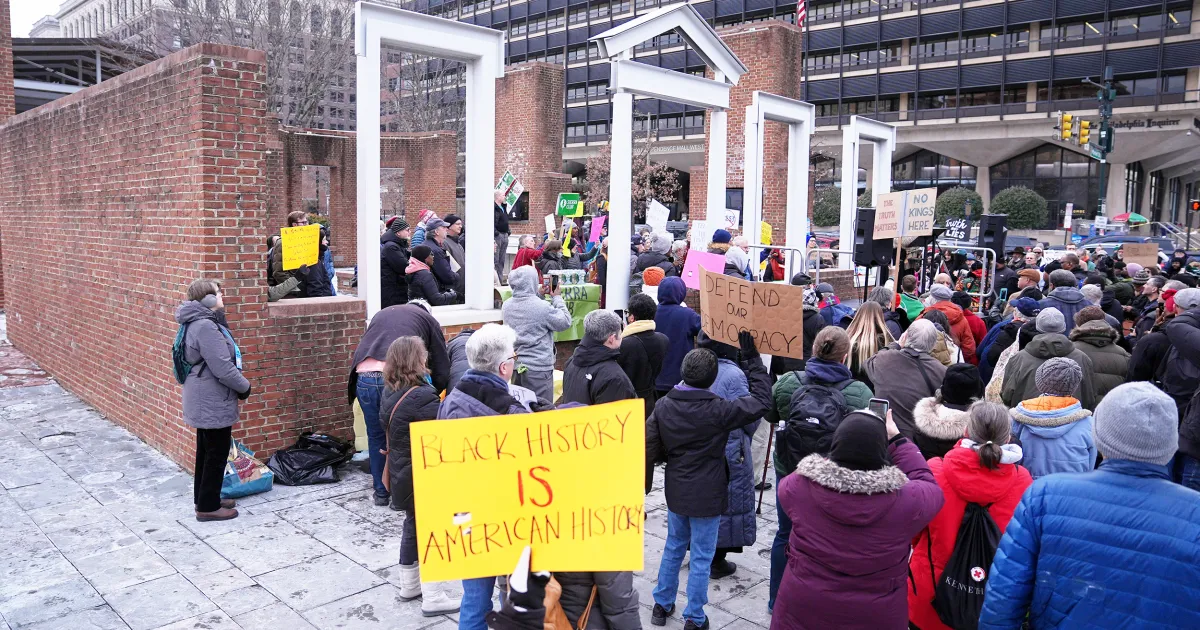
The Trump administration’s fragile white ego is in focus yet again thanks to newly proposed changes for an exhibit in Philadelphia centered on George Washington and slavery.
The administration is being sued by the city over its efforts to whitewash Washington’s history of slave ownership from the President’s House Site, the nation’s first official presidential residence. The push has been put on hold by a judge who compared it to the censorship depicted in George Orwell’s book “1984.”
The attempted alteration of the exhibit came after a Trump executive order demanded a review of national parks and museums to bar any displays that “inappropriately disparage Americans past or living.” Last year, Trump also lobbed a puerile complaint that Smithsonian musuems focus too much on “how bad” slavery was.
And all that kvetching provides context for the changes that Trump’s administration is seeking to impose at the President’s House Site — alterations that The Philadelphia Inquirer said places the first president’s slave ownership “in a more sympathetic light.”
The Inquirer flagged government renderings showing plans for new historical panels to be installed at the site, and it seems clear that the administration’s goal is to make Washington out to be a loving patriot or conscientious objector to slavery, rather than a racist slave driver.
First, note what the Inquirer said has been removed:
The panels taken down by the Park Service in January included displays titled ‘The Dirty Business of Slavery’ and ‘Life Under Slavery,’ as well as illustrations about the Fugitive Slave Act and Ona Judge, who was enslaved by Washington and later escaped.
So the administration wants to omit detailed references to Washington’s slavery history — which Black activists fought for years to include — while also promoting a whitewashed narrative that he was a fundamentally moral man despite the whole “claiming dominion over other human beings” thing. Per the Inquirer:
For instance, on one panel titled ‘Presidents Washington and Adams on Slavery,’ the Trump administration writes that ‘Caught between his private doubts about slavery and his public responsibilities as president, George Washington navigated a nation deeply divided over slavery.’
‘Privately, George Washington often expressed discomfort with the institution and a desire to see it abolished,’ the panel continued. ‘Yet as a Virginia plantation owner, his wealth and livelihood were deeply tied to it.’
And another example:
And later in the same panel: ‘Slaves living in the President’s House experienced a greater modicum of autonomy than elsewhere in the South such as to explore the city and sometimes even attend the theater, with Washington buying the tickets.’
When a censorship regime like Trump’s sees fit to tout a slave owner’s generosity — and the “greater modicum of autonomy” he purportedly granted to those he subjected to brutal bondage and forced labor — it leaves little doubt that the fundamental goal is to sanitize history, rather than teach it thoroughly.
A White House spokesperson told the Inquirer that the administration wants to acknowledge “the full breadth of our nation’s history” and that “no piece of history should be washed away.”
But “whitewashing” truly is the most apt descriptor for a plan that includes touting George Washington as some kind of selfless, principled gift-giver while brushing past, or deliberately omitting, details about his well-documented — and extremely lucrative — history of enslaving human beings.
Ja’han Jones is an MS NOW opinion blogger. He previously wrote The ReidOut Blog.
Today’s edition of quick hits.
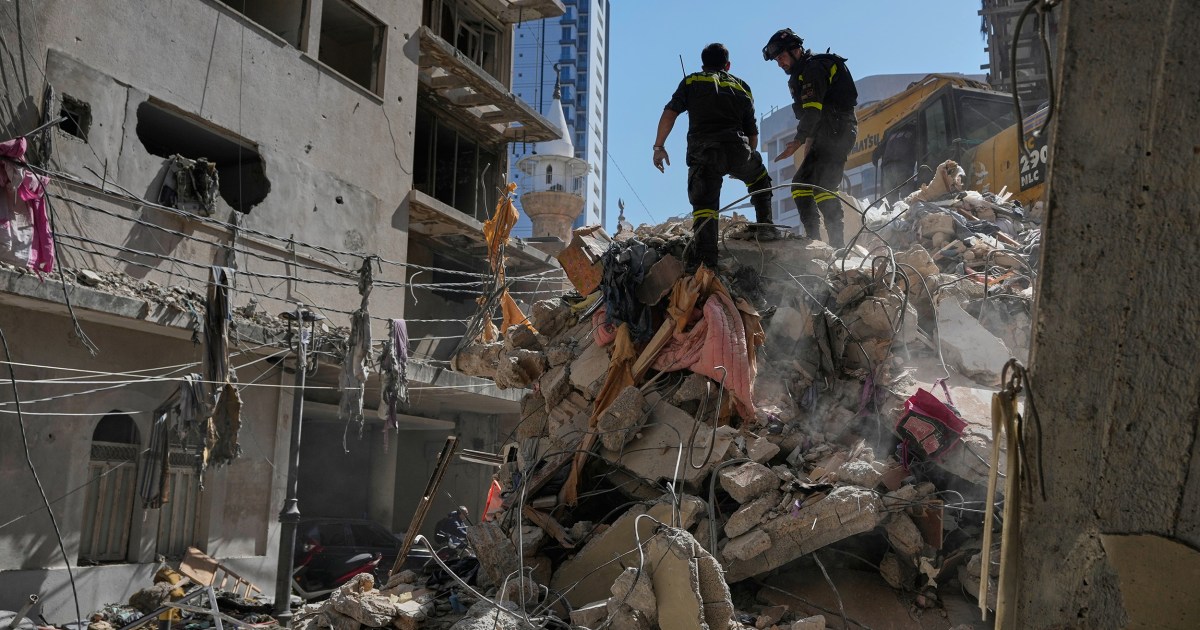
* Crisis conditions in Lebanon: “Prime Minister Benjamin Netanyahu of Israel vowed on Thursday to continue striking Hezbollah in Lebanon, hours after he appeared to make a concession by saying his country would start talks with the Lebanese government about trying to disarm the Iran-backed paramilitary group.”
* In related news: “More than 80 countries — which did not include the U.S. — condemned Israel’s lethal strikes on Lebanon. … Several international leaders have condemned Israel’s intensified strikes on Lebanon, which killed more than 300 people yesterday alone, according to The Associated Press, citing the country’s health ministry.”
* This wasn’t a problem before the war: “Ayatollah Mojtaba Khamenei vowed today to tighten control over the Strait of Hormuz and claimed victory in the ongoing war between his country and Israel and the U.S. ‘We will definitely take the management of the Strait of Hormuz to a new phase,’ Khamenei said in a series of posts on X.”
* Inflation news: “Core inflation held above the Federal Reserve’s target before the recent surge in energy prices, according to a key gauge released Thursday that offers the central bank a snapshot of conditions leading into the Iran war. The core personal consumption expenditures price index, which excludes food and energy, rose a seasonally adjusted 3% in February, the Commerce Department reported. The all-items headline inflation measure increased 2.8%.”
* The good news is, the vaccine saves lives; the bad news is, the Trump administration doesn’t want us to know that: “The acting director of the Centers for Disease Control and Prevention has delayed publication of a CDC report showing the covid-19 vaccine cut the likelihood of emergency department visits and hospitalizations for healthy adults last winter by about half, according to two scientists familiar with the decision.”
* Even for this White House, her remarks were weird: “First lady Melania Trump denied any ties to convicted sex offenders Jeffrey Epstein and Ghislaine Maxwell on Thursday. … ‘The lies linking me with the disgraceful Jeffrey Epstein need to end today,’ the first lady began in remarks delivered from the White House. … It was not clear who or which statements or reporting she was referring to.”
* On a related note, Donald Trump told MS NOW that he didn’t know about his wife’s press statement.
* Trump’s animosity toward the NFL has reached a new stage: “The Justice Department has opened an investigation into whether the National Football League has engaged in anticompetitive tactics that harm consumers, according to people familiar with the situation.”
See you tomorrow.
Steve Benen is a producer for “The Rachel Maddow Show,” the editor of MaddowBlog and an MS NOW political contributor. He’s also the bestselling author of “Ministry of Truth: Democracy, Reality, and the Republicans’ War on the Recent Past.”
- Newly created Polymarket accounts bet big on US-Iran ceasefire in hours before Trump’s announcement

- These Republican-on-Republican disputes are keeping Congress frozen
- Why Trump’s endorsement hasn’t been a ‘close out move’ for Louisiana Senate
- Candidate security costs up in era of political violence: Research

- CDC delays COVID vaccine benefits report
- EPA proposes flexibilities for toxic coal waste

- Pentagon denies threatening Vatican during January meeting with Holy See’s diplomat

- Trump says Iran is not living up to ceasefire agreement in Strait of Hormuz
- This is Rand Paul’s next potential clash with Donald Trump
- Marjorie Taylor Greene unloads on Trump, Netanyahu and the future of MAGA
-

 Politics1 year ago
Former ‘Squad’ members launching ‘Bowman and Bush’ YouTube show
-

 The Dictatorship1 year ago
Luigi Mangione acknowledges public support in first official statement since arrest
-

 Politics1 year ago
Former Kentucky AG Daniel Cameron launches Senate bid
-

 The Dictatorship1 year ago
Pete Hegseth’s tenure at the Pentagon goes from bad to worse
-

 The Dictatorship7 months ago
Mike Johnson sums up the GOP’s arrogant position on military occupation with two words
-

 Politics1 year ago
Blue Light News’s Editorial Director Ryan Hutchins speaks at Blue Light News’s 2025 Governors Summit
-
Uncategorized1 year ago
Bob Good to step down as Freedom Caucus chair this week
-

 Politics12 months ago
Democrat challenging Joni Ernst: I want to ‘tear down’ party, ‘build it back up’