
The Dictatorship
Trump ally takes charge at a tech firm known for tools used to target dissidents


Happy Tuesday! Here’s your Tuesday Tech Drop, the past week’s top stories from the intersection of technology and politics.
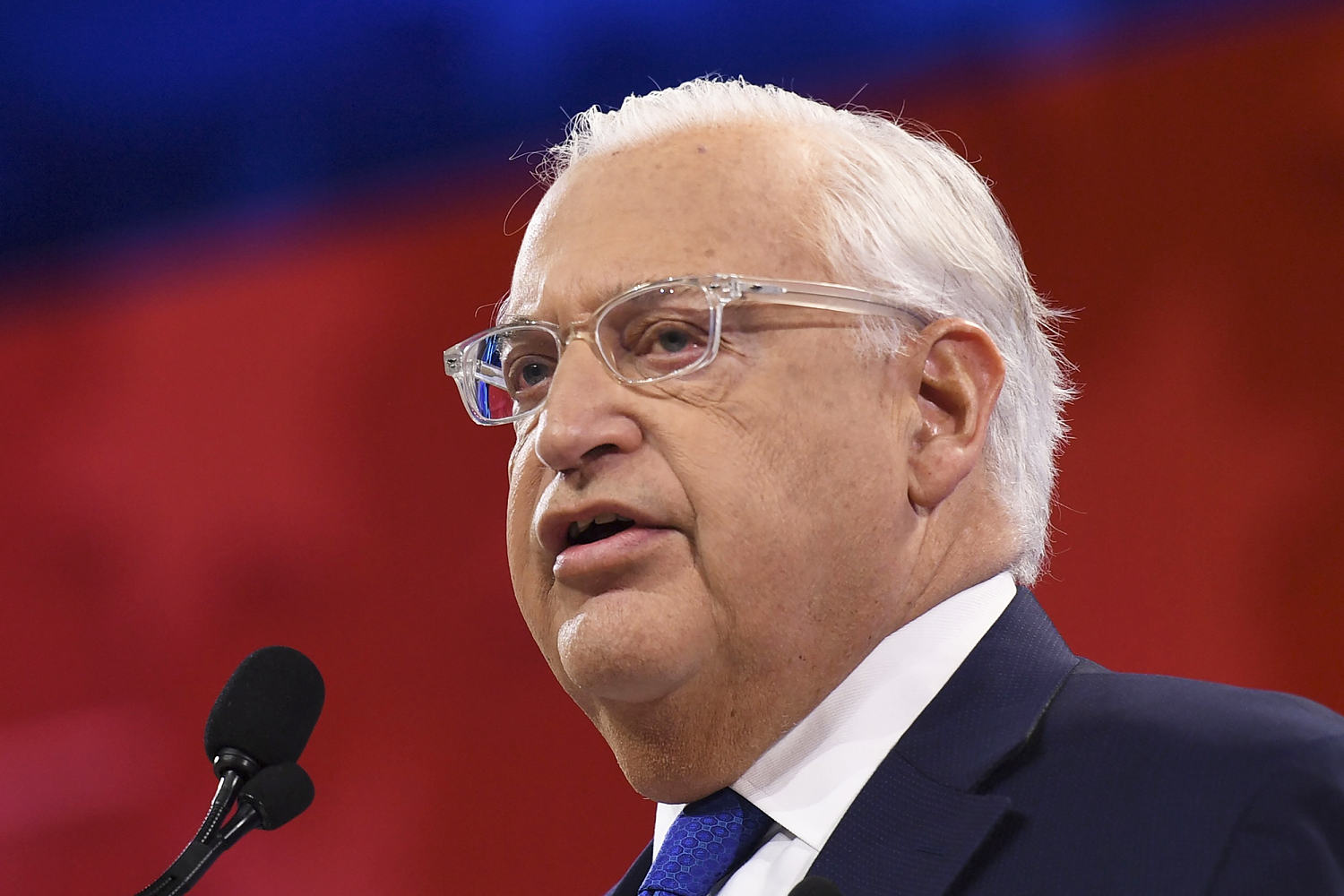
Trump ally to lead Israeli spyware company
David Friedman, a close ally to Donald Trump who formerly served as the U.S. ambassador to Israel, is taking the helm at NSO Group, a controversial Israeli spy technology company that has developed tools that have been used to target journalists and political dissidents. This story pairs well with my previous report on U.S. Immigration and Customs Enforcement reactivating its contract with Paragon Solutions — another Israeli technology company that has developed similar tools. Apple and Meta-owned WhatsApp recently said that they would continue to notify users when their phones are targeted by governments using hacking software.
Read more at Gizmodo.
Lyft and Uber drivers allege discrimination
A group of male drivers is suing Uber and Lyft over new safety features that allow passengers to request that their drivers be women only. (The ride-hailing companies did not immediately respond to Time magazine’s requests for comment.)
Read more at Time.
MAGA world’s pipe bomb conspiracy theory
Will Sommer recently wrote a piece for The Bulwark explaining how right-wing conspiracy theorists have promoted an apparently bogus report purporting to have homed in on the identity of the person who authorities say planted pipe bombs that were found outside the Washington headquarters of the Republican and Democratic national committees on Jan. 6.
Read more at The Bulwark.
Trump’s influencer army
A new report from Reuters highlights how the Trump administration and right-wing influencers “have formed a powerful alliance, working together to target perceived adversaries, amplify false claims and reshape the media landscape.”
Read more at Reuters.
The church-to-Congress pipeline
Affiliates of a Texas-based megachurch, including a state lawmaker, have been using an online course that trains Christians how to run for office, so that they can impose their evangelical worldview on the masses. The Texas Tribune published a report on so-called Campaign University, describing how the lessons train “potential candidates to ‘stand for spiritual righteousness’ and teach them how to build a platform and navigate the campaign trail while maintaining a strong family and church life.”
Read more at The Texas Tribune.
CBO hack
The Congressional Budget Office confirmed Friday that it was hacked. A CBO spokesperson said the office has “identified the security incident, has taken immediate action to contain it, and has implemented additional monitoring and new security controls to further protect the agency’s systems going forward.”
Read more at Tech Crunch.
Musk’s pay package
Tesla approved a compensation package that could make Elon Musk a trillionaire if he hits certain benchmarks over the next decade. I wrote about how Tesla’s decision affirmed an observation made by former President Barack Obama about how corporate giants enrich themselves off the backs of the government.
Read more at MSNBC.
Crockett warns about Dominion’s new owner
During a recent conversation with election law expert Marc Elias, Rep. Jasmine Crockett raised her concerns about election technology company Dominion Voting Systems being purchased by a former GOP election official, who has rebranded the company — which has become a magnet for right-wing conspiracy theories — as Liberty Vote.
Watch the Texas Democrat’s remarks at Democracy Docket’s YouTube channel.


BATON ROUGE, La. — With his political future hanging in the balance and President Donald Trump looming large over Louisiana’s Republican Senate primary, Sen. Bill Cassidy spent the campaign’s final hours trying to hit a moving target.
During a campaign stop at a gun range on Friday, the incumbent senator — fighting for his political life against two Trump-aligned candidates — said his primary “is not me versus Donald Trump.”
“This is me fighting for the people of Louisiana,” he said.

When MS NOW asked if he regretted his vote to convict Trump following the president’s impeachment after the Jan. 6, 2021, attack on the Capitol — a vote that set into motion the primary fight currently threatening his political career — Cassidy said he doesn’t sit around and think about what happened five years ago. “I’m focused on the future,” he said.
And when MS NOW pressed Cassidy on whether there’s room in the GOP for a Republican willing to cross Trump, he shot down the question.
“I’m gonna let you hold on that because I think you got a theme there,” Cassidy said, turning from reporters and walking toward the gun range. “So let me go shoot.”
In a race defined by Trump, closely watched by Trump, and playing out in a state that voted for Trump three times, Cassidy is choosing his words carefully. But instead of avoiding the topic entirely, he’s embracing it in his own way.
The Louisiana Republican said he’s the only candidate in the race “who’s ever had Donald Trump sign a bill into law,” pointing to his sponsorship of a measure that reclassified fentanyl as a schedule 1 drug and a separate bill that aimed to combat the opioid crisis.
“My opponent, she has never had a single piece of legislation signed into law,” Cassidy said. “I’ve had dozens.”
The strategy is a risky gamble for the incumbent senator, who’s fending off two Trump-affiliated candidates in a state that voted for the president by more than 18 percentage points in the 2024, 2020 and 2016 presidential elections. The race has taken on national interest, with onlookers across the country watching to see if a Republican can cross Trump and survive.
With his congressional career on the line, Cassidy is confident in the wager.
“I plan on winning,” Cassidy said. “It may go to a runoff. If it goes to a runoff, I’ll win in the runoff.”

He went on to shoot an AR-15 and a 9mm pistol, highlighting the suppressors on the guns after he championed a bill that eliminated a tax on silencers. He admired his target sheet showing five shots hitting the bullseye and one in the innermost ring.
“I wanted them all like right there, but that’s not too bad — I’m pretty pleased with that,” he told reporters, pointing to the bullseye. “You know what I’m saying? I’m real pleased with that.”
Whether Cassidy will be just as pleased when results begin to roll in on Saturday is another question.
Primary polls show Cassidy trailing both his Trump-associated opponents — Rep. Julia Letlow and former Rep. John Fleming — spelling trouble for Cassidy’s chances at a third term in Congress. If none of the candidates reach a majority vote, the top two vote-getters will head to a runoff.
Letlow, a second-term congresswoman whom Trump hand-picked to challenge Cassidy, is a relative newcomer, after arriving on Capitol Hill in 2021 to succeed her late husband. But Letlow’s political fortunes have since skyrocketed since she secured Trump’s endorsement
“Highly Respected America First Congresswoman, Julia Letlow, of the wonderful State of Louisiana, is a Great Star, has been from the very beginning, and only gets better!” Trump wrote on Truth Social Friday.
But there’s also Fleming, the former congressman and Louisiana State Treasurer, who is a founding member of the conservative House Freedom Caucus and deputy chief of staff during Trump’s first administration. Despite not having the coveted endorsement, the MAGA loyalist has stressed his Trump credentials.
“I served in the Trump administration for four years. I was Trump’s deputy chief of staff for the last 10 months of his administration, his first one. And also, I was there Jan. 6,” Fleming said at a primary debate last week. “And you know what? There were a lot of resignations in that White House on Jan. 6. I stood there, stayed there, and did not leave my post in the White House. I was there to the very end.”

Trump has had his sights set on Cassidy since shortly after Jan. 6, when the Louisiana lawmaker was one of seven Senate Republicans who voted to convict Trump following his impeachment after the Capitol attack. Of that group, just three remain.
The tensions continued into last year, when Cassidy — a doctor by trade — raised doubts about Robert F. Kennedy Jr. and his vaccine skepticism after Trump nominated him to lead the Department of Health and Human Services.
If Cassidy — the chairman of the Senate Health, Education, Labor and Pensions Committee — had voted against Kennedy for a preliminary committee vote, he would’ve been blocked. In the end, Cassidy supported Kennedy, but noted to Kennedy that he was “struggling with your nomination.”
Last month, Trump unleashed on Cassidy as the president’s pick to be the next surgeon general, Casey Means, stalled amid GOP opposition from Cassidy and others. Trump called Cassidy “a very disloyal person” and urged Louisiana residents to vote him “OUT OF OFFICE in the upcoming Republican Primary.”
The recent opposition comes back to Cassidy’s core identity: A doctor. During his outing at the gun range on Friday, donning protective earmuffs and glasses, the physician-turned-politician spoke about the physics of the suppressors and how they protect people’s hearing.
Minutes after dodging a question about whether he regrets his vote to convict Trump, Cassidy said his experience as a doctor — gathering information, making decisions, and not looking back — guides everything he does.
“When you graduate from med school in 1983 and you’ve been a doctor ever since, that is the prism through which you use things, which is really good,” he told reporters. “As a doctor, you’re taught to serve people. You’re taught to listen to them, figure out what the issue is, digest it, observe, and then come up with an answer.”
“You make the answer, you live with it, you move on,” he continued. “You learn from a mistake, but you move on. And so, in one sense that’s insightful. You could probably look at like almost everything I do, and you can say there’s a doctor in him.”
Mychael Schnell is a reporter for MS NOW.

Syedah Asghar
Syedah Asghar covers Congress for MS NOW.
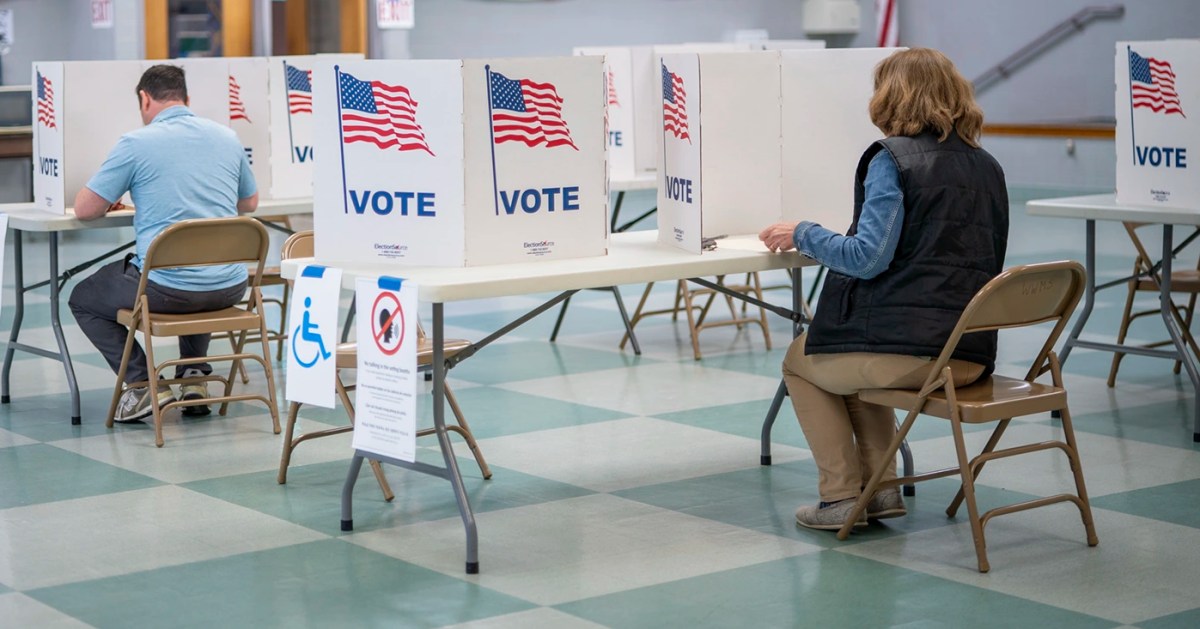
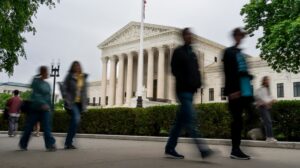
In the Supreme Court’s latest action that helps Republicans ahead of the midterms, the justices rejected Virginia Democrats’ emergency bid to save the state’s redistricting effort that voters approved last month.
Friday’s order follows the GOP-appointed majority’s recent Voting Rights Act ruling in Louisiana v. Callaiswhich prompted Republican-led states to try to make their maps redder ahead of November’s elections. Earlier this week, the high court majority granted emergency relief to Alabama Republicans who cited Callais as justification to use a congressional map that was previously deemed discriminatory.
The justices didn’t explain their decision in their unsigned order Friday, as is typical for emergency appeals. None of the justices noted any dissent.
The rejection of Virginia’s appeal is another court win for Republicans in this election season because the state’s voters had approved a process for new congressional districts that were poised to deliver more seats to Democrats. At President Donald Trump’s urging, Texas set off a wave of mid-decade redistricting last year that led other states, including Virginia, to follow suit. In prior orders affecting congressional maps, the Supreme Court approved the Texas effort as well as a Democratic countermeasure in California while also helping New York Republicans hold onto a seat.
The GOP-appointed majority said in a 2019 ruling that federal courts can’t do anything about partisan gerrymandering. Combined with Callais, that set the stage for Republicans to erase districts across the South that have been led by Black representatives and supported by Black voters, under the legal guise of partisanship rather than race. The Callais ruling makes it even more difficult to prove that map-makers are motivated by improper racial considerations rather than the partisan ones that the high court majority has effectively approved.
The Virginia rejection was expected because, although the Supreme Court can hear appeals from state high courts, this case posed a challenge for Virginia officials. That’s because the state court ruling they challenged was based largely on Virginia jurists’ interpretation of their state’s constitution, and the Supreme Court gets involved when there are federal issues to resolve. The Virginia case didn’t squarely call into question the Voting Rights Act or other federal matters of the sort the justices have been ruling on in election cases.
Still, in their emergency appealVirginia Democrats maintained that their case presented federal issues warranting the justices’ attention. The NAACP supported that position in an amicus briefwriting that invalidating Virginians’ votes “constitutes a deprivation of constitutional due process that requires this Court’s immediate intervention.”
Opposing the application, state Republicans arguedamong other things, that the state high court’s ruling rested on “pure state-law grounds” and so “no federal issue is present” for the justices to take up.
The meaning of ‘election’
In the state court ruling that struck down the measure, Virginia’s justices split 4-3 in deciding that the process that put it on the ballot had violated Virginia’s Constitution.
The state’s amendment procedures are, per the state court majority, admittedly “laborious” and “slow-walk[ed]” to “guard against hasty changes.” With that in mind, the majority explained that the process gives voters two chances to weigh in on a proposed amendment, the first time indirectly and the second time directly. The first, indirect time is after legislators initially propose the amendment, when voters can choose to retain those representatives based on their position on the amendment. The second, direct time occurs if it gets on the ballot, as this one did when voters approved itin April.
To get an amendment on the ballot, it actually needs to be approved twice by the state legislature before it goes to the voters. In this case, the proposed amendment first passed the legislature on Oct. 31 and then in January before voters backed it at the ballot box last month.
The legal issue in the ruling centered on the first step in late October when the legislature voted after early voting began but before Election Day on Nov. 4. That timing turned out to be crucial because the state constitution says the second approval must happen “after the next general election.” So the case raised the question of whether the first vote technically happened prior to the November election.
The state court majority said it did not, reasoning that the phrase “general election” in this context included early voting. The majority rejected what it called the state’s “thesis” that early voters “unknowingly forfeited their constitutionally protected opportunity” to base their November election votes on whether their representatives supported the amendment.
The dissent said the majority’s reading was an unnatural one that “broadened the meaning of the word ‘election’” and was “in direct conflict with how both Virginia and federal law define an election.”
As for why the court didn’t rule until after voters approved the measure, the majority said that’s a “fair” question to ask but that Virginia officials have no right to complain because, the majority recalled, they insisted that the court couldn’t rule prior to the vote.
Jordan Rubin is the Deadline: Legal Blog writer. He was a prosecutor for the New York County District Attorney’s Office in Manhattan and is the author of “Bizarro,” a book about the secret war on synthetic drugs. Before he joined MS NOW, he was a legal reporter for Bloomberg Law.
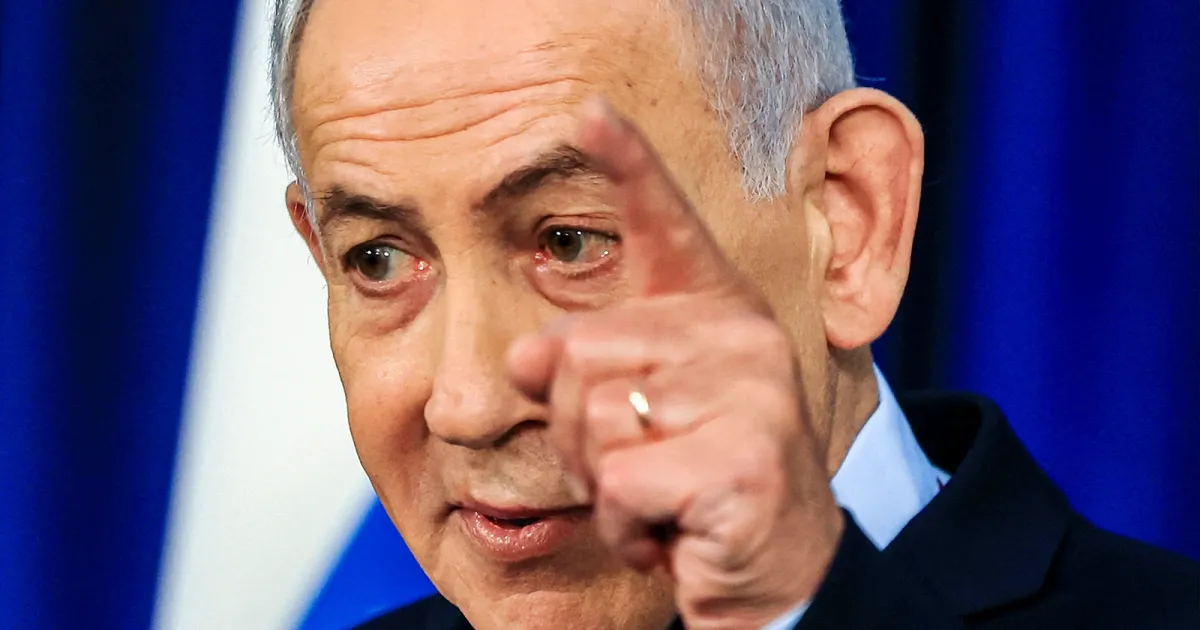
Israeli Prime Minister Benjamin Netanyahu on Thursday threatened to sue The New York Times over its publication of an opinion column detailing allegations of sexual abuse against Palestinians by Israeli forces and settlers.
The Times’ articlewritten by Nicholas Kristof and published Monday, was based on conversations the Pulitzer Prize-winning journalist said he had with 14 men and women who alleged they had been sexually assaulted in what Kristof described as “a pattern of widespread Israeli sexual violence against men, women and even children — by soldiers, settlers, interrogators in the Shin Bet internal security agency and, above all, prison guards.”
In one account, a Palestinian freelance journalist told Kristof that when he was detained in 2024, a group of guards threw him to the ground, pulled down his pants and underwear and that one guard raped him with a rubber baton. A Palestinian woman separately told Kristof she was repeatedly stripped naked, beaten and groped after she was arrested following the Oct. 7, 2023, attacks on Israel.
Kristof also cited a 49-page United Nations report alleging sexual violence has become one of Israel’s “standard operating procedures” and “a major element in the ill treatment of Palestinians” since the Hamas-led attacks that became the deadliest day in Israeli history.
Israeli leaders have denied the allegations. Netanyahu wrote in a social media post Thursday that he asked his legal advisers to consider “the harshest legal action” against Kristof and The New York Times.
“They defamed the soldiers of Israel and perpetuated a blood libel about rape, trying to create a false symmetry between the genocidal terrorists of Hamas and Israel’s valiant soldiers,” Netanyahu said.
The Israeli prime minister’s statement and his threat to sue the Times falls against the backdrop of the war against Iran that he is waging jointly with President Donald Trump, who has separately threatened to sue the same news organization over its Iran war coverage.
Israel’s foreign ministry called Kristof’s article “one of the most hideous and distorted lies ever published against the State of Israel in the modern press.”
The Times said in a statement posted on X that the allegations detailed in Kristof’s article “were extensively fact-checked, with accounts further cross-referenced with news reporting, independent research from human-rights groups, surveys and in one case, with U.N. testimony.”
Asked for comment, New York Times spokesperson Danielle Rhoades Ha said Netanyahu’s threat to file a lawsuit “is part of a well-worn political playbook that aims to undermine independent reporting and stifle journalism that does not fit a specific narrative.”
“Any such legal action would be without merit,” she said in a statement to MS NOW, adding, “Nick has covered sexual violence for decades, and is widely regarded as one of the world’s best on-the-ground journalists in documenting and bearing witness to sexual abuse experienced by women and men in war and conflict zones.”
The statement continued:
“The accounts of the men and women he interviewed were corroborated with witnesses, whenever possible, and with people the victims confided in, including family members and lawyers. Details were extensively fact-checked, with accounts further cross-referenced with news reporting, independent research from human-rights groups, surveys and in one case, with U.N. testimony. Independent experts were consulted on the assertions in the piece throughout reporting and fact-checking.”
This story has been updated to include additional comment from The New York Times.
Erum Salam is a breaking news reporter for MS NOW, with a focus on how global events and foreign policy shape U.S. politics. She previously was a breaking news reporter for The Guardian.
- Mullin has more work to do to repair the relationship between DHS and Congress
- Tennessee Democrat Steve Cohen announces retirement
- Johnson: House will amend stalled housing bill despite White House, Senate GOP pushback

- Capitol agenda: Nervous GOP weighs options on ballroom
- Nervous Republicans weigh their options amid White House’s ballroom lobbying blitz
- Mullin has more work to do to repair the relationship between DHS and Congress
- Energy secretary: Strait of Hormuz will reopen ‘sometime this summer at latest’
- Cassidy faces Republican primary loss in Louisiana

- GOP lawmakers fume over pulled troop rotation in Poland: A ‘slap in the face’

- Supreme Court declines to restore Virginia Democrats’ congressional map
-

 Politics1 year ago
Former ‘Squad’ members launching ‘Bowman and Bush’ YouTube show
-

 The Dictatorship1 year ago
Luigi Mangione acknowledges public support in first official statement since arrest
-

 Politics1 year ago
Former Kentucky AG Daniel Cameron launches Senate bid
-
Uncategorized2 years ago
Bob Good to step down as Freedom Caucus chair this week
-

 The Dictatorship1 year ago
Pete Hegseth’s tenure at the Pentagon goes from bad to worse
-

 Politics1 year ago
Blue Light News’s Editorial Director Ryan Hutchins speaks at Blue Light News’s 2025 Governors Summit
-

 The Josh Fourrier Show2 years ago
DOOMSDAY: Trump won, now what?
-

 The Dictatorship8 months ago
Mike Johnson sums up the GOP’s arrogant position on military occupation with two words