
The Dictatorship
Trump admin sets up ‘anti-Christian bias’ tip line to target Biden holdovers at the State Dept.

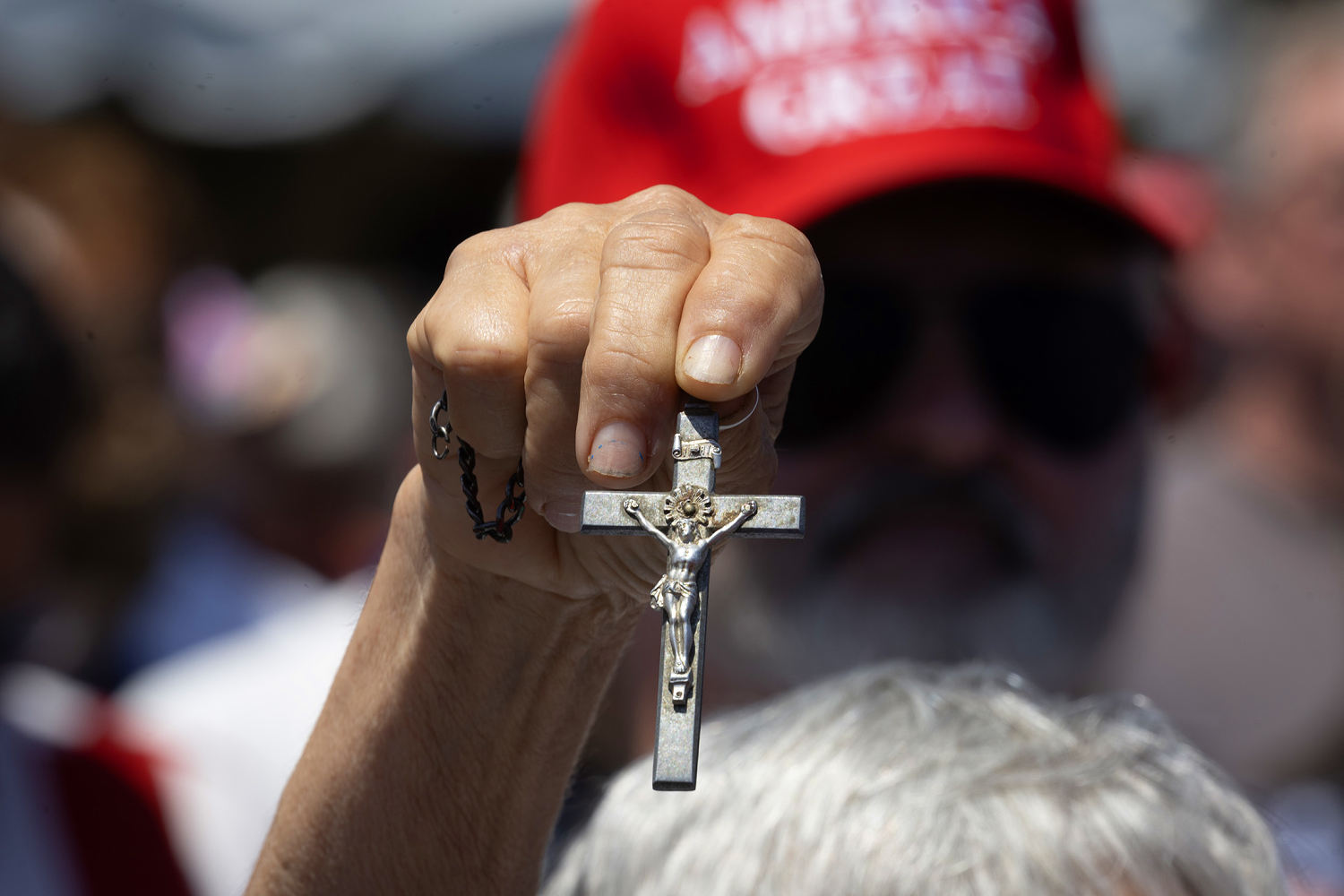
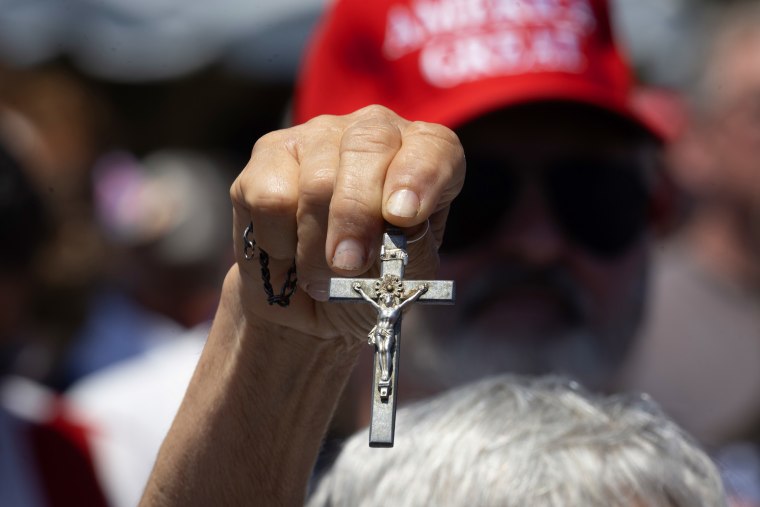

The Associated Press reported this week on a new effort to use allegations of anti-Christian bias within the State Department to target officials who worked at the agency during President Joe Biden’s administration.
The outlet cited a cable the State Department sent to employees, encouraging them to report the allegations — even anonymously — to Trump’s so-called task force on anti-Christian bias, which will apparently determine whether any officials involved will face discipline. BLN hasn’t yet confirmed the report.
As The Associated Press notes, “there is no immediate indication that such discrimination, as defined by President Donald Trump’s State Department, took place under Biden.” Nonetheless, employees are being asked to submit their complaints to Heather Olowski, the head of the State Department’s office of civil rights and wife of Lew Olowski, a pro-Trump, Anti-Immigration lawyer who currently leads the Bureau of Global Talent Management, wh me is essentially the State Department’s HR office. The examples the State Department cable cited as potential infractions make this effort seem like little more than a way to exact vengeance upon officials who helped enforce vaccine requirements or supported pro-LGBTQ policies.
According to the AP:
Examples of potential violations include formal or informal actions taken against a person because they requested religious accommodation “from taking mandatory vaccines or observing religious holidays ” and “mistreatment for refusing to participate in events and activities that promoted themes inconsistent with or hostile to one’s religious beliefs, including policies or practices related to preferred personal pronouns,” according to the cable. Others include “mistreatment for opposing displays of flags, banners or other paraphernalia on or in government facilities because of religious objection or for opposing official media content due to religious objections, forcing employees to remove personal displays of religious faith or conscience, whether as part of clothing/accessories items on desks or in personal workspace,” the cable said.
The hypocrisy displayed by Trump and his administration on the subject of anti-Christian bias is especially egregious. They have publicly denounced Christians who show compassion to immigrants and have tried to strip funding from Christian groups known to provide immigrants assistance. Even some faith leaders from the conservative-leaning Southern Baptist Convention have said the administration’s anti-immigrant crackdown, and particularly its refusal to rule out raids on churches, tramples on religious freedom. So it seems many Christians are discovering what many Muslims and many Jews have also discovered about Trump — that he is no ally to their free religious expression. Far from protecting religious liberty outright, Trump seems only interested in protecting expressions of religion that serve his and his movement’s political goals — and using any means available to punish his perceived adversaries.


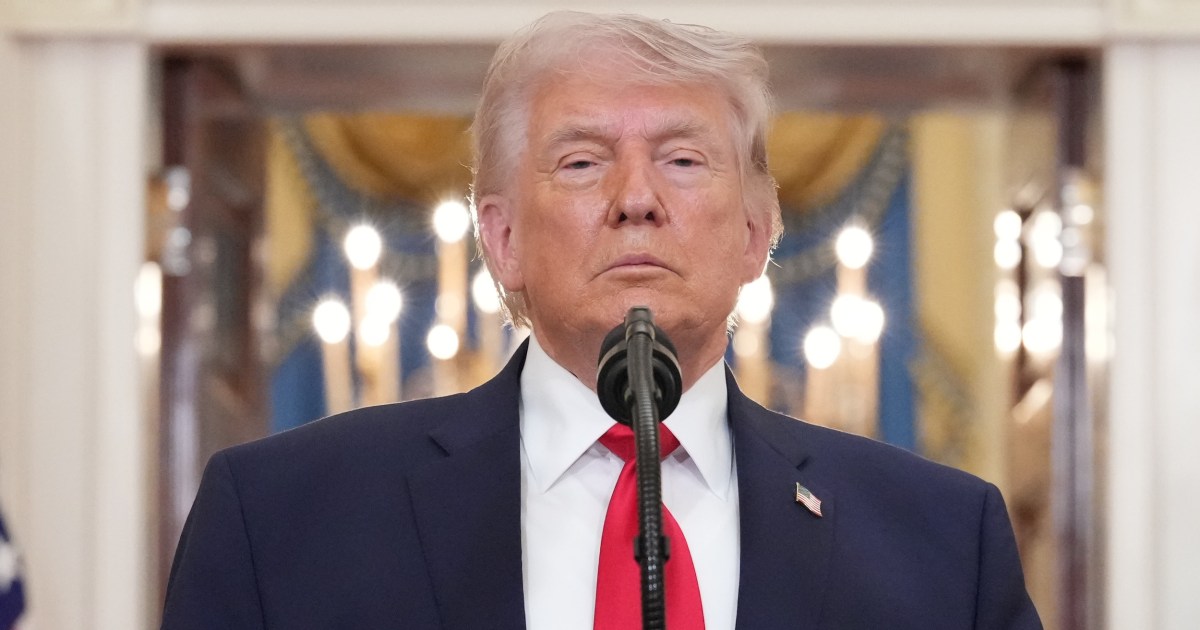
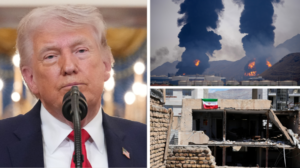
The White House is pushing back against mounting criticism that President Donald Trump has not formally addressed the search for a missing American airman in Iran after the country shot down its first U.S. warplane since the raging conflict began.
The president has not made any public speeches or appearances regarding the search-and-rescue operation. His last public address was on Wednesday, when he gave a primetime speech in which he attempted to make a case for his war to the nation.
White House Communications Director Steven Cheung sought to quell questions from reporters and speculation swirling on social media by issuing a statement on X late Saturday afternoon. “There has never been a President who has worked harder for the American people than President Trump. On this Easter weekend, he has been working nonstop in the White House and Oval Office. God Bless him,” Cheung said.
Questions about Trump’s whereabouts came to a boil on Saturday as one freelance photographer who covers the White House sought to put a rest to a rash of guesswork — untethered to any evidence.
An hour later, Cheung issued his statement noting that Trump spent Saturday working at the White House.
MS NOW spotted a Marine sentry standing guard outside the West Wing a couple of times on Saturday, suggesting the president was working inside. Notably, Trump did not visit his golf club in Sterling, Virginia, outside Washington on Saturday as he usually does when he stays at the White House on weekends.
In an interview with NBC on FridayTrump said the downing of the U.S. F-15E fighter jet over Iran would not affect ongoing negotiations with the country. When asked by The Independent what he’d do if the pilot is harmed or captured by Iranians, Trump replied: “Well, I can’t comment on it because — we hope that’s not going to happen.”
But on Saturday, he issued a fresh threat to Iran on his 10-day deadline, which expires Monday, for the country to reopen the Strait of Hormuz.
“Time is running out – 48 hours before all Hell will reign down on them,” Trump wrote in a Truth Social post.
The president also posted about a “massive strike in Tehran” which allegedly killed “many of Iran’s Military Leaders,” though Trump did not provide additional details on the strike he cited. The White House did not respond to MS NOW’s inquiry on when the strike happened and whether any new military leaders were killed.
Emily Hung is an associate White House producer for MS NOW.
Like many Americans, President Donald Trump has become fixated on Alcatraz, the notorious, frequently fog-shrouded California island fortress in the San Francisco Bay.
But for Trump, the defunct prison is more than a pop-culture, literary and cinematic phenomenon reminiscent of an era when the federal government dealt with gangsters so dangerous they were jailed on a remote, maximum-security island. It’s an opportunity to build “a state-of-the-art secure prison facility.”
And the president wants to use at least $152 million worth of taxpayer dollars to turn the dilapidated facility — shuttered in 1963 because its remoteness made it too expensive to operate — into a functional federal prison.
The White House sent Congress an outline of Trump’s spending priorities for the upcoming fiscal year on Friday. In it was a $5 billion request for the Bureau of Prisons to renovate the country’s “crumbling detention facilities.” More than $150 million of that would be directed toward upholding “the president’s commitment to rebuild Alcatraz.”
The money would cover the first year of project costs, the White House said. But that number pales in comparison to the projected cost of fully restoring Alcatraz, which has not housed a prisoner since the early 1960s.
In its heyday, operations at Alcatraz cost three times more than the average federal prison, according to a 1959 report published by the General Services Administration that assessed the long-term viability of keeping the prison open. Jailing one inmate on the island cost $10 per day, compared to $3 in other prisons.

The prison was closed in the early 1960s because its remoteness and proximity to salt water corrosion ultimately made it too expensive to sustain. Everything from water to food and fuel had to be sent to the island by boat. The logistical challenges of holding inmates on the island long term won’t just disappear, critics argue.
California’s politicians have balked at Trump’s proposal, arguing it would erase an important part of American history and cut into San Francisco’s already struggling local economy. Alcatraz generates about $60 million in tourism revenue every year, according to the National Park Service, which operates the public museum on the island.
“Rebuilding Alcatraz into a modern prison is a stupid notion that would be nothing more than a waste of taxpayer dollars and an insult to the intelligence of the American people,” Rep. Nancy Pelosi, the former House speaker and California Democrat whose district encompasses swaths of San Francisco, said in a statement on X.
San Francisco Mayor Daniel Lurie, a Democrat, dismissed the notion as unserious when Trump first began flirting with the idea last spring.
“If the federal government has billions of dollars to spend in San Francisco, we could use that funding to keep our streets safe and clean and help our economy recover,” Lurie wrote in a post on X after Trump deployed a delegation of federal officials — which included his now former Attorney General Pam Bondi and Federal Bureau of Prisons Director William Marshall — to size up the prison last July.
After the visit, Bondi teased the idea of using a renovated Alcatraz to imprison “illegal aliens.” And Trump suggested Alcatraz could serve as a model to counter former President Joe Biden’s border policies.
The Federal Bureau of Prisons said last year it would issue a “leave no stone unturned” directive to “determine whether the iconic Alcatraz can, once again, serve as a fortress of law and order.” Congress would need to approve Trump’s request for funding the Alcatraz project.
Alcatraz was designated a National Historic Landmark in the 1980s, giving it legally protected status. It’s unclear how the White House would circumvent that designation to open a federal prison. The White House declined to comment to MS NOW’s request about its plan to navigate Alcatraz’s legal protections, referring questions to the Office of Management and Budget.
Since returning to the White House last year, Trump has focused on what he calls “restoring truth and sanity to American history,” which has included revamping the Smithsonian Institution and national parks in his image — including a planned 250-foot arch along the Potomac River — while demolishing the East Wing of the White House to make way for his new ballroom.
As those plans become legally imperiled, his Alcatraz proposal also stands to face a battle.
“Alcatraz is a historic museum that belongs to the public,” Pelosi said. “San Franciscans will not stand for Washington turning one of our most iconic landmarks into a political prop.”
Emily Hung contributed to this report.
Sydney Carruth is a breaking news reporter covering national politics and policy for MS NOW. You can send her tips from a non-work device on Signal at SydneyCarruth.46 or follow her work on X and Bluesky.
As the U.S. military searched Saturday for the missing crew member of an American F15-E fighter jet downed over Iran, critics slammed President Donald Trump for not speaking more forcefully about finding the airman and for overstating his war’s accomplishments.
Rep. Madeleine Dean, D-Pa., a member of the House Foreign Affairs Committee who appeared on MS NOW’s “The Weekend” Saturday, decried Trump’s speech to the nation earlier this week in which she said he “bloviated and bragged about the destruction of Iran’s ability to compete in this war,” which she said “seemed like he was just going to incite such an attack on our military.”
“So I pray for the safe return of the other pilot of the F-15, and I pray for a swift end to this war,” Dean said.
With the U.S. military in a race against time to locate the missing American aviator, the president has said very little about the search.
“Number one, we haven’t obliterated Iran’s capability,” Retired Lt. Gen. Mark Hertling, appearing on the same MS NOW show, said, referring to Trump’s claim on March 16 that the U.S. had “literally obliterated” Iranian threats. “That’s, that’s ridiculous to say.”

He said the Trump administration should be “pulling out all stops” to find the missing airman. Instead, Hertling noted, Trump has tepidly said “he hopes we’re going to find the other crew member and he’s not going to comment on what we’re going to do if we don’t.”
“You move mountains to try and find that individual, get them back to safety,” he said.
Shortly after the military plane went down Friday, Trump touted the idea of seizing Iranian oil that flows through the Strait of Hormuz. But he had yet to publicly condemn the attack. And on Saturday, the president remained mum on the missing service member, saying in a Truth Social post early reminding Iran of his imposed deadline to open the Strait of Hormuz: “Time is running out – 48 hours before all Hell will reign down on them. Glory be to GOD!”
Later Saturday afternoon, Trump posted a one-minute video allegedly of a “massive strike in Tehran,” which he said killed “many of Iran’s Military Leaders.” The timing of the strike and the source of the video were not known. MS NOW reached out to the White House for clarification and additional information about the president’s post.
Iran’s successful targeting of the U.S. aircraft suggests a different wartime reality than the one Trump conveyed in his address to the nation on Wednesday: Iran still has the military capacity to strike U.S. service members and target critical infrastructure deep within its American-allied Gulf Arab neighbors.
Rep. Adam Smith, D-Wash., ranking member of the House Armed Services Committee, said Saturday on MS NOW’s “Velshi” that Trump’s approach to the war overall is “problematic.”
“We’ve got an airman behind enemy lines trying to survive and trying to be rescued. And we should all think about him,” Smith said. “We should also think about the 13 service members who have been killed and the hundreds who have been wounded. So yes, that search is front of mind right now on the war in Iran.”

Bryan Stern, a U.S. military intelligence veteran who operates Grey Bull Rescue, a nonprofit organization that runs high-risk rescue missions in active war zones, said in an interview with MS NOW that “the life expectancy of a downed pilot behind enemy lines decreases exponentially every few hours.” And he said the Iranian regime Iran is “incentivized” to keep the U.S. service member alive for leverage in negotiations with the U.S. and Israel.
Sen. Lindsey Graham, R-S.C., a staunch Trump ally, said after speaking with the president Saturday morning, “I am completely convinced that he will use overwhelming military force against the regime if they continue to impede the Strait of Hormuz and refuse a diplomatic solution to achieve our military objectives.” Graham did not mention the missing U.S. airman.
Trump claimed in his address that the “enemy suffered” clear and “devastating large-scale losses” in a matter of weeks. But less than three days after his prime-time speech, Tehran downed a two-seat fighter jet and struck at least two other American aircraft, including a Blackhawk helicopter involved in search efforts, injuring several of its crew members.
One crew member of the two-person F15-E jet was rescued by U.S. forces Friday. The second airman who is missing has been declared “DUSTWUN,” or “Duty Status, Whereabouts Unknown.”
Iran reportedly has offered a sizable reward to anyone who locates the missing U.S. military service member. The lone U.S. pilot of an A-10 Warthog attack jet that went down in Iran was rescued.
Trump declined to say what actions U.S. forces may take if the missing F-15E crew member is captured or harmed by the Iranians because “we hope that’s not going to happen,” he said in a phone interview with The Independent shortly after the jet went down Friday.
Emily Hung contributed to this report.
Sydney Carruth is a breaking news reporter covering national politics and policy for MS NOW. You can send her tips from a non-work device on Signal at SydneyCarruth.46 or follow her work on X and Bluesky.
- In the West’s water war, Arizona’s governor is betting on Trump — and Iran
- ‘Paradigm shift:’ How Trump’s budget request will keep everyone guessing

- What we know about the White House ballroom bunker

- Gen. George says Army deserves ‘leaders of character’ in farewell letter
- Sunday shows preview: Trump ups threats on Iran after saying war ‘near completion’
- Wisconsin judicial race spotlights state GOP’s struggles

- Crews making progress containing Southern California wildfire as some mandatory evacuations remain

- What we know about the White House ballroom bunker
- White House addresses criticism Trump is AWOL during missing airman search
- Trump’s latest island real estate venture: Alcatraz
-

 The Dictatorship1 year ago
Luigi Mangione acknowledges public support in first official statement since arrest
-

 Politics1 year ago
Former ‘Squad’ members launching ‘Bowman and Bush’ YouTube show
-

 Politics1 year ago
Former Kentucky AG Daniel Cameron launches Senate bid
-

 The Dictatorship1 year ago
Pete Hegseth’s tenure at the Pentagon goes from bad to worse
-

 Politics1 year ago
Blue Light News’s Editorial Director Ryan Hutchins speaks at Blue Light News’s 2025 Governors Summit
-

 The Dictatorship7 months ago
Mike Johnson sums up the GOP’s arrogant position on military occupation with two words
-
Uncategorized1 year ago
Bob Good to step down as Freedom Caucus chair this week
-

 Politics12 months ago
Democrat challenging Joni Ernst: I want to ‘tear down’ party, ‘build it back up’