
Congress
Thune faces first loyalty test: What to do with Trump’s most controversial Cabinet picks

A series of controversial Cabinet picks have become an early test for how Senate leader-in-waiting John Thune will balance proving his loyalty to Donald Trump with the interests of his wide-ranging conference.
So far, he seems to be giving the president-elect wide deference.
Trump hasn’t finished his selections yet, but three picks for some of the most influential roles in the Cabinet are already prompting anxiety among GOP senators who must decide whether to confirm them: Matt Gaetz for attorney general, Pete Hegseth for secretary of Defense and Tulsi Gabbard for director of national intelligence. And Blue Light News first reported another pick Thursday afternoon: Robert F. Kennedy Jr. for Health and Human Services secretary.
Broadly, Republican senators, led by Thune (R-S.D.), say Trump should be allowed to fill out his Cabinet the way he wants — though a couple are openly expressing doubts, especially on Gaetz. Nominees can only afford to lose three votes on the Senate floor and still get confirmed.
“We don’t know until we start the process,” Thune said about Gaetz’s chances of getting confirmed. “And that’s what we intend to do with him and all the other potential nominees.”
The wait-and-see approach isn’t a ringing endorsement, and Thune will have his work cut out for him if he moves forward on confirming each nominee. In addition to publicly aired doubts from Sens. Susan Collins of Maine and Lisa Murkowski of Alaska, Sen. John Cornyn (R-Texas) said Thursday he wanted to see a House Ethics Committee report on Gaetz that details an investigation into several allegations against the attorney general nominee, including that he had sex with a minor. The chair of that panel has indicated the report won’t be released now, because Gaetz resigned from the House on Wednesday night.
The Department of Justice conducted its own investigation as part of a sex trafficking probe and, according to Gaetz’s lawyers and DOJ officials, decided not to bring criminal charges. Gaetz has denied any wrongdoing.
There are issues with Hegseth, Gabbard and Kennedy, too. Combat veteran Sen. Joni Ernst (R-Iowa) has said Hegseth needs to “explain” his recent comments on a podcast that “we should not have women in combat roles.” Gabbard has sparked concern within the intelligence community due to her sympathetic views on autocrats like Russia’s Vladimir Putin and Syria’s Bashar al-Assad. And some senators have dodged questions about confirming Kennedy — who has touted for years the debunked claim that vaccines cause autism — before reports of his official pick.
There’s a general theory on Senate-confirmed nominations that new presidents will offer a sort of sacrificial lamb, a nominee meant to go down to make others look better or provide cover to purple-state senators to approve others. But GOP leaders said they don’t think that’s Trump’s intention here, and regardless, more than one failure could sour Thune and Trump’s relationship early in the term. Thune has vowed to advance Trump’s agenda, and his nominees are the first test on how effectively he can deliver.
“He’s got a hard job,” said one GOP senator, granted anonymity to speak candidly. “Be careful what you ask for. He knew it was going to be hard. He knew President Trump was going to put people in there that people [were] going to question.”
But, the senator noted, Thune remains responsible for getting members “on the same page, and that’s tough as Republicans.”
Compare it to 2017, when Republican senators had a slightly slimmer majority to confirm Trump’s picks in his first term. At the time, Trump had to withdraw his secretary of Labor nominee Andrew Puzder after it became clear he didn’t have the votes in a 52-48 Senate majority. Puzder faced multiple accusations of misconduct, most notably his admission that he did not pay taxes on the services of an undocumented immigrant who worked for him for years.
Puzder was the only Cabinet nominee that Trump had to pull in his first year, though he was far from alone over the four-year term. Senate Republicans, even those closely aligned with Trump, aren’t eager to hop into another bruising series of confirmation fights — or deal with cascading withdrawals again.
And in a further sign of the general levels of deference to Trump, leading GOP senators aren’t actively pushing back on suggestions that the president-elect use recess appointments for picks that may not have the votes in the Senate.
Sen. Shelley Moore Capito (R-W.Va.) said she doesn’t think there’s been “any serious discussions on how to move forward on a recess appointment, because hopefully it’ll prove unnecessary.”
Republicans frequently brushed off questions about confirming the controversial nominees by pointing to the need for a thorough vetting process. And some argued that even if that process turned up negative information on nominees, it was in Trump’s best interest to find out before they were confirmed.
“We need to have a complete vetting of the nominees — not only so we know that the nominee is qualified but also to protect the president,” Cornyn said. “I’m sure it’s not in his best interest to have any surprises.”
“I don’t have any preconceived notions about it,” Cornyn later added about Kennedy’s planned nomination to HHS. But he said he’s “sure” Kennedy’s strong anti-vaccine position “will come up.”
With regards to Gabbard, Sen. Lindsey Graham (R-S.C.) — a close Trump ally — noted that “we have different foreign policy positions at times” but that he intended to give broad latitude to the president-elect in selecting his government.
“I’m gonna do with Trump what I do with everybody: Let you pick your people,” he told Blue Light News. “Defer to your choice, unless it’s too far.”
Collins, who voted against multiple Trump nominees in his first term, said she “can’t imagine” that the issues contained in the House Ethics Committee’s report about Gaetz wouldn’t “become public, either through the committee’s extensive investigation or the FBI report or questions asked by committee members at Mr. Gaetz hearing.”
“Mr. Gaetz is an example of where the Senate’s role is critical to take a look at allegations and at his fitness for a very important job,” Collins added.
And Murkowski, after saying Wednesday that Gaetz was not a “serious” pick, declined to weigh in on Trump’s selections on Thursday, saying she needs to meet with her constituents.
Sen. Todd Young (R-Ind.), who’s broken with Trump on occasion, said he needed to learn more about each of the picks, especially Gaetz.
“I don’t know enough to be concerned right now,” he told reporters. “I think it would be responsible for me to learn more about each of these nominees.”
Others in the conference said nothing, even an adverse report from the House Ethics Committee, would shake their confidence and willingness to confirm Gaetz as attorney general.
“He’s very talented, and anyone who has spent any time with him knows he’s very smart and capable. I’m going to vote to confirm him,” said Sen.-elect Jim Banks (R-Ind.). “I’m not gonna speculate about what [the Ethics report] says or what it doesn’t say, because we don’t know what it says.”
Joe Gould contributed to this report.


Lawmakers in both parties are escalating pleas for legislative action after an artificial intelligence researcher claimed late Tuesday that unchecked AI models could feasibly destroy the world by the decade’s end — and AI developers know it.
While it’s not the first time experts have warned of the existential threats posed by an unregulated industry that is rapidly advancing, it comes at a moment of heightened awareness on Capitol Hill about the need to reach consensus on AI safety legislation before it’s too late.
“The call is coming from inside the house,” Rep. Lori Trahan of Massachusetts, a House Democrat seeking to lead her party on AI policy, posted on X Wednesday. “Safety researchers are resigning, powerful AI models are breaking out of their labs, and companies are racing ahead anyway.”
She was responding to social media posts from former Anthropic AI researcher Jason Coxon, whose warnings were first reported in the Wall Street Journal.
“I resigned from Anthropic today. I spent the last three years doing pretraining research at both OpenAI and Anthropic,” said Coxon, who specialized in training models. “Neither company is acting responsibly. They are racing straight to self-improving superintelligence and gambling with our lives.”
He added: “The people building AI earnestly believe that it could kill us all by the end of the decade. This is not a marketing stunt.”
Adding to the alarm, Evan Hubinger, a top Anthropic scientist charged with ensuring AI aligns with human values and ethics, agreed with Coxon’s characterization of the situation.
“We really do earnestly believe AI could kill all humans! I personally think it is >10% within the next decade,” he posted. “I believe Anthropic is trying its best, but we do not yet have a plan to solve alignment for superintelligence and are not clearly on track to.”
Spokespeople for OpenAI and Anthropic did not immediately respond to requests for comment, but leaders of both companies have engaged with Congress in the not so distant past on the issue. Anthropic CEO Dario Amodei made a direct plea to lawmakers to impose limits on AI development in a New York Times op-ed last year, while OpenAI CEO Sam Altman has repeatedly visited congressional offices this year.
Trahan was not the only member of Congress Wednesday to join the calls for guardrails now.
Democratic Rep. Ted Lieu of California — a member of leadership and co-chair of an AI commission that Minority Leader Hakeem Jeffries charged with formulating AI policy recommendations — called Coxon’s post “exhibit number 739 for why we need to pass the bipartisan AI Kill Switch Bill asap.”
Republican Rep. Anna Paulina Luna of Florida urged Congress to convene a special session on AI, asserting “not enough of Congress is focusing on this.”
“We MUST be ready,” she wrote. “This is happening whether or not we want it to.”
But lawmakers remain far apart on agreeing to any plan. Trahan continues to push for Congress to pass her bipartisan AI safety bill with Republican Rep. Jay Obernolte of California as members of both parties say it falls short.
Sen. Bernie Sanders (I-VT), who has often been ahead of the pack in calling for strict standards — including his latest proposal that would ban AI superintelligence — declared on social media that 81 percent of Americans believe the government is not doing enough to regulate AI.
“AI threatens our economy, privacy, democracy and the well-being of our kids,” he said. “Congress must stand up to the Big Tech oligarchs and protect the American people.
Sanders’ proposal with House Progressive Caucus Chair Greg Casar (D-Texas) to ban AI superintelligence, however, was widely panned by colleagues who said barring innovation was not the answer.
Minority Leader Chuck Schumer is about to step into a political minefield as the Senate takes up a college sports bill as soon as next week — with perhaps as many reasons for his caucus to oppose it as support it.
Senators return to Washington Monday to a three-week window for legislating before they depart until November — and internal splits on both sides of the aisle are threatening passage of legislation to impose new federal rules on an industry worth tens of billions of dollars.
Schumer must decide if he wants to steer his members toward helping Republicans reach the 60-vote threshold on what could be the sweepiest bill the chamber passes before the midterms.
Backing it would mean supporting top Commerce Democrat Maria Cantwell’s efforts in crafting the bipartisan legislation that has taken months of painstaking negotiations with her counterpart, Chair Ted Cruz. But there are also plenty of downsides to promoting the bill — which has President Donald Trump’s endorsement.
One Democratic Senate aide with knowledge of the negotiations believes there’s enough opposition within the party to tank the measure on the floor as a coalition of labor rights groups and the Congressional Black Caucus warn the bill is exploitative.
“A good number of Democratic offices aren’t eager to tick off the AFL-CIO and NAACP, screw over college athletes and deliver Trump and Senate Republicans a major political win weeks before midterms,” another Democratic Senate aide with knowledge of the negotiations said.
“Bad policy. Terrible politics,” the aide added.
An aide for Schumer Tuesday did not say whether he supports the legislation. The spokesperson said Schumer “knows Congress should act to bring clarity and certainty” to the issues addressed in the measure, and that he’s “continuing to talk to members as the bill moves toward the floor.”
But continued pushback from Democratic members like Sen. Chris Murphy and the CBC — plus several labor, civil rights and athletes organizations — have thrown into question Democrats’ support.
Murphy, who has objected to the bill’s silence on college athletes’ employee status, has led the charge against the bill, refuting several posts from Cruz on social media this week.
Still, a lobbyist working on the bill, granted anonymity to discuss the dynamics, said they “could see Schumer letting [defectors] go their own way.”
“I also suspect that [Dems’] own tallies are probably showing that they can afford votes like that,” the lobbyist said of Schumer.
Meanwhile, Republicans are still working through their own divide on the bill: concerns over whether the legislation would pre-empt states’ authority to block trans athletes from competing on women’s sports teams.
Trump last month encouraged Republicans not to stand in the way of the measure over the issue after senators like Josh Hawley and Tommy Tuberville expressed hesitation.
But even if the bill were to eke by in the Senate, a hefty amount of opposition in both parties is bound to create an uphill battle in the House, where Majority Leader Steve Scalise has been less than enthusiastic about the package.
What else we’re watching:
— GOP HOPES DALLAS ENERGIZES TRUMP FANS: Republicans are hoping the Trump-centric midterm convention kicking off in Dallas Wednesday reminds their base why they fell in love with the president in the first place. The next 48 hours are geared in part toward turning out low-propensity voters who are loyal to Trump but tend to skip midterm elections. If they turn out, it won’t be because these voters like a particular congressman but because of their affinity for the president.
— COLLINS DINGS WHITE HOUSE ON TARIFFS: Sen. Susan Collins says the White House doesn’t understand how its trade war with Canada is affecting Maine. The border-state senator facing a tough re-election bid told Blue Light News she has spoken with Vice President JD Vance and U.S. Trade Representative Jamieson Greer about the escalating tariffs between the two countries and encouraged them to re-open negotiations. Collins late Tuesday applauded the Trump administration’s tariff exemptions on road salt and cement, stating they were “two products crucial to Maine that would be severely affected.”
Jacob Wendler, Alex Gangitano, Jessica Piper and Megan Messerly contributed to this report.
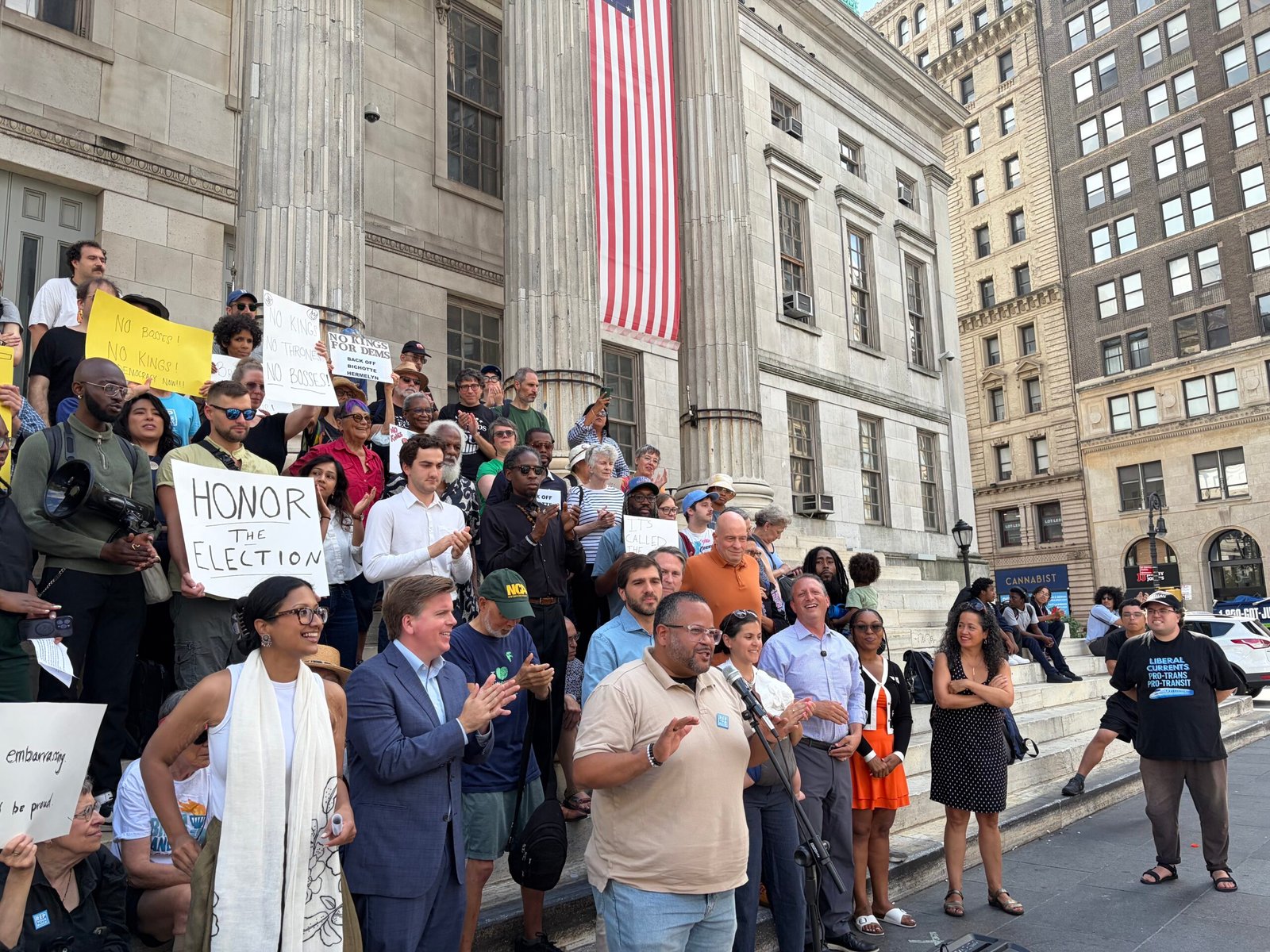
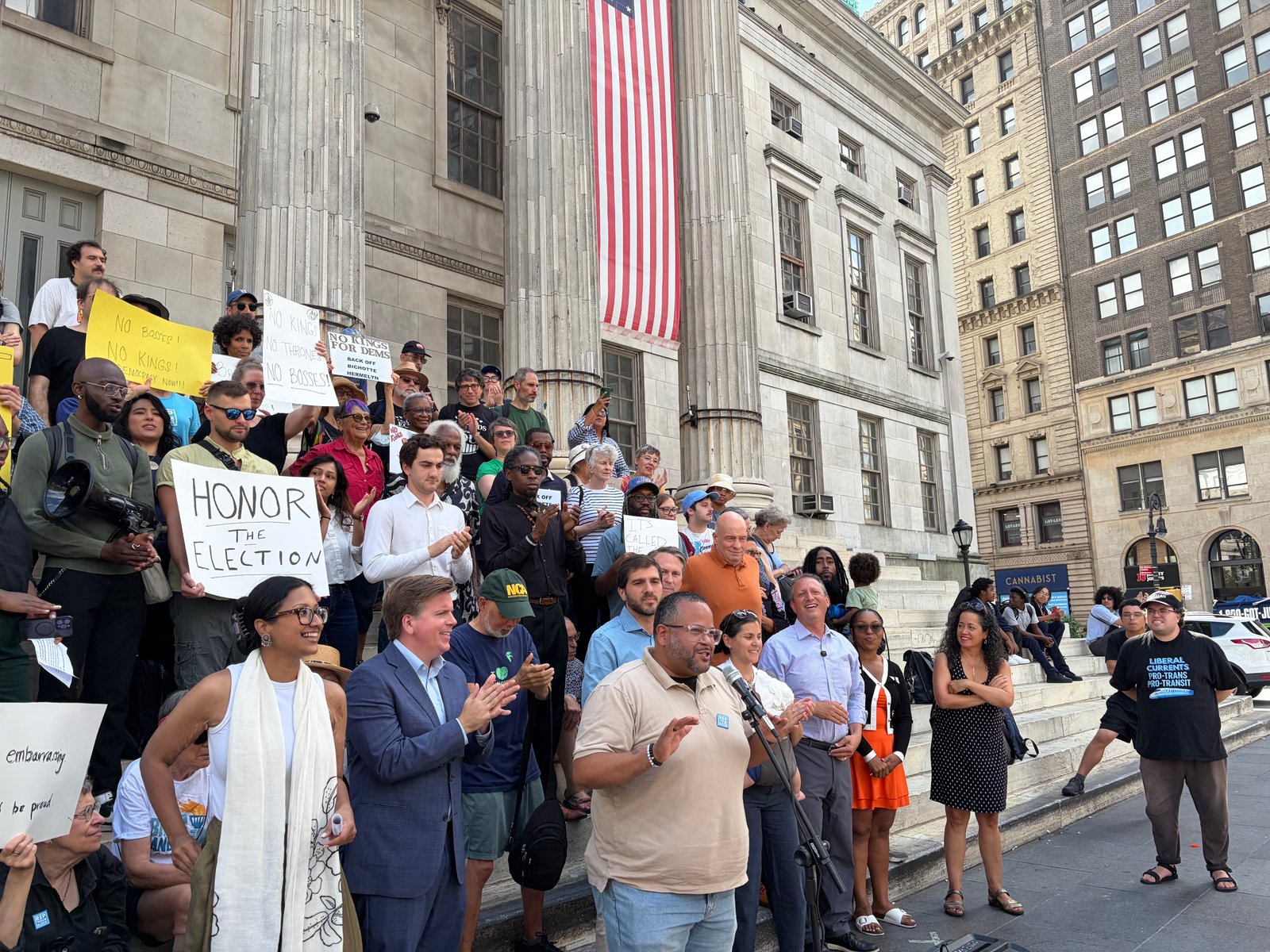
NEW YORK — Democrats are at war in Brooklyn over a maneuver some inside the party have called “corrupt,” a “power-grab” and even “fascist.” And they’re not talking about Republicans.
With weeks to go before the midterm elections, an intraparty feud is on full display among Democrats jockeying for control of the party apparatus in one of the bluest, most populous counties in the country. And some in the party worry the quarrel is exposing the limits of the party’s two most powerful politicians: Senate Minority Leader Chuck Schumer and House Minority Leader Hakeem Jeffries, both Brooklynites.
“It is not great if you’re a powerful national Democrat and you can’t stop what is functionally a coup d’etat from happening in the county party in your own backyard,” said Democratic strategist Jon Paul Lupo, noting that the Brooklyn contretemps “definitely has repercussions” and an “impact on their standing among Democrats.”
“There’s a huge incentive to try and fix it,” he added.
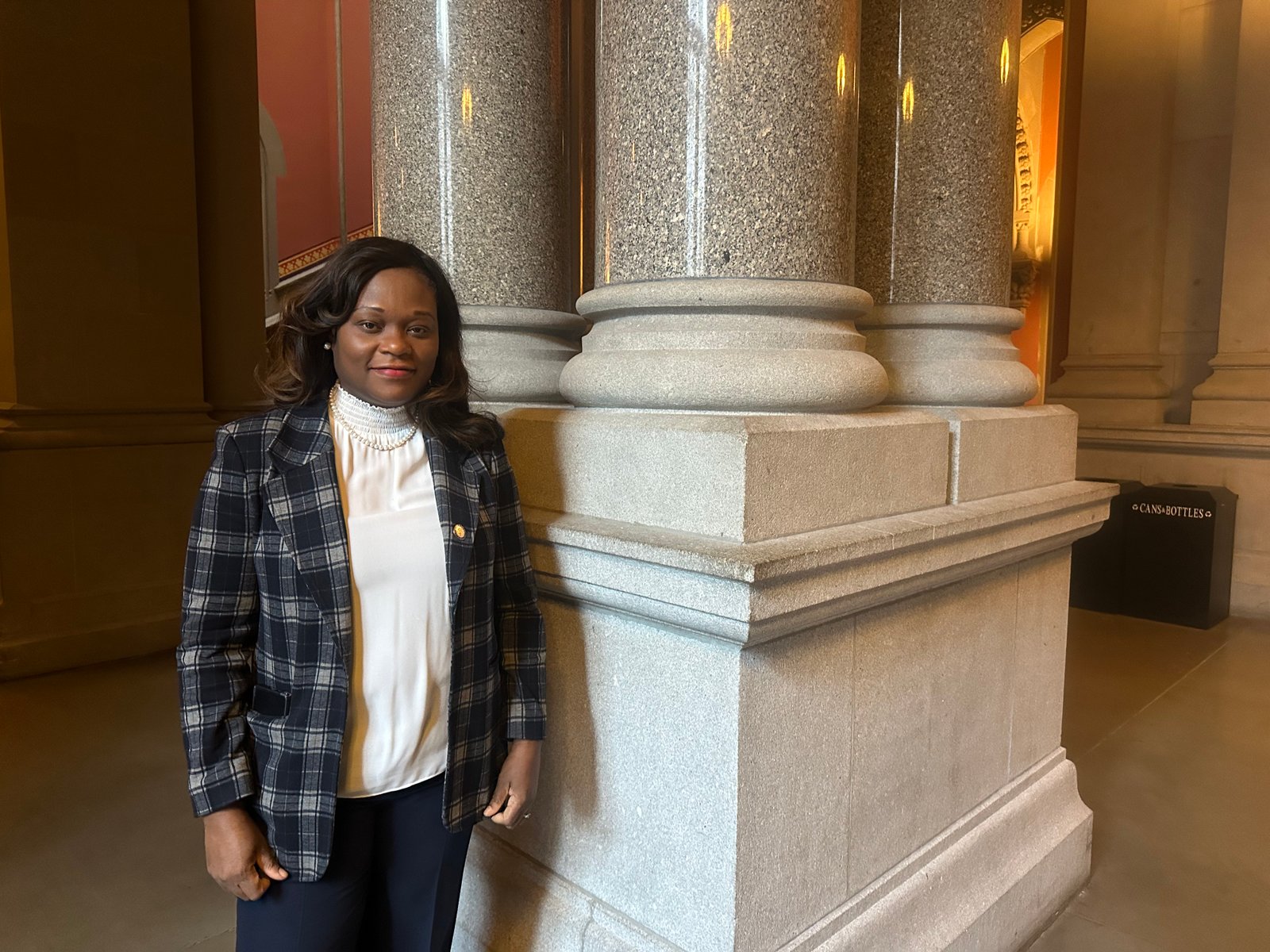
Controversies are by no means foreign to the Brooklyn Democratic Party. But this fight has drawn in some of New York’s biggest political names as they lambast its chair, state Assemblymember Rodneyse Bichotte Hermelyn. In the weeks before a contested leadership election, she moved to change the makeup of the organization by expanding its executive committee, claiming it would promote inclusivity. Her critics insist it’s really just a play to boost her dwindling support ahead of the vote.
Democrats across the ideological spectrum — including Gov. Kathy Hochul, New York City Mayor Zohran Mamdani and state Democratic Party Chair Jay Jacobs, as well as Schumer and Jeffries — came out against the move. Schumer warned such a change “sends the wrong message when we need to rally voters for the November election.”
But even the widespread criticism wasn’t enough to stop her proposed changes. A vote to implement them was held last month and narrowly passed, 21 to 19 with one abstention.
In the wake of that vote, leaders aligned with Brooklyn Can’t Wait, the self-described reformer group that claimed they had enough support to unseat Bichotte Hermelyn, are wondering if Schumer and Jeffries could be doing more to support them.
Julio Peña III — Brooklyn Can’t Wait’s pick to challenge Bichotte Hermelyn for chair — told Blue Light News last week he appreciated Schumer and Jeffries coming out publicly against Bichotte Hermelyn’s maneuver, but said he has not spoken with either.
“I do think this does not send a good message that this power grab from straight out of the Republican playbook is happening in our own backyard in Brooklyn,” he said. “We would love if they can have conversations with either … individual district leaders, or the party chair, and just say like, ‘This needs to stop.’ We’re hopeful that that can still happen.”
When asked if he thinks they would have sway, he replied: “I would hope so.”
Chi Ossé, a progressive New York City Council member who briefly considered a primary challenge against Jeffries last year, wrote on social media that “a simple call or text to a couple of these district leaders” from Jeffries and Schumer “would’ve changed the results.”
“Either they don’t care about this affront to our democracy happening in their own backyard or people don’t take their leadership seriously,” he said.
The collective pushback is uncommon in a local battle — a reality Democratic strategist Evan Stavisky said highlights how this isn’t a “run-of-the-mill fight in Brooklyn.”
But both Schumer and Jeffries have more pressing priorities to deal with beyond Brooklyn. Control of Congress tops that list.
“Anything aside from that mission, no matter how important it is, has to take a backseat,” Stavisky said. “That’s why it’s remarkable [Jeffries] and Sen. Schumer both opined on this. Their job has to be winning tough races outside of the city of New York and outside the state of New York.”
When asked if Jeffries plans to get further involved in the Brooklyn battle, spokesperson Justin Chermol said the minority leader’s focus is on the midterms.
“Leader Jeffries has publicly and privately made clear that he opposes the Kings County Democratic Party rule change,” he said in a statement last week. “With 60 days left until the midterms, he is focused on battling Republicans, fighting for an Affordable America and taking back control of the United States House of Representatives so we can end this national nightmare.”
Schumer’s office did not respond to a request for comment.
Democrats are clear-eyed that what’s going on with their county party is a mess — and want to move on so they can focus on the midterms. But some pushed back on the idea that either Jeffries or Schumer should get further involved, arguing that issuing a statement was enough.
Lupe Todd-Medina, a political consultant and longtime Jeffries ally, contended that for some of Jeffries’ critics, no matter what he does, “it’s not enough.”
She questioned when he would even have the time to make calls to district leaders on this: “He’s got a lot going on,” she said. “You’re talking about a hyperlocal position.”
The fight is playing out in court. After the reformers unsuccessfully sought legal action in state Supreme Court to stop the rule-change vote, they sued again. That suit argues outgoing county committee members should not have been allowed to participate, and that if they were excluded, the amendments would have failed.
A ruling is still pending after a hearing Tuesday.
Bichotte Hermelyn has argued it was fair game to amend the county party’s internal rules and leadership structure — and she’s taking the drama in stride on social media. In a video posted last week, she questioned the outrage over “more people” being involved in the committee, insisted they “didn’t undo any election” and mocked her opponents, saying they had “been out-organized again.”
In between cuts of her eating a Haitian beef patty, Bichotte Hermelyn, the first Haitian-American woman elected to the state Assembly from New York City, said, “Melting down over a harmless rule change, but Haitians are being fired. That didn’t deserve a statement?”
The reference was to how, after the Trump administration ended temporary protected status for Haitians, Mamdani fired municipal employees who had the status. Bichotte Hermelyn wrote an op-ed questioning the move. The mayor said the city kept people on the payroll as long as legally possible.
A spokesperson for the Brooklyn Democratic Party did not respond to questions directed at Bichotte Hermelyn regarding communications with Schumer and Jeffries, or the court fight.
Amid all the division, some have floated the idea of a consensus candidate. But Peña said he doesn’t think the 22 district leaders supporting him will flip. (Twenty-two votes would constitute a majority under the original structure of the committee, but not after Bichotte Hermelyn’s changes.)
While Jeffries and Schumer spoke out against the changes, neither have explicitly put their weight behind either candidate.
A Brooklyn Democratic insider, granted anonymity to speak candidly, said it’s a “big mistake” to assume that Jeffries has a “magical allegiance to anyone.”
“It is not his responsibility to manage anyone’s campaign,” that person said. “It’s lazy for anyone to expect him to clean up messes.”
Frank Seddio, a former Brooklyn party head who’s now a district leader and helped orchestrate the latest rule changes, said he hasn’t heard from Jeffries or his team and that he doesn’t believe any other party members have either.
“I guess he’s staying out of it,” Seddio said. “It’s not his business … although he’s certainly someone I admire and respect and one of the most important people in the United States.”
The Brooklyn Democratic Party hasn’t been an integral organization to campaigning. In fact, some Democrats have accused Bichotte Hermelyn of actively helping Republican opponents and waging a legal battle to remove district leader candidates aligned with Brooklyn Can’t Wait from the ballot. But the party does have power in nominating judicial candidates, a process Peña and his allies say they want to make more transparent.
Bichotte Hermelyn has served as chair since 2020. The leadership vote that will decide her fate has yet to be scheduled, but party rules dictate that vote must take place by Oct. 6.
If she remains in her role, Lupo warned, it could become fodder for Republican attacks about the “evil specter of corrupt New York Democrats in Brooklyn.”
“It’s not like Hakeem Jeffries did this or Chuck Schumer did this,” he said. “It’s very different from Trump’s active interference in democracy, but it can be weaponized by Republicans if it goes through.”
Much of the concern is likely to quiet down if Democrats do retake Congress — and Schumer and Jeffries claim the highest leadership positions. But if they don’t, critics, especially from the left flank of the party, are likely to get even louder.
The latter scenario would make having a cohesive county party even more critical, said Basil Smikle, a former executive director of the New York Democratic Party.
“It does create vulnerability depending on what happens to Democrats nationally at the end of the cycle,” Smikle said. “There’ll be questions about Hakeem’s leadership and Chuck’s leadership. … If you don’t have a strong county organization pushing those voices back, those detractors back, that creates real vulnerability.”
Chris Sommerfeldt contributed to this report.
- Key oil benchmark tops $100 a barrel for first time since July, as midterms loom
- Lawmakers urge Congress to act after AI researcher’s dire warning
- ‘No good options’: GOP’s midterm hopes suffer under energy inflation
- Capitol agenda: Will Schumer go long for college sports?
- Spencer Cox: America’s political divide is destroying families and friendships

- Louisiana’s abortion pill case could wipe out access in blue states
- Schumer and Jeffries opposed a Brooklyn power play. It happened anyway.

- Stefany Shaheen, daughter of Sen. Jeanne Shaheen, wins New Hampshire House primary
- Supreme Court rejects bid to revive Missouri’s pro-GOP redistricting before midterms
- Capitol agenda: Republicans hope Trump won’t dominate Dallas
-

 Politics2 years ago
Former ‘Squad’ members launching ‘Bowman and Bush’ YouTube show
-
Uncategorized2 years ago
Bob Good to step down as Freedom Caucus chair this week
-

 Politics2 years ago
Former Kentucky AG Daniel Cameron launches Senate bid
-

 The Josh Fourrier Show2 years ago
DOOMSDAY: Trump won, now what?
-

 The Dictatorship2 years ago
Luigi Mangione acknowledges public support in first official statement since arrest
-

 The Dictatorship2 years ago
Pete Hegseth’s tenure at the Pentagon goes from bad to worse
-

 Politics2 years ago
Blue Light News’s Editorial Director Ryan Hutchins speaks at Blue Light News’s 2025 Governors Summit
-

 The Dictatorship12 months ago
Mike Johnson sums up the GOP’s arrogant position on military occupation with two words