
The Dictatorship
There’s a reason Republicans want to hide what’s in their newly passed megabill

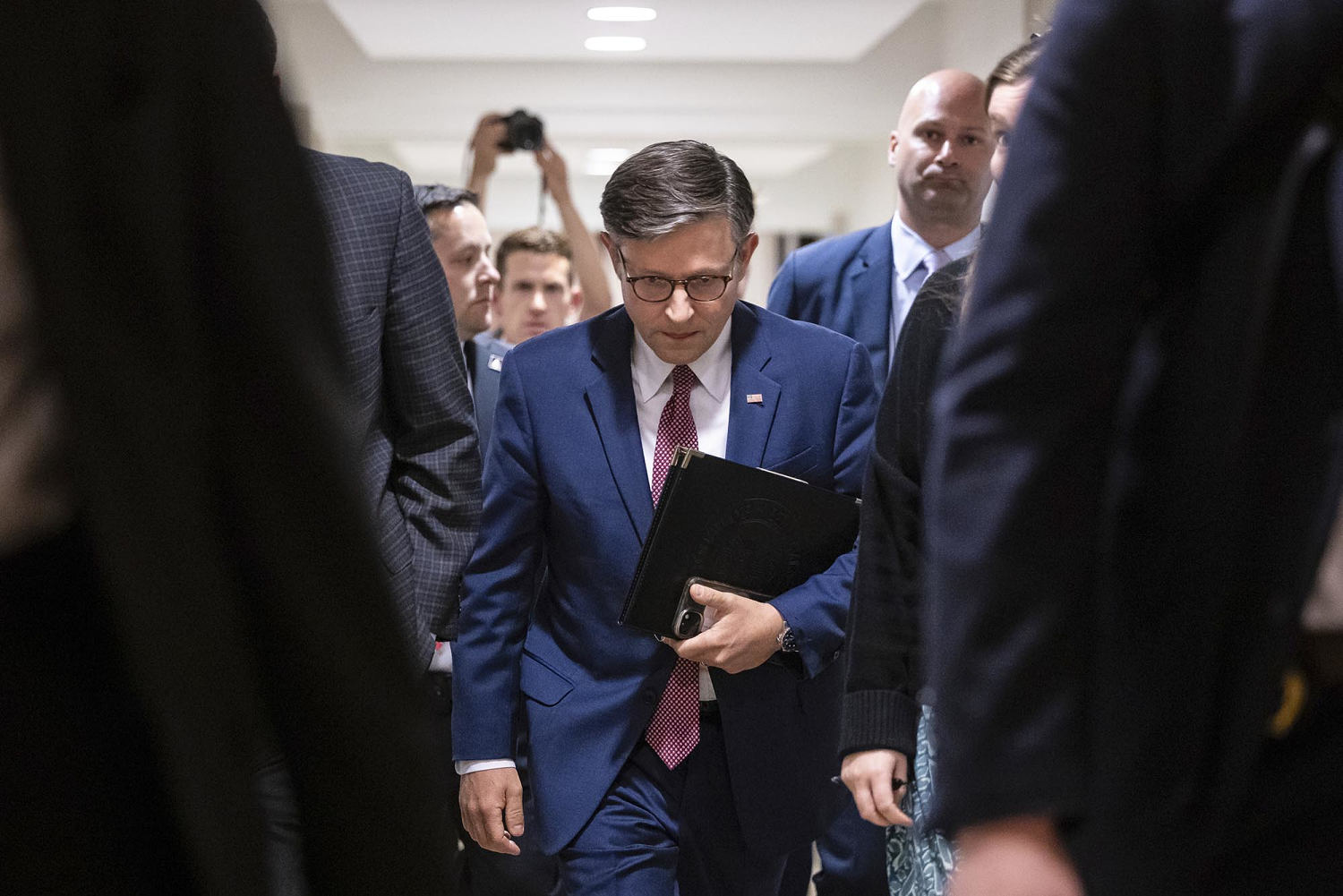
Early Wednesday, when most Americans were snuggled in their beds, Republicans in the House of Representatives were working hard to take away the health care of millions of Americansblow a $3 trillion hole in the budget deficit and make the wealthiest people in America richer and the poorest Americans poorer.
If this sounds like hyperbole, it’s not. The GOP-controlled House Rules Committee convened at 1 a.m. Wednesday morning to discuss a bill that hasn’t been fully drafted and the provisions of which were still part of intense negotiations. Indeed, the real work on the legislation was happening behind closed doors as House Speaker Mike Johnson, R-La., tried to cobble together enough votes to pass something, anything, so he could meet his self-imposed deadline for a floor vote by Memorial Day. Late Wednesday, GOP leaders released yet more significant changes to the billand on Thursday morning the full House passed the bill by a single vote.
What we do know about the legislation the GOP is calling the “One Big Beautiful Bill Act” is genuinely terrifying.
All this is being done to extend the Trump tax cuts, which disproportionately benefit wealthy Americans.
According to an analysis published Tuesday by the Congressional Budget Officethe numbers in the GOP’s draft legislation are brutal. The bill would increase the federal deficit by $3.8 trillion — a rise that is spooking bond markets already worried about the president’s tariff increases. The bill would slash $267 billion in federal spending for SNAP, which more than 42 million low-income people rely on to put food on the table for their families. And it would cut nearly $700 billion from federal funding for Medicaid.
The CBO estimated Tuesday that the Medicaid cuts could cause roughly 8 million people to lose their health insurance coverage, and that number could rise to 15 million thanks to other provisions in the legislation. The amendments revealed Wednesday, writes Larry Levittexecutive vice president for health policy at KFF, surely “would lead to more people losing health insurance.” But Republicans scrambled to vote Thursday before the CBO could update its totals.
All this is being done to extend the Trump tax cuts, which disproportionately benefit wealthy people. The impact of the GOP’s bill is extraordinary in both its cruelty and its extreme inequality. According to the CBO’s estimate, household resources for the poorest people would decrease by 4% over the next eight years, while the richest people’s household resources would increase by 4%.
If enacted, the bill would constitute the largest transfer of wealth from the needy to the wealthy in American history.
It’s no wonder, then, that Republicans were rushing this bill through while most Americans slept. If you were robbing the poor on behalf of the rich, you, too, would do it in the dead of night.
This obfuscation has become par for the course as this legislation has wound its way through Congress. As Bulwark’s Jonathon Cohn pointed out last weekthe House Energy and Commerce Committee, which is responsible for overseeing Medicaid, hasn’t held a single hearing to examine the implications of these changes to the American health care system. Instead, it merely held a markup hearing to move the legislation closer to a vote on the House floor.
What makes this situation even worse is that Republicans, from the president on down, are consistently lying about what the bill would do.
Earlier this week, White House press secretary Karoline Leavitt claimed that this bill, which would blow a $3 trillion hole in the federal budget, wouldn’t increase the deficit. Leavitt even claimed that there are “$1.6 trillion worth of savings in this bill” and that this number represents “the largest savings for any legislation that has ever passed Capitol Hill in our nation’s history.” (Leavitt provided no source for this figure, and it appears she simply referred to the spending cuts in the bill while ignoring the trillions in lost revenue that will come from the tax cuts.)
What is happening on Capitol Hill can hardly be described as legislating.
It is as stunning a lie as perhaps any other uttered by members of the Trump administration (and that is saying something). Even one House Republican, Thomas Massie of Kentucky, is publicly calling the White House and his colleagues liars for promoting this fiction.
On Tuesday, President Donald Trump traveled to Capitol Hill to lobby Republicans and told reporters that Republicans are “not doing any cutting of anything meaningful. The only thing we’re cutting is waste, fraud and abuse.” This, too, is a bald-faced lie.
House Republicans have consistently claimed that the bill’s work requirements for Medicaid recipients are meant to get the “able-bodied” into the workplace. Such people, according to the No. 2 Republican in the House, Steve Scalise of Louisiana, are “living in their mom’s basement playing video games.” In fact, nearly two-thirds of those on Medicaid are already working. Almost all other recipients aren’t working because of caregiving, school, illness or disability.
In states where work requirements have been imposed on Medicaid recipients, the result is a drop in coverage, which almost certainly is the reason Republicans are including them in their big, beautiful bill. The fewer people on Medicaid, the greater the cost savings, and the more money there is for tax breaks.
Indeed, what is happening on Capitol Hill can hardly be described as legislating. Making laws means hearing from experts, considering data and weighing pros and cons. The GOP’s “Big, Beautiful Bill” is none of those things. It’s highway robbery, and Republicans desperately don’t want the American people to know that they are the ones holding them up.

Michael A. Cohen is a columnist for BLN and a senior fellow and co-director of the Afghanistan Assumptions Project at the Center for Strategic Studies at the Fletcher School, Tufts University. He writes the political newsletter Truth and Consequences. He has been a columnist at The Boston Globe, The Guardian and Foreign Policy, and he is the author of three books, the most recent being“Clear and Present Safety: The World Has Never Been Better and Why That Matters to Americans.”




NEW YORK (AP) — Among dozens of companies competing for Pentagon contracts to supply attack drones, one stands out.
Powerus is flush with cash and ballooning in size as it buys up rivals and has one other advantage: It is partly owned by President Donald Trump’s two oldest sons.
The Trump family has drawn criticism for expanding its real estate business into foreign countries that are trying to curry favor with the president and for making billions of dollars off cryptocurrency ventures benefiting from his policies. Grabbing less attention are new ownership stakes in federal contractors providing everything from rocket parts and rare earth magnets to AI chips and computer hardware.
“It’s corruption,” said Kathleen Clark, a government ethics expert at Washington University School of Law in St. Louis. “Government decision makers will feel pressure to use contract awards to enrich the president’s family.”
The latest Trump venture is hoping to win some of the $1.1 billion set aside by the Pentagon to build up a U.S. manufacturing base for armed drones now that the Trump administration put a ban on importing them from China.
Powerus says there is no problem with it bidding for government money that could make the president’s sons richer.
“There’s no conflict there. Whatever they’re doing, is what they’re doing,” said co-founder Brett Velicovich, referring to the Trump brothers. “Our focus at the company has nothing to do with politics.”
Asked to comment about potential conflicts, the Trump Organization sent a statement from Eric Trump: “I am incredibly proud to invest in companies I believe in. Drones are clearly the wave of the future.”
Founded by U.S. Army Special Operations veterans about a year ago, Powerus makes drones mostly for commercial uses, from spreading fertilizer to putting out forest fires. But it is bulking up fast to supply the Defense Department with armed drones like the ones being used by Ukraine and Russia and, more recently, Iran as it rains havoc on Gulf states allied with the U.S.
The company bought three rivals in the past six months and plans to buy more. It just raised $60 million from investors to fund the buying spree and hopes to tap additional financing by doing a “reverse merger” in which a private company gets a public listing by buying one already on the stock market, usually a business with little or no operations.
The public company in this case is Aureus Greenway Holdings, a Florida firm partly owned by Eric and Don Jr. that holds a few golf courses and is listed on the Nasdaq stock exchange.
Of the two oldest brothers, Don Jr., is the one most involved in federal contracting firms through a venture capital fund called 1789 Capital.
Shortly after Trump’s reelection, 1789 Capital made Don Jr. a partner and then went on a buying spree of its own, investing in 25 companies in one year. It had made only six purchases in the two years prior, according to data provided by research firm Pitchbook. Most of its targets appear to be seeking federal contracts or taxpayer funds or have already won them
Don Jr. and his brother have also started their own investment firm to buy stakes in U.S. companies designed to help their father revive America’s manufacturing base. After The Associated Press asked Trump’s chief business lawyer about language in a regulatory filing stating the firm would target companies seeking federal grants, he filed a new document with that language removed.
Don Jr. appears well-equipped to help Powerus. He has spoken out about the need for armed drones, appears knowledgeable about the technology and publicly endorsed Defense Secretary Pete Hegseth when he was coming under fire during his confirmation hearings.
Asked why Powerus picked a Trump company to merge with instead of the hundreds of others on Nasdaq with little or no operations, co-founder Velocovich said he was not a finance specialist and didn’t know.
“Our focus is 100% on getting the right technology in the hands of the warfighter,” he said, “regardless of who the investors are.”
The Dictatorship
Trump White House Is Releasing Video Mixes Of Iran War Footage With Video Games And Action Movies

Peaceful and violent, in video game screenshots and movie clips and on professional playing fields, the icons come fast and furious in quick-cut footage — some of the most renowned slivers of 21st-century American popular culture, harnessed by the Trump administration to promote the freshly launched war with Iran.
The White House’s social media feed has issued a series of pumped-up videos that mix real Iran was explosions with movie action heroes, gaming footage and bone-crunching football tackles, leading critics like a top cleric of the U.S. Catholic Church to condemn a trivialization of deadly real-life conflict.
Clips from “Braveheart,” “Superman,” “Top Gun,” “Breaking Bad,” and “Iron Man.” All appear cut between declassified imagery of what is presumably the Iran war. Even the cartoon likeness of SpongeBob SquarePants is spliced in, asking, “You wanna see me do it again?” in between images of buildings, planes and vehicles blown up by American bombs. The caption on one bomb-heavy post: “Courtesy of the Red, White and Blue” — the title of a post-9/11 Toby Keith song about war that is subtitled “The Angry American.”
People wait in line for theater presentations for video games including Batman, Mortal Kombat X and Shadow of Mordor at the WB Games booth at the Electronic Entertainment Expo, Wednesday, June 11, 2014, in Los Angeles. (AP Photo/Jae C. Hong, File)
People wait in line for theater presentations for video games including Batman, Mortal Kombat X and Shadow of Mordor at the WB Games booth at the Electronic Entertainment Expo, Wednesday, June 11, 2014, in Los Angeles. (AP Photo/Jae C. Hong, File)
The fiction-meets-reality product of the White House’s aggressive social media team cuts a wide swath through cultural touchstones that resonate with young men, including the video games Call of Duty, Grand Theft Auto, Mortal Kombat and Halo. Two videos feature NFL and college football tackles and Major League Baseball home runs — with the cracks of bats interspersed with explosions.
They’re set to ominous or aggressive music, including Childish Gambino’s “Bonfire,” Miami XO’s “Bazooka” and AC/DC’s “Thunderstruck.” One of the White House postings described the video as “JUSTICE THE AMERICAN WAY,” accompanied by flag and fire emojis.
It’s hard not to see the thinking here: The more cinematic the content, the more people might support the war.
Two actors call for their depictions to be removed from videos
The sounds and images of American popular culture, a sure attention-getter in many contexts, have increasingly been used in politics in recent decades, at least as far back as Bill Clinton’s use of Fleetwood Mac’s “Don’t Stop” during his 1992 presidential campaign. Never, though, has a White House built and disseminated content quite like this, drawing explicit parallels between the aggressive moments of modern entertainment — a video game kill shot, a hard football hit, a towering home run — and battle footage to amplify the enthusiasm for war.
What’s happening with the White House videos, which some call the “gamification” of war, hasn’t landed well in some quarters.
Ben Stiller accepts the awards for best comedy for “Tropic Thunder” at the 14th Annual Critics’ Choice Awards, Thursday Jan. 8, 2009, in Santa Monica, Calif. (AP Photo/Chris Pizzello, File)
Ben Stiller accepts the awards for best comedy for “Tropic Thunder” at the 14th Annual Critics’ Choice Awards, Thursday Jan. 8, 2009, in Santa Monica, Calif. (AP Photo/Chris Pizzello, File)
Two actors whose work appeared in the videos — Ben Stiller, who starred in the 2008 movie “Tropic Thunder,” and Steve Downes, who portrays Master Chief, the protagonist in Halo — said the material was used without permission and called for their depictions to be removed.
Stiller said on X that he had “no interest in being part of your propaganda machine. War is not a movie.” Downes called the videos “disgusting and juvenile war porn.” Neither the NFL nor Major League Baseball would comment on the use of their footage in the war videos.
The discussion reached a high level in the U.S. Catholic Church as well. Cardinal Blase J. Cupich, the archbishop of Chicago, said he found it sickening to see a war that has brought real death and suffering being treated like a video game. That approach, he said, dishonors the people who have died, including U.S. servicemen.
Archbishop of Chicago, Cardinal Blase Cupich, answers a journalist’s question during an interview with The Associated Press, in front of St. Bartholomew church, in Rome, Thursday, Oct. 9, 2025. (AP Photo/Gregorio Borgia, File)
Archbishop of Chicago, Cardinal Blase Cupich, answers a journalist’s question during an interview with The Associated Press, in front of St. Bartholomew church, in Rome, Thursday, Oct. 9, 2025. (AP Photo/Gregorio Borgia, File)
“Our government is treating the suffering of the Iranian people as a backdrop for our own entertainment, as if it’s just another piece of content to be swiped through while we’re waiting in line at the grocery store,” Cupich said in a weekend statement. “But, in the end, we lose our humanity when we are thrilled by the destructive power of our military.”
Asked for comment, the White House would not say whether or not it would accommodate artists who said their work was used without permission.
“America’s heroic warfighters are meeting or surpassing all of their goals under Operation Epic Fury,” said White House spokeswoman Anna Kelly. “The legacy media wants us to apologize for highlighting the United States Military’s incredible success, but the White House will continue showcasing the many examples of Iran’s ballistic missiles, production facilities, and dreams of owning a nuclear weapon being destroyed in real time.”
It’s not the first time this White House has trotted out game-related memes. Last year, it posted a drawing of Trump dressed as Master Chief. In another, it made Trump look like a blocky Minecraft character with the caption: “America’s most pro-gamer president.”
Every war has a psychological dimension, and this seems to be part of it, said Zia Haque, director of the Baker Institute for Peace and Conflict Studies at Juniata College in Pennsylvania. “We live in a digital age, and I see this as a use of the space to propagate the message across the board,” he said.
A motivation to be cool?
Some observers also cast the administration’s content as potential efforts to encourage gamers to join the military. It wouldn’t be a first: The Pentagon’s efforts to recruit players date to at least 2002, with the release of a first-person shooter called America’s Army. The Defense Department also sends recruiters to video game conventions and esports tournaments.
Today, many of Trump’s loudest fans are young white men who are gamers and heavy consumers of sports and popular culture — and thus likely a receptive audience for such imagery and music.
Many young men are motivated to join the military because they want to be cool like the people they see in action movies, said Ray Deptula, who recently retired from the U.S. Navy after 24 years and rose to the rank of commander. That’s what motivated him, he said. So he can see the appeal of the videos.
Gamers play “Halo Wars 2″ at the Xbox Media Showcase at E3 2016, Monday, June 13, 2016, in Los Angeles. (Photo by Casey Rodgers/Invision for Microsoft/AP Images, File)
Gamers play “Halo Wars 2″ at the Xbox Media Showcase at E3 2016, Monday, June 13, 2016, in Los Angeles. (Photo by Casey Rodgers/Invision for Microsoft/AP Images, File)
But, he says, there’s a caveat — a big one.
“That’s not what your life is going to be like,” said Deptula, who recently wrote a novel, “A Dog Before a Soldier,” about a young man who joined the military out of desperation during the Revolutionary War. “Your life is going to be about hard work and humility.”
But Jeff Fromm, co-author of “Marketing to Gen Z,” has doubts about the videos’ long-term effectiveness.
Many young people in Generation Z are keenly interested in transparency and the values of organizations they are seeking to join, and Fromm questions whether the current administration rates highly in those areas.
Sometimes the overlap between real life and game culture is accidental. Last week, Trump posted on Truth Social that defense contractors had agreed to “quadruple Production of the ‘Exquisite Class’ Weaponry.” Policy experts were puzzled — but Final Fantasy XIV players were reminded of the game’s most powerful weapons. Still, the president probably wasn’t calling for the game’s Exquisite Wrathgrinder to go into production.
___
Associated Press correspondents Matt Brown in Washington and Ali Swenson in New York contributed to this report.
The Dictatorship
Airport lines grow longer — and Congress can’t even agree if DHS shutdown talks exist
It’s been nearly a month since thousands of Department of Homeland Security employees were forced to begin working without pay, and the negotiations to overhaul and fund the department haven’t yielded any meaningful progress.
In fact, talks have moved so slowly that lawmakers are now publicly arguing over whether negotiations even exist.
Lengthening TSA lines, dwindling disaster aid funds and rejected proposals to fund portions of the department have forced lawmakers to acknowledge they’re nowhere close to a deal.
“If Democrats won’t sit down with us, it’s showing you who’s playing you right now,” Sen. Katie Britt, R-Ala., told reporters Tuesday. “They’re playing you.”

Britt said she’s sought meetings with Sen. Patty Murray, D-Wash., the top Democrat on the Appropriations Committee, and has been rebuffed.
Murray said she’s willing to negotiate, but President Donald Trump’s White House needs to acknowledge it has to change tactics at Immigration and Customs Enforcement, as Democrats seek requirements for agents to wear body cameras, remove masks and cooperate with state and local investigations, among other things.
“I am willing to talk to people, but I’m not willing to sit in a room, have coffee, give away a few things and have Stephen Miller override whatever we all agreed to in a room,” Murray said on the Senate floor Wednesday.
Murray sought agreement on the Senate floor to pass a bill to fund most of the department, excluding funds for ICE, Customs and Border Protection and the secretary’s office, which Britt objected to.
That leaves the TSA, Federal Emergency Management Agency, Coast Guard and other agencies running on fumes, as pressure builds on lawmakers.
FEMA was projected to have about $5.9 billion left in its Disaster Relief Fund at the end of February and $2.1 billion left at the end of this month, according to its latest report. Those funds were projected to run out before the end of April.
TSA wait times have varied widely as employees work without pay. On Wednesday afternoon, the Hartsfield-Jackson Atlanta International Airport posted TSA wait times of 40 minutes at its main terminal. But Dallas Fort Worth International Airport, another major hub, posted wait times between 0 and 10 minutes at its terminals. Meanwhile, over the weekend, wait times in Houston and New Orleans were as long as three hours.

The ouster of Kristi Noem as Homeland Security secretary, and the selection of Sen. Markwayne Mullin, R-Okla., as the new nominee, hasn’t won over Democrats. Senate Minority Leader Chuck Schumer, D-N.Y., said ICE needs to be overhauled legislatively, and not just a change in personnel.
“The president has fired Kristi Noem. Good riddance,” Schumer said last week when Mullin was named as the new nominee. “But the problems at this agency, at ICE, transcend any one person. The rot is deep.”
Sen. Thom Tillis, R-N.C., a Republican who helped push Noem out of her position — citing over-the-top mass deportations, mismanagement of disaster responses and her decision to kill her dog — said he’s not sure Mullin will change the negotiations over DHS funding.
He said he expects Mullin to “have a transformative impact on FEMA.” But Tillis said he still wants answers about ICE operations in North Carolina, which Noem didn’t answer.
“I just want to demonstrate that this mass deportation idea was a bad idea because it was quantity over quality — quality of really bad people that need to be incarcerated or deported, or hopefully deported and incarcerated in whatever country they came from,” Tillis told MS NOW Wednesday.
It’s been nearly two weeks since the White House last sent Democrats an offer in the ICE negotiations. Senate Majority Leader John Thune, R-S.D., told reporters Wednesday that Democrats still hadn’t responded to the latest GOP offer.
Thune said Republicans aren’t going to agree to a funding bill that cuts out money for ICE and CBP.
“You take away border security — I can’t imagine wanting to do that,” he said. “This bill needs to move together.”
The spat over funding other agencies only highlighted the chasm between the two parties on policy changes at ICE and CBP.
“We are not going to defund the police,” Britt said of Murray’s proposal to fund other agencies. “We are not going back to Biden’s open borders.”
Murray pushed back, contending it’s “absurd” to say Democrats are defunding the police. She noted that ICE and CBP received billions of dollars in last year’s Republican reconciliation bill — money that’s still available during the shutdown.
After the tense exchange on the Senate floor Wednesday, Sen. Brian Schatz, D-Hawaii, said it’s clear lawmakers have a long way to go.
“We are not that close,” Schatz said. “And so if everybody agrees on that, that we’re not that close, that it’s not like negotiations have shut down, but they’re a little stalled.”
Jack Fitzpatrick covers Congress for MS NOW. He previously reported for Bloomberg Government, Morning Consult and National Journal. He has bachelor’s and master’s degrees from Arizona State University.
- GOP senator proposes vote to nix filibuster amid elections bill debate
- Who’s on the Gonzales probe
- GOP senator proposes vote to nix filibuster amid elections bill debate
- Hegseth announces task force to ensure US war colleges are ‘effective’

- Talarico: Attack on Iran girls’ school ‘makes me sick to my stomach’

- Trump admin sues California over vehicle emission, greenhouse gas rules

- TSA workers set to miss first paycheck with no end to shutdown in sight

- Iran government not at risk of collapse: US intel

- New drone maker partly owned by Trump sons hopes to win Pentagon contracts

- Dems flip 28 state legislature seats in Trump 2.0
-

 The Dictatorship1 year ago
Luigi Mangione acknowledges public support in first official statement since arrest
-

 Politics1 year ago
Former ‘Squad’ members launching ‘Bowman and Bush’ YouTube show
-

 Politics1 year ago
Blue Light News’s Editorial Director Ryan Hutchins speaks at Blue Light News’s 2025 Governors Summit
-

 Politics1 year ago
Former Kentucky AG Daniel Cameron launches Senate bid
-

 The Dictatorship6 months ago
Mike Johnson sums up the GOP’s arrogant position on military occupation with two words
-

 The Dictatorship1 year ago
Pete Hegseth’s tenure at the Pentagon goes from bad to worse
-

 Politics11 months ago
Democrat challenging Joni Ernst: I want to ‘tear down’ party, ‘build it back up’
-
Uncategorized1 year ago
Bob Good to step down as Freedom Caucus chair this week