
The Dictatorship
The Trump White House has put colleges in a terrible ‘can’t win’ situation

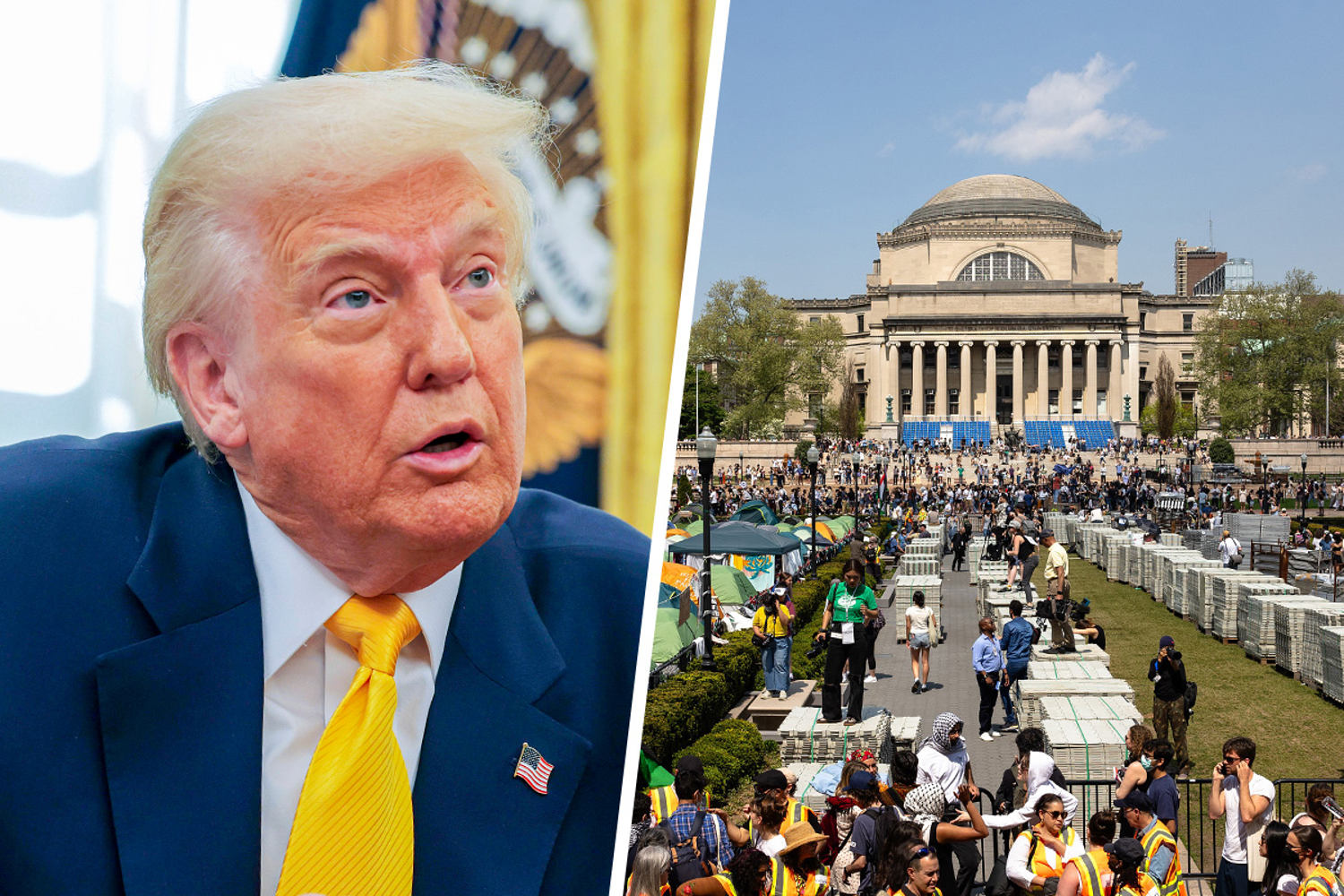
On Friday, the Trump administration announced it was canceling approximately $400 million in federal grants to Columbia University because of what the Department of Education called “continued inaction in the face of persistent harassment of Jewish students.” The decision is rich in irony, given the Trump administration’s promotion of antisemitism.
I am not referring to Elon Musk’s Nazi-adjacent “hand gestures,” or Vice President JD Vance’s speech supporting Germany’s far-right AfD party, or the president’s decision to grant clemency to openly antisemitic perpetrators of the Jan. 6 riots — as alarming as all those actions were. Rather, even as the administration blasts Columbia for failing “to protect students from anti-Semitic harassment,” it is simultaneously pushing colleges and universities to gut the programs and policies they use to fight antisemitism and other forms of discrimination.
Already, over 250 schools in 36 states have taken steps to change or dismantle some of their DEI programs.
According to the Education Department, the administration is canceling grants to Columbia “in light of ongoing investigations under Title VI of the Civil Rights Act.” Title VI prohibits discrimination based on race, color or national origin in federally funded institutions. Since 2004, the Department of Education has extended Title VI protections to Jews, Muslims and other religious groups that “face discrimination on the basis of shared ethnic characteristics.”
In the weeks and months after the Oct. 7, 2023, attacks, the Department of Education in President Joe Biden’s administration opened dozens of Title VI investigations into antisemitism. These probes seek to determine whether students have faced a hostile environment because of their membership in the law’s protected categories. In some cases, a school may be found responsible for creating such an environment, but even absent that, schools that fail to ameliorate these environments stand in potential violation of Title VI.
What tools can schools use to fix hostile campus climates? The same ones that President Donald Trump’s Department of Education have now branded toxic and impermissible according to a “Dear Colleague Letter” and a subsequent FAQ issued last month.
The two documents amount to a wholesale assault on the programs and policies schools have created over the last half-century to comply with Title VI. In the letter, acting Assistant Secretary for Civil Rights Craig Trainor characterizes universities as the source of “pervasive and repugnant race-based preferences” and pledges that the Education Department will no longer tolerate any explicit or implicit program that “treats a person of one race differently than it treats another person because of that person’s race.” Pointing to the Supreme Court’s 2023 ruling that struck down racial preference in admissions, Trainor takes particular aim at DEI programs as “a shameful echo of a darker period in this country’s history” and slams discussions of “systemic and structural racism” themselves as agents of discrimination.
New offices to safeguard Jewish students who believe they are victims of antisemitism; mandatory training programs for staff or students to gain sensitivity about antisemitism; anti-bias response teams installed to handle antisemitism complaints: All of these efforts, according to the letter and FAQ, would appear impermissible.
The Trump White House has put schools in a ‘can’t win’ situation.
Trainor’s citation of the Supreme Court is tendentious at best. The court’s decision was limited to admissions, and anti-discrimination initiatives remain valid and are even required under both federal law and Supreme Court precedent. But scared of reprisals to come, many institutions may feel they have no choice but to comply. Already, over 250 schools in 36 states including the University of Pennsylvania, Stanford University, and the University of North Carolina have taken steps to change or dismantle some of their DEI programs.
In other words, in an attempt to abide by the government’s directive, colleges and universities are cutting the offices and programs that hosted many of their proactive efforts to address antisemitism. And as the cancelation of Columbia’s grants shows, not only is the Trump administration prohibiting schools from using the tools many instituted at the behest of Title VI to fight antisemitism, it is also putting them on notice that they will be penalized for failing to act.
The Trump White House has put schools in a “can’t win” situation. Schools that are rushing to shutter DEI programs can later be investigated for violating Title VI, yet those that preserve their programs or create new ones to fight discrimination can also be accused of violating Education Department guidelines. Taken together, Title VI will surely be hollowed out, as the Trump administration plans to abolish the Department of Education and endorses policies to criminalize student protest and free expression.
Make no mistake, the Trump administration is using antisemitism as an excuse to obliterate Title VI, undermine civil rights and incapacitate higher education. If Jewish safety were the point, then the constructive efforts to improve universities’ responses to incidents and allegations of antisemitism would be sacrosanct. If Jewish safety mattered, our government would seek to strengthen universities where Americans can learn about the past and think about how to create a better future, and our elected officials would fight to preserve democracy. American Jews may disagree about the best way to combat antisemitism, but there should be no disagreement from our elected officials that American Jews are American and deserve equal protection — no more and no less.
Lila Corwin Berman
Lila Corwin Berman is professor of history and Jewish studies at New York University and the author of the forthcoming book, “Who Belongs? Citizenship Rights and the Question of America’s Jews.”


The Dictatorship
Monday’s Campaign Round-Up, 6.22.26: Why Trump backed both Republicans in a key S.C. race
Today’s installment of campaign-related news items from across the country.
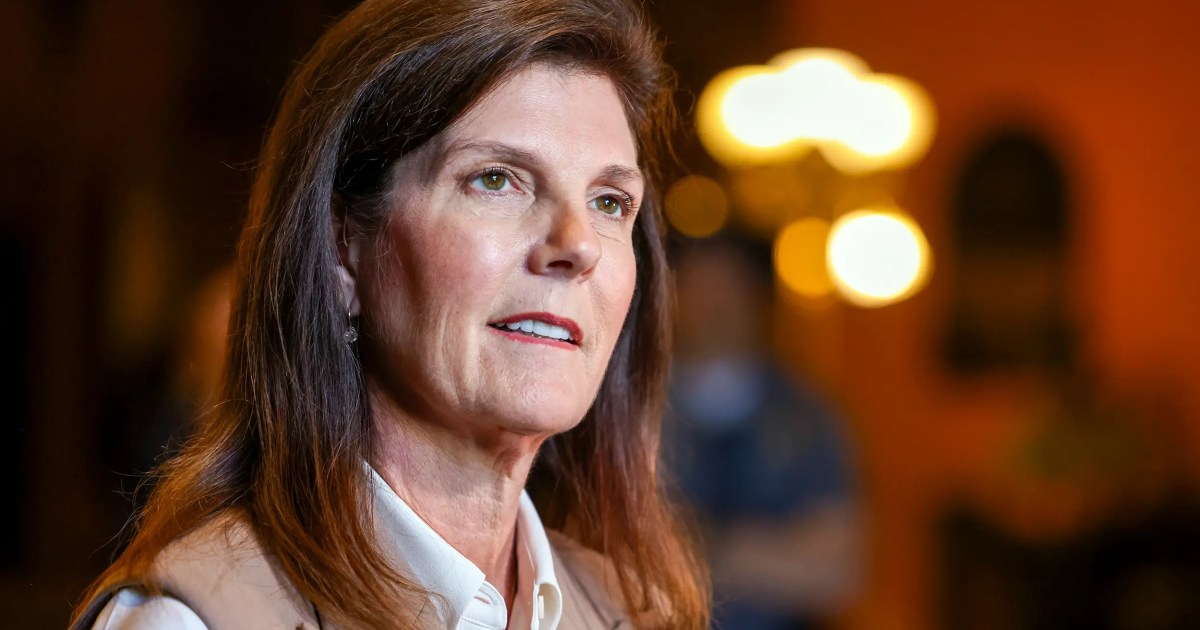
* In South Carolina’s gubernatorial raceDonald Trump endorsed Lt. Gov. Pam Evette last month. Last week, however, ahead of this week’s primary runoff election in the race, the president published an online item telling voters that “you can’t go wrong” with either Evette or state Attorney General Alan Wilson.
If this sounds at all familiar, it’s because Trump has done this before. Around this time two years ago, for example, he endorsed both Republicans running in a congressional primary in Arizona. And two years before that, he endorsed two leading contenders in a Senate primary in Missouri.
Only the president can say for sure why he ended up endorsing Evette and Wilson in the South Carolina race, though it’s worth emphasizing for context that GOP primary voters have already ignored his direction into two gubernatorial primaries this month, and it stands to reason that he hoped to avoid a third.
* We’re one day away from a variety of notable racesincluding but not limited to South Carolina’s gubernatorial race. There are also some congressional primaries in a handful of statesincluding Maryland, New York and Utah.
* In took a while, but the ballots have been tallied under Maine’s ranked-choice systemand we now know that Democrat Hannah Pingree, the former state House speaker, will face off against Republican Bobby Charles, who worked at the State Department during the Bush-Cheney era.
* As for Maine’s closely watched congressional racestate Auditor Matt Dunlap won the Democratic nomination in the battleground 2nd District, defeating state Sen. Joe Baldacci, who enjoyed the backing of the Democratic Congressional Campaign Committee. Dunlap will run in the fall against a familiar figure: former Republican Gov. Paul LePage, who had moved to Florida a few years ago, but who returned to run for Congress.
* In California’s congressional special electiontwo Democratic candidates — state Sen. Aisha Wahab and Melissa Hernandez, a Bay Area Rapid Transit director — have advanced to an Aug. 18 special general election. The winner will fill the vacancy left by disgraced former Rep. Eric Swalwell, who resigned in April.
* In a new commercial shared first with MS NOWDemocrat James Talarico has launched his campaign’s first multimillion-dollar ad buy in Texas’ gubernatorial race. In the 30-second spot, Talarico focuses on affordability and the cost of living. The state lawmaker will face scandal-plagued state Attorney General Ken Paxton in the fall.
* And in New Jersey, Republican Rep. Tom Kean Jr.who has been missing from Capitol Hill since early March, will reportedly return to work on June 30according to a statement from his spokesperson. Neither Kean nor his office have offered any public information about why he has been away.
Steve Benen is a producer for “The Rachel Maddow Show,” the editor of MaddowBlog and an MS NOW political contributor. He’s also the bestselling author of “Ministry of Truth: Democracy, Reality, and the Republicans’ War on the Recent Past.”
The Dictatorship
Trump tries dual endorsement in South Carolina as his pick for governor flounders in polls
After President Donald Trump’s pick for governor in Iowa lost in the Republican primary earlier this month, the president argued that he “would have endorsed the other person” if he had “the proper information.”
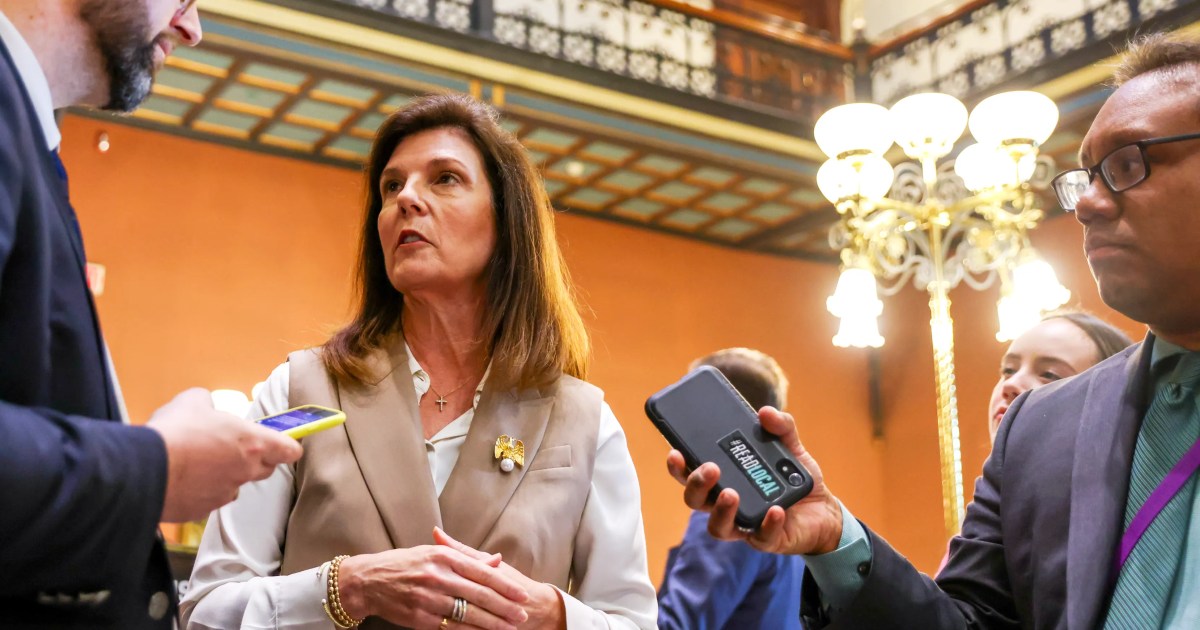
Trump is taking no chances in the South Carolina gubernatorial primary. Over the weekend he rescinded his exclusive endorsement of Pamela Evette, the lieutenant governor, announcing instead that he would support both Evette and her runoff opponent, Alan Wilson, the state’s attorney general.
The move put Evette’s political future in jeopardy: Even before Trump’s dual endorsement, she trailed in limited public polling and was seen by political observers in South Carolina as a weak candidate with little to show besides the president’s coveted endorsement.
“Her chief distinction from Alan Wilson was that Trump endorsed her,” said Dr. Dubose Kapeluck, a professor of political science at the Citadel Military College of South Carolina.
Trump’s dual endorsement “was a kiss of death,” he told MS NOW.
Evette, who moved to South Carolina from Ohio to found a successful payroll and HR company in 2000, has been lieutenant governor since 2019, serving under Gov. Henry McMaster, who is term-limited.
In office, she has pursued meaningful but little-celebrated policies, like a key tort reform bill, according to Gil Gatch, a Republican member of the South Carolina state House and an Evette supporter.
But voters could be forgiven for knowing little about Evette besides the fact that Trump endorsed her, which he did just days before the June 9 primary. Visitors to her campaign website are greeted with a full-screen message labeling Evette as “Trump-endorsed.” The first line in her X bio states the same. Pro-Evette television ads are quick to tout the endorsement.
An accomplishment like tort reform, while noted on Evette’s website, “maybe could have been something that was highlighted more heavily,” Gatch told MS NOW.
The political makeup of South Carolina nearly guarantees the next governor will be whoever emerges on Tuesday between Evette and Wilson. They survived a crowded primary field on June 9, and nearly every challenger who fell short of the runoff publicly endorsed the attorney general.
“She’s just not a good candidate,” Josh Kimbrell, a state senator who failed to make the runoff and has since said he’d back Wilson, said of Evette.
“She kind of assumed this was a coronation, and that was never going to go over that well,” he added.
Even some pro-Trump voters were confused by the president’s initial endorsement of Evette, whom he called “a good friend, fighter, and WINNER” in a social media post in May.
“I have no clue why Trump would endorse Pamela Evette,” Leland Lemmons, a 30-year-old Trump supporter told MS NOW as he exited a polling site in the Greenville suburb of Easley on June 9.
“She’s served, you know, a decent time. I just haven’t seen much fruition of what she’s done in office,” he added.
In a post on Truth Social Friday announcing his dual endorsement, Trump wrote, “I can’t hurt one of them by only Endorsing the other, so, therefore, I am going to Endorse, for Governor of South Carolina, both Pam Evette and Alan Wilson!”
In a subsequent statement on X, Evette said, “I was proud to come in first as [Trump’s] endorsed candidate for Governor on June 9th. Looking forward to doing it again on June 23rd.”
After The Washington Post foreshadowed the dual endorsement last Tuesday, allies of Evette were quick to denounce the possibility.
“I would guess that’s fake news,” Suzanne Pucci, a member of Evette’s finance committee, told MS NOW of the chance Trump would also endorse Wilson. “She’s probably not real worried about it.”
Another close ally and supporter told MS NOW at the time the report was “a total, fabricated lie.”
“[Trump] is invested in Pamela Evette because she invested in him. He’s a loyal guy. That kind of stuff is important to him,” added the supporter, who spoke on condition of anonymity.
“With or without Trump, I think she is going to win,” they said.
On Thursday, a senior campaign aide, who spoke on condition of anonymity, brushed off the idea of a dual endorsement, telling MS NOW in a statement, “Pamela Evette has earned the complete and total endorsement of President Trump. She is the only Trump-endorsed candidate in this race and we look forward to delivering a big win for the president on Tuesday.”
Roughly 24 hours later, Trump retracted the exclusive endorsement.
Will McDuffie is a reporter for MS NOW.
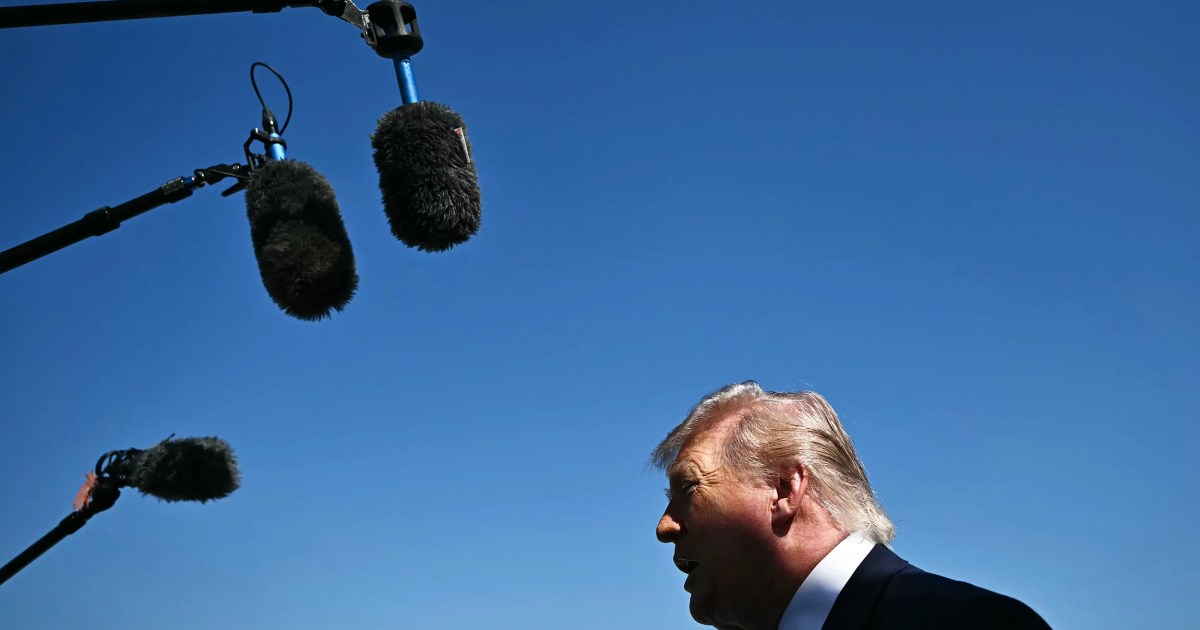
As last week’s G7 summit in France got underway, a reporter asked Donald Trump whether his purported deal with Iran was final. “No, it’s not final,” the president replied. Later that day — during a visit to Versaillesof all places — he signed the framework anyway.
But moments after signing his name to the memorandum of understanding, Trump offered an unsubtle hint about what he was thinking at the time. Amid applause from those around him, the American president pointed down and then up while saying“Oil down, stocks up.”
In other words, Trump’s focus had nothing to do with natural security and everything to do with the economy. What’s more, the four-word phrase was part of a larger and underappreciated pattern. The Washington Post reported:
In the more than 100 days since President Donald Trump launched a war with Iran, he has offered a shifting list of reasons for why he started the conflict. But in explaining his push for peace, he named a priority much closer to home: protecting the stock market.
“I didn’t want to see economic catastrophe,” Trump told reporters gathered in the Alpine spa town of Évian-les-Bains, France, after the Group of Seven summit.
As the summit wrapped up, the Republican similarly said“I’ve studied presidents, some good, some bad, some great. Not too many are great and some really bad. … And the one president I did not want to be was the late, great Herbert Hoover. I didn’t want that and who knows what would have happened.”
He pushed the same point in an interview with Axios, which was released over the weekend.
“If I went further, the stock market would be much lower,” the president said. “Now think of this: I have one primary wish as president, in terms of people: I never want to be the late, great Herbert Hoover.”
The comments came days after Trump similarly argued“The alternative to this deal was a global recession. There are stupid people who want to see a global recession. They are just stupid people.”
Whether the president fully appreciates the implications of his own rhetoric, this string of comments doesn’t just shed light on his motivations for accepting a defeat, it also suggests he saw his failed policy in Iran as pushing the global economy toward a dangerous cliff.
In other words, based on Trump’s own comments, the war he started was poised to create an “economic catastrophe,” which he was desperate to avoid — and which led him to accept a framework that empowered Iran to get what it wanted in exchange for effectively no concessions at all.
Steve Benen is a producer for “The Rachel Maddow Show,” the editor of MaddowBlog and an MS NOW political contributor. He’s also the bestselling author of “Ministry of Truth: Democracy, Reality, and the Republicans’ War on the Recent Past.”
- Dershowitz to testify on Epstein ties
- Hegseth to brief House Republicans on White House goals for party-line package
- Monday’s Campaign Round-Up, 6.22.26: Why Trump backed both Republicans in a key S.C. race

- Trump tries dual endorsement in South Carolina as his pick for governor flounders in polls
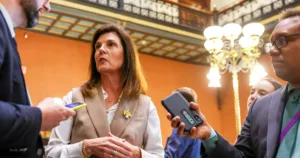
- Fears of an ‘economic catastrophe’ helped push Trump toward an Iran deal

- In back-to-back reversals, the Trump administration folds under pressure

- Vance touts ‘successful’ first round of U.S.-Iran talks after Trump threatens new attacks
- Turek leads Hinson in Iowa Senate poll of likely general election voters
- Capitol agenda: House GOP races to make Recon 3.0 real
- A rising populist tide is threatening New York’s powerful incumbents
-

 Politics1 year ago
Former ‘Squad’ members launching ‘Bowman and Bush’ YouTube show
-

 The Dictatorship1 year ago
Luigi Mangione acknowledges public support in first official statement since arrest
-

 Politics1 year ago
Former Kentucky AG Daniel Cameron launches Senate bid
-
Uncategorized2 years ago
Bob Good to step down as Freedom Caucus chair this week
-

 The Dictatorship1 year ago
Pete Hegseth’s tenure at the Pentagon goes from bad to worse
-

 The Josh Fourrier Show2 years ago
DOOMSDAY: Trump won, now what?
-

 Politics1 year ago
Blue Light News’s Editorial Director Ryan Hutchins speaks at Blue Light News’s 2025 Governors Summit
-

 The Dictatorship10 months ago
Mike Johnson sums up the GOP’s arrogant position on military occupation with two words