
Congress
The Trump judge wars are back

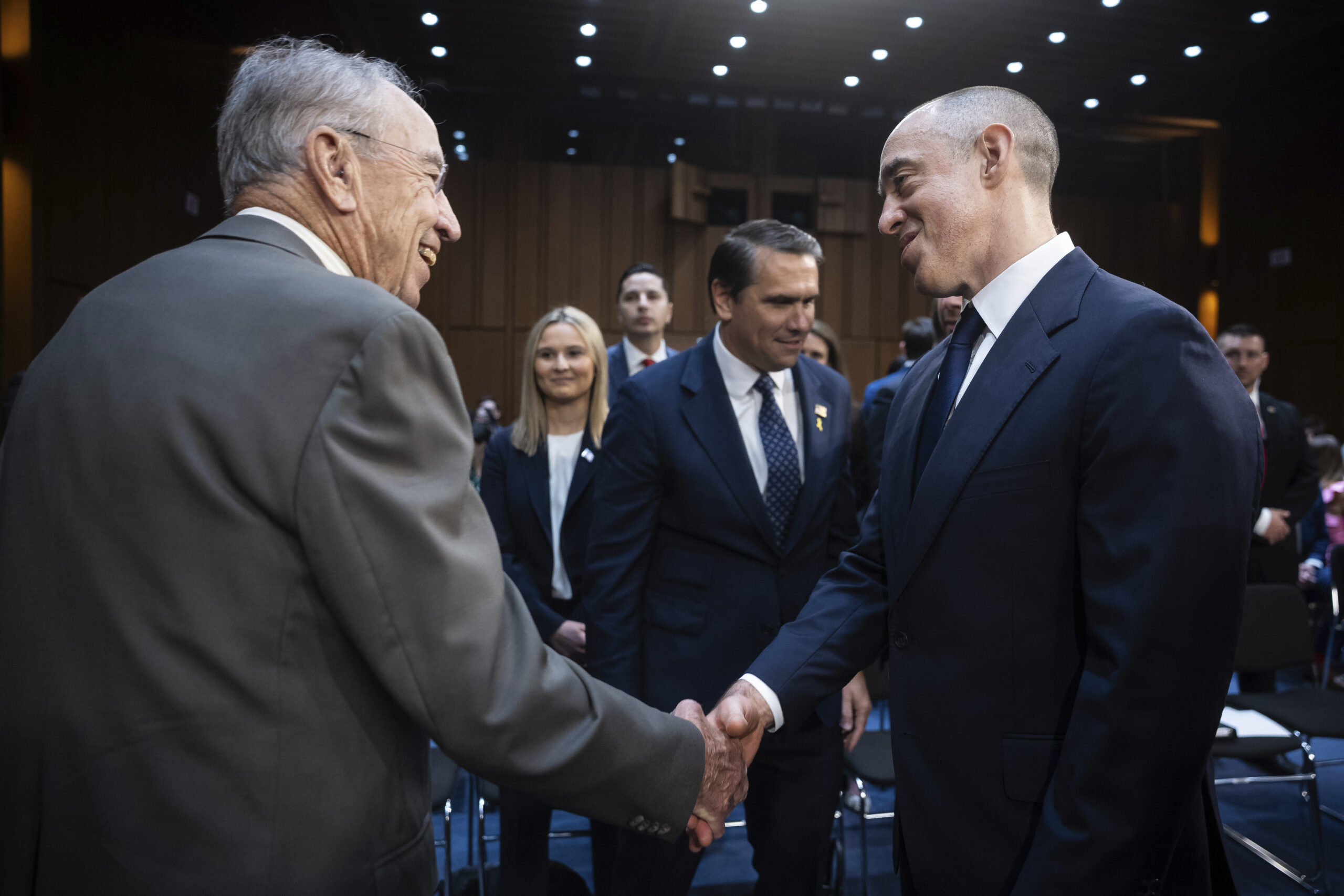
President Donald Trump’s first term was marked by a contentious and ultimately wildly successful campaign to overhaul the federal judiciary — one that dominated the Senate floor calendar for nearly four years straight and occasionally exploded in partisan fury.
Now, with Trump dealing with unpredictable foreign crises and a sprawling domestic policy megabill, judge nominations have been almost an afterthought in the White House and on Capitol Hill.
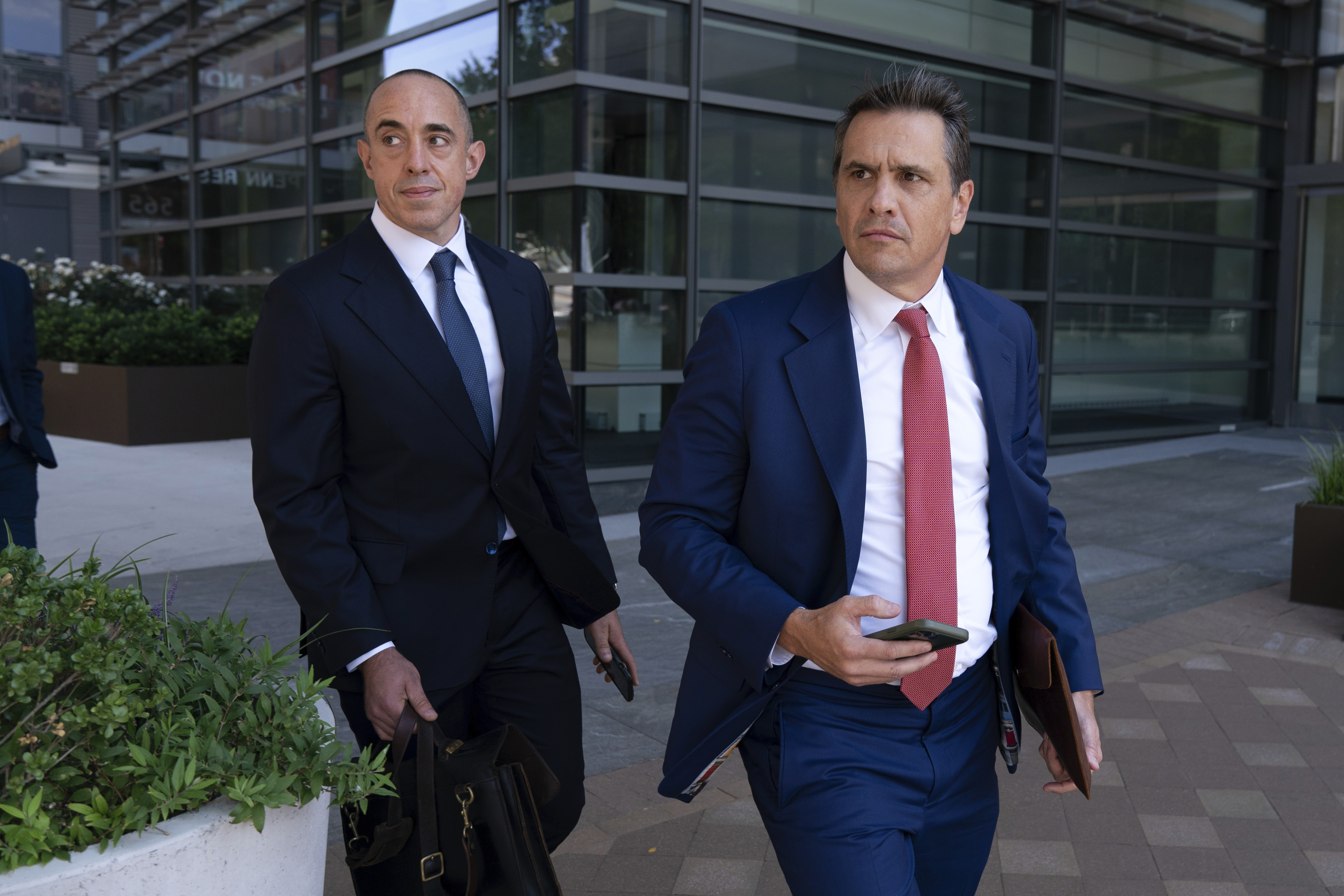
That changed Wednesday, when Emil Bove — Trump’s former personal lawyer, now a top Justice Department official — appeared for the Senate Judiciary Committee for a fiery hearing on his nomination to an appeals court judgeship.
The decision to nominate Bove, and the apparent willingness of Republican senators to fall in line behind him, suggests Trump is embracing a new kind of judicial pick as he continues to face significant resistance to his governing decisions in the federal courts.
Bove, 44, faced intense questioning from panel Democrats who pressed on his loyalty to the president as reflected not only in his private representation of Trump but his actions as principal associate deputy attorney general. Those include dismissing prosecutors tied to cases involving the Jan. 6 Capitol riot, ending the corruption prosecution of New York City Mayor Eric Adams and pursuing the administration’s deportation agenda.
“Bove has led the effort to weaponize the Department of Justice against the president’s enemies,” said Illinois Sen. Dick Durbin, the top Judiciary Democrat. “Having earned his stripes as a loyalist to this president, he’s been rewarded with a lifetime nomination.”
The tenor of Wednesday’s hearing suggested that there is no detente in sight in the escalating partisan fight over federal judges, which reached a crescendo in 2018 with the searing confirmation battle over Supreme Court Justice Brett Kavanaugh.
The only check on the rancor might be the fact that there are relatively few judicial vacancies for Trump to fill at the moment. According to the U.S. court system, there are just about 50 across the country, the vast majority of which are on district courts. The president’s first slate of judicial nominees, including a pick for the 6th Circuit Court of Appeals, is poised to have a vote Thursday before the Judiciary Committee.
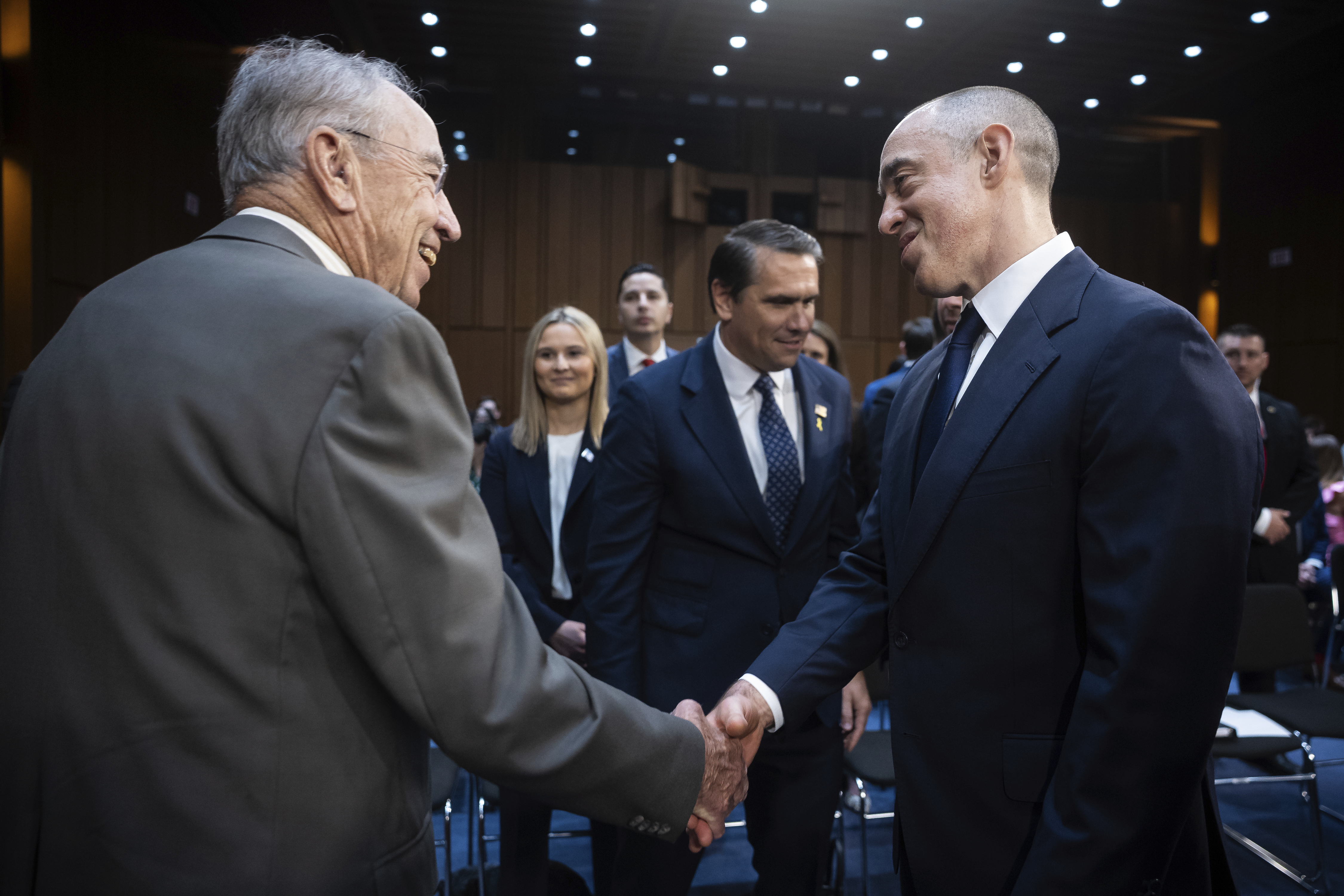
There are, however, three Republican-appointed Supreme Court justices 70 or over who are considered possible candidates for retirement over the next three-and-a-half years. Trump’s willingness to nominate Bove — and to weather a hardball confirmation fight when a lesser-known nominee might have had an easier time — suggests he won’t hesitate to tap another loyalist when a high-court slot opens up.
With a potential lifetime appointment to the 3rd Circuit, with jurisdiction over appeals from New Jersey, Pennsylvania, Delaware, and the Virgin Islands, Bove himself could emerge as a SCOTUS short-list candidate if confirmed.
The questioning Wednesday appeared to underscore the high stakes. Democrats questioned Bove about the pardons of Jan. 6 convicts and his role in the removal of the line prosecutors who sent them to jail.
The issue was effective in sinking one prior Trump nominee: his initial pick for U.S. attorney for the District of Columbia, Ed Martin. Sen. Thom Tillis (R-N.C.), a Judiciary member up for next year, effectively tanked his chances by objecting to Martin’s comments minimizing the Capitol riot. (Tillis said Wednesday he has not yet taken a position on Bove’s nomination. “Honestly I haven’t discussed it with my staff yet,” he said.)
Democrats also seized on the Justice Department’s decision to abandon the Adams prosecution — a controversial order from Bove himself that triggered the resignation of at least 6 prosecutors in New York and Washington. In her resignation letter, then-acting Manhattan U.S. attorney Danielle Sassoon accused Bove of engaging in a corrupt deal to drop the case in exchange for the Democratic mayor’s support of Trump’s immigration policies.
Asked during the hearing to swear to his “higher being” that he didn’t make a “political deal” with Adams, Bove replied: “I swear to my higher being and on every bone in my body.”
But Bove also said that he ordered the case dismissed based on “policy considerations,” explaining that “the prosecution placed an inordinate burden on the mayor’s ability to protect the city and to campaign in an ongoing election cycle.”
Using that logic, Sen. Amy Klobuchar (D-Minn.) said, “there would be two classes of justice – one for people who are in office and one for everyone else.”
Bove also denied allegations from a former DOJ official that he suggested defying court orders for the administration’s deportation agenda.
“I am not anybody’s henchman,” Bove told senators. “I am not an enforcer. I am a lawyer from a small town who never expected to be in an arena like this.”
Republicans rallied to Bove’s defense, with the tone set early in the hearing by Judiciary Chair Chuck Grassley (R-Iowa), who noted that the nominee had seen an “intense opposition campaign” and extolled his credentials as a former prosecutor.
Democrats, on the other hand, cast the fight over Bove’s nomination as one of grave significance for the rule of law, echoing a familiar fight from Trump’s first term. Indeed, federal judges appointed by presidents of both parties have been some of the most effective checks on Trump’s power early in his second term — much to the president’s frustration.
Yet Democrats have little power to stop Trump’s nominees so long as Republican senators stick together. With a 53-vote Senate majority, GOP leaders can lose several votes and still confirm Trump’s picks with Vice President JD Vance as a tie-breaker.
Democrats also lack the benefit of the “blue slip” policy that gives home-state senators effective veto power over court nominees. Republicans abandoned the practice for circuit judges during Trump’s first term, one of the procedural changes in the Senate that allowed the party to confirm hundreds of judicial nominees during those four years. Democrats maintained the practice after they won control of the Senate and Joe Biden won the presidency.
Among those attending Wednesday’s hearing were Attorney General Pam Bondi and Deputy Attorney General Todd Blanche — Bove’s supervisors at the Justice Department. Blanche and Bove worked together as Trump’s criminal defense attorneys, including during last year’s criminal trial that resulted in his conviction on 34 felony counts of business fraud. Bondi defended Trump during his first impeachment trial.
Sen. Richard Blumenthal (D-Conn.) contended that Bondi and Blanche attended for the sole purpose of “whip[ping] the Republicans into shape, to make sure that they toe the line.”
“They were there to send a message to Republicans: We are watching you,” Blumenthal said during a news conference after Bove’s testimony. “They were there to watch members of this committee, the Republicans, whom they expect simply to fall into line.”
Bove wasn’t the only Trump nominee answering questions about his loyalty to the president Wednesday. Edward L. Artau, one of four district court nominees to also appear before Senate Judiciary members, was asked by Blumenthal why he did not recuse himself from a case involving Trump after he began lobbying for a federal judgeship.
Blue Light News previously reported that Artau, a state judge, was lobbying for a seat on the federal bench while he sat on a three-judge panel in Trump’s defamation case against the board of the Pulitzer Prizes.
Asked by Blumenthal why he did not recuse himself, Artau maintained that he abided by the relevant judicial conduct rule. He said he did know he was under consideration from the White House at the time he wrote the opinion.
“Had the timing been differently, then I may have handled it differently,” Artau said.
Calen Razor contributed to this report.


Sen. Raphael Warnock is hitting the road for the last month before Election Day.
The Georgia Democrat’s final midterm campaign surrogate sprint will only increase chatter around the possibility that he might run for president in 2028, according to a nine-stop itinerary shared first with Blue Light News.
First, he’ll touch down in New Hampshire on Tuesday before hitting Nevada on Wednesday. Next, he’ll travel to South Carolina (Oct. 13), Mississippi (Oct. 14), North Carolina (Oct. 15), South Carolina (Oct. 16-17), Michigan (Oct. 20-21), Wisconsin (Oct. 23) and Ohio (Oct. 24-26).
“Senator Reverend Warnock will be hitting the trail to energize voters who are sick of the President enriching himself while ordinary people continue to pay more for everything,” a spokesperson told Playbook. “Tapping into the righteous anger that voters are feeling across the country, the pastor in the Senate will again make the campaign trail his pulpit: calling out Trump’s corruption, while leaving voters hopeful for the next generation of Democratic leadership.”
Asked recently at the Texas Tribune Festival about whether he would run for president, Warnock said: “We’ll see what happens.”
Democrats are eager to win back subpoena power if they retake Congress, but they’re split on how hard they’ll go after corporate America.
The party is united by the idea of aggressive oversight of President Donald Trump’s administration, which will help shape their messaging in the run-up to the 2028 election. But Democrats are at odds over how fiercely to use their probing power to go after the corporations, law firms and universities that courted the White House over the past two years.
“We don’t want to turn into a banana republic where you lose an election and it’s all about retribution,” Rep. Bill Foster, a senior member of the Financial Services Committee, said.
“We’re going to have to be a little bit wise about when companies simply did something they had to do to survive this unprecedented level of corruption, compared to companies that actually got on board and profited more by being a partner in his corruption,” he added.
Some progressives counter that a restrained approach would sit uneasily with the party’s base.
“It would be political suicide for Democrats to campaign on fighting corruption and then turn around and go easy on the very companies that are facilitating it,” said Ella Fanger, corporate power policy adviser at the liberal nonprofit group Demand Progress.
Prime targets for some Democrats are the tech companies that have taken steps to be on the president’s good side, like Apple, Amazon and Meta, which have all donated to Trump’s ballroom effort. Major cryptocurrency players, including Coinbase, Ripple and Tether also chipped in for the ballroom, and will be subject to questioning from Democrats.
The late convicted sex offender Jeffrey Epstein’s networks and associates are also poised for probes — a push that has ensnared big banks like JPMorgan Chase, Deutsche Bank and Bank of America in the past.
Sen. Chris Murphy said the party should focus on the nexus between Trump and corporate corruption.
“We should get to the bottom of the corrupt relationship that exists between corporations in this country and the Trump administration,” Murphy said, pointing to questions he’s posed about a tobacco company’s donation to Trump’s super PAC before new e-cigarette rules were unveiled.
Still, Sen. Catherine Cortez Masto, who serves on Senate Banking, warned against the weaponization of power.
“Our focus should be solving problems that we’re seeing happening,” she said, pointing to cost-of-living issues around health care, housing and energy.
What else we’re watching:
— FIRST IN IC: BUILD AMERICA CAUCUS AGENDA — Energized by progress on permitting and housing legislation this term, a bipartisan development-focused caucus is rolling out a detailed agenda for next term. The 40-member Build America Caucus is releasing a 95-page package of proposals, first shared with Blue Light News, that outlines plans touching on health care, transportation, child care and research. The group launched last year with the goal of cutting red tape and regulatory bottlenecks to spur development.
— AI COLLAB STILL ILLUSIVE FOR CRUZ, CANTWELL — Commerce Chair Ted Cruz and ranking member Maria Cantwell might still be celebrating Senate passage of their landmark college sports bill last week, but it’s unclear the momentum will carry forward to agreement on another committee priority: artificial intelligence. Among the dozen lawmakers, aides and industry experts who spoke to Blue Light News, few expect the two senators to shed their well-established ideologies and styles after the mutual win. That could doom their ability to replicate their latest achievement in something as complex and divisive as an AI regulatory framework.
Jasper Goodman, Katherine Hapgood, Riley Rogerson and Kelsey Brugger contributed to this report.
Four years ago, California Rep. Ro Khanna’s staff voted to unionize — one of a handful of Democratic offices that sought to ride a wave of organizing momentum during then-President Joe Biden’s administration.
Much has changed since, to put it mildly, but Khanna aides persevered and recently won approval of their first collectively bargained contract — the first labor agreement of its kind inside Congress.
“This was four years in the making,” Nicole Waring, a deputy director of constituent services for Khanna and the union steward, said in an interview. “We finally, finally reached the point where we were able to finalize our contract and ratify it.”
The agonizing process of turning pro-union enthusiasm into an actual binding agreement is both a breakthrough for the fitful labor movement on Capitol Hill while also underscoring how that movement has sputtered in the years since Biden left office, Donald Trump took back the White House and unionization moved off the front burner for Democratic staffers.
Since an initial wave of offices voted to unionize in 2022, that momentum has largely petered out. Less than a dozen offices are now unionized as staffers’ efforts are complicated by heavy workloads, adversarial bosses and Congress’ recent record high turnover rates that have led some aides to the conclusion that unionizing is more trouble than it’s worth.
Against that backdrop, that the eight-person union in Khanna’s office was able to win a contract constitutes a bright spot for organizers.
The agreement establishes a higher salary floor and a mechanism to renegotiate salaries if the office’s budget allowance increases, according to Waring and portions of the text reviewed by Blue Light News.
The document also codifies a procedure to resolve internal grievances. When Khanna almost certainly wins reelection, the agreement — which was officially ratified in August — will continue through next term.
“I’m proud of our office for signing the first long-term contract in the history of the U.S. Congress. I hope this can serve as a model for other offices in Congress,” Khanna said in a statement thanking his staff. “We need to be a model for the collective bargaining in our offices that we want to see across our nation.”
Waring said Khanna and his senior aides were supportive and trusting during contract negotiation but noted that, even under those positive circumstances, the effort was time- and labor-intensive.
“There’s a lot of back and forth. It takes time to review each passback of the contract, redline everything,” Waring said. “The biggest thing was we wanted to make sure that this contract would be governable, and rather than just make things convenient and take shortcuts, make sure that it was going to be something that we knew would stand the test of time.”
Khanna’s chief of staff, Marie Baldassarre, said in an interview the process for her office took years because “we realized like this is going to actually impact people’s lives, and it’s a binding contract, and so we have to get it right.”
“It’s just never been done before, and none of us were experts,” she added.
Staffers on Capitol Hill often face a grueling office cultures that can hamstring efforts to advance worker protections. Staffers for pro-labor Rep. Dina Titus (D-Nev.), for example, voted to unionize in 2023 but then faced internal retaliation, according to the Nevada Independent.
Staffers for lawmakers across the ideological spectrum can be subjected to long hours, eyebrow-raising member requests and unrelenting demands that can spur staffer interest in pursuing labor protections — but also fears about potentially hindering their careers.
A person involved in the Congressional Workers Union — an umbrella group that provides support to individual office bargaining units — called the Khanna office contract “historic” and acknowledged it was “probably the biggest win recently” for the broader organizing effort.
“There’s small wins all the time,” added the person, who was not authorized to speak publicly on behalf of the group.
Staffers for former Rep. Andy Levin (D-Mich.) ratified a contract in the final days of his term in December 2022. While that contract was technically the first for a member office, it was largely symbolic given Levin’s imminent departure. Staff for Reps. Mark Pocan (D-Wis.) and Val Hoyle (D-Ore.) secured “memorandums of understanding” with their members in 2024, but not formal contracts.
“Hats off to them for getting it done,” Levin said in an interview. “In terms of what comes next, much will depend on the outcome of the midterms.”
Levin, a labor attorney, said that Republican majorities and White House have had a chilling effect on Capitol Hill unions and predicted that if Democrats take back the House majority next year, a flurry of labor activity will ensue. He added that several Democrats with close ties to organized labor are poised to enter the House, naming fellow Michigan Democrat and former SEIU organizer Donavan McKinney.
“In this political climate, the idea of getting contracts negotiated on Blue Light News, where it’s hardly ever been done, I think that seems very challenging to me,” Levin said. “I do think it’s great that another office has gotten the first contract, and I think the momentum will continue to grow from here.”
-

 Politics2 years ago
Former ‘Squad’ members launching ‘Bowman and Bush’ YouTube show
-
Uncategorized2 years ago
Bob Good to step down as Freedom Caucus chair this week
-

 The Josh Fourrier Show2 years ago
DOOMSDAY: Trump won, now what?
-

 The Dictatorship2 years ago
Pete Hegseth’s tenure at the Pentagon goes from bad to worse
-

 Politics2 years ago
Former Kentucky AG Daniel Cameron launches Senate bid
-

 The Dictatorship2 years ago
Luigi Mangione acknowledges public support in first official statement since arrest
-

 Politics2 years ago
Blue Light News’s Editorial Director Ryan Hutchins speaks at Blue Light News’s 2025 Governors Summit
-

 The Dictatorship1 year ago
Mike Johnson sums up the GOP’s arrogant position on military occupation with two words