
Politics
The state of the Democratic Party is … split

Democratic leadership’s choice to have Virginia Gov. Abigail Spanberger deliver the State of the Union rebuttal was a strategic move to keep the party’s focus on affordability. But she was just one Democrat jockeying to pave the way forward for the party.
Various Democratic factions hosting numerous competing events Tuesday night diverged on the best way to challenge President Donald Trump. Throughout the speeches, universal calls to bring down costs and crack down on ICE mixed in with more forceful and sometimes vulgar rebukes of his administration — laying bare the ideological and stylistic divides that are driving the party’s identity crisis.
Spanberger — a one-time battleground House Democrat who joined Congress during the party’s last wave election — was the headliner, calling from Williamsburg, Virgina, for Trump to focus on the needs of American families while also condemning the president for doing “what he always does: he lied, he scapegoated, and he distracted.”
But she was far from alone, with a group of Democratic-aligned organizations holding their own State of the Union events in an effort to harness rising furor against Trump.
Dozens of lawmakers spoke across several counter-programming events, including a rally hosted by MoveOn and the left-leaning media outlet MeidasTouch on the National Mall, or at another in downtown D.C. hosted by the anti-Trump activist networks Defiance and the Portland Frog Brigade along with the Courier Newsroom.
On the Mall, Rep. Summer Lee (D-Pa.) called to impeach Attorney General Pam Bondi over the Epstein files and Sen. Jeff Merkley (D-Ore.) accused Trump of “rigging” the midterms by pushing voting restrictions to “save his authoritarian control and turn the presidency into a kingship.” Rep. Becca Balint (D-Vt.) called herself a “bareknuckled brawler with a heart” and declared “that’s what we need right now.”
The dueling rallies, both timed to overlap with Trump’s speech, were accompanied by a Working Families Party rebuttal also delivered by Lee.
Some party strategists said the events — which also hosted high-profile Democrats like Robert De Niro, Joy Reid and New York congressional candidate George Conway — splintered the party’s response in a high-profile moment.
“A uniform response is much better than a cacophony of responses,” said Matt Bennett, an executive with the center-left think tank Third Way. “One narrative is better than many, and Spanberger is very talented at articulating a message that resonates broadly.”
Dueling State of the Union responses are not a new phenomenon. While the party out of power typically greenlights an English- and Spanish-language rebuttal — Sen. Alex Padilla (D-Calif.) gave Democrats’ response in Spanish this year, vowing his party would lower costs, make voting more accessible and rein in ICE — different wings have long looked to get in on the action, from Tea Party Republicans during Barack Obama’s presidency to the progressive groups on Tuesday night.
But the lack of a unified response on Tuesday comes as the Democratic Party still searches — and fights over — the best way to beat Trump, even as party members agree overall that centering the Trump administration’s struggles to boost the economy gives them the best chance in November.
Democrats were already divided in their approach to Trump’s address to Congress. Dozens of members across both chambers skipped the speech to protest the president while others said they were attending out of constitutional duty — a schism that stretched all the way up through party leadership.
Despite calls from Democratic leadership to refrain from protests inside the House chamber, Rep. Al Green (D-Texas) was escorted out of the room minutes into Trump’s speech after brandishing a sign reading “Black people aren’t apes,” a likely reference to a racist video Trump reposted earlier in the month.
Progressive Reps. Ilhan Omar (D-Minn.) and Rashida Tlaib (D-Mich.) also heckled Trump at multiple points during Trump’s speech, including in response to Trump touting his aggressive immigration enforcement.
At multiple moments during his speech, Trump appeared to relish opportunities to draw Democrats in attendance into heated exchanges.
“You people are crazy,” he said at one point, prompting some Democrats in the room to heckle him in return.
Spanberger’s aides were cognizant of the volume of competing Democratic rebuttals and built a “war room” team to boost the governor’s response on social media. And while her team insisted that she isn’t competing with other counter-programming events, her aides believed heading into Tuesday evening that Spanberger’s successful affordability-focused campaign last year gave her credibility on how to best respond to Trump.
Spanberger, whose campaign last year is viewed by some party strategists as a blueprint for Democrats to score victories in November, focused on her proposals to lower costs for Virginians, while also criticizing the president for aggressive immigration policies and blaming rising costs on Trump’s tariffs.
“Americans deserve to know that their leaders are focused on addressing the problems that keep them up at night, problems that dictate where you live, whether you can afford to start a business, or whether you have to skip a prescription in order to buy groceries,” she said in her live rebuttal. “Is the president working to make life more affordable for you and your family? We all know the answer is no.”
Several of the lawmakers who spoke at competing events echoed that affordability template, including some Democrats with possible presidential ambitions, like Sen. Ruben Gallego (D-Ariz.) and Sen. Chris Murphy (D-Conn.).
Gallego, who warned in his speech that Trump was making Americans “sicker and poorer,” told Blue Light News beforehand that “it’s fine that we have different people talking, provided the message is all the same: [that Democrats] are here to fight for everyday Americans.”
Some of those behind Democrats’ various response events Tuesday said they aimed to better capture the degree of frustration voters feel towards Trump.
“These are not the times for an institutionalist to say, ‘Well, let’s just give him his moment, and if you want to protest, protest by sitting there silently.’ That’s bullshit,” said Miles Taylor, a co-founder of Defiance and former Trump administration official-turned-Trump critic. “And I think that Hakeem Jeffries knows that his caucus feels like that doesn’t meet the moment, which is why so many of them are literally just not showing up.”
Taylor added that the plethora of Democratic responses also reflected the current political media environment, where both voters and candidates can easily find forums that align with their preferences.
Lee, who railed against Trump’s “authoritarianism” and cast his speech as an “obituary for the country working people built” in her Working Families Party rebuttal, said Democrats are at a “crossroads” and won’t win control of Congress “by electing more of the same” — which she cast as those who “speak boldly but deliver cautiously or sometimes even vote with MAGA.”
In an interview on Monday, Lee said it was critical for Democrats to promote a bigger tent after progressives scored major wins of their own in recent elections, from Zohran Mamdani being elected mayor of New York City to Analilia Mejia’s victory this month in the Democratic primary to replace moderate now-Gov. Mikie Sherrill in New Jersey.
Progressives “are always accepting of moderate places being represented well,” Lee said. But “it feels like there’s a wing of this party fighting back more against us trying to represent our own communities just as hard as somebody who is trying to represent their community in a swing district.”



Stephen A. Smith on Trump, Democrats and the politics of chaos
lead image
Elon Musk’s super PAC disclosed its first independent expenditures of the 2026 general election in a filing released late Wednesday, detailing roughly $800,000 across key House and Senate races.
Musk’s America PAC targeted several key Senate contests, including races in Texas, Maine, Ohio, New Hampshire, Iowa, Michigan and Alaska.
The largest amount went to Texas — over $247,000 — where Republicans are expected to deploy a wave of party resources to bolster Attorney General Ken Paxton against Democrat James Talarico.
Musk’s super PAC also put nearly $90,000 into eight House races:
Rep. Derrick Van Orden in Wisconsin; Rep. Mike Lawler in New York; Rep. Jen Kiggans in Virginia; Rep. Tom Kean Jr. in New Jersey; Rep. Scott Perry in Pennsylvania; Rep. Rob Bresnahan in Pennsylvania; Rep. Ryan Mackenzie in Pennsylvania; and Scott Singer in Florida.
The independent expenditures — Musk’s first of the general election — were disclosed days after he met with Speaker Mike Johnson in Texas last week.
Republicans already hold a significant fundraising advantage over Democrats, buoyed by President Donald Trump’s roughly $400 million in his MAGA Inc. super PAC. Trump is under growing pressure from Republicans to tap into that money as the midterms near. A major investment from Musk would further widen the GOP’s financial edge heading into November.
Musk has reportedly considered spending at least $100 million for the GOP through America PAC to help Republicans in this year’s midterms, but the full scope of that effort remains unclear.
A spokesperson for America PAC declined to comment.
Musk spent roughly $290 million to support Trump and the GOP during the 2024 cycle, predominantly through his super PAC, making him the largest individual donor to any political committee that cycle, before he took on a major role in the White House’s DOGE effort.
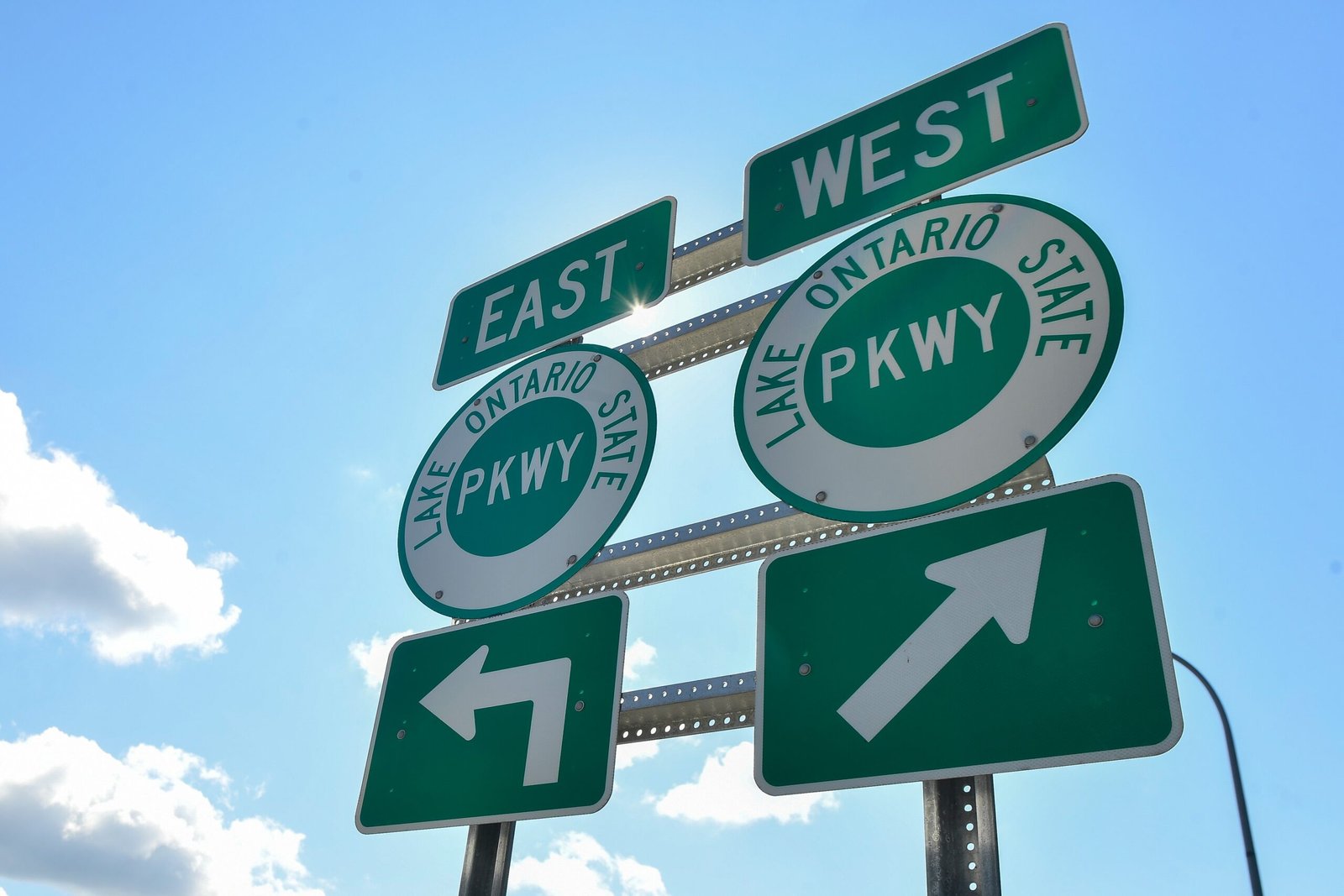
Robert Corradino has never lived anywhere but Oswego, New York. As the only commercial port city on the southeastern shore of Lake Ontario, everything bears the lake’s name — the streets, the convention center, the historic fort.
And in his first term as mayor, Corradino — a Republican who said he previously voted for President Donald Trump — said he worries that a distant political feud is threatening to erase part of his city’s history.
In the days following Trump’s executive order renaming Lake Ontario to Lake America, Corradino and other mayors in upstate New York said Trump’s decision is “regrettable” and could upset voters in the region — and even further impact an economy so closely tied to the U.S.’s relationship with Canada.
“The water is part of our identity,” Corradino said. “Not only our identity, but the economy and the history of the lake is tied to the city.”
Oswego, a city of 17,000, is split between Democrats and Republicans, Corradino said. However, the larger Oswego County is one of the reddest in the state and 61 percent of its voters went for Trump in the 2024 election.
Yet on Monday, several Oswego County legislators from both parties approved a resolution rejecting the new name, out of concern for the cost of the rebrand on taxpayers and businesses. The resolution said it does not intend to diminish the authority of the federal government, rather it aims to “recognize the longstanding historical and regional significance of the name Lake Ontario.”
Last Thursday night, at Oswego’s weekly summer concert series, Corradino said everyone he interacted with said they didn’t support the name change and they weren’t sure why it was happening. The general sentiment, he said, was frustration.
Asked about the issues Oswego residents actually care about, Corradino said his constituents are concerned about less immigration enforcement and the war with Iran.
“In general the consensus I see is it just seems like the country is heading in a direction that we’re not all happy about,” Corradino said.
The pushback is not isolated to Oswego. Hours after Trump signed the executive order, New York Gov. Kathy Hochul, a Democrat who runs the only state that borders Lake Ontario, said in a post to social media, “New York won’t be calling it that.”
And there’s been mixed adaptation nationally — similar to when Trump dictated that the Gulf of Mexico now go by Gulf of America.
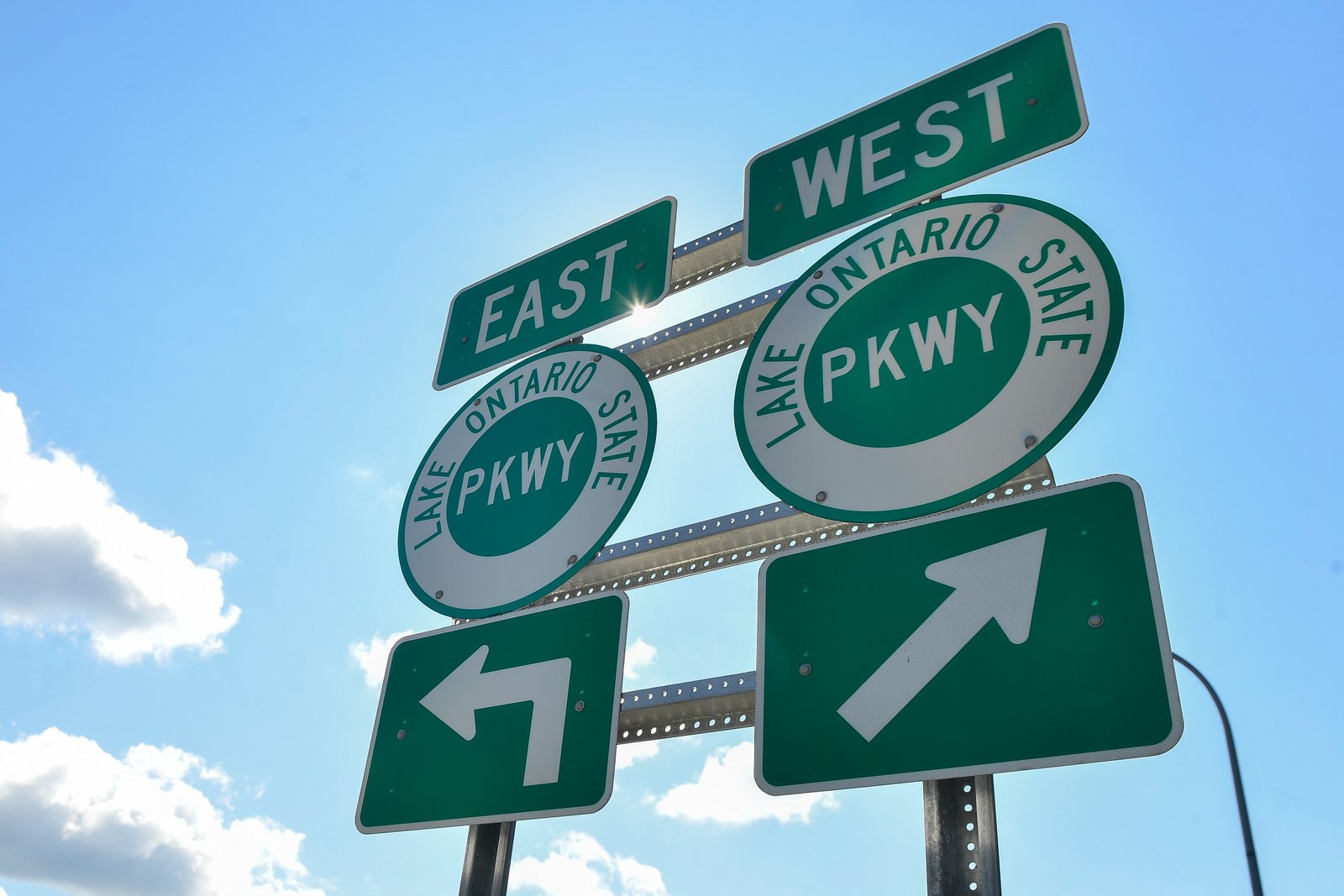
On Saturday, Google Maps, which uses the U.S. Geographic Names Information System that comes from official government sources, officially changed the name. Map users on the American side will see “Lake America” while users in Canada will see “Lake Ontario.” For users outside of both the U.S. and Canada, they will see both names. Apple Maps followed suit, using the same naming approach as Google.
But MapQuest — the once-dominant mapping service of the 1990s and early 2000s — rocketed up app stores after refusing to use Lake America.
Long before the lake was renamed, Alex Morgia — a Democrat and mayor of Sackets Harbor, N.Y. — said his community has been grappling with the deteriorating relations between the U.S. and Canada.
Sackets Harbor, located along the eastern shores of Lake Ontario, is home to a number of Canadian residents. A village of 1,400 people, it was a major military outpost and naval command center during the War of 1812, when the U.S. clashed with British and Canadian forces.
Since 1971, the village has hosted the Can-Am festival to commemorate the village’s Canadian-American heritage.
The festival “reminds everyone that it’s not very nice to be at odds with your neighbor,” Morgia said. “Having good relationships with your international neighbors is important, particularly for people that live along the border on either side.”
Last year’s festival was the first time residents began making floats of maple leaves and Canadian flags to protest the Trump administration’s calls to make Canada the “51st state” and to remind Sackets Harbor residents that there were Canadian citizens among them, Morgia said.
This year, as Trump has continued to roll out tariffs against Canadian products, and relations with Canadian Prime Minister Mark Carney continued to worsen, Morgia joked that the theme for this year’s parade should’ve been “we’re sorry.”
The overall atmosphere at this year’s parade in July was “somber,” Morgia said.
“I kind of hoped that the Canadian issue had gone by the wayside, but you know [Trump] seems to bring it up when he needs to,” Morgia said.
Sackets Harbor is split between Democrats and Republicans, Morgia said. Jefferson County, which encompasses Sackets Harbor, overwhelmingly supported Trump in the 2024 election with 61 percent of its vote.
“It’s a three-hour drive to Montreal, a two-hour drive to Toronto and a six-hour drive to New York City,” Morgia said. “The biggest metropolitan cities near us are Canadian, and a lot of North Country businesses and people rely on the southern part of Canada. … I’m hopeful that voters will think about that at the polls in November and in 2028.”
In the village of Sodus Point, N.Y. — which is located along the southern border of the Great Lake — Republican Mayor Pat Nolan said he’s disappointed by the name-change as “Ontario” is rooted in the Indigenous history of the region.
The name Ontario, is largely believed to come from Iroquoian roots, meaning “beautiful lake” or “sparkling water,” according to the Canadian government. The Canadian province of Ontario, is named after the lake.
A village of 1,000 people, Sodus Point is located in Wayne County, where Trump received 61 percent of the vote in 2024. Nolan was elected in a write-in campaign last year.
“My hope is that, rather than allowing this decision to become another wedge that further divides people,” Nolan wrote in an email, “it can encourage a broader discussion about the history of this great body of water, the Indigenous people who first gave it its name and the generations of communities that have grown along its shores.”
- Stephen A. Smith on Trump, Democrats and the politics of chaos

- Elon Musk unleashes first wave of spending on key races in the midterms
- House Democrats watch closely as Hakeem Jeffries vows to rein in rogue members
- These mayors live along Lake America’s shores. But they won’t be calling it that.

- Markwayne Mullin safe after Coast Guard jet makes emergency landing due to engine failure
- White House pushes companies to ditch Macron’s space summit
- Tillis renews calls for Hegseth’s ouster
- No immediate plans to punish rogue House Democrats for bailing out GOP
- Thune: Data centers should be ‘self-sufficient’
- Mike Johnson says he has ‘no plans’ to campaign with Max Miller
-

 Politics2 years ago
Former ‘Squad’ members launching ‘Bowman and Bush’ YouTube show
-
Uncategorized2 years ago
Bob Good to step down as Freedom Caucus chair this week
-

 Politics2 years ago
Former Kentucky AG Daniel Cameron launches Senate bid
-

 The Dictatorship2 years ago
Luigi Mangione acknowledges public support in first official statement since arrest
-

 The Josh Fourrier Show2 years ago
DOOMSDAY: Trump won, now what?
-

 The Dictatorship2 years ago
Pete Hegseth’s tenure at the Pentagon goes from bad to worse
-

 Politics2 years ago
Blue Light News’s Editorial Director Ryan Hutchins speaks at Blue Light News’s 2025 Governors Summit
-

 The Dictatorship12 months ago
Mike Johnson sums up the GOP’s arrogant position on military occupation with two words