Politics
The rift over generational change roils the Congressional Black Caucus
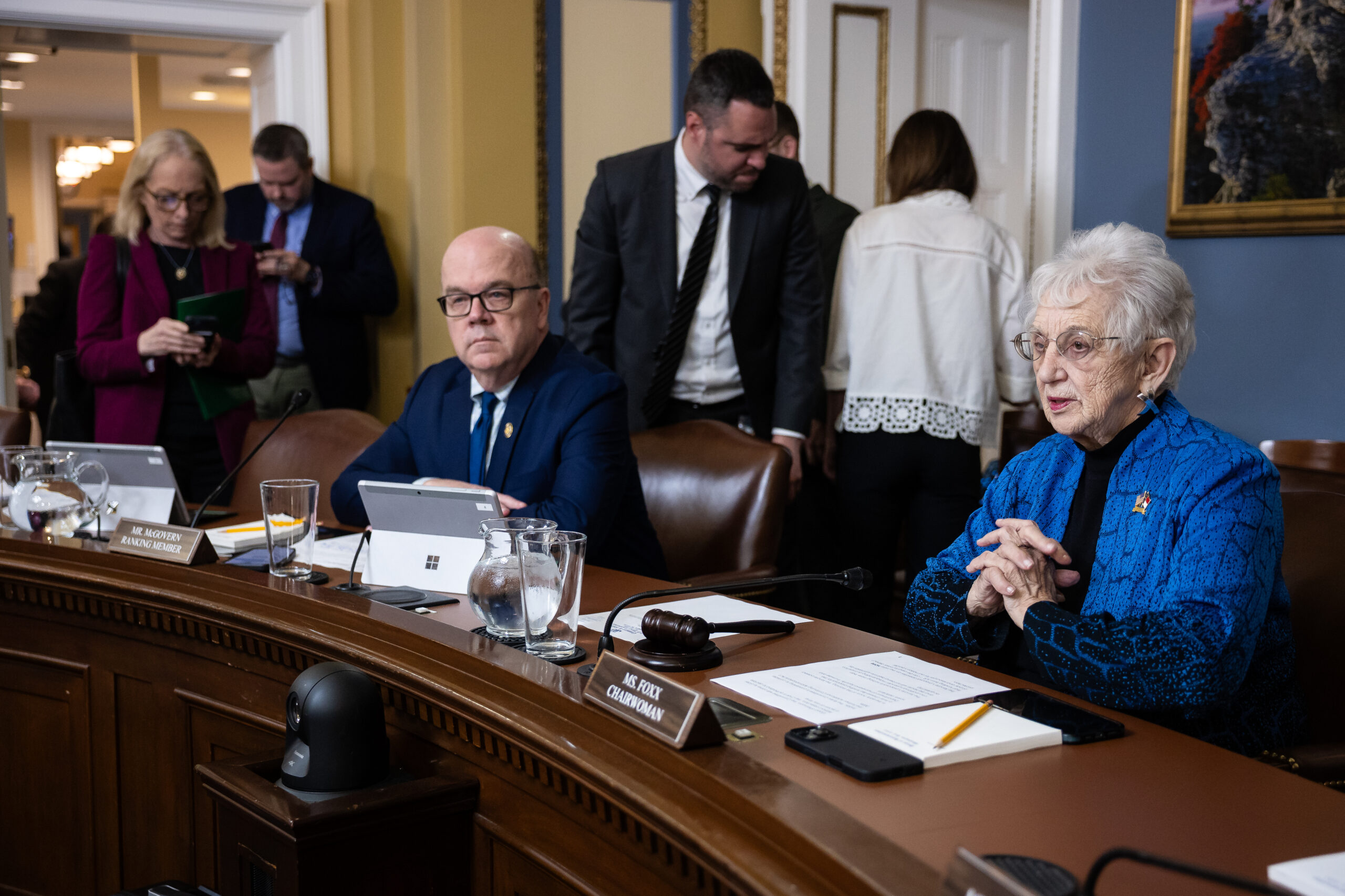
A new generation of Black Democrats is running in the midterms, aiming to inject a younger vision into an aging Congressional Black Caucus. And in some cases, that means primarying incumbents.
The wave of new candidates comes amid an identity crisis for the Democratic Party, which has splintered along generational and ideological lines as the party searches for new leaders in the second Trump era, both for this November and the open presidential race in two years.
“This is a new moment that requires different ideas, requires new energy and new perspectives and you cannot be a part of the system for 40 years and also be the one who’s going to change it for the next 40,” said Tennessee state Rep. Justin Pearson, 31, who launched his primary challenge to 76-year-old Rep. Steve Cohen (D-Tenn.) last year. “You’ve done the best that you could, and it’s time for other folks to be able to do the best that they can for the present and for the future.”
Young Black candidates say they’re motivated to run due to rising racial tensions, redistricting and the possibility of an end to the Voting Rights Act — and what they describe as an inadequate response from older generations that are fighting past battles.
“Our generation recognizes the fierce urgency of now,” Pearson said.
The CBC has grown exponentially since its establishment in 1971, currently boasting a historic 62 members — the largest of any of the affinity caucuses. But the average age of CBC members is 60 years old, and some of the oldest House Democrats are members.
Rep. Jim Clyburn, 85, has represented South Carolina for more than 30 years and plans on running again. At 88 years old, D.C. Del. Eleanor Holmes Norton has not ruled out running for reelection, despite growing concerns about her age. And 87-year-old Rep. Maxine Waters (D-Calif.), who was first elected in 1990, said she also plans on running for reelection this year.
These long tenures have started to worry some new candidates, they said in interviews.
“When I was born in 1992, this was the poorest district in the poorest state in the country,” said Evan Turnage, who is primarying 77-year-old Rep. Bennie Thompson (D-Miss.). “Congressman Thompson was elected in ’93 and now today, I’m 33, and this is still the poorest district in the poorest state in the country.”
Turnage — a former senior staffer to Sens. Chuck Schumer of New York and Elizabeth Warren of Massachusetts — said these long-serving members have “failed” younger generations for too long.
“Just because you’ve been around the block for 30 years doesn’t mean you’re delivering results for the district, doesn’t mean you’re delivering results for your constituents,” Turnage said.
In a statement, Thompson said he has spent his entire career encouraging young people “to make a difference in the world.”
“If this is how Mr. Turnage chooses to make a difference in Mississippi’s 2nd Congressional District, that’s his choice,” Thompson said.
The younger Black candidates — and current lawmakers — have generally pushed more progressive policies in their campaigns than CBC members who have served for decades. They’ve had a heavy focus on issues they say are of most concern to those in their generations, such as the cost of living and education.
“The Democratic Party has to adapt in order to survive. That work starts right now,” said Pearson, who gained nationwide fame in 2023 as a member of the “Tennessee Three” after he was expelled from, and then reelected to, the state Legislature for leading a gun safety protest on the state House floor.
“Black folks in this country are still suffering disproportionately in every single category, and without leadership to elevate those concerns, those worries, those issues in a meaningful way, we’re never going to see that change,” Pearson added.
He is challenging Cohen, who is white, in a majority-Black district based in Memphis that Cohen has represented for decades. During his 2007 campaign, Cohen expressed interest in joining the CBC, but caucus members quickly shut that down.
Cohen said in an interview that his tenure in Congress is actually a strength.
“I know the issues and I know the problems, I know the people,” said Cohen. “The way you get legislation passed hasn’t changed, really, in the 40 years I’ve been here. Some people think it’s about getting a megaphone and hollering or making some kind of a fuss, and I’ve done some of that in my younger days, and I still like to occasionally … but it’s a matter of having friends, having relationships, and being able to get the majority of votes to pass the bills. And I’ve done that all my life.”
The CBC has begun to see younger legislators enter their ranks in recent years. Rep. Gabe Amo, 38, made history in 2023 when he was elected as Rhode Island’s first Black representative. And in 2022, at the age of 25, Rep. Maxwell Frost became the first Gen Z CBC member elected to Congress.
“Our movement — from the civil rights era to the birth of the CBC itself — was born from the energy and courage of young people to stand up and do the right thing,” said Rep. Gregory Meeks (D-N.Y.), chair of the CBC’s political arm, in a statement. “Our caucus today represents the breadth and depth of our community — from every corner of America — and folks whose families have been here for generations, those who are immigrants, queer, disabled, and more women and young people than ever before.”
The CBC PAC has already endorsed some young candidates this cycle, including California’s Lauren Babb and Arkansas’ Chris Jones. It’s likely the PAC will also endorse Adrian Boafo, 31, according to a person familiar with the matter who was granted anonymity to discuss private matters, who is running to succeed 86-year-old Rep. Steny Hoyer.
But the PAC this year also endorsed 71-year-old incumbent Rep. Adriano Espaillat (D-N.Y.) — who identifies as Afro Latino, currently chairs the Congressional Hispanic Caucus and has had a bumpy relationship with the CBC — over his 32-year-old primary challenger, Darializa Avila Chevalier.
As the age gap between caucus members and voters grows, an influx of fresh faces will be vital to regaining voters’ support for Democrats ahead of the 2026 midterms, said 25-year-old Courtney McClain, who is running for a red House seat in South Carolina.
“Within the party in general, we’ve had an issue of connecting with younger voters, and especially with young men,” said McClain, referring to the 15 percent of Black men who supported President Donald Trump in the 2024 presidential election. “I really think a lot of people are more apt to vote if they can see themselves in the candidate as opposed to someone who has been there for many years.”
But these young Black candidates still hold a deep appreciation for the caucus, despite their concerns around age.
Turnage said he’d “love” to be a member of the CBC. Pearson called the caucus an “extraordinary institution.” And McClain — a onetime CBC Foundation intern and a fellow with the CBC Institute last year — said she would “definitely” like to be a member.
Ultimately, McClain said, the CBC needs young members if they hope to actually address the challenges facing the next generation.
“The legislation that’s being passed, a lot of the people that are currently in office won’t even be impacted by it, say, in the next 20 years,” McClain said. “But my generation will.”
Politics
Mark Kelly keeps cashing in on Trump’s ‘Seditious Six’ attacks
Sen. Mark Kelly (D-Ariz.) raised $13 million in the last three months and ended the first quarter of 2026 with a massive $22.3 million cash on hand in his campaign account, large sums for a candidate not up for reelection, his campaign told Blue Light News.
The haul is a sign President Donald Trump’s targeting of him as part of the so-called “Seditious Six” has continued to juice his grassroots donations. He raised $12.5 million last quarter too, much of it after Trump accused him and other Democratic military veterans of being traitors.
He’s not the only one to benefit: Rep. Jason Crow (D-Colo.), who was also featured in the video, raised $928,000 since the beginning of the year, which his team said was his largest quarterly fundraising haul of his career, and comes even though this year he’s not a top GOP target.
Kelly’s big quarter is likely to only stir more speculation about his presidential ambitions. Kelly has increasingly flirted with a presidential campaign, saying he will “seriously consider” a 2028 bid.
Kelly is using his fundraising prowess to spread the wealth to other Democrats facing tough races this year — and who could be helpful allies if he runs for president.
He raised an additional $470,000 for his leadership PAC and $1.1 million for the DNC in 2026. In the first quarter, his campaign and leadership PAC transferred $105,000 to the DSCC and made direct contributions to six candidates, including James Talarico, Julianna Stratton and Mary Peltola. Kelly’s campaign said 98 percent of his donations to his campaign were under $100.
“Mark knows that flipping Congress in November is how we hold Trump accountable and that’s why he is campaigning in battleground states and supporting candidates with the resources to help them win tough elections,” Kelly spokesperson Jacob Peters told Blue Light News.
Politics
Senate Democratic candidates are posting some huge fundraising hauls
Democrats running for the Senate posted some massive fundraising hauls in the first quarter.
The most striking number so far came from Texas. James Talarico brought in an eye-popping $27 million over the past three months, his campaign announced Wednesday morning ahead of today’s Federal Election Commission deadline, including $10 million since he won his March 3 primary.
Georgia Sen. Jon Ossoff raised more than $14 million in the first quarter, according to his campaign. In North Carolina, former Gov. Roy Cooper raised $13.8 million. In Alaska, former Rep. Mary Peltola brought in $8.9 million, while former Ohio Sen. Sherrod Brown raised $12.5 million in his comeback bid.
The hauls, several of which set records in their respective states, underscore how Democrats are feeling increasingly bullish about their ability to flip the Senate. While Democrats still face an uphill climb due to the red lean of many states on the Senate map, President Donald Trump’s tanking approval ratings and the unpopularity of the ongoing war in Iran has the party feeling optimistic ahead of the midterms.
Democrats facing competitive primaries did not report as strong numbers, as donors split among several candidates. In Michigan, state Sen. Mallory McMorrow brought in $3 million, slightly ahead of Abdul El-Sayed’s $2.2 million. Rep. Haley Stevens, the third candidate in the race, has not yet revealed her fundraising numbers ahead of the FEC deadline on Wednesday. Iowa’s two Democratic candidates, state Sen. Josh Turek and state Rep. Zach Wahls, each raised $1.1 million in the past quarter.
Politics
Rick Jackson cannonballed into the governor race. It’s having ripple effects across Georgia.
HOMER, Georgia — The last few players of the day were finishing their rounds at the Chimney Oaks Golf Club when a steady wind picked up by the practice putting green. Pin flags bent to a near snap. A sleek helicopter slowly descended onto the manicured lawn.
Rick Jackson had arrived.
The billionaire health care executive turned GOP gubernatorial candidate was making his grand entrance as a headliner for a recent event hosted by the Banks County Republican Party. In many ways, it mimicked the same disruptive force with which he entered the race two months earlier: loud, ostentatious and out of nowhere.
He rose from being a virtually unknown contender to a frontrunner in the polls by spending $50 million of his own money to flood the airwaves, social media and mailboxes with ads — nearly double the amount of all the candidates in both primaries for governor combined, according to an AdImpact analysis. He’s cutting into Trump-backed Lt. Gov. Burt Jones’ margins with ultra-conservative voters and he’s complicating Secretary of State Brad Raffensberger’s path to making the June run-off.

An already crowded race has become all about Jackson.
“Anytime you’ve got somebody spending $100 million on TV and mailers and everything else, obviously you’re forced to talk about him,” Jones said in an interview with Blue Light News.
As Jackson has upended the governor’s race, he’s also taking up so much of voters’ attention that Georgia Republicans in other races are worried about their own chances of breaking through.
Voters and strategists alike say they just can’t avoid Jackson’s presence anywhere, not even at home. His media blitz is alarming fellow Republicans, half a dozen of whom told Blue Light News that Jackson is endangering Republicans in down ballot races — and a critical Senate contest — that will likely be decided by razor-thin margins.
“Down the ballot, it’s going to be extremely difficult for candidates for the other constitutional offices to get any kind of media attention, which creates a scenario where many of these races are essentially crapshoots,” said Spiro Amburn, a longtime Georgia Republican strategist and statehouse official who is neutral in the race.

A Georgia-based Republican operative involved with the governor’s race suggested that Jackson is partly the reason for the GOP’s messy Senate primary because the candidates are struggling to “get traction” and make headway with paid media. Another GOP strategist said Jackson’s spending, particularly in a primary, has far surpassed any precedent: “I watched 30 minutes of TV the other day and had six Rick Jackson ads. It’s just on a different level.”
“He’s sucked up so much oxygen that it’s really hard for any other Republican to operate right now,” said a third GOP strategist involved in races up and down the ballot in the state.
Jackson, in an interview, said he had not considered how his spending might be affecting other races and said he’d ultimately help them across the finish line when he’s the GOP nominee.
“Anytime you have a lot of money on TV, it’s going to raise the bar for everybody. Unfortunately, it’s just a necessity,” he said unapologetically. Speaking with Blue Light News after the Banks County event last week, Jackson shrugged off any concerns about his money and said he will do “whatever it takes” to win.
“When I win, that’s when I’m done,” he added.
Rick Jackson’s money vs. Burt Jones’ Trump endorsement
Perhaps the biggest target in the face of Jackson’s onslaught is Jones, who used to lead the governor’s race by most standards. He now finds himself neck and neck with the billionaire in recent polling, as Jackson sells himself as another Trump-aligned candidate — even though he and the president don’t have much of a close, personal relationship.
“He’s not portraying himself as what he really is,” Jones told Blue Light News. “He’s not this hard-nosed conservative guy. He is somebody who’s dependent on state and federal contracts to make his living, and he’s trying to make himself out to be some outsider and doesn’t know how the political process works.”
Other Jones allies have been leaning hard into attacking Jackson as a big-spending outsider. At a fish fry last week in rural Atkinson County, state Rep. James Burchette encouraged voters to question why a candidate would spend so much money to “take control of the state of Georgia.” Sen. Russ Goodman warned that “all this stuff that you see in the mailbox — it’s nothing but a bunch of lies.”
But even with Jackson’s big-spending approach, Trump’s stamp of approval still holds immeasurable power with the MAGA base.
The president has reaffirmed his support for Jones: “All these guys are coming in now loaded up with some money. Who the hell knows how much money he’s got? But Burt Jones has been here and been with you and been with me right from the beginning,” the president said at an event in Rome, Georgia in February.
Parked outside the fish fry, Jones’ campaign bus was emblazoned with that reminder: “Trump Endorsed.”

Jackson is betting on voters like Bruce Brooker, a 72-year-old farmer from Atkinson County: intrigued by Jackson, but ultimately sticking with the lieutenant governor out of loyalty to the president.
“I would probably vote for [Jackson] if Trump had not endorsed Burt,” he said. “I like the fact that he started with nothing and crawled and climbed through like any. He knows what hard work is. I’m not being critical of him. I admire him.”
Jackson, meanwhile, is trying to prove his MAGA credentials to Georgia Republicans to siphon off enough of Jones’ voters to win. Over in Homer, where Jackson was addressing a crowd of about 200 voters at the country club, attendees peppered him with questions about his relationship with Trump.


One man in the crowd asked Jackson to explain why he had donated to former Rep. Liz Cheney (R-Wyo.) — a longtime Trump critic who voted to impeach the president during his first term. Another questioned why he had only donated to the president after the 2024 election.
“Just like JD Vance and Marco Rubio, I will admit I was late to the Trump Train. There’s no question about it,” Jackson responded. “But I gave a million dollars to him. That’s not an insignificant concept of supporting somebody.”
The non-MAGA candidates say they have an opening
Others in the governor’s race who are less interested in wooing the MAGA masses — including Raffensperger, who has rebuked efforts to overturn the 2020 election, and Attorney General Chris Carr — are not as concerned about Jackson undercutting their campaigns.
Carr campaign spokesperson Julia Mazzone said in a statement that Jackson’s entry into the race “devastates Burt Jones’ campaign, but it does not change the fundamentals for us.” The attorney general has a long-shot chance of advancing out of the primary, however, as polls show him in a single-digit fourth place.
A March 30 memo penned by Raffensberger’s campaign manager and obtained by Blue Light News claimed that the Jackson-Jones cagefight has created an opening for other candidates to lead on policy substance. The secretary has avoided injecting himself into the MAGA mêlée, instead keeping his profile comparatively low as he travels the state to speak with voters.

“I have my own lane, and I feel good where we are,” Raffensberger said in an interview. “We travel all over the state, reaching voters, talking to people, making sure that people understand my message is about making sure we keep Georgia affordable and safe, and I’m best positioned to do that at the end of the day.”
After all, Raffensperger has a history of overcoming Trump-backed challengers and cruising to a general election victory.
“I’m going to be in the runoff,” he added, deflecting any and all concerns with finality.
-
Politics1 year agoFormer ‘Squad’ members launching ‘Bowman and Bush’ YouTube show
-

The Dictatorship1 year agoLuigi Mangione acknowledges public support in first official statement since arrest
-

Politics1 year agoFormer Kentucky AG Daniel Cameron launches Senate bid
-

The Dictatorship1 year agoPete Hegseth’s tenure at the Pentagon goes from bad to worse
-

The Dictatorship7 months agoMike Johnson sums up the GOP’s arrogant position on military occupation with two words
-

Politics1 year agoBlue Light News’s Editorial Director Ryan Hutchins speaks at Blue Light News’s 2025 Governors Summit
-
Uncategorized1 year ago
Bob Good to step down as Freedom Caucus chair this week
-

The Josh Fourrier Show1 year agoDOOMSDAY: Trump won, now what?