
Politics
The Blue Light News Poll Electability Experiment



Politics
Farm-state Republicans are having a cow over Trump’s beef imports as Election Day approaches
Farm-state Republicans don’t support President Donald Trump’s move to import cheap beef — but they’re still getting grilled for it.
Trump’s plan to combat sky-high beef prices by introducing discounted, tariff-free foreign beef has been widely condemned by ag-state Republicans who are concerned it will undercut the domestic beef industry and hurt ranchers, a normally reliable constituency.
And their opponents see an opening to paint Republicans as unconcerned about voters’ pocketbook concerns.
“Our ranchers and our farmers keep getting kicked in the teeth, and we have politicians that keep telling us that everything’s great, that we’re the hottest country,” Dan Osborn, an independent running for Senate in Nebraska, said in an interview. “And to be quite frank, I’m pretty pissed off about it.”
Osborn’s state is one of the top four top cattle-producing states — along with Texas, Kansas and Iowa — all of which have more-competitive-than-expected Senate races this cycle. And Trump’s controversial plan to remove tariffs from 300,000 metric tons of imported beef, sold at 25 percent below current market prices, is doing Republicans no favors.
Osborn’s campaign went on air with a pun-filled ad this week in which he says the import plan is “selling out American farmers and ranchers,” and blasts Congress for being “too chicken to stand up to the corporations who bought them off.” The campaign says it plans to spend at least six figures airing the spot. It’s the first major spending from a campaign focused on the beef import plan. But it plays into a larger economic argument Democrats are pushing to break through with farmers and ranchers: Trump and Republicans have turned their backs on rural America, as a worsening farm crisis and spiking fuel and fertilizer prices pinch agricultural communities.
“It’s part of a wider frustration,” said an adviser to one of the farm-state GOP senators, granted anonymity to speak openly. “I don’t think it sways anyone’s vote, but it isn’t a great look. … It isn’t fun for me to read the headline. It’s frustrating.”
Sen. Pete Ricketts (R-Neb.), Osborn’s opponent, said in a statement he has a record of standing for his state’s agriculture community, “no matter who is president — from fighting Biden’s 30×30 plan to opposing this beef import plan.”
“Ranchers know the difference between a senator who delivers and a candidate reading a script his socialist ad agency wrote,” Ricketts said.
Farm-state Democrats and independents believe beef imports provide a window to speak to rural voters who have skewed red for decades but suddenly look more competitive amid Trump’s plunging political standing. A strategist working on Osborn’s campaign, granted anonymity to discuss strategy, said Osborn’s ad “codes as non-partisan in a way that running ads about taxes or healthcare doesn’t.”
Trump’s overall unpopularity is hurting Republicans across the map, but this policy could be especially problematic in a quartet of once-sleeper Senate races that could hand Democrats control of the upper chamber.
Spokespeople for the GOP nominees in Iowa and Kansas declined to discuss the issue, pointing to their candidates’ statements in August, when Trump’s plan was announced: Rep. Ashley Hinson (R-Iowa) called Trump’s plan a “bad idea,” while Sen. Roger Marshall (R-Kansas) said the priority should be growing the U.S. cattle herd, “not flooding the market with imports.”
Last week, during a debate at the Kansas State Fair, Democratic nominee Adam Hamilton slammed the import plan as “a slap in the face of all of our cattle ranchers,” earning a raucous response from fair-goers, and hit Marshall for “tepidly respond[ing] to it as opposed to shouting like hell that this is not okay.”
In Iowa’s agriculture-heavy first district, Democrats have been on the air since June with an ad hammering Rep. Mariannette Miller-Meeks for record-high beef prices” and other cost-of-living increases under the Trump administration. The Republicans who were already getting hammered for high prices before now are now hobbled by a proposed remedy — one that has infuriated their own base.
When asked how Republicans should message the beef plan back home, Sen. John Boozman (R-Ark.), chair of the Senate Agriculture Committee, acknowledged there’s “certainly a lot of concern amongst our cattle producers.”
“I think they understand what’s going on. They’re just not pleased with it,” Boozman said. “We’re in contact with the administration, a lot of members are in contact, helping them understand the unintended consequences of it. We’d like to lower prices, but again, we don’t want the unintended consequence of lowering cattle futures significantly.”
That leaves ranchers worried that the import plan will undercut their struggling industry.
“President Trump wants to lower the price of beef, I think that’s where it’s coming from,” said Ben Menges, a cattle rancher in Arizona’s battleground 6th District. “The best way that President Trump can do that is by lowering the cost of fuel, not by importing a bunch of beef.”
Some Republicans have looked to turn the conversation into a culture war issue — hitting their opponents for past stances on meat consumption or veganism.
Vice President JD Vance, during a visit to Iowa Friday — which Hinson did not attend — slammed Hamilton, the pastor-turned-Democratic nominee for Senate in Kansas, for having a “kind of a ‘gee whiz, I’m a nice pastor’ vibe” who tells his congregation to “repent for their white privilege while eating beef.”
It’s an attack Marshall made at last week’s debate, hitting Hamilton for a sermon he delivered on climate change and the impact of meat consumption.
“I think the senator needs to repent for not standing up for the beef industry,” responded Hamilton.
Gubernatorial candidates across the country are racing to stake out positions on AI as the battle over regulating the technology intensifies.
They’re watching as sitting governors of both parties turn the rapidly evolving technology into a political priority, from Gavin Newsom in California to Ron DeSantis in Florida and Kathy Hochul in New York.
Now they’re starting to join the chorus, calling for more state-based action to put guardrails on AI — even if they don’t know what that would look like yet.
Blue Light News reached out to more than 18 Republican and Democratic gubernatorial candidates on their plans and received responses from eight. Nearly all said they want states to take the lead on AI, signaling a frustration with Washington’s inaction and acknowledgement that — if they eventually secure the governor’s mansion — they can’t dismiss the growing warnings.
Candidates said they were motivated by different concerns including fraud, job displacement and children’s safety. Their lack of detail on just how to address AI also reveals a tricky pivot these gubernatorial candidates are facing: To date, much of their campaign messaging on AI or the technology race with China has focused on data centers’ impact on energy prices.
Now, with less than six weeks until Election Day, they’re attempting to talk about AI in a more existential — and more far-reaching — manner.
“The federal government has failed to lead on this issue, and we cannot trust the billionaires profiting off of AI to self-regulate,” said Gina Hinojosa, Texas’ Democratic nominee for governor, in a statement. “State government has the most direct impact on our day-to-day lives, and at a time when Texans are more uncertain and concerned about AI than ever, it’s critical that we put the needs of Texans before corporate profits.” (GOP Gov. Greg Abbott, Hinojosa’s opponent, did not respond to a list of questions.)
Former Health and Human Services Secretary Xavier Becerra, a Democrat who’s heavily favored to succeed Newsom in California, is in conversations with tech industry leaders and economists on the path forward. He will “work to set firm guardrails to prevent the threat of real harms to workers, to children, to our privacy rights, to public safety,” spokesperson Jonathan Underland said in a statement. “California is the birthplace of modern AI, and California will lead the way in making it safe.”
Becerra’s longshot Republican opponent, Steve Hilton, told Blue Light News that there’s a place for narrow regulation on AI — even though he thinks some of the warnings are overblown and “preposterous.”
“California should lead on this because we are leading on the technology, and therefore we should lead on the regulation,” Hilton said. “I would prefer to see both the Congress and politicians in other states back off and stop talking about something they don’t understand.”
Recent warnings from top AI leaders about the technology’s potential apocalyptic trajectory roiled Democrats and Republicans both in Washington and on the campaign trail. According to a new POLITICO Poll, a majority of voters now think that AI poses an existential threat to humanity and a plurality want to see a pause in development of advanced models.
“There is a lot of education that’s needed here, and people are navigating an issue that they weren’t even really thinking about six months ago beyond the beyond ‘Should we have data centers’?” said Alyssa Cass, a Democratic strategist who has worked with Alex Bores, a New York state lawmaker who gained national attention in his failed campaign for Congress for opposition to unchecked AI.
“They’re talking about it,” she added. “That’s a meaningful difference.”
The National Governors Association, which convened a working group on AI’s impact on the workforce earlier this year, plans to release a policy roadmap for governors in November on how states can take action.
“We have 39 gubernatorial elections happening in November, and at least 21 new governors will be sworn in in January,” said Sophia Yager, the NGA’s policy director for workforce development and economic policy. “So we wanted to have a resource available not only for incumbent governors who are thinking and working on this issue, but for all of the new governors coming in, wanting to have something available for them from the jump in November.”
So far, Democrats have taken the sharpest aim at the Republican-controlled federal government for its inaction on establishing safeguards against AI.
“While regulation is strongest and most effective at the federal level, President [Donald] Trump dismisses the need for even the most basic guardrails, and we know it can take time for Congress to act,” said Federico Araujo, a spokesperson for Oregon’s Democratic Gov. Tina Kotek, who’s locked in a tightening battle for reelection. “States, in the meantime, must act with more urgency and do everything possible to manage how AI impacts our economies, energy prices and natural resources.”
David Crowley, the Democratic nominee in Wisconsin, told Blue Light News in a statement that AI safety is “an issue Wisconsin can address” but “we need strong leadership and partners in Washington who are looking out for us at home.” Still, he didn’t offer specifics, and much of his battle with GOP nominee Tom Tiffany — and even the Democratic primary — has been focused on data centers’ proliferation in Wisconsin.
Tiffany did not respond to a request for comment.
The calls for action on state-based regulation have not been limited to Democrats alone. Republicans — including some Trump allies — signaled a willingness to create safe buffers for the technology at the state level, following the lead of governors like DeSantis and Utah Gov. Spencer Cox, who have long advocated for states’ abilities to install guardrails amid federal inaction.
“States should have a say in how AI is regulated,” said Dan Capodilupo, spokesperson for Iowa GOP gubernatorial nominee Zach Lahn. “Zach is committed to protecting states rights.” State Auditor Rob Sand, his Democratic opponent, did not respond to a request for comment.
In Georgia, Garrison Douglas, a spokesperson for GOP nominee Rick Jackson, stopped short of calling for local regulations but said that the health care executive “supports efforts to ensure that new models are tested for risks and that safety standards are established. He added that Jackson is “committed” to working with the state legislature on protecting consumers from AI-driven scams.
Georgia’s Democratic nominee Keisha Lance Bottoms did not respond to a request for comment.
Trump has labeled concerns about AI’s existential threat a “HOAX” and derided efforts to regulate the technology, and his White House has pushed preemption of state-level regulation. In February, the White House urged Utah legislators to abandon an AI transparency bill; the administration has similarly gone after state-level legislation in Colorado and in California.
A POLITICO review of state-level legislation found 18 laws in 13 states, led by both Republicans and Democrats, that contradict the White House’s preemption framework.
These candidates’ calls for state-based action mirror some early actions that both red and blue state executives are taking from their statehouse perches, explicitly defying Trump’s hands-off approach to regulating the nascent but powerful industry.
This week, Cox urged Washington to “establish a consistent national framework for the development of frontier AI,” and Pennsylvania Gov. Josh Shapiro, in a speech at an AI-focused conference in Pittsburgh, called for the “federal government to step up and regulate the AI industry just like they do for nearly every other industry that significantly impacts our lives.”
Shapiro — who’s up for reelection in the battleground state this year and is considered a 2028 presidential contender — outlined what he sees as the stakes of slow-walking protective measures.
“By the time Congress comes back into session after the election, we could be dealing with a whole new generation of generative AI, and more scary examples of AI agents going rogue,” he said.
Lisa Kashinsky contributed to this report.
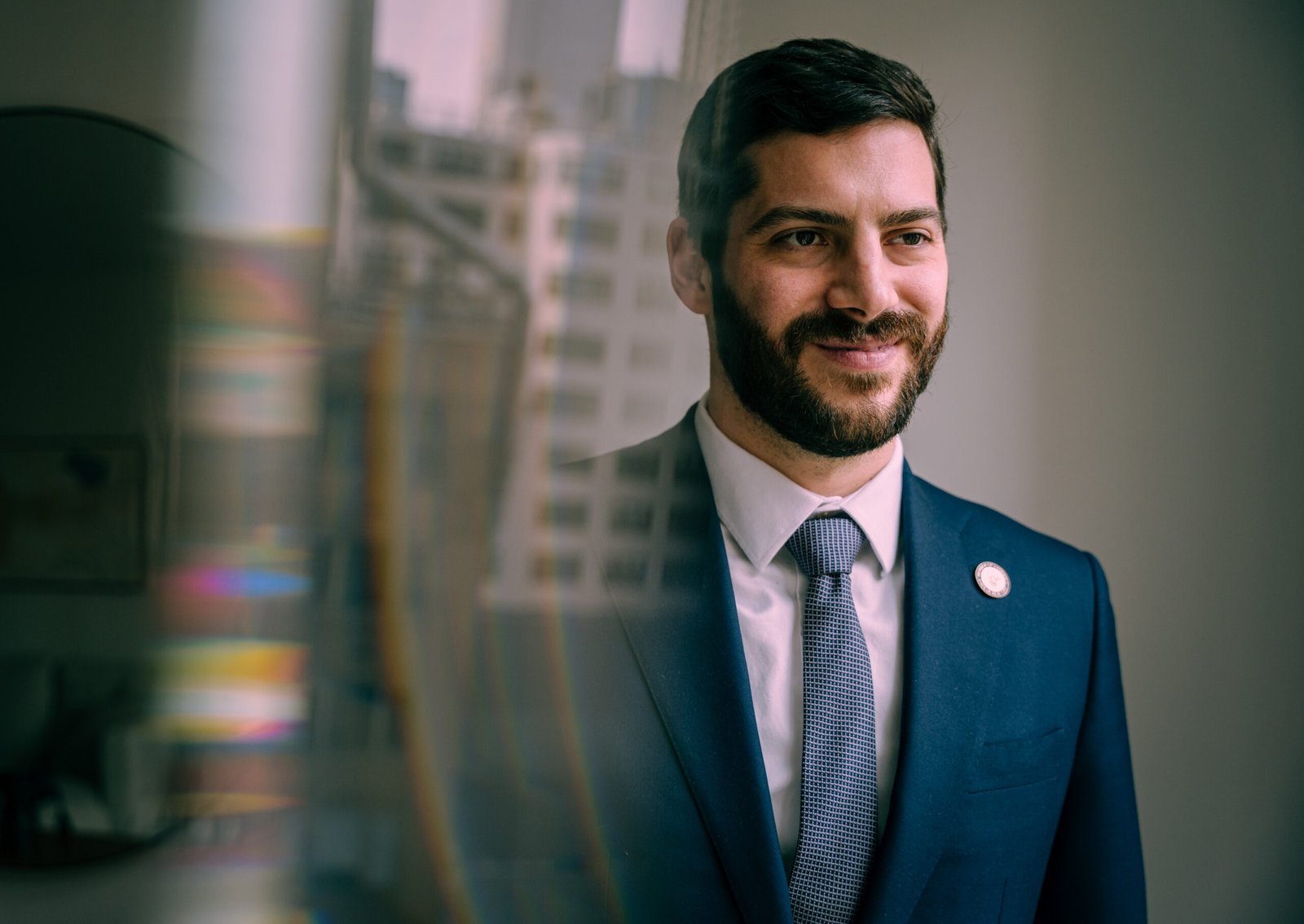
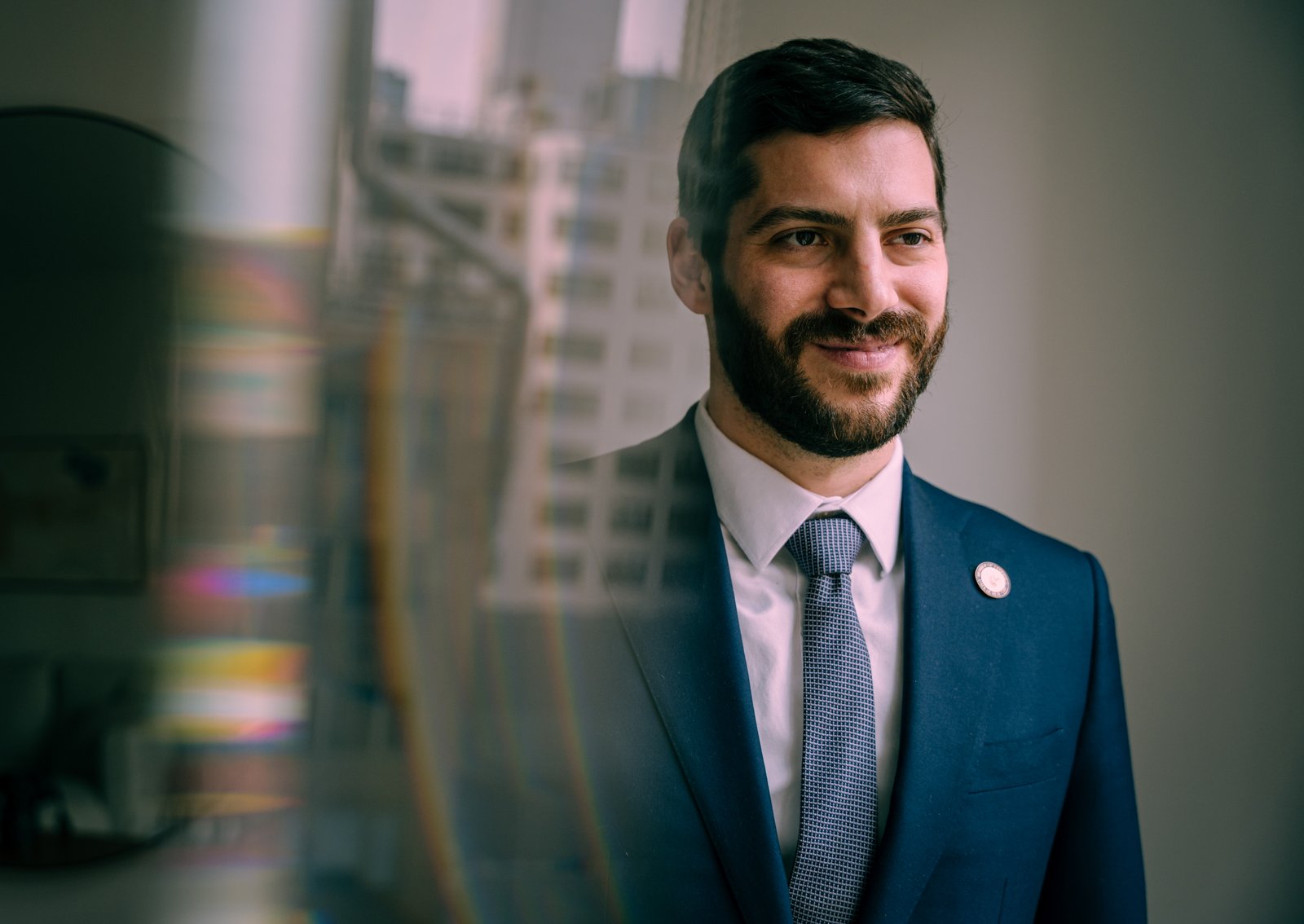
SESSION LESSON: Assemblymember Alex Bores would really like to take another swing at regulating Big Tech before he leaves office at the end of the year.
The New York lawmaker faced the multimillion-dollar wrath of the tech industry after leading the charge on crafting state regulations for artificial intelligence, falling short in his quest to move on to the halls of Congress.
But he said he’s optimistic about policymakers taking action amid growing public alarm over the risks of AI — and that he’d support a special session in Albany on the issue.
“This is an urgent problem, and too frequently we have left it to California to set the nationwide standards,” Bores said. “We’ve got some pretty darn talented people here in New York … and I would love to give them the chance to lead.”
The outgoing assemblymember, who has work experience in the industry, has positioned himself as a national leader on the issue with the launch of a $30 million group to develop the Democratic agenda on AI rules.
There are currently no plans for a special session on AI, according to Gov. Kathy Hochul’s office.
The lack of plans to return to Albany before January to work on AI rules contrasts with discussions in California, where Gov. Gavin Newsom has mused on the possibility of calling lawmakers back to Sacramento.
Newsom signed an executive order today to speed up implementation of recently passed AI safety laws and consider proposals like requiring a “kill switch” for advanced AI models. New York regulators issued an order requiring gas, electric and water utilities to report on their use of AI yesterday, and New York Attorney General Letitia James urged employees at AI companies to report any rulebreaking.
The jockeying between states to act on AI comes amid a crescendo of alarm, including from the industry itself, that the technology is outpacing humans’ abilities to monitor and control it. Hochul has also said she wants to take additional actions, but without offering specifics.
The rhetorical flurry among state officials is also being sparked by the Trump administration’s dismissal of AI safety threats and a widespread sense that there’s little chance Congress will act on the issue anytime soon.
Democratic lawmakers who’ll be returning to Albany in January are discussing their options — and gearing up for pushback from the industry.
“The crux of the fight is in clawing back power from these oligarchs and putting real people in the driver’s seat,” said state Sen. Kristen Gonzalez, chair of the Internet and Technology committee.
Read the full story from Blue Light News Pro’s Marie J. French.
HEALTH CARE
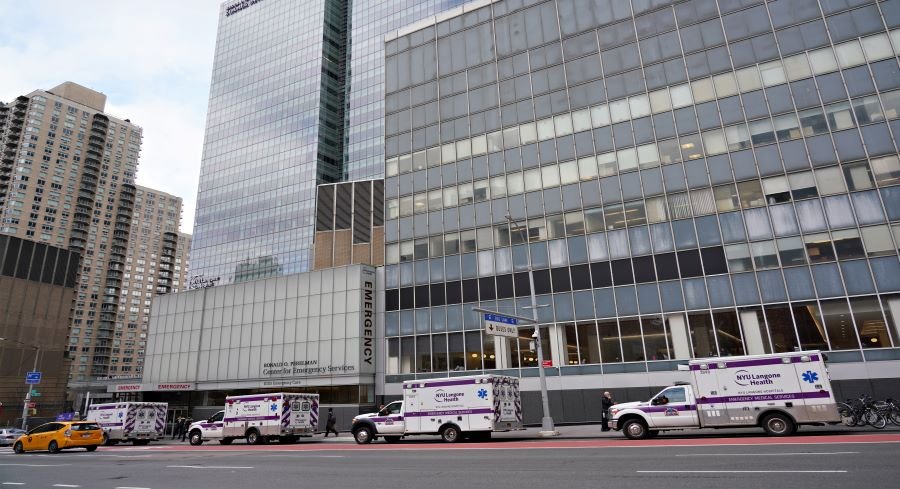
SETTLEMENT WATCH: NYU Langone agreed to pay $8.5 million and stop providing puberty blockers and hormonal treatment to minors under an agreement with the Justice Department announced today.
DOJ has announced similar agreements with five other hospital groups, including the Mount Sinai Health System in New York City, as part of a nationwide investigation into gender-affirming care that came at the direction of President Donald Trump.
NYU Langone spokesperson Steve Ritea said the DOJ agreement “protects our providers and secures the privacy and confidentiality of our patients and their families,” noting the health system denied any wrongdoing or liability as part of the agreement.
“Under this agreement, DOJ has agreed to resolve its investigations, removing the threat that NYU Langone would have to provide the confidential information previously demanded about patients under 18 who received gender-affirming care at our institution,” Ritea said in a statement.
NYU Langone’s statement echoes comments by Mount Sinai upon reaching a similar agreement with the Justice Department. — Maya Kaufman
MEASLES ON THE RISE: In response to a growing number of measles cases in rural New York, state Health Commissioner James McDonald is calling on all New Yorkers to make sure they’ve received the measles, mumps and rubella vaccine.
McDonald said yesterday at a Public Health and Health Planning Council meeting that there are 66 cases across the state, with roughly two-thirds of those in adults aged 18 years old and older. The state’s new measles dashboard reports 51 cases, but it hasn’t been updated since Saturday.
The outbreak is primarily in rural and western parts of the state. Fifteen counties have reported at least one case, but the majority of cases are concentrated in Steuben, Seneca, Otsego and Allegany counties.
McDonald said he’s been in contact with health officials in neighboring Pennsylvania, where 767 cases and four deaths have been reported in a fatal outbreak there, according to the Pennsylvania Department of Health dashboard.
“I can’t explain why the federal government is being as confusing as they are about vaccines,” McDonald said yesterday. “But I’m not confused. There was no new research or new science when they did their executive order. Nothing changed in New York State. States determine what the required vaccines are.”
He said the state has been working with local health departments to distribute more than 700 MMR vaccine doses to people living in the affected counties, where health officials traditionally face skepticism surrounding healthcare and vaccines.
The push is part of a broader effort to overcome confusion over an executive order signed by President Trump last month that directs federal agencies to reduce the number of recommended vaccines children receive and spread the shots out over a longer time period.
The executive order has ignited renewed hope among parents seeking exemptions from the state’s vaccine laws, which do not include a religious exemption and have proven to be a challenge when attempting to qualify for a medical exemption. — Katelyn Cordero
FROM CITY HALL
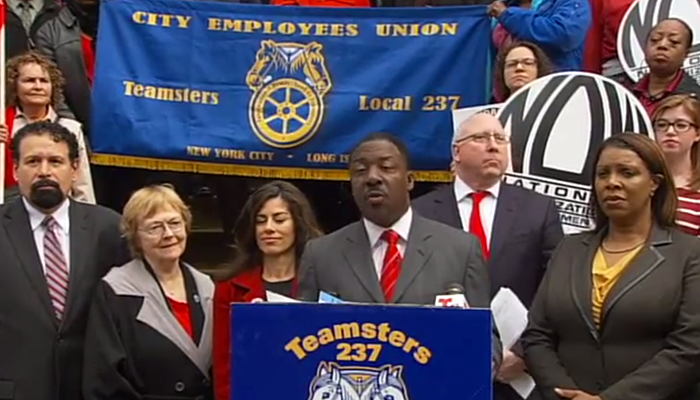
SCHOOL SAFETY: A longtime union leader is demanding Mayor Zohran Mamdani come up with a plan to keep classrooms safe amid recent weapons seizures at public schools.
Gregory Floyd, who heads Teamsters Local 237, pointed to several recent incidents, including a student caught with a loaded gun at a Staten Island high school.
His union represents nearly 2,000 municipal workers, including school safety officers.
“He’s yet to say anything, he’s yet to address it,” Floyd told Playbook. “Before we get further into the school year, we want him to come up with a comprehensive plan to make sure that no one in the public school system is seriously injured or possibly killed.”
Floyd decried a shortage of school safety agents, noting that the city has lost 2,000 agents since 2022. And the Mamdani administration, he said, isn’t hiring.
A City Hall spokesperson did not immediately respond to a request for comment.
The city saw a decrease in major felony crimes in schools, according to the mayor’s management report released Thursday.
Mamdani faced criticism over the summer after eliminating vacant school safety agent positions, drawing backlash from parents and advocates as felony assaults in schools rose.
Floyd pointed specifically to a lack of metal detectors. The most current version in schools, he said, has proven incapable of detecting smaller scalpels, which he described as an emerging threat in schools. Fewer than 100 schools currently have full-time scanners, according to Floyd. — Madina Touré
IN OTHER NEWS
— STOKING SPECULATION: Rep. Alexandria Ocasio-Cortez plans to campaign for candidates across New York, reigniting speculation she’ll run for senator or president in 2028. (The New York Times)
— PRE-K PAY: After severe funding delays, providers of free childcare in New York City are finally being paid by the Mamdani administration, but some are still waiting. (Gothamist)
— $10M PAYOUT: Family of Robert Brooks, man beaten to death by corrections officers, to get $10 million settlement. (WPTZ)
Missed this morning’s New York Playbook? We forgive you. Read it here.
- Farm-state Republicans are having a cow over Trump’s beef imports as Election Day approaches
- The Blue Light News Poll Electability Experiment
- ‘States should have a say’: Candidates for governor race to take on AI regulation
- Citing Trump, GOP regulators reject gas plant for Amazon data center
- Gottheimer unveils 2 bipartisan AI safety bills
- Let’s beat California on AI, key Democrat says

- Spanberger slaps new guardrails on data centers
- Hill investigates after F-35 parts diverted to Hong Kong
- As data center backlash grows, another GOP governor draws a line
- Capitol agenda: High costs hound GOP as House exits
-

 Politics2 years ago
Former ‘Squad’ members launching ‘Bowman and Bush’ YouTube show
-
Uncategorized2 years ago
Bob Good to step down as Freedom Caucus chair this week
-

 Politics2 years ago
Former Kentucky AG Daniel Cameron launches Senate bid
-

 The Josh Fourrier Show2 years ago
DOOMSDAY: Trump won, now what?
-

 The Dictatorship2 years ago
Luigi Mangione acknowledges public support in first official statement since arrest
-

 The Dictatorship2 years ago
Pete Hegseth’s tenure at the Pentagon goes from bad to worse
-

 Politics2 years ago
Blue Light News’s Editorial Director Ryan Hutchins speaks at Blue Light News’s 2025 Governors Summit
-

 The Dictatorship1 year ago
Mike Johnson sums up the GOP’s arrogant position on military occupation with two words