
Politics
The Great Un-Awokening

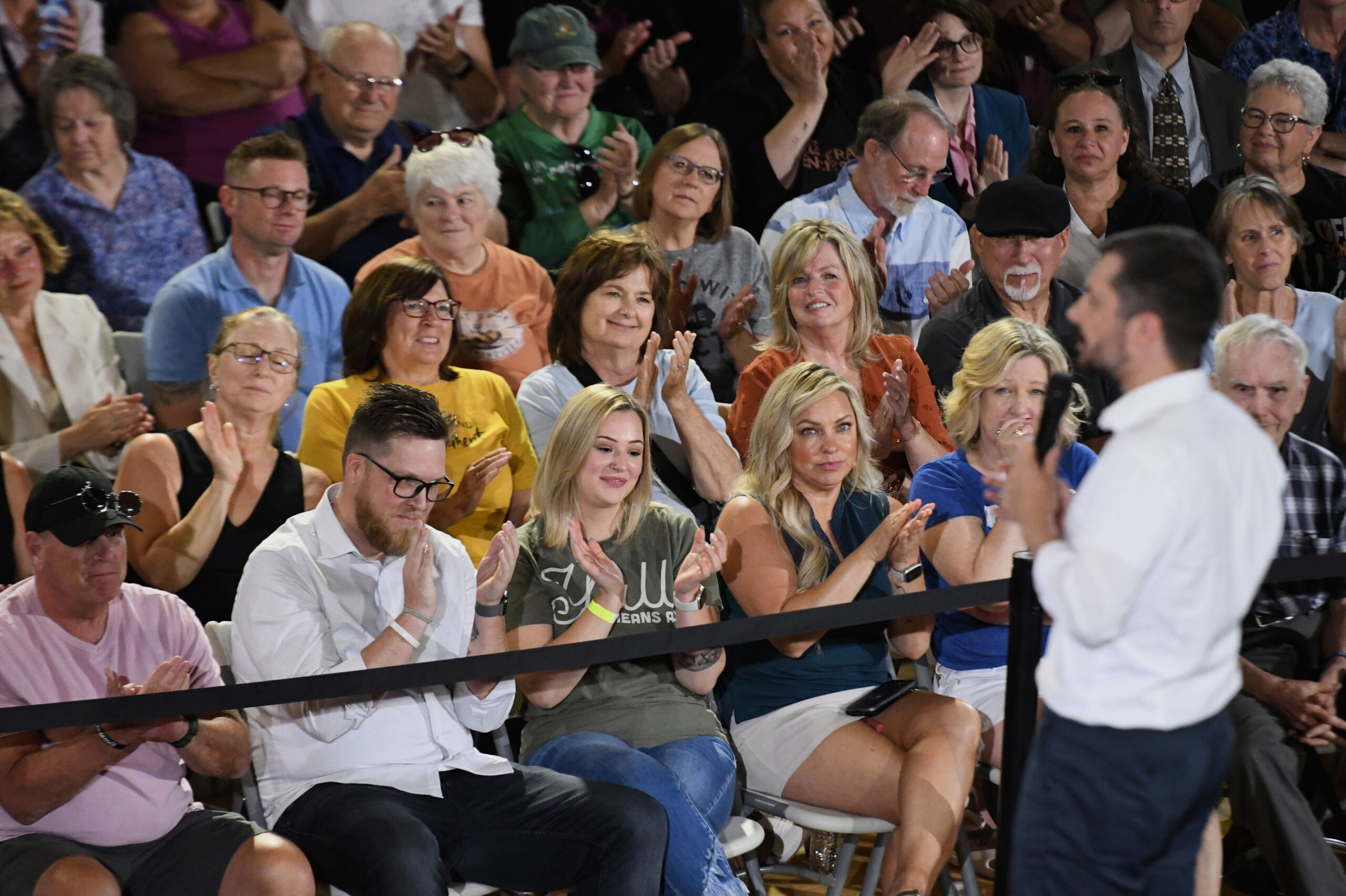
Ambitious Democrats with an eye on a presidential run are in the middle of a slow-motion Sister Souljah moment.
Searching for a path out of the political wilderness, potential 2028 candidates, especially those hailing from blue states, are attempting to ratchet back a leftward lurch on social issues some in the party say cost them the November election.
Maryland Gov. Wes Moore, who is Black, vetoed a bill that took steps toward reparations passed by his state legislature. California Gov. Gavin Newsom called it “unfair” to allow transgender athletes to participate in female college and youth sports. And Rahm Emmanuel has urged his party to veer back to the center.
“Stop talking about bathrooms and locker rooms and start talking about the classroom,” said former Ambassador to Japan Rahm Emmanuel, the two-term Chicago mayor who said he is open to a 2028 presidential campaign. “If one child is trying to figure out their pronoun, I accept that, but the rest of the class doesn’t know what a pronoun is and can’t even define it,”
Each of these candidates are, either deliberately or tacitly, countering a perceived weakness in their own political record or party writ large—Emmanuel, for example, has called the Democratic Party “weak and woke”; Sen. Elissa Slotkin (D-Mich.) has said the party needs more “alpha energy”; others like Newsom are perhaps acknowledging a more socially liberal bent in the past.
On diversity, equity, and inclusion, some in the party are also sending a signal they’re no longer kowtowing to their left flank. Former Transportation Secretary Pete Buttigieg removed his pronouns from his social media bio months ago, and questioned how the party has communicated about it.
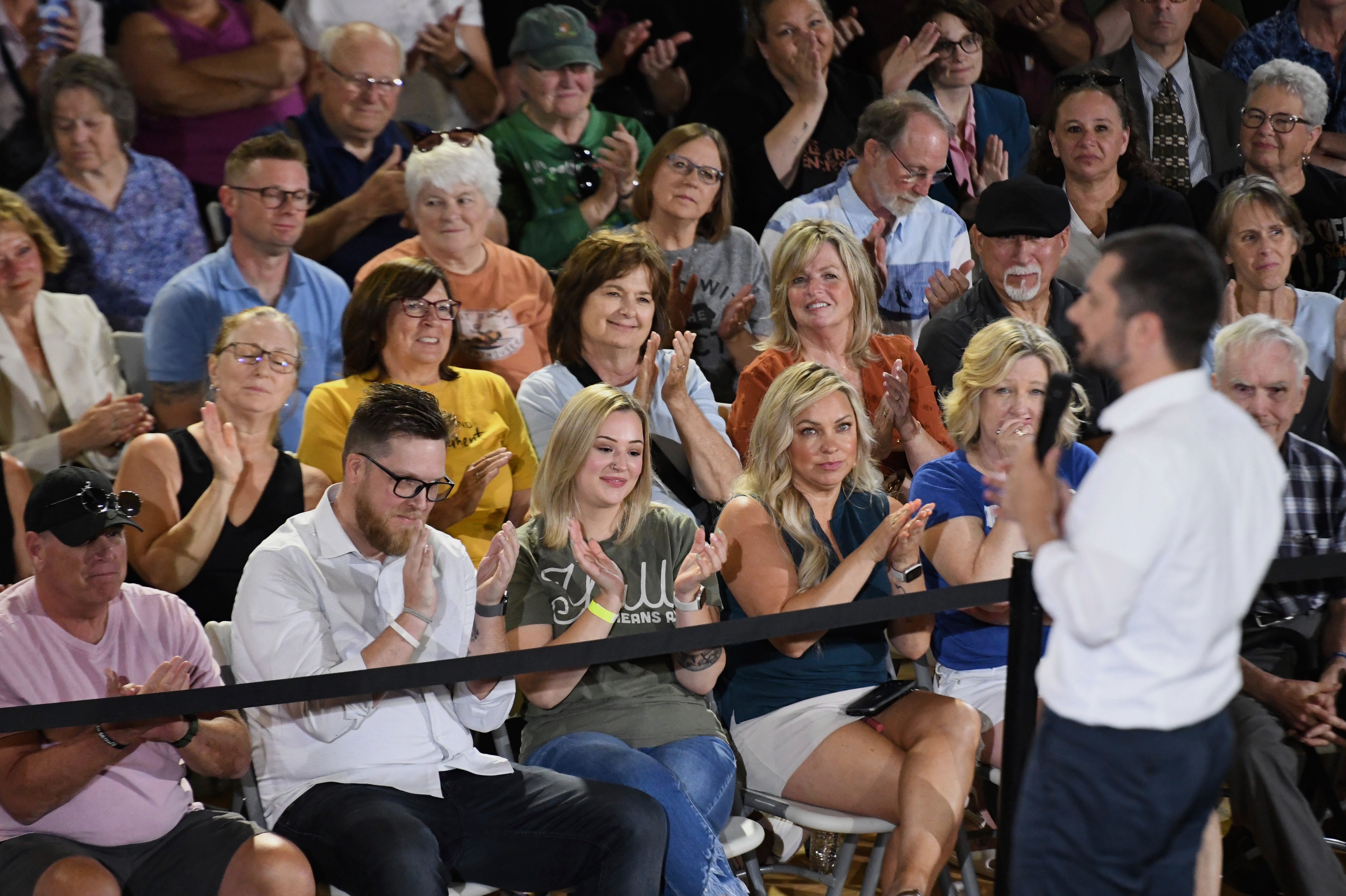
“Is it caring for people’s different experiences and making sure no one is mistreated because of them, which I will always fight for?” he said in a forum at the University of Chicago earlier this year. “Or is it making people sit through a training that looks like something out of ‘Portlandia,’ which I have also experienced,” Buttigieg said.
Buttigieg added, “And it is how Trump Republicans are made.”
Moderate Democrats are having a moment and there is a cadre of consultants and strategists ready to support them.
Ground zero for the party’s great un-awokening was this week’s WelcomeFest, the moderate Democrats’ Coachella. There, hundreds of centrist elected officials, candidates and operatives gathered to commiserate over their 2024 losses and their party’s penchant for purity tests. Panels on Wednesday featured Slotkin, Reps. Jared Golden (D-Maine) and Marie Gluesenkamp Perez (D-Wash.), described as “legends of the moderate community,” and included a presentation by center-left data guru David Shor, who has urged Democrats to shed toxic positions like “defund the police.”
Adam Frisch, the former congressional candidate and director of electoral programs at Welcome PAC, said his party is “out of touch culturally with a lot of people.”
“I think a lot of people are realizing, whether you’re running for the House, the Senate, or the presidential, we better start getting on track with what I call the pro-normal party coalition,” Frisch said. “You need to focus on normal stuff, and normal stuff is economic opportunity and prosperity, not necessarily micro-social issues.”
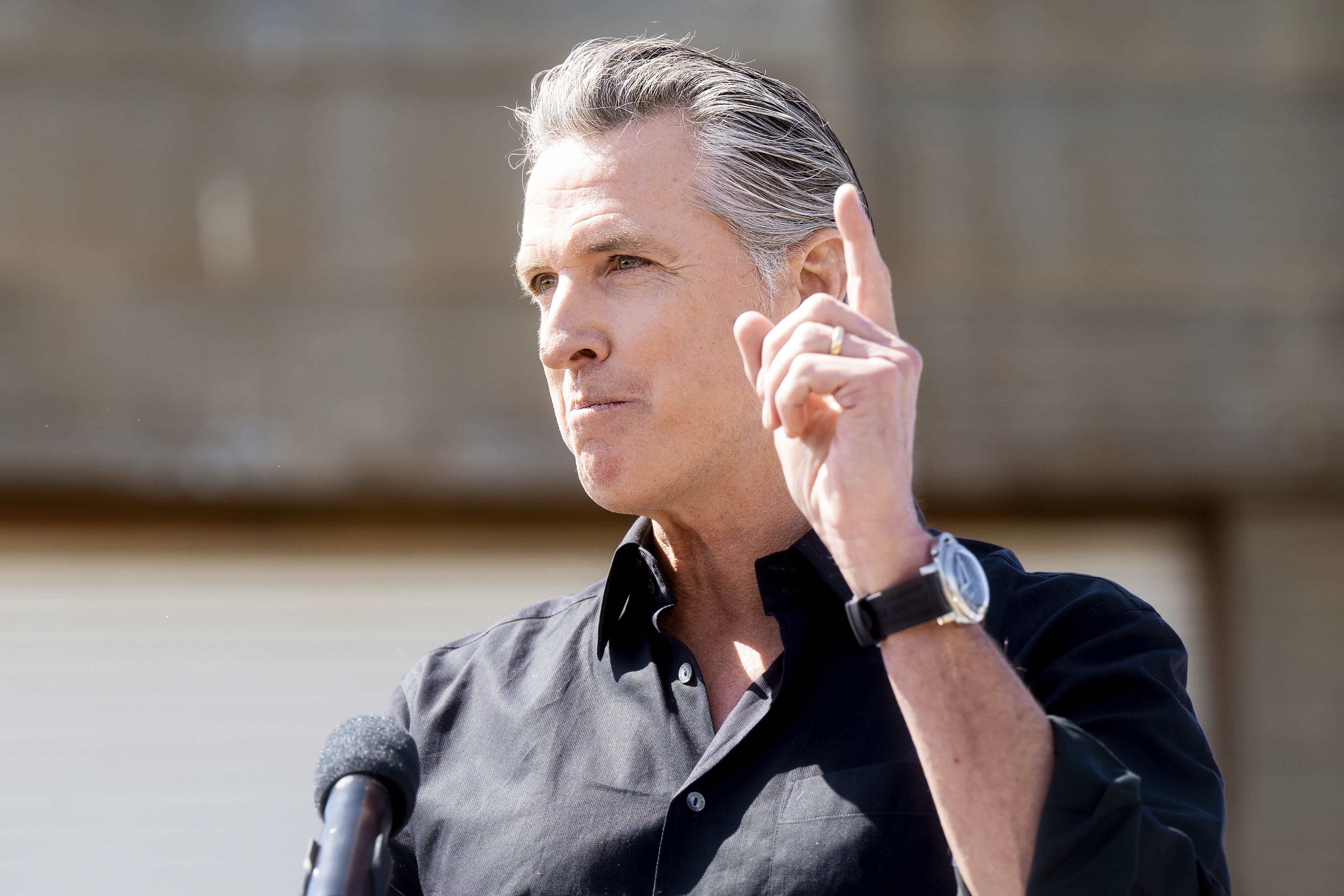
Then there is Newsom, the liberal former mayor of San Francisco, who has also distanced himself from so-called woke terminology and stances. The governor claimed earlier this year that he had never used the word “Latinx,” despite having repeatedly employed it just years earlier and once decrying Republicans who’ve sought to ban the gender-neutral term for Latinos.
Newsom made the claim on his podcast episode with conservative firebrand Charlie Kirk — one of several MAGA personalities the governor has hosted on the platform in recent months. “I just didn’t even know where it came from. What are we talking about?” Newsom told Kirk.
The governor, who gained national notoriety in 2004 for defying state law and issuing marriage licenses to same-sex couples in San Francisco, has also pivoted on some LGBTQ+ issues. Newsom broke with Democrats this spring when he said, in the same podcast episode with Kirk, that he opposes allowing transgender women and girls to participate in female college and youth sports.
“I think it’s an issue of fairness, I completely agree with you on that. It is an issue of fairness — it’s deeply unfair,” Newsom said, a comment that was panned by many of his longtime LGBTQ+ supporters and progressive allies.
Newsom for months has also muted his tone on immigration issues, avoiding using the word “sanctuary” to describe a state law that limits police cooperation with federal immigration authorities even as he defends the legality of the policy. The governor is proposing steep cuts to a free health care program for undocumented immigrants, which comes as California faces a $12 billion budget deficit. In recent days, however, he joined a chorus of California Democrats criticizing Trump administration immigration efforts in his state.
Moore, who recently trekked to South Carolina, vetoed legislation that would launch a study of reparations for the descendants of slaves from the Democratic-controlled legislature. Moore urged Democrats not get bogged down by bureaucratic malaise and pointed to the Republican Party as the reason why.
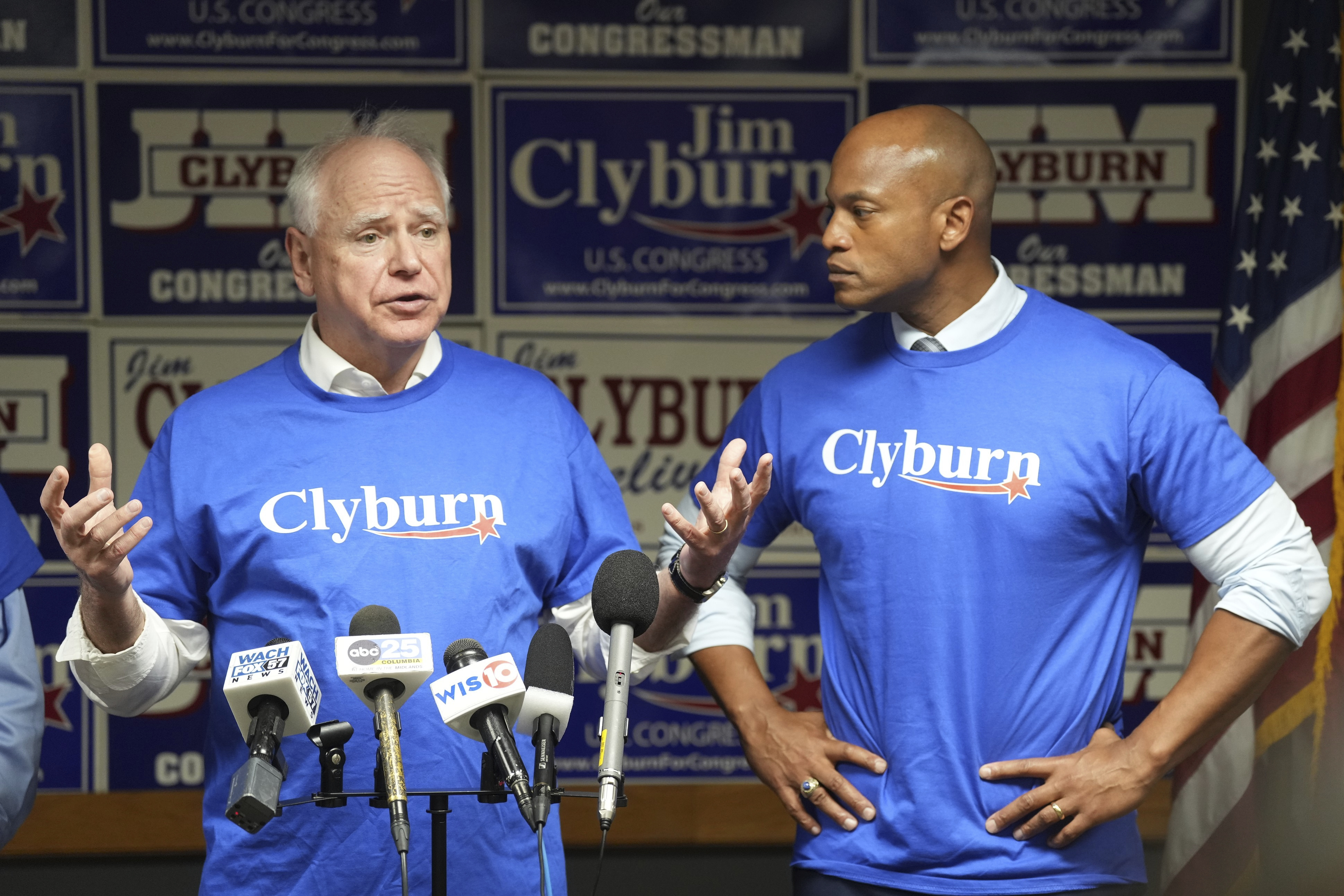
“Donald Trump doesn’t need a study to dismantle democracy. Donald Trump doesn’t need a study to use the Constitution like it’s a suggestion box,” he told a packed dinner of party power players. “Donald Trump doesn’t need a white paper to start arbitrary trade wars that will raise the cost of virtually everything in our lives,” Moore said.
There are some notable exceptions to the party’s border pivot to the center. Govs. Andy Beshear of Kentucky, JB Pritzker of Illinois and Tim Walz of Minnesota haven’t shied away from social issues.
Beshear, who has vetoed several anti-LGBTQ+ bills, including during his own reelection year, attacked Newsom for inviting conservative provocateurs Steve Bannon and Charlie Kirk onto his podcast. He also drew a distinction with Newsom on transgender athletes playing in youth sports, arguing that “our different leagues have more than the ability to make” sports “fair,” he told reporters in March.
“Surely, we can see some humanity and some different perspectives in this overall debate’s that going on right now,” Beshear added. The Kentucky governor said his stance is rooted in faith — “all children are children of God,” he often says.
Walz called it “a mistake” to abandon transgender people. “We need to tell people your cost of eggs, your health care being denied, your homeowner’s insurance, your lack of getting warning on tornadoes coming has nothing to do with someone’s gender,” he told The Independent last month. Pritzker, too, recently said that it’s “vile and inhumane to go after the smallest minority and attack them.” This spring, Pritzker declared March 31 as Illinois’ Transgender Day of Visibility.
“Walz, [Sen. Chris] Murphy, Pritzker, Beshear — they’re not going around talking about it all the time, but they’re also not running away from their values,” said one adviser to a potential 2028 candidate granted anonymity to discuss the issue candidly. “They’re in the both-and lane.”
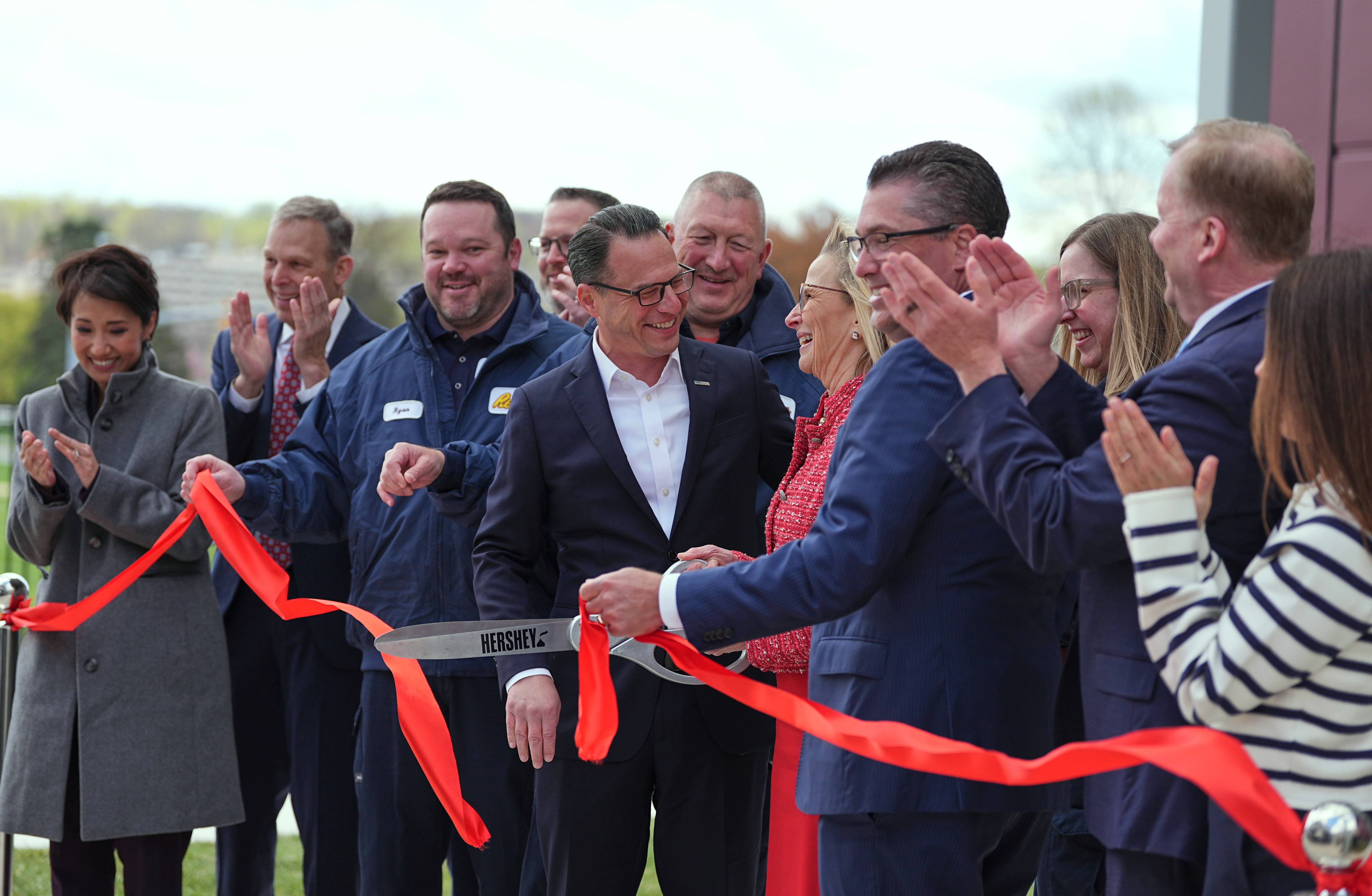
The party’s reckoning with social issues is far from over. In 2021, then-Pennsylvania Attorney General Josh Shapiro vocally opposed a GOP bill that aimed to ban trans athletes from participating in women’s school sports, calling it “cruel” and “designed to discriminate against transgender youth who just want to play sports like their peers.”
This year, as the state’s Republican-controlled Senate has passed a similar bill with the support of a handful of Democrats, Shapiro has remained mum on the legislation.
It’s not likely to come up for a vote in the state’s Democratic-held House, so he may be able to punt — at least a while.
As Emmanuel sees it, his party has a long way to go to over-correct for what he paints as the excesses of the last few years.
“The core crux over the years of President [Joe] Biden’s tenure is the party on a whole set of cultural issues looked like they were off on a set of tangential issues,” Emmanuel said.
Dasha Burns, Dustin Gardner, Holly Otterbein, and Brakkton Booker contributed to this report.


Former President Barack Obama will campaign in Detroit with Michigan Democrats later this month, giving the party a high-profile boost ahead of the start of the state’s early voting period.
Obama is set to join Democratic Senate nominee Abdul El-Sayed, gubernatorial nominee Jocelyn Benson and other candidates on Oct. 24, the state party announced Monday.
“It is my honor and privilege to announce that President @BarackObama is joining us on the trail in Detroit on Saturday, October 24,” El-Sayed wrote on social media. “Get. Ready.”
The event comes 10 days before Election Day, with Democrats defending an open Senate seat and the governor’s office.
El-Sayed faces Republican former Rep. Mike Rogers in the race to succeed retiring Democratic Sen. Gary Peters. Benson, Michigan’s secretary of state, faces Republican Rep. John James in the open governor’s race.
Since leaving the White House, Obama has remained one of the party’s most popular figures, both nationally and among the party grassroots. He has campaigned in past cycles, but he’s made few public stops on the trail this year.
He previously campaigned in Texas with Democratic Senate nominee James Talarico and gubernatorial nominee Gina Hinojosa, and appeared in a campaign ad with Iowa Senate nominee Josh Turek.
The former president is also set to headline a Washington-area fundraiser Wednesday for the Democratic Senatorial Campaign Committee, his first with the party’s Senate campaign arm this election cycle.
Ken Paxton is less than a month out from the conclusion of a D.C.-outsider campaign for a Texas U.S. Senate seat that he privately admitted is being run by Washington.
“I’ve never been in a race where I felt less control over the campaign and, like, what issues are going to matter because it’s all coming — you know — from D.C.,” Paxton said during a small fundraising event last month, according to an audio recording obtained by Blue Light News from a person in the room who does not support Paxton, and verified by another attendee.
“I don’t control message or what we’re doing.”
The lunch, hosted Sept. 24 in Washington by Chris Brinson and Susan Hirschmann of the D.C.-based lobbying firm Williams & Jensen, was attended by about a dozen people including Scott Kopple, VP of government relations at defense contractor BWXT.
“Texas is a big state, and some of these issues obviously resonate with real — I’ll call real people — you know, like back home,” Kopple, who did not respond to a request for comment, said to some chuckles in the room. “I know you need money to get the message out and stuff, but how does this stuff translate?”
Paxton replied saying: “I miss the days when I could go to, get around with all the people. But we have 32 million people, so let’s just say for the next 40 days I’m in front of 1,000 people a day — which I’m not — and that’s 40,000 people. Ten to 10.4 million people are gonna vote.”
“But then it comes down to your messaging,” he continued, “which in a federal race comes from other people a lot of times, which you don’t control.”
One attendee granted anonymity to discuss the private meeting said that Paxton never explicitly said he was referring to Trump’s team controlling his campaign, but “everybody knew what he was talking about.” The person said Paxton’s comments came amid a broader discussion about the national political environment.
“I don’t have ability to change anything,” Paxton went on. “So I have to live with whatever I’ve got. So it is a challenge.”
Paxton campaign adviser Nick Maddux said, “Campaigns don’t coordinate with super PACS and that’s obviously what AG Paxton was referring to,” in a statement to Blue Light News. “AG Paxton is thankful for the support and knows how important Texas is to keeping the majority which is why he’s on the ground every day talking to Texas, raising money, and taking his message directly to the people including with his statewide television buy that started over this past weekend.”
Neither Hirschmann nor Brinson responded to a request for comment.
In an audio recording of the same meeting obtained by The New York Times, Paxton told attendees the midterm convention hosted by Trump in Texas last month “dropped our numbers. Everybody’s numbers dropped. Right now, yeah, not good.” Maddux described the article as “manipulated nonsense.” Playbook hasn’t heard the contents of the rest of the hourlong meeting.
The most recent New York Times/Siena poll has Paxton running 6 points behind Democratic challenger James Talarico.
The private comments follow a bitter primary campaign waged against Republican incumbent John Cornyn, whom Paxton framed as a “Washington insider” and “RINO” while publicly aligning himself with Trump.
“His money is coming from the D.C. establishment,” Paxton said of Cornyn while campaigning in Texas before the primary, the AP reported. “That’s how they always try to convince us from Washington with their money that we should select their person. Well, I’m not their person and I’m never going to be their person.”
Paxton maintains a cash advantage heading into November and announced a $20 million ad buy last month. The Senate Leadership Fund, a top GOP super political action committee closely aligned with Senate Majority Leader John Thune, pledged millions to back Paxton earlier in September.
Like this content? Consider signing up for Blue Light News’s Playbook newsletter.
President Donald Trump made major gains among Latino voters in 2024. Now, those same voters might cost Republicans control of Congress.
Fifty-nine percent of Latino registered voters prefer a Democratic-controlled Congress, compared with 35% who favor Republican control, according to a new NBC News/Telemundo poll released Sunday. That 24-point gap for Democrats is twice the party’s lead compared to the September 2024 version of the poll.
A separate CBS News/YouGov poll released Sunday also found Democrats ahead among Hispanic likely voters, with 60% backing a Democratic House candidate and 39% supporting a Republican.
The findings threaten gains the GOP made in 2024, when Trump narrowed Democrats’ long-standing advantage among Latino voters. A POLITICO analysis of that year’s election results found that Trump improved his vote share by an average of more than 6 percentage points in majority-Hispanic counties, compared with 2020.
With the midterms approaching, Republicans have made those gains central to their push to maintain control of the House. When Texas Republicans revealed their redistricting proposal last year, four of the five potential GOP pickup opportunities were in majority-Hispanic districts.
Meanwhile, Trump’s overall approval rating among Latino registered voters stands at just 27% in the NBC/Telemundo poll, while 69% disapprove. On the economy specifically, 74% of Latino voters disapprove of Trump’s handling, while 78% disapprove of how he’s dealt with cost-of-living concerns.
Nearly two-thirds, 65%, say Trump’s policies have hurt economic conditions. Inflation and cost of living rank as the most important issues facing the country for 33% of respondents, followed by government corruption at 22%. Another 10% named jobs and the economy.
Economic frustration helped drive Latino voters toward Trump in 2024, with Democrats across the country suggesting in the aftermath of his victory that he was better able to connect with the voting bloc on financial issues.
But now, Latino voters seem to favor Democrats over Republicans on the economy, 48% to 27%, and the cost of living, 45% compared to 26%.
The war with Iran, now in its seventh month, is also weighing on voters’ perceptions of energy costs. In September, the average price of diesel hit a record $6.53, according to AAA.
In the CBS survey, 91% of Hispanic registered voters attributed rising U.S. oil and gas prices to the conflict.
Trump’s immigration crackdown is also putting vulnerable Republicans on the defensive. Rep. María Elvira Salazar (R-Fla.) released an ad in English and Spanish criticizing the administration for going “too far” on immigration and saying Hispanics who backed Trump in 2024 feel “betrayed.”
In the days immediately following her ad, Trump told reporters that he still supported Salazar. “I’m very strong on the borders — and she isn’t,” Trump said. But the president later reposted a flurry of social media messages criticizing Salazar on Truth Social, including one calling for the Florida Republican’s replacement ahead of the midterms.
In the NBC/Telemundo poll, 67% of Latino voters say Trump’s immigration enforcement has gone too far, compared with 22% who say he has taken the right approach.
The White House did not immediately respond to a request for comment.
Dissatisfaction with Trump and Republicans has not translated into broadly positive views of Democrats. According to the NBC poll, Latino voters remain nearly evenly divided on the Democratic Party, with 41% viewing it positively and 42% negatively. Negative views of the GOP, meanwhile, have climbed to 62%, up from 46% in September 2024.
The NBC/Telemundo survey of 800 Latino registered voters was conducted Sept. 21-28 and has a margin of error of ±3.46%. The CBS/YouGov survey of 2,166 adults was conducted Sept. 30-Oct. 2, with a margin of error of ±2.5 points.
-

 Politics2 years ago
Former ‘Squad’ members launching ‘Bowman and Bush’ YouTube show
-
Uncategorized2 years ago
Bob Good to step down as Freedom Caucus chair this week
-

 The Josh Fourrier Show2 years ago
DOOMSDAY: Trump won, now what?
-

 The Dictatorship2 years ago
Pete Hegseth’s tenure at the Pentagon goes from bad to worse
-

 Politics2 years ago
Former Kentucky AG Daniel Cameron launches Senate bid
-

 The Dictatorship2 years ago
Luigi Mangione acknowledges public support in first official statement since arrest
-

 Politics2 years ago
Blue Light News’s Editorial Director Ryan Hutchins speaks at Blue Light News’s 2025 Governors Summit
-

 The Dictatorship1 year ago
Mike Johnson sums up the GOP’s arrogant position on military occupation with two words