
The Dictatorship
The first case of Trump’s second term reaches the high court

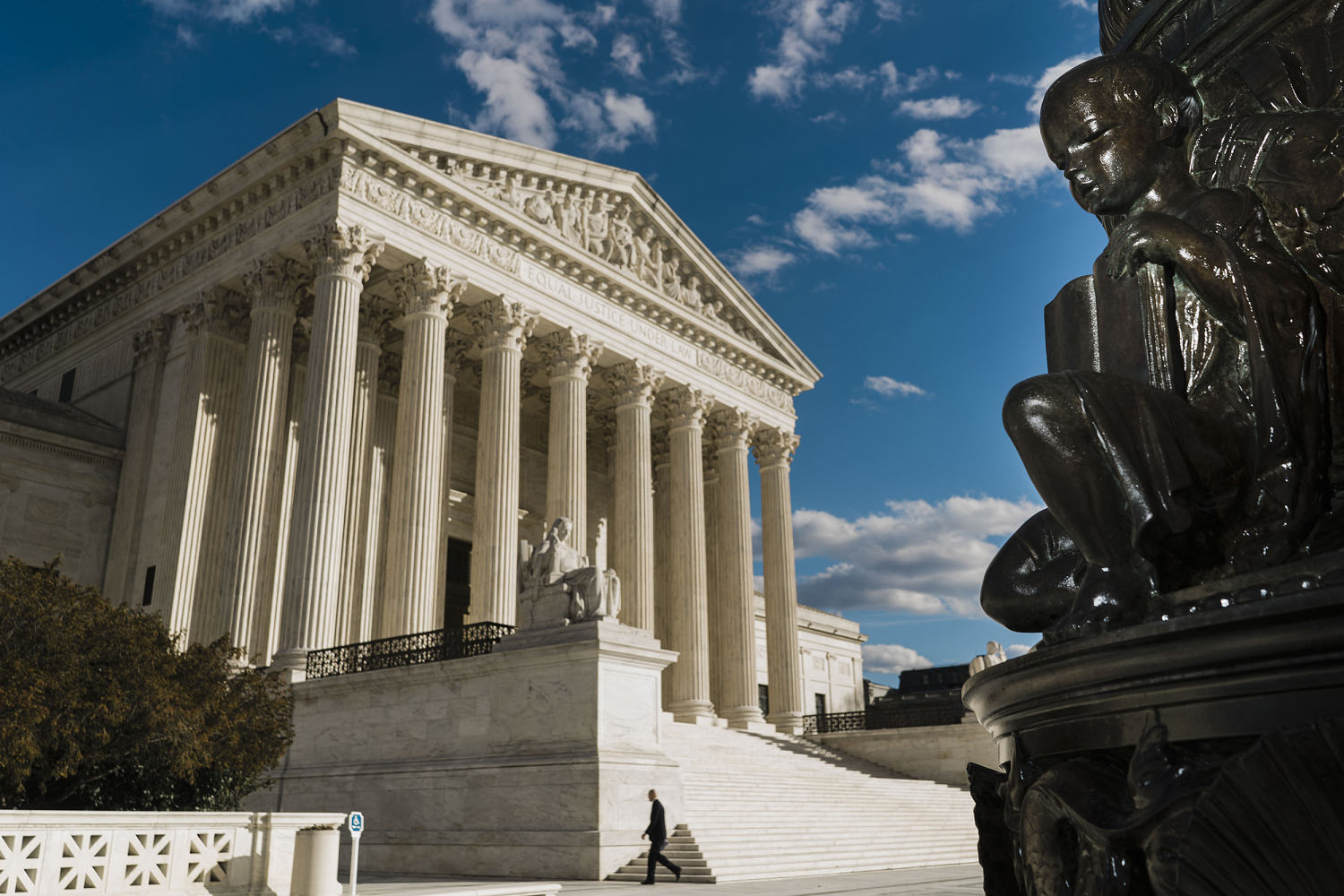
It took less than a month for a case from Donald Trump’s second presidential term to reach the Supreme Court. The administration’s appeal stems from Trump’s attempt to fire a top government watchdog in a dispute that implicates long-standing precedent that protects independent federal agencies. How the justices handle it could give us the first glimpse of their thinking at this early stage of an already litigation-packed term.
The background here is that Trump sought to fire Hampton Dellinger, head of the Office of Special Counsel. The OSC is an independent agency that protects federal employees and applicants from retaliation for whistleblowing and other protected practices (not to be confused with the Justice Department’s special counsels, like Jack Smithwho prosecuted Trump). A divided federal appeals court panel issued a ruling over the weekend that keeps Dellinger in his position for now, which prompted the administration to seek emergency relief from the high court.
Specifically, Trump’s acting solicitor general, Sarah Harris, wants the court to undo a trial court judge’s temporary restraining order against the government — which is set to expire Feb. 26 — and to immediately pause the order while the justices consider the matter.
“This case involves an unprecedented assault on the separation of powers that warrants immediate relief,” Harris (a former Clarence Thomas clerk) wrote to Chief Justice John Roberts, who handles emergency litigation from the District of Columbia. She cited the Roberts-authored immunity decision in Trump’s favor that touted the president’s power, as well as other recent rulings that enhanced presidential authority over federal agencies.
Harris cast Trump’s bid to remove Dellinger earlier this month as “uncontroversial,” while deeming the lower court reaction extraordinary. “Until now,” she wrote, “as far as we are aware, no court in American history has wielded an injunction to force the President to retain an agency head whom the President believes should not be entrusted with executive power and to prevent the President from relying on his preferred replacement.”
Absent emergency relief, Harris warned, lower courts would be “embolden[ed]” to grant restraining orders against the White House. “This Court should not allow lower courts to seize executive power by dictating to the President how long he must continue employing an agency head against his will,” she wrote.
The application comes as Harris recently wrote to Congress that the government is prepared to seek the reversal of a 1935 precedent called Humphrey’s Executorwhich has long protected agency independence.
Opposing the government’s high court bid, Dellinger’s lawyers wrote that the administration is trying to create an exception to the general rule that temporary restraining orders can’t be appealed. “To accept its theory and grant its request for relief would be to invite more of the same: a rocket docket straight to this Court, even as high-stakes emergency litigation proliferates across the country,” they wrote. They added that Humphrey’s Executor and other precedents cited by the government “all support the constitutionality of the OSC’s for-cause removal limitation.”
And they called it “an especially unfortunate moment at which to weaken the OSC, given the historic upheaval currently occurring within federal employment and the continued importance of ensuring that whistleblowers are guarded from reprisal.”
We could soon learn what Roberts and his colleagues make of all this. To be sure, they could issue a procedural-type ruling — such as lifting the restraining order for a brief period while they further consider the issue — that wouldn’t necessarily determine how the court will ultimately resolve the merits of the issue. And their eventual resolution as to the merits of Dellinger’s removal also won’t necessarily determine how they’ll deal with other agencies and lawsuits.
But whatever the court does decide will be scrutinized closely not only for what it means on this important issue but for any indications of how the court might treat Trump’s broader bid to consolidate power in his second term.
Subscribe to theDeadline: Legal Newsletterfor expert analysis on the top legal stories of the week, including updates from the Supreme Court and developments in Donald Trump’s legal cases.

Jordan Rubin is the Deadline: Legal Blog writer. He was a prosecutor for the New York County District Attorney’s Office in Manhattan and is the author of “Bizarro,” a book about the secret war on synthetic drugs. Before he joined BLN, he was a legal reporter for Bloomberg Law.


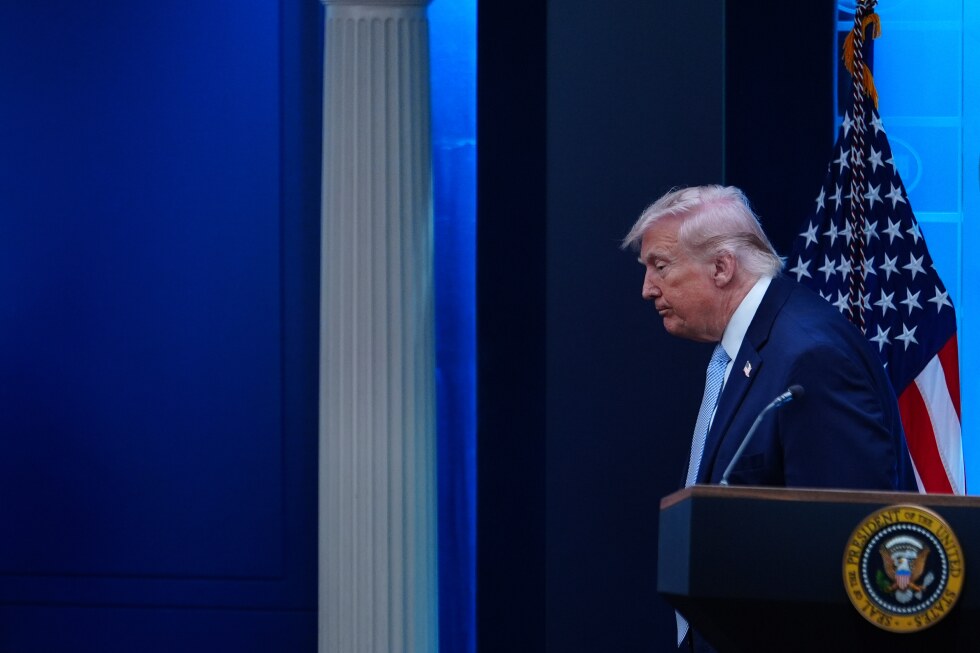
TEHRAN, Iran (AP) — U.S. President Donald Trump pulled back on his threats to launch devastating strikes on Iran late Tuesday, as the U.S. and Iran agreed to a two-week ceasefire that includes the reopening of the Strait of Hormuz.
Trump swerved to deescalate the war less than two hours before the deadline he set for Tehran to capitulate to a deal or face attacks on its bridges and power plants meant to destroy Iranian “civilization.”
Iran’s Supreme National Security Council said it has accepted the ceasefire and that it would negotiate with the United States in Pakistan beginning Friday. Neither Iran nor the United States said when the ceasefire would begin, and attacks took place in Israel, Iran and across the Gulf region early Wednesday.
Israel backed the U.S. ceasefire with Iran but the deal doesn’t cover fighting against Hezbollah in Lebanon, Prime Minister Benjamin Netanyahu said early Wednesday.
His office said in the statement that Israel supported Trump’s decision to suspend strikes subject to Iran immediately opening the Strait of Hormuz and stopping all attacks on the U.S. Israel and countries in the region. His office said Israel also supports U.S. efforts to ensure Iran no longer poses a nuclear or missile threat.
The ceasefire calls for Israel and Hezbollah to halt fighting in Lebanon, according to the prime minister of Pakistan, which has been mediating talks.
The ceasefire process was clouded in uncertainty after Iran released different versions of the 10-point plan intended to be the basis for negotiations. The version in Farsi included the phrase “acceptance of enrichment” for its nuclear program. But for reasons that remain unclear, that phrase was missing in English versions shared by Iranian diplomats to journalists.
Trump initially had said Iran proposed a “workable” 10-point plan that could help end the war launched by the U.S. and Israel in February. But he later called it fraudulent, without elaborating. Trump has said ending Iran’s nuclear program entirely was a key point of the war.
Pro-government demonstrators in the streets of Iran’s capital screamed: “Death to America, death to Israel, death to compromisers!” after the ceasefire announcement Wednesday morning. They also burned American and Israeli flags in the street.
It shows the ongoing anger from hard-liners, who had been preparing for what many assumed would be an apocalyptical battle with the United States.
Iran and Oman to collect shipping fees in Strait of Hormuz
Iranian Foreign Minister Abbas Araghchi said passage through the strait would be allowed under Iranian military management. It wasn’t immediately clear whether that meant Iran would completely loosen its chokehold on the waterway.
The plan allows for both Iran and Oman to charge fees on ships transiting through the strait, according to a regional official who spoke on condition of anonymity to discuss negotiations they were directly involved in. The official said Iran would use the money it raised for reconstruction.
In addition to control of the strait, Iran’s demands for ending the war include withdrawal of U.S. combat forces from the region, the lifting of sanctions and the release of its frozen assets.
Since the war began, Trump has repeatedly backed off deadlines just before they expire.
In doing so again Tuesday, Trump said in a social media post he had come to the decision “based on conversations” with Pakistan Prime Minister Shehbaz Sharif and Gen. Asim Munir, Pakistan’s powerful army chief. Sharif, in a post on X hours earlier, urged Trump to extend his deadline by two weeks to allow diplomacy to advance. He used the same post to ask Iran to open the strait for two weeks.
“Almost all of the various points of past contention have been agreed to between the United States and Iran, but a two week period will allow the Agreement to be finalized and consummated,” Trump said.
There are concerns in Israel about the agreement, according to a person familiar with the situation who spoke on condition of anonymity because they were not allowed to speak to the media. The person said Israel would like to achieve more.
Iran’s stockpile of highly enriched uranium is still buried at enrichment sites. The program had been one of the main issues cited by both Israel and the U.S. in launching the war.
Earlier Trump threats raised alarms
“A whole civilization will die tonight, never to be brought back again,” if a deal isn’t reached, Trump said in an online post Tuesday morning. But he also seemed to keep open the possibility of an off-ramp, saying that “maybe something revolutionarily wonderful can happen.”
Trump’s expansive threat did not seem to account for potential harm to civilians, prompting Democrats in Congress, some United Nations officials and scholars in military law to say such strikes would violate international law.
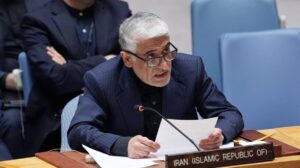
Tehran’s representative at the U.N., Amir-Saeid Iravani, said the threats “constitute incitement to war crimes and potentially genocide” and that Iran would “take immediate and proportionate reciprocal measures” if Trump launches devastating strikes.
The U.S. and Israel have battered Iran with attacks targeting its military capabilities, leadership and nuclear program. Iran has responded with a stream of strikes on Israel and Gulf Arab neighbors, causing regional chaos and outsized economic and political shock.
Late Tuesday, Pakistan’s prime minister urged Trump to extend his deadline by two weeks to allow diplomacy to advance. In a post on X, Shehbaz Sharif, whose country has been leading negotiations, also asked Iran to open up for two weeks the Strait of Hormuz.
China, which is Tehran’s biggest trade partner, encouraged the Iranians to find a way to a ceasefire as talks progressed, according to two officials who were not authorized to comment publicly and spoke on condition of anonymity.
Before the deadline, airstrikes hit two bridges and a train station, and the U.S. hit military infrastructure on Kharg Island, a key hub for Iranian oil production.
While Iran cannot match the sophistication of U.S. and Israeli weaponry or their dominance in the air, its chokehold on the strait since the war began in late February is roiling the world economy and raising the pressure on Trump both at home and abroad to find a way out of the standoff.
Airstrikes hit Iran, which fires on Saudi Arabia and Israel
Even as the ceasefire was announced, missile alerts continued in the United Arab Emirates, Israel, Saudi Arabia, Bahrain and Kuwait early Wednesday, hinting at the chaos surrounding the diplomatic moves. A gas processing facility in Abu Dhabi was ablaze after incoming Iranian fire, officials said.
Israel was continuing its attacks on Iran, said an Israeli military official who spoke on condition of anonymity in line with military regulations. Iran also kept up fire on Israel.
AP AUDIO: Trump warns a ‘whole civilization will die tonight’ if a deal with Iran isn’t reached
AP correspondent Charles de Ledesma reports Iran’s leader, who is calling for human chains around power plants as President Trump’s deadline nears, says millions of Iranians have answered calls to volunteer to fight should there be a ground invasion by the U.S.
The U.S. military has halted all offensive operations against Iran but continues defensive actions, said an official, who spoke on condition of anonymity to describe sensitive military operations.
Earlier Tuesday the Israeli military said it attacked an Iranian petrochemical site in Shiraz, the second day in a row it hit such a facility. The military later said it also struck bridges in several cities that were being used by Iranian forces to transport weapons and military equipment.
More than 1,900 people have been killed in Iran since the war began, but the government has not updated the toll for days.
In Lebanon, where Israel is fighting Iran-backed Hezbollah militants, more than 1,500 people have been killed. and more than 1 million people have been displaced. Eleven Israeli soldiers have died there.
In Gulf Arab states and the occupied West Bank, more than two dozen people have died, while 23 have been reported dead in Israel, and 13 U.S. service members have been killed.
___
Gambrell reported from Dubai, United Arab Emirates. Magdy reported from Cairo. Associated Press writers Farnoush Amiri at The United Nations; Aamer Madhani, Konstantin Toropin, Seung Min Kim, Michelle L. Price, Joshua Boak and Will Weissert in Washington; John Leicester in Paris; Nicole Winfield in Rome; Amir-Hussein Radjy in Cairo and Natalie Melzer in Jerusalem contributed to this report.
The Dictatorship
Steve Bannon wins Supreme Court order likely to lead to dismissal of contempt of Congress conviction
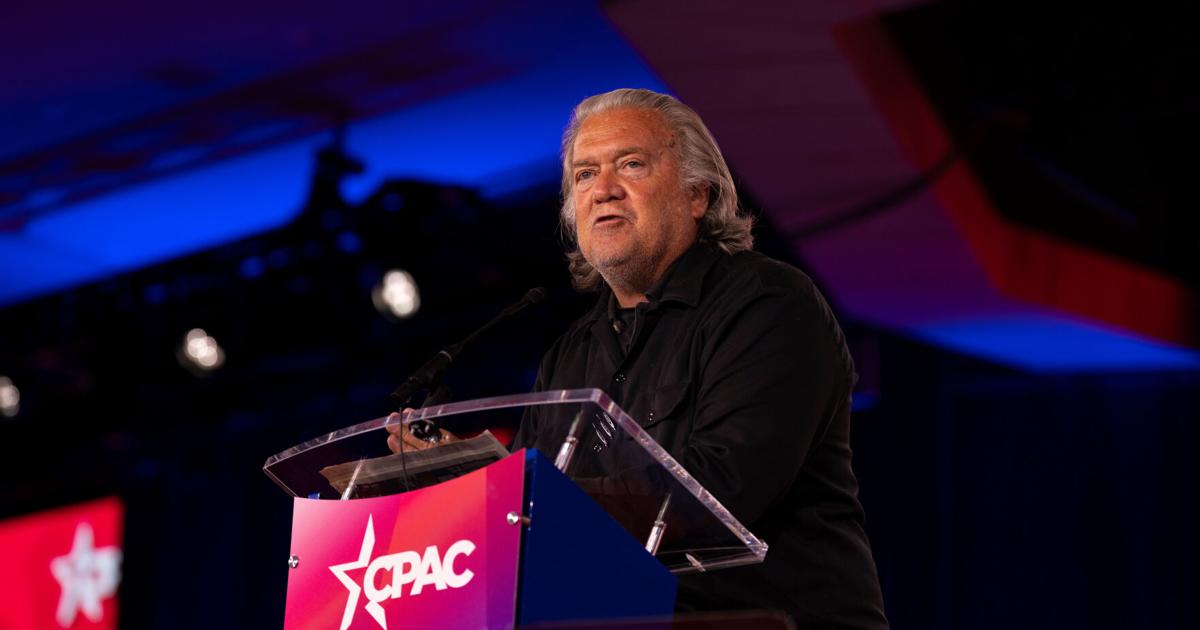

WASHINGTON (AP) — Steve Bannona longtime ally of President Donald Trump, on Monday won a Supreme Court order that is expected to lead to the dismissal of his criminal conviction for refusing to testify to Congress.
Prodded by the Trump administration, the justices threw out an appellate ruling upholding Bannon’s conviction for defying a subpoena from the House committee that investigated the Jan. 6, 2021, attack by a mob of Trump supporters on the U.S. Capitol.
The move frees a trial judge to act on the Republican administration’s pending request to dismiss Bannon’s conviction and indictment “in the interests of justice.”
The dismissal would be largely symbolic. Bannon served a four-month prison term after a jury convicted him of contempt of Congress in 2022. A federal appeals court in Washington had upheld the conviction.
The justices also issued a similar order in the case of former Cincinnati Councilman P.G. Sittenfeld, who was pardoned by Trump last year.
Sittenfeld had served 16 months in federal prison after a jury convicted him of bribery and attempted extortion in 2022. The high court order allows a lower court to consider dismissing his indictment.
The Justice Department brought the case against Bannon during Democrat Joe Biden’s presidency, but it changed course after Trump took office again last year.
Bannon had initially argued that his testimony was protected by Trump’s claim of executive privilege. But the House panel and the Justice Department contended such a claim was dubious because Trump had fired Bannon from the White House in 2017 and Bannon was thus a private citizen when he was consulting with the then-president in the run-up to the Capitol riot.
Bannon separately has pleaded guilty in a New York state court to defrauding donors to a private effort to build a wall on the U.S. southern border, as part of a plea deal that allowed him to avoid jail time. That conviction is unaffected by the Supreme Court action.
Happy Tuesday. Here’s your Tuesday Tech Drop, the past week’s top stories from the intersection of technology and politics.
Trump seeks funds to snoop on liberals
Rep. Mary Gay Scanlon, D-Pa., sounded the alarm on Monday over the Trump administration’s latest budget proposal, particularly its requests for “counterterrorism” funds to be used to target Americans. Scanlon flagged recent reporting from journalist Ken Klippenstein that highlighted the White House’s request for a “joint mission center” that would “proactively” target Americans deemed a terrorist threat due to opinions such as anti-Christian sentiment, “anti-Americanism” and “anti-capitalism.” Those definitions came from a national security memo the Trump administration issued last yearknown as NSPM-7.
The proposed budget references social media platforms as hotspots for the so-called terrorism the administration is “proactively” trying to target.
“We’ve been raising the alarm about Trump’s counterterrorism directive – NSPM-7 – a plan to label Americans as domestic terrorists over opposition to immigration enforcement, beliefs about capitalism, and positions on race, gender, and religion,” Scanlon wrote on X. “Now, the White House wants to use taxpayer dollars to spy on those who oppose its extremist agenda.”
We’ve been raising the alarm about Trump’s counterterrorism directive – NSPM-7 – a plan to label Americans as domestic terrorists over opposition to immigration enforcement, beliefs about capitalism, and positions on race, gender, and religion.
Now, the White House wants to use… https://t.co/HKQIzHZCKI
— Congresswoman Mary Gay Scanlon (@RepMGS) April 7, 2026
DOJ privacy official quits Civil Rights Division
Kilian Kagle, a privacy official with the Civil Rights Division, which oversees voting rights at the Justice Department, resigned last week as the Trump administration works to compel states to hand over sensitive voter information. Kagle did not give a reason for his departure.
Read my blog on Kagle’s resignation here.
Propagandists join Trump’s Easter party
The founders of Tenet Media, a right-wing organization paid by Russian interests to launder pro-Russian talking points to Americans in an illegal scheme, apparently attended the White House Easter celebration on Monday.
The founders of illegal Russian media operation Tenet Media weren’t just allowed back in the country. They’re invited to the White House Easter egg roll! https://t.co/sEoiwMcZmY
— Will Sommer (@willsommer) April 6, 2026
Trump’s wasteful war enriches defense industry
The Pentagon is seeking $4.5 billion dollars to replenish its stockpile of Tomahawk missiles, which Trump has depleted over the course of his deadly and economically destructive war with Iran. During a recent episode of “All In with Chris Hayes,” Sen. Chris Murphy, D-Conn., discussed how Trump’s reckless use of extremely expensive military weapons will likely benefit defense contractors that have agreed to fund the president’s legally dubious new ballroom at the White House.

Read more about the White House’s request at Bloomberg here.
Reporting for the record
A new report in the Gateway Journalism Review highlights how data journalists have helped establish a public record of the devastating effects of Trump’s racist, anti-immigrant crackdown.
Read more at the Gateway Journalism Review here.
TMZ targets vacationing lawmakers
Digital tabloid TMZ has had a field day outing lawmakers who have gone on vacation during the government shutdown of the Department of Homeland Security. One of those lawmakers, Rep. John James, R-Mich., has been facing mockery after he posted an old video of himself at a gun range, apparently in an effort to raise doubts about whether he went to Turks and Caicos during the shutdown.
Feast your eyes on the evidence:
Read more at the Daily Beast here.
After a bunch of conservative lawmakers posted artificial intelligence-generated images that purported to show the colonel who was rescued after his plane was shot down over Iran, the Daily Kos’ Alix Breeden wrote about the crisis of Republicans “getting tricked by AI slop.”
Read the post on Daily Kos here.
Holocaust Memorial pulls links
Blue Light News reported this week on alterations made last year to references to racism on the U.S. National Holocaust Memorial website, removing a page called “Teaching Materials on Nazism and Jim Crow,” which, according to the outlet, “Provided lesson plans and resources about the connections between Americande jureracism and the Nazi regime, including links to sites about ‘African American Soldiers during World War II’ and ‘Afro-Germans during the Holocaust.’” A spokesperson for the museum told Blue Light News, “The Trump administration has not requested any changes to the Museum’s content or programming,” pointing them to other, still-active pages that touch on related topics.
Read the Blue Light News report here.
Ja’han Jones is an MS NOW opinion blogger. He previously wrote The ReidOut Blog.
- Pam Bondi still on the hook for Epstein testimony, Oversight panel says
- Hegseth declares victory in Iran but says US forces will remain in region
- Iran fires at Saudi Arabia and Israel as Trump deadline nears

- Steve Bannon wins Supreme Court order likely to lead to dismissal of contempt of Congress conviction
- Wisconsin city passes nation’s first anti-data center referendum
- Iran’s UN envoy says Tehran open to ‘genuine’ talks, rejects temporary ceasefire
- Nuclear energy regulators roll back security drill requirements

- Blanche says DOJ providing counsel on legality of Iran strikes

- Howard Stern and wife Beth sued, accused of hostile work environment

- Alex Jones slams Trump’s ominous Iran threat: ‘That is the definition of genocide’
-

 The Dictatorship1 year ago
Luigi Mangione acknowledges public support in first official statement since arrest
-

 Politics1 year ago
Former ‘Squad’ members launching ‘Bowman and Bush’ YouTube show
-

 Politics1 year ago
Former Kentucky AG Daniel Cameron launches Senate bid
-

 The Dictatorship1 year ago
Pete Hegseth’s tenure at the Pentagon goes from bad to worse
-

 Politics1 year ago
Blue Light News’s Editorial Director Ryan Hutchins speaks at Blue Light News’s 2025 Governors Summit
-

 The Dictatorship7 months ago
Mike Johnson sums up the GOP’s arrogant position on military occupation with two words
-
Uncategorized1 year ago
Bob Good to step down as Freedom Caucus chair this week
-

 Politics12 months ago
Democrat challenging Joni Ernst: I want to ‘tear down’ party, ‘build it back up’