
The Dictatorship
The disturbing message behind the DOJ’s attack on George Mason University

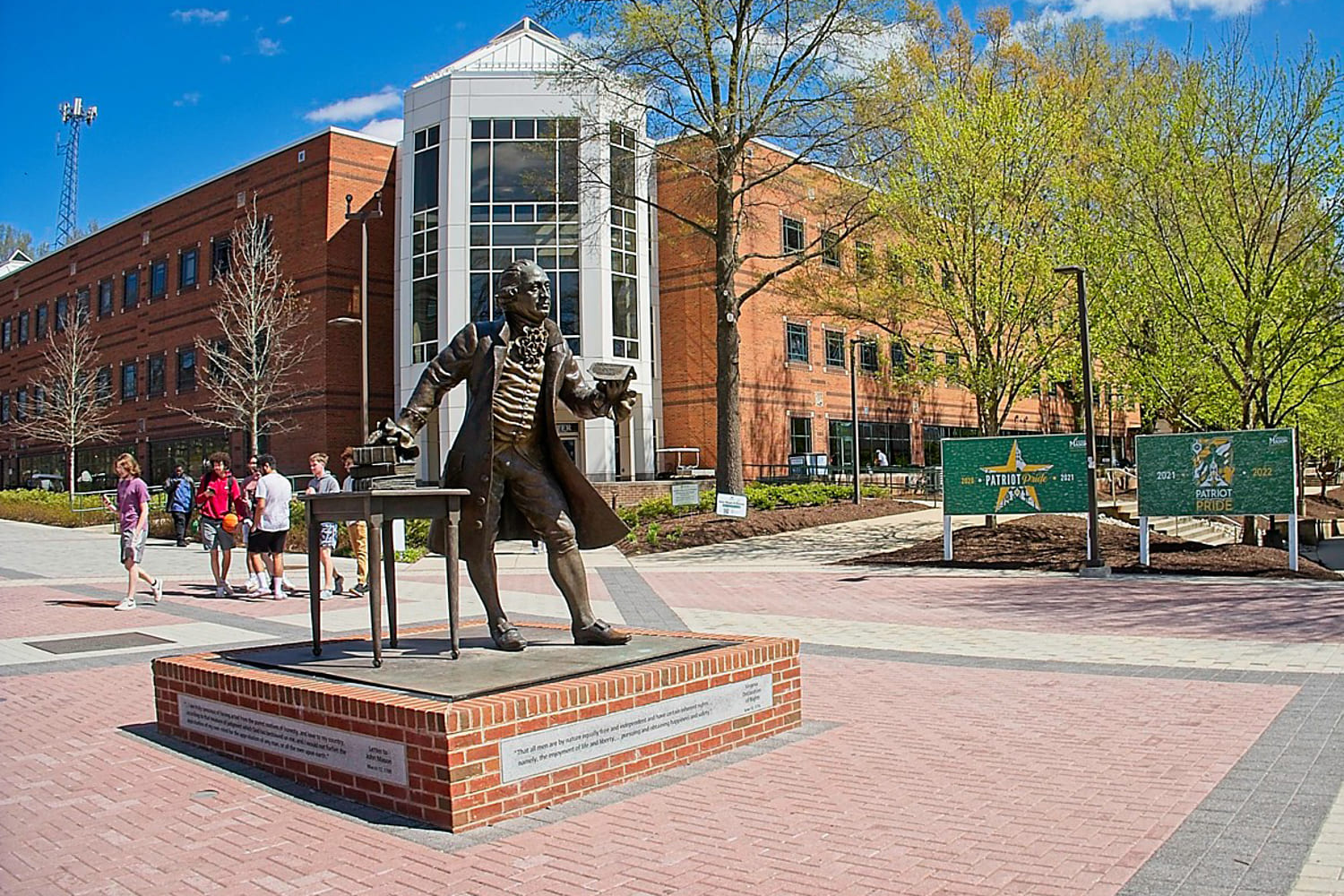
George Mason University has long been known as a right-leaning outlier among large public universities. And because of its proximity to the capital, it has become a home away from home for much of the D.C. Republican elite. GOP megadonors Charles and David Koch gave the university millions of dollars over the years; among the beneficiaries was the Market Centera libertarian think tank housed at the university.
Its law school is named for the late Supreme Court Justice Anton’s Scaliaand the school is an outpost of conservative legal thought that counts Justices Clarence Thomas, Neil Gorsuch and Brett Kavanaugh among its adjunct faculty.
A fair and equal administration of justice is absolutely central to the operation of a democracy, and DOJ’s sweeping powers are supposed to be wielded with extreme care.
In short, it was just about the last university one would have expected the Trump administration to target in its assault on higher education. But maybe that was the point.
The Education Department opened an investigation into George Mason in early July, saying it had received complaints about the university’s efforts to promote diversity. Much of the ire was focused on Gregory Washington, the university’s current, and first Black, president, whom conservative critics have characterized as a dangerous promoter of diversity, equity and inclusion (though none of those three ideals is against the law — at least not yet).
Then the stakes were raised. A week later, the Civil Rights division of the Justice Department announced that it was mounting its own investigation into George Mason. That division has undergone an upheaval since Trump returned to office, discarding its traditional focus on defending minority groups from discrimination and instead becoming an advocate for those who have historically always held power in this country: white people, men, Christians and others whom the Trump administration sees as its constituents. As a result, 70% of the division’s lawyers quit or were pushed out.
When the faculty senate approved a statement defending Washington, the Justice Department responded by opening an investigation of the body, demanding “drafts of the faculty resolution, all written communications among the Faculty Senate members who drafted the resolution, and all communications between those faculty members and the office of the university’s president, Gregory Washington.”
A fair and equal administration of justice is absolutely central to the operation of a democracy, and DOJ’s sweeping powers are supposed to be wielded with extreme care. Which makes the Justice Department’s enthusiastic attack on George Mason so particularly disturbing.
Because under Donald Trump, the idea of an independent Justice Department is a joke. The upper echelons of the department are filled with his close associates, many of whom worked for him personally before he retook the White House, from Attorney General Pam Bondi on down. The department pursues Trump’s policy goals and petty grievances with the same vigor as the White House itself.
Career prosecutors who worked on Jan. 6 prosecutions were fired. The office that investigates political corruption was gutted. Bondi created a “strike force” to investigate deranged allegations that then-President Barack Obama tried to rig the 2016 election. She also created a “weaponization working group,” headed by the far-right erstwhile podcaster and hyper-partisan lawyer Ed Martin, specifically to go after anyone who had participated in prior investigations of Trump’s copious misconduct.
Under Donald Trump, the idea of an independent Justice Department is a joke
The DOJ dismissed its corruption case against New York Mayor Eric Adams in what many saw as a deal to get his support for an immigration crackdown. Charges against politically friendly defendants — including one anti-trans doctor who allegedly violated patient privacy laws and another accused of destroying Covid vaccines and selling fake vaccination cards — have been dropped. The department filed a preposterous misconduct complaint against a judge who held the administration in contempt for defying his legal orders. Another of Trump’s former personal attorneys, Alina Habba, was named interim U.S. Attorney for New Jersey, then days later told a podcast: “We could turn New Jersey red. … Hopefully, while I’m there, I can help that cause.” Rather than grounds for dismissal, that kind of partisanship appears to be expected and even rewarded in Trump’s Justice Department.
And so it was only natural that power would be mobilized against elite universities, as Trump seems eager to cripple any institution where liberal ideas might gain a foothold. Going after Harvard and Columbia could have been expected; but including a place like George Mason on the target list sends an even more chilling message: Nothing less than complete devotion to the MAGA cause will be tolerated.
As some of us have been saying for years, the conservatives who decried the supposed politicization of justice and trumpeted their support for free speech never believed a word they were saying; they were just waiting until they had power so they could do for real what they accused their enemies of.
If a president wanted to destroy those who criticize him or simply promote values he finds distasteful, there are few tools more potent than the Justice Department. Which is precisely why Donald Trump turned it into a kind of legal brownshirt militia, deploying not cudgels and brickbats but demand letters, subpoenas and (before long) indictments against any who would oppose him. Now we’re seeing what the genuine politicization of justice looks like.


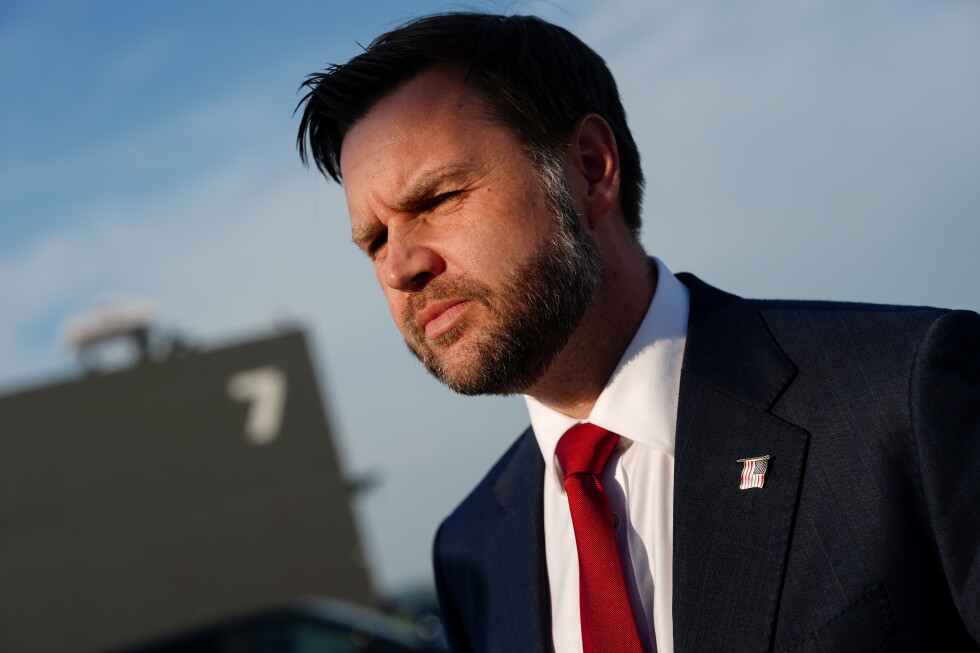
WASHINGTON (AP) — U.S. President Donald Trump and Vice President JD Vance say their interim deal to end the war with Iran will deliver a financial windfall to American farmers.
But the Iranians deny it. And in the absence of more details, sanctions experts are flummoxed over exactly how billions of dollars’ worth of Iranian assets would make their way to the American heartland from the escrow accounts where they’ve been locked for years by U.S. sanctions.
A tentative agreement reached last week would reopen the Strait of Hormuz, through which a fifth of the world’s oil and natural gas once passed, and allow Iran to start selling its oil freely again during a 60-day period when the two countries will continue negotiating key issues. The memorandum of understanding also promised to unfreeze Iranian assets.
Trump’s deal has come under fire for failing to address the reasons the president cited for going to war with Iran on Feb. 28, including curbing Tehran’s nuclear ambitions, its missile program and its support for militant groups such as Hezbollah in Lebanon and Hamas in Gaza.
Lashing back at critics Tuesday on his Truth Social media platform, Trump said U.S. farmers would get a payday: The U.S. Treasury Department, he wrote, would release the Iranian assets “into escrow, controlled by the U.S.A., and will be used for the purchase of food and medical supplies, exclusively from the United States, including Corn, Wheat, and Soybeans from our great American farmers. These are things that are desperately needed by Iran.’’
Vance, who spoke about the proposal after high-level talks in Switzerland, and Trump say that any frozen funds and assets held outside of Iran will be used to buy U.S. crops.
But the Iranians deny that’s part of the deal. A spokesperson for the Iranian Foreign Ministry, Esmail Baghaei, said any agricultural purchases would be based on “prices and quality,’’ not terms dictated by Washington.
“It is interesting that the philosophy and goal of the war, which was the destruction of the Iranian civilization and the collapse of Iran, has become enriching American farmers,” Baghaei said.
Sign up for Morning Wire: Our flagship newsletter breaks down the biggest headlines of the day.
Iran’s ambassador in Geneva, Ali Bahreini, rejected Vance’s contention that the U.S. and Qatar would dictate how Iran uses unfrozen funds. “Iran is the only country who decides what to do with those assets,” he told reporters.
A U.S. official dismissed the contradiction, asserting that Iranian leaders were speaking to their domestic audience. The official spoke on condition of anonymity because they were not authorized to speak on the record.
Joseph Glauber, a research fellow emeritus at the International Food Policy Research Institute, said Iran was unlikely to abandon its other trade partners on food.
Iran’s major suppliers include Brazil, India, Turkey, the European Union, Canada, Australia and Argentina, he said. Trump’s demand to buy from the U.S. would “create some hard feelings with some of our competitors.”
Under previous sanctions, the U.S. has required that money foreign countries spend on imports from Iran — such as South Korean purchases of oil and Iraqi purchases of Iranian electricity — be locked in escrow accounts and typically released only if the Treasury approves and if the proceeds go toward “non-sanctionable’’ items such as food and medicine.
On Monday, the U.S. Treasury approved the sale of Iranian oil, petrochemicals and petroleum products through Aug. 21. It did not mention any escrow accounts.
Richard Goldberg of the Foundation for Defense of Democracies, who coordinated efforts to put diplomatic pressure on Iran in the first Trump administration, said in a post on X that he would welcome “a clarification that Iran is actually restricted to only buying U.S. agricultural products.”
Richard Nephew, senior research scholar at Columbia University’s Center on Global Energy Policy, said it’s unclear what the new U.S.-Iran agreement actually means for releasing restricted Iranian assets.
Could the U.S. require that the assets be used to buy American farm products?
“Well, we can try!’’ Nephew, who helped design Iran sanctions in the Obama and Biden administrations, said by email. “All you really need to do is to tell a foreign bank that they can move the money but only to a U.S. bank to buy soybeans or whatever.”
Banks do not have to comply, he said. If they refuse, the U.S. could sanction them as well.
But it’s rare for the U.S. to conduct itself that way, he added, “in part because we don’t usually like to give the impression that we treat national security issues as a cash grab.”
___
Associated Press writers Josh Boak and Michelle L. Price in Washington contributed to this report.
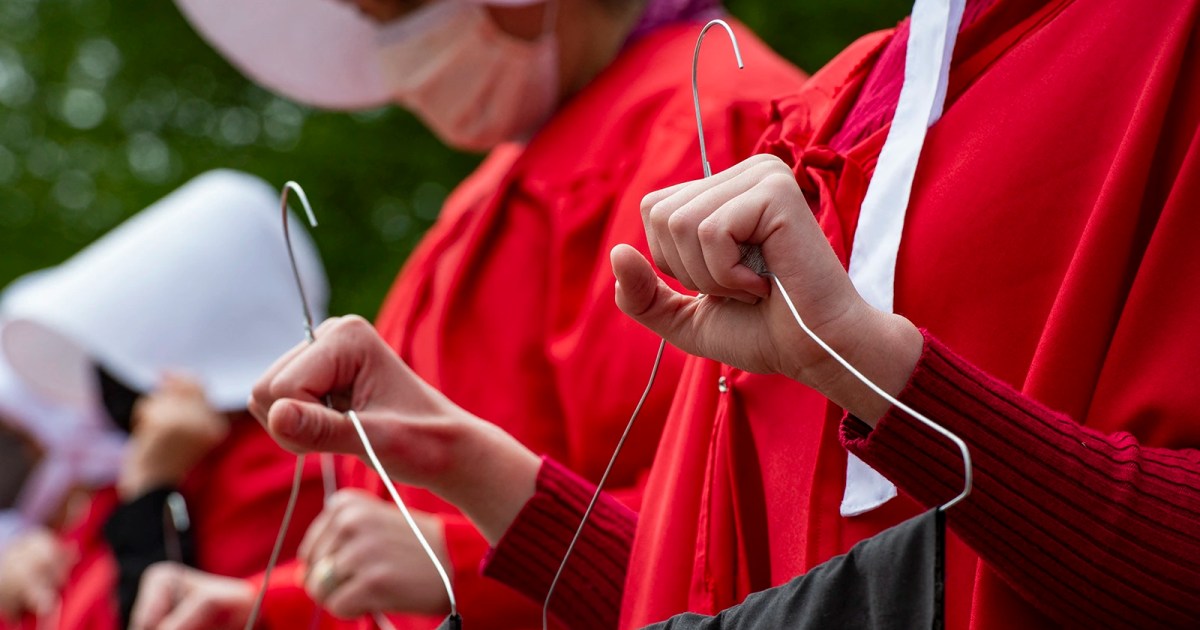
Wednesday marks four years since the Supreme Court issued its landmark Dobbs decisionwhich effectively overturned Roe v. Wade and repealed the constitutional right to an abortion. On “Morning Joe,” co-host Mika Brzezinski explained how the ruling set off a domino effect across the United States, affecting not just abortion-related care, but also altering “the state of women’s healthcare as a whole.”
As Brzezinski noted, states across the country have enacted harsher abortion restrictions since the 2022 ruling, with 13 outright banning the procedure with very limited exceptions. This has created a climate of fear among those who treat pregnant patients, with many healthcare providers worrying that any care involving an abortion could violate the law, even when the mother’s health is at risk.
“We are talking about people dying when they’re miscarrying because doctors are too afraid to intervene and save their lives,” Amy Littlefield, abortion access correspondent for The Nation, told MS NOW.
Brzezinski said the laws have effectively limited women’s “access to lifesaving healthcare.”
The MS NOW host reflected on some high-profile stories of pregnant women who faced delayed care in states with near-total abortion bans, noting “the numbers of cases that we’ve covered here on the show of women who have had their lives threatened, have been forced to give birth to dying or dead babies, and then, by the way, denied the access to ever create life again, because they became sterilized in the process.”
“There’s an image I can’t get out of my head,” Brzezinski added, before sharing reporting from ProPublica about Porsha Ngumezi, a 35-year-old mother who died in Texas in 2023 after not receiving timely care for a miscarriage.
“For months afterward, Porsha’s 3-year-old son would chase after women who looked like her on the street, shouting, ‘That’s Mommy!’” Brzezinski said. “That’s the detail I can’t forget. I can’t stop imagining that little boy chasing after strangers on the street. And that story repeats itself.”
You can watch Brzezinski’s full comments in the clip at the top of the page.
Allison Detzel is an editor/producer for MS NOW. She was previously a segment producer for “AYMAN” and “The Mehdi Hasan Show.”
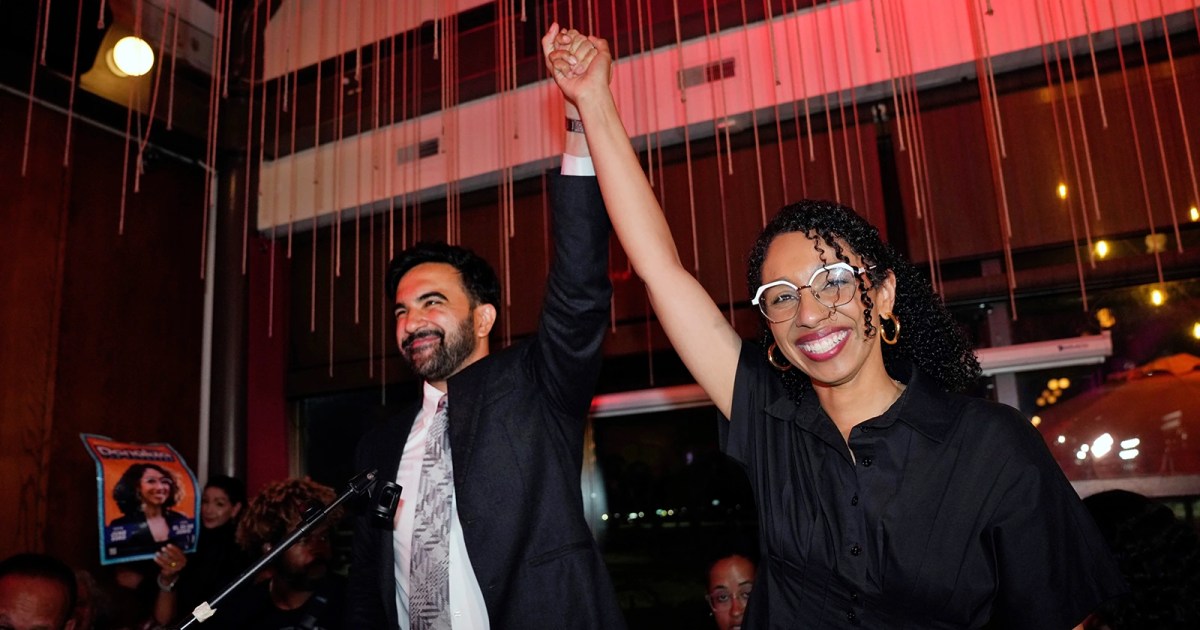
One of the biggest upsets in Tuesday night’s primaries came in New York’s 13th Congressional District, where Darializa Avila Chevalier, a 32-year-old democratic socialist, managed to beat incumbent Rep. Adriano Espaillat, 71, who was backed by establishment Democrats.
Chevalier, a doctoral student in sociology at the City University of New York, secured 49.4% of votes in the district — which encompasses upper Manhattan, Harlem and parts of the Bronx — defeating Espaillat, who received about 46% of the votes after representing the district for nearly a decade, according to The Associated Press. She now advances to the November general election, which she is presumed to win in the solidly Democratic district.
Chevalier’s primary win marks a major win for the Democrats’ left-wing flank that backed her, including New York City Mayor Zohran Mamdaniwho endorsed Chevalier last month during a joint interview on MS NOW’s “The Briefing with Jen Psaki.”
Here is what to know about Chevalier and the platform she campaigned on.
She has never held elected office
Prior to her congressional campaign, Chevalier had never run or held elected office. But she has been involved with advocating for issues that became political flashpoints, including helping organize the pro-Palestinian encampments at Columbia University, according to her biography on the website of the Justice Democratsthe progressive group that recruited her to run.
The daughter of Dominican immigrants, Chevalier also worked as an organizer for Families for Freedom, a New York City group that assists immigrants facing deportation.
Chevalier earned a bachelor’s degree in Middle Eastern studies from Columbia University in 2016 and later worked as a paralegal, according to her LinkedIn.
Chevalier faced scrutiny during her campaign over previously articulated stances and incendiary comments, including her appearance at a Times Square rally the day after Hamas’ attack on Israel on Oct. 7, 2023, where attendees reportedly suggested the attack was justified.
At a March candidates’ forum, Chevalier declined to condemn Hamas, saying that a request to do so “ignores the 75 years of occupation that the Palestinian people have been subjected to and the conditions that that folks were living under before this genocide began,” the local outlet City & State reported. Later, on local radio station WNYC, Chevalier said she did condemn Hamas when asked, adding, “As far as I know, the U.S. does not send a single dime to Hamas. What we fund is the Israeli military.”
In a series of since-deleted social media posts between 2018 and 2022Chevalier also used expletives to refer to former Vice President Kamala Harris and the Democratic National Committee, calling for abolishing borders and stopping all deportations, according to BLN. Other reports noted that she called former President Joe Biden a “rapist” and disparaged white people in some of her posts.
Chevalier has said she has “grown considerably” since writing those posts and that she regrets them. Mamdani defended her after the social media posts surfaced but said he was unaware of them before endorsing Chevalier.
She’s the left’s preferred candidate
Chevalier’s focus on affordability, expanding housing access and opposing war and deportations made her the preferred candidate of many progressive groups. In addition to the endorsements from Mamdani and the Justice Democrats, she was also backed by the New York City chapter of the Democratic Socialists of America and several progressive members of the New York City Council.
After her primary win, the Democratic establishment also seems to have rallied behind her, despite her previous expletive-laden critiques of them.
In a statement Tuesday, DNC Chair Ken Martin called Chevalier “a tireless advocate for the hard-working people of New York City” who “will fight for healthcare, affordable housing, public education, civil rights, and an economy that works for everyone.”
Julianne McShane is a breaking news reporter for MS NOW who also covers the politics of abortion and reproductive rights. You can send her tips from a non-work device on Signal at jmcshane.19 or follow her on X or Bluesky.
- GOP leaders cancel Friday votes as House agenda hangs in balance
- Raskin launches discharge effort to formally block ‘Anti-Weaponization Fund’
- Here’s why Republicans are worrying about high gas prices ahead of the midterms
- Trump and Vance tout Iran deal as a payday for US farmers
- Capitol agenda: Johnson tries to clean up Trump’s Hill mess
- The Dems already had AOC. Now they have DAC.
- Centrist Democrats are freaking out about progressives’ winning streak
- ‘Trying to read the tea leaves’: Ted Cruz offers few clues on his AI agenda
- YouTube settles case brought by minor alleging harm

- 5 things to know about the ‘Great American State Fair’

-

 Politics1 year ago
Former ‘Squad’ members launching ‘Bowman and Bush’ YouTube show
-

 The Dictatorship1 year ago
Luigi Mangione acknowledges public support in first official statement since arrest
-

 Politics1 year ago
Former Kentucky AG Daniel Cameron launches Senate bid
-
Uncategorized2 years ago
Bob Good to step down as Freedom Caucus chair this week
-

 The Josh Fourrier Show2 years ago
DOOMSDAY: Trump won, now what?
-

 The Dictatorship1 year ago
Pete Hegseth’s tenure at the Pentagon goes from bad to worse
-

 Politics1 year ago
Blue Light News’s Editorial Director Ryan Hutchins speaks at Blue Light News’s 2025 Governors Summit
-

 The Dictatorship10 months ago
Mike Johnson sums up the GOP’s arrogant position on military occupation with two words