
Politics
The clock is ticking on an Iran talks. Here’s what still has to get done.

As talks loom between the U.S. and Iran, negotiators face a simple and daunting task: turning a 14-point memorandum of understanding into a comprehensive nuclear deal within 60 days.
The ticking clock was set in motion on Thursday, according to Vice President JD Vance, following the signing of the MOU one day earlier. That signing brought an official end to military hostilities. What it did not do is resolve the conflict that caused them.
Some agreements took effect immediately upon signing: a cessation of hostilities, the reopening of the Strait of Hormuz, the lifting of the U.S. naval blockade, the issuing of oil waivers and initial steps to unfreeze billions of dollars in Iranian assets.
But those were the easy parts.
What remains are the metaphorical landmines — the unresolved questions the MOU largely deferred rather than decided, each with the potential to blow up any prospect for a nuclear deal. On Thursday evening, the White House announced that Vice President JD Vance will not attend talks in Switzerland that had been planned for Friday — a decision that may well be read as a signal of just how far apart the two sides are. A White House spokesperson acknowledged in a statement that while the U.S. delegation has been prepared to depart at the first available opportunity, “the logistics of these negotiations have never been simple or predictable.”
Here is what the negotiators will actually have to solve:
The future of the Strait of Hormuz
The MOU ensures safe passage of commercial vessels through the Strait of Hormuz “with no charge for 60 days only,” and outsources the negotiating responsibility for ensuring long-term toll-free passage to Gulf allies — ceding responsibility for a key outstanding issue.
“We don’t ever want this to happen again — that’s not about tolling, that’s about ensuring that the Straits are never used as a choke point for the global economy ever again,” Vance said at the White House on Thursday. “If that’s not reflected in the final deal, there’s not going to be a final deal.”
Recognizing the Iranians will “assert their rights as aggressively as they can,” a senior U.S. official was confident Gulf states would preserve their own self-interests and press Iran to allow toll-free passage.
There’s also the matter of demining the waterway. Iran has 30 days for “removing the technical and military obstacles and demining,” but mine removal could take weeks or even months — potentially testing U.S. patience if ship traffic doesn’t recover quickly.
In a joint statement following this week’s G7 summit in France, leaders said a defensive initiative led by France and the UK could help by “protecting merchant vessels, reassuring commercial shipping operators, and supporting verification that all mines are removed.”
Sanctions and frozen assets
Senior U.S. officials have said sanctions relief for Iran would be tied to its performance — but haven’t yet indicated what those benchmarks will be.
“As they dial up their good behavior, we can dial up the economic relief,” Vance said in broad terms on Thursday at the White House. “If they dial down their good behavior, we can turn it off.”
The MOU commits the U.S. to ending all Iranian sanctions — including those imposed by the U.N. Security Council and the International Atomic Energy Agency — “in an agreed-upon schedule as part of the final deal.” How quickly the U.S. is willing to provide this economic relief could become a sticking point.
Complicating matters further: whether lifting of sanctions would require congressional action, and how the State Department’s designation of Iran as a State Sponsor of Terrorism factors in.
Then there’s the unfreezing of billions of dollars of Iranian assets. Though the Trump administration insists any release would be tied to Iran’s performance, the MOU’s own text undercuts that: Paragraph 13 says the process of releasing assets must begin before negotiations even start, handing Iran an upfront incentive rather than one to earn.
“It’s clearly a huge loophole and a potential for disagreement,” said Aaron David Miller, a former Middle East advisor and negotiator for the State Department, calling the text’s language “destructive ambiguity.”
The Lebanon front
The MOU calls for “the immediate and permanent termination of military operations on all fronts, including in Lebanon.”
“We expect Hezbollah is not going to be firing rockets and firing drones at the Israelis, and we also expect that the Israelis are not going to be going wild in Lebanon, right? Both sides have to honor their end of the deal,” Vance said at the White House on Thursday.
Yet Israel did not sign the aforementioned “deal.”
Israeli Ambassador to the U.S. Yechiel Leiter said it’s “unnecessary” for Lebanon to have been included in an agreement between the U.S. and Iran, pouring cold water on the idea that Israel would cease its offensive against Hezbollah and occupation of southern Lebanon — even if Iran says that’s a dealbreaker for negotiations.
“This is something that we simply can’t live with,” Leiter told NPR on Tuesday. “We can’t have jihadi terrorists on our border. … We’re not going to withdraw from South Lebanon, and the mad men of Tehran have no business poking their nose into Lebanon.”
A U.S. official confirmed that U.S.-brokered peace talks between Israel and Lebanon will continue as planned next week at the State Department. Whether the Lebanon provision holds will depend on Iran keeping Hezbollah in check and Trump keeping Netanyahu in line.
Iran’s reconstruction
The MOU promises that within 60 days, the U.S. would work “with regional partners” to develop a plan guaranteeing at least $300 billion for Iran’s “reconstruction and economic development.”
Trump has insisted that there “is no 300 Billion Dollar payment to Iran by the U.S.” using taxpayer money. That may technically be true, but the U.S. has still committed to delivering that sum in the form of investment. That means convincing private corporations and Gulf allies — many of which are dealing with economic disruption and rebuilding costs after facing strikes from Iran — to invest in a country the Trump administration is still threatening to attack again if Iran reneges on its end of the deal.
Vance said there is a “great desire from the Arab world and from outside the Arab world to actually get involved in Iran if they behave properly.” Pressed by MS NOW whether private money would be included, Vance said he assumes countries like the United Arab Emirates would be part of the picture.
But Gulf leaders expressed concern to MS NOW about the agreement’s financial provisions that could strengthen Iran economically at a time when many Gulf states believe pressure should have been maintained.
Iran’s highly enriched uranium and nuclear program
For the duration of negotiations, Iran will “maintain the current status quo of its nuclear program,” per the MOU. What happens after that is the central outstanding question — the one that led to war in the first place.
The MOU provides no consensus on what to do with Iran’s existing stockpile of enriched uranium, only an agreement to “resolve” the matter. It doesn’t distinguish between the roughly 900 pounds of highly enriched uranium — material close to bomb-grade — and the 11 tons enriched to various levels above the 3.67% threshold set by the JCPOA, which Trump withdrew from during his first term.
A senior U.S. official said downblending the stockpile would be the minimum standard, with Washington pushing for “more than that” during negotiations. Vance alluded to “gentlemen’s agreements,” noting that Iran has “promised that they would allow inspectors in to destroy that highly enriched stockpile, and then, of course, it’s not usable anymore, you take it somewhere else.” Iran has not formally agreed to anything beyond a general promise to resolve the issue.
Whether Iran will be permitted to enrich in the future, and to what extent, remains an open question. The MOU commits the two countries to discussing “the issue of enrichment and other mutually agreed matters,” promising a “satisfactory framework” related to Iran’s “nuclear needs” in a final deal.
Notably, the U.S. has already backed down from one of its previous red lines, dropping Trump’s earlier demand for zero enrichment forever in favor of allowing Iran to maintain a civilian nuclear program.
“We’re not bothered at all by the idea of civilian power plants in Iran,” a senior U.S. official said. “What we’re bothered by is the type of infrastructure that would allow them to jump from civilian power generation to nuclear weapons development. … We feel quite confident that if they meet their obligations under this agreement, they’re not going to have that infrastructure to build a nuclear weapon.”
A senior administration official insisted Iran has committed to dismantling its nuclear weapons program, including its nuclear site, noting that the countries would “figure out how to do that in the technical negotiations that will follow.” But abandoning its nuclear program will be a tough domestic sell for the Islamic Republic to make.
Inspections and implementation
Trump has repeatedly hammered the Obama-era JCPOA for not having a strong enough verification and inspections system. But his own MOU offers little clarity on what will replace it, only a vague commitment that “an executive mechanism will be established to monitor the successful implementation of this MOU and the future compliance of the final deal.”
Given that Iran blocked IAEA inspectors from accessing its nuclear facilities under the JCPOA, a stronger inspection system represents perhaps the most important potential U.S. win in final deal talks — if Washington can secure one.
“If we feel comfortable with the inspection and enforcement regime, that is when they will get some of the benefits of negotiation,” a senior administration official told reporters last week, without providing specifics of what that verification regime would entail nor confirming the role of the UN or IAEA.
Miller, the former State Department negotiator, compared the MOU to Trump’s 20-point Gaza plan — a document that pushed the conflict out of the headlines but left unsolved problems on the humanitarian, disarmament and reconstruction fronts.
“I see very little chance, without significant flexibility on the part of both sides, that 60 days is going to be enough” to bridge the “Grand Canyon-like gaps that separate Tehran and Washington,” Miller said.
And though the MOU’s 60-day deadline allows for extension “with mutual consent,” Defense Secretary Pete Hegseth said the military is “prepared to restart if we need to” if Iran does not show progress in complying with U.S. demands.
Trump, speaking at the G7, was blunter still.
“If it doesn’t get done in 60 days, that’s all right,” Trump said. “We go back to bombing.”


Republicans are banking on a massive cash edge to help save their majority in Congress. But they are losing much of that advantage in an important arena: broadcast TV ads.
Republicans have spent $677 million on those ads across 10 key Senate battleground states, compared to $479 million by the Democrats. But the GOP’s money isn’t going nearly as far because they’re more dependent on outside groups that pay much higher rates than candidates.
The disparity has helped Democrats stay in the fight for Senate control amid an onslaught of GOP outside spending.
In Ohio’s Senate race, Republican groups make up 63% of the $218 million spent. But in spite of their nearly two-to-one spending advantage, they make up just over half of ads that are on the airwaves, according to data from the tracking service AdImpact. In Texas, Republicans have outspent Democrats by a three-to-one margin, but have aired just 58% of the ads. And in Michigan, the GOP accounts for 60% of the spending but just over half of the ads.
A large part of this discrepancy comes down to the mechanics of broadcast advertising. Candidates, and now political parties thanks to a recent Supreme Court ruling, are entitled to significantly lower rates. That has allowed Democratic candidates — who have posted bonkers fundraising hauls — to offset much of the GOP advantage in super PACs. Republican Senate candidates, on the other hand, struggled overall with their fundraising. And some GOP outside groups bought their ad time later, when it was even more expensive.
“There are limitations to the impact of ‘big money’ in politics,” said Sean Cooksey, a Republican former FEC commissioner. “It’s a good demonstration of the economics of campaign fundraising. Hard dollars really just go so much further.”
The disparity also shows “the Republican overreliance on outside groups,” said Ian Russell, a Democratic admaker.
“You get an eye-popping dollar amount, but it doesn’t actually translate into as many spots as you would think relative to a well-financed candidate,” Russell said. “[Republicans] were just hoping that they could spend their way out of everything that was going wrong for them. But the problem is, their issues run much deeper than a few ad buys can fix. Especially when you’ve got monster fundraising hauls from the Democratic side.”
Republicans in House and Senate races have long been more dependent on outside groups and megadonors, and for multiple cycles have seen their cash advantage undercut by fundraising strength from individual Democratic candidates. But that trend is particularly pronounced this year given the combination of Republican super PAC money and their candidates’ struggles.
In 2024, Republican outside groups spent only about 15% more than Democrats on TV ads across House and Senate general election contests, according to a Blue Light News analysis of AdImpact data. This cycle, GOP outside groups have spent 7% more.
In a few states, the discrepancy between dollars and airtime is less stark. Republicans account for 60% of the spending in Maine’s Senate race and an equal percentage of the ads, according to AdImpact. That’s in part because Sen. Susan Collins has outraised her Democratic opponent Troy Jackson over the whole cycle, although Jackson, who didn’t launch his campaign until July, raised far more in the third quarter.
The numbers show the shifting dynamics of campaign strategy after the Supreme Court opened the floodgates to more spending from parties by granting them the lower advertising rate.
Republicans have been faster to take advantage of the new rules: Major coordinated spending efforts from the NRSC and RNC have helped their side significantly this cycle.
Republicans have far outspent Democrats on Senate party-coordinated Senate advertising, $90 million to $34.6 million across TV, radio and digital ads, according to data from AdImpact.
“If I were the leader of either party, I would say you shouldn’t give a dollar, you shouldn’t give a single penny to these super PACs until you’ve maxed out to the party committee,” Cooksey said.
Some Republicans say that strategic errors have contributed to erasing their cash edge. A number of GOP strategists have also privately griped that MAGA Inc. — one of the major outside groups backing their candidates — bought TV airtime too late, forcing them to pay even higher rates and further draining resources and increasing the price of reaching voters. Republicans fretted for months about whether Trump’s well-financed super PAC, MAGA Inc., would get involved. The group has since spent heavily, but only launched its first general election ad buys in September.
“There is no question MAGA Inc. should have bought ads earlier in the cycle,” said one national GOP operative who was granted anonymity to discuss party strategy, noting that rates across the country increase as Election Day nears. Other top GOP outside groups, like the Senate Leadership Fund and the Congressional Leadership Fund, made their early advertising reservations much earlier in the cycle than MAGA Inc.
Trump allies waved away that criticism. A person familiar with the Trump operation’s midterm planning, granted anonymity to discuss strategy, said it’s “indisputable that the spending from the Trump political effort has kept us competitive in many Senate races.”
MAGA Inc. declined to comment.
Still, GOP outside groups are utilizing their cash advantage in some underappreciated ways.
Republican super PACs have massively outspent their Democratic counterparts on mail — roughly $157 million to $35 million for the general election — according to a Blue Light News analysis of independent expenditure filings submitted to the Federal Election Commission. That’s led by a whopping $44 million in spending on mail across 24 races from the Trump-aligned No Going Back PAC, along with $23.8 million across 20 races from Elon Musk’s America PAC.
GOP-aligned super PACs have also spent more than Democratic ones on phone calls and text messages, the data shows.
Georgia Republicans are counting on Rick Jackson to save them from a wipeout in November — if President Donald Trump doesn’t get in the way.
The billionaire health care executive and political newcomer has spent nearly $200 million since he entered the Georgia governor’s race earlier this year. That’s boosted GOP hopes as many in the party have all but given up on the state’s marquee Senate race, where Rep. Mike Collins is struggling to close the gap against a formidably well-funded Democratic Sen. Jon Ossoff. Republicans worry that their open contests for attorney general and lieutenant governor as well as control of the state general assembly could be in peril in a larger blue wave.
But Jackson’s deep pockets are being tested against a difficult political environment for Republicans, weighed down by unpopular Trump actions, including the war in Iran. And some in the GOP worry that the president’s repeated visits to Georgia could only make the situation worse.
“I don’t know that Trump coming helps Republicans more so than it excites Democrats, especially in a wave election year, and so becomes and becomes a catch-22 for Republican candidates,” said Jason Shepherd, a former Cobb County chair who is supporting Jackson.
One Georgia-based Republican strategist who is not involved in the gubernatorial race posited that Trump’s dual appearances in the state almost certainly did more harm than help. They, like others in this article, were granted anonymity to speak openly about the race to avoid reprisals.
“Every piece of data that I’ve seen, it is not MAGA Republicans that are unmotivated to vote in this election,” the person said. “All the data that I’ve seen is that the undecideds in our marquee races, and specifically in the governor’s race, have a very, very negative opinion of the president. So, I can’t really rationalize a case for how it would be helpful.”
Jackson, for his part, has carefully navigated his relationship with the president, and has not publicly broken with him on policy like other battleground Republicans. But he has not mentioned the president in any of the nearly 150 ads he’s run in the general election, according to an analysis of data from tracking firm AdImpact. Shortly after the RNC announced that Trump would return to the state this weekend, Jackson’s team said in a statement that the candidate will be campaigning in a different part of Georgia.
And during his only televised gubernatorial debate on Oct. 6 against Democrat Keisha Lance Bottoms, Jackson never name-dropped the president — despite his opponent invoking Trump’s name eight times. Instead, the Republican mentioned popular outgoing GOP Gov. Brian Kemp five times and focused on Bottoms’ tenure as mayor of Atlanta during the COVID pandemic.
“It’s been proven time and again that when the message is on Georgia, and the results under Brian Kemp and the conservative vision and roadmap that’s been laid out here, that we win in Georgia. When the focus is on D.C. and personal politics, we lose,” said Cole Muzio, president of the conservative Frontline Policy Action group.
The Jackson campaign declined to comment for this story.
“President Trump is the unequivocal leader, best messenger, and unmatched motivator for the Republican Party,” White House spokesperson Davis Ingle said in a statement.
Natalie Baldassarre, a spokesperson for the Republican National Committee, said in a statement that Republicans “are laser focused on winning, and our candidates will run the races necessary to best represent their districts and prevent Democrats from taking control.”
Jackson is one of several Republicans across the country who now must balance between keeping the president close enough to turn out Republican base voters, but not so closely as to alienate the center.
Though many Georgia Republicans see Jackson as their de-facto ticket-topper, they don’t see his win as a guarantee against Bottoms, the former Atlanta mayor, in a finicky battleground state like Georgia. Jackson has outspent Bottoms nearly five-to-one in the final stretch of the race, but still remains in a close race in public polling.
And yet, without him, Republicans fear the bottom would have already fallen out on races up and down the ballot, given how poorly Collins is performing in polls against Ossoff. Republicans’ top Senate super PAC, Senate Leadership Fund, was dark in Georgia last week, a sign the race may be slipping out of reach.
“If Rick Jackson weren’t running, we would all be in a lot of trouble,” said Stephen Lawson, a Georgia-based Republican strategist and Jackson ally. “He’s our best hope at keeping the state red.”
A second Georgia-based Republican strategist, who is working on other races in the state, underscored how Jackson’s money is keeping the party afloat. “There is no question in my mind that without the extra $150 million he spent in his general election, that the ticket would be lost,” this person said. “That is the only reason there’s still a fight to be had.”
But, this person cautioned, the race is still very much a toss-up, and Jackson’s victory will rely on a large share of Georgia voters choosing to split their ballots between Ossoff for Senate and Jackson for governor.
Jackson’s allies are optimistic that a significant number of voters will do just that. A private statewide poll reviewed by Blue Light News found that roughly 19% of Georgia voters say they are definitely or likely to cast a vote for at least one Democrat and one Republican — a potentially significant pool of crossover voters that could power two very different results in the marquee contests.
Whether the sheer force of Jackson’s spending will prove successful enough to overcome Trump is a microcosm of the larger issue his party is experiencing across the country: National Republicans, flush with cash, hold an enormous financial advantage over Democrats. But money alone may not be enough to insulate candidates in battlegrounds or even in traditionally red territory.
“I don’t know that Republicans across the country should feel as bullish about the cash influx that we’ve gotten because it didn’t work here,” said the first GOP operative. “In terms of actively moving races in our favor, it at least didn’t work here.”
In the last month, as Bottoms began to spend more heavily on the air amid Jackson’s spending advantage, her campaign has noted that polling has started to move marginally in her favor — even if the race remains largely within the margin of error. Her high name ID, as well as cash spent after the primary to define her early, are helping.
“Rick Jackson has spent $200 million in this campaign but all the money in the world can’t hide the fact that he would be a lackey for Donald Trump,” TaNisha Cameron, a spokesperson for Bottoms, said in a statement. “Despite being outspent, Keisha’s message is breaking through and she has the momentum in this race right when it matters.”
Jackson is making more of an effort to tie himself closely to Kemp, who won over moderates and independents in his 2022 reelection for governor and has an approval rating that sits 30 points higher than the president’s in Georgia, according to a recent poll by the Atlanta Journal-Constitution. Kemp, for his part, has continued to be a presence on the trail for Jackson, including joining him on a statewide tour earlier this month and appearing in at least three TV ads for the campaign.
But Jackson’s pathway to victory requires him to not only secure crossover voters that may support Ossoff in the Senate race or the type of voters who broke for Kemp, but also turn out the MAGA base who powered the president’s two presidential victories in the perennial battleground.
The president is intent on still showing up for him.
Shortly after Jackson dispatched Trump’s initially preferred candidate, Lt. Gov. Burt Jones, in June’s primary runoff, the president was quick to praise Jackson as standing “strong with ‘TRUMP.’” And in subsequent posts on Truth Social, Trump has called the health care executive a “good friend.”
Trump, onstage on Friday, called Jackson a “great businessman,” before adding: “I’ve been watching you, you are good, and he never did this before. Hedid it because he wants to straighten out things and he’s an amazing, an amazing story.”
Aaron Pellish contributed reporting.
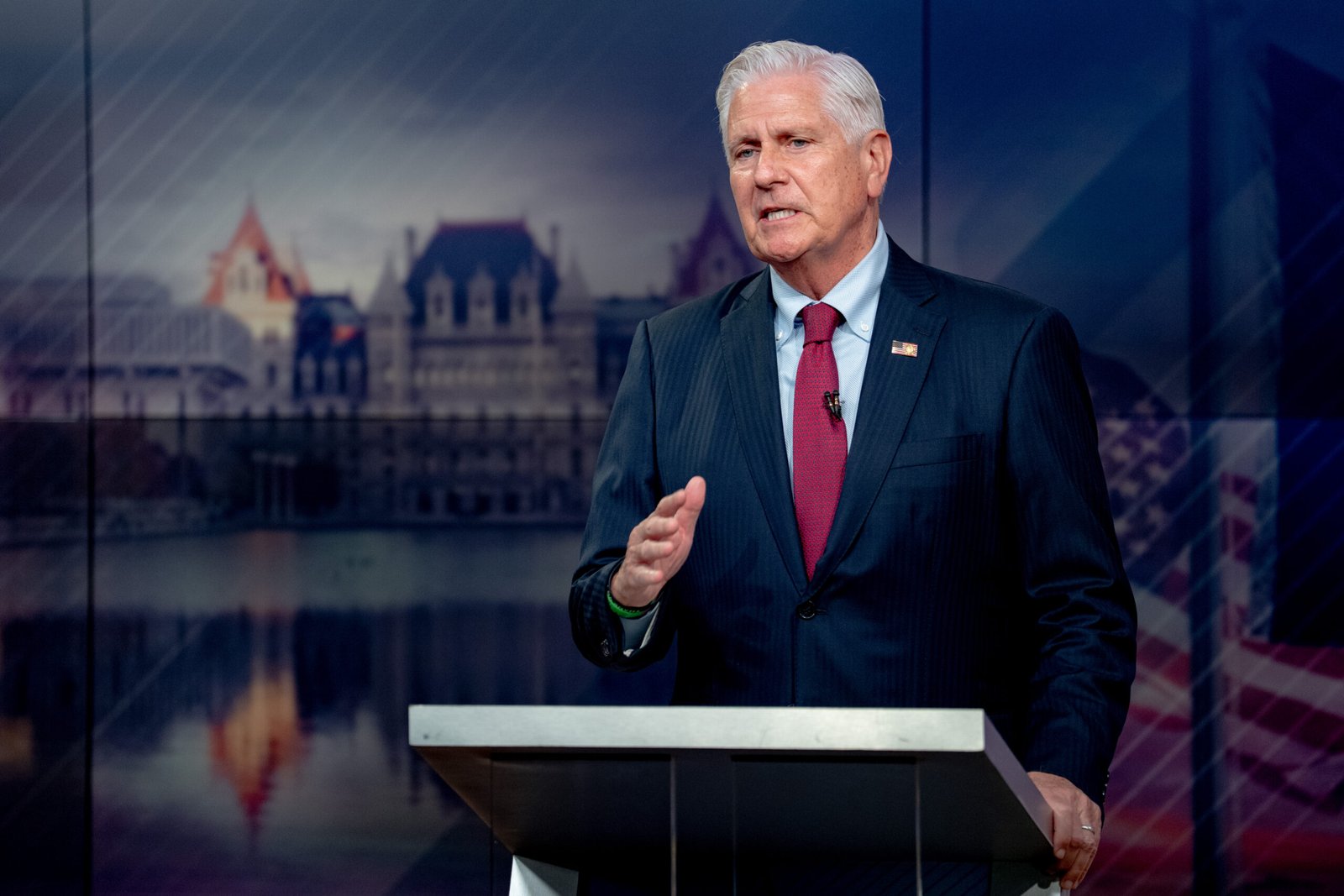
BLAKEMAN’S (LACK OF) ENERGY PLAN: GOP gubernatorial candidate Bruce Blakeman continued to hammer Gov. Kathy Hochul on rising energy costs today, promising to slash utility bills in half if he’s elected.
The Republican, however, still has not offered up a policy proposal on how he’d go about doing that.
“Kathy Hochul increased our utility rates 48 times in four years,” Blakeman said in upper Manhattan this morning.
The Washington Heights press conference, which included former Gov. George Pataki, was heavy on rhetoric and relatively light on details. Afterward, Blakeman’s campaign would not spell out how exactly he plans to cut consumer utility costs and did not respond to a request for clarification about his claim that Hochul increased utility rates 48 times. (While the state’s Public Service Commission has approved increases in major utility rate cases during Hochul’s tenure, those hikes have been less than what the utilities requested.)
“Donald Trump’s puppet, Bruce Blakeman … wants data centers raising your costs and said Trump was doing an ‘amazing job’ after he jacked up utility bills.” Hochul campaign spokesperson Sarafina Chitika said in a statement. “Two weeks from irrelevance, here’s what Blakeman won’t tell you: Governor Kathy Hochul delivered a billion dollars in energy relief, ten billion in tax relief, and made data centers pay for the energy they use.”
The Nassau County executive described meeting the owner of a Bronx diner who told him the business would need to sell 1,000 burgers a month to pay its $16,000 utility bill. Blakeman said he would legalize fracking to help New Yorkers lower their energy bills fast.
Aside from the fact that fracking doesn’t necessarily lead to lower utility bills and the reality that Blakeman would need buy-in from the state’s Democratic-dominated Legislature to do so, he insists that legalizing fracking could offer near-term relief from high energy costs.
“I met with those same individuals and companies that are doing the extraction of natural gas in Pennsylvania. They told me they can be up and running in 60 days,” Blakeman said. “If Albany has the will to reduce people’s utility bills … we can get it done in 60 days.”
He pointed to Pennsylvania, arguing that the state has lower electric bills because it allows fracking. But he neglected to mention that Pennsylvania is not part of the Regional Greenhouse Gas Initiative — the carbon trading program of 11 eastern states, which Blakeman has pledged to withdraw from if he is elected.
Pataki, the last Republican to serve as governor in the Empire State, spearheaded the creation of that initiative, which is commonly known as RGGI.
“The concept is right, but the way it’s being done in Albany is wrong,” Pataki said at the presser, accusing Albany of using RGGI as a “slush fund.”
Even if New York did withdraw from RGGI, the benefit would amount to a 5% to 6% decrease on an average New York residential household bill, according to an estimate from National Grid — barely making a dent in the 50% Blakeman is promising to slash.
Exactly how the state would cover the rest of his proposed cut remains unclear.
Affordability, though, continues to be a key concern in Washington Heights, a largely Dominican neighborhood that Mayor Zohran Mamdani did well in during his ascent to victory last year.
To drive their message home, the Republicans even attempted to make their pitch in Spanish. Pataki, much more practiced in this than Blakeman, talked about how much he loved the “barrio” when he was governor, describing Blakeman as a leader “muy fuerte.”
“Gracias, hombre grande,” Blakeman exclaimed, before touting what he views as the GOP ticket’s immigrant bonafides — Saritha Komatireddy for attorney general and Joe Hernandez for comptroller.
“Governor, your Spanish is better than my Spanish, and I grew up speaking it,” Hernandez praised Pataki. — Mona Zhang
From the Capitol
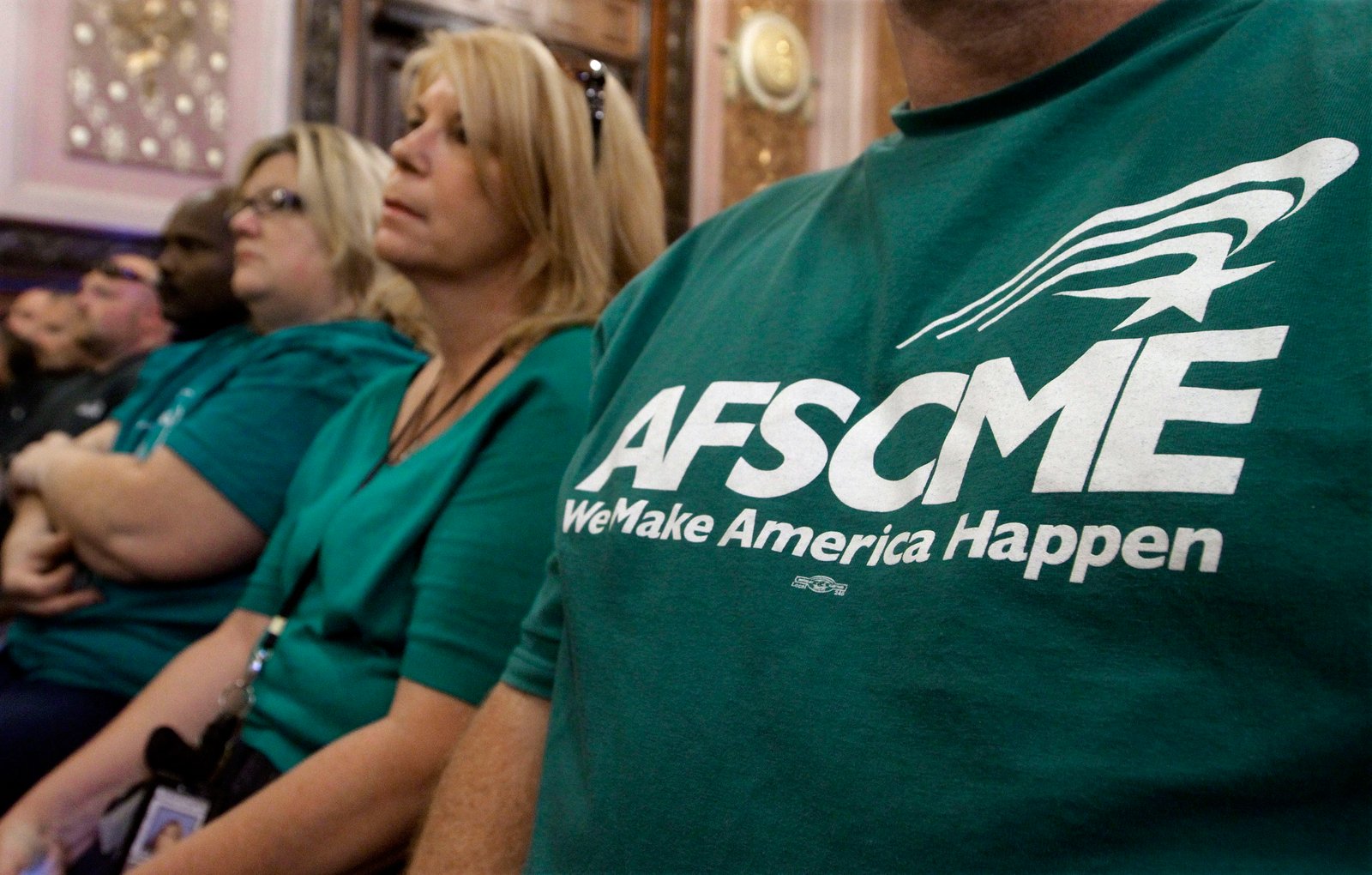
LABOR BOOSTS GOV: A coalition of public employee unions is joining the crowded roster of super PACs spending on the gubernatorial election.
The New York Accountability Coalition has received $550,000 in recent weeks from the Civil Service Employees Association, Public Employees Federation, District Council 37, and CWA District One. It’ll soon spend that money to boost Hochul.
The governor “is laser-focused on lowering costs for working families and investing in public services,” AFSCME’s Courtney Brunelle-Kim said. “Bruce Blakeman is just another pay-to-play politician. From now until Election Day, we’ll be working to ensure that voters in key districts know The Blakeman Record.”
The super PAC spent $460,000 this spring helping Comptroller Tom DiNapoli as he faced two Democratic primary challengers. — Bill Mahoney
FROM THE CAMPAIGN TRAIL
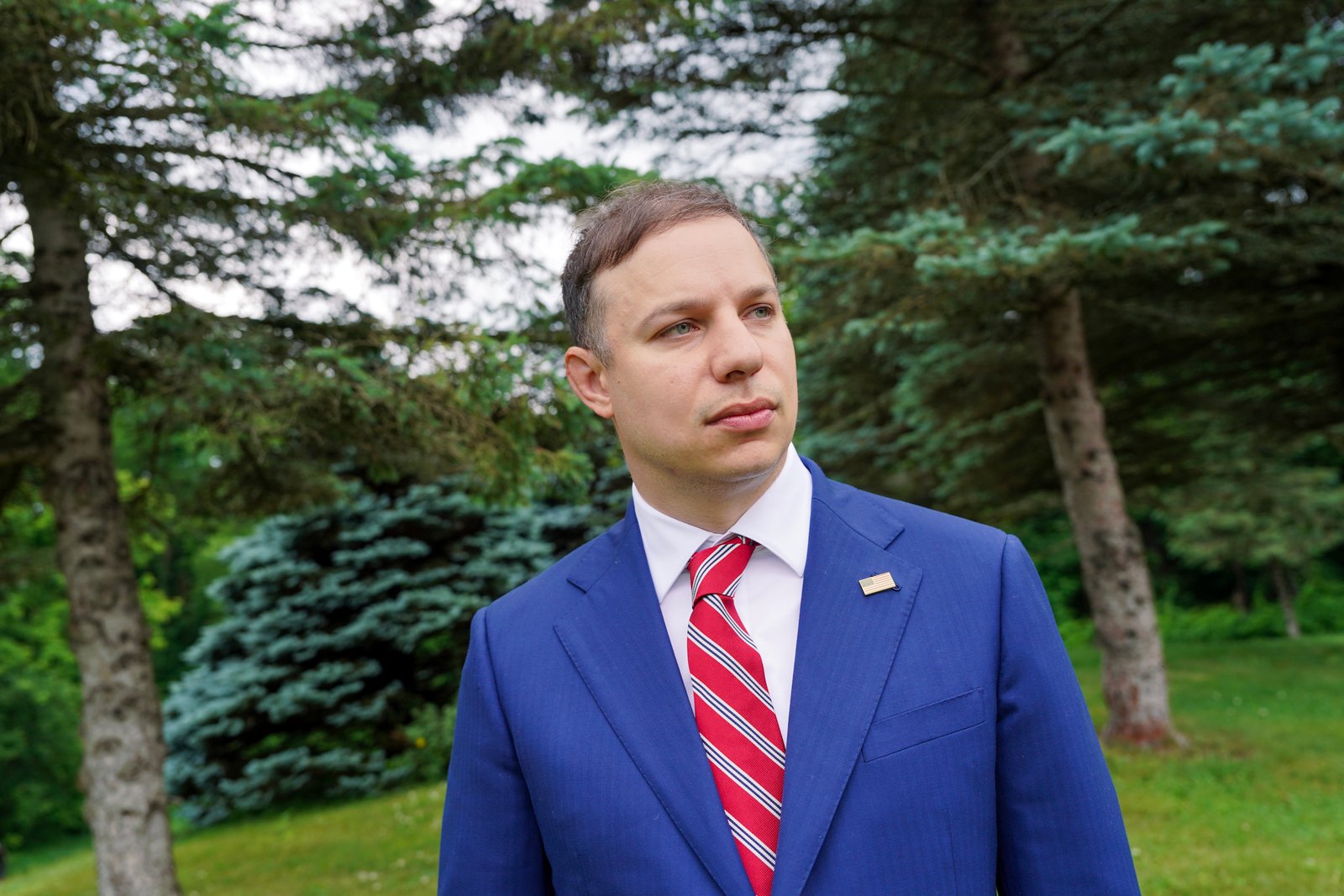
AD PULLED: A clean energy super PAC yanked a version of an ad airing in a competitive upstate House district after Republican candidate Anthony Constantino’s attorney complained the spot was defamatory.
The group Invest In Tomorrow Coalition recently began airing the spot in the sprawling North Country House seat that accused Constantino — who runs a custom sticker business — of selling anti-police merchandise.
“What do Anthony Constantino and violent anti-cop extremists have in common? They both think ‘kill the police’ is a good slogan,” the ad’s narrator says.
Constantino’s attorney last week contacted a lawyer for the super PAC alleging the contents of the ad were false and defamatory. On Saturday, the group signaled it would suspend further distribution of the current ad. So far, the PAC has spent some $243,000 in the district in the last three days, according to AdImpact.
“Anthony Constantino may lawyer up, but he can’t sticker over the truth: he’s gotten rich off selling vile merch, including hosting a listing for a ‘Kill the Police’ sticker and other anti-cop listings that are still active today,” said Chris Coffey, a spokesperson for the group. “As a token of our gratitude and recognition of his desire to spread that message, ITC PAC is putting $250,000 more behind the original ad buy to make sure all of NY-21 knows the real Anthony Constantino.”
The fight over the commercial comes as Constantino is trying to retain the seat being vacated by GOP Rep. Elise Stefanik. Polls have shown Democrat Blake Gendebien running competitively against the Republican, however, giving the race a surprising dose of uncertainty in the final two weeks. — Nick Reisman
HOUSE HUNTING: Two New York battleground districts have again moved in Democrats’ favor, according to a nonpartisan election forecaster.
Sabato’s Crystal Ball shifted Stefanik’s upstate seat from “likely Republican” to “leans Republican” today, as well as Democratic Rep. Laura Gillen’s Long Island district from “leans Democratic” to “likely Democratic.”
The Stefanik seat covers a sprawling, deep-red area — though Democrats are feeling bullish in part because of the Trump administration’s tariffs impacting farmers there.
Gillen faces a challenge from Hempstead Receiver of Taxes Jeanine Driscoll. Kamala Harris narrowly won that district in 2024, but Republicans are counting on tailwinds from Blakeman, the Nassau County executive, to boost down-ballot candidates. — Madison Fernandez
IN OTHER NEWS
— REAL ESTATE STRIKES BACK: A new organization called Built For New York hopes to promote the real estate industry’s interests in the wake of a pro-tenant political sweep in New York City. (The New York Times)
— PAC ALERT: A coalition of Jewish Democrats from the Capital Region launched a state-level PAC dedicated to supporting liberal candidates who push back on anti-Jewish and anti-Israel forces. (Jewish Insider)
— BOOZE BUCKS: Lily Fan, chair of the State Liquor Authority and a close Hochul ally, donated $40,000 to a pro-Hochul super PAC that’s run by people who lobby the liquor industry. (New York Focus)
Missed this morning’s New York Playbook? We forgive you. Read it here.
- This member is so frustrated with Congress he wants voters to sidestep it
- Capitol agenda: The unknowns of a Sherrod Brown return
- Rick Jackson is Georgia Republicans’ best hope. Donald Trump may get in the way.
- Why Republicans’ massive cash advantage is evaporating on the airwaves
- The House GOP’s imminent decision on the Omar raid
- NRSC takes on $20M in loans
- Blakeman’s uptown fracking fiesta
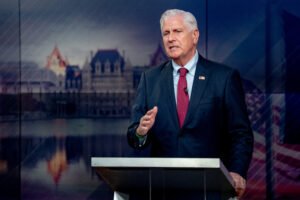
- FEMA chief tells states to prepare to handle disasters on their own
- Trump is promising farmers $8B. Republicans are praying it will save their campaigns.
- Senate Democrats start spending in Mississippi
-

 Politics2 years ago
Former ‘Squad’ members launching ‘Bowman and Bush’ YouTube show
-
Uncategorized2 years ago
Bob Good to step down as Freedom Caucus chair this week
-

 The Josh Fourrier Show2 years ago
DOOMSDAY: Trump won, now what?
-

 The Dictatorship2 years ago
Pete Hegseth’s tenure at the Pentagon goes from bad to worse
-

 Politics2 years ago
Former Kentucky AG Daniel Cameron launches Senate bid
-

 The Dictatorship2 years ago
Luigi Mangione acknowledges public support in first official statement since arrest
-

 Politics2 years ago
Blue Light News’s Editorial Director Ryan Hutchins speaks at Blue Light News’s 2025 Governors Summit
-

 Politics1 year ago
John Legend advises Trump to drop the ‘dictator s‑‑‑’ if he wants Nobel Peace Prize