
Politics
The bots powering Nicki Minaj’s MAGA war

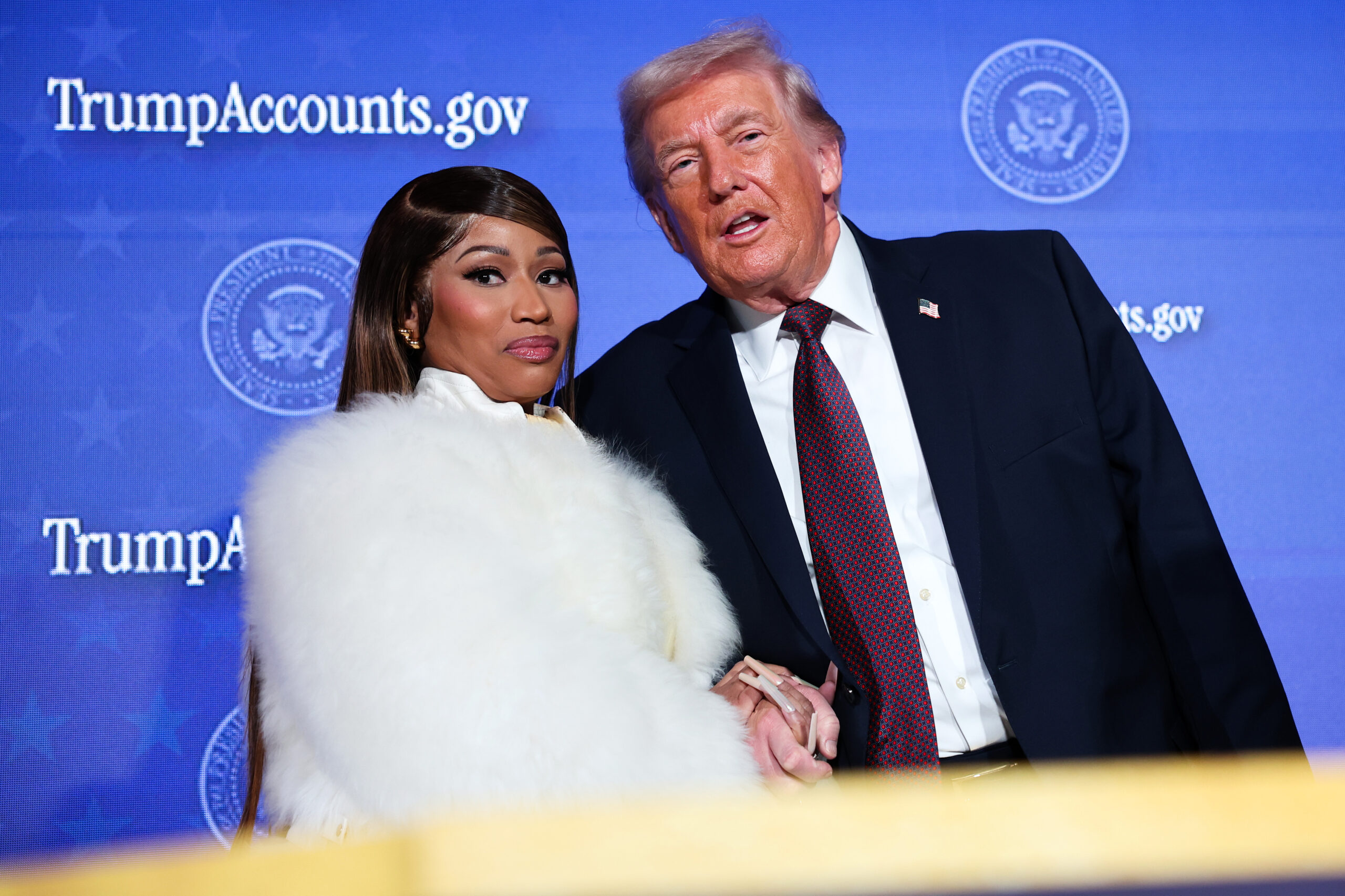
Nicki Minaj spent the past year transforming herself from a polarizing rap superstar into a high-profile conservative provocateur, lobbing viral attacks at Democratic leaders, boosting MAGA talking points and earning public praise from President Donald Trump and his allies.
On social media, Minaj’s pugnacious persona and sharp-edged posts — including repeated broadsides against California Gov. Gavin Newsom — have made her a darling of the Trump administration and the conservative movement, drawing millions of views and steady amplification from far-right influencers.
But quietly, humming in the background of her varied social media blitzes, a sophisticated army of bots was unconditionally praising and amplifying Minaj’s content, according to a new report shared exclusively with Blue Light News.
The report, compiled by the disinformation detection company Cyabra, identifies a coordinated network of bots — more than 18,000 of them — that drove algorithms to spread Minaj’s posts on X.
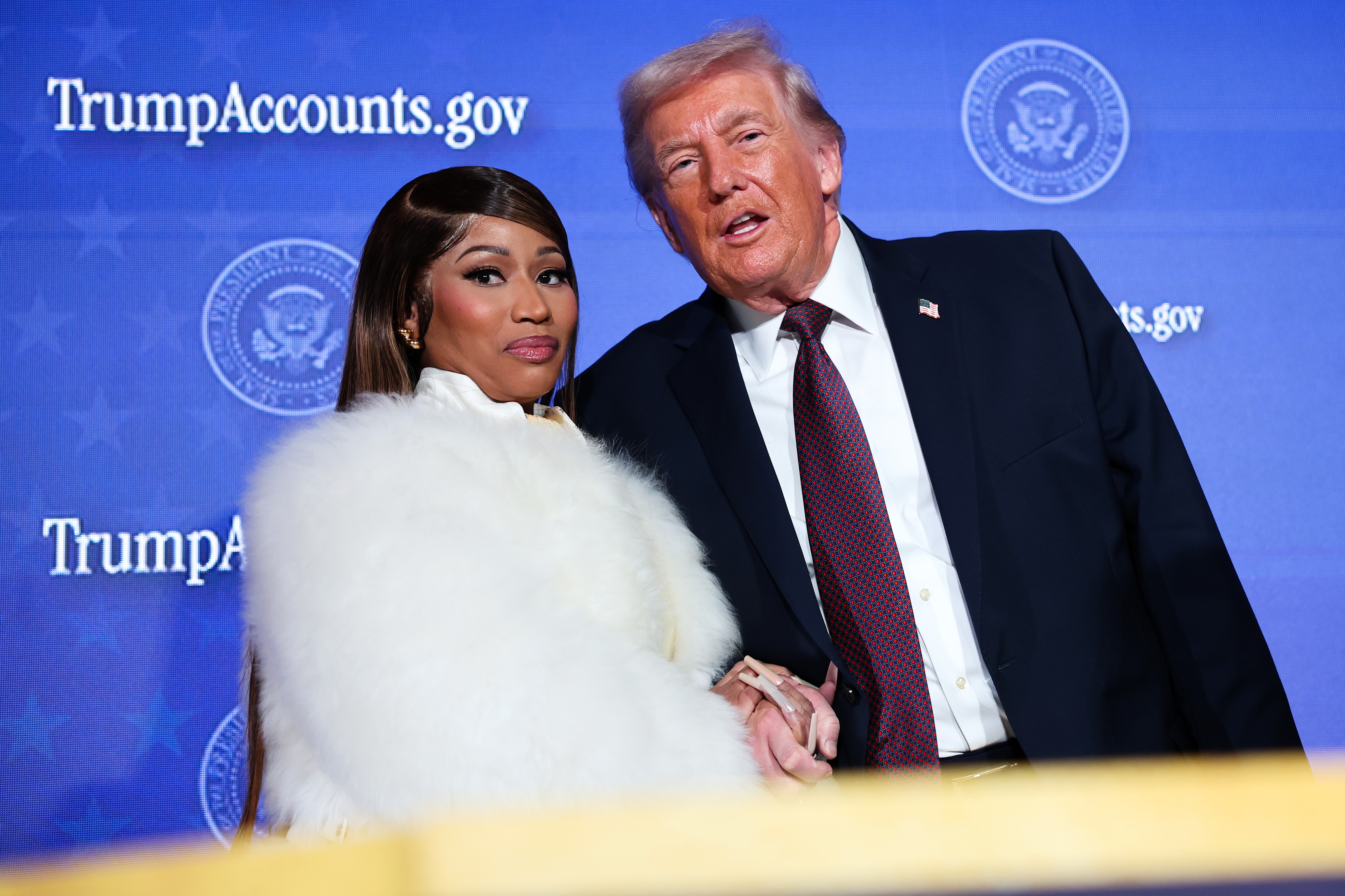
The analysis, which looked at social media activity from Nov. 11 to Dec. 28, provides a window into how the rapper was able to capture millions of views online and position herself as a celebrity the White House found value in partnering with. Last month, Minaj joined the president at the Trump Accounts Summit — where Trump invited her on stage, showered her with praise and recorded a chummy TikTok video with her afterward.
“We don’t really see a lot of high volume, high impact orchestration of bad and fake actors within that intersection of the geopolitically driven and music culture,” said Dan Brahmy, the CEO and founder of Cyabra. “It is scarce in our field to see the combination of the bad and the fake online world with the entertainment world.”
The report found inauthentic accounts repeatedly amplified Minaj’s posts with praise that used “highly similar language,” particularly in response to posts where authentic accounts were criticizing Minaj.
“Supportive comments generated by fake profiles were predominantly brief, repetitive, and low in semantic complexity, consisting largely of praising keywords and positive hashtags rather than original or substantive engagement,” the report found.
Other inauthentic activity surrounding Minaj included “longer, more detailed comments designed to appear organic.”
“Nicki you are brave for living your truth, people might not always agree with what’s being played out, but as an artist and watching your growth as a person is inspiring,” read one comment from a purported Minaj fan, @LAX76283656, that was deemed fake by Cyabra.
“This pattern suggests a deliberate attempt to integrate into genuine conversations, increasing the credibility and visibility of the amplified content,” the report read.
Cyabra identified one day, Dec. 26, when fake profiles made up 56 percent of all comments on political posts made by Minaj.
Bot networks have become a familiar feature of modern politics since revelations of Russian interference in the 2016 presidential election, when coordinated inauthentic accounts were used to inflame divisions and manipulate online discourse. Such campaigns are now routinely detected around wars, elections and geopolitical flashpoints — but far less often around celebrities or the music industry.
That backdrop helps explain why Cyabra’s findings seem so peculiar. Rather than a short-lived spike tied to a single event or appearance, the company found sustained and coordinated amplification of Minaj’s posts across a range of political and cultural topics over time.
When Minaj posted about her support for Trump, her concern over the persecution of Christians in Nigeria and Newsom’s perceived alignment with the transgender community, the bots were there to back her up, Cyabra’s report shows. They also amplified her posts related to the music industry.
Representatives for Minaj did not respond to requests for comment.
Alex Bruesewitz, a media and political adviser to Trump who considers Minaj a “very close friend,” told Blue Light News he is confident there are no bots involved with the rapper’s social media presence.
“Nicki has never used bot activity to promote herself on social media, because she doesn’t need to,” Bruesewitz said. “She has one of the largest fan bases of any musician that’s alive today.”
The Cyabra report was commissioned by a person who was granted anonymity because they fear public retaliation.
Cyabra is about 85 percent confident the more than 18,000 profiles identified are fake. But if the company were to narrow that scope to profiles that exhibit even stronger signs of inauthenticity, the confidence level could easily rise into the 90s, Brahmy said.
“We always have to make sure that we play at a confidence level that’s strong enough for people to rely on it, and doesn’t really change the narrative,” he said.
And when accounts boosting Minaj posted content that researchers identified as “toxic,” the algorithm drove her posts even further. Companies like Cyabra determine toxicity by assessing not just the “positive” or “negative” words used in a post, but the apparent intent behind them, Brahmy said. Personal attacks, slurs, threats or comments that seem designed to deter a reasonable person from engaging in conversation are typically considered toxic.
“When the conversation is limited to toxic content, a substantially stronger amplification effect emerges,” the report found. “These accounts predominantly amplify content produced by Nicki Minaj and Turning Point USA, indicating a notable overlap between the two within this discourse. Several of the accounts involved had previously been identified as exhibiting fake campaign-like behavior in the context of Minaj’s online activity within and relating to the music industry.”
Turning Point USA didn’t respond to a request for comment.
The analysis also shows how foreign and domestic political narratives can be manipulated by bot networks without broad public awareness — and how influential figures in the hip-hop world are making inroads into the conservative political conversation in America.
Minaj’s online activity was not only amplified by inauthentic accounts — but also a string of authentic accounts, including those of popular conservative influencers Dom Lucre and Matt Wallace, Cyabra found. The way those accounts parroted Minaj’s talking points suggest strategic coordination behind the scenes, Brahmy said.
“Real human beings are behaving the exact same way, utilizing the exact same behavioral patterns, as you would expect from a well coordinated campaign,” Brahmy said. “They amplify each other. They are riding the same, similar wave of narrative.”
Lucre responded with a statement saying, “This is one of the most absurd conspiracy theories I have ever seen in my entire life brother.”
He then uploaded videos to his X and YouTube accounts reacting to Blue Light News’s questions about whether he was coordinating his posts about Minaj with others or being paid for posts related to the rapper.
“Nicki Minaj is now pulling so many liberals to the right that they now have to push out a theory that these aren’t real organic people, and that she’s now manipulating the system with bots,” Lucre said. “If Nicki Minaj was manipulating systems with bots on Instagram, TikTok, X, do you not think there would be a conclusive data that they would have to present this instead of asking influencers to say yes?”
Wallace did not respond to a request for comment.
Minaj’s foray into politics comes after Trump made inroads with Black and Hispanic voters in the 2024 election. He and his allies have been eager to propel a political realignment around a multiracial, working-class, right-populist coalition, but polls show that that 2024 coalition has frayed badly over the last year.
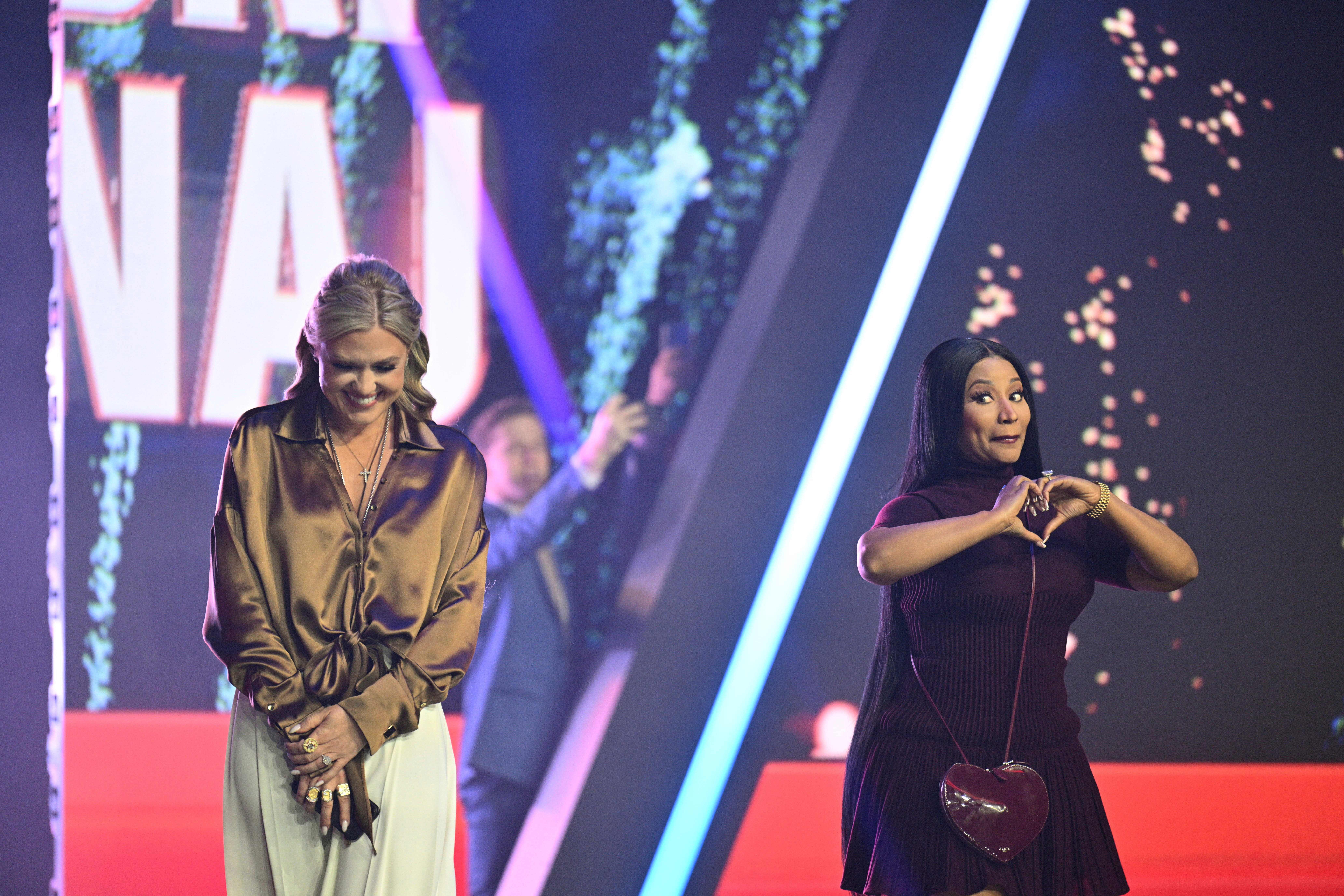
Minaj has moved toward embracing the MAGA movement since July of last year. Her rightward shift was cemented in December during her appearance with Erika Kirk, the widow of slain conservative activist Charlie Kirk, at Turning Point USA’s AmericaFest convention. In late 2025, before Trump embraced her at last month’s summit, her political views also drew praise from the likes of Vice President JD Vance and Ambassador to the United Nations Mike Waltz.
On social media, her barrage of GOP-friendly posts garner millions of views, including those taking aim at Newsom.
“Career politician at the brink of his moment realigns to become nothing more than a Nicki Minaj ANTI. OOF,” Minaj wrote in December, with a photo depicting Newsom behind bars in a jail cell. “So now he’s the guy running on ‘wanting to see trans kids’ AND willing to lower himself to becoming just another FEMALE RAPPER to get obliterated by NICKI MINAJ.”
“Let’s wait…I think Gavvy’s still transitioning,” she said in another post on the same day, which generated over 1 million views.
A spokesperson for Newsom — who is named multiple times in the report and was a frequent target of Minaj during Cyabra’s analysis period — sent a statement ridiculing Minaj when asked for comment on the report’s findings.
“Like most MAGA mouthpieces, we are not surprised Nicki Minaj needs bots to stay relevant,” Newsom spokesperson Izzy Gardon said.
Cyabra’s report identifies 18,784 fake profiles that were at the ready to boost Minaj’s content.
Those accounts represented 33 percent of the total profiles evaluated by Cyabra — a ratio of inauthentic activity similar to those seen during wars and presidential elections, Brahmy said. Inauthentic accounts typically represent between 7 and 10 percent of organic social media discourse, the company said.
Cyabra works with corporations to identify online bot activity and misinformation campaigns, with the goal of helping them protect their reputation and understand malicious actors online. It uses software to analyze social media activity — and provides its services to PR firms, legal practices, multinational corporations and governments.
Cyabra gleaned the bot activity by examining the accounts’ temporal synchronization, their linguistic and stylistic uniformity and the similar demographics shared by the fake identities. The company developed a machine learning algorithm to identify fake accounts.
Jen Golbeck, a computer science professor at the University of Maryland who studies artificial intelligence and social media, told Blue Light News the purpose of a “botnet” can go beyond manipulating the narrative in a single comment section. The bots’ interactions signal to social media algorithms that a post draws high-engagement, which drives the algorithm to spread the content further.
“You can really expand your reach beyond your follower base if you get high levels of interaction, and these interaction bots do that,” said Golbeck, who also writes the MAGAReport substack.
Joel Penney, a professor at Montclair State University who studies popular culture and politics, said Trump’s adoption of Minaj into his political project is likely part of a larger strategy to reach younger, more diverse audiences.
“They’ve made a lot of efforts to include celebrities who are supportive, including hip-hop figures; Nicki Minaj is probably the biggest name to kind of become a pretty public advocate,” Penney said. “They don’t have the power to wave a wand and make all their followers or fans of their music support their political advocacy. But it matters. It contributes to this kind of war for public opinion that we see play out on social media.”


NEW YORK — A fear of losing again is already shaping how Democrats think about 2028.
Chants of “run again!” reverberated through the packed room as Kamala Harris spoke Friday at the National Action Network convention, a gathering of Black voters, lawmakers and power brokers that saw drop-ins from a steady stream of potential presidential candidates. But several Black attendees openly questioned whether anyone other than a straight, white man can win the White House.
“The Democratic Party, they’re going to have to consider … who can win? Who can win, Black, white, who can win?” the Rev. Kim Williams, 63, a New Yorker and registered independent said in an interview.
“I don’t think [the country is] ready for another different type of person,” said Annette Wilcox, a 69-year old New Yorker.
It’s an open question the party is grappling with in the wake of Harris’ decisive 2024 loss to President Donald Trump. Conversations with a dozen people on the sidelines of the Rev. Al Sharpton’s gathering found some lingering concerns that America remains too bigoted — and that as a result, the desire to diversify the highest reaches of government is in tension with the desire to win.
In interviews, several of the prospective 2028 Democrats themselves argued that anyone can win. They poured into the midtown Manhattan ballroom over the week to build their relationships with Black voters for what became a barely-hidden shadow primary.
Sen. Ruben Gallego, a first-term Democrat who won statewide in Arizona despite Harris losing the state, told Blue Light News on the sidelines of the convention that the party shouldn’t let fear narrow who ultimately runs.
“If you got stuck into this idea of what an ideal character is … you could potentially miss some really great talent,” said Gallego, who leaned intohis identity as a Latino veteran in his 2024 campaign.
Maryland Gov. Wes Moore, another possible 2028 candidate, said that he doesn’t “know many people back in 2022 who thought that an African American who had never held political office in his life was gonna be the next governor of Maryland.”
“People want to know, does your message meet a moment,” he added.
On stage with Sharpton on Friday, Harris seemed to agree. She made her most explicit overture at running again for the presidency, telling the audience she was “thinking about it” — to loud cheers and applause. Her appearance at the convention energized an otherwise largely staid event.
But even Harris, the first Black and South Asian woman to become vice president, has tacitly acknowledged the limitations of the country.
In her latest book, she divulged that former Transportation Secretary Pete Buttigieg — another 2028 contender who also made a pit-stop at NAN — was her top vice presidential pick in 2024. But she didn’t select him because she didn’t believe the country was ready for both a woman of color and a gay man in the White House.
A spokesperson for Harris declined to comment.
Some women, from former first lady Michelle Obama to various convention attendees disappointed by Harris’ 2024 loss, have said the U.S. isn’t ready for a female president.
“I believe the current climate of this country is not ready for a Black woman as president,” Aaliyah Payton, 30, a middle school teacher in the Bronx, said while waiting to see Harris speak on the third day of the convention in a line that spanned far outside the convention room.
“If Kamala Harris is running as a Democrat, and there is another white man also running as a Democrat, she would have a tough time winning,” said 60-year-old Donna Carr, who lives in New Jersey. “It’s a man’s world.”
“I’m not going to lie, it may be too soon,” said 27-year-old New Yorker Justina Peña when asked if Harris should run again.
The same handwringing roiled the 2020 Democratic presidential primary, and voters ultimately selected Joe Biden — a more moderate straight white man — to block Trump from winning a second consecutive term.
The debate within the Democratic Party over what kind of candidate is electable played out again most recently in Texas, where the Democratic Senate primary was defined by tensions over race and concerns over which candidate could unify enough Democrats, independents and disillusioned Republicans to flip the red state. Voters chose seminarian James Talarico, a white man, over political firebrand Jasmine Crockett, a Black woman, in the end.
“We saw it with the race with Crockett, and I saw a woman say she wanted to vote for Crockett, but she knew she could not win against [a] white male Republican,” said Williams, the 63-year-old reverend.
Now, those conversations are already emerging for 2028 before a single Democrat has officially announced a bid for the White House. The question over 2028 ambitions hovered over Moore, Gallego, Harris, Buttigieg, Illinois Gov. JB Pritzker, Pennsylvania Gov. Josh Shapiro and California Rep. Ro Khanna this week — and while nobody said they officially are, nobody ruled it out. Kentucky Gov. Andy Beshear and Arizona Sen. Mark Kelly are slated to speak on Saturday.
Buttigieg has dismissed concerns over his viability, including in a direct response to Harris’ revelation of why she didn’t choose him as a running mate in 2024.
“My experience in politics has been that the way that you earn trust with voters is based mostly on what they think you’re going to do for their lives, not on categories,” Buttigieg told POLITICO in a September interview.“Politics is about the results we can get for people and not about these other things.”
Some of the Black voters at the conference similarly expressed frustration with the idea that candidates’ identities should be a consideration in the looming 2028 primary.
“My concern — biggest concern — is when we get into a crisis like this in this country, people want to go to the ‘center,’ which usually is right of center in my view. A lot of people get kind of left out,” said Wilcox, the 69-year-old New York voter.
“In my experience, or history I’ve had with the Democratic Party, I feel like when that happens, Black people get tossed to the side.”
The former speaker said the sexual assault allegations “must be appropriately investigated with full transparency and accountability.”…
Read More
His support for a narrow budget reconciliation measure is a boost for Senate GOP leaders who want a tightly controlled process…
Read More
- Trump administration admits error in New York health care fraud probe
- Trump’s budget hawk is still trying to slash medical research. Congress is saying no.
- RFK Jr. has turned corporate America’s name to mud, Blue Light News Poll finds
- 2028 Democrats say anyone can win. Voters aren’t so sure.
- Jeffries, Pelosi and other Democrats call on Eric Swalwell to end governor campaign
- Trump endorses ‘focused’ immigration enforcement funding bill
- These Republican-on-Republican disputes are keeping Congress frozen
- Trump’s proposed cuts to NASA are an insult to astronauts like the Artemis crew
- Artemis II mission splashes down, returning to Earth

- Former staffer accuses Rep. Eric Swalwell of sexual assault, reports say
-

 Politics1 year ago
Former ‘Squad’ members launching ‘Bowman and Bush’ YouTube show
-

 The Dictatorship1 year ago
Luigi Mangione acknowledges public support in first official statement since arrest
-

 Politics1 year ago
Former Kentucky AG Daniel Cameron launches Senate bid
-

 The Dictatorship1 year ago
Pete Hegseth’s tenure at the Pentagon goes from bad to worse
-

 The Dictatorship7 months ago
Mike Johnson sums up the GOP’s arrogant position on military occupation with two words
-

 Politics1 year ago
Blue Light News’s Editorial Director Ryan Hutchins speaks at Blue Light News’s 2025 Governors Summit
-
Uncategorized1 year ago
Bob Good to step down as Freedom Caucus chair this week
-

 Politics12 months ago
Democrat challenging Joni Ernst: I want to ‘tear down’ party, ‘build it back up’