
Politics
Supreme Court grants Virginia’s appeal to purge voter rolls ahead of Election Day

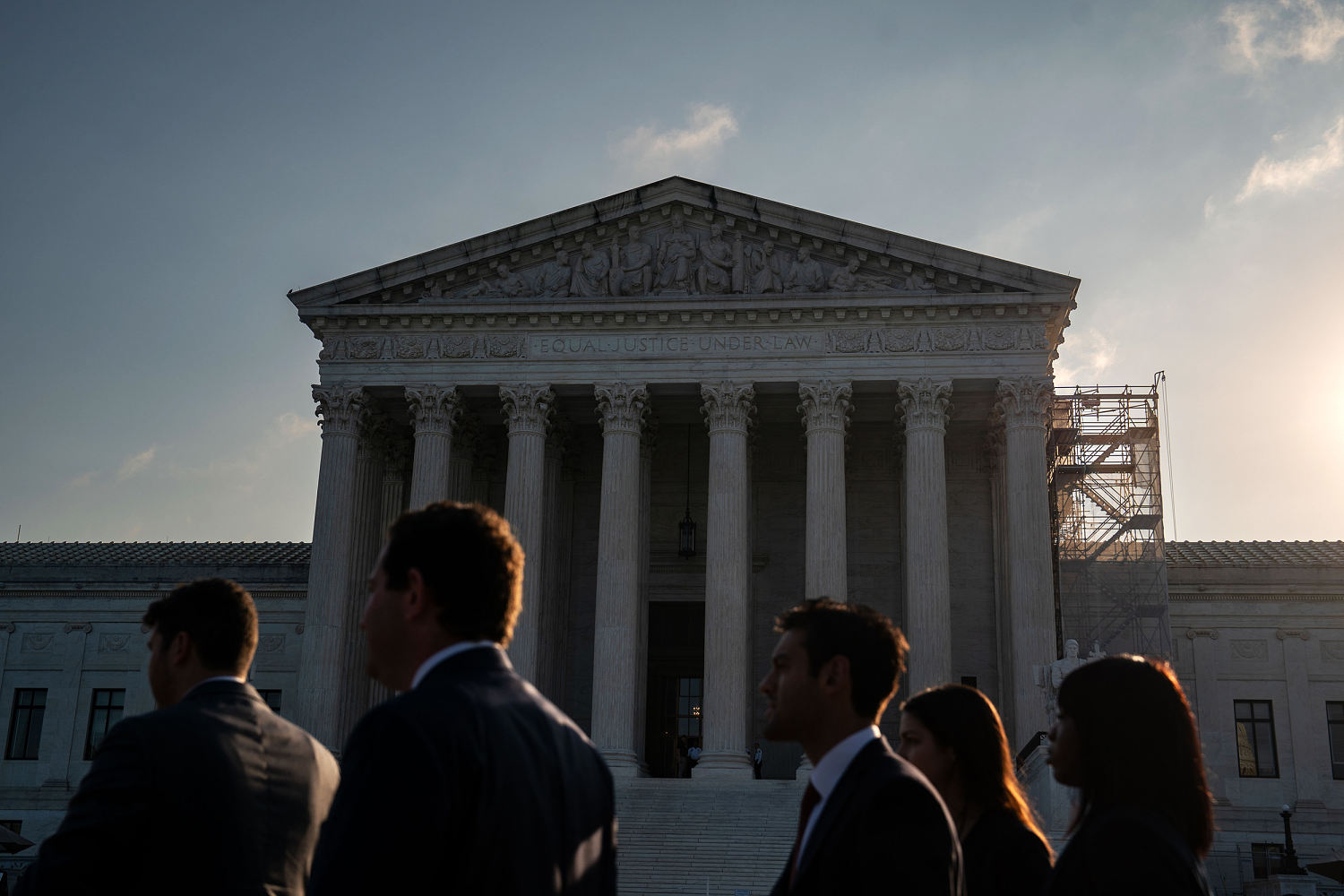

The Supreme Court on Wednesday granted Virginia’s emergency request to revive Republican Gov. Glenn Youngkin’s systematic purge of voter rolls ahead of Election Day.
The court’s three Democratic appointees dissented from the order. The Republican-appointed majority didn’t explain its reasoning, nor did the dissenters, which isn’t unusual in emergency litigation.
The Republican win from the Roberts Court follows Tuesday’s nearly unanimous rejection of former independent candidate Robert F. Kennedy Jr.’s attempt to get off ballots in battleground states Wisconsin and Michigan, which he wanted to do to help Republican Donald Trump’s campaign.
The justices are also expected to rule soon on an emergency bid from Republicans to block provisional ballots in Pennsylvania. The impending decision in the case from that swing state could provide a fuller picture of how the court is handling litigation in this election, which could be a close one between Trump and Democratic nominee Kamala Harris.
A federal judge on Friday had blocked Virginia’s program, citing the National Voter Registration Act. That federal law bars states from systematically removing ineligible voters within 90 days of a federal election. Virginia argued to the justices that the law doesn’t apply to removing noncitizens and that its removal process is individualized, not systematic.
Opposing the emergency bid alongside voting rights groups, the federal government said that Virginia has “no legitimate interest in continuing practices that plainly violated federal law.” The government said that state officials “pervasively invoke alleged harms that they have failed to prove. … Notably, applicants have provided no reason to believe that any noncitizens have voted in past Virginia elections, or that any are likely to do so in the upcoming election.”
In ruling against the state, U.S. District Judge Patricia Giles said that its program has curtailed the rights of eligible voters to cast their ballots, citing evidence that eligible citizens have had their registrations canceled. The Joe Biden appointee said that “restoring the right to vote of all eligible voters affected by this program strongly outweighs the burden to Defendants [Virginia] of restoring those names to the rolls.”
She added that officials could still remove ineligible registrants through individualized inquiry.
On Sunday, a 4th U.S. Circuit Court of Appeals panel said it was likewise “unpersuaded” by the state’s argument that it wasn’t violating the federal voter registration law. “Here, the challenged program does not require communication with or particularized investigation into any specific individual,” a unanimous appeals court panel said in the order that prompted Supreme Court review. “Rather, the inclusion of a person’s name on a list electronically compared to other agency databases is enough for removal from the voter rolls.”
The panel of Democratic appointees said the state’s argument that the law doesn’t cover noncitizens “violates basic principles of statutory construction by focusing on a differently worded statutory provision that is not at issue here and proposing a strained reading of the Quiet Period Provision to avoid rendering that other provision absurd or unconstitutional. That is not how courts interpret statutes.”
The Supreme Court’s order on Wednesday pauses the trial judge’s ruling pending further litigation in the appeals court and potentially the high court.
In the 2020 election that Trump lost to Biden, the Democrat won Virginia, where early voting is already underway this year, by about half a million votes.
While this appeal only concerned Virginia, the state was backed at the high court by Republican interests and states, including a brief led by Kansas Attorney General Kris Kobach, who was previously held in contempt and sanctioned for defying court orders during voting litigation.
Subscribe to the Deadline: Legal Newsletter for expert analysis on the top legal stories of the week, including updates from the Supreme Court and developments in Donald Trump’s legal cases.
Jordan Rubin is the Deadline: Legal Blog writer. He was a prosecutor for the New York County District Attorney’s Office in Manhattan and is the author of “Bizarro,” a book about the secret war on synthetic drugs. Before he joined BLN, he was a legal reporter for Bloomberg Law.



Adam Hamilton on faith, Trump and the fight for Kansas
lead image
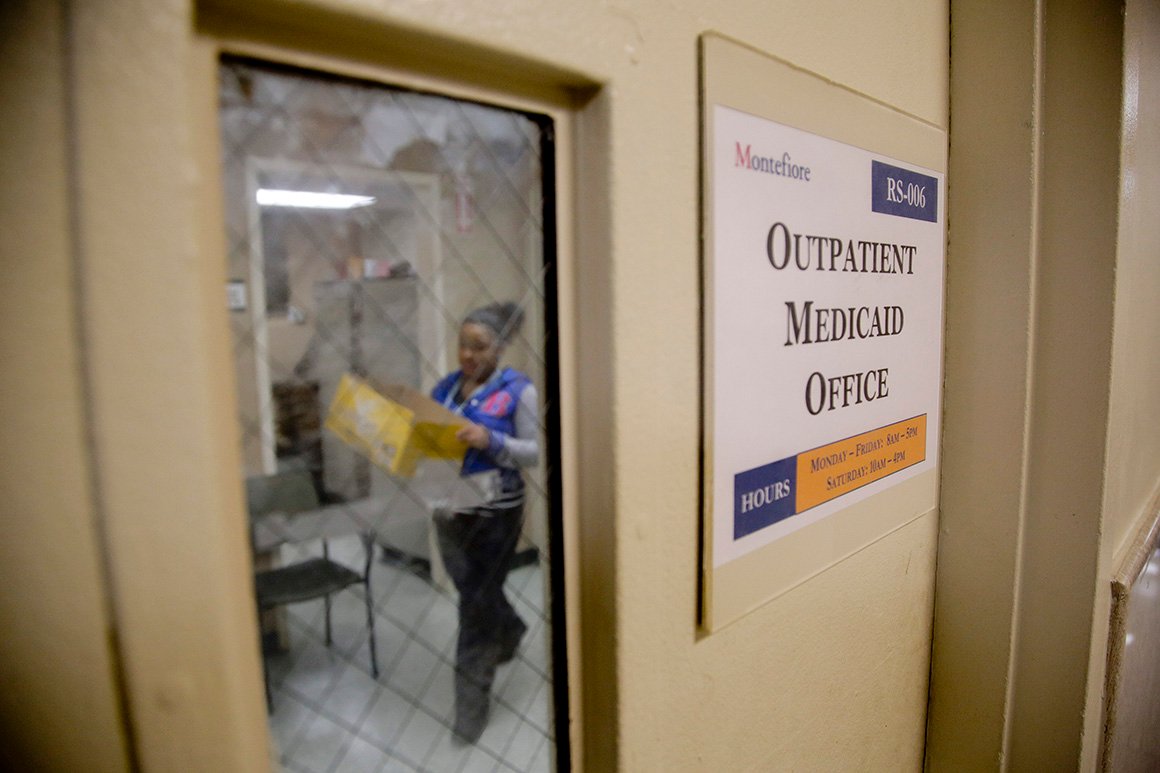
WORKING OUT THE KINKS: New York’s Department of Health began transitioning more than 147,000 Medicaid and Medicare Savings Program enrollees to an upgraded case management system about a year ago.
Since then, state officials say only a third of them have been able to automatically renew their coverage without assistance.
The shift is part of a $1.1 billion contract aimed at creating an automated system for Medicaid enrollees to receive real-time determinations on their eligibility for the two programs. While the new system is intended to create a seamless enrollment process, for many consumers it’s been riddled with challenges.
The initiative is part of a broader effort to move the Medicaid program away from local social services departments that still rely on paper applications and an outdated system in desperate need of overhaul. The state wants to transition the program to one centralized system run through its public health insurance marketplace, New York State of Health, according to officials.
Lindsay Heckler, managing attorney for policy at the nonprofit Center for Elder Law & Justice, said her firm has seen a surge in inappropriate denials.
“I’m not saying the new system shouldn’t be in place,” Heckler said. “But the concern is that the training and processes that are in place are preventing people from becoming eligible. My concern is that in the coming year they are moving more people into a system that doesn’t have the kinks worked out for the people that are in the system right now.”
The state began rolling out the new Medicaid Eligibility and Client Management system in September 2025. A second wave of more complex cases is expected to migrate to the new system between November 2027 and February 2028. And while state officials say the system — which was created by Deloitte Consulting through a $1.1 billion contract — was thoroughly tested by both the Health Department and the company, they concede that problems remain and are being addressed as they’re flagged.
Advocates describe the situation in starker terms. They say errors have put health care coverage in jeopardy for people who are 65 years and older, blind or disabled. They also told Blue Light News they’ve discovered inaccurate information being transferred, a flawed automated asset verification tool and state workers’ inability to manually override inappropriate denials.
Deloitte did not respond to a request for comment.
New York entered into a $177 million contract with Deloitte in August 2023. But that projected outlay has grown to $1.18 billion after the state quietly filed four amendments to the initial deal, which ended on March 31, 2025. The latest amendment included an $866 million extension along with a work plan modification, according to details of the contract listed in the Open Book New York database.
The Health Department said the contract extension will complete the migration of Medicaid enrollees to the new system, which includes more complex cases in the next wave, such as long-term care and nursing home patients. The contract also includes additional funding for Deloitte to conduct testing and ensure compliance with new federal requirements.
“This multi-year transition to a centrally administered model will replace the outdated, expensive, error-prone and inefficient paper-based system with a streamlined, user-friendly platform that better supports the health coverage needs of New Yorkers while reducing the potential for waste, fraud, and abuse,” Health Department spokesperson Cadence Acquaviva said in a statement. “At every step of the way, this transition and contract were subject to extensive federal review and approval by the Centers for Medicare and Medicaid Services.”
Read more in Blue Light News Pro from Katelyn Cordero.
MARK YOUR CALENDAR: Join Blue Light News’s New York Outlook: Affordability, Industry & The Economy on Oct. 14 for live conversations about the business and policy decisions being made today — from City Hall to the State Capitol — that will shape the city’s economic future. The lineup includes New York City Council Speaker Julie Menin, New York City Economic Development Corp. CEO Anthony Shorris, Partnership for NYC CEO Steven Fulop, Citizens Budget Commission President Andrew Rein, Charles H. Revson Foundation President Maria Torres-Springer, and more. Register now to attend in person or watch the livestream.
From the Capitol
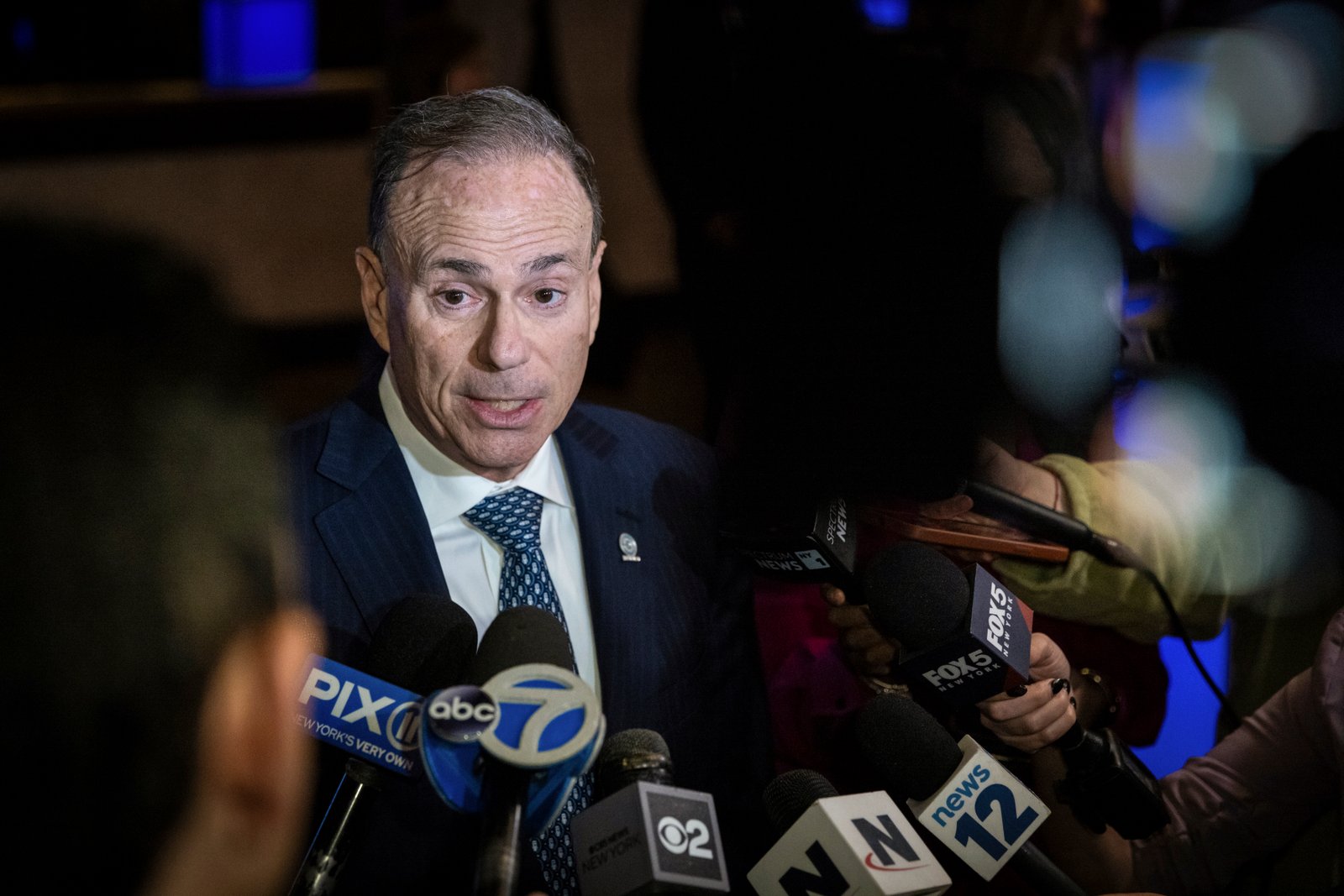
JACOBS WINS: State Democratic Committee Chair Jay Jacobs handily won a new two-year term on the job, receiving 82 percent of the weighted vote at a party gathering in Westchester today.
Jacobs — who angered the left last year by declining to endorse then-Democratic mayoral nominee Zohran Mamdani in the general election — faced a challenge from Otsego County chair Caitlin Ogden. He preached unity as his victory message, inviting Ogden to join his leadership team in a “substantive” role.
“This party has got to come to an understanding that our first priority is electing Democrats in whatever districts they’re in, and speak the language of the people in those districts,” Jacobs said. “All sides of our party need to learn to listen, to understand, to respect each other. There should be no vitriol inside the Democratic Party tent.”
Party members have traditionally supported the governor’s choice for chair. Gov. Kathy Hochul never publicly wavered in her support for Jacobs, making clear in recent weeks he was still her pick.
“I want to thank him for accepting the weight, the responsibilities,” she told party officials today. “Not the easiest job in the state. But he has done it in a way that has brought us together.”
Jacobs, who also heads the Nassau County Democratic Committee, has chaired the state party under the past three governors, serving from 2009-2012 and since 2019. If he completes his new two-year stint, he’d be just one term away from surpassing FDR kingmaker James Farley as the longest-tenured chair in the history of the New York Democrats. — Bill Mahoney
FROM THE CAMPAIGN TRAIL
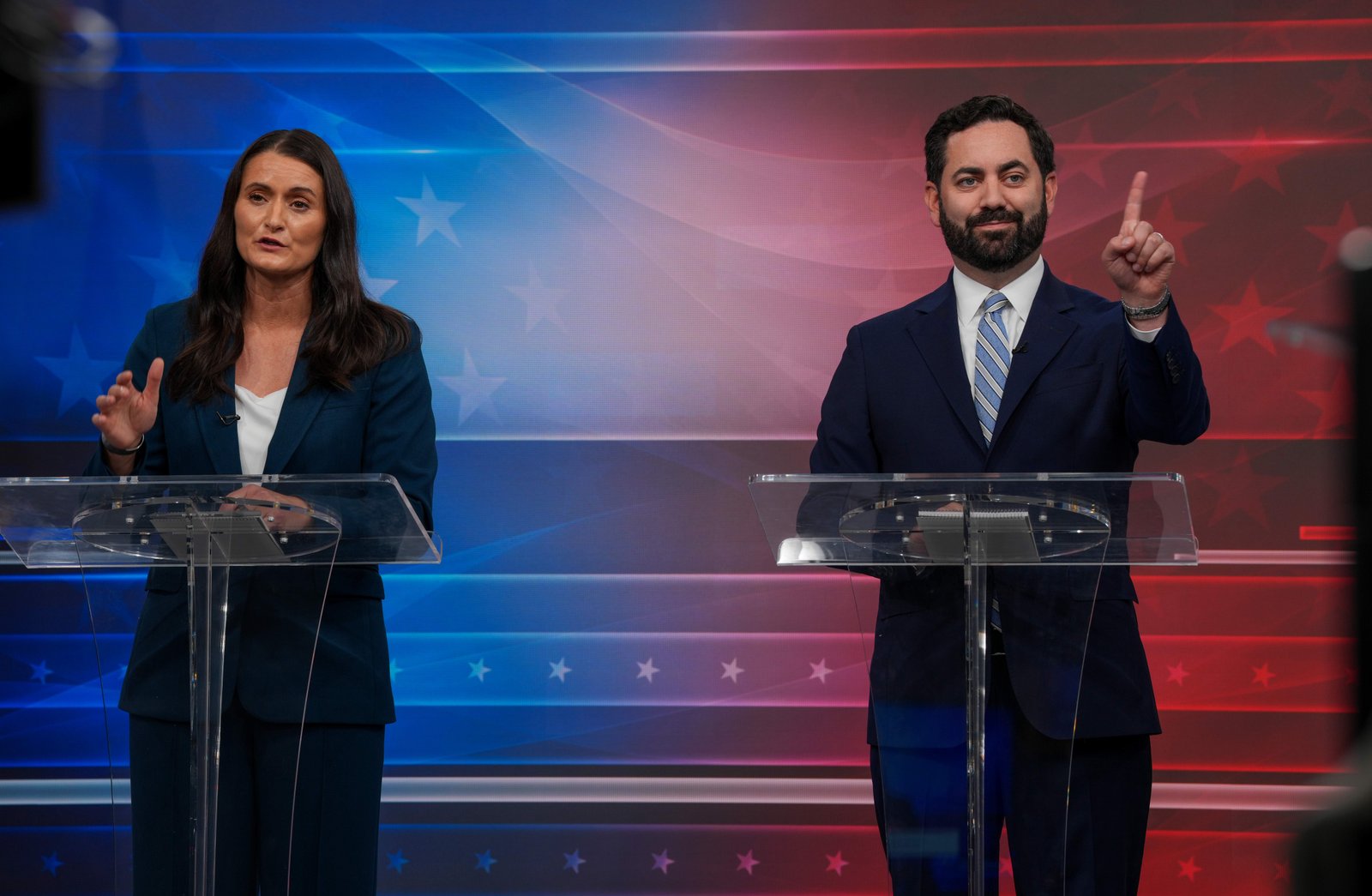
POLL POSITION: Republican Rep. Mike Lawler and Democratic challenger Cait Conley are locked in a tight race, per a new Emerson College/PIX11 poll.
Conley earned 48% of support to Lawler’s 46%, with 7% of respondents undecided.
Lawler has more crossover support than Conley does, and independents break for him. But the pollsters note the percentage of Democratic backing for him fell from an Emerson survey in October 2024, while Conley’s GOP support increased compared to Lawler’s 2024 opponent, former Rep. Mondaire Jones.
Hochul’s favorability is underwater in the district — 40% of respondents approve and 49% disapprove — though the pollsters acknowledge she’s on better footing than she was in 2024. President Donald Trump is also unpopular, with 43% approving his performance and 53% disapproving. The poll did not ask about Mamdani, a favorite foil of Lawler’s on the trail.
The survey was conducted among 400 likely voters from Sept. 27-29. It has a margin of error of plus-or-minus 4.9 percentage points. — Madison Fernandez
TRUMP TO CNY: Trump is considering a trip to upstate New York on Oct. 9 to appear alongside Republican gubernatorial candidate Bruce Blakeman, according to three people with knowledge of the discussions.
The event is being considered for central New York, but has not been finalized, said a fourth person. The people were granted anonymity to disclose the private conversations about the potential trip.
Blakeman’s campaign did not comment and the White House did not immediately return messages seeking comment.
Trump previously appeared on Long Island this summer to rally with Blakeman and Republican House candidates.
Read more from Blue Light News’s Nick Reisman.
FROM CITY HALL

BILLIONAIRE’S ZO: Mamdani hosted fifteen business leaders — several of them billionaires — at Gracie Mansion yesterday for the inaugural meeting of his Business Advisory Council.
The council brings together business executives across industries to help guide the city’s economic policy and shepherd growth and innovation. Despite decrying the ultra wealthy, Mamdani welcomed input from billionaires such as Chobani founder and CEO Hamdi Ulukaya and Jefferson River Capital Chairman Tony James on how to address the affordability crisis, which has inhibited their ability to recruit top talent.
The council also discussed potential plans to convert unused office space across the city into arts and research hubs, according to a spokesperson for the mayor.
While he was welcoming other business execs to his home, one of the mayor’s biggest billionaire foes, Ken Griffin, was announcing his $3 billion donation to Carnegie Mellon University, the largest single donation in the history of American higher education.
Most of that money is earmarked to build the university a new campus in Miami — months after Griffin said the mayor’s rhetoric prompted him to “double down” on investments in Florida, rather than New York.
The Mamdani-Griffin beef swelled this spring when the mayor posed in front of Griffin’s $238 million penthouse in a social media video promoting his pied-à-terre tax. In the post, Mamdani framed the billionaire as a prime target of his tax-the-rich agenda.
Griffin responded by calling the video “creepy and weird,” saying his plans to further invest outside of New York were “an immediate and direct consequence of the mayor’s poor decision.”
“We will welcome anyone’s support, anyone’s involvement, and we will always do so because this is a city that belongs to all who live here,” Mamdani said when asked about Griffin’s historic donation. — Molly Reinmann
IN OTHER NEWS
— RETREAT: NYC first lady Rama Duwaji reportedly sojourned at an Islamic wellness retreat with a history of calling for the destruction of Israel, as her husband was rolling out his blueprint to combat antisemitism. (Washington Free Beacon)
— CHATBOT GOVERNANCE: The Mamdani administration is planning to unroll new AI safeguards, including cracking down on chatbots used in customer service and launching a formal study of AI assistants. (POLITICO Pro)
— SPEEDING THINGS UP: Mamdani’s administration unveiled 12 districts where housing will be fast-tracked. (POLITICO Pro)
Missed this morning’s New York Playbook? We forgive you. Read it here.
Republicans know President Donald Trump’s unpopularity poses a big problem for them in November. They also recognize he may be their only option to avoid a wipeout.
Five weeks before Election Day, many Republicans are facing a damned-if-they-do, damned-if-they-don’t dilemma. Some candidates in close races are wary of alienating undecided voters by campaigning alongside Trump and the baggage that comes with him: High gas prices, voters’ persistent economic concerns and the prolonged war in Iran.
But keeping the president at arm’s length could make it harder to turn out the low-propensity base voters they need — voters that only Trump has been able to bring to the polls.
“These guys are in a pickle,” said one national GOP operative granted anonymity to speak candidly about the landscape, like others in this article. “They may not want Trump to come to the district, but there are still things that Trump can do to help.”
Asked what would happen if Trump campaigned in a battleground state where their candidates were running, another GOP operative working on midterm races said: “I suspect my candidates would come down with COVID.”
But the candidates may not have much of a choice. Trump is increasingly inserting himself into the election in the closing stretch, ramping up his campaign travel with a slate of stops scheduled in red states, repeatedly imploring voters to “pretend” he’s on the ballot and, most recently, appearing in taxpayer-funded campaign-style ads that the White House has claimed are Public Service Announcements.
Some Republicans have encouraged Trump’s team not to send the president to a blue-leaning Omaha district and other key districts where his approval rating is underwater ahead of Election Day, according to two people with direct knowledge of the matter. Brinker Harding is running in the Omaha seat being vacated by retiring Rep. Don Bacon (R-Neb.); his campaign didn’t respond when asked if he’ll attend Trump’s upcoming rally in Grand Island, Nebraska, about a two-hour drive away.
Others have said similar things.
“They’ve called me four times now to see if we want him to come, and I’ve said no,” one senior Republican involved in a House GOP battleground race in a district Trump safely won in 2024 told Blue Light News.
Another Republican operative familiar with Republican midterm strategy said the party views its role — and Trump’s — primarily as driving GOP turnout, while the work of persuading moderates, independents and other swing voters falls more heavily on individual candidates.
“Where the president is going is being decided very strategically, to areas where we are trying to boost turnout among Republican voters,” the operative said. “We’re not going to be sending him into areas where it would necessarily be hurtful to our candidates.”
Others in red states that are increasingly competitive acknowledge that if they want to rally the MAGA base to the degree necessary to hold onto key seats, no one can deliver like Trump.
“He’s a turnout machine for the Republican Party, the president is,” said Ohio GOP Chair Alex Triantafilou, who will welcome Trump to his state on Saturday. “I certainly know what some of the national polling and some of the pundits have to say about this. But he is always welcome to Ohio because we know that he fires our people up.”
Not everyone thinks Trump is a net-positive even in places he comfortably won.
A national GOP operative, granted anonymity to speak candidly, said there are “no indications that there are enough turn out voters to overcome dropping some persuasion voters.”
Outgoing North Carolina Republican Sen. Thom Tillis said he doesn’t think it would be helpful for Trump to campaign in his state — which the president won in all three of his presidential runs, and where former RNC chair Michael Whatley is struggling to tighten the race against former Gov. Roy Cooper.
“Not in my opinion — just if you take a look at the votes — you take a look at the independents. I don’t think he’s the one who’s going to get them out,” he told Blue Light News.
“I think [Trump’s] job is to get the people out who traditionally vote for him and don’t show up in off-year elections,” he added. “Our job [as candidates] is to then … create some separation. It’s not like you’re breaking your loyalty to the president. … So there are states I think he should go to, there are states I don’t think he should go to.”
The Whatley campaign, however, feels differently. “Who drives R turnout right now in NC — Trump or Tillis? We would welcome Trump back to NC,” said Whatley’s senior adviser, Jonathan Felts. Both Trump and Vice President JD Vance have been to North Carolina to campaign with Whatley in recent weeks.
Trump’s upcoming stop in a red corner of Ohio outside Dayton is part of a broader campaign swing that reflects the political bind. Other stops scheduled include in deep-red states like Oklahoma and Alabama, as well as in red states with key Senate contests including Ohio, Nebraska and Alaska.
Ironically, the expanding battleground map could make Trump more useful to Republicans in some of the places they are most worried about. As the fight has spread into states and districts he won by double digits, simply turning out more of his base may be enough to make a difference.
The White House argued Trump is the “unequivocal leader, best messenger, and unmatched motivator for the Republican Party.”
“No one can dispute the fact that President Trump has created one of the most robust coalitions in political history with the MAGA movement, and the President understands how to communicate with them,” White House spokesperson Davis Ingle said.
The Republican National Committee and National Republican Congressional Committee also said Trump is still a valuable turnout tool, and their candidates are eager to have the president visit their districts and to appear with him on the campaign trail. The National Republican Senatorial Committee did not respond to a request for comment.
But some of the voters Republicans most need Trump to activate — especially blue-collar white voters in rural areas who came out to vote for him but often skip voting in the midterms — are themselves unhappy with his presidency.
Recent Blue Light News polling found that even some of Trump’s strongest supporters — those who identify as MAGA — are souring on his handling of key issues. A Blue Light News Poll in August found that a 44% plurality of MAGA Trump voters said the Iran war has made things more expensive for them, while 38% said the war has had no real impact on their costs.
“It’s really Trump’s voting base that’s feeling the pain of Trump the most,” said another Republican operative involved in several battleground races across the country, granted anonymity to speak candidly about the landscape.“They have to turn those people out. But those people are pissed at Trump, so it’s this weird dynamic of like: ‘Does he help? Does he hurt? Can he go and encourage the disenfranchised, the really pissed off Republican Trump voter?’” the operative said. “That’s really going to be what decides the outcome of this election.”
It’s noteworthy which GOP candidates are enthusiastically coming out to Trump’s rallies — and which are sitting out or staying mum on their plans.
A spokesperson confirmed that Sen. Jon Husted (R-Ohio), who is locked in a tough race in a state Trump won by double-digits, will attend Trump’s upcoming rally outside of Dayton; a spokesperson for Vivek Ramaswamy, the GOP gubernatorial candidate, did not respond to an inquiry about Ramaswamy’s attendance plans, nor did spokespeople for the trio of GOP House candidates running in Ohio’s competitive 1st, 7th and 9th Districts.
Republican Rep. Ashley Hinson, the GOP Senate candidate in Iowa, recently said the Iran war needs to be “brought to a successful and immediate end,” in a rare public break with Trump. Hinson also did not attend a campaign rally Vice President JD Vance held in western Iowa in mid-September. She did, however, appear in the Oval Office behind Trump earlier this week when he announced a plan to build a $15 billion steel plant in Iowa.
But with an ever-darkening environment, some Republicans see any efforts to reverse course as better than nothing.
“Everybody sees the polling,” said Daniel Garza, a Texas Republican strategist and president of the conservative LIBRE Initiative. “Is the polling accurate? I have no idea. All I know is that turnout is going to be key to this, and anything helps right now, at this point.”
Jordain Carney and Lisa Kashinsky contributed.
- The low-profile Democrat helping shape her party’s AI agenda
- ‘A game-changer’: House Dems aim for a big majority that could ease Hakeem Jeffries’ headaches
- Adam Hamilton on faith, Trump and the fight for Kansas

- New York grapples with kinks in $1B Medicaid system

- Top Democratic appropriator wants White House to pay for airing ‘propaganda’
- Barrage of lawsuits targets Trump’s funding cancellation
- ‘These guys are in a pickle’: Some Republicans spurn Trump on the campaign trail
- Democrats rethink their mail-voting strategy as voters grow wary
- Senate bipartisan permitting deal faces a House buzz saw
- Centrist Dem’s Supreme Court plan boosts momentum for revamp
-

 Politics2 years ago
Former ‘Squad’ members launching ‘Bowman and Bush’ YouTube show
-
Uncategorized2 years ago
Bob Good to step down as Freedom Caucus chair this week
-

 The Josh Fourrier Show2 years ago
DOOMSDAY: Trump won, now what?
-

 Politics2 years ago
Former Kentucky AG Daniel Cameron launches Senate bid
-

 The Dictatorship2 years ago
Pete Hegseth’s tenure at the Pentagon goes from bad to worse
-

 The Dictatorship2 years ago
Luigi Mangione acknowledges public support in first official statement since arrest
-

 Politics2 years ago
Blue Light News’s Editorial Director Ryan Hutchins speaks at Blue Light News’s 2025 Governors Summit
-

 The Dictatorship1 year ago
Mike Johnson sums up the GOP’s arrogant position on military occupation with two words