
Politics
Shapiro tests Democrats’ data center strategy

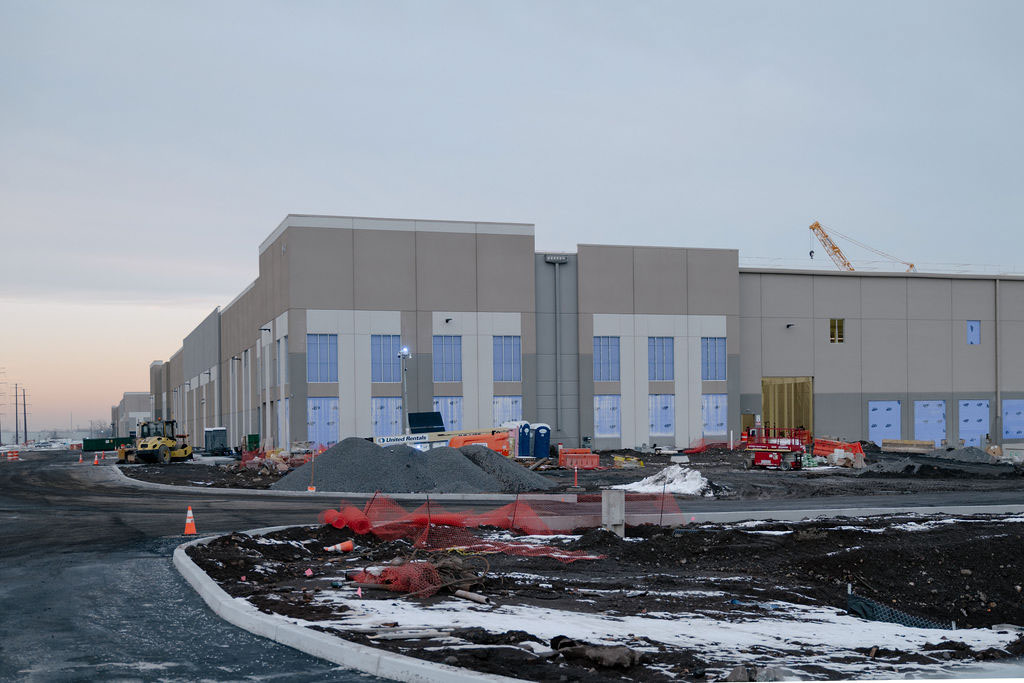
PHILADELPHIA — Pennsylvania Gov. Josh Shapiro, a bellwether Democrat on AI and data centers, is tempering his message ahead of his reelection campaign.
Shapiro, a swing-state Democrat and a 2028 presidential prospect, has staked his state’s economic fortunes on the tech industry. He wooed a $20 billion investment from Amazon along with major investments by Microsoft and Google. Shapiro has backed President Donald Trump’s call for more nuclear and natural gas plants to power new tech hubs.
He’s now trying to hedge his bet as data centers absorb a nationwide backlash from voters increasingly concerned about their impact on electricity bills.
“Pay for your own power, so it’s not saddling local businesses or homeowners with higher costs,” Shapiro said in an interview with Blue Light News earlier this month from a union hall in Philadelphia.
It’s an unmistakable pivot by a leading practitioner of data center politics who along with other Democratic governors has been trying to bring under control rising electricity prices that could be political kryptonite for both parties. Household electricity bills are rising at twice the rate of inflation. In recent weeks, Shapiro has joined Arizona Gov. Katie Hobbs, New York Gov. Kathy Hochul and other Democrats who are sharpening their tone and putting new policies in place to try to claw back taxpayer expenses, increase pressure on utility companies and address local backlash against development.
“Too many of these projects have been shrouded in secrecy, with local communities left in the dark about who is coming in and what they’re building,” Shapiro said in his annual address to the Pennsylvania General Assembly earlier this month.
Shapiro, who is riding high in the polls as he launches his reelection campaign, is pitching the AI and data center boom as a source of union jobs during the yearslong construction phase — but also trying to manage the boom’s potential to alienate other voters.
Christopher Borick, a political science professor at Muhlenberg College in Allentown, said Shapiro’s “get stuff done” political brand runs into trouble if voters tie energy affordability concerns to data center projects.
“People have started to connect the demand for AI and data centers to pricing,” he said.
Jobs and energy
Few Democrats have anticipated the data center zeitgeist as deftly as Shapiro. Shortly after taking office in 2023, he ordered an analysis of where the state and U.S. economies were headed. AI jumped out as a key opportunity, a top adviser said.
“Not just because we thought it was cool, but because we have strengths,” said Rick Siger, a former Obama staffer who serves as Shapiro’s secretary of community and economic development.
Carnegie Mellon University, a top engineering and technology school, was a selling point. So was the state’s manufacturing base, which makes hardware for data centers and boasts tech companies that will deploy advanced AI. Shapiro’s team fixated on what major developers were after. “Speed matters, in particular to companies that are competing in AI,” Siger said.
In June 2025, Shapiro announced Amazon’s $20 billion investment in two data center complexes: one in the Philadelphia suburbs of Bucks County and another south of Wilkes-Barre.
“The employees will be making, in some cases, double the average wage in that county,” Siger said, “to work in a high-tech job and be able to stay home and raise their kids in their hometown.” The data center piece of the AI juggernaut also works well for Shapiro’s union-heavy constituency. He toured Steamfitters Local Union 420’s training center in Philadelphia earlier this month, which is training apprentices to install cooling systems for the computer chips packed in wall-to-wall racks inside the cluster of AI factories being developed in Bucks County.
Rory Carroll, a 42-year-old steamfitter who was among the trainees greeting Shapiro, said he’s “tried everything” to make a living. “I sold cars, delivered pizza, managed a supermarket.” Now, he says he’s on a rising tide.
Local officials in Bucks County — which Trump flipped red in 2024, for the first time since 1988 — are wary but welcoming.
“Do I think the trend of technology replacing jobs will continue with the data centers? Of course I do,” said Erin Mullen, vice chair of the Falls Township Board of Supervisors. But she said the temporary construction jobs were worth pursuing. “This is a blue-collar township,” Mullen said. “So even though the jobs are temporary, a lot of families here survive on temporary jobs, and this is huge for the trades.”
Data centers’ demand for energy also works for Shapiro, who’s been touting the state’s large natural gas reserves in talks with tech companies. Last summer, he joined Trump and the state’s Republican senator, Dave McCormick, in Pittsburgh to announce multibillion-dollar commitments for restarting aging hydropower and expanding electricity generation from nuclear and natural gas.
Now, after cuts to federal renewable energy tax credits, he’s still touting Pennsylvania energy — with a partisan edge.
“I’m an ‘all-of-the-above’ energy governor,” Shapiro said in the Blue Light News interview. “Unfortunately, the president of the United States has cut hundreds of millions of dollars from clean energy development in this commonwealth, which has cost us 26,000 union trade jobs who were set to work on these projects.”
“I don’t think it’s an either-or — it’s a both-and,” he continued. “We need to generate more power. Yes, it will rely in part on Pennsylvania natural gas. We also need to generate more power with renewables.”
Power politics
Shapiro’s call for data center developers to pay for electricity infrastructure that could drive up utility bills echoes the Trump administration’s recent rhetoric exhorting them to “pick up the tab” — but Shapiro’s focus on power bills was a long time coming.
In July 2024, as Shapiro was chasing Amazon, mid-Atlantic ratepayers were hit with a $14.7 billion, one-year charge from PJM Interconnection, the region’s electricity grid manager. The double-digit cost increases in utility bills came as a result of projections that electricity supplies could fall short of demand across the 13-state region stretching from northern Virginia to Chicago.
Shapiro demanded a price cap in December 2024 on the fastest-rising part of PJM customers’ electricity bills — a headline-grabbing event in Pennsylvania. And he’s threatened to pull Pennsylvania out of the PJM market all together, a major uprooting of the way power is delivered in the region. He’s attacked PJM for its byzantine utility-heavy leadership structure that leads to a sclerotic response to rising power prices.
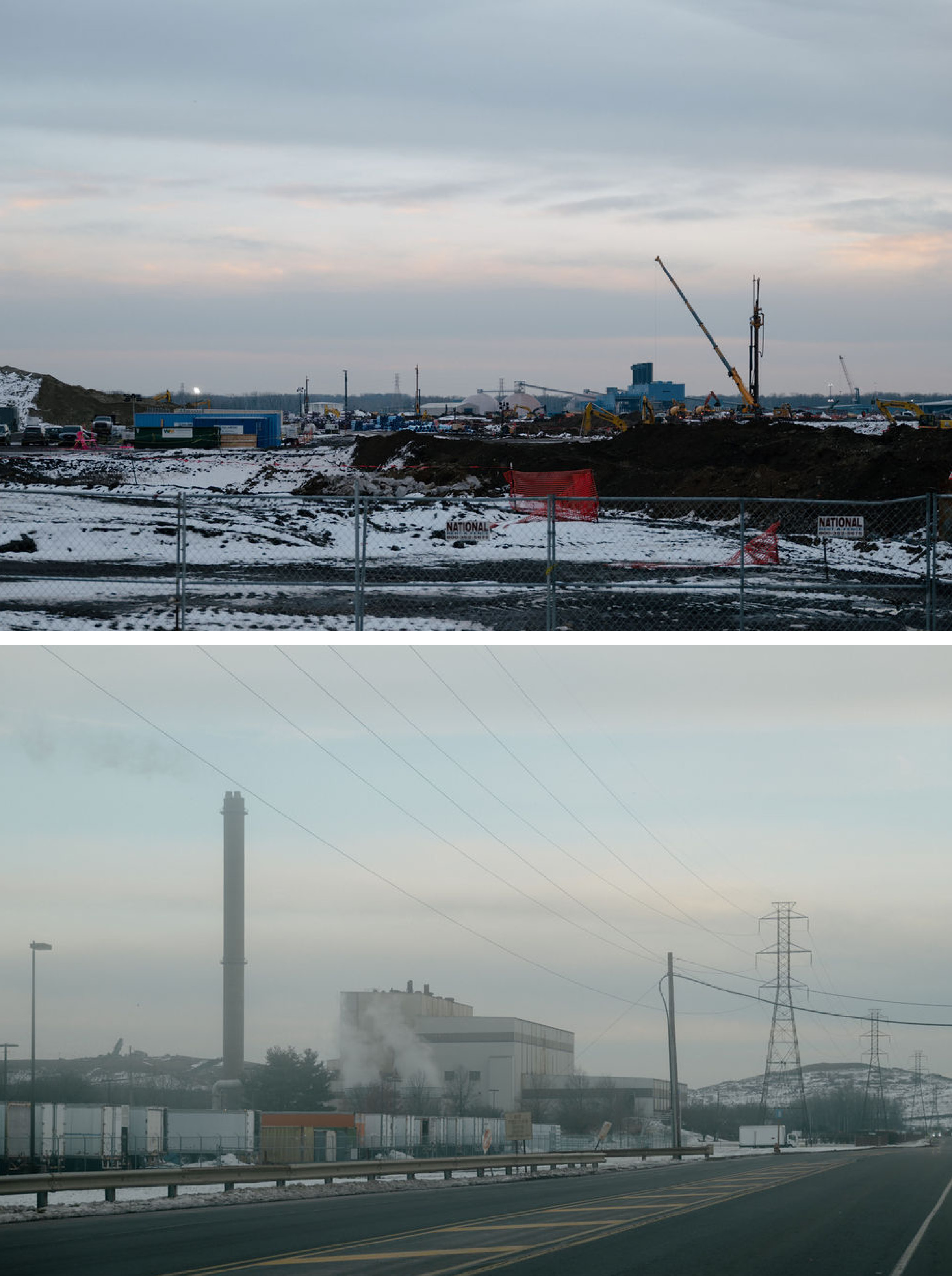
According to federal data, electricity prices in Pennsylvania rose roughly 20 percent between November 2024 and November 2025 — the highest rate in the country. And PJM has warned that states could face power shortages by the end of the decade if the construction of new data centers race ahead of the energy supply.
“PJM is broken,” Shapiro said in December. “They’re too damned slow. And the needs we have in this country to produce more energy to support everything from data centers to more manufacturing need to be met. And we are being held captive.”
The enormously complex market rules that affect power prices in Shapiro’s state are outside average Americans’ conversations. But Shapiro and Trump have tied a rising part of their political parties’ credibility to the outcome of their pledges to make data centers pay their own way.
In January, Shapiro went to the White House alongside other East Coast governors of both parties to call for PJM to control power prices — and for data centers to “bring their own power” through long-term contracts with new generation developers.
Big tech companies are starting to sign on. Trump used a Truth Social post in early January to announce the White House was working with tech companies to get more agreement on containing the public cost of energy infrastructure. Microsoft then pledged to shoulder more of those costs.
Shapiro’s tack could work for him, according to recent polling.
A POLITICO poll released last week showed an electorate still wrestling with the data center question. Respondents’ top concerns surrounding data centers were power prices and the risk of blackouts — yet they were generally willing to support a new data center in their area evenif it hikes their power bills.
In his address to lawmakers, Shapiro proposed a three-pronged strike against rising energy costs — proposing new rules for data center developers, electric utilities and the regional grid PJM. He pledged to “hold data center developers accountable to strict standards if they want our full support.”
Last week, PJM agreed to extend price controls on future electricity production into 2030.


NEW YORK — A fear of losing again is already shaping how Democrats think about 2028.
Chants of “run again!” reverberated through the packed room as Kamala Harris spoke Friday at the National Action Network convention, a gathering of Black voters, lawmakers and power brokers that saw drop-ins from a steady stream of potential presidential candidates. But several Black attendees openly questioned whether anyone other than a straight, white man can win the White House.
“The Democratic Party, they’re going to have to consider … who can win? Who can win, Black, white, who can win?” the Rev. Kim Williams, 63, a New Yorker and registered independent said in an interview.
“I don’t think [the country is] ready for another different type of person,” said Annette Wilcox, a 69-year old New Yorker.
It’s an open question the party is grappling with in the wake of Harris’ decisive 2024 loss to President Donald Trump. Conversations with a dozen people on the sidelines of the Rev. Al Sharpton’s gathering found some lingering concerns that America remains too bigoted — and that as a result, the desire to diversify the highest reaches of government is in tension with the desire to win.
In interviews, several of the prospective 2028 Democrats themselves argued that anyone can win. They poured into the midtown Manhattan ballroom over the week to build their relationships with Black voters for what became a barely-hidden shadow primary.
Sen. Ruben Gallego, a first-term Democrat who won statewide in Arizona despite Harris losing the state, told Blue Light News on the sidelines of the convention that the party shouldn’t let fear narrow who ultimately runs.
“If you got stuck into this idea of what an ideal character is … you could potentially miss some really great talent,” said Gallego, who leaned intohis identity as a Latino veteran in his 2024 campaign.
Maryland Gov. Wes Moore, another possible 2028 candidate, said that he doesn’t “know many people back in 2022 who thought that an African American who had never held political office in his life was gonna be the next governor of Maryland.”
“People want to know, does your message meet a moment,” he added.
On stage with Sharpton on Friday, Harris seemed to agree. She made her most explicit overture at running again for the presidency, telling the audience she was “thinking about it” — to loud cheers and applause. Her appearance at the convention energized an otherwise largely staid event.
But even Harris, the first Black and South Asian woman to become vice president, has tacitly acknowledged the limitations of the country.
In her latest book, she divulged that former Transportation Secretary Pete Buttigieg — another 2028 contender who also made a pit-stop at NAN — was her top vice presidential pick in 2024. But she didn’t select him because she didn’t believe the country was ready for both a woman of color and a gay man in the White House.
A spokesperson for Harris declined to comment.
Some women, from former first lady Michelle Obama to various convention attendees disappointed by Harris’ 2024 loss, have said the U.S. isn’t ready for a female president.
“I believe the current climate of this country is not ready for a Black woman as president,” Aaliyah Payton, 30, a middle school teacher in the Bronx, said while waiting to see Harris speak on the third day of the convention in a line that spanned far outside the convention room.
“If Kamala Harris is running as a Democrat, and there is another white man also running as a Democrat, she would have a tough time winning,” said 60-year-old Donna Carr, who lives in New Jersey. “It’s a man’s world.”
“I’m not going to lie, it may be too soon,” said 27-year-old New Yorker Justina Peña when asked if Harris should run again.
The same handwringing roiled the 2020 Democratic presidential primary, and voters ultimately selected Joe Biden — a more moderate straight white man — to block Trump from winning a second consecutive term.
The debate within the Democratic Party over what kind of candidate is electable played out again most recently in Texas, where the Democratic Senate primary was defined by tensions over race and concerns over which candidate could unify enough Democrats, independents and disillusioned Republicans to flip the red state. Voters chose seminarian James Talarico, a white man, over political firebrand Jasmine Crockett, a Black woman, in the end.
“We saw it with the race with Crockett, and I saw a woman say she wanted to vote for Crockett, but she knew she could not win against [a] white male Republican,” said Williams, the 63-year-old reverend.
Now, those conversations are already emerging for 2028 before a single Democrat has officially announced a bid for the White House. The question over 2028 ambitions hovered over Moore, Gallego, Harris, Buttigieg, Illinois Gov. JB Pritzker, Pennsylvania Gov. Josh Shapiro and California Rep. Ro Khanna this week — and while nobody said they officially are, nobody ruled it out. Kentucky Gov. Andy Beshear and Arizona Sen. Mark Kelly are slated to speak on Saturday.
Buttigieg has dismissed concerns over his viability, including in a direct response to Harris’ revelation of why she didn’t choose him as a running mate in 2024.
“My experience in politics has been that the way that you earn trust with voters is based mostly on what they think you’re going to do for their lives, not on categories,” Buttigieg told POLITICO in a September interview.“Politics is about the results we can get for people and not about these other things.”
Some of the Black voters at the conference similarly expressed frustration with the idea that candidates’ identities should be a consideration in the looming 2028 primary.
“My concern — biggest concern — is when we get into a crisis like this in this country, people want to go to the ‘center,’ which usually is right of center in my view. A lot of people get kind of left out,” said Wilcox, the 69-year-old New York voter.
“In my experience, or history I’ve had with the Democratic Party, I feel like when that happens, Black people get tossed to the side.”
The former speaker said the sexual assault allegations “must be appropriately investigated with full transparency and accountability.”…
Read More

His support for a narrow budget reconciliation measure is a boost for Senate GOP leaders who want a tightly controlled process…
Read More
- Trump administration admits error in New York health care fraud probe

- Trump’s budget hawk is still trying to slash medical research. Congress is saying no.
- RFK Jr. has turned corporate America’s name to mud, Blue Light News Poll finds
- 2028 Democrats say anyone can win. Voters aren’t so sure.
- Jeffries, Pelosi and other Democrats call on Eric Swalwell to end governor campaign

- Trump endorses ‘focused’ immigration enforcement funding bill

- These Republican-on-Republican disputes are keeping Congress frozen

- Trump’s proposed cuts to NASA are an insult to astronauts like the Artemis crew
- Artemis II mission splashes down, returning to Earth

- Former staffer accuses Rep. Eric Swalwell of sexual assault, reports say

-

 Politics1 year ago
Former ‘Squad’ members launching ‘Bowman and Bush’ YouTube show
-

 The Dictatorship1 year ago
Luigi Mangione acknowledges public support in first official statement since arrest
-

 Politics1 year ago
Former Kentucky AG Daniel Cameron launches Senate bid
-

 The Dictatorship1 year ago
Pete Hegseth’s tenure at the Pentagon goes from bad to worse
-

 The Dictatorship7 months ago
Mike Johnson sums up the GOP’s arrogant position on military occupation with two words
-

 Politics1 year ago
Blue Light News’s Editorial Director Ryan Hutchins speaks at Blue Light News’s 2025 Governors Summit
-
Uncategorized1 year ago
Bob Good to step down as Freedom Caucus chair this week
-

 Politics12 months ago
Democrat challenging Joni Ernst: I want to ‘tear down’ party, ‘build it back up’