
Politics
Schumer keeps his job as Democrats wonder if he’s on borrowed time

Chuck Schumer is bruised but not beaten — at least not yet.
Two weeks after the Senate minority leader joined with Republicans to prevent a government shutdown, Democrats are still fuming over how he handled the standoff. But many in the party are conceding that they’re stuck with him for the time being.
With no obvious alternative to Schumer emerging nor any appetite among the vast majority of Senate Democrats for a messy leadership contest, lawmakers are indicating they are falling in behind the New Yorker and hoping for the best as they prepare for upcoming fights. Some frustrated Democratic donors have made the same calculation.
After Schumer enraged his party by voting to advance the Republican stopgap measure, he went into damage-control mode making a flurry of media appearances, pleading his case to lawmakers, and working the phones with liberal groups. Even as a handful of House members and outside progressive activists called for him to step aside, he avoided any defections inside his own caucus. And Schumer’s seeming omnipresence enabled him to run out the clock until another news cycle — this one over the Trump administration’s war plan group chat — began.
“Chuck’s been reaching out to everyone and having conversations with folks, which I appreciate,” said Sen. Ben Ray Lujan (D-N.M.) on Wednesday. Asked if there were discussions about replacing Schumer as leader, Sen. Tim Kaine (D-Va.) added: “Not within the caucus.”
Instead, Schumer is working to convince his members that he understands they need to ramp up their tactics. “Leader Schumer is, in fact, demonstrating the kind of vision and energy that we need right now in a renewed or a stronger way,” said Sen. Richard Blumenthal (D-Conn.), pointing to the closed-door discussions, Democrats’ floor strategy and forthcoming actions from the caucus.
Some Democratic lawmakers, donors and activists warned that Schumer is now under a political microscope, with many in the party closely watching how he handles upcoming battles in Congress over the debt limit, Republicans’ planned domestic policy agenda and the next government funding bill.
Even some members of Schumer’s caucus said he still has work to do to win their confidence. Asked about Schumer’s leadership on Wednesday, Sen. Andy Kim (D-N.J.) said, “We’re still talking it through.”
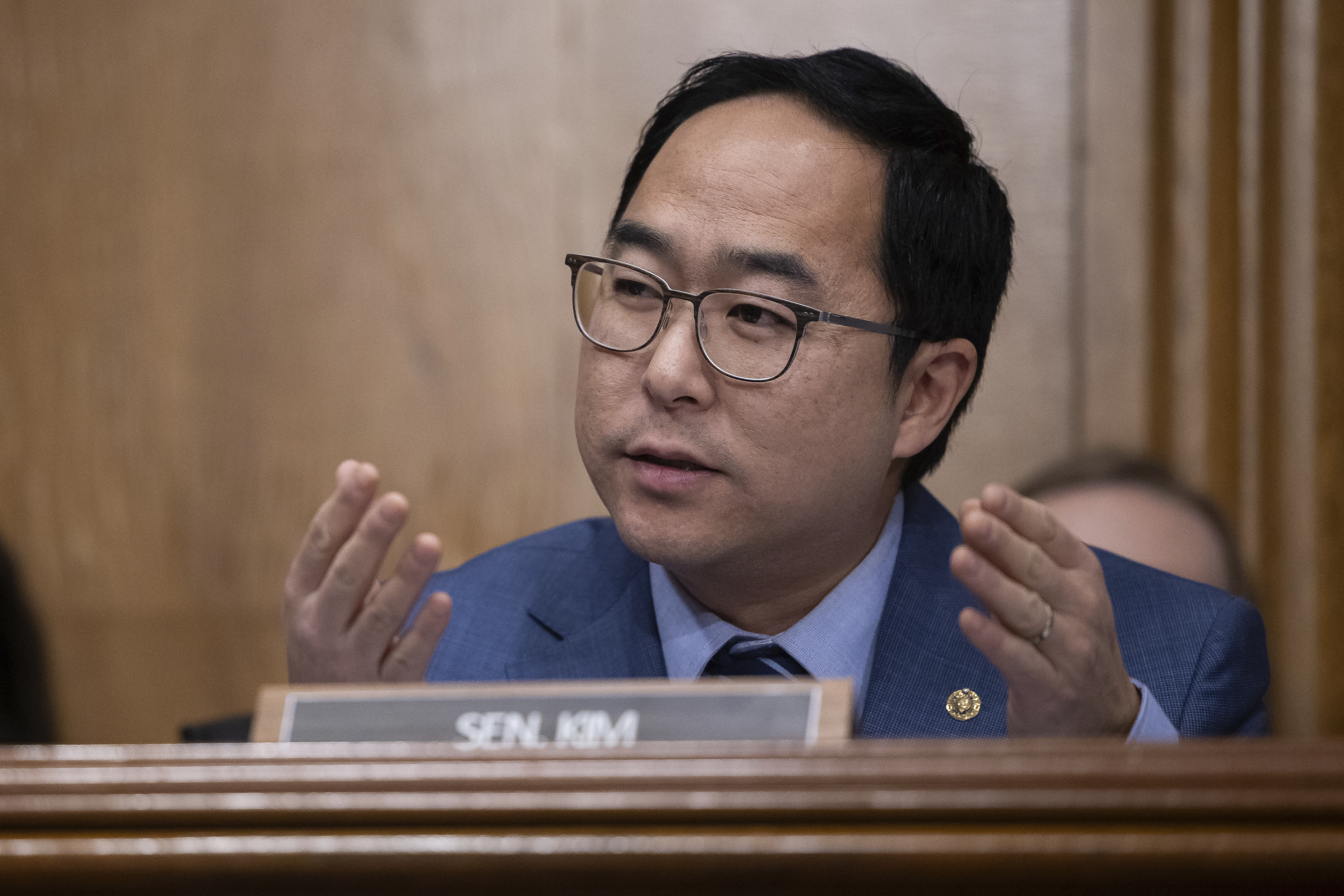
“I want to see what the strategy is going forward,” he said. “If I feel like it’s moving in a direction, I can go and I’ll have some greater confidence. But if not, then I’ll certainly make that known.”
Schumer’s vote exposed a broader rift in the party over how to counter President Donald Trump in his second term. The vote prompted a handful of House lawmakers to publicly suggest or outright call for Schumer to step aside. Some liberal groups have piled on with demands for stronger leadership.
“Schumer made a disastrous decision,” said Rep. Greg Casar (D-Texas), chair of the Congressional Progressive Caucus, adding later that he “hopes” Schumer and Senate Democrats see that the voters want them to fight Republicans. Otherwise, he said, “the voters are going to make them see it if they don’t see it themselves.”
A few weren’t just after Schumer’s leadership role. They were angry enough to call for his seat.
Rep. Alexandria Ocasio-Cortez (D-N.Y.) has received private encouragement from Democratic House members, including even those in battleground districts, to mount a primary challenge to Schumer in 2028. But Ocasio-Cortez is currently noncommittal about moving forward.
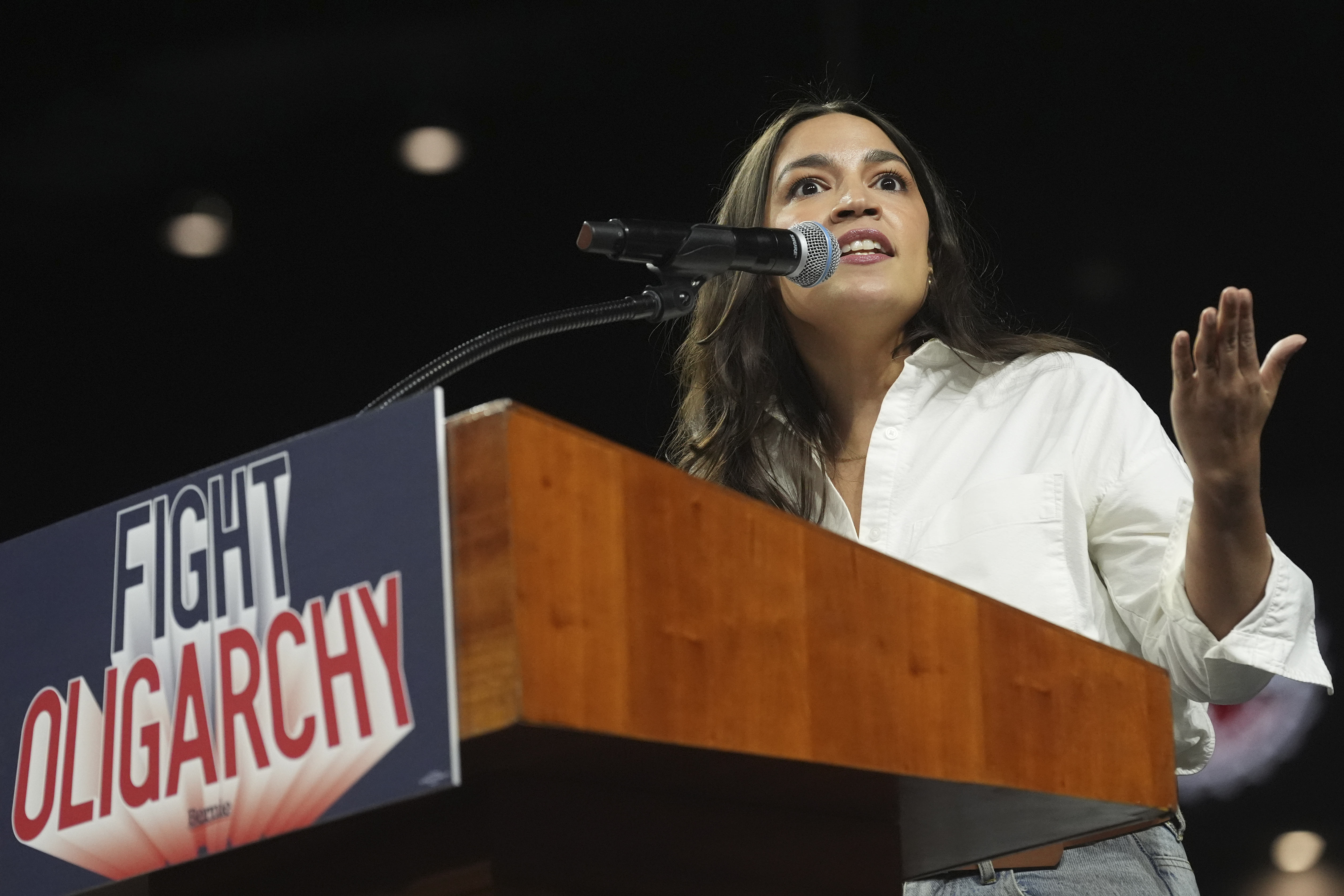
“My focus is our strength in this particular moment and what we can do right now to be the party that stands up for working people and protects against Republican cuts,” she said in a brief interview. Asked whether Schumer should remain leader, she said the issue was “less about any one specific person.”
But the decision by some House Democrats to step into a Senate leadership discussion has rankled some senators, including former House members. Lujan, asked about the criticism from his former colleagues, quipped: “I’m not aware of my colleagues voting for the leader of the Senate.”
Inside the Senate, Schumer has taken steps to acknowledge the anger and disappointment over the spending-bill surrender. Kaine said on Wednesday that Schumer “was very candid and humble” in addressing his colleagues at a private lunch Tuesday “and then focused on the next steps.” Unlike the lunches in the days leading up to the government funding vote, where senators could be heard yelling, moments of applause were overheard during their first meeting after the break.
The result, he said, was a “very productive discussion” about “‘what do we need to do different?’”
Schumer’s spokesperson did not provide a comment for this article.
Senate Democrats acknowledge that they haven’t yet fully landed on what they believe eluded them just two weeks ago — a strategy that both unifies them and gives them a foothold for fighting despite their limited leverage. But they are making clear that their public focus, at least, is on the Trump administration and gearing up for looming battles over the debt ceiling and a sweeping GOP tax plan.
“My top priority is ending the lawlessness of the Trump administration. My next priority is ending the lawlessness of the Trump administration. … I think you get my drift,” said Sen. Ron Wyden (D-Ore.), when asked about questions on Schumer’s leadership.
Outside of Congress, major Democratic donors are also furious over Schumer’s handling of the GOP funding bill and his leadership in general. But without a clear successor, people close to the fundraisers said there isn’t much they can do. The next Senate leadership contest will come after the 2026 election, when they could already have a vacancy at the top of their ranks if Democratic Whip Dick Durbin (D-Ill.) retires. Schumer, if he runs again for the top spot, would only need a simple majority of his caucus to win.
Donors “think he’s ineffective, but the question is, who else is going to step in? And that’s where things get stuck,” said one Democratic donor adviser, who, like others in this story, was granted anonymity to discuss private conversations.
“No senator is presenting themselves as an alternative, so that’s a major barrier to any donor momentum to pressure him out,” a second Democratic donor adviser said. “If somebody signaled to donors they wanted to be that alternative, I do think there would be real movement around that. But it hasn’t come yet.”

A third Democratic donor adviser said fundraisers think Schumer is “deeply pathetic,” but “I do think he has squashed a lot of the specific rumblings” about a new leader.
House lawmakers who publicly and privately fumed at Schumer after he and a group of Senate Democrats voted to advance the GOP funding bill heard an earful from their constituents back home last week who have demanded more forceful, public resistance to Trump.
Even swing-district Democrats who might face pressure to work with Trump acknowledged that their voters wanted them to push back. All but one House Democrat, Rep. Jared Golden (D-Maine), had voted against the funding bill.
Constituents “want to see more from us,” said Rep. Chris Pappas (D-N.H.), who could mount a Senate bid to succeed retiring Sen. Jeanne Shaheen (D-N.H.). “They know there are other battles to be waged, and they’re really interested in us continuing to dig in and stand up for what counts.”
And others dismissed the speculation over Schumer’s future while they focused on the current fights against Trump.
“So this is not about, no offense, like the inside baseball political leadership. Nobody gives a fuck. They want to know, are we fighting for them? Are we going to protect them? Are we going to stop them?” said Rep. Pat Ryan (D-N.Y.).



Byron Donalds says he is not a ‘yes man’ to Trump
lead image
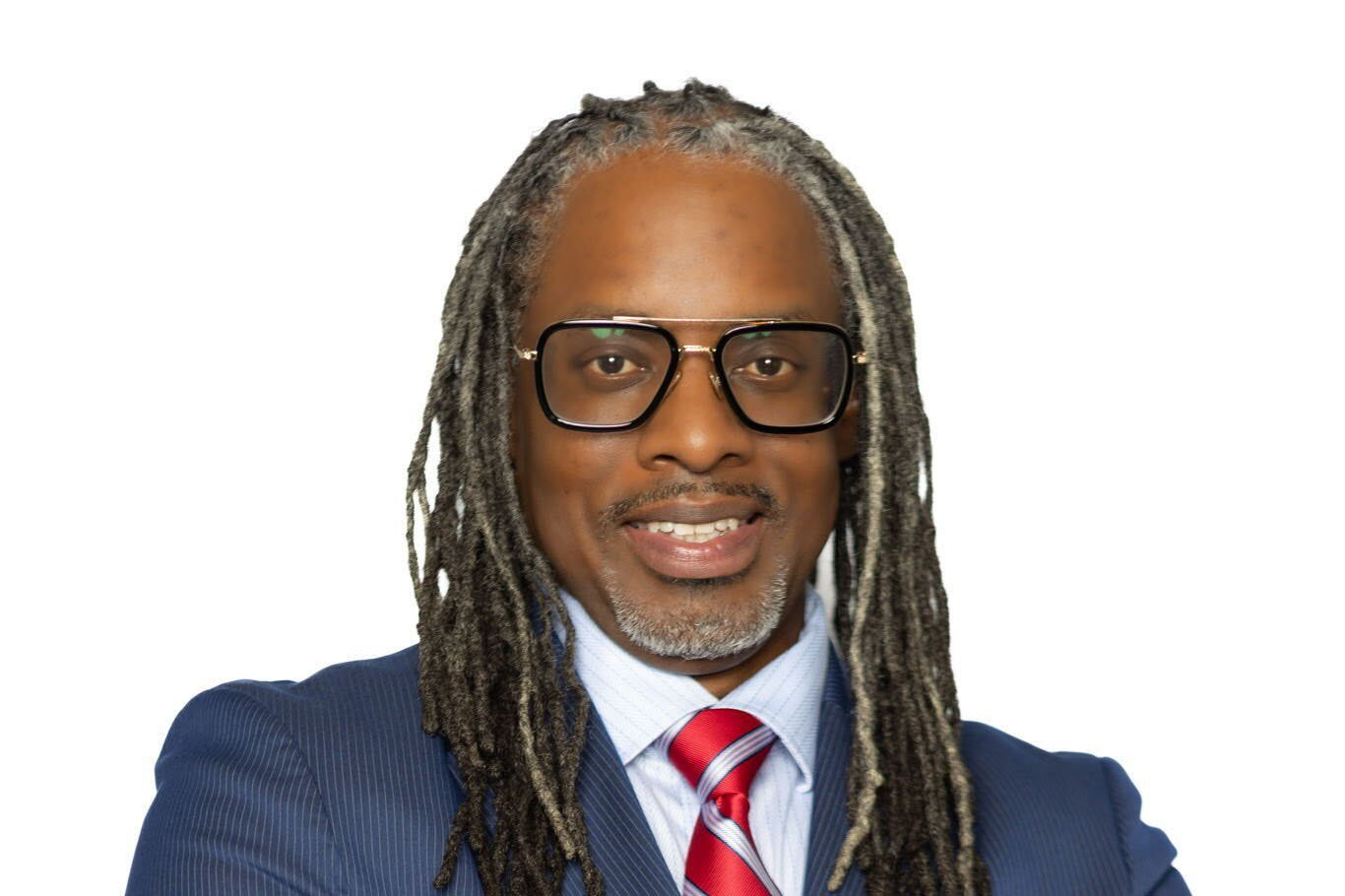
The progressive political action committee Justice Democrats has appointed Rev. Hodari Williams as its new executive director. The change sets the organization up to hone a civil rights message ahead of the 2028 election cycle, Williams told Blue Light News.
His appointment, shared first with Blue Light News, comes at a time when self-proclaimed progressives (and socialists) are flooding the scene. The PAC has had its most successful election cycle ever, helping seven candidates — including Donavan McKinney in Michigan, Melat Kiros in Colorado and Darializa Avila Chevalier in New York — defeat incumbents in the primaries. While those candidates are heavily favored to win on Election Day, the fates of three other Justice Democrats candidates, including Tennessee’s state Rep. Justin Pearson, remain less certain going into November.
At one point, the group tried to get Williams to run for office. Though he declined, Williams said now is the right time to force change.
“America and its present-day politicians, from my experience, have a high blood pressure of promises and anemia of political courage,” Williams said in an interview, using a common Kenyan political expression. “Right now, JD is producing candidates who have the political courage to deal with the crises that are existing in marginalized and disenfranchised communities, and I want to be a part of that.”
Williams, 46, was born and raised in Lakewood, New Jersey. His parents were activists and community organizers who raised him on the legacy of the Civil Rights Movement. After graduating from Francis Marion University in Florence, South Carolina, with his bachelor’s degree, he joined the NAACP as a field organizer for voter rights and empowerment while pursuing his Master’s of Divinity at the Interdenominational Theological Center. In his time with the NAACP, Williams traveled across the Black Belt, where he said he witnessed poverty and inequity up close.
“Civil rights traditionally has been something that people have tried to separate from progressivism … but these movements are inseparable,” said Williams. “What I witnessed in the South as a worker in voter rights and voter empowerment and education, and as a regional representative for the NAACP, was that the conditions that created inequity still existed and needed to be confronted and challenged.”
His work took him to Kenya, where he served as a program coordinator with the Presbyterian Church USA. In Nairobi, he supported the Green Belt Movement’s work against deforestation and its mission to highlight environmental justice as a tool for economic empowerment and self-determination.
Now, as some Black and brown voters express concerns of being tokenized by traditional Democratic candidates, Williams plans to bring his experience working in racial justice circles to his new role.
“I have worked in communities that have borne the brunt of failed promises from the current Democratic leadership,” Williams said. “I have opened the doors of my congregations to politicians and have experienced the absence of those politicians after the elections.”
He continued: “Black communities have become destinations for environmental hazards and data centers. Unemployment has risen. Black federal employees have been targeted. The list goes on. I’ve pastored these people. I’ve prayed with them. I’ve listened to them as they’ve shed tears. Now I’ve decided I want to move from triage work to really transformational work.”
Some of that work will require challenging other Black leaders.
“Unfortunately, many of our Black politicians have become victims of corporate capture, and their voices have been taken by entities like AIPAC,” said Williams, referring to the American Israel Public Affairs Committee. “They have not really been able to stand for the issues that are affecting the communities that that many of us are fighting for, and JD candidates are free from that, and they’re free to take bold and significant action to move forward legislation.”
But with the 2026 election cycle nearly over, the PAC is already brainstorming how to establish a strong progressive coalition for the 2028 presidential election. That will mean convincing the mainstream Democratic party that Justice Democrats have built a lasting coalition of the party’s base, said Williams.
“We hope that the Democratic Party would see that we’re developing a blueprint to show them how the base is being energized around the issues that are kitchen table issues that people want us to deal with,” said Williams.
“It’s not enough for us just to have a call to defeat a fascist president. We don’t want a fascist president. We want him out, but we also want a vision of what America could look like when affordability, healthcare, civil rights, housing, and livable wages — all of those things are at the top of the political agenda,” he added.
Williams succeeds current executive director and co-founder Alexandra Rojas, who will become president of Justice Democrats’ board and will support Williams as a senior adviser.
Iowa Rep. Ashley Hinson took a swipe at the savings habits of millennials as she fielded a question Wednesday about Social Security during a Senate campaign debate.
Hinson, the Republican candidate facing off against Democrat state Rep. Josh Turek, was asked about ensuring the solvency of Social Security when she raised the broader prospect of savings by millennials, the demographic consisting of people born from 1981-1996.
She said the country needed to have a “serious conversation” about “how young people are saving money,” as part of the discussion about the future of Social Security.
“We also need to be talking about millennials saving money,” she later added. “Millennials are the worst group of savers in the country right now and have the least amount of savings. So those are ways where I think we can help have a bigger conversation around saving in general, planning for retirement, and making sure we’re all able to experience a robust retirement.”
Hinson faces a tough race in Iowa against Turek amid a difficult political environment for Republicans. Voters are overwhelmingly pessimistic about the state of the economy and their own personal finances, and they support Social Security while being concerned about the program’s future.
Hinson said she would not support cutting benefits and suggested creating a bipartisan commission to present suggestions to Congress to save the program. When pushed on her statement that “all options should be on the table,” she turned her attention to young people.
“I think my dad and I had this discussion when I was in sixth grade, looking at a ledger book and trying to figure out, hey, how are we going to make sure you’re set up for your life?” she said. “So we need to be having a conversation simultaneously to all solutions on the table, to make sure that it can stay solvent, while we’re also talking about, how do we get more young people to save?”
Hinson’s campaign did not immediately respond to a request for clarification.
Turek, when asked about Social Security, said he supports removing the payroll tax cap.
“The best way we can keep this solvent is by taking off the cap,” Turek said. “Let’s make sure that billionaires and large corporations are paying their fair share. That will move the needle in a very serious way to keep Social Security solvent.”
Hinson disagreed. “The only thing I’m hearing from him is that the only solution to everything is to raise taxes,” she said.
- Grassley slams Democrats for ‘falling over themselves’ to defend Jack Smith
- This watchdog can bark. Congress wants it to bite.
- Byron Donalds says he is not a ‘yes man’ to Trump

- Mike Rogers opens the door for AIPAC support in Michigan Senate race
- Hegseth: Military will publicly execute Fort Hood shooter
- Mike Johnson voices uncertainty about his future if GOP loses control
- Capitol agenda: GOP ads have yet to overwhelm voters, poll finds
- Justice Democrats announce new executive director

- Iran’s drones reveal US military weakness
- Democrats call on Chuck Grassley to apologize to Jack Smith for basketball gaffe

-

 Politics2 years ago
Former ‘Squad’ members launching ‘Bowman and Bush’ YouTube show
-
Uncategorized2 years ago
Bob Good to step down as Freedom Caucus chair this week
-

 The Josh Fourrier Show2 years ago
DOOMSDAY: Trump won, now what?
-

 The Dictatorship2 years ago
Pete Hegseth’s tenure at the Pentagon goes from bad to worse
-

 Politics2 years ago
Former Kentucky AG Daniel Cameron launches Senate bid
-

 The Dictatorship2 years ago
Luigi Mangione acknowledges public support in first official statement since arrest
-

 Politics2 years ago
Blue Light News’s Editorial Director Ryan Hutchins speaks at Blue Light News’s 2025 Governors Summit
-

 The Dictatorship1 year ago
Mike Johnson sums up the GOP’s arrogant position on military occupation with two words