
The Dictatorship
Satirical news site The Onion buys Alex Jones’ Infowars at auction as ‘a very funny joke’

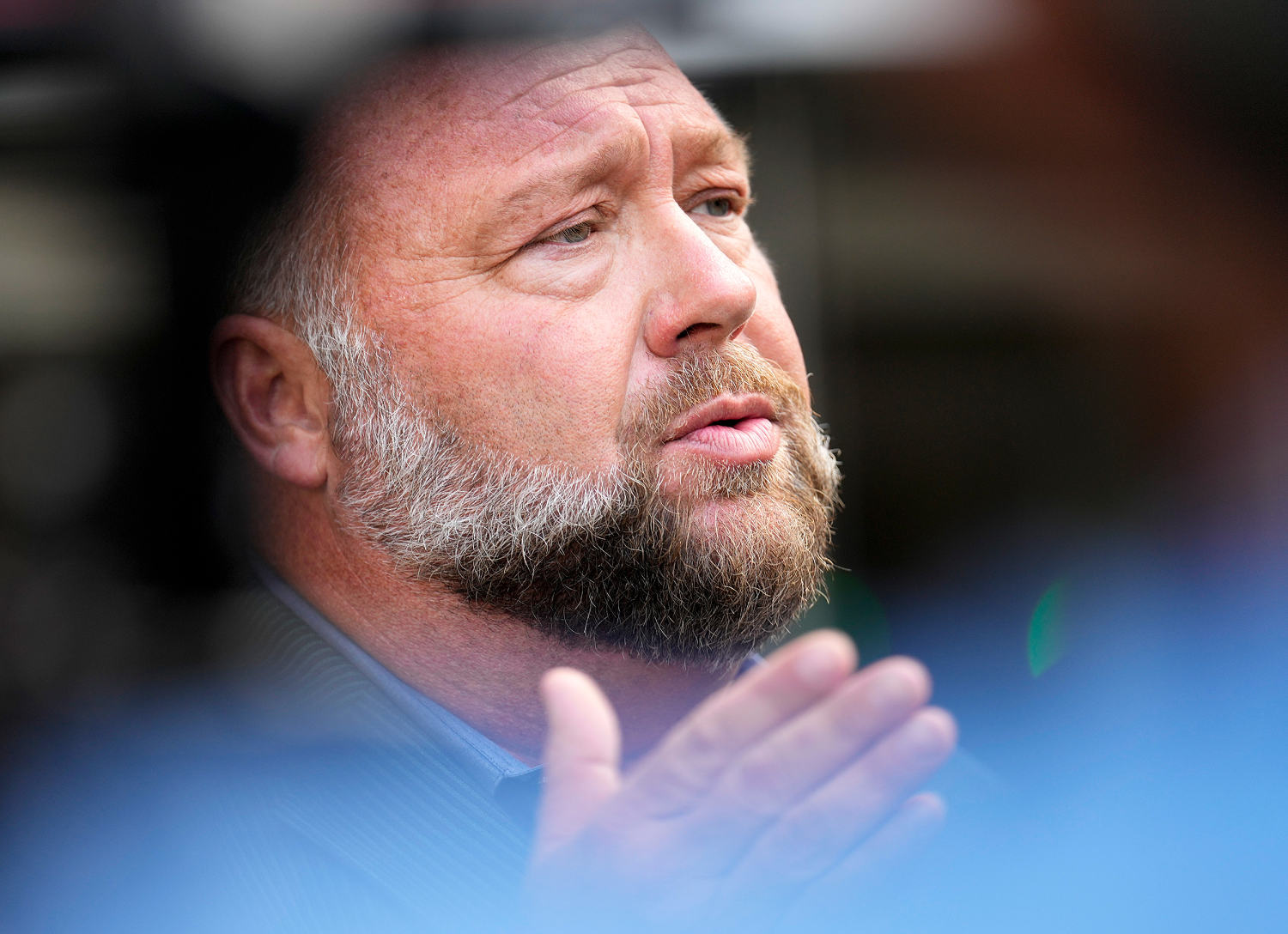

The Onion, a satirical news website, appeared to have won a bankruptcy auction to buy Alex Jones’ Infowarspotentially seizing control of the media platform that Jones used to peddle a menagerie of conspiracy theories, including falsehoods about victims of the Sandy Hook mass shooting.
Jones announced the news Thursday morning in a frantic video posted on Xsaying that he “just got word” that Infowars would be shuttered following the sale. The Onion subsequently published a statement from its parent company’s fictitious CEO, “Bryce Tetraeder,” calling Infowars “an invaluable tool for brainwashing and controlling the masses.”
“We thought it would be a very funny joke if we bought this thing, probably one of the better jokes we’ve ever told,” Ben Collins, the real CEO of The Onion’s parent company (and former NBC News reporter), told The Associated Press.
The Onion intends to relaunch Infowars as a website that will parody figures like Jones, The New York Times reported. The Onion declined to reveal how much it paid for Infowars to the Times.
The Onion’s purchase of Infowars was supported by families of the Sandy Hook victims, whom Jones owes nearly $1.5 billion in defamation judgments after tormenting them for years. Jones initially filed for bankruptcy protection to avoid paying the families, but he later agreed to liquidate his assets to help pay the sum. In September, a bankruptcy judge ruled that Infowars and its intellectual property would go up for auction, with proceeds going to the families.
Christopher Mattei, an attorney for a group of the victims’ families in Connecticut, said in a statement about The Onion’s winning bid on Thursday:
Our clients knew that true accountability meant an end to Infowars and an end to Jones’ ability to spread lies, pain and fear at scale. By divesting Jones of Infowars’ assets, the families and the team at The Onion have done a public service and will meaningfully hinder Jones’ ability to do more harm.
Although the sale was initially announced on Thursday morning, First United American Companies (FUAC), a backup bidder associated with one of Jones’ online supplement stores, was granted a court-ordered meeting later that day to address what the group called “apparent defects in the sale process.”
FUAC’s lawyers said the company was in the dark about the winning bid, which included a “credit bid” from the Sandy Hook families. The judge said late Thursday that there would be another hearing next week to review the process.
Clarissa-Jan Lim is a breaking/trending news blogger for BLN Digital. She was previously a senior reporter and editor at BuzzFeed News.


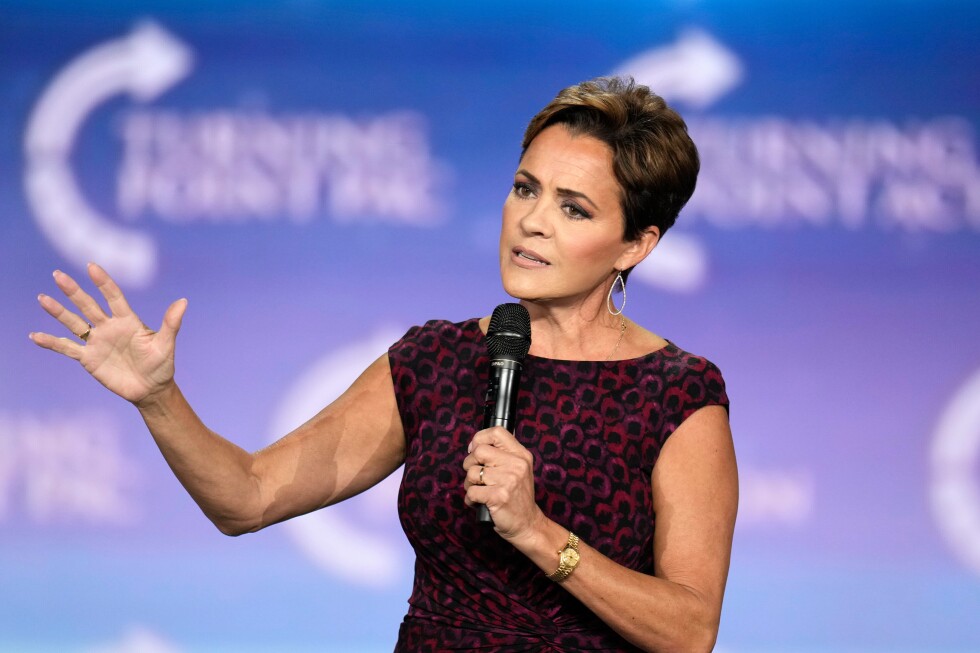

NEW YORK (AP) — A federal judge on Tuesday ordered the Trump administration to restore the government-run Voice of America’s operations after it had effectively been shut down a year ago, putting hundreds of employees who have been on administrative leave back to work.
U.S. District Court Judge Royce C. Lamberth gave the U.S. Agency for Global Media a week to put together a plan for putting Voice of America on the air. It has been operating with a skeleton staff since President Donald Trump issued an executive order to shut it down.
A week ago, Lamberth said Kari Lake, who had been Trump’s choice to lead the agency, did not have the legal authority to do what she had done at Voice of America. In Tuesday’s decision, Lamberth ruled on the actions she had taken to respond to Trump’s order, essentially shelving 1,042 of VOA’s 1,147 employees.
“Defendants have provided nothing approaching a principled basis for their decision,” Lamberth wrote.
There was no immediate comment on the decision by the agency overseeing Voice of America. Lake had denounced Lamberth’s March 7 ruling, saying it would be appealed. Since then, Trump nominated Sarah Rogers, the undersecretary of state for public diplomacy, to run USAGM. That requires Senate approval, a step that was not taken with Lake.
Patsy Widakuswara, Voice of America’s White House bureau chief and a plaintiff in the lawsuit to restore it, said she is deeply grateful for the decision.
“We are eager to begin repairing the damage Kari Lake has inflicted on our agency and our colleagues, to return to our congressional mandate, and to rebuild the trust of the global audience we have been unable to serve for the past year,” she said.
“We know the road to restoring VOA’s operations and reputation will be long and difficult,” she said. “We hope the American people will continue to support our mission to produce journalism, not propaganda.”
Voice of America has transmitted news coverage to countries around the world since its formation in World War II, often in countries with no tradition of a free press. Before Trump’s executive order, VOA had operated in 49 different languages, broadcasting to 362 million people.
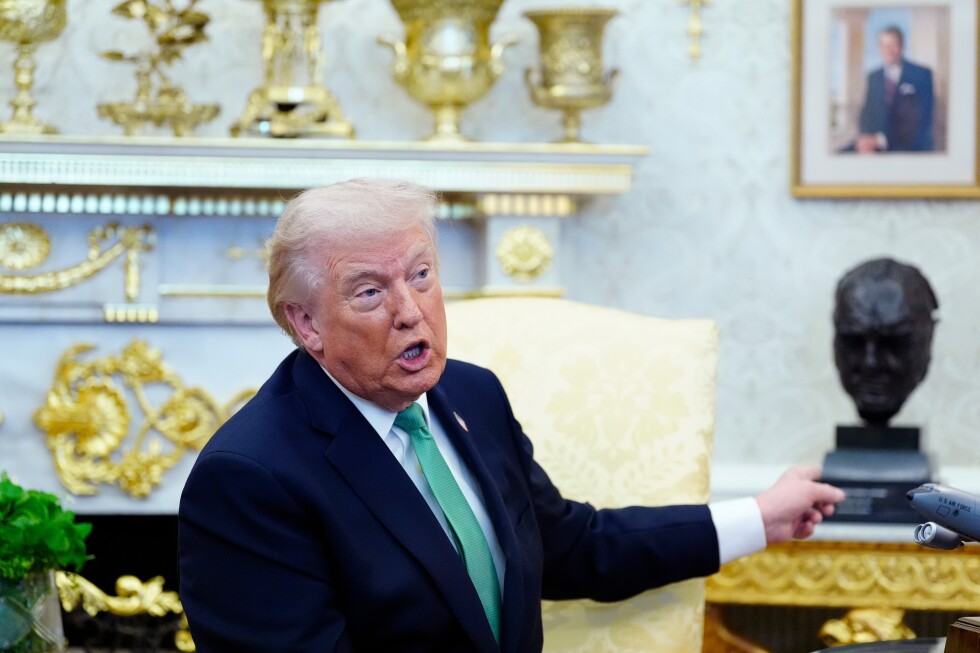

WASHINGTON (AP) — President Donald Trump is delaying a diplomatic trip to China that had been planned for months but began to unravel as he pressured Beijing and other world powers to use their military might to protect the Strait of Hormuz.
Trump said Tuesday while meeting with Irish Prime Minister Micheál Martin in the Oval Office that he would be going to China in five or six weeks’ time instead of at the end of the month. He said he would be “resetting” his visit with Chinese President Xi Jinping.
“We’re working with China — they were fine with it,” Trump said. “I look forward to seeing President Xi. He looks forward to seeing me, I think.”
Trump’s visit to China is seen as an opportunity to build on a fragile trade truce between the two superpowers, but it has become tangled in his effort to find an endgame to the war in Iran. Soon after pressing China and other nations to send warships to secure access to Middle Eastern oil over the weekend, Trump indicated his travel plans depended on Beijing’s response, though he added Tuesday that the U.S. didn’t need help from the allies who rebuffed his request.
AP AUDIO: Trump postpones his China trip to focus on the war in Iran
Speaking with reporters, President Trump says he’s postponing this month’s planned trip to China.
In a Sunday interview with the Financial Times, Trump said he wanted to know whether Beijing would help secure the strait before he departed for the late-March summit. On Monday, he told reporters that he had requested a delay of about a month because of the demands of the war.
“I think it’s important that I be here,” Trump said. “And so it could be that we delay a little bit. Not much.”
Treasury Secretary Scott Bessent, who met with Chinese Vice Premier He Lifeng in Paris this week for a new round of talks meant to pave the way for Trump’s trip, said any changes to the schedule would be because of logistics, not because Trump was trying to pressure Beijing.
Trump is urging other nations that rely on Middle Eastern oil to help police the Strait of Hormuz, a waterway through which about one-fifth of the world’s traded oil usually flows. He has singled out China, noting that it gets much of its oil from the strait while the U.S. gets a minimal amount. He also made appeals to Japan, South Korea, Britain and France. There have been no takers so far, and China has been noncommittal.
“We strongly encourage other nations whose economies depend on the strait far more than ours,” Trump said at the White House on Monday. “We want them to come and help us with the strait.”
Trump is framing the war as a favor to the world being carried out by the U.S. and Israel, saying it’s now time for others to do their share to protect the strait. Some world leaders have directly rebuffed the notion and objected to the U.S.’ military approach.
Trump’s trip to China carries major geopolitical consequences as the two nations seek stability in the wake of a trade war that led to soaring tariffs before both sides eased off. Trump and Xi agreed to a one-year trade truce last fall, and Trump later agreed to a state visit to Beijing. He also went to China in 2017, during his first term.
China’s foreign minister said last week that the country looks forward to a “landmark year” in its relationship with the U.S. He added that China’s attitude “has always been positive and open, and the key is for the U.S. side to meet us halfway.”
Trump’s priorities have shifted as the war sends oil prices skyrocketing during a tough midterm year in which affordability was already a chief concern for American voters. In addition to postponing his China trip, he has given Russia a boost by lifting sanctions on its oiland he tapped into the nation’s oil reservessomething he previously objected to doing.
The Dictatorship
Why Judge Boasberg’s ruling on DOJ’s Jerome Powell investigation is bigger than one case
The most important part of Chief Judge James Boasberg’s ruling quashing Justice Department subpoenas served on the Federal Reserve was not simply that he blocked them.
It was that he refused to suspend common sense. He read the subpoenas against the public record that produced them. He took President Donald Trump at his word. That is what made the opinion so important.
Judge Boasberg did not begin with dry procedural throat-clearing. He began with Trump’s own attacks on Federal Reserve Chair Jerome Powell and the broader campaign of presidential and White House pressure on the Federal Reserve to cut interest rates.
For too long, courts have often maintained an artificial separation between presidential rhetoric and executive action.
He quoted Trump calling Powell “TOO ANGRY, TOO STUPID, & TOO POLITICAL, to have the job of Fed Chair.” He cited another post calling Powell “one of the dumbest, and most destructive, people in Government.” He noted Trump’s statement that “Powell’s termination cannot come fast enough!” and his threat that if the Fed did not cut rates, “I may have to force something.”
That was not decoration; it was the architecture of the opinion. From page one, Judge Boasberg made clear that motive was not some side issue here. Motive was the case. The subpoenas arose from a Justice Department investigation into supposed cost overruns in the Federal Reserve’s multiyear headquarters renovation project and into Powell’s congressional testimony touching on those renovations. On paper, that was the inquiry. In reality, Judge Boasberg concluded, something else was going on.
Judge Boasberg wrote that there was “abundant evidence” that the dominant, if not sole, purpose of the subpoenas was to harass and pressure Powell either to yield to the president or resign and make way for someone who would. On the other side of the scale, he said the government had offered “no evidence whatsoever” that Powell committed any crime other than displeasing the president. By the end of the opinion, that judgment hardened even further: The government had produced “essentially zero evidence” of criminality, and its stated justifications looked like “a convenient pretext” for another unstated purpose.
That is an extraordinary thing for a federal judge to say about the Department of Justice.

This was not a close call. It was not a case in which prosecutors pushed the envelope and got reined back in. It was a finding that criminal process had been used as pressure rather than law enforcement.
And the way Judge Boasberg got there was the real story. He did not invent improper purpose. Rather, he looked at what was already in plain view. Trump spent months attacking Powell, demanding lower rates and making his desired outcome unmistakable. He said, “Anybody that disagrees with me will never be the Fed Chairman!” He said, “I want to get him out.” He said he would “love to fire his ass.” He said Powell “should resign.”
A political appointee then floated the Fed renovation issue as a path toward investigation and possible removal. After that, the U.S. Attorney’s Office opened a criminal investigation on that very theory and served subpoenas on the Federal Reserve.
Judge Boasberg looked at that sequence and refused to act naive.
He was right to.
For too long, courts have often maintained an artificial separation between presidential rhetoric and executive action. The president says what he says. Prosecutors do what they do. Judges examine the narrower legal record and resist attributing too much significance to the political atmosphere outside the courthouse. But there comes a point where that posture stops looking disciplined and starts looking unserious.
From page one, Judge Boasberg made clear that motive was not some side issue here. Motive was the case.
When a president has repeatedly identified the official he wants pressured or removed, made his desired outcome unmistakable and then his Justice Department shows up with a paper-thin theory aimed at that same target, a court does not have to pretend those events are unrelated. Judge Boasberg’s opinion suggested that at least some courts may be losing patience with that formalism.
What made the opinion important was not just that Judge Boasberg drew that inference here. It was that he did so openly, in a way that may signal a broader judicial willingness to read executive motive more realistically in politically saturated cases.
That is not judicial activism. It is common sense.
And Trump’s response since the ruling only reinforced the point. In a post after the decision, Trump attacked Judge Boasberg personally, called him a “Wacky, Nasty, Crooked, and totally Out of Control Judge,” said he has been “‘after’ my people, and me, for years,” claimed the ruling had “little to do with the Law, and everything to do with Politics,” and said Judge Boasberg should be removed from cases involving Trump and his administration.
That mattered because it underscored the precise interpretive move Judge Boasberg made in the opinion. The judge treated Trump’s public words not as background noise, but as evidence reasonably bearing on motive and pretext. Trump’s reaction did not undercut that reasoning. It strengthened it.
It also said something larger and more troubling about the DOJ.

The government was given the chance to substantiate its claims and chose not to. Judge Boasberg was left, as he put it, with “no credible reason” to think prosecutors were investigating suspicious facts as opposed to targeting a disfavored official.
That is not just a loss. It is a collapse of confidence.
And it matters all the more because of what a subpoena is. A subpoena is the point where political pressure becomes legal compulsion. It is the government bringing the authority of criminal process into the room.
That is why misuse of subpoena power is so dangerous. It can impose burden, stigma, cost and fear long before any indictment, and it can intimidate even when no charges are ever filed. Judge Boasberg understood that. He did not treat these subpoenas as some technical skirmish over records. He treated them as part of an effort to pressure the chair of an independent central bank and, in his words, to “bulldoz[e] the Fed’s statutory independence.”
That is why this ruling matters beyond Powell and beyond the Federal Reserve.
Judge Boasberg did not just quash subpoenas.
He modeled a more realistic way for courts to evaluate politically freighted exercises of state power.
And if more judges start doing the same, this opinion will be remembered as more than a rebuke in one ugly case. It will be remembered as an early sign that courts were no longer willing to separate presidential coercion from the legal machinery deployed to carry it out.
Duncan Levin is a criminal defense attorney and former federal prosecutor who serves as a Lecturer on Law at Harvard Law School and is a frequent contributor to MS NOW.
-

 The Dictatorship1 year ago
Luigi Mangione acknowledges public support in first official statement since arrest
-

 Politics1 year ago
Former ‘Squad’ members launching ‘Bowman and Bush’ YouTube show
-

 Politics1 year ago
Blue Light News’s Editorial Director Ryan Hutchins speaks at Blue Light News’s 2025 Governors Summit
-

 Politics1 year ago
Former Kentucky AG Daniel Cameron launches Senate bid
-

 The Dictatorship6 months ago
Mike Johnson sums up the GOP’s arrogant position on military occupation with two words
-

 The Dictatorship1 year ago
Pete Hegseth’s tenure at the Pentagon goes from bad to worse
-
Uncategorized1 year ago
Bob Good to step down as Freedom Caucus chair this week
-

 Politics11 months ago
Democrat challenging Joni Ernst: I want to ‘tear down’ party, ‘build it back up’