
Congress
‘Sanctuary city’ mayors hope to avoid an embarrassing spectacle in Congress

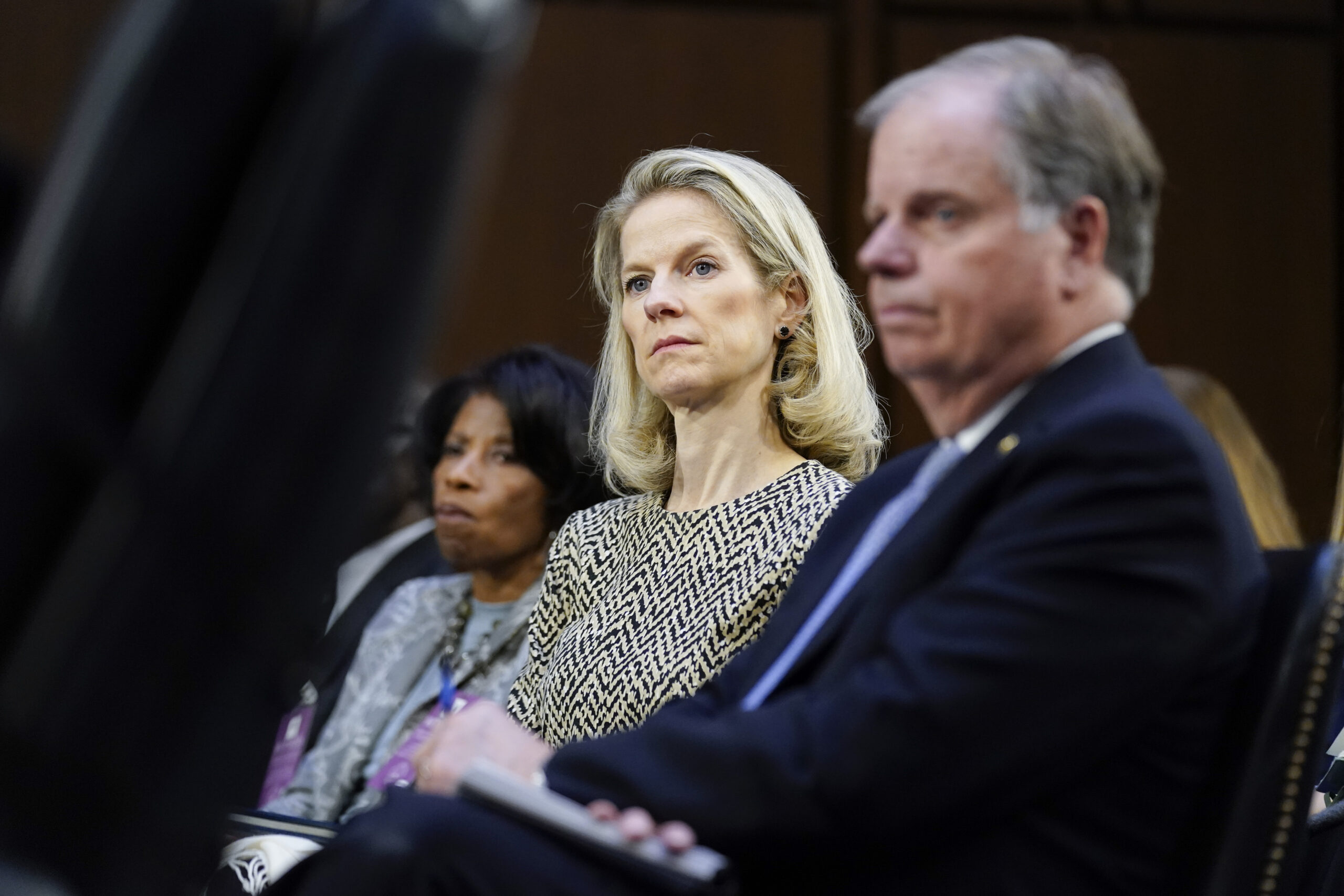
Democratic mayors of four cities with sanctuary policies to protect migrants are consulting with advisers, hiring lawyers and preparing to redact documents ahead of a grilling by House Republicans — hoping to avoid the kind of Capitol Hill spectacle that embarrassed three Ivy League presidents a little over a year ago.
These mayors are also furiously conferring with anyone they know who can offer insight and counsel about how to handle the kind of scrutiny that resulted in the ouster of University of Pennsylvania President Liz Magill following the late 2023 congressional hearing on antisemitism at elite colleges.
Just as Republicans hammered Magill and others for what they saw as condoning alleged threats to Jewish students and faculty, Republican members of Congress will on Wednesday ask the mayors of New York, Chicago, Boston and Denver to defend their more permissive immigration policies against high-profile, if isolated, episodes of violent crime by undocumented immigrants.
“I just want to make sure that people understand that [this is] a city that has been established by immigrants and migrants who were formerly enslaved,” Chicago Mayor Brandon Johnson told reporters about the message he hopes to relay to Congress. “It’s the global capital of the world, and we’re going to continue to show up at our very best.”
Republicans on the House Oversight and Government Reform Committee are getting ready for this moment, too, especially Chair James Comer, who sat on the Education and Workforce panel that questioned Magill and other university presidents. He said in an interview he was impressed by how Rep. Elise Stefanik, the former education committee chair who President Donald Trump nominated to be U.N. ambassador, ran those proceedings.
In a sign of how seriously the Kentucky Republican is taking his own preparations to produce a similar, politically explosive event, he and his members last week sat down to discuss immigration policy with Stephen Miller, the White House deputy chief of staff and the architect of some of Trump’s most aggressive efforts to curb illegal immigration, according to a person granted anonymity to describe a private meeting.
“We expect accountability — we expect the mandate that President Trump was given on the border to be implemented, and hopefully there won’t be any obstruction or opposition to the law,” Comer, who may run for governor in 2027, said in an interview. “If the mayors are protecting people who are here illegally, then they are breaking the law.”
The ramp-up on all sides speaks to the high political stakes of the upcoming hearing, both for the policies at the center of the debate and the political futures of the committee chair and the four mayors: Johnson, Eric Adams of New York, Michelle Wu of Boston and Mike Johnston of Denver. All four cities have struggled to shelter and support the influx of migrants from the Southern border.
Adams likely has the most at stake: The Trump Department of Justice recently called for the mayor’s criminal bribery and fraud case to be dismissed, citing his cooperation on immigration enforcement. (Adams continues to deny the charges.) Shortly thereafter, Adams met with border czar Tom Homan and announced he’s drafting an executive order allowing ICE agents back into the city’s Rikers Island jail complex.
Adams has rejected criticism he’s beholden to the Trump administration and says he has his constituents’ best interests at heart. Still, observers expect Adams — a former New York Police Department captain — will be treated differently than the other mayors, with Comer contending the New Yorker’s perspective is unique given his cooperation with the administration.
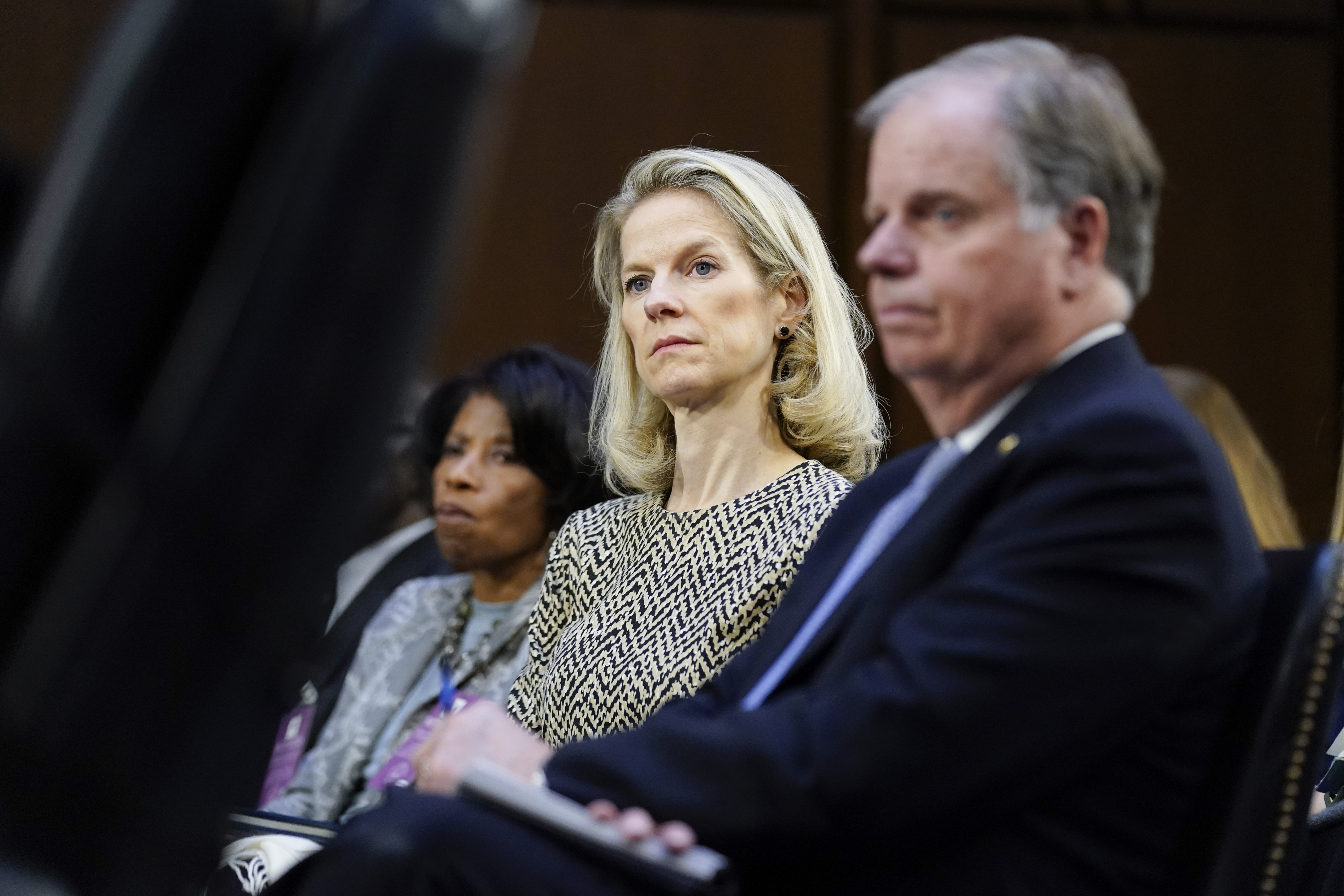
“He was one of the first blue city mayors that was representing a sanctuary city that said, ‘wait, we cannot handle anymore. This is a drain on our resources,’” Comer said of Adams. “I think that that’s what makes him a good witness.”
Adams will seek to strike a balance before the committee, according to his spokesperson Kayla Mamelak Altus. While the mayor believes in the spirit of sanctuary laws, he also thinks those laws currently go too far. He is expected to testify that immigrants are crucial to his city’s success — but also that the “long-broken immigration system” should be fixed, law-abiding New Yorkers should be protected and violent criminals should be targeted.
The mayor has been meeting daily with his legal, intergovernmental and communications teams in preparation for Wednesday’s hearing, Mamelak Altus said. And his deputy mayor for intergovernmental affairs, Tiffany Raspberry, is the liaison to both the Oversight Committee members and the other mayors’ teams.
At the same time, the contrast between Adams and the other Democratic mayors could pose a political risk for the three more progressive city leaders — including Johnston of Denver, who said in November he was willing to go to jail over his opposition to Trump’s mass deportation plans.
In preparation for the hearing, Johnston has conferred with Sen. Michael Bennet and Rep. Diana DeGette — both Colorado Democrats — for pointers on appearing before Congress. He also has contracted the Washington-based attorney Dana Remus, a former White House counsel for President Joe Biden.
The city of Denver is preparing to gather documents requested by federal officials, and it is expected to redact information so the hundreds of city employees who have been involved in the sanctuary city work are not unnecessarily targeted for doing their jobs.
Meanwhile, an attorney close to the Chicago mayor’s office hopes to see Johnson stick to his talking points as Republicans may try to pit Adams as “the good compliant mayor and Johnson as the deviant.” The attorney was granted anonymity to discuss internal planning.
Johnson has connected with former Chicago Mayor Lori Lightfoot, a former federal prosecutor who has experience working with GOP elected officials — including representing congressional Republicans in two high-profile redistricting cases. He is also working with the city’s corporate counsel, Mary Richardson-Lowry, on how to respond to legally sensitive questions, and the city has contracted with outside counsel.
Wu, the Boston mayor, has received guidance in advance of the hearing from Rep. Stephen Lynch, a fellow Massachusetts Democrat who sits on the Oversight Committee. He called after Comer first extended the invitation for Wu and others to testify, Lynch said in an interview with a local station.
The story Wu is likely to tell is that of her city’s plummeting murder rate. Boston earned national attention for the drop in homicides last year, and the number of shooting victims and instances of gunfire have also ticked down of late. That has prompted Wu to regularly tout Boston as “the safest major city in the country.”
Wednesday will reveal whether the mayors’ preparations are a match for Comer, whose team has been building anticipation for the big event. Last week, Oversight Committee Republicans released a dramatized video, akin to a movie trailer, previewing the hearing, depicting a Constitution burning to reveal the faces of the four Democratic mayors. Ominous music plays, and Comer vows to cut federal funding for those who fail to cooperate with U.S. law.
But in a recent interview, Comer maintained that creating a made-for-TV moment was not his goal. He was there when Stefanik asked those university presidents whether calling for the genocide of Jews violated their codes of conduct — a “substantive question,” Comer recalled, adding that rarely do substantive questions go viral.
“First of all, our goal is to get the truth, we believe in transparency,” Comer said. “My job isn’t entertainment. My job is to get the truth to the American people.”


Senate Democrats’ top super PAC is pushing into Kansas.
The Chuck Schumer-aligned Senate Majority PAC is launching a $5 million statewide television ad blitz starting Saturday through Election Day — the latest sign that Democrats believe the Senate map is shifting onto red turf.
SMP had signaled in recent days it could get involved in the race, telling Blue Light News late last month it was “actively thinking” about whether to wade into the state where Democrats haven’t won a Senate seat in nearly a century but where Adam Hamilton narrowly leads GOP Sen. Roger Marshall in recent polls. Internal SMP polling that found an increasingly competitive race factored into the group’s decision to spend. It will also run digital ads.
“The gap is closing in Kansas,” SMP spokesperson Lauren French said in a statement. “We are committed to ensuring families understand Marshall’s real record of making health care and basic goods more expensive for working Kansans.”
Republicans are scrambling to shore up Marshall. Senate Leadership Fund, a top GOP super PAC aligned with Republican leadership, has booked over $10 million in ads through Election Day in the state, per ad tracking firm AdImpact.
SMP’s first ad attacks Marshall for joining Senate Republicans in voting to table a Democratic-led amendment last year to release the Jeffrey Epstein files. The Senate later approved legislation to release the files by unanimous consent. It’s the latest in a slate of ads from Democrats hitting their Republican rivals over the late, disgraced financier and convicted sex offender. Marshall’s campaign did not immediately respond to a request for comment.
Senate Democrats’ plunge into the state comes as the midterm battle map is undergoing a major realignment. Georgia and North Carolina — primed to be two of the cycle’s premiere battlegrounds — are tilting left to the point where national Republicans are retracting spending in both states and Democrats are starting to follow suit, freeing funds on both sides to shift elsewhere.
Republicans are racing to reinforce incumbents across what was once safer red turf. SLF has also pledged $5 million to bolster Sen. Darline Graham in South Carolina.
Democrats, meanwhile, are starting to spend more in red states. SMP has dropped over $2 million on digital ads in Texas. Schumer, the Senate minority leader, has included Kansas and Mississippi in his pitches to donors.
The Democratic Congressional Campaign Committee is begging for resources, and setting a hard deadline for donors to give $17 million in order to compete in a handful of districts that Republicans carried easily in 2024.
DCCC Executive Director Julie Merz said the committee needs the cash influx by Oct. 22 in order to “to take advantage of the opportunities we have” outside of the core battlefield, according to a memo shared with donors on Friday and obtained by POLITICO.
If they don’t pony up, Merz warns, the party “could be leaving winnable races on the table.”
Democrats have been clear that they have a fundraising disadvantage this cycle, but they have so far been reluctant to place a specific dollar amount on their needs, making the DCCC’s memo Friday a particularly surprising outlier.
“Here’s the tough reality though: the Republican ecosystem has amassed a massive war chest that is significantly greater than ours and is spending it,” Merz says in the memo after arguing that the members of the committee “remain confident that we will win back the majority in 25 days.”
Specifically, Merz dedicates significant portions of the memo to four districts where the committee is desperate for more money in order to compete — all of which President Donald Trump won by double-digit margins in 2024:
— Florida’s 27th District (Trump +14.6)
— Nevada’s 2nd District (Trump +13.9)
— South Carolina’s 1st District (Trump +13)
— New York’s 21st District (Trump +20.7)
The fundraising disadvantage has created headaches for both House and Senate Democrats over where, exactly, to deploy the resources they do have.
The committee tells donors that their internal polling shows all of those races within reach, but that Republicans’ big cash advantages — especially in the Trump-aligned super PAC MAGA Inc. — will make it harder to win those and other reach seats.
Merz also name drops a handful of other deep-red districts that are “worthy of additional investment in this environment,” including seats held by GOP Reps. French Hill (R-Ark.) and Richard Hudson (R-N.C.), the chair of the Republican National Congressional Committee.
The NRCC was quick to mock the DCCC’s memo.
“No amount of money fixes candidates voters don’t want. These seats are staying red, and Republicans are on offense across the map,” NRCC spokesperson Mike Marinella said in a statement.
Sen. Elizabeth Warren may get her clearest shot yet to take on corporate America next year — thanks to the once unthinkable help of Republicans.
The Massachusetts Democrat is poised to chair Senate Banking if the party takes back the chamber. And while the progressive has long been a boogeyman to corporate America, lobbyists worry she’ll have powerful backup thanks to the surge of populist Republicans eager to take big swings at Wall Street and Big Tech.
One longtime financial industry lobbyist, granted anonymity to speak candidly, said Warren “has a streak that is not just wanting to be a progressive gadfly, but to actually reach across the aisle to push for policy ideas.” There is “absolutely” reason for concern, the person said.
Atop the panel, Warren would also have a strong position to shape the 2028 presidential debates on both sides.
“There’s very little doubt that the agenda of the Senate Banking Committee is going to overlap substantially with the core issues that the candidates in the 2028 election cycle are going to be grappling with,” said Dennis Kelleher, the outgoing leader of the progressive group Better Markets.
As Banking chair, Warren is expected to try to recruit Republicans in a crackdown on artificial intelligence — specifically restrictions on chip giant Nvidia’s exports to China, which already has some GOP support — and a follow-up of this year’s bipartisan housing law that sought to rein in private equity’s role in the market, according to people close to the senator.
Some of President Donald Trump’s own populist ideas, like credit card interest rate caps and limits on stock buybacks for defense contractors, would provide fertile ground for Warren.
But Trump would also likely be Warren’s biggest obstacle, as he’s been resistant to embrace policy overlaps with her. He’s also been resistant to any AI restrictions.
Warren’s approach also threatens to expose rifts between GOP populists who have been ascendent under Trump and more mainstream conservatives.
Asked about the possibility of a Chair Warren, Sen. Mike Rounds, a more moderate South Dakota Republican, said he doesn’t “think anything would get done except lots of investigations and lots of accusations.”
What else we’re watching:
— LAWMAKERS CLAMOR FOR GAO v. TRUMP — Lawmakers are desperate for a government watchdog to step up and help them in their fight against the Trump administration over control of federal cash. The independent Government Accountability Office concluded earlier this week that the White House illegally withheld more than $1 billion for education and health care research programs — the latest in more than a half-dozen such findings GAO has published since the start of Trump’s second term. But the agency has yet to use its unique power to take the president to court to challenge those “impoundments,” and lawmakers who are tired of the administration running roughshod over their funding prerogatives want GAO to act.
— MURPHY’S DEFENSE FUNDING ULTIMATUM — Democrats should not approve Pentagon funding or the annual defense policy bill if they control Congress next year unless those bills would hasten the end of the Iran war, Sen. Chris Murphy told reporters Thursday. “We should make the end of the war a priority,” said the Foreign Relations Democrat who was returning from a trip to Saudi Arabia and Qatar. Murphy also accused Defense Secretary Pete Hegseth and officials of attempting a “cover-up” of the war’s damage and obscuring its true cost after he was denied entry on a base in Qatar. Given the damage to bases in the region, Murphy also told reporters that the U.S. should “reconsider its footprint” in the Middle East.
Jasper Goodman, Jennifer Scholtes and Connor O’Brien contributed to this report.
- Democrats drop $5M into Kansas Senate race
- House Democratic campaign arm says it needs $17 million, and fast
- Hegseth faces bipartisan backlash over public execution for Fort Hood shooter
- Capitol agenda: How Warren could link arms with Trump’s GOP
- Even some Republicans want this watchdog agency to sue Trump
- Grassley slams Democrats for ‘falling over themselves’ to defend Jack Smith
- This watchdog can bark. Congress wants it to bite.
- Byron Donalds says he is not a ‘yes man’ to Trump
- Mike Rogers opens the door for AIPAC support in Michigan Senate race
- Hegseth: Military will publicly execute Fort Hood shooter
-

 Politics2 years ago
Former ‘Squad’ members launching ‘Bowman and Bush’ YouTube show
-
Uncategorized2 years ago
Bob Good to step down as Freedom Caucus chair this week
-

 The Josh Fourrier Show2 years ago
DOOMSDAY: Trump won, now what?
-

 The Dictatorship2 years ago
Pete Hegseth’s tenure at the Pentagon goes from bad to worse
-

 Politics2 years ago
Former Kentucky AG Daniel Cameron launches Senate bid
-

 The Dictatorship2 years ago
Luigi Mangione acknowledges public support in first official statement since arrest
-

 Politics2 years ago
Blue Light News’s Editorial Director Ryan Hutchins speaks at Blue Light News’s 2025 Governors Summit
-

 The Dictatorship1 year ago
Mike Johnson sums up the GOP’s arrogant position on military occupation with two words