
The Dictatorship
Rob Reiner warns Trump’s media crackdown could plunge U.S. into a ‘full-on autocracy’

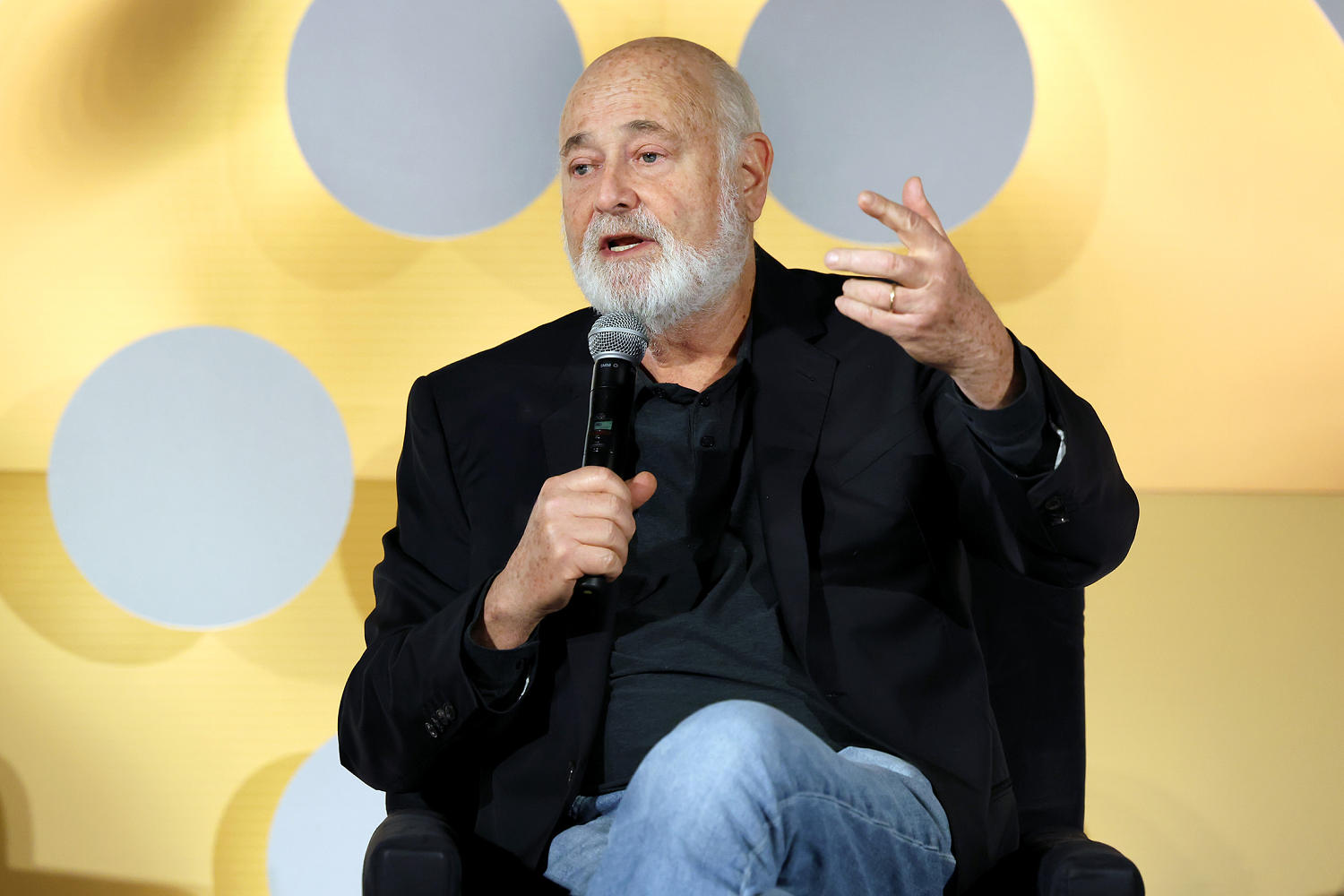

Actor and director Rob Reiner is issuing a warning amid Donald Trump’s continued crackdown on free speech, cautioning that the United States has only a year before it becomes a “full-on autocracy” and “democracy completely leaves us.”
Reiner made the stark warning during a discussion with BLN host Ali Velshi about AppleTV+’s recent postponement of “The Savant,” a new miniseries that stars Jessica Chastain as an investigator who infiltrates online extremist groups. The program’s premiere was delayed after the killing of Charlie Kirk.
The streaming giant didn’t mention Kirk in its statement, with an Apple TV+ spokesperson saying the decision came after “careful consideration.” Upon the official announcement, Chastain made it clear she was “not aligned” with Apple’s decision. “I’ve never shied away from difficult subjects, and while I wish this show wasn’t so relevant, unfortunately it is,” she wrote in a statement.
On Sunday’s “ Velshi,” the host called news of the postponement “just the latest episode that illustrates the pressures that have come to bear on artists, on comedians and the entertainment industry more broadly, in this new politically fraught era.” In July, CBS announced that it would cancel “The Late Show with Stephen Colbert” next year, while ABC briefly took Jimmy Kimmel’s show off the air recently.
Reiner said that the current climate in the United States has become “beyond McCarthy era-esque” and that the 1950s crackdown “feels quaint compared to what’s going on in America right now.”
The award-winning film director said the federal government’s moves to squash free speech were “just the beginning” and urged Americans to “understand our democracy is being taken away from us.”
He added: “Make no mistake: We have a year before this country becomes a full-on autocracy and democracy completely leaves us.”
Reiner said Trump’s attempts to pressure the entertainment industry are part of a larger effort by his administration to erode American democracy. He said the “two big things an autocrat needs” are “control of the media” and “military control of the streets.”
“And that’s the other thing that we’re seeing,” Reiner said, referring to the federal government’s deployment of federal agents and National Guard troops in Democratic-run cities. “So we’re in it right now, and we’re sliding downhill in a very, very fast way, and we have to find a way to stop it.”
To try to help stop that slide, the actor and activist said his colleagues in Hollywood have a role to play.
“I believe the way to stop it is to educate people who may not understand what democracy is. They may not know what the impact of losing it is,” he said. “We have to explain it, us storytellers have to explain to them what they’re going to wind up with if an autocrat has his way.”
You can watch Velshi’s full discussion with Reiner in the clip at the top of the page.


Transgender women will be barred from participating in women’s events at the next Olympics, according to a policy the International Olympic Committee announced Thursday.
The decision follows a demand for such a rule from U.S. President Donald Trump, and comes despite objections from researchers and advocates for trans athletes.
The policy change, announced ahead of the 2028 Los Angeles Olympics, aligns with an executive order Trump issued last year directing Secretary of State Marco Rubio to “use all appropriate and available measures” to ensure the IOC “amends the standards governing Olympic sporting events to promote fairness, safety, and the best interests of female athletes by ensuring that eligibility for participation in women’s sporting events is determined according to sex and not gender identity or testosterone reduction.”
The policy will apply to the 2028 Games and all others going forward and is not retroactive, the IOC said. In a video statement announcing the news, IOC President Kirsty Coventry cast the decision as a matter of fairness.
“At the Olympic Games, even the smallest margins can be the difference between victory and defeat,” she said. “So, it is absolutely clear that it would not be fair for biological males to compete in the female category. In addition, in some sports it would simply not be safe.”
As a result of the new IOC policy, eligibility for participation in the female category will be determined by a one-time gene test — the same one World Athletics, the international governing body for track and field, introduced last year. The IOC says the test is highly accurate and nonintrusive, requiring only a cheek swab or blood test.
The policy says athletes who are deemed ineligible to complete in the female category can compete in either the male category or in sports that do not classify athletes by sex, such as equestrian.

But who the policy will actually affect, and how, remains to be seen. There have been few openly trans athletes at the Olympics, Michael Waters, author of “The Other Olympians: Fascism, Queerness, and the Making of Modern Sports,” told MS NOW.
Only one openly transgender woman, Laurel Hubbard, a weightlifter from New Zealand, has ever competed at the Summer Games.
Waters said he sees the IOC’s decision as “a culmination of a broader cultural and political backlash that’s been brewing” regarding the participation of trans people in sports. The U.S. Olympic and Paralympic Committee also banned trans athletes from competing in the women’s category last summer, he noted, and the international skiing and boxing federations have also implemented mandatory gene testing for the same purpose.
That test has also been a source of controversy.
The test is meant to determine the presence or absence of the SRY gene, found on the Y chromosome, which triggers male reproductive development. But cisgender women and intersex people can also have the gene. At the 1996 Olympics in Atlanta, Waters pointed out, eight women failed the SRY gene test before later being reinstated.
“That was one of many reasons why these tests were banned in the first place,” he said. “They were quite inaccurate, in addition to being discriminatory.”
Andrew Sinclair, the Australian researcher who discovered the SRY gene in 1990said last year that he disagreed with World Athletics’ decision to use the test to determine biological sex, calling it an “overly simplistic assertion.”
“Using SRY to establish biological sex is wrong because all it tells you is whether or not the gene is present,” wrote Sinclair, a professor at the University of Melbourne. “It does not tell you how SRY is functioning, whether a testis has formed, whether testosterone is produced and, if so, whether it can be used by the body.”
Sinclair also wrote that a male lab technician could inadvertently contaminate a test, producing a false positive.
The IOC previously mandated “gender verification” for female athletes from 1968 to 1998, but removed the requirement ahead of the 2000 Olympics in Sydney on a “trial basis.” Sinclair wrote that decision came after he and other experts persuaded the IOC to drop it.
Prior to the most recent change, IOC guidelines released in 2021 said there should not be a “presumption of advantage due to biological sex,” leaving eligibility decisions to each sport’s international governing body.
The announcement of the new policy followed an IOC review of the issue beginning in September 2024, which the body says included consultations with a range of experts and an online survey of 1,100 athletes. It marks the highest-profile decision by Coventry, a former Olympic swimmer from Zimbabwe who was elected president of the IOC last March.
It also comes as the Trump administration and its Republican allies have made a pet issue of excluding trans people — and trans women specifically — from public life, women’s sports and American history.
Trump and congressional Republicans are currently aiming to exclude trans women from the forthcoming Smithsonian American Women’s History Museum, as MS NOW recently reported. The president has also signed executive orders stating the government would only recognize biological sex rather than gender identity, that transgender troops could not serve in the military and that minors should not receive gender-affirming care. (Those orders are all the subject of ongoing litigation.)
Trump allies celebrated the IOC decision.
“President Trump’s Executive Order protecting women’s sports made this happen!” White House press secretary Karoline Leavitt wrote on X.
Advocates for LGBTQ athletes predicted the decision would lead to discrimination.
A group that represents intersex youth, interACT, said the decision could harm intersex women athletes, despite the IOC’s assurances that it will not.
“Sex testing invades all women’s privacy, forcing them to give up their personal medical and genetic information for the IOC to determine if they are ‘woman enough’ to compete,” the group’s executive director, Erika Lorshbough, said in a statement. “Any policy that intends to discriminate against transgender athletes also harms intersex women, especially those with chromosomal and hormonal variations. All women deserve the chance to pursue their Olympic dreams.”
The new policy “invites confusion, stigma and invasive scrutiny rather than clarity or safety,” said Brian Dittmeier, director of LGBTQI equality at the National Women’s Law Center.
“At a moment when women athletes continue to face real and persistent inequities — including unequal funding, fewer opportunities and pervasive harassment and abuse — it is deeply harmful to prioritize exclusion over meaningful progress,” Dittmeier added.
Julianne McShane is a breaking news reporter for MS NOW who also covers the politics of abortion and reproductive rights. You can send her tips from a non-work device on Signal at jmcshane.19 or follow her on X or Bluesky.
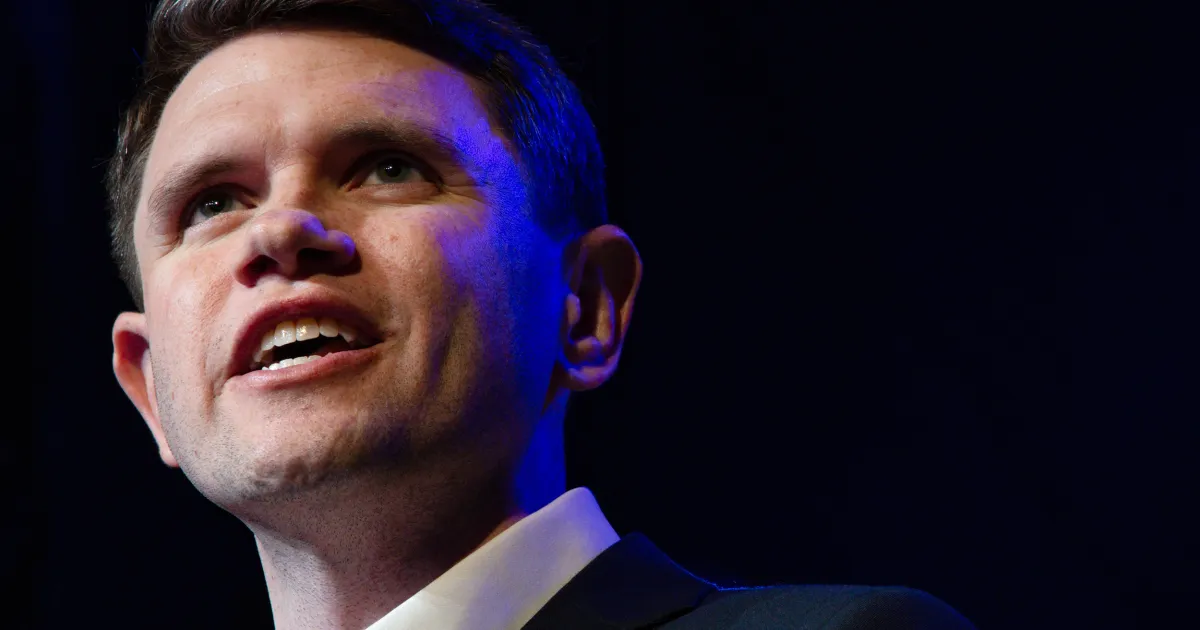
Some deranged death wishes from Christian extremists against Texas Democrat James Talarico have vaulted the Senate candidate into rare air.
Talarico, a progressive state lawmaker known for preaching at Presbyterian churches, rebuked the comments, made by two pastors with ties to Defense Secretary Pete Hegseth. The incident brings to mind other white faith leaders who have faced violent fury from white people while advocating for civil and human rights, such as the Rev. Will Campbell and Freedom Rider James Zwerg.
HuffPost reported on the remarks made on a recent podcast by the extremist pastors, Brooks Potteiger and Joshua Haymes:
After referring to the Texas Democrat as ‘a wolf,’ a ‘demon,’ and ‘a snake,’ the two talked about what they hope becomes of Talarico.
‘First and foremost, we pray that a man like this would be cut to the heart,’ Haymes said. He said he puts Talarico in the category of ‘public enemies,’ or those you ‘are not called to love.’
‘This is where you have imprecatory psalms. This is where you pray strongly,’ he said. ‘The psalmist is not shy. God, destroy them. Make them as dung on the ground.’
But wait, there’s more:
‘I pray that God kills him,’ Haymes continued. ‘Ultimately, that means killing his heart and raising him up to new life in Christ.’
Potteiger concurred. ‘Right, right,’ he said. ‘We want him crucified with Christ.’
Haymes repeated that he wants “death and new life” for Talarico. “And if it would not be within God’s will to do so, stop him by any means necessary,” he said.
Talarico’s”https://x.com/jamestalarico/status/2036647988182036730?ref_src=twsrc%5Etfw%7Ctwcamp%5Etweetembed%7Ctwterm%5E2036647988182036730%7Ctwgr%5Ed51c4d37758d17c3a41a9e9d615c53d527b284cf%7Ctwcon%5Es1_&ref_url=https%3A%2F%2Fwww.ms.now%2F%3Fp%3D1208984″>response on social media was a simple one, directed at Potteiger:
Jesus loves. Christian Nationalism kills.
You may pray for my death, Pastor, but I still love you.
I love you more than you could ever hate me. https://t.co/ejQg3U2Yq6
— James Talarico (@jamestalarico)”https://twitter.com/jamestalarico/status/2036647988182036730?ref_src=twsrc%5Etfw”>March 25, 2026
I’ve previously written about Haymes and his assertions that “the institution of slavery is not inherently evil” and it’s “not inherently evil to own another human being” — and that “every Christian in today’s society should be able to defend” those claims. Such comments help show that he and Potteiger are essentially polar opposites of Talarico, who tends to use his religion to rebuke abuses of civil and human rights — not defend them.
This incident underscores divisions I spotlighted in 2024, when I wrote about the divide between white Christian nationalists and the Christians who adhere to a more loving and radically progressive theology, like the kind traditionally practiced by the Rev. Martin Luther King Jr., Bishop William Barber and other Black leaders.
Fundamentally, Talarico’s response to the far-right pastors seemed to center on what some white Christians believe their god exists to do — harm conservatives’ perceived enemies — and those who spread a gospel of love and shared humanity.
Ja’han Jones is an MS NOW opinion blogger. He previously wrote The ReidOut Blog.
The Dictatorship
Trump’s ‘highlight reel’ briefings on Iran war raise concerns about U.S. intelligence
This is an adapted excerpt from the March 25 episode of “All In with Chris Hayes.”
Right now there are real questions about the ability of the U.S. intelligence apparatus to provide this country’s commander in chief with accurate information.
On Wednesday, NBC News reported that Donald Trump is getting his “daily briefing” on the war in Iran in the form of a “highlight reel.” Three current U.S. officials and a former U.S. official told NBC News that since the start of the war, military officials “compile a video update for Trump that shows video of the biggest, most successful strikes on Iranian targets over the previous 48 hours.”
It does not seem like there is a functioning truth-telling process in the intelligence apparatus.
According to those officials, the montage typically runs for about two minutes, sometimes longer. One official described each daily video as a series of clips of “stuff blowing up” — national intelligence in the form of Instagram Reels, basically.
Now, to be clear, the sources stressed that Trump also receives more traditional briefings. But given what we know about how much reading this president does, it’s fair to question how much information he actually retains or understands.
Following NBC News’ reporting, the Iranian foreign minister mocked Trump on social media, essentially calling him a patsy for his own intelligence agencies.
“It is said that Edward Bernays, a pioneer of mass persuasion, served on Committee on Public Information and worked to help Woodrow Wilson rally Americans for war in Europe. When he and Walter Lippmann met president in 1917, they reportedly said ‘We can sell the war to the public,’” Abbas Araghchi wrote. “More than a century later, little has changed — except that now, it seems, the war is being ‘sold’ not once, but daily, even to the president himself, through carefully curated videos.”
It is completely unclear who is putting together these little highlight reels in the first place. Is it a “best of” reel from Pete Hegseth’s Department of Defense? From National Intelligence Director Tulsi Gabbard?
Gabbard previously told lawmakers that Trump was getting the “best objective intelligence available to inform his decisions.”
“All the best intelligence” — and the most awesome explosion videos, it appears.
But this is a symptom of a much wider problem. Right now it does not seem like there is a functional truth-telling process in the intelligence apparatus. By many accounts, it has been hollowed out. Experts have been replaced with MAGA loyalists, and we’re seeing the consequences.
On the very first day of the war, the U.S. struck a girls’ elementary school in Iranapparently while meaning to target a nearby military installation. Almost 200 people were killed, most of them children.
As one mother whose child was killed told NBC News this week, “Trump should not think that killing our children has made us despair … He should cry for himself, because he will end up in hell.”
This administration’s total lack of competence has had effects like what we saw in Iran in plenty of other places. Do you remember earlier this month when the Pentagon announced it had conducted a joint operation with the military of Ecuador? According to the U.S. Southern Command, they were targeting “narco-terrorists.” The Department of Defense posted a video to social media that showed a large explosion and told the public it was a “narco-terrorist supply complex.” According to the government of Ecuador, the attack was based on “intelligence and support” from the U.S.
But as The New York Times reports:
The military strike appears to have destroyed a cattle and dairy farm, not a drug trafficking compound, according to interviews with the farm’s owner, four of its workers, human rights lawyers and residents and leaders in San Martín, the remote farming village in northern Ecuador where the strike took place.
Workers on the farm told the Times that Ecuadorian soldiers arrived by helicopter on March 3, doused several shelters and sheds with gasoline and ignited them after interrogating workers and beating four of them with the butts of their guns. Some of the workers said the soldiers later choked them and subjected them to electrical shocks before letting them go.
Three days later, on March 6, the Ecuadorian military reappeared in helicopters, residents said, and dropped at least two explosives on what the Times called “the farm’s smoldering remains.”
You have to wonder if that explosion made it into the president’s daily highlight video.
But this is the apparent product of U.S. intelligence during the second Trump administration: garbage in, terrible garbage decisions out.
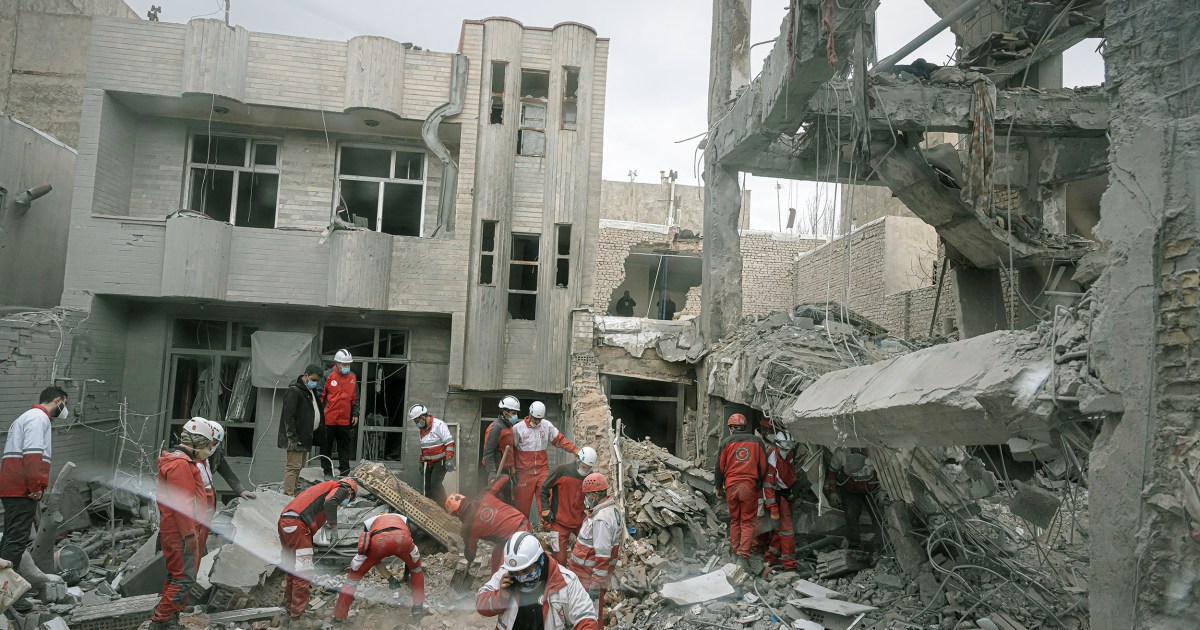
On Wednesday, Iraq said the U.S. struck a medical clinic on a military base there, killing seven members of the country’s military and wounding more than a dozen.
The U.S. denies targeting a clinic, but it’s a fair question to ask: Did they know what they were targeting?
Right now, as this war spirals throughout the region, it is not even clear if Trump knows whether or not our country is actually negotiating an end to it. He keeps saying we are, while Iran insists negotiations are a nonstarter.
So here we are, with Iran using its leverage to run a “toll operation” in the Strait of Hormuzmaking their own deals for safe passage with China, Russia, India, Iraq and Pakistan. Maybe they’ll decide to negotiate with the U.S. — and maybe they won’t.
But according to the former head of Britain’s foreign intelligence service, it’s clear who has the upper hand here. Alex Younger told The Economist“The reality is the U.S. underestimated the task, and I think, as of about two weeks ago, lost the initiative to Iran. In practice, the Iranian regime has been more resilient than I think anyone expected.”
Trump thought this was going to be a cakewalk. He thought it would be a quick process to depose a regime, as it was in Venezuelaand now the war is dragging into its fourth week. As the human toll grows with each passing day, I don’t know if the commander in chief is even aware of the costs of this mess.
Allison Detzel contributed.
Chris Hayes hosts “All In with Chris Hayes” at 8 p.m. ET Tuesday through Friday on MS NOW. He is the editor-at-large at The Nation. A former fellow at Harvard University’s Edmond J. Safra Foundation Center for Ethics, Hayes was a Bernard Schwartz Fellow at the New America Foundation. His latest book is “The Sirens’ Call: How Attention Became the World’s Most Endangered Resource” (Penguin Press).
- New IOC policy bans transgender women from women’s Olympic events
- Talarico’s loving response to death wish shows rifts among white Christians
- Trump’s ‘highlight reel’ briefings on Iran war raise concerns about U.S. intelligence

- ‘Tone-deaf’: Trump’s GOP loses ground to Democrats on the economy
- The Tea, Spilled by Morning Joe: ‘Fire ‘em all’
- House Republicans huddle with Johnson to plot party-line package

- Senate rejects voter ID
- John Thune says he’s aiming to land DHS deal Thursday
- House Republicans huddle with Johnson to plot party-line package
- Senate rejects voter ID
-

 The Dictatorship1 year ago
Luigi Mangione acknowledges public support in first official statement since arrest
-

 Politics1 year ago
Former ‘Squad’ members launching ‘Bowman and Bush’ YouTube show
-

 Politics1 year ago
Former Kentucky AG Daniel Cameron launches Senate bid
-

 Politics1 year ago
Blue Light News’s Editorial Director Ryan Hutchins speaks at Blue Light News’s 2025 Governors Summit
-

 The Dictatorship7 months ago
Mike Johnson sums up the GOP’s arrogant position on military occupation with two words
-

 The Dictatorship1 year ago
Pete Hegseth’s tenure at the Pentagon goes from bad to worse
-
Uncategorized1 year ago
Bob Good to step down as Freedom Caucus chair this week
-

 Politics11 months ago
Democrat challenging Joni Ernst: I want to ‘tear down’ party, ‘build it back up’