
Congress
Republicans will be hard-pressed to pass Trump’s ‘Great Healthcare Plan’

President Donald Trump announced his “Great Healthcare Plan” to little fanfare on Capitol Hill last week.
The question now is how willing and able congressional Republicans will be to actually pass any of it into law after stumbling for years over politically toxic plans to undo Obamacare. The prognosis is not encouraging for the White House.
Key parts of the light-on-details proposal likely won’t meet the strict Senate rules for party-line legislation that could skirt a Democratic filibuster. Similar cost-reduction proposals from Republicans ran into problems on that count in last year’s tax-cuts-focused megabill.
White House officials argue the new health care plan features initiatives that should garner bipartisan support, but Democrats are already balking. They’re in no mood to help Republicans out after Trump’s megabill slashed Medicaid funding, and they’re still fighting to revive the expired Obamacare subsidies that the Trump plan rejects.
“Time and again, Donald Trump has made empty promises to the American people about lowering their health care costs, and today’s announcement is no different,” Senate Finance ranking member Ron Wyden (D-Ore.) said in a statement following the release of the White House framework.
Even without the procedural hurdles, uniting Republicans behind a health care plan has repeatedly proven next to impossible. The fate of the enhanced Obamacare subsidies roiled the party for months before they lapsed Jan. 1, and now there are major divisions over whether to pursue more health initiatives using the partisan budget reconciliation process.
One key House faction, the conservative Republican Study Committee, released a blueprint last week for a party-line bill that included health care provisions, and its leaders now argue Trump’s plan mirrors key parts of it. They are among a significant GOP bloc that sees reconciliation as the only way the party can pass health legislation — or any other substantive policy — ahead of the midterms.
“Our framework for a second reconciliation bill includes many of these historic reforms, because that’s how we’re going to secure real wins for the people who sent us here,” Rep. August Pfluger (R-Texas), who leads the group of nearly 200 House Republicans, said in a statement to Blue Light News.
But vulnerable incumbents have much less of a stomach for taking up a new health care package before Election Day — especially after the bruising Medicaid and Obamacare subsidy fights.
One House Republican granted anonymity to speak candidly about conference dynamics described the appetite among GOP moderates for another major party-line bill — especially a health-focused one — as “not good.”
“You’re going to need 218 votes, which means you’re going to need to build consensus across the conference on what it is we’re pursuing,” said Rep. Mike Lawler (R-N.Y.), a centrist in a tough reelection fight who said the RSC’s plans are “not reflective of the entirety of the conference.”
There’s also major skepticism among Senate Republicans, including some top Trump allies, who understand that many of their ideas don’t qualify under reconciliation rules, which generally allow only for initiatives that are primarily fiscal in nature. Senators have long deferred to the chamber’s parliamentarian on those judgments.
“A lot of the reforms my colleagues thought about earlier, the parliamentarian didn’t accept,” said Sen. Josh Hawley (R-Mo.), adding that he expected only “a pretty limited universe” of health care proposals to pass muster.
Indeed, Senate Republicans tried to include one of Trump’s health care proposals in their megabill last year — funding a kind of insurance subsidy for out-of-pocket payments in a bid to lower premiums for some Obamacare plans. The parliamentarian ultimately ruled the measure was noncompliant.
Trump’s call for insurers and providers to publish their prices is also unlikely to qualify for inclusion, considering that any fiscal impact of the transparency measures would be purely incidental to the policy.
Two senior Republicans involved in the internal conversations granted anonymity to speak about them said GOP leaders will likely have to carve out a narrow slice of the Trump health plan to pursue via reconciliation, if that’s even possible. Other pieces, they said, would have to advance through bipartisan talks with Democrats, who have in the past endorsed proposals to crack down on pharmaceutical industry intermediaries who help negotiate drug prices.
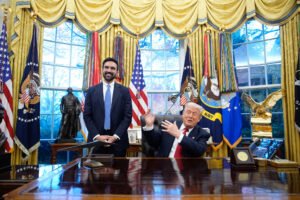
A senior administration official said Thursday that “reconciliation would not be necessary” because the ideas sketched out under the health care framework could get bipartisan support. But at a White House event Friday, Trump acknowledged that was unlikely, saying “the problem we’ll have with this is, we’ll get no Democrat votes.”
There’s another complication: A key plank of the Trump plan — codifying “most favored nation” drug pricing deals — is opposed by many senior Republicans. Speaker Mike Johnson said last year he was “not a big fan” of the policy as White House officials tried unsuccessfully to shoehorn it into the GOP megabill.
Still, many Republicans are making a public show of embracing the Trump framework — including Sen. Rick Scott (R-Fla.), who quickly reinforced the need for a party-line bill to implement the White House plan after it was released Thursday.
Sen. Bill Cassidy (R-La.), who chairs a Senate committee dealing with health care, said he would take “action” on some of the president’s proposals, including codifying transparency rules. Meanwhile, House Ways and Means Chair Jason Smith (R-Mo.), who has previously expressed deep skepticism about the GOP’s ability to pass another party-line bill, complimented the plan’s “bold vision” and said his panel would move to advance it.
Any action will be in the hands of the top Republican leaders. Johnson and Senate Majority Leader John Thune discussed a second reconciliation bill during their regular weekly meeting last week. Thune said the two will “coordinate” but that the House will be “first movers” on any new partisan package.
“They’ve got some ideas about what they want to do with it,” Thune said. “As I’ve said before, you’ve got to have a reason to do it.”
Cheyenne Haslett contributed to this report.


Ohio television stations are so far choosing to ignore a legal threat from GOP Rep. Max Miller and broadcast an ad from his Democratic challenger centered on the allegations of domestic abuse Miller faces from his ex-wife.
A lawyer for Miller demanded that Cleveland-area television station WKYC not publish “false, malicious, and defamatory statements” in a Thursday cease-and-desist letter first reported by Blue Light News.
WKYC ran the ad Tuesday morning, according to ad-tracking firm AdImpact, as did two other Cleveland stations, WEWS and WOIO.
The 30-second ad from the Poindexter campaign and Democratic Congressional Campaign Committee depicts a local sheriff listing the accusations levied against Miller levied by Emily Moreno, his ex-wife and the daughter of Sen. Bernie Moreno (R-Ohio). Miller has repeatedly denied the abuse allegations.
“The ad mentioned is filled with lies,” Miller spokesperson Abigail Angelos said in a statement. “Each of the statements in the advertisement are entirely unsubstantiated and contradicted by evidence.”
Representatives for the three TV stations did not immediately respond to requests for comment. Poindexter responded to the legal threat by tearing up the cease-and-desist letter in a campaign video.
Before the ad, Poindexter had focused his campaign on his working-class background and cost-of-living issues. Now the campaign has gotten intensely personal: The Democrat is on air publicizing Miller’s family dispute, while Miller’s campaign is lobbing accusations about Poindexter’s past run-ins with law enforcement in an ad paid for by the NRCC.
NRCC spokesperson Zach Bannon said in a statement that Poindexter is “completely out of touch with Northeast Ohio” and is a “life-long criminal” who is “fully embracing the radical far-left socialist agenda.”
Aaron Pellish contributed to this report.
A Senate Republican from Utah is asking the Senate Judiciary Committee to subpoena Donald Trump Jr. following reports that the president’s son had parts of his wedding paid for by a Russian oligarch with ties to Russian President Vladimir Putin.
Sen. John Curtis’ request, which comes following a news story by ProPublica, marks a significant break with President Donald Trump from a member of his own party.
“Questions have arisen about the relationships of President Trump’s eldest son, Donald Trump Jr., with foreign business figures and the acceptance of significant gifts. These include a lavish wedding afterparty, on a private island, provided by Russian oligarch Umar Kremlev, who reportedly traveled to China as part of a delegation accompanying Vladimir Putin shortly before giving the gift,” Curtis wrote in a letter dated Sept. 21 to Senate Judiciary Chair Chuck Grassley (R-Iowa) and the panel’s top Democrat, Sen. Dick Durbin of Illinois.
“These concerns are compounded by Donald Trump Jr.’s active promotion of family-backed cryptocurrency ventures, his continued pursuit of international real estate deals involving direct meetings with foreign heads of state, and his reported investments in defense contracting,” Curtis added.
Curtis, also noting the profits the Trump family has made through cryptocurrency deals, indicated this incident is part of a broader pattern where the relatives of U.S. presidents can improperly leverage their proximity to power.
In addition to probing Trump Jr., Curtis asked the Senate Judiciary Committee to subpoena President Joe Biden’s son, Hunter Biden, who over the years found himself enveloped in numerous self-dealing scandals. Both men, he said, should testify “regarding their past business dealings, relationships with foreign individuals and entities, gifts, or other benefits they have received, and any instances in which their relationship to the President was invoked or understood to provide value.”
“The country should not have to accept one standard for the family of a Republican president and another for the family of a Democratic president. Nor should congressional oversight begin and end when control of the White House changes hands,” Curtis said.
The White House did not immediately return a request for comment Wednesday, but it’s unlikely that Trump, who demands loyalty from the GOP, will consider the bipartisan nature of Curtis’ request to be anything other than a personal affront.
Trump said in a statement he has “no idea who Umar is” and that he has “never heard of him, and he didn’t pay for Don and Bettina’s wedding, which took place at a totally different location, and on a different day from the wedding.”
Kremlev is president of the International Boxing Association and received an Order of Friendship medal from Putin for his “contribution to international sport and his commitment to the global boxing family.” He’s also been sanctioned by the Ukrainian government for his ties to Putin.
A spokesperson for Judiciary Committee Republicans confirmed Grassley was in receipt of the letter but could not commit to investigating the matter. The spokesperson noted that hearing dates are extremely limited through the end of 2026 and investigative hearings usually take months of background work before they can be scheduled.
It’s sure to be an issue Democrats pursue if they win the majority in either chamber next year. Rep. Robert Garcia (D-Calif.), the ranking member of the House Oversight and Government Reform Committee, wrote to the White House and Donald Trump Jr. last week demanding information about the president’s son’s ties to Kremlev.
Cheyanne M. Daniels contributed to this report.
Senators dreaming of the smell of jet fumes might get their wish.
The chamber, initially scheduled to be in session until the beginning of October, is instead eyeing departure by the end of the week. To get there, though, Republicans will need to strike a time agreement with Democrats to fast-track the remainder of their work.
And while GOP members are antsy to spend more time in their states campaigning ahead of the midterms, some in their ranks are also uncomfortable that their final agenda items aren’t doing more to address issues voters increasingly care about — like the cost of living, data centers or AI safety.
For now, senators’ agenda includes: a sweeping college athletics bill, an Iran war powers resolution, a handful of nominees — including for labor secretary — and potential votes to roll back California’s stricter standards for vehicle emissions.
So far Democrats haven’t tipped their hand on whether they will agree to speed up consideration of the college sports legislation. Without a deal, the bill will drag into at least Friday evening, but Democrats first want details about the entire pre-recess agenda, according to two people granted anonymity to disclose private deliberations.
Whether the Senate will get around to doing something — anything — to address public alarm about the growing capabilities of artificial intelligence or pass permitting reform legislation remains to be seen.
Discussions are ongoing about whether the chamber will take a vote on Sen. Jon Husted’s so-called Ratepayer Protection Act, which aims to curb the energy costs associated with data centers.
Negotiators dragged past what was viewed as an unofficial deadline (over the weekend) to reach a deal to streamline energy permitting before the midterms.
Also to potentially get the boot if senators leave this week: a planned Senate Judiciary hearing next week with former special counsel Jack Smith.
Chair Chuck Grassley, asked last week, said “we gotta go ahead with that” hearing but added that he hasn’t grappled with an early dismissal: “Gosh, I haven’t thought about that.”
An aide of his chimed in saying the committee is “working on options” but that “it’s hard with the uncertainty” of the schedule.
What else we’re watching:
— SOARING DIESEL COSTS EXPOSE GOP SPLITS: Several farm state Republicans this week have all but begged President Donald Trump to do something to lower record-high diesel prices fueled by the Iran war, even if it means crossing their traditional allies in the oil and gas sector. The cacophony of outcry puts pressure on GOP leaders and exposes divisions among Republicans as members grapple with an unpopular war led by the president. Grassley posted over the weekend that high diesel prices are “KILLING FARMERS INCOME” and urged Trump to “put an embargo on diesel exports like presidents in the 70s put embargoes on ag products bc food prices were inflated.” Michigan’s GOP Senate candidate Mike Rogers on Monday also threw his support behind a “temporary embargo” on diesel exports and called for an end to the Iran war, as did Iowa Senate candidate Rep. Ashley Hinson in a Monday morning post. Reps. Zach Nunn and Mariannette Miller-Meeks also called for diesel price relief.
— JEFFRIES SNAPS BACK AT GOLDEN: Hakeem Jeffries slammed exiting Rep. Jared Golden’s endorsement of a battleground Republican Monday, showcasing a rare display of frustration by the minority leader against a member who’s bucked his party multiple times this month. Jeffries and Democratic leaders were already weighing potential punishment for Golden after he twice in recent weeks was a key vote unfreezing Republicans’ floor agendas. On Monday, Golden twisted the proverbial knife by endorsing Rep. Mike Lawler in a district Democrats are spending millions of dollars in in an effort to flip. “Mike Lawler is an unadulterated phony who has never shown bipartisan courage when it matters,” Jeffries wrote in a statement that didn’t mention Golden by name. “In desperation, he is peddling an 11th hour endorsement from a retiring Congressmember who represents an out of town district more than 400 miles away.”
Jordain Carney, James Bikales, Rachel Shin and Riley Rogerson contributed to this report.
- Ohio stations ignore Max Miller’s legal threat, run Democratic challenger’s ad
- GOP Senator wants to subpoena Donald Trump Jr. over Russian-funded wedding
- Capitol agenda: Senate GOP eyes exit plan as trail calls
- ‘We need to stop the contagion’: GOP ramps up midterms defense in Trump states
- Abbott slaps halt on Texas data center permits
- Top House Oversight Dem demands answers to Trump’s media ban
- Mike Rogers says Iran war needs to “end quickly” amid rising prices
- The art of dealing with Trump
- Collins slams Trump plan to ‘politicize’ grants as defying Congress
- Big Ag and Big Oil go head-to-head over diesel export ban
-

 Politics2 years ago
Former ‘Squad’ members launching ‘Bowman and Bush’ YouTube show
-
Uncategorized2 years ago
Bob Good to step down as Freedom Caucus chair this week
-

 The Josh Fourrier Show2 years ago
DOOMSDAY: Trump won, now what?
-

 Politics2 years ago
Former Kentucky AG Daniel Cameron launches Senate bid
-

 The Dictatorship2 years ago
Luigi Mangione acknowledges public support in first official statement since arrest
-

 The Dictatorship2 years ago
Pete Hegseth’s tenure at the Pentagon goes from bad to worse
-

 Politics2 years ago
Blue Light News’s Editorial Director Ryan Hutchins speaks at Blue Light News’s 2025 Governors Summit
-

 The Dictatorship1 year ago
Mike Johnson sums up the GOP’s arrogant position on military occupation with two words