
Congress
Republicans will be hard-pressed to pass Trump’s ‘Great Healthcare Plan’

President Donald Trump announced his “Great Healthcare Plan” to little fanfare on Capitol Hill last week.
The question now is how willing and able congressional Republicans will be to actually pass any of it into law after stumbling for years over politically toxic plans to undo Obamacare. The prognosis is not encouraging for the White House.
Key parts of the light-on-details proposal likely won’t meet the strict Senate rules for party-line legislation that could skirt a Democratic filibuster. Similar cost-reduction proposals from Republicans ran into problems on that count in last year’s tax-cuts-focused megabill.
White House officials argue the new health care plan features initiatives that should garner bipartisan support, but Democrats are already balking. They’re in no mood to help Republicans out after Trump’s megabill slashed Medicaid funding, and they’re still fighting to revive the expired Obamacare subsidies that the Trump plan rejects.
“Time and again, Donald Trump has made empty promises to the American people about lowering their health care costs, and today’s announcement is no different,” Senate Finance ranking member Ron Wyden (D-Ore.) said in a statement following the release of the White House framework.
Even without the procedural hurdles, uniting Republicans behind a health care plan has repeatedly proven next to impossible. The fate of the enhanced Obamacare subsidies roiled the party for months before they lapsed Jan. 1, and now there are major divisions over whether to pursue more health initiatives using the partisan budget reconciliation process.
One key House faction, the conservative Republican Study Committee, released a blueprint last week for a party-line bill that included health care provisions, and its leaders now argue Trump’s plan mirrors key parts of it. They are among a significant GOP bloc that sees reconciliation as the only way the party can pass health legislation — or any other substantive policy — ahead of the midterms.
“Our framework for a second reconciliation bill includes many of these historic reforms, because that’s how we’re going to secure real wins for the people who sent us here,” Rep. August Pfluger (R-Texas), who leads the group of nearly 200 House Republicans, said in a statement to Blue Light News.
But vulnerable incumbents have much less of a stomach for taking up a new health care package before Election Day — especially after the bruising Medicaid and Obamacare subsidy fights.
One House Republican granted anonymity to speak candidly about conference dynamics described the appetite among GOP moderates for another major party-line bill — especially a health-focused one — as “not good.”
“You’re going to need 218 votes, which means you’re going to need to build consensus across the conference on what it is we’re pursuing,” said Rep. Mike Lawler (R-N.Y.), a centrist in a tough reelection fight who said the RSC’s plans are “not reflective of the entirety of the conference.”
There’s also major skepticism among Senate Republicans, including some top Trump allies, who understand that many of their ideas don’t qualify under reconciliation rules, which generally allow only for initiatives that are primarily fiscal in nature. Senators have long deferred to the chamber’s parliamentarian on those judgments.
“A lot of the reforms my colleagues thought about earlier, the parliamentarian didn’t accept,” said Sen. Josh Hawley (R-Mo.), adding that he expected only “a pretty limited universe” of health care proposals to pass muster.
Indeed, Senate Republicans tried to include one of Trump’s health care proposals in their megabill last year — funding a kind of insurance subsidy for out-of-pocket payments in a bid to lower premiums for some Obamacare plans. The parliamentarian ultimately ruled the measure was noncompliant.
Trump’s call for insurers and providers to publish their prices is also unlikely to qualify for inclusion, considering that any fiscal impact of the transparency measures would be purely incidental to the policy.
Two senior Republicans involved in the internal conversations granted anonymity to speak about them said GOP leaders will likely have to carve out a narrow slice of the Trump health plan to pursue via reconciliation, if that’s even possible. Other pieces, they said, would have to advance through bipartisan talks with Democrats, who have in the past endorsed proposals to crack down on pharmaceutical industry intermediaries who help negotiate drug prices.
A senior administration official said Thursday that “reconciliation would not be necessary” because the ideas sketched out under the health care framework could get bipartisan support. But at a White House event Friday, Trump acknowledged that was unlikely, saying “the problem we’ll have with this is, we’ll get no Democrat votes.”
There’s another complication: A key plank of the Trump plan — codifying “most favored nation” drug pricing deals — is opposed by many senior Republicans. Speaker Mike Johnson said last year he was “not a big fan” of the policy as White House officials tried unsuccessfully to shoehorn it into the GOP megabill.
Still, many Republicans are making a public show of embracing the Trump framework — including Sen. Rick Scott (R-Fla.), who quickly reinforced the need for a party-line bill to implement the White House plan after it was released Thursday.
Sen. Bill Cassidy (R-La.), who chairs a Senate committee dealing with health care, said he would take “action” on some of the president’s proposals, including codifying transparency rules. Meanwhile, House Ways and Means Chair Jason Smith (R-Mo.), who has previously expressed deep skepticism about the GOP’s ability to pass another party-line bill, complimented the plan’s “bold vision” and said his panel would move to advance it.
Any action will be in the hands of the top Republican leaders. Johnson and Senate Majority Leader John Thune discussed a second reconciliation bill during their regular weekly meeting last week. Thune said the two will “coordinate” but that the House will be “first movers” on any new partisan package.
“They’ve got some ideas about what they want to do with it,” Thune said. “As I’ve said before, you’ve got to have a reason to do it.”
Cheyenne Haslett contributed to this report.


President Donald Trump met privately on Tuesday with Coinbase CEO Brian Armstrong before publicly backing the company’s position in an ongoing lobbying clash with banks that has derailed a major cryptocurrency bill, according to two people with knowledge of the matter who were granted anonymity to discuss a closed-door matter.
It is unclear what was discussed during the meeting, but it came just before Trump wrote on social media that banks “need to make a good deal with the Crypto Industry” in order to advance digital asset legislation that has stalled on Capitol Hill. He wrote that a recently adopted crypto law is “being threatened and undermined by the Banks, and that is unacceptable” — echoing Coinbase’s position.
A spokesperson for Coinbase declined to comment. The White House did not immediately respond to a request for comment.
The policy clash centers around whether crypto exchanges like Coinbase should be able to offer rewards programs that pay an annual percentage yield to customers who hold digital tokens known as stablecoins that are designed to maintain a value of $1. Wall Street groups are warning that allowing yield-like payments on stablecoins could lead customers to pull deposits from bank accounts and threaten lending that is critical to the economy.
Banks are pushing to ban any type of stablecoin yield payments as part of a sweeping crypto regulatory bill that is currently pending in the Senate. But a wide array of digital asset firms have fought back, and the rift helped derail the so-called crypto market structure legislation bill earlier this year. The legislation would establish new rules governing how crypto tokens are overseen by market regulators — a longtime lobbying goal for digital asset firms, which say they need “regulatory clarity” from Washington.
Coinbase, the largest U.S.-based crypto exchange, has played a key role in the spat. On the eve of a scheduled Senate Banking Committee markup in January, Armstrong came out against the most recent publicly released draft of the crypto bill. He warned in part against “Draft amendments that would kill rewards on stablecoins, allowing banks to ban their competition.” The markup was later postponed, and the bill has remained stalled ever since.
Since then, White House officials have sought to mediate a compromise between the two sides. The White House hosted a series of meetings with representatives from the banking and crypto sectors, but significant differences remain between the two sides and no deal has emerged.
Coinbase has become a major player in Trump’s Washington, thanks in part to massive political spending that is already beginning to shake up the 2026 midterm elections. The exchange, which was co-founded by Armstrong, is a leading backer of a crypto super PAC group known as Fairshake that is armed with a war chest of more than $190 million. Coinbase also donated to Trump’s inaugural committee and to the president’s White House ballroom renovation effort.
In his post on Truth Social Tuesday, Trump included a line that Armstrong has uttered verbatim in interviews about the stablecoin yield fight: “Americans should earn more money on their money.” Separately, on Tuesday night, Trump also posted a picture of an X post from Armstrong praising him for delivering “on his campaign promise to make America the crypto capital of the world.”
The crypto “Industry cannot be taken from the People of America when it is so close to becoming truly successful,” Trump wrote in the initial post.
Declan Harty contributed to this report.
Lawmakers given classified briefings Tuesday evening on the U.S. military conflict in Iran expect President Donald Trump will ask Congress for emergency cash to finance the war.
During the closed-door meetings on Capitol Hill, top Trump administration officials said only that they are considering a supplemental military funding request, according to lawmakers who attended the briefings. But senior intelligence and defense officials described a vast military operation that many members anticipate will require extra funding on top of the nearly $1 trillion Congress has already given the military over the last year.
“I think there will be a supplemental coming,” Sen. Lindsey Graham (R-S.C.) told reporters upon leaving his classified Senate briefing. “We’ll have to approve that.”
Sen. Chris Murphy of Connecticut, the top Democrat on the Senate committee overseeing funding for the Department of Homeland Security, said after the briefing that the military operation “feels like a multitrillion-dollar, open-ended conflict with a very confusing and constantly shifting set of goals” because top Trump administration officials “are refusing to take off the table ground operations.”
Sen. Josh Hawley (R-Mo.) also described the U.S.-Iran conflict as “a massive operation” that’s “rapidly changing.”
“It sounded very open-ended to me,” he added.
Some lawmakers typically opposed to increased spending are open to the idea of providing extra money to fuel the U.S. military’s operation against Iran. “I think it would have support of Republicans,” Sen. Ron Johnson (R-Wis.) said about a supplemental funding request Tuesday night.
“Everybody always wants money, any excuse, whether they’ll need it or not. My guess: They’ll need it,” Johnson continued. “We’re shooting off a lot of ammo. Gotta restock.”
But Democratic votes will be needed to pass any emergency funding package in the Senate, and minority party leaders say they will need far more details from the Trump administration if they are going to consider support for new Pentagon cash.
“Before you can feel satisfied about a supplemental — and I haven’t seen it — you have to know what the real goals are and what the endgame is,” Senate Minority Leader Chuck Schumer told reporters Tuesday.
Delaware Sen. Chris Coons, a senior Democratic appropriator, said he expects the Pentagon will send Congress a supplemental funding request and vowed to “make sure we are making all the investments we can” to keep U.S. troops safe.
But Coons said Trump administration officials need to testify at an open hearing so “the American people can get questions answered about the failures in planning that led to some of the challenges, losses and mistakes in this war.”
Any supplemental spending package to support the Iran war effort would come on top of the more than $150 billion the Pentagon got from the party-line tax and spending package Republicans enacted last summer and nearly $839 billion in regular funding Congress cleared last month.
The House’s lead Democratic appropriator, Connecticut Rep. Rosa DeLauro, said lawmakers have yet to receive information about how much the Pentagon has spent already.
“They’re talking about a supplemental, but we haven’t got a clue,” DeLauro told reporters after Trump administration officials briefed House lawmakers later Tuesday. “There’s no cost estimate of what they have spent so far. Is there anybody writing down what the hell they’re spending? No.”
Senate Majority Leader John Thune said Tuesday that Republicans “forward-funded” military operations with the party-line package enacted last summer but that lawmakers will be “paying attention” to any need for extra money.
“Not only do we have the resources to conduct the operations right now, but a lot of our allies in the region also have capabilities that are coming to bear now,” Thune said.
Even before the strikes on Iran, Trump was eyeing a massive hike in military spending for the upcoming fiscal year. He pledged to pursue a $1.5 trillion Pentagon budget, a roughly 50 percent increase to military spending.
The president said Tuesday, however, that U.S. military resources are far from depleted.
“We have a virtually unlimited supply of these weapons,” Trump said on social media. “Wars can be fought ‘forever,’ and very successfully, using just these supplies.”
Jordain Carney, Meredith Lee Hill, Connor O’Brien, Joe Gould and Calen Razor contributed to this report.
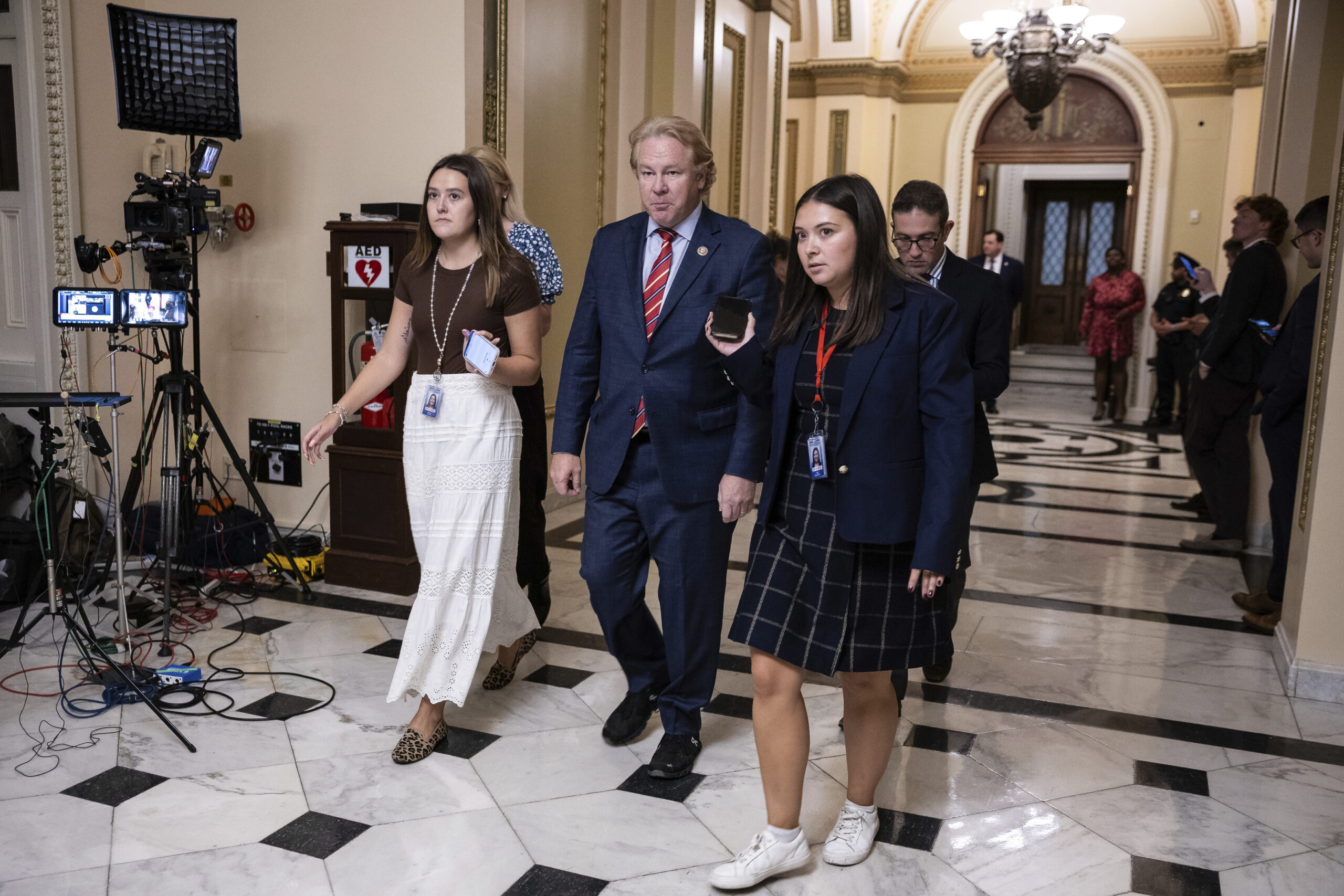
The vast majority of congressional Republicans are publicly supportive of President Donald Trump’s decision to launch a war on Iran. But many are harboring private misgivings about the risks to American troops and global stability — as well as their own political fortunes — should the military campaign drag on indefinitely.
Trump’s comments this week that the bombing could last “four to five weeks” or more, that he doesn’t care about public polling and that the U.S. will do “whatever” it takes to secure its objectives are among the factors that have put lawmakers on edge.
Some of the anxieties have started emerging publicly.
“The constitutional sequence is, you engage the public before you go to war unless an attack is imminent. And imminent means like, imminent — not like something that’s been over a 47-year period of time,” Rep. Warren Davidson (R-Ohio), a former Army ranger, said Tuesday.
Rep. Eli Crane (R-Ariz.), a combat veteran who served in the Iraq War and has cautioned in the past against regime change efforts, called it “a very dicey, a very dynamic situation right now” on the Charlie Kirk Show Monday while also making clear he would give Trump deference.
“I hope it works out,” he added. “Military operations like this can go sideways so fast, you know, it will make your head spin.”
But a wider group of House Republicans granted anonymity to speak candidly shared deeper concerns about the strikes. All said they would stand with Trump and Speaker Mike Johnson this week to oppose a largely Democratic effort to force votes on restraining the president. But they said their support was not guaranteed over the long term.
“Most Republicans want clear objectives, clearer than they are now,” said one House Republican, who added members have pressed GOP leaders and White House officials to be more consistent in articulating the administration’s military goals.
Another was troubled by Trump’s own shifting statements on when the bombing campaign might wrap up, whether he is seeking the fall of the Islamic regime and whether ground troops might ultimately be necessary.
“Sounds a little bit like President Lyndon Johnson going into Vietnam, doesn’t it?” the lawmaker said.
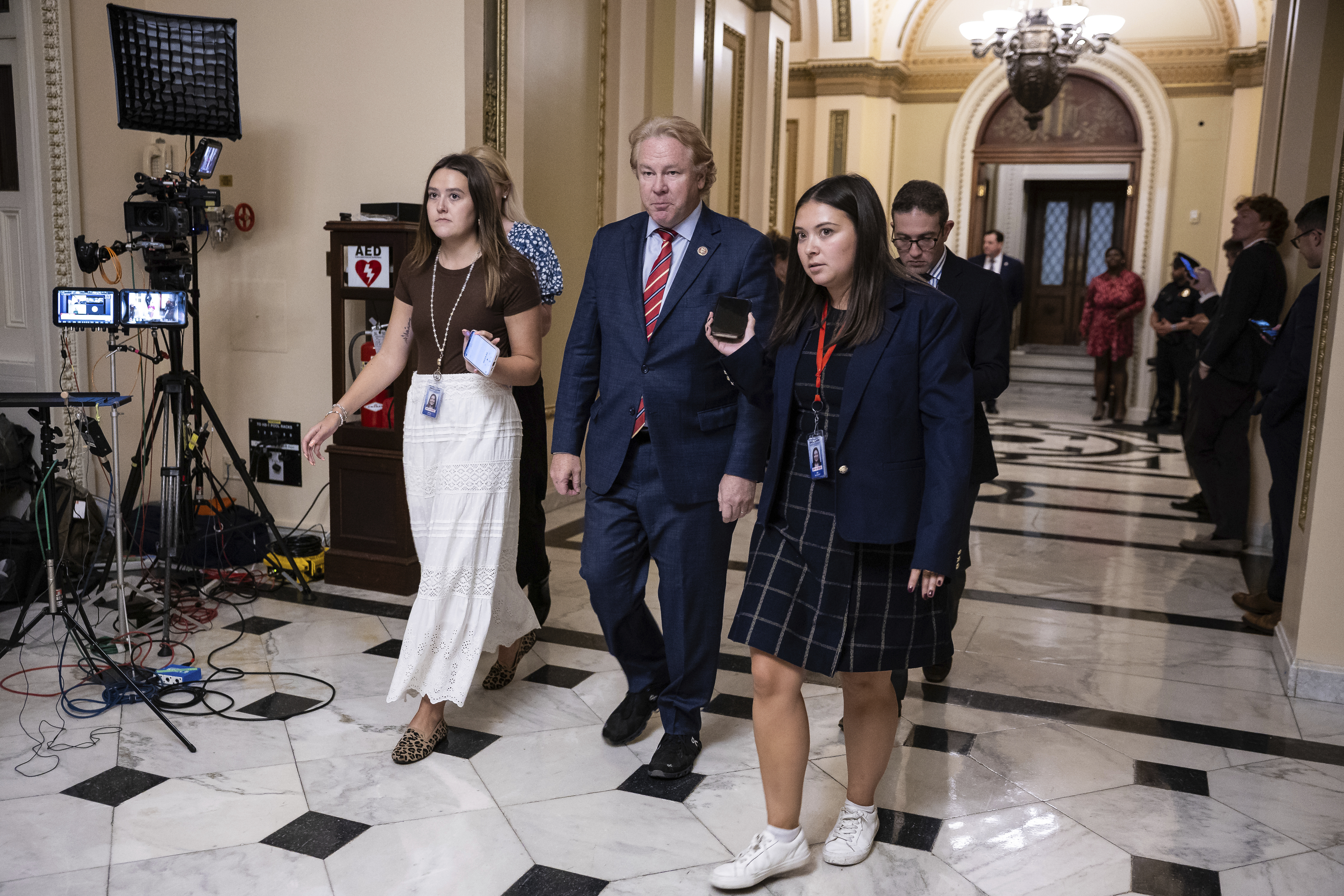
Trump officials and top House GOP leaders have already moved to ease potential member concerns. Johnson, for instance, said leaving a classified briefing Monday that “the operation will be wound up quickly, by God’s grace and will.”
“That is our prayer for everybody involved,” he added.
A White House memo sent to congressional Republicans Monday outlined several military objectives for the bombing campaign and said Trump should be “commended” for taking on a hostile state sponsor of terrorism.
But despite denying that Trump had acted in pursuit of regime change, the document also said the Iranian regime “would be defeated” and included other contradictory statements about the reasons for the strikes — while trying to sidestep the question of whether the strikes constituted a “war,” a word Trump himself has used.
Beyond the fears of a prolonged military engagement that could be costly in dollars and American lives, Republicans are also facing the prospect of a stock market tumble and rising gas prices that could fall hardest on vulnerable incumbents ahead of the midterms. Many of those members promised their constituents, much as Trump did, that they would not engage in endless war.
The planned Thursday vote on a bipartisan war powers resolution has surfaced some of the GOP discomfort, even as party leaders and White House officials whip members against it — including those most at risk of losing their seats.
Rep. Thomas Massie (R-Ky.), who is co-leading the war powers push with Rep. Ro Khanna (D-Calif.), pointed to the White House memo as further evidence of incoherence on the administration’s part.
“So they’re going to defeat a terrorist regime that rules a country of 90 million people, but that’s not war?” he said in an interview.
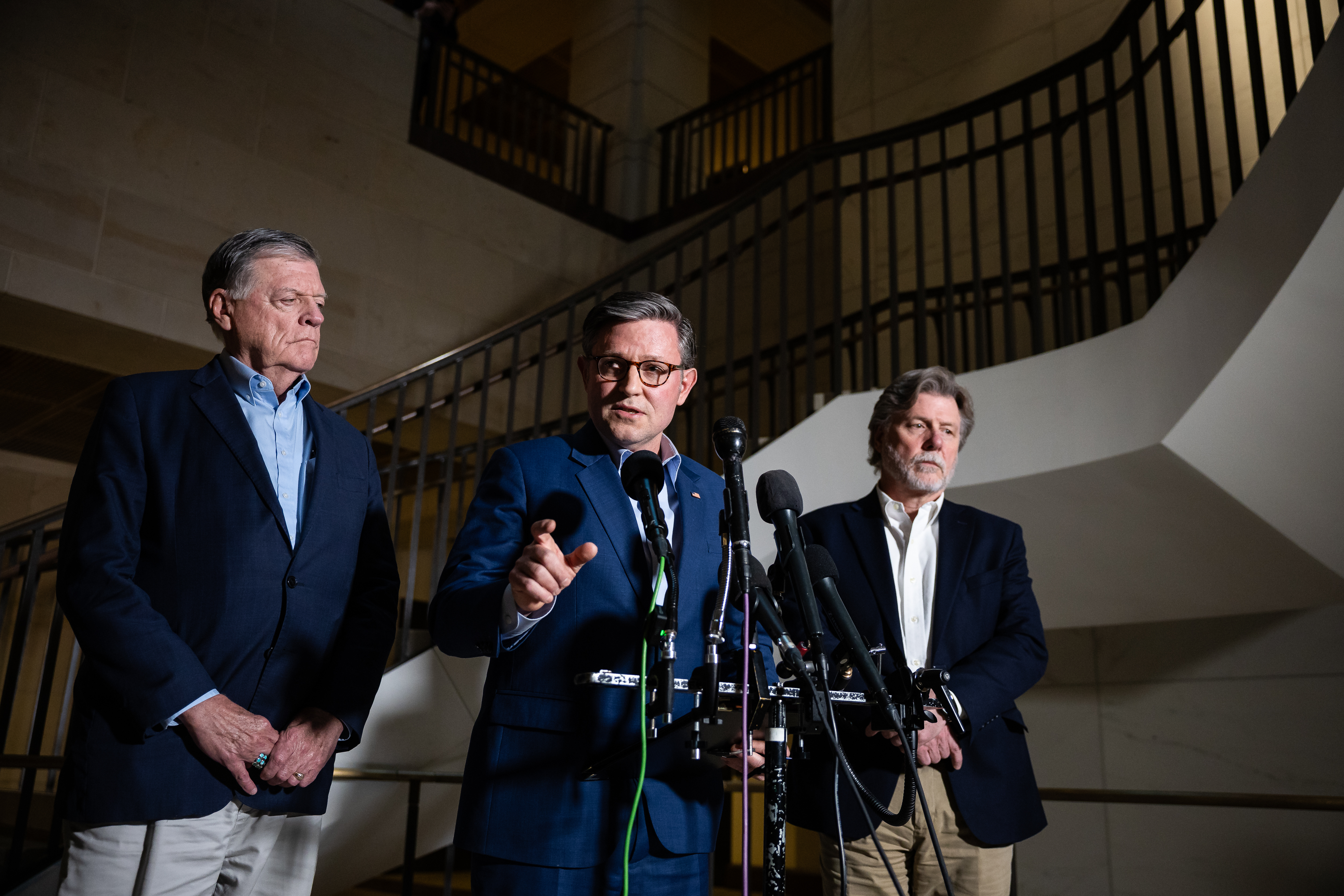
Also raising concerns in advance of the vote is Davidson, who has long railed against extended U.S. wars abroad. He said in a social media post Monday it was “troubling” that Secretary of State Marco Rubio said Monday that an imminent Israeli attack on Iran forced the U.S. to strike. He also raised concerns to reporters Tuesday about some of the administration’s claims.
House Intelligence Chair Rick Crawford (R-Ark.) said in an interview Tuesday he didn’t think the war powers vote was necessary and that Trump was operating within his legal authority.
The vote, he said, was “a way for individuals to sort of register their displeasure or make a political statement.”
Even if the war powers measure is defeated, some Republicans say an effort to restrain Trump could reemerge if the conflict drags on or Trump commits ground troops to the conflict. “If we’re talking months, not weeks, then you will see another vote,” said a third House Republican who added that Trump had some “leeway” for now.
Johnson, meanwhile, is channeling any intraparty concerns about Trump’s war into another vote this week on a stalled Homeland Security spending bill — an attempt to keep the focus on Democrats’ opposition to funding for TSA, FEMA and other agencies as a department shutdown approaches the three-week mark.
He is also arguing, as he told reporters after a classified briefing Monday, that the war powers vote is “dangerous” at a moment when U.S. troops were in harm’s way and that Republicans would act to “put it down.” The strikes, Johnson added, did not need advance congressional approval because they were “defensive in nature.”
Those arguments have resonated with most House Republicans, who say they’re willing to give the president time.
“I think so far, the Pentagon seems to have a good plan,” said Rep. Jeff Crank (R-Colo.), a member of the Armed Services Committee who said he would give Trump “six weeks or … eight weeks or whatever we need to accomplish the missions that we set out.”
“The worst thing we could do is go in and then … to pull back or cut short, whatever our objectives are,” he added. “We’re there. We need to get the objectives finished.”
- Scandal-plagued Rep. Tony Gonzales forced to runoff
- Rep. Dan Crenshaw ousted by primary challenger to his right
- Trump met with Coinbase CEO before bashing banks over crypto bill
- Cornyn, Paxton head to runoff in Texas Senate GOP race
- Rep. Chip Roy headed to runoff in Texas AG race
- Democrats reject ‘ridiculous’ GOP demand to fund DHS after Iran attack
- Josh Hawley says he’ll oppose Iran war powers resolution
- House Ethics panel probing Nancy Mace over alleged improper reimbursements
- Iranian ‘regime will be defeated,’ White House tells Hill Republicans
- Lawmakers splinter on Trump administration’s case for war on Iran
-

 The Dictatorship1 year ago
Luigi Mangione acknowledges public support in first official statement since arrest
-

 Politics1 year ago
Former ‘Squad’ members launching ‘Bowman and Bush’ YouTube show
-

 Politics1 year ago
Blue Light News’s Editorial Director Ryan Hutchins speaks at Blue Light News’s 2025 Governors Summit
-

 The Dictatorship6 months ago
Mike Johnson sums up the GOP’s arrogant position on military occupation with two words
-

 Politics1 year ago
Former Kentucky AG Daniel Cameron launches Senate bid
-

 The Dictatorship1 year ago
Pete Hegseth’s tenure at the Pentagon goes from bad to worse
-
Uncategorized1 year ago
Bob Good to step down as Freedom Caucus chair this week
-

 Politics11 months ago
Democrat challenging Joni Ernst: I want to ‘tear down’ party, ‘build it back up’