
Congress
Republicans just took ICE spending fights off the table. It won’t end shutdown threats.

Republicans just solved an immediate crisis with a party-line vote to fund immigration enforcement agencies into 2029. But that hardly improves the chances of avoiding a shutdown for the rest of the government.
Lawmakers in both parties say the odds of another federal funding lapse are unimproved, if not heightened, by the GOP’s move to fund President Donald Trump’s immigration and border security efforts for three years through the party-line budget reconciliation process.
The Sept. 30 government shutdown deadline, less than four months away, hits just weeks before the November elections that will determine which party controls the House and Senate next year. This electoral uncertainty was already complicating cross-party negotiations to fund federal agencies.
“It’s not helpful for sure,” Washington Sen. Patty Murray, the Senate’s top Democratic appropriator, told reporters this week of the GOP’s party-line gambit. “It makes it very difficult for us moving forward.”
The Senate’s top appropriators, who are typically chummy, are at loggerheads over totals for the military and nondefense programs — prompting the cancellation this week of committee markups for the second week in a row.
Republicans’ move to stiff-arm Democrats has further soured negotiations to fund the government and raised concerns of more my-way-or-the-highway ultimatums from members on both sides.
“Does it mean that we avoid a shutdown in that area? Takes care of that,” Sen. Lisa Murkowski (R-Alaska), a senior appropriator, said about removing the need to fund Immigration and Customs Enforcement and Border Patrol past the end of President Donald Trump’s term.
“But how many other accounts do we have that we could have another kerfuffle?” she continued. “And all of a sudden we now have leverage, because we tried it once — and we pulled the trigger.”
Murkowski voted against the reconciliation bill last week — the only Senate Republican to do so.
It’s widely accepted on Capitol Hill that Congress will pass a stopgap funding bill to keep cash flowing for federal agencies past the midterms.
Rep. Steve Womack (R-Ark.), who oversees annual transportation and housing spending, predicted this week that Congress will be crafting a funding patch come September. “I just hope we’re not seriously talking about a potential shutdown again,” he added. “We touched that stove once. It was pretty hot.”
Yet some are predicting Senate Minority Leader Chuck Schumer will direct his members to band together to oppose a funding patch, as Democrats did last September in triggering a 43-day government shutdown.
“They do not want appropriation bills. They do want to shut down government,” Sen. John Kennedy (R-La.) told reporters about Democrats. “And they think they’re going to take the House and maybe the Senate and can get a better deal then.”
Senate Appropriations Chair Susan Collins said Democrats “have made clear they are not willing to work with us” to pass government funding bills. But the Maine Republican also said she doesn’t think her party’s move to fund immigration enforcement through reconciliation “has an effect one way or another” on funding the rest of the government beyond September.
Though ICE and Border Patrol are now funded through September 2029, some Democrats say they are planning to use the dozen annual government funding bills as leverage to demand policy changes and funding cuts at those two agencies.
“I can tell you this: We’re going to try every which way to unfund these agencies,” Rep. Lois Frankel (D-Fla.), a member of the Appropriations Committee. “We have 12 bills that we have to pass. We have so many battles — this piece is one of them.”
Democrats had for months been demanding guardrails on Trump’s immigration enforcement activities as a condition of supporting enforcement funding after federal agents shot and killed two U.S. citizens in Minnesota in January. When talks broke down, Republicans made the decision to act alone.
It’s not just ICE and Border Patrol that control immigration enforcement policy, though. Congress still has to fund the broader operations of DHS each year, including the office of Secretary Markwayne Mullin, who recently told lawmakers he couldn’t commit to following court orders.
“You still have to ultimately deal with the Homeland Security bills, and they’ve refused to rein in a lawless ICE operation,” Maryland Sen. Chris Van Hollen, a top Democratic appropriator, said in an interview. “That’s not changed.”
Some appropriators are holding out hope that collegiality on the House and Senate funding panels will ultimately prevail, if for no other reason than the margins of the Republican majorities in both chambers depend on it.
“You don’t have to have a master’s in logic to figure out that, at the end of the process, the bills in today’s Congress are going to have a bipartisan flavor,” Womack said, “because the numbers dictate that anybody that thinks otherwise is just simply not being intellectually honest about the situation that we happen to be in.”
After Rep. Andy Harris (R-Md.) proposed the idea this week of funding other controversial agencies through party-line reconciliation bills, House Appropriations Chair Tom Cole immediately rejected the idea floated by one of his subcommittee chairs.
“We’re not doing that. I will just tell you flat out, that will not happen,” the Oklahoma Republican told reporters.
He also refuted the idea that the $70 billion party-line immigration enforcement package could be attractive for his colleagues to replicate going forward.
“I don’t think it’s a precedent,” Cole said. “But if it became a regular practice, I certainly wouldn’t be supporting it.”


House Democrats’ campaign arm is launching its first ad buy against seven-term GOP Rep. Mike Turner in his western Ohio district as they seek to turn up the pressure on Republicans in once-safe red seats.
The DCCC is dropping separate six-figure buys on two coordinated television ads boosting challenger Kristina Knickerbocker, spokesperson Riya Vashi said — a remarkable investment considering Turner won in 2024 by over 18 percentage points, overperforming President Donald Trump.
Ohio adopted a new redistricted congressional map last year that was expected to favor Republicans. Turner’s 10th District voted for Trump by 6 points in 2024; under the new lines it would have been closer to 8 points.
The first ad airing this week opens with a woman saying, “It’s time we had someone in Congress who actually stands up for us” as Knickerbocker jogs through a neighborhood.
Democrats are eyeing Turner’s Dayton-area seat as a reach opportunity. A new internal DCCC poll of 535 likely general election voters reviewed by Blue Light News shows Knickerbocker running three percentage points ahead of Turner. Polling from this summer showed Turner leading the race.
Another Democratic group, House Majority PAC, has already poured more than a million dollars into the race against Turner and has reservations planned through Nov. 3. Knickerbocker is not on the DCCC’s “Red to Blue” roster of candidates who get the bulk of its resources.
“Alarm bells should be ringing for Mike Turner,” Vashi said in a statement. “Kristina Knickerbocker has the momentum in this race, and the DCCC will make sure every voter in this district knows exactly how Turner has betrayed them.”
But the NRCC has been spending in the district for several weeks to boost Turner. House Republican campaign operatives are so far dismissing efforts to flip the seat.
NRCC spokesperson Zach Bannon called Turner “a life-long Ohioan who has a record of cutting taxes, lowering costs, and making Ohio streets safer.”
“While Congressman Turner delivers commonsense conservative wins, out of touch Democrat Kristina Knickerbocker supports a radical far-left agenda,” Bannon said. “This November, Ohioans will reject liberal Knickerbocker and send Congressman Mike Turner back to Congress.”
Elon Musk is facing a gauntlet of Democratic oversight.
Democrats have long eyed investigating the world’s richest man and the GOP’s top donor. They may get their chance if they win back congressional power in November, and senior members are mulling how a range of panels could target Musk and a huge swath of his businesses.
Their list of potential probes is growing.
Some members are eager to dig into Musk’s possible role last week in throttling crucial internet access to the Ukrainian military as President Donald Trump seeks to pressure the country into cutting a peace deal with Russia.
“What happens when one guy gets a giant contract from the government and then uses it to do something that shuts down communication in a war that has been extremely important to the United States to support Ukraine?” Rep. Pramila Jayapal said in an interview.
The incident is one of a glut of alleged conflicts of interests members cited as ripe for oversight, as Musk’s companies like SpaceX and Tesla rake in multi-billion dollar federal contracts and subsidies.
“The sheer number of conflicts of interest are astounding,” top Space, Science and Technology Democrat Rep. Zoe Lofgren said.
Spokespeople for Musk did not respond to multiple requests for comment.
Members of House Oversight and other panels also want to examine Musk’s role in eliminating over 250,000 federal jobs during his time at DOGE, withholding congressionally appropriated money and accessing sensitive government data.
“Congress must demand a full accounting of the damage Mr. Musk and DOGE caused, and we will not let anyone obstruct our oversight,” House Foreign Affairs ranking member Rep. Greg Meeks said in a statement Monday, referring to the so-called Department of Government Efficiency Musk headed last year.
Meeks named Musk’s part in “the cruel dismantling of USAID” as a prime target for his panel next year.
Some Democrats are not waiting for gavels: House Homeland Security Democrats demanded last month Musk testify under oath about a watchdog report claiming DOGE overstated its savings. And Ways and Means Democrats called for an investigation into the group’s alleged data theft from Social Security records.
But even members on panels with less obvious ties to the tech mogul are eyeing targets. Rep. Maxine Dexter, who sits on Natural Resources and Veterans Affairs, said she sees Musk among “the well-connected billionaire, trillionaires who have seen government contracts as a way to subsidize their own company’s research, development, and bottom line.”
“We need to shut that down,” she said.
What else we’re watching:
— MEET TRUMP’S HILL LIAISON: Katie Bailey is poised to run point between the White House and a chaotic Congress — especially if Democrats prevail in the midterms. Trump’s pick for the new director of the Office of Legislative Affairs is a longtime former congressional aide with wide-ranging experience in oversight and investigations. Her first task will be helping navigate a fast-moving, high-stakes “lame duck” legislative session, where lawmakers rush to pass outstanding bills and avoid a government shutdown. James Braid, who previously held the role before announcing his departure in August, said in an interview that Bailey is up for that task.
— GOP TRIES TO SPARE UKRAINE FROM TRUMP: Republican lawmakers are scrambling to find a way to stop Trump from cozying up to Russia and dismissing Ukraine — but they’re running low on options. All of it comes in response to the president’s decisions to purchase Russian diesel, waive sanctions on Moscow and potentially stop sharing intelligence with Ukraine. Lawmakers are also frustrated with days of unexplained disruptions in Kyiv’s U.S.-controlled satellite defenses. The disparate responses reflect an undercurrent of Republican angst about an administration that has largely ignored Congress on Ukraine and foreign policy more broadly — and the lack of a coordinated response from the legislative branch. They underscore just how little power Trump’s own party has had in reining in his attacks on longstanding allied relationships.
Riley Rogerson, Chris Marquette, Adam Wren, Mia McCarthy, Mark Satter and Leo Shane III contributed to this report.
Democrats are eyeing many targets as they make plans to probe corruption in and around President Donald Trump’s administration should they win control of the House next month.
Few loom larger than Elon Musk.
The world’s richest man and nine-figure Republican donor has emerged as a man of intense interest to several potential committee chairs — not to mention scores of rank-and-file Democratic lawmakers — who see multiple fronts for investigations.
Those include Musk’s whirlwind stint as head of the Department of Government Efficiency, his companies’ multibillion dollar contracts with the federal government and — most recently — his possible role in throttling crucial internet access to the Ukrainian military as the White House seeks to pressure President Volodymyr Zelenskyy into cutting a peace deal with Russia.
“What happens when one guy gets a giant contract from the government and then uses it to do something that shuts down communication in a war that has been extremely important to the United States to support Ukraine?” Democratic Rep. Pramila Jayapal of Washington, a member of the Foreign Affairs Committee, said in an interview. “There’s a lot of different parts of the corruption around Musk.”
Multiple committees are now gaming out how they will take on Musk next term if Democrats win back gavels, with senior members and aides considering how he fits into the various panels’ jurisdiction. Any number of committees in both chambers could stake a claim to probing a piece of Musk’s dealings with the federal government.
“We definitely have a lot of questions about Elon Musk’s role in DOGE and it is something we plan to investigate,” said Sara Guerrero, a spokesperson for top Oversight Committee Democrat Rep. Robert Garcia of California.
Spokespeople for Musk did not respond to multiple requests for comment.
Some members are not waiting for election results to get started. Democrats on the House Homeland Security Committee demanded last month that Musk testify under oath about a Government Accountability Office report claiming that DOGE overstated its savings, while the House Ways and Means Committee has already called to investigate alleged DOGE-related data theft from Social Security.
Huge parts of Musk’s dealings with the federal government could come under congressional scrutiny, including the billions of dollars in spaceflight contracts SpaceX holds with NASA as well as the clean-energy subsidies Tesla has reaped.
But leading Democrats of multiple committees remain fixed on Musk’s five-month rampage through the federal bureaucracy as DOGE leader, in which an estimated 250,000 federal jobs were cut amid allegations of data breaches and illegally withheld congressional spending.
Rep. Zoe Lofgren of California, the top Democrat on the Space, Science and Technology Committee, which oversees NASA, said her panel has more “to learn about the damage that DOGE inflicted on our science agencies.”
“Elon Musk and his DOGE cronies stirred up chaos, ruined careers, and played a large role in illegal grant cancellations and firings of civil servants,” she said in a Monday statement.
“He helped orchestrate the systematic destruction of government programs and services over the last nearly two years,” Lofgren added. “The sheer number of conflicts of interest are astounding.”
Rep. Greg Meeks of New York, the top Foreign Affairs Committee Democrat, said much the same — calling in a Monday statement for “a full accounting of the damage Mr. Musk and DOGE caused.”
“The cruel dismantling of USAID, championed by Elon Musk and carried out by Secretary Rubio, saved no taxpayer money, balanced no budget, and made America no safer,” Meeks said, adding that the panel “will not let anyone obstruct our oversight.”
The House Oversight Committee, considered to have the most robust investigative staff of any congressional panel, could also get involved in probing Musk’s dealings.
“I think DOGE was the original sin,” said one Democratic member of the panel granted anonymity to describe internal discussions about its agenda. “A third of the committee is lawyers and we see the lawlessness, the intentional violations of the law.”
“I certainly hope that Elon Musk and DOGE get brought in,” the member added. “No one should be above the law.”
Minority Leader Hakeem Jeffries has not named Musk as a preeminent target as tries to keep the Democratic midterm message trained on affordability, but he has spoken out about the need to crack down on the “wealthy, the well-off and the well-connected.”
Garcia also spoke at length in an August interview about targeting corruption within Trump’s inner circle, and others have emphasized the need to take a broad view of potential oversight subjects. Many top Democrats, for instance, want an early focus on Defense Secretary Pete Hegseth.
“I don’t think that there is a single like, ‘You are the one,’” Rep. Emilia Sykes (D-Ohio), a member of the Science panel, said in an interview. “I think it is across the board — we need answers.”
But plenty of rank-and-file Democrats want Musk personally held to account — including some on panels with less obvious ties to the tech mogul.
Rep. Maxine Dexter (D-Ore.), for instance, sits on the Natural Resources and Veterans Affairs Committees. She said she sees Musk among “the well-connected billionaire, trillionaires who have seen government contracts as a way to subsidize their own company’s research, development, and bottom line.”
“We need to shut that down,” she added.
Rep. Sydney Kamlager-Dove (D-Calif.), a Foreign Affairs member, was succinct in describing the need to probe Musk’s dealings and haul him before that committee: “Bring it all on.”
Musk has made no secret of his preference for House control next term as the GOP’s single biggest known midterm donor, with $276 million and counting going to Republican committees and candidates.
Rep. Greg Casar (D-Texas), an Oversight Committee member and the chair of the Congressional Progressive Caucus, said delving into the allegedly transactional nature of Musk’s influence is the whole point.
“Our committees need to be doing oversight both into the Trump administration, but I think even more importantly or equally importantly, into the corporations and ultrarich people who have tried to corrupt our government,” he said. “And, of course, Elon Musk is on that list because it takes two to tango.”
Kelsey Brugger and Ari Hawkins contributed to this report.
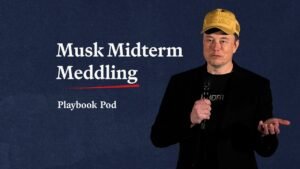
- Democrats’ Musk-ask questions
- DCCC launches ads against Mike Turner in red Ohio district
- Capitol agenda: Dem gavels are coming for Elon Musk
- Pritzker’s big spending for Black and Hispanic candidates is drawing notice
- The ‘Congress addict’ serving as Trump’s fixer on Capitol Hill
- Elon Musk is in Democrats’ oversight crosshairs
- GOP lawmakers scramble to spare Ukraine from Trump
- Medicaid cuts haunt Republicans in battleground states
- GOP-linked PAC spends over $1M to boost third-party socialist in Ohio Senate race
- ‘A warning sign for polling’: Why one GOP pollster thinks a blue wave may fall short
-

 Politics2 years ago
Former ‘Squad’ members launching ‘Bowman and Bush’ YouTube show
-
Uncategorized2 years ago
Bob Good to step down as Freedom Caucus chair this week
-

 The Josh Fourrier Show2 years ago
DOOMSDAY: Trump won, now what?
-

 The Dictatorship2 years ago
Pete Hegseth’s tenure at the Pentagon goes from bad to worse
-

 Politics2 years ago
Former Kentucky AG Daniel Cameron launches Senate bid
-

 The Dictatorship2 years ago
Luigi Mangione acknowledges public support in first official statement since arrest
-

 Politics2 years ago
Blue Light News’s Editorial Director Ryan Hutchins speaks at Blue Light News’s 2025 Governors Summit
-

 Politics1 year ago
John Legend advises Trump to drop the ‘dictator s‑‑‑’ if he wants Nobel Peace Prize