
Politics
Republicans’ alarm grows about holding Texas Senate seat

With just days until Texas’ primary, Republicans in Washington are growing more alarmed that their increasingly vicious intraparty contest could cost them a must-win Senate seat.
Sen. John Cornyn appears to be headed to an expensive and nasty 10-week runoff against Texas Attorney General Ken Paxton, with a strong chance that Paxton wins the nomination even after national Republicans spent months airing his dirty laundry all over the Texas airwaves in an effort to boost Cornyn.
“Honestly, if you look at the polling in a general election setting, I don’t think it’s outside the realm of possibility that the seat [flips], depending on who the Democrats nominate,” said Senate Majority Leader John Thune, when asked about the possibility that Republicans could lose the race if Cornyn, who he endorsed, is not the party’s nominee.
If Cornyn loses the primary, Senate Republicans worry they could be forced to spend hundreds of millions of dollars that could otherwise go toward key battleground races in expensive states like North Carolina, Georgia or Michigan, complicating their path toward holding Senate control.
Republicans have already spent nearly $100 million on TV advertising in the primary, which also includes Rep. Wesley Hunt (R-Texas), according to data from AdImpact. And Cornyn launched new ads this week, with support from the National Republican Senatorial Committee, that hammer Paxton in ways that could hurt him in the general election too: highlighting his messy ongoing divorce and accusations of corruption and calling Paxton a “wife-cheater and fraud.”
But those attacks haven’t stopped Paxton, a MAGA hero more aligned with the party base who has been bolstered by positive polling and a wave of grassroots enthusiasm.
“All signs indicate that Paxton probably finishes first,” a Washington GOP operative close to Cornyn told Blue Light News granted anonymity to candidly discuss the race. “We’re just hoping the gap is close enough the narrative isn’t ‘Paxton kicked the crap out of Cornyn.’”
Paxton attended the president’s State of the Union address Tuesday night as a guest of Rep. Troy Nehls (R-Texas), who called warnings of an expensive general election a “scare tactic.”
“What you’re doing now is you’re telling Texas you can’t elect Ken Paxton, not because you do a better job than me, but it’ll cost too much to win it,” said Nehls. “What a desperate attempt to convince voters to not vote for Ken Paxton because it could cost too much money in November. That’s ridiculous.”
Paxton is predicting a massive victory. Speaking with reporters after a campaign rally in the Houston suburbs last Friday, he suggested he may win the race outright and avoid a runoff.
Both Paxton and Cornyn allies have been running ads attacking Hunt in recent days, a sign either that they see a chance that Hunt could edge Cornyn for a spot in the runoff — or that Paxton could win outright.
If the race does extend until the end of May, Paxton said he doesn’t intend to change his strategy.
“It’ll be grassroots, just like it always has been, and we’ll be out trying to compete,” Paxton said. “Obviously, [Cornyn] has got a lot of money, D.C. money. I don’t have that money. We’ll have our money from Texas.”
A spokesperson for Hunt said the congressman told NRSC chair Sen. Tim Scott last year before he got into the race that Cornyn was going to lose, but “Washington ignored it.” They also warned that Paxton could be vulnerable in the general election.
“If Senate Republicans lose the majority, it will be because the NRSC failed to plan for the future and chose to spend a record-breaking sum meddling in a Republican primary in Texas, of all places, where the GOP nominee is almost always favored to win,” the spokesperson said. “That’s malpractice.”
Republican Party officials and Senate GOP leaders think Cornyn has a far better chance than Paxton of staving off a Democratic challenger in the general election. When asked for comment on the race, the NRSC pointed to a memo it circulated to donors earlier this month that said that “John Cornyn is the only Republican candidate who reliably wins a general election matchup,” and warned “Paxton puts this seat at risk.”
“We have to be prepared to spend there, and that’s a very different scenario if Cornyn’s the nominee,” Thune said. “He is by far, I think, the best candidate on the ballot in a general election, not only for the Senate, but also for down-ballot races in the House that could be impacted by the Senate race too.”
The polls bear that out. The NRSC released polling toplines showing Cornyn leading state Rep. James Talarico by 3 points and Rep. Jasmine Crockett (D-Texas) by 7 points in general-election matchups. Paxton would trail Talarico by 3 points and lead Crockett by just 1 point. Nonpartisan public polls have found similar numbers.
A Democrat has not won a U.S. Senate election in Texas since 1988.
Rep. Monica De La Cruz (R-Texas), who hasn’t made an endorsement in the race, said she hopes the Republican primary avoids a runoff. “We’ve got to keep Texas red,” she said. “That is not a choice, and so the faster we can get someone in place, the better it is for all Texans.”
During a Fox News appearance Monday, Cornyn said he anticipates he will face Paxton in a runoff and warned that a Paxton victory would give Democrats a boost in November.
“Unfortunately, the attorney general has got so much baggage and corruption in his wake that he will jeopardize our chances of keeping this seat red in November,” Cornyn said. “I believe that I can help President Trump in [the] end of his second term by not only winning this race, but bringing along some of these congressmen who are running in these five new congressional seats. Ken Paxton jeopardizes all of that.”
Paxton has led or been in a statistical tie with Cornyn in nearly every primary poll since launching his bid in April of last year, despite campaigning minimally and spending a small fraction compared with Cornyn’s war chest. It’s a testament to Paxton’s status as an aggressive MAGA figure in Texas, a reputation he has forged while serving as Texas’ top lawyer for a decade. Paxton used the power of his office to stoke the culture wars in court, like suing to overturn the 2020 election and defending the state’s strict abortion ban.
Dave Carney, an adviser to Texas Gov. Greg Abbott, predicted that Cornyn and Paxton will face off in a runoff, where he suggested Paxton would have the edge. The most conservative candidate tends to win because they often have the most driven supporters in low-turnout primary runoff elections.
“They have to run real campaigns, both of them, they got to model their voters and turn them out,” said Carney.
To date, Trump has resisted making an endorsement in the primary. “I’m friendly with all of them,” he said earlier this month. “I like all of them, all three.”
Thune and other Senate Republicans for months privately lobbied to get Trump to endorse Cornyn, believing he would be the most formidable candidate in the general election. Thune has been careful not to predict what Trump will do in the future. Some top Trump political aides are working on Cornyn’s campaign — but the president has a longstanding relationship with Paxton. There is lingering skepticism in and outside of the Capitol that Trump would endorse Cornyn if the senator comes in second heading into the runoff.
Trump is scheduled to make an appearance in Corpus Christi on Friday to deliver a speech on the economy. A White House aide, granted anonymity to speak freely, said the president will not endorse at the event. The White House hasn’t announced if any of the GOP Senate candidates will join Trump on the trip.
Top GOP donors, too, worry that the party is burning money — and that Paxton still has the upper hand in spite of the huge spending against him, with some concerned about an outright Paxton win.
“Nobody truly knows what is going to happen based on the polling,” said one GOP donor. “There is a scenario [where] Cornyn doesn’t make it into a runoff. But even if he does, a runoff with Paxton will be very tough because of [the] low number of voters who turn out — most of whom are very conservative and viewed as Paxton voters.”
The person added that there is “frustration from everyone that Trump lets this happen by not endorsing.”
Another GOP donor said there’s “not a lot of cautious optimism” among donors that Cornyn will even make it to a runoff. “It’s going down to the wire,” the donor lamented.
Lisa Kashinsky contributed reporting.


Former Vice President Kamala Harris is revving up her involvement in the midterms. While some Democrats are eager to embrace her, others want her to steer clear.
Harris is planning to attend a canvass launch with Nevada Attorney General Aaron Ford for his gubernatorial bid next month in Las Vegas, his campaign told Blue Light News.
“As anyone who is interested in 2028 should do, Kamala Harris will be coming through. We are a pivotal state in the presidential election,” Ford said in an interview in Las Vegas on Tuesday. “2028 starts right now in 2026.”
Harris’ plans to visit Nevada signal yet another step into the fray of the midterms — and the national political stage. On Tuesday, she publicly backed Rep. Chris Pappas in his Senate bid in New Hampshire, a must-hold seat for the party in a state that Harris narrowly won in 2024. And she waded into three House races, two Democratic-leaning districts in her home state and a solidly Republican one in Tennessee.
Harris had kept a relatively low profile so far on the campaign trail. Some Democrats prefer it that way.
Iowa’s two most prominent Democratic candidates have said they do not want Harris to campaign for them. Alaska’s Democratic Senate nominee rejected a fundraising solicitation Harris sent on her behalf. And a swing-district Democrat in Wisconsin and a long-shot Senate hopeful in Kansas both told Blue Light News they would prefer Harris keep her distance.
“I received 9,000 more votes than Harris in 2024,” Rebecca Cooke, the Democratic challenger to Republican Rep. Derrick Van Orden in western Wisconsin, said in a statement when asked by Blue Light News. “I don’t need anyone to come and campaign with me in my district. I do the work of building relationships — including across the aisle — on my own.”
The arm’s-length treatment isn’t necessarily surprising: red-state and rural Democrats have long been hesitant to tie themselves to national Democratic figures. They are increasingly distancing themselves now as polls show the Democratic brand remains underwater even as President Donald Trump’s own standing with voters continues to drop. Trump’s approval hit a weak 36 percent in a recent poll conducted by The Economic and YouGov, while a separate survey from the pollster showed over 56 percent of registered voters disapproved of the Democratic Party.
Harris’ favorability numbers at the end of last year only stood at 42 percent. As the party’s most recent presidential nominee, she is one of its most prominent avatars.
A Cooke campaign aide, granted anonymity to discuss internal conversations, said Cooke’s team has turned down campaign offers from other national Democrats as she focuses on making a personal case to voters in one of the party’s top target districts this fall.
Cooke hasn’t warded off everyone, however: During her primary she leaned heavily into support from Sen. Bernie Sanders (I-Vt.), featuring him in campaign ads; his team also sent texts to help turn out voters. She also has accepted endorsements from potential 2028 candidates like former Transportation Secretary Pete Buttigieg and Sens. Mark Kelly (D-Ariz.) and Elissa Slotkin (D-Mich.).
Other high-profile Democrats, like California Gov. Gavin Newsom, have similarly stayed relatively low-key with their own endorsements so far. He’s faced some Democratic distancing himself: Stefany Shaheen, who is running for a House seat in New Hampshire, emphasized her support from Granite Staters when asked about a fundraising email the governor sent on her behalf last month.
Harris, like other potential presidential candidates, needs to build a network of friends and favors — much of which she has already developed from her own runs for Senate, the White House and her four years as vice president — while staying relevant. She retains a powerful fundraising network that can help down-ticket Democrats, too.
But in many parts of the country where she lost, her involvement could be a drag for Democrats otherwise facing strong political tailwinds in the midterms.
“It’s all good,” Eduardo Negrón, a spokesperson for Harris, said in a statement. “Vice President Harris will continue to raise money and travel on behalf of candidates in races where she can help make a difference. With Trump so unpopular and our deep bench of strong candidates, we are now seeing deeply red states in play this cycle. The Vice President believes we should be ruthless about competing everywhere and that means giving candidates in tough races the space to do whatever it takes to win.”
Harris’ recent ramp-up marks a shift from what had been an otherwise quiet midterms strategy that has focused primarily on standing by close preexisting relationships. It’s strikingly different from other potential 2028 presidential candidates who’ve endorsed more widely and been more prominent on the campaign trail.
One of the few times she did weigh into a contested primary was for Rep. Jasmine Crockett (D-Texas) — a co-chair of her 2024 presidential campaign — in her bid for Texas Senate. The vice president’s support came in the form of a robo-call released just days before the primary rather than an in-person appearance, and she quickly backed James Talarico shortly after he won the nomination. She also threw her support behind Michigan Democratic nominee Abdul El-Sayed after a bruising primary that has left Democrats scrambling to project unity heading into the general election.
Red-state Democrats have been particularly pointed in their calls to keep Harris out of their races.
“In Kansas, you’re trying to reach 45 percent of the state who are Republicans and a lot of really good people who are Republicans, but their vantage point or their worldview may be a bit different than Kamala Harris’,” Kansas Democratic Senate nominee Adam Hamilton told Blue Light News. “What I’m looking at is I’m really mounting a very Kansas-centered campaign, and I’m out speaking, I tell people I’m running as an independent-minded Democrat.”
Hamilton is running an uphill battle in a state that hasn’t sent a Democrat to the Senate since 1932. The state is seen as potentially somewhat in play amid the ongoing war in Iran, trade wars with close allies and a persistent cost of living crisis that have cut especially deep in agricultural territory.
But that doesn’t mean a coastal Democrat like Harris would play well in the conservative heartland.
“Having somebody from California come in and try to tell Kansans who they should vote for is a pretty bad idea,” Hamilton said. Harris has not endorsed in the race.
Other Democrats have taken similar tones toward Harris in recent days. In an interview with Blue Light News, Iowa State Auditor Rob Sand said he would not want the former vice president to appear with him as he runs for governor, adding that the country needed “new leadership.”
State Rep. Josh Turek, speaking with reporters after an event for his Senate campaign in Cedar Rapids, broadcasted an even more blunt answer to the same question: “No,” he said flatly, letting out a laugh.
A similar scenario played out in Alaska last month. After Harris’ team sent a fundraising email for Senate candidate and former Rep. Mary Peltola (D-Alaska) on the eve of the state’s primary election, a spokesperson for Peltola’s campaign told a local Alaska television station that she “isn’t seeking endorsements from anyone from the Lower 48.” Peltola’s campaign did not respond to Blue Light News’s questions on the matter.
Campaign spokespeople for several battleground Senate Democrats locked in high-profile races, including El-Sayed in Michigan, Troy Jackson in Maine and Roy Cooper in North Carolina — who have all received her support — declined to respond to requests for comment about how involved they would like the former vice president to be in their races.
Harris’ support isn’t an albatross for all Democrats, however. For some, her endorsement is welcome — and they want her out on the trail.
One key battleground Democrat (and a potential 2028 rival), Georgia Sen. Jon Ossoff, embraced Harris’ support with open arms. “Senator Ossoff is grateful for Vice President Harris’ help and support in his re-election campaign,” campaign spokesperson Ellie Dougherty said in a statement, adding that he would welcome her to Georgia to campaign alongside him or on his behalf.
Harris lost Georgia, but the rightward swing in the state was the smallest of any battleground — in large part because of a population boom in metro Atlanta and the large share of Black voters.
And in deep-blue Massachusetts, former Biden White House aide Dan Koh won an open House primary on Tuesday after running aggressively on support from Harris and President Joe Biden. Koh sought their support and featured them prominently in a campaign ad and in social media videos. He said scheduling didn’t work out for them to hit the trail, though.
“I will never run away from two people I admire greatly, who I believe did a lot of good for this country,” Koh said last week.
Jessica Piper contributed to this report.
Sports broadcaster Stephen A. Smith has been bouncing around cable TV but insists he’s staying out of one arena: the political one.
The outspoken ESPN personality isn’t staying away from talking politics — far from it. But Smith told Blue Light News in an interview airing Thursday that he’s not running for president in 2028 in his firmest rejection yet of speculation that has surrounded him for the past year.
“The minute I announce that I’m running, I would be taken off the air,” Smith said in an interview on The Conversation with Dasha Burns. “I wouldn’t be able to work, and I would lose a contract that I worked my entire career for, you know, and I’m not giving that up.”
He left no wiggle room: “As long as the rules are what they are and they can’t be circumvented, it’s not something that I’m going to think about.”
That didn’t mean Smith, who is famous for his brash takes, didn’t have a few about Democrats and Republicans.
Smith, who has repeatedly doled out criticism of both parties, offered blunt advice for Democrats seeking a path back to power: Purge the Democratic Socialists of America and restrain the party’s progressive flank.
The Democrats, he said, should only welcome people who “march lockstep” with the party. “We should never want to hear anything about the Democratic Party being a ‘big tent,’” he said.
Asked how Democrats should handle the progressives, Smith said: “Tell them to sit their ass down and get with the program.”
He also warned that Democrats’ association with left-wing streamer Hasan Piker would “come back to haunt” the party. Smith said he would have Piker on his show “if necessary,” and then “grill him about the things that he said and why.”
Smith’s remarks come as Democrats have been distancing themselves from Piker, who played an active role in supporting Abdul El-Sayed for Senate in Michigan and has come under fire for commentary that has included suggesting that American Jewish support for Israel could lead someone to “take action” against Jews in the U.S.
The ESPN star also had some praise for President Donald Trump, crediting him for recognizing “that most voters believe our politics and our politicians are full of shit” in a way that Democrats have been unable to articulate as well.
“He speaks a language that the electorate, no matter who they are or what side of the aisle they are on, can relate to, even if they despise him,” Smith said, adding that there are millions of voters out there who “want chaos” and “the evisceration of rules and decorum and regulations.”
Looking ahead to 2028, Smith named Pennsylvania Gov. Josh Shapiro as his top prospect for Democrats, calling him “big time,” and saying “[his] record is head and shoulders above anybody right now.”
Smith also praised Maryland Gov. Wes Moore, but thinks electing him could be a challenge following Barack Obama’s presidency.
On the Republican side, Smith dismissed a potential run by media personality Tucker Carlson, noting he doesn’t think the former Fox host could secure enough support from independents.
On the other hand, Smith argued that Secretary of State Marco Rubio would be a stronger candidate than Vice President JD Vance.
Vance is “an individual that tries to be too like Trump,” Smith told Blue Light News. “And I don’t think there’s — the level of authenticity that you’re wishing to see from candidates; I don’t think he’s that guy. I think that Marco Rubio is an authentic individual.”
Smith even noted he would consider voting for Rubio himself, saying it depends “on the candidate on the left.”
Watch the whole interview on the latest episode of “The Conversation.”
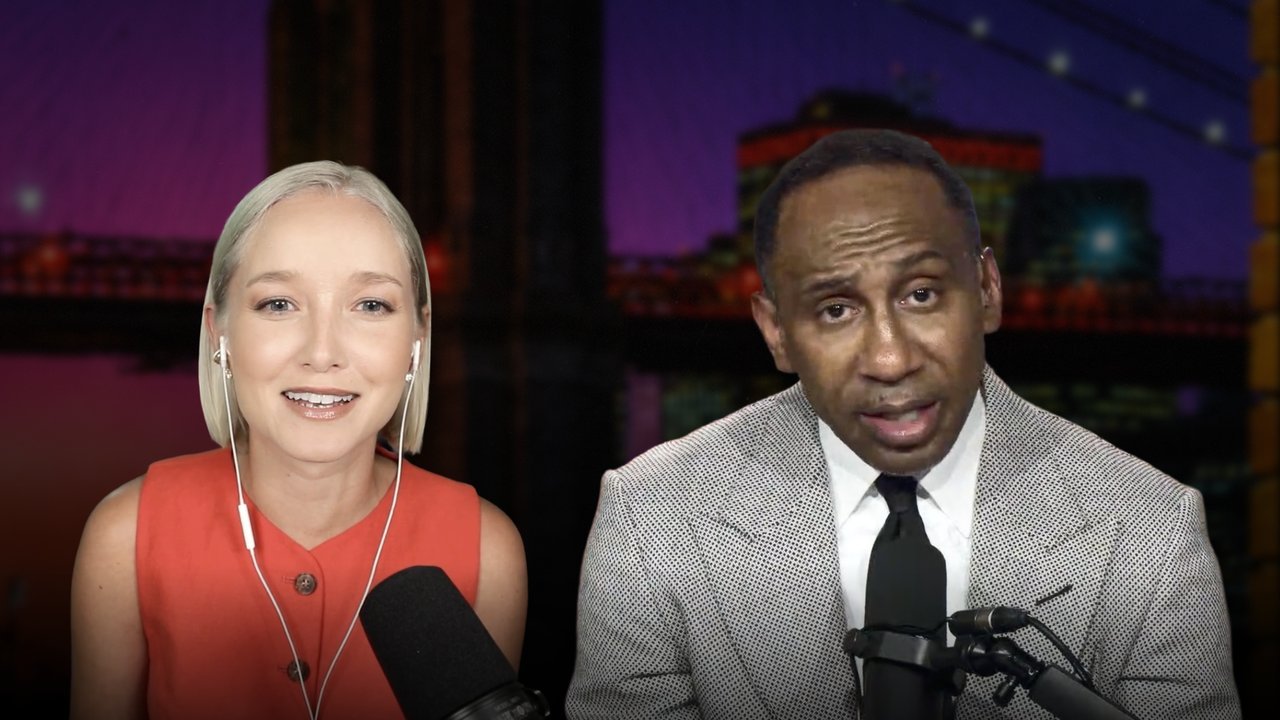
Stephen A. Smith on Trump, Democrats and the politics of chaos
lead image
- Leon Black defies House Oversight Committee, sues Congress amid Epstein investigation
- House Republicans set to cut pre-election session short
- Third Way rolls out “new economic bargain” platform for Dems
- Kamala Harris is wading into the midterms. Some Democrats want her to stay out.
- The Trump administration is taking stakes in more companies — and progressives are taking notes
- Stephen A. Smith has some words for Democrats as he makes his 2028 plans clear
- Democrats’ new data center attack line
- Stephen A. Smith on Trump, Democrats and the politics of chaos
- Elon Musk unleashes first wave of spending on key races in the midterms
- House Democrats watch closely as Hakeem Jeffries vows to rein in rogue members
-

 Politics2 years ago
Former ‘Squad’ members launching ‘Bowman and Bush’ YouTube show
-
Uncategorized2 years ago
Bob Good to step down as Freedom Caucus chair this week
-

 Politics2 years ago
Former Kentucky AG Daniel Cameron launches Senate bid
-

 The Dictatorship2 years ago
Luigi Mangione acknowledges public support in first official statement since arrest
-

 The Josh Fourrier Show2 years ago
DOOMSDAY: Trump won, now what?
-

 The Dictatorship2 years ago
Pete Hegseth’s tenure at the Pentagon goes from bad to worse
-

 Politics2 years ago
Blue Light News’s Editorial Director Ryan Hutchins speaks at Blue Light News’s 2025 Governors Summit
-

 The Dictatorship12 months ago
Mike Johnson sums up the GOP’s arrogant position on military occupation with two words