
Politics
Republican Deb Fischer holds slight lead over Dan Osborn in Nebraska Senate race

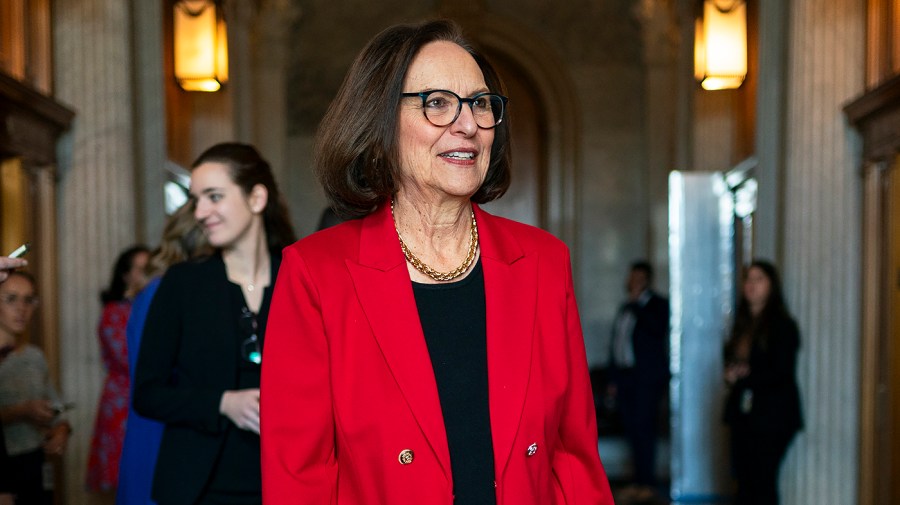
Sen. Deb Fischer (R-Neb.) is holding onto a small lead over independent Dan Osborn in the Nebraska Senate race, according to a new independent survey. A New York Times/Siena College poll showed that Fischer, a two-term incumbent, is ahead by two percentage points among likely voters — 48 to 46 percent — putting her lead squarely…
Read More



When President Donald Trump announced a two-week ceasefire with Iran shortly before his own deadline for Tehran to comply with U.S. demands or be wiped off the Earthhe didn’t simply say hostilities had halted.
He said the United States had favorably received a 10-point proposal from Iran and billed the two weeks not as a temporary end to fighting, but a chance to simply formalize a deal the countries had been negotiating since before the U.S. and Israel attacked at the end of February.
“Almost all of the various points of past contention have been agreed to between the United States and Iran,” Trump said in a Truth Social post Tuesday night.
Since then, the two sides seem to have agreed on very littleincluding whether the war has actually been paused. Iran has alleged it has faced attacks even after the ceasefire was announced; the U.S. military ha said it was not them.
That 10-point plan — the one Trump called “a workable basis on which to negotiate” Tuesday night — was dismissed Wednesday by White House press secretary Karoline Leavitt as “fundamentally unserious, unacceptable and completely discarded,” saying the president literally threw it in the garbage.
In fact, after thousands of deaths, more than a month of regional instability and a hit to the global economy, it’s unclear how much of what’s on the table even differs from the lead-up to the war.
Here’s a closer look at some of the points of contention that could determine whether the ceasefire holds:
The Strait of Hormuz
Trump called the ceasefire contingent on Iran reopening the Strait of Hormuz, a narrow trade route at the mouth of the Persian Gulf through which about 20% of the global oil and gas supply passes. He even floated the strange possibility of Washington and Tehran jointly collecting tolls on tankers that use the lane.
Iran said it would only reopen the strait once a series of conditions were met, including some that may be beyond Trump’s control, such as whether Israel withdraws from Lebanon.
Control of the strait is arguably Iran’s greatest strategic advantage. After it was attacked, Iran effectively closed the tightly curved passage by striking ships that tried to sail past, sending the price of oil and other goods skyrocketing. Trump’s threat to destroy an entire civilization was meant to force Tehran to allow tankers to once again pass through, even though he has insisted over the course of the conflict that he would leave other nations to cope with the closure since the U.S. sources relatively little energy from that route.
Nuclear enrichment
The U.S. has demanded Iran completely stop its uranium enrichment, and of the shifting reasons the Trump administration has provided for why it went to war alongside Israel, this one eventually became the most consistent.
Before the war, Iran was working toward enriching its nuclear fuel to the point that it could be considered weapons-grade, well beyond the level agreed upon by several countries in the 2015 Joint Comprehensive Plan of Action. Trump withdrew the U.S. from the agreement during his first term in 2018, calling it a bad deal. Tehran responded by ramping up enrichment despite international pressure to stop.
In its ceasefire proposal, Iran emphasized its right to enrichment. Without a return to something like the 2015 arrangement, this could be the single biggest sticking point.
Sanctions
Iran has been burdened with its own economic crisis even before the war started. Iran’s national currency, the rial, fell to a record low in December, leading shopkeepers in Tehran to take to the streets in protest. U.S. sanctionson Iran, some of which have existed since the 1979 Islamic Revolution, have further strained an already struggling economy. Iran has called on the U.S. to lift primary and secondary sanctionswhich not only directly affected Iran, but also prevent third parties from conducting trade with the country.
The most crippling U.S. sanctions are on Iranian oil.
“We are, and will be, talking Tariff and Sanctions relief with Iran,” Trump said Wednesday.
Lebanon
Iran has demanded the withdrawal of U.S. forces from the region, an unlikely scenario considering the positive relationship between the U.S. and Gulf Arab countries that host its military bases. More immediately pressing is the issue of Lebanon.
Pakistani Prime Minister Shehbaz Sharif, who has emerged as a the primary diplomatic intermediary in the war, said all parties agreed to “an immediate ceasefire everywhere including Lebanon and elsewhere, EFFECTIVE IMMEDIATELY.” Israel and the U.S disagreed.
Lebanon was dragged into the war after the Iran-backed militia Hezbollah mounted an attack against Israel in retaliation for assassination of Iran’s Ayatollah Ali Khamenei.
Not even 24 hours after the ceasefire was announced, Israel struck central Beirut in what Israel called the largest coordinated military strike in the war, with more than 100 Hezbollah targets hit within 10 minutes in Beirut, southern Lebanon and other areas.
Israel’s attack on Lebanon could jeopardize the fragile agreement, with Iran threatening to pull back. Following the attack, Iranian Foreign Minister Abbas Araghchi said, “The U.S. must choose — ceasefire or continued war via Israel. It cannot have both. The world sees the massacres in Lebanon,” adding that “the ball is in the U.S. court.”
What’s next?
Sharif proposed direct talks between the U.S. and Iran on Friday in Islamabad. Leavitt said Wednesday that Vice President JD Vance, special envoy Steve Witkoff and Jared Kushner, the president’s son-in-law, will represent the U.S. in negotiations, though Trump said it was possible Vance would not attend due to security concerns.
In the meantime, Sharif asked all warring countries to adhere to the ceasefire amid reports of attacks in the region. While Israel has continued to bombard Lebanon, countries such as Qatar, the UAE and Kuwait said they have continued to intercept missiles and drones coming from Iran.
Erum Salam is a breaking news reporter for MS NOW, with a focus on how global events and foreign policy shape U.S. politics. She previously was a breaking news reporter for The Guardian.
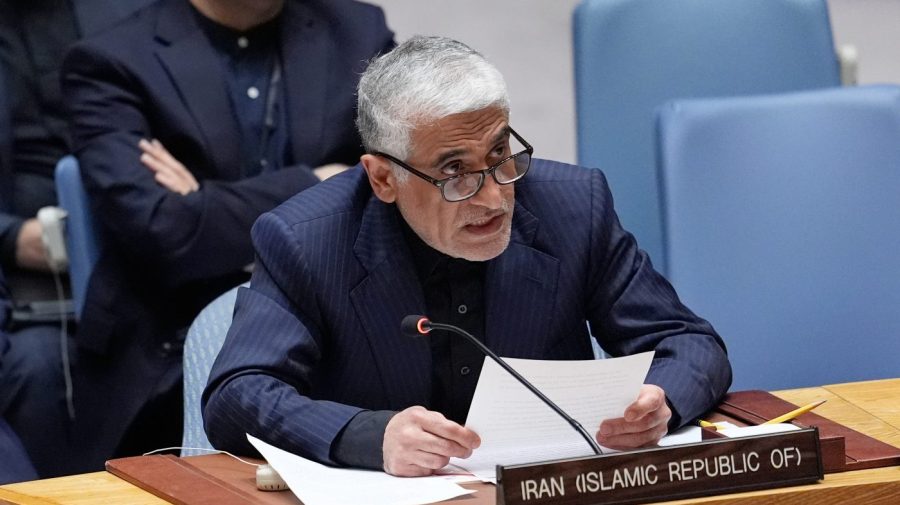
Iran’s envoy to the United Nations said Tuesday that Tehran is willing to engage in “genuine” negotiations to end the conflict in the Middle East but will not accept a temporary ceasefire, as the country defies intense pressure from President Trump to make a deal on the Strait of Hormuz or face escalation…
Read More
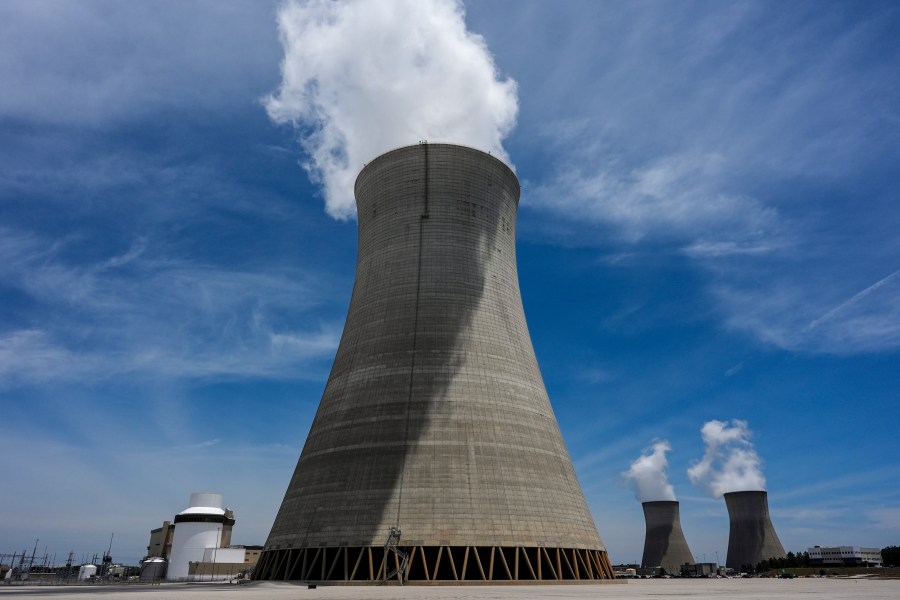
The Nuclear Regulatory Commission (NRC) has voted to no longer lead security drills at power plants, instead allowing companies to lead their own drills in the coming years. Last week, the commission decided to transition to company-led drills rather than agency-led ones to assess the nuclear energy fleet’s preparation for attacks…
Read More
- U.S.-Iran ceasefire: What we know
- ‘Seems like losing’: What the US hasn’t won in Iran
- Oil prices rise as US stocks fall ahead of Trump’s deadline for Iran

- ‘I don’t see anyone accepting that’: Oil industry balks at Iran’s shipping toll
- Zeldin stars at climate denial conference
- Top drug lobbyist to depart PhRMA at year end
- Pam Bondi still on the hook for Epstein testimony, Oversight panel says
- Hegseth declares victory in Iran but says US forces will remain in region
- Iran fires at Saudi Arabia and Israel as Trump deadline nears

- Steve Bannon wins Supreme Court order likely to lead to dismissal of contempt of Congress conviction
-

 The Dictatorship1 year ago
Luigi Mangione acknowledges public support in first official statement since arrest
-

 Politics1 year ago
Former ‘Squad’ members launching ‘Bowman and Bush’ YouTube show
-

 Politics1 year ago
Former Kentucky AG Daniel Cameron launches Senate bid
-

 The Dictatorship1 year ago
Pete Hegseth’s tenure at the Pentagon goes from bad to worse
-

 Politics1 year ago
Blue Light News’s Editorial Director Ryan Hutchins speaks at Blue Light News’s 2025 Governors Summit
-

 The Dictatorship7 months ago
Mike Johnson sums up the GOP’s arrogant position on military occupation with two words
-
Uncategorized1 year ago
Bob Good to step down as Freedom Caucus chair this week
-

 Politics12 months ago
Democrat challenging Joni Ernst: I want to ‘tear down’ party, ‘build it back up’