
Politics
Rahm Emanuel says U.S. should follow Australia’s youth social media ban

Rahm Emanuel, who is mulling a presidential run, is pushing for the United States to follow Australia’s lead in banning children under 16 from most social media.
Alarmed by the addictive nature of social media apps and the attendant health and safety risks for young users, Emanuel wants to amp up public pressure on American lawmakers to restrict access to some of the world’s most popular platforms.
In a bit of irony, the potential 2028 White House hopeful plans to issue his call to action Tuesday, as Australia’s ban takes effect, in a video he’ll post on his social media accounts, according to plans the Democrat shared first with Blue Light News.
“We’ve got to make a choice when it comes to our adolescents: Who’s going to be a kind of moral guiding light? I put my thumb on the scale for adults over algorithms,” Emanuel said in an interview, accusing Big Tech of prioritizing profits over “protecting our adolescents.”
It’s the latest in a series of policy stances Emanuel is sharpening as the former ambassador, who worked for three Democratic presidents and was mayor of Chicago, calls out his party’s messaging from education to public safety ahead of a critical midterm election.
It also comes as Democrats are embracing social media influencers and encouraging political leaders and candidates to spend more time online to promote their messaging and reach younger voters.
But Emanuel sees those as separate issues — an electoral strategy targeted toward adults over 18 versus a public health problem affecting adolescents. He likened solving it to steps he took to curb youth smoking as mayor by raising the minimum age to buy tobacco products. And he suggested lawmakers should start with targeting three of the most popular apps among U.S. teens — TikTok, Instagram and Snapchat.
“We can’t lose another generation because of inaction or political gridlock,” he said.
Emanuel appears to be taking a tougher stance on youth access to social media than some of his would-be rivals for the Democratic nomination — and positioning himself against the Big Tech lobby that has fiercely opposed efforts to regulate who accesses their platforms by arguing it infringes upon free speech. As a candidate, he too received donations from tech giants, including Eric Schmidt and Sheryl Sandberg.
Asked about those contributions, he said his stance now shows his independence from those firms.
In California, Gov. Gavin Newsom signed bills this fall that require social media platforms to display health warning labels to minors and require apps to check kids’ ages. Both Newsom and his wife, Jennifer Siebel Newsom, have spoken out about social media’s impact on kids’ mental health.
Maryland Gov. Wes Moore signed a “Kids Code” last year that aims to limit data tech companies can collect from children, but is mired in a legal battle. Illinois Gov. JB Pritzker signed a law in 2023 that works to ensure children are compensated for appearing in online content.
Emanuel, asked if his proposed social-media ban would be key to his platform should he run for president, said “anything that allows us to keep focus on improving academic standards and protecting our children on a public-health basis is going to be a priority.”
Australia’s world-first social media ban is designed to restrict access to major social media platforms including Facebook, Instagram, X, Snapchat, TikTok and YouTube for children under 16. And it threatens to slap their parent companies with tens of millions of dollars in fines if they don’t take “reasonable steps” to prevent youngsters’ access. Tech firms had protested the measure as rushed and “short-sighted” and argued it “will not fulfill its promise to make kids safer online.” But they have already begun deactivating accounts.
There’s some support for a similar ban in the U.S. Nearly six in 10 voters in a Quinnipiac University poll conducted in late 2024 said they would like to see similar age restrictions, though support was lower among those ages 18 to 34. An August POLITICO-Citrin Center-Possibility Lab poll of registered California voters showed 45 percent support for banning social media for kids under 16.
A bipartisan group of senators — including Ted Cruz (R-Texas), who political insiders think is positioning himself for another White House run in 2028 and who has made kids’ online safety a centerpiece of his stint chairing the panel that oversees social media — introduced a bill earlier this year that would ban children under age 13 from social media. Emanuel said that legislation has “the right thrust.”
Another bipartisan group of senators has reintroduced a bill that would require social media firms to remove features that could have negative effects on youth mental health. The bill sailed through the Senate 91-3 last year but stalled in the House, and the two chambers remain at odds over the details.
Amid congressional gridlock, a patchwork of primarily red states have passed laws attempting to limit kids’ access to social media by requiring parental consent and imposing digital curfews. But those efforts have drawn resistance from industry groups representing tech giants like Meta, Alphabet and Snapchat and have been largely blocked by courts.
Still, a divided panel of appeals judges last month gave Florida the go-ahead to begin enforcing a law signed by one-time presidential aspirant, GOP Gov. Ron DeSantis, that bars children under age 14 from using many social media platforms and requires parental approval for those ages 14 and 15. DeSantis, who might mount another White House bid in 2028, has hailed the law as a way of keeping children safe from online predators.
Emanuel acknowledged the stiff legal challenges a sweeping social media ban could face. But he said there’s a potentially “winning argument” in casting the crackdowns as combating “a public health issue associated with technology” rather than the technology itself.
Tyler Katzenberger, Andrew Atterbury and Shia Kapos contributed to this report.


🚨🚨MUST READ🚨🚨: Mayor Zohran Mamdani and a group of fellow basketball enthusiasts have been secretly using the NYPD Police Academy’s gymnasium in Queens to play pickup ball, according to four people familiar with the games. The mayor and his crew typically show up around 10 or 11 p.m. and enter surreptitiously through a loading dock before hitting the court. While sports fanaticism has often buoyed the political brand of past mayors, Mamdani’s choice of venue is raising eyebrows. Read the story from POLITICO’s Graham Rayman, Chris Sommerfeldt and Joe Anuta here.
FINANCE FLAWS: Republican gubernatorial candidate Bruce Blakeman’s campaign finance disclosure reports have been plagued by inaccuracies since the spring. Copies of the campaign’s bank statements obtained by Blue Light News suggest his filings might have even more problems than previously suspected.
According to a disclosure report submitted to the state Board of Elections earlier this month, the Blakeman campaign had only $178,000 in the bank as of Sept. 28.
Yet the campaign’s checking account had a balance of $1.7 million on Sept. 28, according to TD Bank’s monthly statement.
The bank records also show dozens of transactions that are missing from his campaign finance filings.
On July 29, for example, the bank statements identified the campaign using a check with the number 1156 to make a $13,500 payment to an unspecified recipient. Yet Blakeman’s campaign finance reports do not identify any transactions that used check number 1156. It also hasn’t shown a single payment totaling $13,500 at any point over the past year.
In addition, there are instances in which the bank records show apparent contributions to the campaign that never show up in the disclosure reports. The statements show Blakeman was wired $18,000 by actress Lois Robbins on Sept. 2, for example, while the filings don’t show any transactions totaling $18,000 within two weeks of that date or any donations from Robbins. An $18,000 wire from attorney and campaign finance chair Howard Fensterman in July similarly doesn’t match anything in the disclosure reports.
Blakeman is the first gubernatorial candidate in state history to participate in the new matching funds program that lets him receive up to $3.5 million in public money. Then-Mayor Eric Adams was blocked from participating in a similar New York City program last year due to discrepancies between his bank statements and disclosure reports.
Reinvent Albany’s Kyle Kennedy said he didn’t know the cause of the discrepancies, but that it could just be due to “the timing of when things were recorded.”
But, he noted, Blakeman’s campaign “will automatically be audited by the Board of Elections after the election. … Campaign finance enforcement takes place after elections, not in real-time.”
Blakeman’s campaign didn’t respond to a request to explain the discrepancies. It has previously said its campaign finance problems are due to technical issues caused by a large number of donors.
Several of the candidate’s campaign finance disclosure reports have been repeatedly amended, often in ways that made the initial numbers wildly inaccurate. His July report showed him with $4.7 million in the bank; that was changed a week later to show his balance was $6.1 million; then in August it was changed to $4.3 million.
As Blue Light News reported earlier this month, Blakeman has received about $360,000 in donations over the contribution limit that he still needs to return. Many of the donations he has already returned have been highly unusual — one person who gave $1 in July was quickly refunded $780.76.
His campaign then said he accidentally submitted some duplicate contributions. Nearly a month later, it hasn’t amended the filing to show which transactions were real.
And as New York Focus reported, the Blakeman campaign submitted requests to receive matching funds for 2,600 donations that were ineligible for matches.
From the Capitol
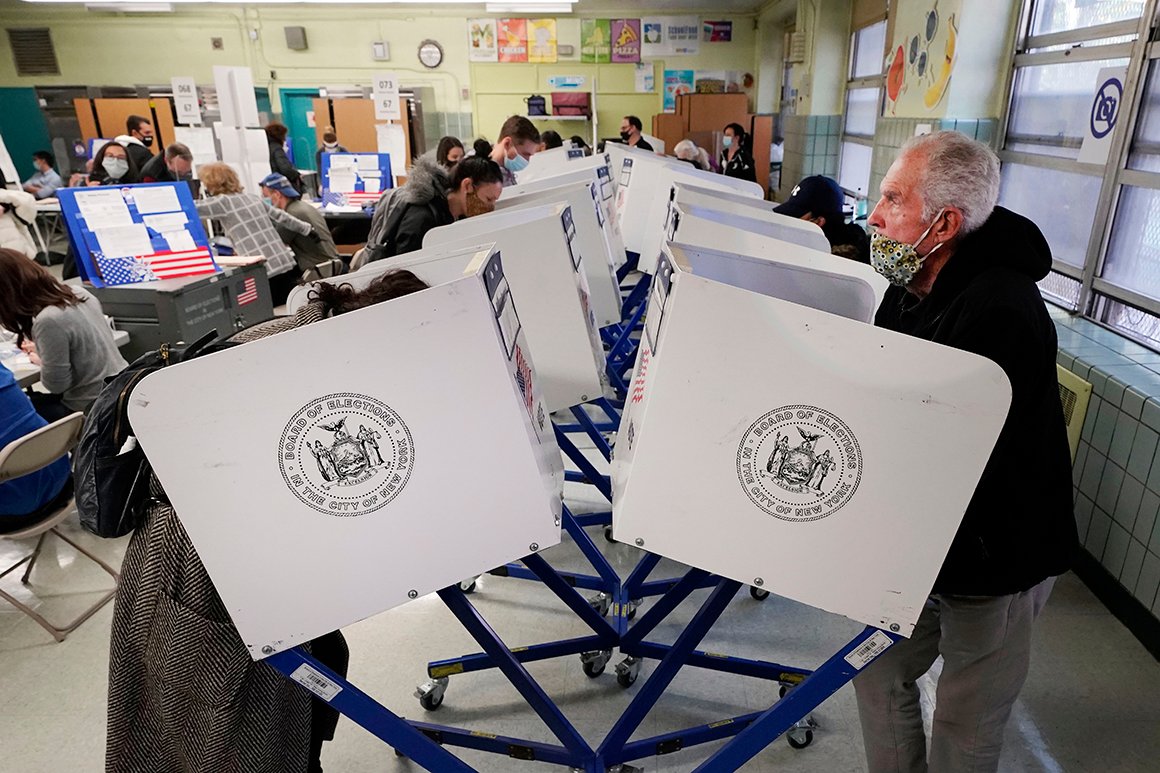
THE WEEKEND TURNOUT: Early voting turnout has skyrocketed in every corner of the state, according to unofficial tallies provided by the state Board of Elections.
On the first two days of early voting in 2022, 261,735 people cast a ballot. This weekend, that number increased to 485,205 — a jump of roughly 85 percent.
The biggest increases were in the North Country — particularly in the congressional seat being vacated by Rep. Elise Stefanik, which is now a battleground district for the first time in over a decade. Washington County’s weekend turnout was up 236 percent from four years ago. Early voting increased 196 percent in St. Lawrence County, 182 percent in Warren County, and 179 percent in Herkimer County.
The smallest gains were in the Hudson Valley. That was especially true in the district held by Democratic Rep. Pat Ryan, where early turnout was the highest in the state four years ago as Ryan won his first full term in a nail-biter. His race isn’t widely viewed as competitive this year, and the smallest increase among the state’s 62 counties was in Ulster, which was up only 41 percent relative to 2022.
There were also relatively middling gains in Erie County (up 60 percent) and Nassau County (up 64 percent). Those are the places where New York’s two gubernatorial candidates live, perhaps indicating that neither is yet the beneficiary of any outpourings of hometown pride. — Bill Mahoney
FROM THE CAMPAIGN TRAIL
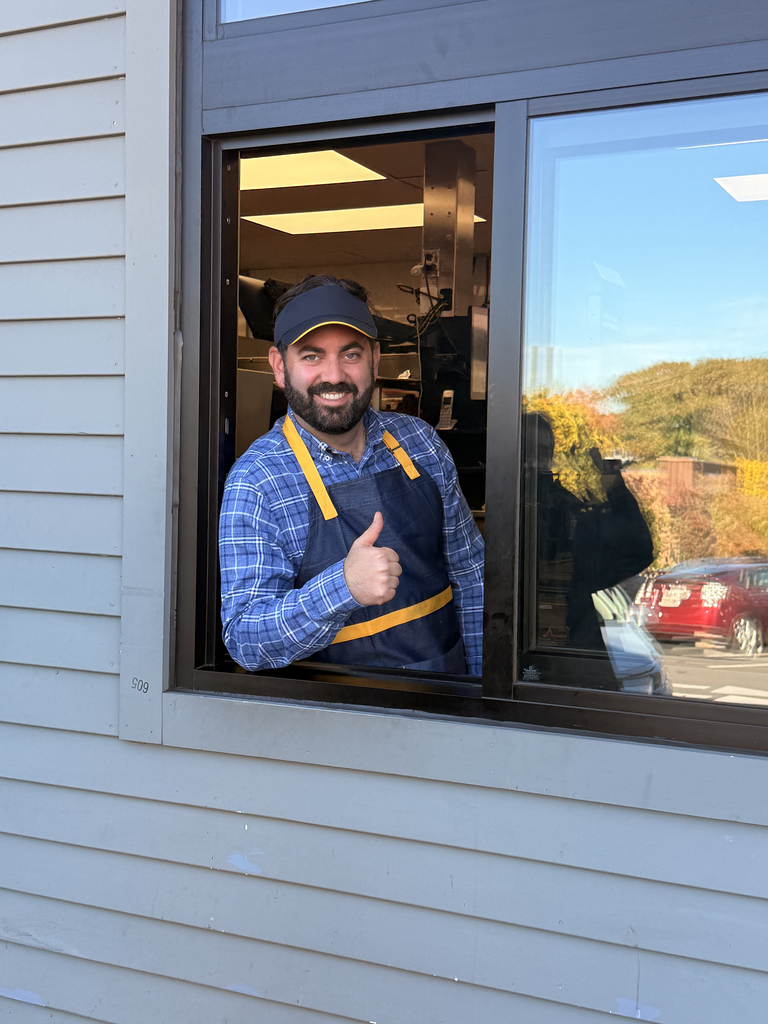
ORDER’S UP: Republican Rep. Mike Lawler spent part of this afternoon working at McDonald’s in Haverstraw – a potential backup job “if things don’t work out in November,” he said while putting on his uniform. Lawler is in the final campaign stretch in one of the country’s most closely watched congressional battlegrounds against Democrat Cait Conley.
The lawmaker spent his McDonald’s shift cooking food, handing out orders and speaking with constituents – one of whom openly admitted to voting against him before taking their food and driving off. Aside from that one outlier, customers gave Lawler a warm reception at the drive-thru window. The visit was seemingly part of an effort to make inroads in Haverstraw, a town that leans Democratic.
Lawler told Blue Light News he’s feeling confident going into the final days of his campaign, but insisted that he is an underdog in the Hudson Valley district. In the 2024 presidential election, Kamala Harris and Lawler each won the district.
“I feel very good about where we are heading on Election Day. Eight days from now, we’re going to win because I’ve done the work,” Lawler said in an interview. “I’ve delivered for my district, and the people here know me. I’m from here; I’ve lived here my whole life, I know the community..”
And for those wondering about Lawler’s go-to McDonald’s order: double quarter-pounder with cheese, a Coke and a four-piece McNugget. — Katelyn Cordero
STUMPING SPRINT: Fresh off a weekend of enthusiastic campaigning for Gov. Kathy Hochul, the mayor addressed reporters at a press conference this morning.
He stuck to his rhetoric touting the governor as a champion for affordable child care and lampooning her GOP foe Bruce Blakeman as a Trump puppet.
The mayor was also pressed about whether he expects something in return for all the campaigning he’s been doing for Hochul — such as increased taxes on the rich, a top goal for Mamdani and his democratic socialist allies in the state Legislature.
“I’m expecting a continuation of a positive and productive working relationship with the governor,” he said. “I’m excited for that relationship to continue. It’s been one that’s delivered for working class New Yorkers, and I’m confident it’s going to keep delivering.”
It’s far from an explicit commitment, but it suggests he’ll continue pushing Hochul for tax hikes should she win reelection — something City Council Speaker Julie Menin told POLITICO she would support to bankroll child care programs earlier this month.
Mamdani also repeatedly mentioned the importance of showing New Yorkers that a mayor and a governor can have a productive working relationship — an apparent dig at the storied feud between former Mayor Bill de Blasio and former Governor Andrew Cuomo.
“New Yorkers across the five boroughs are excited about us finally working together, where they haven’t seen mayors and governors do that often in the past to be able to deliver on common sense things,” he said. — Molly Reinmann
FROM CITY HALL
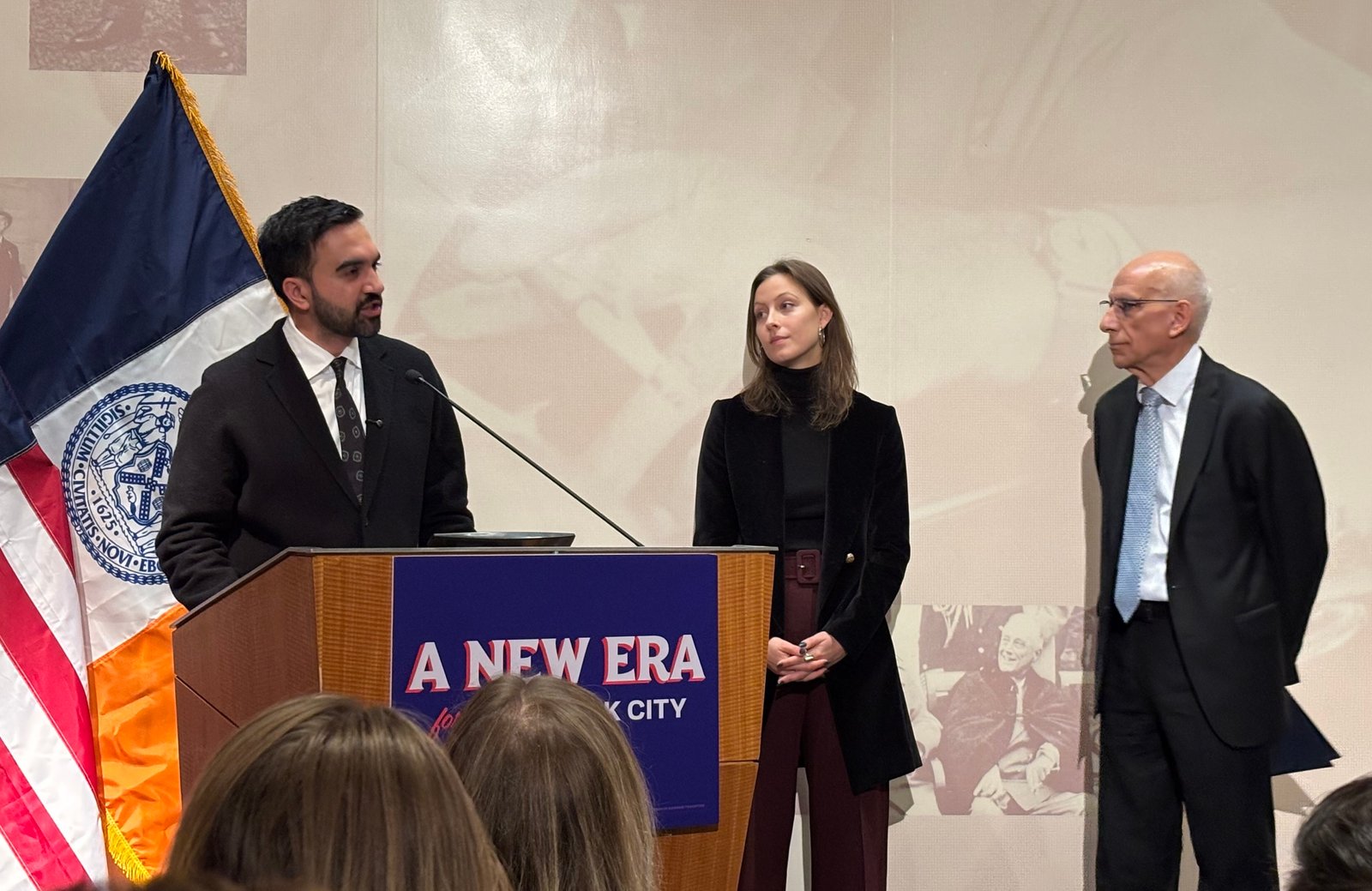
GRAND PLANS: Mamdani’s chief of staff Elle Bisgaard-Church laid out the democratic socialist administration’s governing philosophy today — including its opposition to means-testing for government programs.
“We look especially to universal social programs, facilitating forms of collective ownership, supporting the growth of unions. In short, creating shared economic security and stability through material programs,” Bisgaard-Church said at an event on Mamdani’s affordability agenda hosted by the New York City Policy Forum, a left-leaning research and publishing network. “On the contrary, means-tested programs segregate and encumber people.”
She pointed to other periods in the city’s history that saw “rich public institutions that could compete with the private sector,” citing NYCHA, the MTA and CUNY. Public housing, in particular, has seen significant deterioration in recent decades amid federal disinvestment. Reversing that trajectory is one of the most pressing issues Mamdani faces as mayor.
“Today we are governed by rules of austerity and face a withered welfare regime, means-tested policies, decayed public sector, and weakened public institutions,” Bisgaard-Church continued. “These are the political realities our administration wants to overturn, and we know that tackling the crushing cost of living is again key to doing so.”
The event drew other top Mamdani officials including Deputy Mayor for Housing and Planning Leila Bozorg, Economic Development Corporation Chair Lina Khan, and Consumer and Worker Protection Commissioner Sam Levine. — Janaki Chadha
IN OTHER NEWS
— HOMELESSNESS: Mamdani’s early efforts to address a ballooning homelessness problem in the city have largely failed, community leaders allege. (The Wall Street Journal)
— SUNNYSIDE YARD: Housing experts weighed in on the outlandishly high cost of Mamdani and Trump’s proposed development at Sunnyside Yard. (The City Reporter)
— BK DEMS: There are four state legislative seats Democrats are looking to flip in southern Brooklyn this midterm cycle, a fact that has largely been overshadowed by the party’s drama-packed leadership succession saga. (City & State)
Missed this morning’s New York Playbook? We forgive you. Read it here.
House Democrats are pushing into redder and redder territory. History shows those last-minute moves don’t usually pan out, even in favorable cycles.
Since 2018, Democrats haven’t flipped any Republican-held seat that was added to the Democratic Congressional Campaign Committee’s “Red to Blue” list in the September or October before Election Day, according to a Blue Light News analysis. Of the 28 total candidates from 2018 to 2024 that were added in the final two months of the campaign, just three Democrats won — all in Democratic-held open seats.
That’s a much lower rate than average Red to Blue performance. Out of 203 candidates added to the program in the four previous cycles, 73 flipped their seats.
That’s not a shock: The DCCC tends to add the biggest reaches later as it moves through the cycle, both to make sure its best opportunities are funded first and have enough attention and to try to create a sense of momentum and map expansion for donors and the media.
In fact, the DCCC used some of the seats in their latest round of additions in a recent fundraising plea sent out by Executive Director Julie Merz, who warned that without more cash the committee “could be leaving winnable races on the table.”
But it illuminates how hard it is — even in the best of environments — to reach deep into red territory in order to flip House seats. And it’s especially true now, as the House battlefield has shrunk significantly since 2018 because of gerrymandering.
Since the beginning of September, the DCCC has added nine Democrats to Red to Blue: independent Bill Hill in AK-AL; Will Lawrence in MI-07; Mitchell Berman in WI-01; Chris Jones in AR-02; Dwayne Romero in CO-03; Eliott Rodriguez in FL-27; Teresa Benitez-Thompson in NV-02; Blake Gendebien in NY-21; and Justin Pearson in TN-09.
Democrats acknowledge these late additions are a low-percentage play. Former DCCC staffer Cole Leiter, who worked there for the 2018 and 2020 cycles, said the committee recruits and tracks reach-district candidates early in the cycle with hopes the political winds will shift their way.
“That is an investment in the unpredictability of the map,” Leiter said. “Most of these seats probably won’t flip, but one or two might.”
Regardless of whether or not Democrats ultimately win the seats they’ve added late this year (the DCCC added six deep-red targets to Red to Blue in early October) — the additions alone contribute to a narrative of a party on offense. And they can also be a boon for fundraising for those specific candidates as well as to entice donors with exactly which areas their dollars will go if they pony up.
“Even if there’s ultimately not a massive success rate in those final editions, it is not a bad thing to make sure that those campaigns have any last-minute dollars that the designation can bring,” said Meredith Kelly, a former DCCC staffer who worked the 2016 and 2018 cycles. “Just make sure that they have a surfboard in the water and have an ability to potentially take advantage of a really, really good night.”
This cycle’s late-add Democrats are almost all facing cash disadvantages against their incumbent GOP opponents. Of the nine Democrats added within the past two months, only one — Benitez-Thompson, running against Republican David Flippo — has reported more cash on hand than their opponent. Five of them are facing fundraising deficits of over $1 million, according to Federal Election Commission filings.
Democrats’ poor record in these seats is somewhat self-selecting — seats added to the program late in the cycle reflect the fact that Democrats weren’t initially convinced they could be flipped.
Whitney Fox, who lost by 9 points to GOP Rep. Anna Paulina Luna in FL-13 in 2024 and was among the last Democrats to be added to Red to Blue when she was picked in late September, said her campaign suffered from the delay in adding her to the program, even as she acknowledged the DCCC is forced to make strategic decisions with limited resources.
The late additions also limit the window that candidates can capitalize on the program’s benefits. After initially being told she wouldn’t be added and after what she said was months of making her case to the DCCC, Fox made the list just before Hurricane Milton devastated the Tampa area, which she said made it difficult to fundraise off her newly minted Red to Blue status.
“I felt like it was too little, too late,” she said.
The Democrat running against Luna this cycle, Leela Gray, was added to Red to Blue in late August. Fox, who is informally advising local Florida candidates this cycle, said she offered Gray advice on how to make the list early.
“I was a squeaky wheel trying to talk to leadership and Democratic members of Congress, and then it got to a certain point where I was no longer the squeaky wheel,” she said she relayed to Gray. “I was going to take the spoke off the wheel and hit people over the head with it.”
Still the DCCC believes this cycle will be different, history be damned. And if recent national polling showing them with a double-digit lead in the generic ballot is correct, some of these late additions might break through.
“Records are meant to be broken,” DCCC spokesperson Viet Shelton said in a statement. “We’re on track to break them this year because across the battlefield, we’ve got amazing recruits and the enthusiasm to fire House Republicans for making life unaffordable is off the charts.”
A version of this article first appeared in Blue Light News Pro’s Morning Score. Want to receive the newsletter every weekday? Subscribe to Blue Light News Pro. You’ll also receive daily policy news and other intelligence you need to act on the day’s biggest stories.
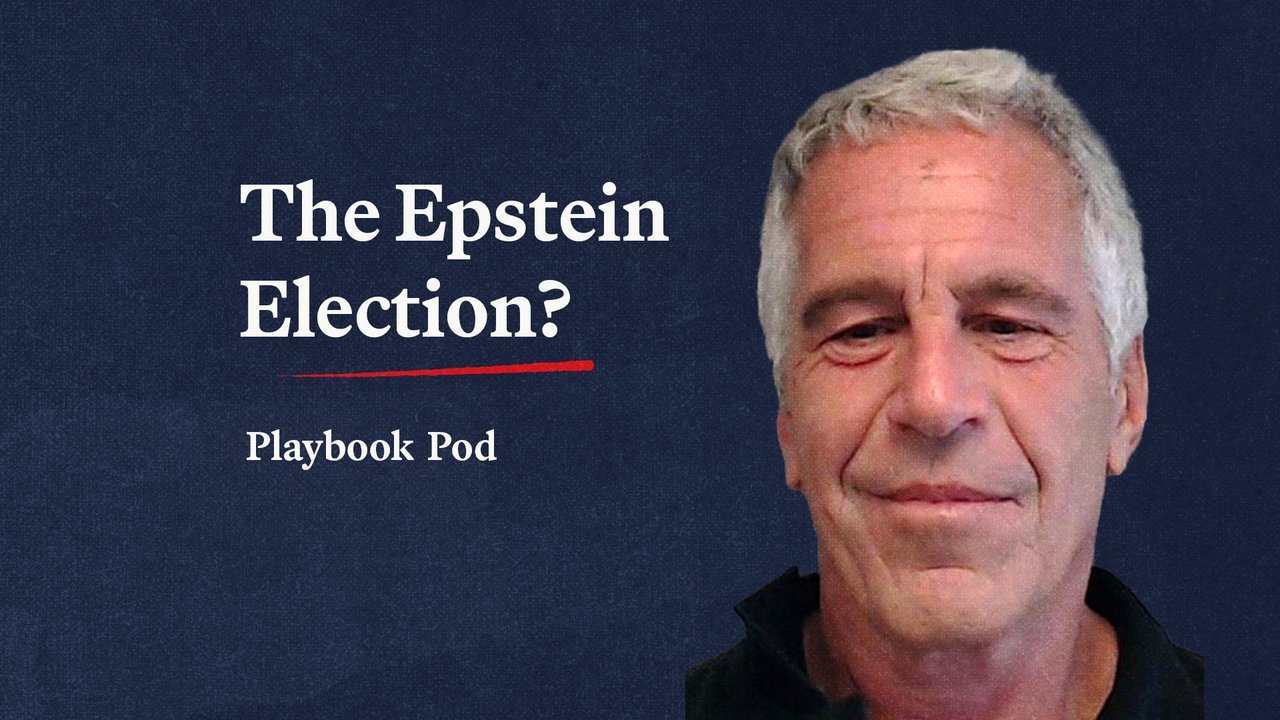
The Epstein election?
lead image
- Judge bars Trump admin from further tree-felling, closures, at golf course
- Ralph Norman under pressure from fellow South Carolina Republicans to campaign for Darline Graham
- Blakeman’s bank statements don’t match his disclosure reports
- House Republicans set leadership elections
- Raskin warns oil industry against Trump’s Russian diesel deal
- Gallego plans final midterm travel around Latino enclaves
- Asian voters are swinging toward Talarico in Texas. Dems still say more outreach is needed.
- Jeffries edges closer to Hegseth impeachment as he eyes the gavel
- Why Dems’ late House reaches don’t usually pan out
- The Epstein election?
-

 Politics2 years ago
Former ‘Squad’ members launching ‘Bowman and Bush’ YouTube show
-
Uncategorized2 years ago
Bob Good to step down as Freedom Caucus chair this week
-

 The Josh Fourrier Show2 years ago
DOOMSDAY: Trump won, now what?
-

 The Dictatorship2 years ago
Pete Hegseth’s tenure at the Pentagon goes from bad to worse
-

 Politics2 years ago
Former Kentucky AG Daniel Cameron launches Senate bid
-
 Politics1 year ago
John Legend advises Trump to drop the ‘dictator s‑‑‑’ if he wants Nobel Peace Prize
-

 The Dictatorship2 years ago
Luigi Mangione acknowledges public support in first official statement since arrest
-

 Politics2 years ago
Blue Light News’s Editorial Director Ryan Hutchins speaks at Blue Light News’s 2025 Governors Summit