
Politics
Poll: MAHA wants more. They may turn to Democrats to get it.

Republicans hope the Make America Healthy Again movement becomes a permanent fixture of a big GOP tent. But the party can’t count on its support heading into midterm elections this November.
New results from The POLITICO Poll show both broad frustration and dissatisfaction with the Trump administration on health priorities and opportunities for Democrats to make inroads with Health Secretary Robert F. Kennedy Jr.’s MAHA supporters.
A majority of Americans associate MAHA with the Republican Party, but not overwhelmingly, and most believe the Trump administration has not done enough to “Make America Healthy Again” — including a 41 percent plurality of Trump’s own 2024 voters.
The burgeoning political movement that officials in both parties credit with helping President Donald Trump win in 2024 has already begun to reshape how the GOP approaches health policy — driving everything from a redesign of the food pyramid to a rollback in vaccine recommendations.
At the same time, however, many poll respondents view Democrats as better positioned on the movement’s key health priorities. They were more likely, for example, to say the Democratic Party can be trusted to make the country healthier and are more eager to improve health in America, while fewer said the same of Republicans. The GOP, on the other hand, is seen as more likely to be influenced than Democrats by lobbyists for the food and pesticide industries, who rank among the MAHA movement’s top enemies.
These views could have real consequences in a midterm election year when razor-thin differences in turnout could determine control of Congress. And Democrats are bullish about channeling voters’ frustration with the Trump administration’s policies into a blue wave this cycle.
“The MAHA movement in the [2024] campaign cycle started with a lot of energy, and did create more energy for these types of issues that previously wouldn’t have been associated with the GOP,” said Abby McCloskey, a GOP policy adviser who has warned that Republicans are “squandering their MAHA moment.”
“Since then, I think the energy has trickled off from the perspective of, what is the federal government going to do about this?” she said.
Overall, 47 percent of poll respondents say they support the MAHA movement, including roughly a third of voters who backed former Vice President Kamala Harris in 2024 and about a third of Americans who plan to vote for Democrats this November. By comparison, 70 percent of Trump 2024 voters say they support the MAHA movement.
However, Americans don’t consider the nation’s health a top issue; It saw the same level of prioritization as “wokeism” and opioid abuse. When asked to choose between priorities for the U.S. government, a majority placed improving Americans’ health above stopping illegal immigration or cutting down on crime — but below affordability and concerns with cost of living.
And there are still widespread misconceptions about what MAHA is and what it does — even among people who self-identify with the movement. Just a third of Americans say they have heard of the MAHA movement and could explain what it is. Another third say they have heard of MAHA but could not explain it, including 31 percent of people who identify as part of the movement. One in four Americans had not heard of the movement at all.
The poll points to an opening for Democrats if they can effectively speak to the movement’s most popular issues and highlights that Republicans’ advantage with MAHA is far from guaranteed.
“People that we would call a ‘MAHA’ voter, they’re not partisans. They really are up for grabs,” Rep. Lauren Underwood (D-Ill.) told reporters on a recent call organized by the progressive advocacy group 314 Action, which is working to elect people with a health and science background to public office. “[Republicans] have really taken actions to alienate those folks, to break the promises that they made. They are no longer focusing on the core tenets of that Make America Healthy Again platform in order to continue to please Donald Trump, and also to advance their policy agenda.”
The Trump administration has largely pushed a deregulatory agenda, despite pressure from its MAHA supporters to crack down on pesticide companies, food manufacturers and drugmakers. Its recent choice to make it easier for Bayer to increase production of its weed killer Roundup has especially enraged MAHA supporters, who have said the move made it harder for them to continue supporting GOP candidates in the November midterms.
Kennedy’s own allies have warned Republicans that they cannot take MAHA voters for granted heading into November. Tony Lyons, the president of the MAHA Action, a political advocacy group that supports Kennedy’s agenda, said last month in a memo obtained by POLITICO that the GOP is merely “renting MAHA voters” but hasn’t been able to “purchase” them.
The Blue Light News Poll also finds that the issues self-identified MAHA supporters rank as most important are ones Democrats have championed more often than Republicans, such as halting the spread of infectious diseases, stricter regulation of “forever chemicals,” and expanding access to reproductive health care.
This is not necessarily surprising, since many voters who support MAHA’s goals have typically been Democrats, said Rodney Whitlock, a longtime GOP congressional aide turned health care strategist.
Some of the policies less popular among MAHA respondents, meanwhile, are ones the GOP has embraced: restricting abortion access and reducing the number of vaccines Americans receive.
Yet the movement still lines up with, and supports, some Republican food policies and initiatives. For example, 80 percent of MAHA respondents support removing artificial dyes from food and 72 percent support restricting junk food purchases in federal nutrition programs, both priorities the Trump administration has tackled.
Lyons has urged Republicans to talk more about Kennedy’s policy goals, including discouraging Americans from eating ultraprocessed food, on the campaign trail. If they fail to do so and disgruntled MAHA voters peel off or stay home in November, he has warned, Democrats could take control of Congress, subject Kennedy to oversight hearings, and block his policy and regulatory efforts from going forward.
Lyons did not respond to a request for comment for this story.
The Blue Light News Poll results — along with other recent polling showing declining trust in the Trump administration’s health recommendations — reveal a potential vulnerability for Republicans.
House Majority Forward, a nonprofit allied with House Democratic leadership, surveyed voters in February and March across several battleground districts the party is hoping to flip this fall. The group’s polls, shared first with POLITICO, found that more voters in Colorado, Iowa, New Jersey and Pennsylvania disapprove of Kennedy and his performance as health secretary than view him favorably.
“There’s this opportunity for Democrats to just start talking about making foods healthier and reducing the chemicals in the food that we’re giving them, … you know, limiting pesticide use, getting physical activity, removing artificial dyes,” said Carly Cooperman, a Democratic pollster and CEO of Schoen Cooperman Research.
A growing number of House and Senate Democrats — challengers and incumbents — are taking this advice to heart.
They’re beginning by focusing on pesticide use, which has become a political tension point for Trump’s GOP coalition, pitting the MAHA movement against powerful farm industry interests that have long been loyal to Republicans and hold significant sway with the administration.
Democratic lawmakers have railed against the Trump administration in social media posts, floor speeches and hearings for signing an executive order boosting domestic production of the pesticide glyphosate and siding with Bayer in a case pending before the Supreme Court that could shield the company from liability for the health impacts of its products. Democratic lawmakers, joined by a handful of Republicans, are also introducing bills and amendments that would undo or overturn these actions.
The Blue Light News Poll found that limiting pesticide use is broadly popular, with more than two-thirds of respondents in support of doing so. And MAHA’s dissatisfaction with the Trump administration’s stance has led to some leaders within the movement threatening to primary farm-state Republicans as early as August of last year — yet another opportunity Democrats can exploit.
“We’re not even sure that we even have a path forward in this administration when it comes to pesticides, because it’s very clear that they are entirely owned by Bayer and the chemical companies,” said Kelly Ryerson, a MAHA influencer who goes by the moniker Glyphosate Girl online and has publicly backed Kennedy.
Progressive advocates also say Democrats would be wise to seize on MAHA voters’ simmering frustration.
“There is a genuine concern that there is unhealthy food in our food supply, and this administration is making it worse,” said 314 Action President Shaughnessy Naughton, whose group is backing Democratic challengers around the country.
Yet even as a segment of MAHA appears to sour on the GOP — and Kennedy — some of his agenda garnered widespread support among poll respondents, from removing artificial food dyes to offering whole milk in schools. Though MAHA respondents didn’t rank Kennedy’s stances on vaccines high on their list of importance, a notable chunk of Americans are highly skeptical of existing requirements.
The Blue Light News Poll found that 41 percent of respondents across party lines support reducing how many vaccines Americans receive, with Republicans significantly more likely to hold that view. Fifty-eight percent of Trump 2024 voters support reducing how many vaccines Americans receive, compared to 29 percent of Harris 2024 voters.
Broad support for some of the key positions of MAHA — especially among Trump 2024 voters — and approval of some of the administration’s actions on health, suggest that Republicans may still be able to leverage the popular elements of the platform to win over voters in November.
Because health ranks so far down the list of Americans’ concerns, it’s unlikely to be a decisive factor in how they vote this midterm. Still, that doesn’t mean Republicans should be complacent and assume MAHA priorities won’t matter at all, Republican strategist Whitlock warned.
“Republicans have to be working from the perspective of ‘everything matters,’” he said. “To do differently is political suicide.”


President Donald Trump is asking voters to “pretend” he is on the ballot. That might backfire.
New results from The POLITICO Poll show that Democratic midterm voters are more motivated to oppose the president than Republican voters are to support him. Many Republican voters also aren’t looking for blind loyalty to Trump in the midterms: Half say they’d rather their local candidate aim to win, even if it means speaking out against the president.
It’s not uncommon for voters in the party out of power to be more motivated in a midterm year. But the lopsided findings are an ominous sign for Trump, who has fundamentally reshaped the GOP over the past decade and has once again staked his brand — and political capital — on delivering wins for Republicans in November.
With less than two weeks before the election, the poll suggests Republicans are pragmatic, and care more about preventing a blue wave than standing by Trump. And in a year when voter frustration over high pricesappears poised to play a major role, that distinction could prove consequential.
The poll, conducted by London-based firm PF Global, reveals the extent to which frustration with Trump is driving Democrats: Nearly half of Democratic midterm voters say they will be voting “mainly to oppose President Trump,” compared to just 38% of Republican voters who say they will be voting mainly to show support for Trump.
Instead, a plurality of Republican midterm voters — 48% — say their main motivation when casting a vote is to show support for a local candidate. Only 37% of Democratic voters agree.
“[Trump is] 100% motivating Democrats more than Republicans,” said Doug Heye, a longtime GOP strategist. “That may have been the case regardless, but it’s even more true with words like ‘diesel’ and ‘Iran’ now a part of everyday political discussion.”
Half of Republicans think candidates have a better chance of winning if they align themselves with Trump rather than breaking from him, compared to just 30% who believe candidates would have a better chance of winning if they break away.
But half of Republicans also accept their candidates speaking out against the president if that’s what they need to do to win their own election. That’s compared with 37% who say candidates should remain loyal to the president and support his agenda, even if it means risking a loss.
On top of that, majorities of Republican voters say Trump himself should give candidates some room to break with him on specific policy issues to win elections.
If it helps GOP candidates’ chances of winning, they said, the president should allow for disagreement on the speed of AI development, the cost of living, and whether the war in Iran was a good decision. That holds true for pluralities or even majorities of Trump 2024 voters who self-identify as part of the “MAGA” movement across each policy area, suggesting that even his most loyal voters want the president to let candidates distance themselves if it can help them win.
“President Trump is the unequivocal leader, best messenger, and unmatched motivator for the Republican Party, and he is committed to maintaining Republican majorities in Congress,” said White House spokesperson Davis Ingle.
RNC spokesperson Natalie Baldassarre said “Blue Light News didn’t need to conduct a poll to know that Democrats are motivated by their hatred for President Trump and Republicans.” She added that the GOP is “running on actual accomplishments like cutting taxes and securing the border,” while saying Democrats have made “investigations, obstruction, and impeachment” their campaign platform.
Still, the tension is playing out in real time as Republican candidates locked in competitive races walk a tightrope between maintaining Trump’s support — and that of his MAGA base — without alienating critical moderate and independent voters. They’re especially under pressure as Trump hits the campaign trail in battlegrounds and red states, with several candidates having to quietly make calculations whether it will hurt them politically to appear next to him.
“I think Republicans … are stuck choosing which finger to cut off,” said a national GOP operative, granted anonymity to speak candidly about the midterm landscape. “There is no good answer.”
In Iowa, where voter frustration over some of Trump’s marquee policies, including tariffs and rising costs stemming from the Iran war, has mounted, Republican candidates have sought to create some distance from the president. Republican Rep. Ashley Hinson, the party’s Senate nominee, has said the war needs to be “brought to a successful and immediate end.” She also skipped a rally Vice President JD Vance held in the state last month.
Several other GOP candidates have also skipped Trump rallies in their home states, and many have grown increasingly wary of mentioning Trump in ads, including in red states that over the last few months have suddenly started to look competitive. In battleground Georgia, GOP gubernatorial nominee Rick Jackson has carefully navigated his relationship with Trump, avoiding public breaks with the president on policy but still limiting direct references to him in campaign ads and on the debate stage.
“I don’t know that Trump coming [to Georgia] helps Republicans more so than it excites Democrats, especially in a wave election year,” said Jason Shepherd, a former Cobb County GOP chair who is supporting Jackson.
That leaves Republican candidates in a tricky position: Their voters are willing to accept breaking from Trump if victory is on the line, but voters — and candidates — won’t know what will cost them their race until it’s too late.
“There’s no reason to gratuitously attack the White House and make an enemy,” the national GOP operative said. “But the end game here is to get reelected, and if they have to get reelected, but the president’s annoyed at them for a period of time, they’ll get over it.”
While Republican candidates balance loyalty to Trump with the possibility of breaking away on certain issues, Democratic midterm voters remain highly motivated to vote against Trump’s agenda.
Even Trump’s endorsement of a Republican candidate seems to influence Democrats more than Republicans: Roughly 70% of Democratic midterm voters say his endorsement would make them less likely to support a candidate, compared to 55% of Republican midterm voters who say the endorsement would make them more likely to support a candidate.
“The midterm elections are about anger management and failed expectations,” said North Carolina based GOP strategist Paul Shumaker. “A lot of Republicans and swing voters feel like their expectations have not been met in helping address their economic concerns.”
Alec Hernández and Alisa Vasquez contributed to this story.
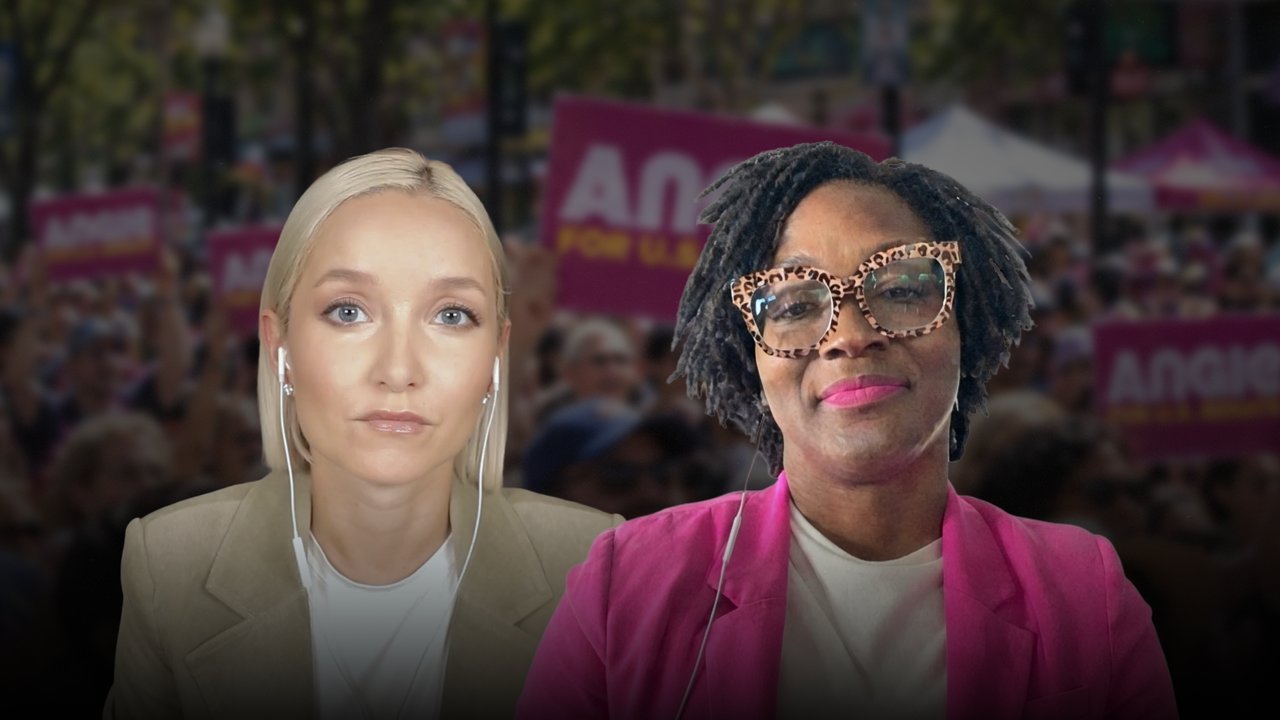
Can Angie Nixon prove Democrats can win in Florida?
lead image
Democrats’ top Senate-focused super PAC will report raising $354 million through Oct. 14 — including roughly $88 million in the first two weeks of the month— as Democrats race to seize control of the upper chamber in the election’s closing weeks.
Senate Majority PAC shared their fundraising totals, which are higher than any previous cycle, with Blue Light News ahead of a Federal Election Commission deadline later Thursday. The super PAC had $32.7 million in the bank as of Oct. 14.
“This is already the strongest cycle in Senate Majority PAC’s history, and it’s arriving exactly when it counts,” SMP spokesperson Lauren French said in a statement. “We’re on the air across the battleground through Election Day, and every dollar is going toward beating price-gouging Republicans and winning back the Senate.”
That’s more than the $306 million SMP raised in the 2024 campaign cycle, according to FEC filings, its previous high.
SMP is still being outraised by the Senate Leadership Fund, the GOP’s top Senate super PAC, in large part thanks to billionaire Elon Musk and other Republican megadonors. Musk gave $158 million to SLF in the third quarter, according to its most recent FEC report, and the super PAC in turn sent that money to Texas’ Senate race in order to boost the scandal-plagued GOP nominee Ken Paxton.
As of Sept. 30, SLF had raised more than $423 million for the cycle.
Democrats have been able to offset much of Republicans’ super PAC cash advantage on the airwaves because of stronger candidate fundraising.
But Republicans still have the advantage of a favorable map — and more outside money — as they hope to maintain control of at least one chamber of Congress next month.
- Democrats want Mullin in the hotseat in the next Congress
- John Barrasso to campaign with Ken Paxton
- Capitol agenda: Bennie Thompson warns about Dems’ late bet
- Poll: Trump wants the midterms to be about him. That could backfire.
- Can Angie Nixon prove Democrats can win in Florida?

- Elon Musk pours another $76 million into boosting Republicans
- Senate Democrats’ campaign arm takes out $15M loan
- Democrats’ top Senate super PAC has raised $354M this year
- Biotech investment is the new front in the U.S.-China trade fight
- A final farewell to NYC’s horse carriage industry

-

 Politics2 years ago
Former ‘Squad’ members launching ‘Bowman and Bush’ YouTube show
-
Uncategorized2 years ago
Bob Good to step down as Freedom Caucus chair this week
-

 The Josh Fourrier Show2 years ago
DOOMSDAY: Trump won, now what?
-

 The Dictatorship2 years ago
Pete Hegseth’s tenure at the Pentagon goes from bad to worse
-

 Politics2 years ago
Former Kentucky AG Daniel Cameron launches Senate bid
-

 The Dictatorship2 years ago
Luigi Mangione acknowledges public support in first official statement since arrest
-

 Politics2 years ago
Blue Light News’s Editorial Director Ryan Hutchins speaks at Blue Light News’s 2025 Governors Summit
-
 Politics1 year ago
John Legend advises Trump to drop the ‘dictator s‑‑‑’ if he wants Nobel Peace Prize