
Congress
Platner raised $4 million, but Collins retains cash advantage

Progressive political newcomer Graham Platner outraised both Democratic Gov. Janet Mills and Sen. Susan Collins in the first fundraising quarter in Maine’s key Senate race.
But Collins, seeking her sixth term, maintains a formidable cash advantage over both of her Democratic opponents that could give her a head start against whichever Democrat emerges from the June primary.
Platner raised $4.1 million in the first quarter, down from $4.6 million he had raised the prior quarter, while Mills brought in $2.6 million, down from $2.7 million in the final quarter of 2025, which had also included her campaign launch.
Collins brought in just over $3 million and had just over $10 million in the bank. She is also expected to be buoyed by a wave of outside money, with a super PAC supporting her, Pine Tree Results, reporting another $11.5 million cash on hand. Platner had $2.7 million in the bank, while Mills had just over $1 million.
Maine is one of national Democrats’ top targets as they seek to take back the Senate, with Collins the only Republican senator representing a seat won by Kamala Harris in 2024.
But it is one of the few battleground states where Democrats do not have a clear cash advantage. The comparatively lower fundraising totals for Platner and Mills compared to Democratic Senate candidates in states such as Ohio and North Carolina may reflect that some donors are still waiting on the sidelines to see which of the pair emerges to face Collins, while others are choosing sides.
Both Platner and Mills have faced challenges, albeit very different ones, in the primary. Mills, a two-term governor who entered the race with the backing of national Democrats, has trailed in recent public polling despite her near-universal name recognition. Platner, an oysterman and military veteran, quickly caught national attention and has drawn large crowds in the state. But he has been beset with a string of controversies involving old Reddit posts that began in mid-October, near the beginning of the previous fundraising quarter.


The Senate could vote as soon as Thursday on Jay Clayton’s nomination to serve as director of national intelligence — a lightning speed pace that will necessitate buy-in from all 100 senators.
Confirming Clayton could help shore up enough votes from Democrats to extend a government surveillance program that expired last Friday over opposition to Trump’s pick for acting director, Bill Pulte.
“He will come out of the committee Thursday, at least hopefully, and then if we get consent, we can move,” Senate Majority Leader John Thune said in an interview Monday about Clayton, who Trump only nominated for the job late last week.
Democrats “ought to be happy with Clayton,” said Thune, adding that he’s a “good” and “solid” pick.
Sen. Mark Warner of Virginia, the top Democrat on the Senate Intelligence Committee, floated Sunday to CBS News that Clayton could be confirmed this week if every senator cooperates.
Senate Intelligence will hold a hearing Wednesday on Clayton’s nomination. If every member of the panel agrees, he could then get a committee vote Thursday. Confirming Clayton on the Senate floor hours later would require getting agreement from every senator to speed up the process. Opposition from a single member will punt Clayton’s confirmation to next week.
Confirming Clayton Thursday would, crucially, limit — and potentially circumvent — Pulte from becoming acting director of national intelligence, which Trump has slated to take place Friday, June 19.
The president’s decision to put Pulte in charge after Tulsi Gabbard’s departure at the helm of the Office of National Intelligence sparked bipartisan pushback, with Democrats saying they will withhold support for extending Section 702 of the Foreign Intelligence Surveillance Act while Pulte is in the acting role. Congress allowed the key government spy authority lapse last Friday without a deal.
Trump threw another curveball into a FISA extension over the weekend when he posted on social media that he was against reauthorizing Section 702 unless a GOP elections bill is attached. That bill, known as the SAVE America Act, does not have the votes to get through Congress.
Thune threw cold water Monday on tying the two issues together.
“Yeah, he’s, as you know, passionate about getting that done and wants to use every opportunity to take a shot at it,” Thune said of Trump and his desire to enact the elections bill.
But, Thune said, “we can’t get FISA done” if the policies are linked.
Senate Majority Leader John Thune is planning to put an updated version of a bipartisan housing affordability bill on the Senate floor for a vote this week, according to two people familiar with the bill dynamics and two Senate Democratic aides granted anonymity to discuss ongoing plans.
The version of the 21st Century ROAD to Housing Act that the Senate will vote on will include most of the House-passed language, including a provision restricting large institutional investors from buying single-family homes. The legislation would also add back Senate bills that were dropped from the House package that passed last month, the two people and the two aides said.
The Senate legislation comes after talks between Thune, Senate Banking Chair Tim Scott (R-S.C.) and ranking member Elizabeth Warren (D-Mass.). The updated Senate package was also discussed with the House and the White House, the aides said.
Still, it’s unclear if House leadership and the White House have signed off on the legislation.
The Senate and House have gone back and forth for months on language for a housing affordability bill as lawmakers on both sides look for a win to tout during a midterm election season dominated by cost-of-living issues.
Both chambers overwhelmingly passed their own versions of the housing bill — the Senate 89-10 in March, and the House 396-13 in May. The White House supported the Senate-passed bill and then backed the House-passed bill after it retained most of the Senate’s language on reining in private equity and other large Wall Street investors in the housing market — a top priority for President Donald Trump.
The Senate’s updated legislation would remove two of the House’s community banking deregulation bills due to budget scoring concerns, said two of the people familiar: two bills that would modify the Federal Deposit Insurance Act around failed insured depository institutions. The Senate bill also added back a provision to authorize the Community Development Block Grant Disaster Recovery program for seven years, as opposed to a permanent reauthorization in the Senate’s March legislation.
The Senate additionally re-inserted several upper-chamber priorities, including the BUILD NOW Act, which would incentivize communities to build more housing through the Community Development Block Grant program; the Rental Assistance Demonstration bill, which would raise the cap on housing authorities to convert voucher-based assistance; the Moving to Work bill, which would aim to add a new cohort of MTW public housing agencies; and the VALID Act, which would require Federal Housing Administration mortgage disclosures to include cost comparison information for veterans.
The package retains core wins for the leaders of both the Senate Banking and House Financial Services committees and their members and reflects input from all four leaders of those panels, one of the people familiar said.
The House Freedom Caucus is suddenly confronting an unsettled future after more than a decade at the center of GOP politics on Capitol Hill.
Some of its most prominent members are leaving Congress next year after seeking higher office, including former chair Rep. Andy Biggs and several media-friendly voices like Reps. Chip Roy, Byron Donalds and Ralph Norman.
Meanwhile, the group’s current chair, Rep. Andy Harris, is term-limited.
Who will step in to fill the shuffling ranks and maintain the caucus’ role as a hard-right vanguard is very much in question — especially as the group faces a potential shift to a Democratic House majority, which has historically made them less pivotal, and the looming transition to a Republican Party without a President Donald Trump.
The group — which is no stranger to reinventing itself — has a number of relatively unknown members ready to become the new faces of the hard right in the House.
— ERIC BURLISON: The second-term Missouri congressman and current HFC board member said he is considering running to be the next chair.
Last summer he was a vocal member demanding the full release of the Jeffrey Epstein files and has become a leading Republican pushing for more information on UFOs.
— ANDREW CLYDE: Another board member, Clyde has amassed significant power by Freedom Caucus standards by winning seats on the Appropriations and Budget panels.
He said in an interview he had not yet thought about running for chair but noted that “you don’t have to be the chairman to have outsized influence.”
— BRANDON GILL: This Texas freshman, the youngest sitting House Republican, is already seen as a rising star in the House GOP.
He’s made a name for himself through provocative social media posts and splashy legislative moves, such as seeking to impeach James Boasberg, the federal judge who ruled against some of Trump’s deportations last year.
Gill has said he wants to emulate Rep. Jim Jordan, the only founding member of the caucus still serving in the chamber.
— CLAY HIGGINS: Another board member and a more senior member of the group, Higgins said he has not ruled out seeking the chair post but is also “not interested in campaigning” for the job.
Higgins was the only lawmaker to oppose the release of the Epstein files. He said in an interview he’s hoping the group focuses more on policymaking in its next iteration rather than obstructing leadership prerogatives.
— ANDY OGLES: Inside the HFC, Ogles has emerged as a serious force over two terms, with his name floated for chair even before the end of his first term.
He also did not rule out running for chair or another caucus leadership position in a recent interview.
What else we’re watching:
— THUNE RACES TO BREAK SPY POWERS LOGJAM: Senate Majority Leader John Thune is racing to try to confirm the next director of national intelligence and end a stand off over extending a key surveillance power before members break for two weeks. The Senate Intelligence Committee will hold a hearing for Jay Clayton Wednesday — less than a week after the chamber formally received the nomination from the White House. Getting Clayton confirmed is a crucial step to unlocking Congress’ willingness to renew Section 702 of the Foreign Intelligence Surveillance Act.
— ANTI-FRAUD OPTIONS FOR RECONCILIATION 3.0: Republican leaders say proposals to crack down on fraud in federal safety net programs could be included in another reconciliation package this year. Turns out, a menu of options is developing in plain sight: Just look at the stack of about a dozen bills the House has passed in recent weeks to prevent waste and abuse.
Jordain Carney and Jennifer Scholtes contributed to this report.
- Senate to confirm Jay Clayton as soon as Thursday
- Trump is urging tankers to sail through Hormuz. Vessels aren’t so sure yet.
- Trump not expected to act on Pulte after Johnson meeting
- Senate eyes vote on updated housing affordability legislation
- Capitol Agenda: The new faces of the Freedom Caucus
- Why Trump and other G7 leaders meeting without China might be a mistake

- The Freedom Caucus is losing its stalwarts. Here’s who to watch next.

- Trump’s North Korea-Iran nuclear paradox could reveal a path to resolution

- 12 dead in Missouri plane crash, authorities say

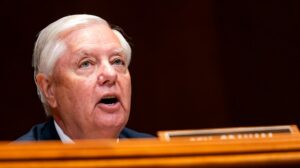
- Graham ‘concerned’ that Iran views deal with U.S. differently than Trump administration
-

 Politics1 year ago
Former ‘Squad’ members launching ‘Bowman and Bush’ YouTube show
-

 The Dictatorship1 year ago
Luigi Mangione acknowledges public support in first official statement since arrest
-

 Politics1 year ago
Former Kentucky AG Daniel Cameron launches Senate bid
-
Uncategorized2 years ago
Bob Good to step down as Freedom Caucus chair this week
-

 The Dictatorship1 year ago
Pete Hegseth’s tenure at the Pentagon goes from bad to worse
-

 The Josh Fourrier Show2 years ago
DOOMSDAY: Trump won, now what?
-

 Politics1 year ago
Blue Light News’s Editorial Director Ryan Hutchins speaks at Blue Light News’s 2025 Governors Summit
-

 The Dictatorship9 months ago
Mike Johnson sums up the GOP’s arrogant position on military occupation with two words