
The Dictatorship
One point of Trump’s ceasefire plan should never have been up for negotiation in the first place


Secretary of State Marco Rubio is the latest Trump envoy visiting Israel in a bid to keep the U.S.-brokered Gaza ceasefire plan intact despite the actions of Prime Minister Benjamin Netanyahu’s government — which include, in Rubio’s words, “threatening the peace deal” by allowing preliminary approval of a bill to annex the West Bank.
Following his trip to Israel last weekPresident Donald Trump has sent several senior officials to Jerusalem, including Middle East envoy Steve Witkoff, the president’s son-in-law Jared Kushner, Vice President JD Vance and, most recently, Rubio.
Trump’s peace plan, which is the basis for the Oct. 10 ceasefire, reads more like one of his stream-of-consciousness social media posts than a binding agreement.
It’s been almost two weeks since the deal to end the war in Gaza went into effect, with little clarity about its 20 points and an even smaller chance of implementing most of them. One part of the Trump plan, however, is unambiguous — and should never have been up for negotiation in the first place: the commitment to protect civilians, in particular by facilitating humanitarian aid and allowing Palestinians to travel into and out of Gaza.
The text of Trump’s peace planwhich is the basis for the Oct. 10 ceasefire, reads more like one of his stream-of-consciousness social media posts than a binding agreement. It recognizes Palestinian statehood aspirations but establishes a neocolonial international board, chaired by Trump, to rule Palestinians in Gaza. It requires Hamas to disarm, even though Trump said it didn’t “bother him much” that the group used violence to “take out a couple of gangs that were very bad” in Gaza. And its call for an international stabilization force, which Vance and Rubio were supposed to be brokering this week, seems destined to fail because, to start, there’s no clarity about the role of Hamas or any other Palestinian actor; sporadic hostilities continue; and third-party countries don’t want to be seen as occupying Gaza or fighting Hamas on Israel’s behalf. Rubio reiterated the pledge to set up an international force during a visit Friday to a U.S.-led command center in southern Israel but did not provide details.
Other provisions have been partially implemented: Hamas has released the 20 living Israeli hostages and the remains of 15 others; Israel has released 1,968 Palestinian prisoners and detainees and repatriated the remains of 195 Palestinians; and Israeli troops withdrew to the so-called yellow line, reducing direct Israeli control to about half of Gaza’s territory.
But the ceasefire plan also included commitments that should never have been part of political negotiations and have still not been met, like an Israeli promise to allow 600 trucks of desperately needed supplies into Gaza daily and an Israeli agreement to reopen Gaza’s Rafah Border Crossing with Egypt. More aid has entered Gaza since the ceasefire, but nutritious food, medical supplies and shelter materials remain catastrophically scarce, including in Gaza City, where experts declared a famine in August.
International humanitarian law requires Israel to facilitate the rapid supply of international aid, as well as to actually pay for and provide essential supplies, as part of its obligations as an occupying power. The Israeli military has instead used starvation as a weapon of warblocking food, medicine and other necessities from entering Gaza even as it has razed croplands, prohibited fishing and destroyed civilian infrastructure like reservoirs, wastewater treatment plants and hospitals. All of this has created conditions calculated to bring about the destruction of Palestinians in Gaza, which is part of the legal definition of genocide.
The Biden and Trump administrations could have ended these abuses by suspending military aid and issuing targeted sanctions. But they chose not to.
The U.S. government bears legal, moral and political responsibility for these crimes, because each year it supplies the Israeli military with billions of dollars of sophisticated weapons that have been used to block food supplies, unlawfully displace more than 90% of Gaza’s population and kill civilians unlawfully. At any moment in the past two years, the Biden and Trump administrations could have ended these abuses by suspending military aid and issuing targeted sanctions. But they chose not to.
Thus Israel has continued to weaponize aid, with U.S. backing, contributing to the death of what experts believe to be thousands of people from malnutrition, infectious disease and lack of medical care. That’s in addition to more than 68,000 Palestinians, mostly civilians, killed in attacks since Oct. 7, 2023, when Hamas-led fighters killed and kidnapped hundreds of civilians in Israel in attacks that constituted crimes against humanity.
Trump’s ceasefire plan promised to immediately restore “full aid” to Gaza and finally allow travel. But since the ceasefire began, Israel has twice suspended humanitarian aid, alleging violations by Hamas, and it has repeatedly delayed the opening of the Rafah Crossing.
Humanitarian aid, the right to health and the right to freedom of movement are legal obligations that the Israeli government owes Palestinians in Gaza, regardless of what Hamas does or doesn’t do. In the same way, the release of civilian hostages by Palestinian armed groups was an absolute obligation that should never have been negotiated.
There are tentative signs that the Trump administration is finally demanding relief for civilians in Gaza. After the Israeli government last Sunday alleged ceasefire violations and announced that it would obstruct humanitarian aid, the U.S. reportedly pressured Israel to quickly reverse course, and aid was restored.
The ceasefire plan includes a rare U.S. acknowledgement that Palestinians in Gaza have suffered terribly, and its declaration that Palestinians in Gaza have a right to remain in Gaza supersedes, at least for now, Trump’s earlier call to “level out” Gaza and transfer its population to other countries.
The U.S. should never have allowed Israeli authorities to starve and forcibly displace civilians in Gaza, nearly half of whom are children. These visits from Rubio, Vance and others should be an opportunity to clarify that whatever else the U.S. ceasefire plan for Gaza means, it can and should mean an end to using human beings as bargaining chips. We shall see if that pans out.
Sari Bashi is a human rights lawyer, the former program director at Human Rights Watch and the author of “Upside-Down Love,” forthcoming in 2026.


This is an adapted excerpt from the March 24 episode of “All In with Chris Hayes.”
Donald Trump’s war on Iran is in its fourth week. Gas prices are up $1 a gallon in much of the country. Stocks continue to fall on fears of global supply shortages.
The death toll is growing. Thirteen American service members have lost their livesand more than 1,200 Iranians have been killed, along with upward of 1,000 people in Lebanonmore than 150 in the surrounding Gulf states and 17 Israelis. That’s not accounting for the millions who are displaced and the thousands who have been injured, including hundreds of U.S. troops.
But according to the president who launched the war, it’s all over.
It is becoming increasingly clear that Trump expected a fast and easy win.
“We’ve won this. This war has been won,” he told reporters Tuesday in the Oval Office. “The only one that likes to keep it going is the fake news.”
However, during those same remarks, Trump was all over the place — talking about an epic victory, ongoing peace negotiations and personal gifts.
It was all completely counter to his posture over the weekend, when he threatened to “obliterate” Iranian civilian power plants — essentially teasing a war crime — if Iran did not stop blocking oil tankers in the Strait of Hormuzsomething Iran was not doing before Trump attacked them.
But now, he has supposedly pressed pause on that bombing plan for five days because, he said, the negotiations are going well.
When he first announced that in a social media post Monday, it sent oil prices down 10% and boosted stocks.
However, those markets reversed themselves Tuesday after the Iranians said they have not engaged in any serious high-level negotiations with the Americans, and they claimed Trump was making things up to help oil prices. The Israelis said the same thing. (That’s not to say you should take Iran’s word for it, or Israel’s, but you shouldn’t take the White House’s word, either.)
It is becoming increasingly clear that Trump expected a fast and easy win. He had no plan B, and now he is flailing to find some kind of fallback position.
On Monday, sources from the administration told Politico that they have their eyes on a future U.S.-backed leader of Iran: Mohammad Bagher Ghalibaf, speaker of the Iranian parliament.
“He’s a hot option,” one unnamed U.S. source — who seems to really wants a deal — told Blue Light News. “He’s one of the highest. … But we got to test them, and we can’t rush into it.”
But on Tuesday, that “hot option” trolled Trump for what he called a “jawboning campaign” to stabilize oil prices. In a social media postGhalibaf wrote: “[L]et’s see if they can turn that into ‘actual fuel’ at the pump — or maybe even print gas molecules!”
Call it the fog of Trumpian war: a million contradictory messages flying around, constantly wildly pinging bits of news that don’t make sense together.
Right now, we have reports that Trump’s negotiators, including his envoy Steve Witkoff and Vice President JD Vance, are traveling to Pakistan for informal talks with an Iranian official.

At the same time, unnamed U.S. officials have told The New York Times that the Saudi crown prince is pushing Trump to continue the war until Iran’s government collapses — something the Saudis publicly deny.
In fact, The Wall Street Journal is reporting that Saudi officials are holding talks in Riyadh with their Arab counterparts to find a diplomatic off-ramp from the war.
On Tuesday evening, U.S. officials said the Pentagon was poised to deploy 3,000 troops of the 82nd Airborne Division to the Middle East. That is in addition to two Marine expeditionary units on their way to the region and the 50,000 U.S. troops already stationed there.
Also on Tuesday, Iranian-backed militias in Iraq are claiming that U.S. strikes there killed 30 of their members.
But, according to Trump, the peace talks are going great, right?
All eyes everywhere have been on the Strait of Hormuz, where Iran responded to the U.S. attack by striking oil tankers and shutting down 20% of the world’s supply of oil and liquefied natural gas. It is now essentially running a toll operation in the strait.
Some countries, such as China, Japan and India, are negotiating deals with Iran to get its oil out. Which is to say, Iran is shipping more oil and making more money than it was under the U.S. sanctions in place before Trump attacked it.
It’s clear the president sees what’s happening, so now he is trying to share control of the strait with Iran. Trump told reporters the strait would be “jointly controlled” by “maybe” him and “the next ayatollah.”
The administration really thought this was going to be another Venezuela. They told themselves that, and they were egged on to believe it by the staunchest advocates of the war, such as Israeli Prime Minister Benjamin Netanyahu and Sen. Lindsey GrahamR-S.C.
But in Iran, a decapitation strike did not lead to mass uprisings. It did not lead to regime change. It led to the situation in which Iran’s regime is intact, even if militarily degraded, and they now have explicit control of the Strait of Hormuz — a huge pressure point.
It really looks like the U.S. is backed into a corner: It can sue for peace because of the oil tanker situation, but they do not have much leverage, or it can escalate the war. That may be why we’re seeing all these contradictory developments.
In Iran, a decapitation strike did not lead to mass uprisings. It did not lead to regime change. It led to the situation in which Iran’s regime is intact.
Trump issued an ultimatum he had to walk back from because he said there were deep peace negotiations, which then later proved to be completely fabricated.
Now, more U.S. troops are set to be deployed for a possible ground invasion in the Middle East, despite reports that the U.S. has supposedly sent a 15-point plan to Iran through Pakistan to end the war.
It almost looks as if Trump is trying to wave the peace card to keep a lid on oil futures and financial marketsjust long enough to have ground troops in position — and just in time for the markets to close for the weekend on Friday, when Trump’s “pause” on bombing Iranian power plants is set to end.
That could be the plan Trump now settles on, weeks into a deadly war where there was obviously, very clearly, no real plan at all.
Allison Detzel contributed.
Chris Hayes hosts “All In with Chris Hayes” at 8 p.m. ET Tuesday through Friday on MS NOW. He is the editor-at-large at The Nation. A former fellow at Harvard University’s Edmond J. Safra Foundation Center for Ethics, Hayes was a Bernard Schwartz Fellow at the New America Foundation. His latest book is “The Sirens’ Call: How Attention Became the World’s Most Endangered Resource” (Penguin Press).
The Dictatorship
Jury finds Meta and YouTube liable in landmark social media trial, awards $6 million
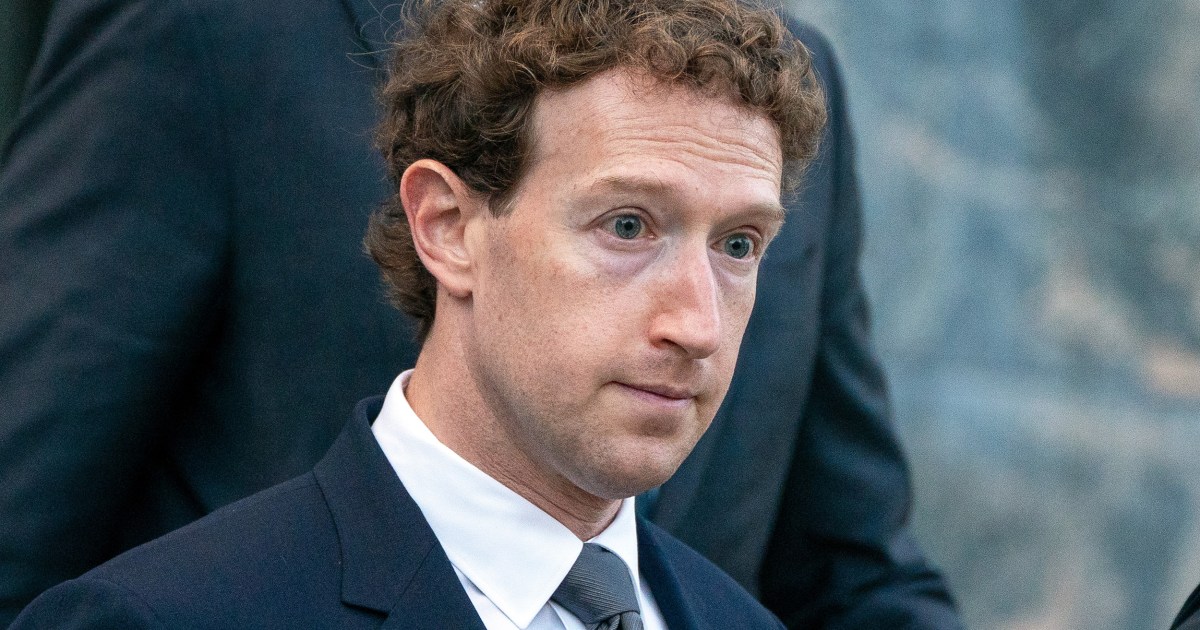
A California state jury found Meta and YouTube liable in a landmark social media case on Wednesday, awarding $3 million in compensatory damages to a plaintiff who brought the case and putting the Instagram maker’s liability at 70% and the Google company’s at 30%.
The jurors later decided to award a total of $3 million in punitive damages, with Meta to pay $2.1 million and YouTube $900,000. The verdict was reached on the jury’s ninth day of deliberation.
A 2023 complaint accused social media companies of fueling an unprecedented mental health crisis for American children through “addictive and dangerous” products. Plaintiffs accused the companies of deliberately tweaking their products to exploit kids’ undeveloped brains to “create compulsive use of their apps.”
The civil case was brought by several plaintiffs against several companies, but this state court trial, which featured testimonyfrom Meta CEO Mark Zuckerberg, involved a plaintiff described by her initials as “K.G.M.” in court papers against Instagram and YouTube.
In the 2023 complaint, K.G.M. said she was a 17-year-old in California who started using social media at a much younger age, though her mother told her not to and used third-party software to try to prevent the daughter’s social media use. The complaint alleged that the corporate defendants designed their products in ways that let kids evade parental controls and that the companies knew, or should’ve known, that K.G.M. was a minor.
The plaintiff alleged that Instagram’s and other companies’ addictive designs led her to develop “a compulsion to engage with those products nonstop” and to see “harmful and depressive content, urging K.G.M. to commit acts of self-harm, as well as harmful social comparison and body image.”
She alleged that she suffered bullying, depression, anxiety and body dysmorphia through Instagram and that Meta did nothing in response to a report about it. “Meta allowed the predatory user to continue harming minor Plaintiff K.G.M., including through the use of explicit images of a minor child,” the complaint said, adding that the company’s “defective reporting mechanisms and/or deliberate failure to act caused emotional and mental health harms to K.G.M. in addition to and separate from any third-party conduct.”
The companies, which have denied wrongdoingsaid Wednesday that they plan to appeal.
Jillian Frankel contributed from Los Angeles.
Subscribe to theDeadline: Legal Newsletterfor expert analysis on the top legal stories of the week, including updates from the Supreme Court and developments in the Trump administration’s legal cases.
Jordan Rubin is the Deadline: Legal Blog writer. He was a prosecutor for the New York County District Attorney’s Office in Manhattan and is the author of “Bizarro,” a book about the secret war on synthetic drugs. Before he joined MS NOW, he was a legal reporter for Bloomberg Law.
The Dictatorship
Democrat vows to turn ‘Epstein files into Epstein trials’ after release of new depositions
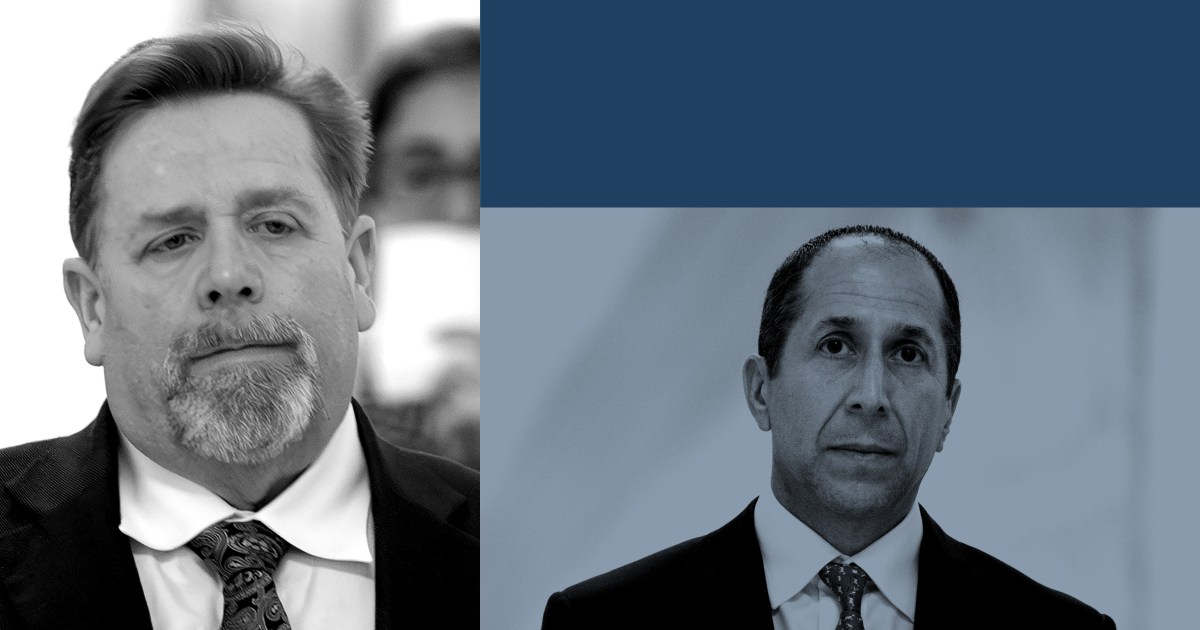
The House Oversight Committee on Tuesday released hours of deposition footage from its interviews with two former close associates of Jeffrey Epsteinattorney Darren Indyke and accountant Richard Kahn. Rep. Melanie Stansbury, D-N.M., a member of the committee, joined “The Weeknight” to discuss the interviews and the efforts to hold any accomplices of the late sex offender accountable.
“What is remarkable is that even in death, his closest associates and co-conspirators are still covering for him,” Stansbury said.
During their depositions, both Indyke and Kahn insisted they had no knowledge of Epstein’s illegal behavior. The New Mexico Democrat cast doubt on those claims, taking particular issue with Indyke’s testimony, during which she said it was possible that Epstein’s former attorney may have “perjured himself.”
“He claimed that he had no knowledge of all of these nefarious activities, and yet he literally has spent decades of his life at the center of this controversy,” she said. “I’m sorry, I’m not buying it.”
Stansbury told MS NOW she believed it was important for the public to understand that both Indyke and Kahn “stand to make tens of millions of dollars off of their execution” of Epstein’s will. She added that “the way the will is structured, there is a survivor fund, and at the end of that, they get to basically keep whatever is left over.”
“We don’t know what was written into whatever contracts, but it’s clear that they have a financial interest,” she said.
Stansbury said the pair’s depositions should be part of a greater effort from lawmakers and law enforcement across the country to pursue accountability for Epstein’s victims, even after his death. She highlighted how her home state, New Mexico, was doing just that.
“That is why we are going to continue to seek justice in this case, and it’s why in New Mexico, not only did we pass a truth commission, but one of the updates that we want to tell people about is that we plan to pursue convictions against individuals who were implicated in these crimes who were not prosecuted by the federal government,” she said. “We want to turn these Epstein files into Epstein trials — and that’s exactly what we plan to do.”
You can watch Stansbury’s full interview in the clip at the top of the page.
Allison Detzel is an editor/producer for MS NOW. She was previously a segment producer for “AYMAN” and “The Mehdi Hasan Show.”
- Schumer rolls out Democrats’ midterm energy pitch
- No plan B: Trump is flailing to find an off-ramp for the Iran war
- Jury finds Meta and YouTube liable in landmark social media trial, awards $6 million

- Democrat vows to turn ‘Epstein files into Epstein trials’ after release of new depositions
- Trump’s Justice Department agrees to financial settlement with Michael Flynn

- Ukrainian energy official: Lifting Russia oil sanctions is ‘wrong approach’
- Kash Patel’s girlfriend ignites conspiracy-based feud with MAGA influencers

- No plan B: Trump is flailing to find an off-ramp for the Iran war
- Arrington: Fraud cuts for war funding
- Gallego: Merrick Garland was a ‘coward’ over Jan. 6
-

 The Dictatorship1 year ago
Luigi Mangione acknowledges public support in first official statement since arrest
-

 Politics1 year ago
Former ‘Squad’ members launching ‘Bowman and Bush’ YouTube show
-

 Politics1 year ago
Former Kentucky AG Daniel Cameron launches Senate bid
-

 Politics1 year ago
Blue Light News’s Editorial Director Ryan Hutchins speaks at Blue Light News’s 2025 Governors Summit
-

 The Dictatorship7 months ago
Mike Johnson sums up the GOP’s arrogant position on military occupation with two words
-

 The Dictatorship1 year ago
Pete Hegseth’s tenure at the Pentagon goes from bad to worse
-
Uncategorized1 year ago
Bob Good to step down as Freedom Caucus chair this week
-

 Politics11 months ago
Democrat challenging Joni Ernst: I want to ‘tear down’ party, ‘build it back up’