
Politics
Obama calls for Dems to focus on AI

Former President Barack Obama is urging Democrats — including 2028 presidential candidates and congressional leaders — to more aggressively focus on a comprehensive AI agenda, warning in a closed-door fundraiser that the technology is at an inflection point.
“This is something that is moving very fast in private hands, and if we don’t get on top of it, I think can be dangerous,” Obama said at the fundraiser Thursday, according to a partial transcript of his remarks provided by his office. “If we do get on top of it, I do think it’s beneficial.”
Speaking alongside House Minority Leader Hakeem Jeffries at the New-York Historical Society in Manhattan, Obama said he is neither a “doomer” nor an “accelerationist.” His remarks come amid increasing alarm over the technology’s advance, with executives at two of the country’s leading AI labs joining Elon Musk in calling for slowing its development, following months and years of cries from within the industry for government to act.
Obama said AI development would be “one of my central agendas” if he were running for president, throwing down a gauntlet as the shadow 2028 Democratic primary debate responded to the AI leaders’ calls.
“I would have a very clear plan, and I would talk about this, and I would say, here’s our plan for safety, here’s our plan for making sure our kids are not corrupted by this,” Obama said, according to excerpts of his remarks shared with Blue Light News by his office and first reportedby The New York Times.
Among the top concerns, Obama said: “I would be thinking about the economic impacts in very concrete ways and understanding what does it mean if there’s going to be job displacement. Where is that going to hit? How are we going to respond? Are there going to be limits to the amount of displacement that can take place? What is that going to mean for our social safety net? If it turns out that you’ve got a lot more people who can’t find full-time work because they’ve been rendered redundant, how are we going to respond?”
He also called for Congress to take action, telling Jeffries that Democrats should “put together a framework for a very public conversation” centered on the biggest issues.
Obama’s remarks mark a larger shift for both himself and the Democratic Party writ large: He governed as a tech-friendly Democrat, who broke POTUS tech barriers by having a laptop and iPad while in office and whose 2011 town hall at Facebook headquarters was widely seen as typifying the administration’s friendliness with Silicon Valley.
The Obama era was also known for Washington’s failure to confront the growing monopolization of power in the tech industry, most famously in the Federal Trade Commission’s 2013 decision not to file an antitrust lawsuit against Google. (The first Trump Justice Department later filed such a suit seven years later.)
Already on Sunday, at least two potential 2028 Democratic presidential candidates addressed the issue of slowing the pace of cutting-edge AI development, or otherwise keeping their products from launching pandemics or cyberattacks.
Speaking on NBC’s “Meet the Press,” former Transportation Secretary Pete Buttigieg said Democrats need to “address it head on.”
“There needs to be safeguards. There need to be rules. There need to be limits. There needs to be a kill switch on rogue AI,” Buttigieg said, criticizing congressional Republicans and the White House for not moving quicker to rein in AI development.
Pennsylvania Gov. Josh Shapiro, who has gone from courting AI investment to pumping the brakes on data center development, posted to X Sunday that it’s “long past time for our federal government to step up, take this seriously, and put up some guardrails — both here at home and on the global stage.”
The calls for “some guardrails” are still much milder than the proposals coming from the far left of the Democratic caucus, including the proposal by Sen. Bernie Sanders (I-Vt.) and Rep. Greg Casar (D-Texas) to pause the development of advanced AI models and permanently ban “artificial superintelligence.” And Obama’s remarks underscore the leadership vacuum in a Democratic Party that remains in the wilderness after brutal 2024 losses and continues to struggle to unify around a policy agenda.
In a portion of his remarks, Obama acknowledged the lack of high-level leadership on the AI issue, saying that “part of the job for us is to give people a reason to believe again in the idea of the democratic project, the American project, the economy that works for everyone, opportunity for every kid, to reassure people that if we work together, we can deliver those things. That’s hard to do without somebody in the White House to lead the charge, but I do think that people are ready for that message.”
President Donald Trump, meanwhile, has dismissed any worries about AI posing an existential threat, telling reporters last week that he’s mainly worried about beating China to dominate the technology.
Obama compared AI to other “dangerous technologies like nuclear power,” but added that it did not have the same “natural” and “physical constraints” on it that is not “under state control.”
In Congress, House and Senate lawmakers have sought to advance legislation to slow down or impose limits on AI development, so far without success. One key Senate proposal, led by Sen. Amy Klobuchar (D-Minn.) and Senate Majority Leader John Thune, faces an uncertain future because of differences over how to impose a legal duty on Silicon Valley companies that would hold them liable for harms their models cause. Another contentious issue is whether the legislation should preempt state from imposing their own AI laws.
House Speaker Mike Johnson said Sunday morning he would support talks with tech leaders on AI but insisted that developers — not Congress — are primarily responsible for ensuring their products are safe.
As lawmakers campaign in their districts ahead of the midterm elections, they are fighting to own the messaging as voters sour on data centers and the impact of AI systems on jobs and education, among other key areas.


Even the head of House Democrats’ top super PAC didn’t fully anticipate the size of their massive midterm wave.
Heading into Election Day, House Majority PAC president Mike Smith told Blue Light News Tuesday’s results, which have netted them a whopping 252 House seats with more yet to be called, was “on the very high end” of the group’s expectations.
The group spent at least $283 million on ads this cycle, per ad-tracking firm AdImpact, making them the largest Democratic spender in House races this cycle and a significant force behind the party’s big night.
As Democrats turn their attention to 2028, Smith remains optimistic the party can hold on to its majority.
His confidence stems in part from a projection that Democrats will respond to the affordability concerns that were the core of the party’s promise to voters.
If Democrats don’t make efforts to address the rising cost of living, “then it’s a totally different story,” Smith said.
Q: How were you feeling in the final days before Tuesday?
Obviously this would have been on the very high end of what we expected. Over the last three months, overall our polling has been pretty consistent. Our whole thought was, with the right environment, if we have the right message and the right types of candidates in, not just the 50-50 districts, but like deeper in the map, that we could put those seats in play and we could potentially win.
Going into Election Day, our whole feeling was there’s a clear path to like 235-plus [seats]. We were playing in districts that, if you were to rank them from like one to 435, some of those districts were like 250, 255, right? And I would throw IN-05, CO-03, KY-06, SC-01, some of the Florida races. SC-01 wasn’t ever going to be seat 225. That was always in the 240s and maybe even 250s. But we took a chance because we saw what the national environment looked like. We saw what the data was coming back in within these individual races. So I think we were optimistic. But to be totally honest, in our heads, you have to play in seat 255 to get to seat 240. You have to spread out the map. You have to force Republicans on their heels, and then you start piecing together how you get to the 240-245 range. Once the numbers started coming back, that was the best case scenario for us. Everything came together.
You guys cut reservations in some reach districts, only to go back up in the final few days. On the outside, it appeared like cutting spending in those reach districts was a bad sign. What went into those last-minute spending decisions?
A lot of the places we made reservations back in April, and then continued to add on to that over the course of the summer. Partners and allies in a bunch of different places took over our reservations. We tried to be smart by locking in the lowest possible rates in very expensive markets, [so that] even if HMP wasn’t the entity spending, we still had partners and allies that were taking over their reservations. In doing all that we saved about $130 million that we could reinvest.
The challenge with some of the races was by a week out, our money was spent. And in some of those districts, there weren’t any partners willing to step up and do it. Florida is a good example of that.
That’s where we just had to make a decision that there weren’t the resources there, and we had to leave the reservations on the table. Around that time, Mayor Bloomberg was like, “We can’t let these races get away from us. We need to do everything we can,” and that’s where we went back into some of those places.
Did you feel the need to adjust your messaging at all once MAGA Inc. and Elon Musk’s PAC joined CLF on the airwaves?
The short answer is no. The messaging was fairly consistent. Early on, our whole feeling was we need to reframe how voters perceive Democrats. When voters think about what Democrats are fighting for, the first thing we want them to think about is cost of living, the economy. At the same time, bringing to light Republican policies that are increasing the cost of living, or focus on things that are anything but that.
Over several months, we did a bunch of battleground research looking at ‘how does corruption tie into that,’ which culminated in what we would describe as the cost of Republican corruption, and how that is impacting your day to day and your cost of living. That’s what we went into Election Day with.
Overall, we ran, I don’t know, 1300 different types of ads, whether TV, digital, direct mail, or whatnot. 76% of those ads talked about the economy. 60% of those ads focused on corruption, because in so many of them, those two things were interlinked in voters’ minds.
Republicans continued to focus on the same thing. It was trying to paint Democrats as out of touch or extremists. And again, the theory of the case from the beginning was us focusing on economic concerns, especially when we figured out we could tie that corruption lens into it. That’s going to be more important to voters than folks talking about socialism or anything else.
Democrats were able to prevent Republicans from capitalizing on their redistricting gains. Are you worried about those gains bearing fruit in a less favorable environment, maybe as soon as 2028?
In a different environment, these races are going to come together in a much different way. So I do think it’s something that we need to be hyper-focused on. That said, I don’t think redistricting is going to go away.
I’m actually pretty hopeful that these huge shifts across every demographic group that we just saw, as long as Democrats continue to focus on the issue that matters most to voters.
If we don’t, then it’s a totally different story.
Are you saying the fate of Democrats’ House chances in 2028 to keep these seats is predicated on Congress passing something, even with the current president still in the White House, that addresses affordability issues?
I wouldn’t say passing. Soon-to-be Speaker Hakeem Jeffries, since we won, his message is that Democrats are focused on three things: costs, care and corruption.
When we come into power, we are going to be hyper-focused on fighting to bring down the cost of living for voters. I think Donald Trump is still this outsized X-factor in everything. He’s still the sitting president in the White House. So I wouldn’t say it’s like, “Oh we have to pass 300 bills. That’s the only way we’re going to be successful.” I think we just need to show voters that we are willing to get stuff done, and in instances where we need to, work across the aisle to pass stuff that’s going to be helpful to voters. I think if we do that, then I think we’re setting ourselves up for success going into ‘28, both with the White House and the House and the Senate. Donald Trump is still going to be this huge factor in all of this, and I don’t think voters are going to be like, “Democrats weren’t able to accomplish this,” and think that that was us. They’re going to continue blaming Donald Trump going into Election Day 2028.
To go back to redistricting, do you want Democrats in these states where they have newly-won trifectas to take up redistricting even if Republicans don’t push for it again?
I think Democrats need to do everything that it will take to win, and if that means that in states where we control the state house, the state senate, a governor’s race, we have an opportunity to redraw the map, I think we need to do it.
What were the seats Democrats flipped that surprised you the most?
I would say NJ-02 [Rep. Jeff Van Drew’s seat], It was a district where we had looked at it — we did not think that it was credibly possible, to be totally honest.
I’d say North Carolina as a whole, probably. We felt good about NC-01, NC-11 for a while…. [NRCC Chair and North Carolina Rep.] Richard Hudson, we looked at that district. There was a clear path to winning it. There just wasn’t money, at the end of the day. NC-13, NC-14, same thing. The makeup of the districts, they’re not bad targets for Democrats. It was just, how much can we spread resources out? But the total implosion in North Carolina by Republicans at the federal level, at the state level — that was probably one of the biggest surprises.
A version of this article first appeared in Blue Light News Pro’s Morning Score. Want to receive the newsletter every weekday? Subscribe to Blue Light News Pro. You’ll also receive daily policy news and other intelligence you need to act on the day’s biggest stories.
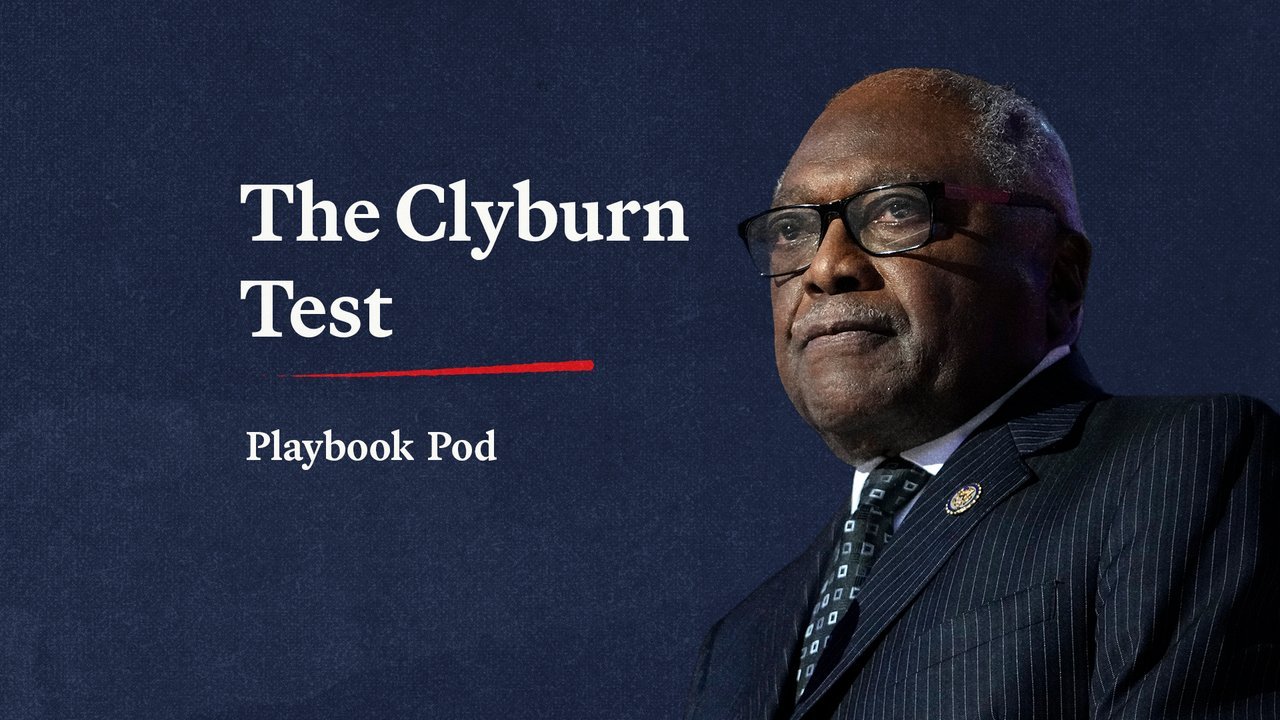
The Clyburn test
lead image
Abdul El-Sayed ran well behind other Michigan Democrats in places with more Jewish voters, according to a detailed Blue Light News analysis of precinct-level results.
Statewide, the progressive senator-elect only ran two points behind Democratic Gov.-elect Jocelyn Benson, getting 52.5% of the vote compared to her 54.5%. But the gap was much larger in heavily Jewish communities: In Huntington Woods, a Detroit suburb that is roughly two-thirds Jewish, El-Sayed ran nearly 15 points behind Benson, getting 65.3% of the vote compared to Benson’s 80%.
In West Bloomfield, the site of the March synagogue attack that shook the Senate primary and a town where roughly a quarter of residents are Jewish, El-Sayed ran 8.8 points behind Benson.
El-Sayed faced blowback from some Jewish Democrats during his campaign, particularly over his calls to end U.S. military support to Israel and his remarks after the synagogue attack that “hurt people hurt people,” for which he later apologized.
El-Sayed, who will be the first Muslim senator in U.S. history, told Blue Light News on Wednesday that he hoped he could “earn support” from Jewish voters who hadn’t backed him in this election.
“One of the big issues of disagreement that kept showing up when it came to the Jewish community was my position on Israel,” El-Sayed said. “I’m not going to change my position, but …I intend to lead on all the issues that we agree on — whether it’s the right to a union or the right to health care, clean air, clean water, or religious pluralism, and respect for the Constitution — and I hope that over time I can earn [their] support on those issues.”
El-Sayed had worked to make inroads with Jewish voters over the course of his campaign, pledging to stand up to antisemitism and for Jewish safety. Still, some Jewish leaders and activists in the state urged voters to blank their ballots in the Senate race, or back Republican former Rep. Mike Rogers.
His former Democratic primary rival, Rep. Haley Stevens, also switched her endorsement from El-Sayed to Rogers days before the election, citing concerns over antisemitism and the Democrat and his allies’ views and rhetoric around Israel. She pointed to an ad put out by a prominent El-Sayed supporter tying high grocery prices to U.S. aid to Israel, which El-Sayed and his campaign distanced themselves from.
Jewish voters, who make up roughly 1.4% of the Michigan electorate, have historically backed Democrats by large margins. But disagreements over support for Israel and how the party should respond to rising antisemitism are testing that voting bloc — both in Michigan and across the country.
A poll of Jewish early voters in the state found that a majority still backed El-Sayed, but roughly one in four who had supported Sen. Elissa Slotkin in 2024 switched to back Rogers.
With Michigan in Democrats’ early primary window for 2028, El-Sayed said his statewide win showed voters were aligned with his positioning on Israel — and that he hopes the next presidential nominee takes note.
“If you want to be where the voters are, if you want to be on the side of peace and on the side of justice and transparency, I believe that that is around holding Israel accountable to its war crimes and on making sure our tax dollars get used to do good things here rather than bad things somewhere else,” he said.
In a post-election memo, El-Sayed’s campaign touted an outside analysis finding that he only ran slightly behind Slotkin’s 2024 performance in predominantly Jewish precincts. The memo also noted he was outspent heavily in both the primary and general elections, including by “MAGA billionaires, AIPAC, Elon Musk, and corporate interests determined to elect candidates who would defend the status quo.”
But he won in a blue wave while Slotkin, who is Jewish, overcame a tough year. El-Sayed’s margins were far better than Slotkin’s numbers across nearly all of the state, suggesting Jewish voters moved in the opposite direction of most Michiganders.
On the other hand, El-Sayed particularly surged in areas with more Muslim voters, who make up roughly 2.4% of Michigan’s electorate. In Dearborn, for example, he won 82.5% of the vote compared to 78.7% for Benson. Two years ago, Slotkin won 41.4% in the city while former Vice President Kamala Harris received just 36.3% of the vote.
Lansing Mayor Andy Schor, a Jewish Democrat who supported Stevens in the primary and did not endorse El-Sayed, said he was unsurprised by that split screen. He expressed hope about El-Sayed’s relationship with the Jewish community going forward, but also said Jewish leaders should continue to raise their concerns to the incoming senator.
“Everybody has to keep talking to him. His views aren’t going to change, and we know what they are,” Schor said. But, “I hope he’s open to hearing the concerns of some of his constituents.”
Nonnegotiable Michigan, a group of Jewish activists that pushed El-Sayed on issues of Jewish safety and Israel, also said in a postelection statement that it was “prepared to work with” El-Sayed “even as we continue to hold elected leaders accountable when antisemitism enters our politics or political discourse.”
El-Sayed made clear he has no plans to change his views on Israel, but said he will be straight with voters — and that he’ll “show up for you when you need me” regardless of their differences.
“With me, what you see is what you get. And I’ve never once gone and told somebody that I was anything but what I am,” El-Sayed said Wednesday. “We’re going to disagree. I’m going to be honest, specific and direct. And over time, I hope that I can earn support for leading on the issues on which I hope to lead and [by] serving everybody.”
- Johnson’s meeting request
- ‘Developer in chief’: White House throws weight behind permitting bill
- Chris Murphy released from hospital after stroke
- Congressional Progressive Caucus chair lays out strategy to ‘wield our power’
- Pro-Talarico PAC pulls back curtain on historic investment
- CPC memo
- Nancy Pelosi’s successor headlines the latest round of calls
- The size of Democrats’ wave surprised even their top House super PAC
- Maxine Waters officially launches bid to lead House Financial Services
- The Clyburn test

-

 Politics1 year ago
John Legend advises Trump to drop the ‘dictator s‑‑‑’ if he wants Nobel Peace Prize
-

 Politics2 years ago
Former ‘Squad’ members launching ‘Bowman and Bush’ YouTube show
-
Uncategorized2 years ago
Bob Good to step down as Freedom Caucus chair this week
-

 The Josh Fourrier Show2 years ago
DOOMSDAY: Trump won, now what?
-

 The Dictatorship2 years ago
Pete Hegseth’s tenure at the Pentagon goes from bad to worse
-

 Politics2 years ago
Former Kentucky AG Daniel Cameron launches Senate bid
-

 The Dictatorship2 years ago
Luigi Mangione acknowledges public support in first official statement since arrest
-

 Politics2 years ago
Blue Light News’s Editorial Director Ryan Hutchins speaks at Blue Light News’s 2025 Governors Summit