
Politics
Not everyone wants a day off

British Prime Minister Keir Starmer is already considering adding an extra bank holiday to the calendar if England wins a World Cup final. But shutting the country down for a day to celebrate a national high might not be the political winner he thinks it is.
While rank-and-file citizens may thrill at getting a break to celebrate, sober up or sleep in, key political interests — from business groups that fear a disruption to commercial activity to social services that have to trudge on regardless — can balk at an instant holiday.
Countries have a long history of celebrating major on-field victories with off days. Uruguay marked victory in football’s inaugural World Cup with a public holiday in 1930, and Panama gave workers the day off for qualifying to its first-ever World Cup in October 2017. Just beating Argentina in a group-stage game seems a particular reason to celebrate: Cameroon did so on a national holiday over 1990, and Saudi Arabia ordered a nationwide day off for public servants, private sector workers and students alike in 2022.
This year two countries have already redrawn their national calendar after World Cup wins. Ecuadorian President Daniel Noboa declared a public holiday for June 26 after his side upset Germany to reach the knockout rounds, thanking players and coaches who had endured “criticism, insults and tough times” before bringing “immense joy” to the country. His post ended with two words: “Tomorrow, holiday!”
Days later, Paraguayan President Santiago Peña did the same after his country’s stunning penalty shootout victory on June 29 over Germany propelled the South American underdogs into the World Cup round of 16. Posting a picture of himself signing the decree, Peña acclaimed the expression of Paraguay’s “grit, faith and strength.” The accompanying decree argued the triumph had gone far beyond sport and that “the government cannot remain indifferent to this tremendous achievement,” making it necessary to allow Paraguayans to celebrate together.
Peña’s government had laid some necessary groundwork for the move. A law adopted in 2025 allows the president to declare up to three temporary public holidays each year by decree for special occasions, including sporting achievements. The measure had been drafted with the World Cup in mind, and was first used after Paraguay qualified for the tournament last September.
But some in Paraguay were not cheering at Peña’s declaration. Even as Paraguay celebrated one of the biggest victories in its football history, business groups — particularly representing micro, small and medium-sized enterprises — complained that the holiday had been announced with virtually no notice, disrupting commercial activity and work schedules. Peña later admitted the decision had been spontaneous.
“I’m very honest. I didn’t think about that before the game,” the president said, acknowledging criticism from the business community. “It was a spontaneous decision.”
Asked this week by reporters on Wednesday whether England winning its first World Cup in 60 years would merit a day off, Starmer replied: “I think I don’t want to jinx it, but ask me again if we get to the final.” The remark fueled speculation that Friday, July 24, could become a one-off holiday if England goes all the way. The decision, however, would likely fall to Starmer’s expected successor, Andy Burnham.
Not everyone is convinced. A Good Morning Britain poll on X found 60.4 percent supported a World Cup bank holiday. Among the minority opposed replies was a user identifying herself as a supermarket worker, who pointed out that essential workers including National Health Service employees would still be on shift while many others enjoyed a long weekend. “Don’t think it’s very fair,” she wrote.
Successive British governments have also generally resisted calls for additional bank holidays, repeatedly pointing to the economic cost. A 2022 Department for Culture, Media and Sport impact assessment estimated that an additional bank holiday would reduce U.K. gross domestic product by around£2.4 billion — a figure ministers continue to cite when responding to calls for extra holidays, including if England were to win this year’s World Cup.
If the Three Lions make history over the next week, Downing Street may discover that deciding whether the country deserves a day off proves almost as politically contentious as winning football’s biggest prize itself.


Ohio returns as a bellwether
lead image
The money spigot is sputtering in Georgia’s Senate race amid growing expectations that Democratic Sen. Jon Ossoff will win reelection.
The Senate Leadership Fund, Republicans’ top Senate super PAC, did not spend on broadcast television in the state last week — the first week they were off air in the race, according to tracking firm AdImpact. Neither did Democrats’ Senate Majority PAC.
Senate Majority PAC will also be dark again this week, the Chuck Schumer-aligned group shared first with Blue Light News. It was not immediately clear whether SLF would follow suit. The group declined to comment on their future spending plans in the state.
The spending slowdown underscores how dramatically Georgia’s place on the Senate map has shifted, as Ossoff maintains wide margins over Republican Rep. Mike Collins in public polling and fundraising. Georgia was expected to be one of the cycle’s most expensive and preeminent battlegrounds — now some of the biggest outside spenders are pulling back and turning their attention to more competitive races in redder territory.
The two major Senate super PACs have closely mirrored each other’s spending decisions in recent weeks, with neither fully retreating from the state. They still both technically have future ad reservations booked past this week, but those are not binding, leaving both sides with the flexibility to redirect money as they assess the Senate map. And with two weeks until Election Day and early voting already underway in Georgia, it’s unclear whether either will spend any more in the state.
“National Republicans are abandoning Mike Collins as he continues to show Georgians why he’s unelectable and unfit for office. We are committed to seeing Jon Ossoff through to victory as we come to the final days of this campaign,” SMP spokesperson Lauren French said in a statement.
Collins’ campaign, in a statement, said they were “grateful to every group that’s standing with Rep. Collins and welcome their continued support.”
“With early voting underway, he’s working every day to earn the vote of every Georgian, because Jon Ossoff is a radical leftist who wants to raise their taxes and make their families less safe. Rep. Collins will keep making that case until Ossoff is held accountable on Election Day,” Collins spokesperson Meyer Siegfried said in a statement.
Ossoff’s campaign didn’t respond to a request for comment.
SMP had pledged in the spring to spend $20 million on television for the race, but as of Friday had only spent or reserved $11.5 million, per AdImpact. SLF had announced an initial $44 million investment, but has so far only spent or reserved roughly $20 million.
No Going Back PAC, which is affiliated with President Donald Trump’s MAGA Inc. super PAC, has also dramatically scaled back its own spending on the race over the last two weeks, according to AdImpact.
Republican operatives are still monitoring Georgia’s governor’s race, where recent public polling shows GOP nominee Rick Jackson slightly ahead of Democratic nominee Keisha Lance Bottoms. Republicans believe Jackson’s strength could keep the Senate race closer than currently expected.
But they have grown increasingly pessimistic about their prospects of flipping Georgia’s Senate seat, as Collins trails Ossoff in the polls and the overall environment for the GOP continues to grow more difficult. SLF’s decision to go dark last week — so close to the election — raises questions about how much more the group will ultimately invest in the state.
“Every dollar Schumer spends in Georgia is one not spent on offense in red states. Republicans’ financial advantage doesn’t just show up in more ads, it keeps Dems on defense,” a person familiar with SLF’s spending plans told Blue Light News.
Ossoff also holds a massive fundraising advantage over Collins, who had just over $1 million cash on hand as of Oct. 1, giving Ossoff a major financial cushion in the final stretch even before the major Senate super PACs pulled back their spending.
The GOP has been triaging races across the map: SLF shifted money out of North Carolina, another perennial battleground, while moving resources toward defending GOP-held seats in states like Kansas and South Carolina, where the Senate contests have become increasingly competitive.
Still, even as the money going into Georgia has continued to slow, Trump appears to be prioritizing the longtime battleground.
At a rally in Dalton on Friday, he urged voters to “pretend” he’s on the ballot, while praising Collins and the state’s GOP governor’s nominee, Rick Jackson.
Meredith Lee Hill and Andrew Howard contributed.
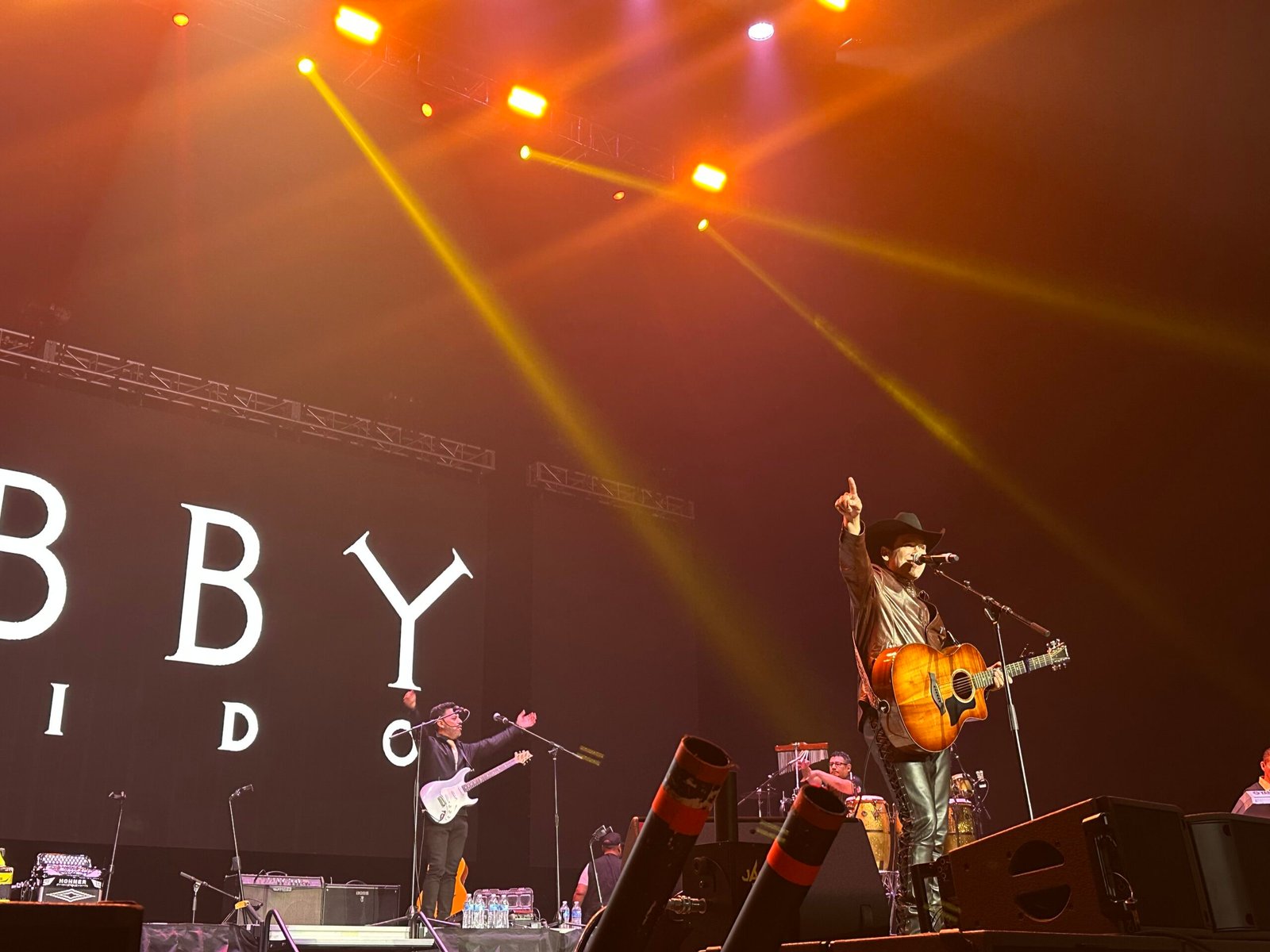
EDINBURG, Texas — A man walks out to a packed arena filled with fervent fans. Nostalgic music blasts out over the speakers as the audience of the spectacle sways and sing along. Firehouse-red campaign hats litter the heads of the devotees jammed in tight to see the show.
But this isn’t a MAGA rally, and that’s not Donald Trump hitting the stage.
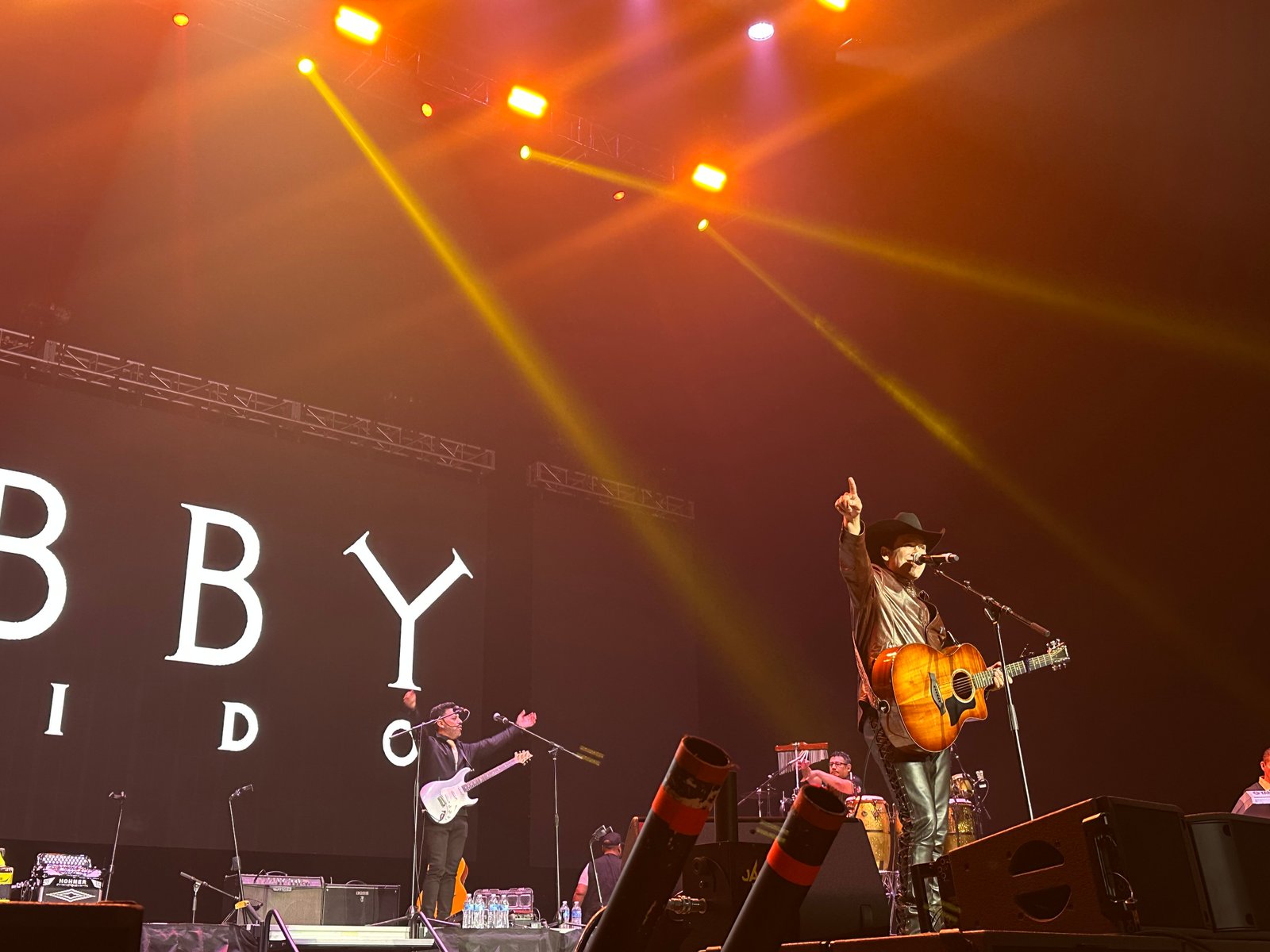
On stage is Bobby Pulido, the Tejano star turned Democratic House candidate clad in head-to-toe leather and a black cowboy hat. The occasion? “La Ultima Desvelada,” what he said will be his final concert in Edinburg on Saturday night.
Pulido is trying to flip a district that has steadily, over the past decade, slipped from the grasp of the Democratic Party and became the ultimate swing test for the country’s most culturally conservative Latino voters.
If Pulido wins in Texas’ 15th District against incumbent GOP Rep. Monica De La Cruz, the Democratic Party stands to gain much more than just a seat that could make a House majority. As the party looks to rebuild with Latinos and lay the groundwork for 2028, the Tejano crooner could become a strong messenger to one of Democrats’ weakest voting blocs.
“Mexican-American men haven’t really felt like they have a home,” in either party, Pulido told Blue Light News in an interview. “It almost feels like the Latino man wants to be that provider, and he can’t fulfill that right now.”
Like many Democrats this cycle, Pulido has dialed in on affordability and an aggressive economic messaging slamming Trump’s tariffs, the war with Iran and the growing stream of big corporate money in political campaigns.
But unlike his fellow Democrats, Pulido echoes a social conservatism that has defined the region. He’s “chapado a la antigua,” he told reporters Friday — a Spanish saying for old-school or traditional.
“Those traditions of how [Latino men] were raised are going away, and I think there’s a lot of frustration,” Pulido told Blue Light News. “They want somebody to talk to them in the language of, ‘Let me go out there and work, right? So I can provide for my family.’”
Pulido has tapped into a level of political fervor and cultural star power for which the Democratic Party has been starved. Trump won the district by a staggering 18 points in 2024 — and it was redrawn by Republicans last year. But Pulido’s near-universal name ID as an Edinburg native and music star, combined with historic headwinds buffeting, put the south Texas district on the map as one of the biggest toss-ups this cycle.
With just over two weeks to go, Pulido is in a dead heat against De La Cruz. He’s leaving behind three decades as a musician, multiple Latin Grammys and packed arenas for a shot at representing his hometown in the halls of Congress.
The 956 region knows Pulido and his family to an extent that very few would-be members of Congress could boast. They know his father, Roberto Pulido, also a famous Tejano singer who joined his son onstage. They know his uncle, a former county judge. But beyond that, with billions of streams to his name, Pulido’s 90s hits became a ubiquitous sound for the RGV. And only in the RGV would his supporters trot up to the arena on horseback, coming off the nearby expressway.
That fame, and his deep district ties, made Pulido one of the party’s most prized recruits this cycle. He’s one of the DCCC’s top candidates, with a campaign staffed in part by blue dog organizations like The Bench while also boasting the same Latino consultants as Sen. Ruben Gallego’s (D-Ariz.) 2024 Senate campaign.
And Democrats see the potential for the kind of surrogate Pulido could become on the 2028 campaign trail. Many of the party’s biggest Latino voices — and attention grabbers — are further on the left.
“What we haven’t had is someone like Bobby Pulido, who’s going to come from the moderate wing of the party, that is going to be a rock star,” Gallego told Blue Light News.
Should Pulido head to D.C. next year, he’d be joining alongside a crop of fresh progressive Democrats who have ridden the wave of democratic socialism in blue enclaves — most notably New York’s Darializa Avila Chevalier and Claire Valdez.
“We’re not going to agree on everything,” Pulido conceded. But with Texas primed to get even more electoral votes in future presidential cycles, the party’s direction has to “resonate inside the middle of the heartland,” he said.
But it’s not only electoral numbers: the early Democratic nominating calendar is heavily Latino, with both New Mexico and Nevada in the lineup. Mexican-American men could help tip the scales in either state.
Pulido knows if he pulls off the win, potential 2028 hopefuls will come flocking, asking him how to win over the Rio Grande Valley. Could he see himself backing 2028 presidential candidates if he wins? They’ll have to convince Pulido first.
“I will hold any type of endorsement or anything very close to my chest, and I will definitely make sure that I get behind somebody that has a policy that resonates with Hispanics,” Pulido said.

Since Pulido released his hit single “Desvelado” in the mid-90s to today, his hometown of Edinburg and its sister cities across the area transformed from a once-reliable blue working class district to a part of the country deeply wary of the Democratic establishment. Latino voters have embraced the economic populism of Trump and other GOP candidates who touted their more conservative values. In 2022, De La Cruz clinched the district for Republicans.
By 2024, Democrats lacked an economic message or answers for what many in the area decried as wide-open borders, Pulido told reporters on the sidelines of his rally in Mercedes on Friday.
That’s made the stakes for his races all the bigger, with the RGV becoming the ultimate bellwether.
“Bobby’s politics are different from the way that we have branded ourselves nationally as a party, but I think that’s a good thing,” said Melissa Morales of Somos PAC, which has poured millions into Pulido’s race.
But Pulido’s campaign has been marred by scandal. He’s taken heat for crude social media posts about women and gay people. Frankie Caballero, one of his former bandmates, was convicted as a child sex offender. Pulido insisted he was not aware of Caballero’s history while he was in the band as a contractor, having not done a background check. Caballero was convicted in 2014, but later returned to performing with Pulido.
De La Cruz’s campaign has made Pulido’s ties to Caballero a staple of attacks. “Bobby Pulido had his uncle drop a child rape charge against a friend so he could play in his band. Then he bailed this pedophile out of jail, brought him to a middle school, and looked the other way while he molested children in South Texas. Latinas are choosing Monica De La Cruz, a working mom fighting for their families, over a corrupt scumbag celebrity who will make life more expensive and already put a predator back on the streets because he likes his accordion,” James Shook, De La Cruz’s campaign manager, said in a statement.
Pulido was defensive over his past, but apologized for his social media posts in an interview with Blue Light News. He has given varied responses on what he knew about why Caballero went to prison. “I apologize for everything that I’ve ever joked about that offended anybody,” Pulido told Blue Light News in August. “But I can’t continue to revisit every single one.”
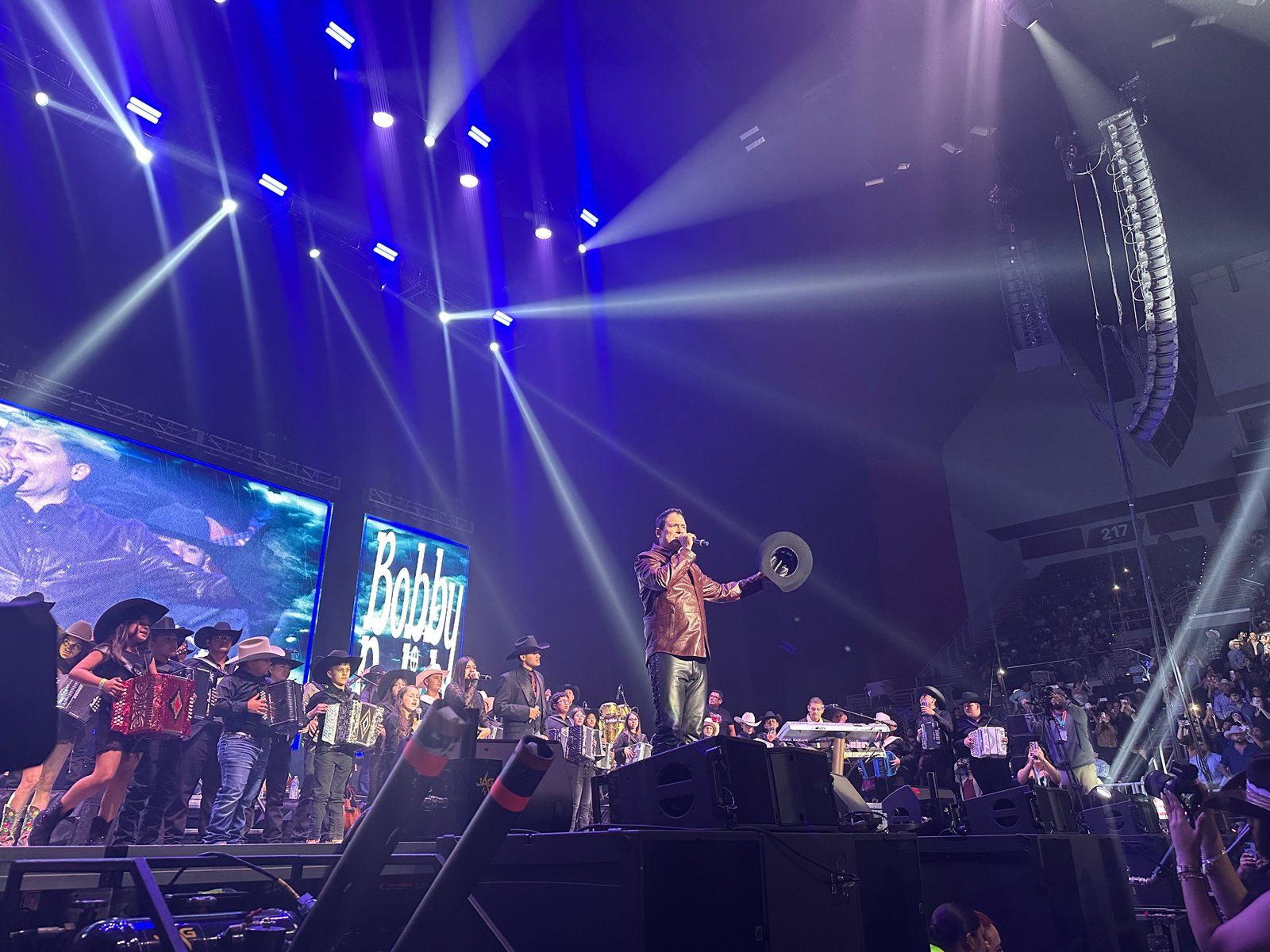
With hundreds flocking to Bert Ogden Arena to witness his final show, Pulido’s popularity has hardly dimmed because of it. Multiple voters in attendance who spoke with Blue Light News said they had heard the allegations about Pulido and his accordionist, but none said that it was affecting their vote.
“It’s unfortunate, but I’m not gonna hold it against Bobby,” said Joe Barrera, a musician from the Pharr-San Juan-Alamo area. Barrera, an independent, added that he’s still undecided between voting for Pulido or De La Cruz — but said he feels “it’s time for a change.”
The economy and immigration dominated the reasons why voters in the crowd pledged their support for the singer. The cost of living has gotten “re pe caro” — super expensive — Frank Trevino, a Democrat from Edinburg, told Blue Light News. He and fellow Edinburg voter Felix Sandoval said they knew Pulido’s mother and remembered Bobby as a kid. “We need to support him, God help him,” Sandoval said.
Pulido’s final show Saturday was the talk of Edinburg, from the hallways of the nearby inns to the post-concert stop at Whataburger. Clocking in at nearly two hours, it served as a greatest hits replay for the last 30 years of his life — and a trip down memory lane for many of the voters who grew up with him. “Of course I’m emotional, but I’m leaving with no regrets,” Pulido said from the stage. Pulido is simultaneously up for yet another Latin Grammy recognition this year.
And for his status as a longtime entertainer, Pulido is not a fan of the comparisons to Trump, who in his words, is “full of shit.” Yet it’s also something his campaign has been (perhaps ironically) leaning into, with “Make Quinceñeras Great Again” hats nodding to what’s become his signature campaign move.
With early voting kicking off on Monday, Pulido sharpened his closing pitch: He’s not for Democrats or Republicans — he’s for his district.
“I want to give something back to the place that’s given me so much,” Pulido said. “And if you give me the honor of representing you in Congress, I give you my word that I’ll never forget where I came from.”
- Capitol agenda: AI experts to school Congress wanted
- Ohio returns as a bellwether
- Inside the quiet money pullback — for both parties — in Georgia’s Senate race
- Wanted: Tech experts to help Congress regulate AI
- Wright defends Trump’s Russian diesel deal as ‘carrot’ for peace
- Democrats’ Tejano star sings to swing South Texas
- Warnock wants Democrats to focus on the South. He’s starting in Mississippi.
- Retiring GOP congressmember will ‘absolutely not’ vote for successor in at-risk seat
- Sullivan walks the line with Trump in Alaska Senate race
- Trump is hitting the campaign trail. But he’s missing from GOP ads.
-

 Politics2 years ago
Former ‘Squad’ members launching ‘Bowman and Bush’ YouTube show
-
Uncategorized2 years ago
Bob Good to step down as Freedom Caucus chair this week
-

 The Josh Fourrier Show2 years ago
DOOMSDAY: Trump won, now what?
-

 The Dictatorship2 years ago
Pete Hegseth’s tenure at the Pentagon goes from bad to worse
-

 Politics2 years ago
Former Kentucky AG Daniel Cameron launches Senate bid
-

 The Dictatorship2 years ago
Luigi Mangione acknowledges public support in first official statement since arrest
-

 Politics2 years ago
Blue Light News’s Editorial Director Ryan Hutchins speaks at Blue Light News’s 2025 Governors Summit
-

 The Dictatorship1 year ago
Mike Johnson sums up the GOP’s arrogant position on military occupation with two words