
The Dictatorship
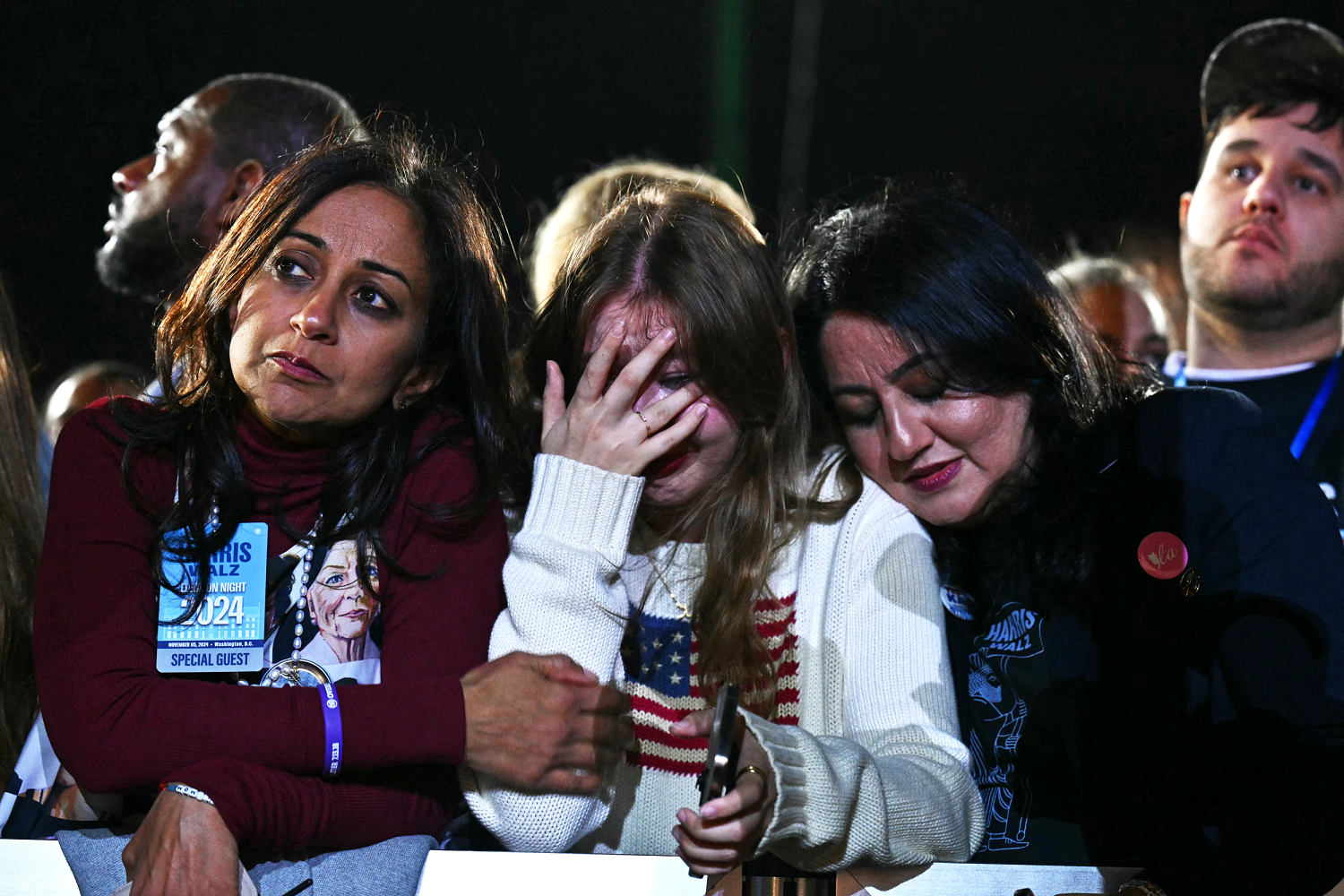
Nearly 77M people voted against Trump. That should give us hope.

To find hope in the aftermath of this month’s electionI don’t have to look any further than the notes I took for the two novels I’ve published since 2019. My debut novel, “We Cast a Shadow,” follows a Black man in a futuristic America trying to protect his son from those who want to destroy his Black body. “The American Daughters,” published this year, is the story of an enslaved girl who joins a spy ring to fight the Confederates.
For everyone who denied the humanity of others, there was someone else who stepped up to defend them.
I spent two decades doing research for those novels, including interviewing elders and digging through archives in New Orleans’ French Quarter. After the last page was turned in, I learned one simple truth I believe speaks to this moment when an incoming president is promising to inflict pain upon our neighbors: For much of our dark past, for everyone who denied the humanity of others, there was someone else who stepped up to defend them. For that reason, frightening changes that initially seemed permanent were anything but.
A bill stripping away rights might be passed one year only to be struck down by a court the following year. Or, in the reverse, a negative ruling by a court might be superseded by a legislative act. Politics, history and culture are like a pendulum, held by a woman on a seesaw, which is itself perched on the back of a whale swimming across the sea. There’s too much motion to fully understand, but two things are certain: One, you’re moving toward something, and two, change is inevitable.
The people in my novels resist authoritarianism in the way that one group or another of Americans always has. Most Black Americans were treated as the property of the wealthy during the time when “The American Daughters” is set, but the characters vigorously fight for their freedoms despite the immense personal risk. In creating these fictional characters, I was inspired by a score of real-life freedom fighters: from Harriet Tubman and Sojourner Truth to more obscure figures like Juan San Maló (Jean St. Malo) who established a village for those who escaped slavery deep in the swamps east of New Orleans.
The narrator of “We Cast a Shadow” is a loving father who uses cunning to shield his son in a world where Black Americans are forced into fenced-in ghettos or deported altogether. The narrator’s wife, Penny, is white, but she is an even fiercer protester of inequality. And several other characters also defend the marginalized. These characters represent a variety of approaches to resistance, just as real-world figures such as Martin Luther King Jr., Malcolm XPatty Hearst and Ida B. Wells had different ways of fighting back against oppressive systems.
Both novels, then, are informed by the many ways that people living in an oppressive police state resisted and fought back and didn’t give up hope but made plans for a brighter future.
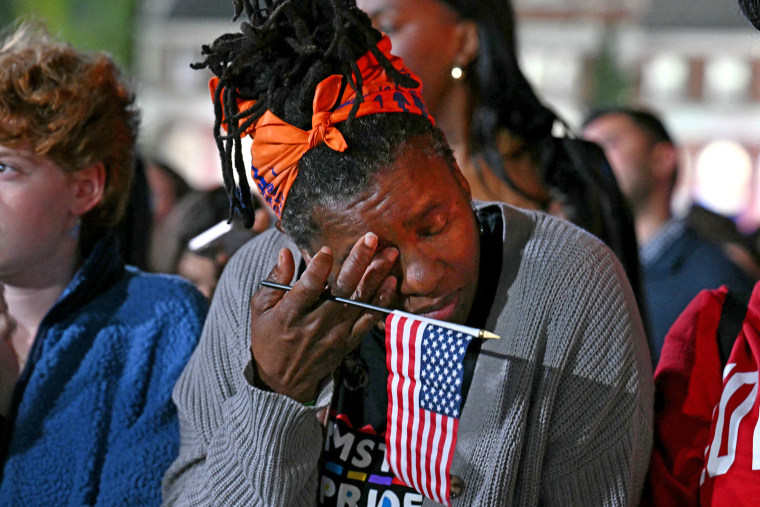
But we don’t have to go back to previous centuries for a reminder that bad times don’t always last as long as it looks like they might last. The day after the 2004 election, my best work friend sat in her office crying. President George W. Bush had just won re-election after he’d launched an illegitimate and brutal war in Iraq and after his party had strategically placed anti-marriage-equality measures on ballots across the country to help the party win that year. My friend was crying in part because at the time, the Bush coalition seemed permanent. On that day in 2004, we couldn’t have even conceived of a President Barack Obama or imagined that during his time in the White House the Supreme Court would make marriage equality the law of the land.
In “We Cast a Shadow,” African Americans are forced to live in a neighborhood surrounded by a wire fence. They can leave only with special permission, not unlike the Japanese Americans who were trapped inside internment camps during World War II. I’m unusual in that I always hope for the best. But I also believe people when they announce what terrors they plan to unleash. I’m disgusted that the new administration is promising to round up countless people and corral them into places that will most likely look very similar to those camps. If President-elect Donald Trump’s menacing promise is enacted, then children will lose their parents. People will die.
There were almost 77 million people who voted against the president-elect’s agenda, a fertile ground of opposition and defiance.
The characters in “The American Daughters” are trapped by patriarchal and racist forces that have plans for their bodies. The women in particular are motivated to fight their oppressors at every turn. We’re at such a place again. Given the Supreme Court justices he appointed (and is likely to support) and the anti-abortion foes in his orbitwe can expect Trump’s new administration to continue to eat away at women’s rights to control their own bodies. That can only result in deaths as doctors unwilling to risk their medical licenses refuse to provide treatment to women who need it. We can also expect that the new administration will do all that it can to end protections for trans and nonbinary people, which will cause incalculable pain and devastation.
But, according to the latest numbers, there were almost 77 million people who voted against the president-elect’s agendaa fertile ground of opposition and defiance.
At some point the new administration will lose its momentum. Allies will use the courts to divert, delay and defeat the worst decisions of this president. The midterm elections will be here before you know it. And in 2028, despite some people’s worries, there will be an election.
The writer James Baldwin, speaking about how he dealt with bullies who threatened him when he was a child, said he’d say, “‘OK … but you gonna have to do it every day.’ You’d have to beat me up every single day. So, then the question becomes which one of us would get tired first. And I knew it wouldn’t be me.”
A friend from Asia told me after the results of the Nov. 5 presidential election that she felt like the U.S. the world loves had just died. But America is what it is in part because we’ve always had people like Baldwin, people who despite being battered refused to ever get tired and quit. To those who think the fight has been lost, I say not so fast. The real-life stories of America show us that we’ve been here before.
Maurice Carlos Ruffin
Maurice Carlos Ruffin is the author of the national bestseller “The American Daughters,”as well as a short story collection, “The Ones Who Don’t Say They Love You.” His debut novel, “We Cast a Shadow,” was a finalist for the PEN/Faulkner Award, the Dayton Literary Peace Prize and the PEN America Open Book Prize. All three books were New York Times Editor’s Choice selections. He is the winner of the Iowa Review Award in fiction and the Louisiana Writer Award. Ruffin is an associate professor of creative writing at Louisiana State University.



NEW YORK (AP) — Oil prices rose, and stock markets dropped in shaky trading worldwide Wednesday after President Donald Trump raised doubts about the temporary truce in the war with Iran.
The S&P 500 fell as much as 1.1% after Trump said the ceasefire agreement was “over,” but the index then trimmed its loss to 0.3% after Trump said recent fighting did not mean a return to full-scale war. They’re his latest mixed messages on what will happen with the war, which threatens to worsen inflation for the world.
The Dow Jones Industrial Average dropped 576 points, or 1.1%, while the Nasdaq composite rose 0.2% after erasing an early loss.
The action was stronger in the oil market, where the price for a barrel of Brent crude climbed 5.2% to $78.02 and briefly topped $80.
That’s still below its peak from earlier in the war, when the price for the most actively traded contract reached nearly $120. But the jump is unsettling because oil prices had just dropped back to where they were before the war.
The worry is that a continuation of the war will block the Strait of Hormuz and prevent the delivery of crude from the Persian Gulf to customers worldwide. That could worsen inflationwhich economists expected would ease with oil prices, and in turn force the Federal Reserve and other central banks to raise interest rates.
Higher rates can keep a lid on inflation, but they also slow the economy and hurt prices for all kinds of investments.
On Wall Street, stocks of companies in the housing industry helped lead the way lower. They were hurt by worries that rising Treasury yields in the bond market will mean higher rates for mortgages and chill the industry.
Builders FirstSource, which sells countertops, windows and other building supplies, fell 5.4%. Homebuilders PulteGroup fell 5.4%, and D.R. Horton sank 4.6%.
Companies with big fuel bills also sank. American Airlines lost 4%, and cruise operator Carnival fell 3.9%.
Helping to offset those losses was a steadying for some influential stocks in the artificial-intelligence industry. They’ve been under pressure in recent weeks on worries that their prices shot too high and that AI may not produce enough productivity and profits to make all the investments in chips and data centers worth it.
Their swings carry a lot of weight on Wall Street because AI stocks have grown into some of the U.S. market’s biggest, giving their movements more effect on the S&P 500 than other stocks.
Sign up for Morning Wire: Our flagship newsletter breaks down the biggest headlines of the day.
Nvidia rose 3.7%, for example, and was the strongest force pushing upward on the S&P 500 because it’s the largest stock on Wall Street.
Close behind was Broadcom, which climbed 4.8% after Apple announced a multiyear commitment where Broadcom will design and produce custom components for its products. Apple said the agreement’s value could top $30 billion.
All told, the S&P 500 fell 21.14 points to 7,482.71. The Dow Jones Industrial Average dropped 576.76 to 52,348.39, and the Nasdaq composite rose 51.96 to 25,870.65.
In the bond market, Treasury yields rose with the price of oil. The yield on the 10-year Treasury briefly got near 4.60% before pulling back to 4.57%. That’s up from 4.55% late Tuesday and from just 3.97% before the war with Iran began.
In stock markets abroad, European markets turned sharply lower after Trump said, “For me, I think it’s over” about the status of the ceasefire. He added that U.S. representatives can continue negotiations, “but I think they’re wasting their time.” Germany’s DAX lost 2.2%, and France’s CAC 40 sank 2.2%.
In Asia, South Korea’s Kospi dropped 5.3% and continued its sharp swings amid seesawing worries and euphoria about the AI stocks that dominate its market.
Hong Kong’s Hang Seng index was an outlier and rose 3%. Shares that trade there of Chinese AI startup Zhipu, known also as Z.ai and traded as Knowledge Atlas Technology, jumped 13.4%.
A six-month lock-up period for “cornerstone” investors following its January trading debut in Hong Kong expires this week. China National Radio reported late Tuesday that nearly 70% of Zhipu’s cornerstone investors are committed to stay on, despite previous worries that the lock-up period expiration could trigger a sell-off.
Zhipu’s share price has risen more than 1,300% since its debut.
___
AP Business Writers Matt Ott, Chan Ho-him and Elaine Kurtenbach contributed to this report.

In the three weeks since Donald Trump declared that a “deal” between the United States and Iran was “complete,” the president and his team have been dogged by a series of difficult questions. Why does Iran have to make so few concessions under the memorandum of understanding? Why have prominent members of both parties slammed the agreement as inadequate? Why is Trump’s deal so much worse than the Obama-era Iran deal?
Now, however, the world is confronting a qualitatively different kind of question: Does Trump’s deal still exist?
On Tuesday, U.S. Central Command announced a new round of strikes against Iran, following reports of attacks on merchant ships in the Strait of Hormuz. The Trump administration simultaneously said it was reinstating sanctions on Tehran, which had been eased as part of last month’s MOU.
Soon after, Iran’s military said it had fired missiles and drones targeting U.S. military installations in Bahrain and Kuwait in retaliation for the strikes confirmed by CENTCOM hours earlier.
As for the tenuous ceasefire and peace process, it’s increasingly difficult to be optimistic. Speaking to reporters on Wednesday from the NATO summit in Turkey, Trump called Iranians “scum” and “evil people.” He added, “Frankly, we’ve wasted a lot of time with them. I think we should just do our business.”
The Republican didn’t elaborate as to what that “business” entails, but in context, he appeared to be referring to additional military strikes.
And then he kept going.
Asked specifically whether the ceasefire is over and the peace framework is dead, the American president told reporters, “To me, I think it’s over. I don’t want to deal with them anymore. They’re scum. … They’re led by sick people, and they’re vicious, violent people. … As far as I’m concerned, it’s over. … As far as I’m concerned, it’s just a waste of time dealing with them. … They’re liars. … There’s something wrong with them. They’re cuckoo.”
Right on cue, oil prices jumped and stock market indexes started falling. There’s no great mystery as to why: If the ceasefire is over and the peace framework is dead, then we’re right back to where we were when the hot war was still underway.
The trouble, however, is that Trump is erratic and easily confused. It’s effectively impossible to know whether he’ll take the opposite position at any given moment, opening the door to new diplomatic talks or making matters vastly worse.
Either way, the truce appears to be unraveling.
Steve Benen is a producer for “The Rachel Maddow Show,” the editor of MaddowBlog and an MS NOW political contributor. He’s also the bestselling author of “Ministry of Truth: Democracy, Reality, and the Republicans’ War on the Recent Past.”

Today’s installment of campaign-related news items from across the country.
* Graham Platner’s Senate candidacy isn’t officially over yet, but as the Maine Democrat hemorrhages supporthis campaign has canceled fundraising events and scheduled ad buys. What’s more, Platner’s team acknowledged Tuesday that it had reached out to the Maine Democratic Party to discuss the process for possibly replacing him on the ballot.
That process, should it proceed, will apparently not be smooth: State party Executive Director Devon Murphy-Anderson accused members of Platner’s team late Tuesday of “trying to put their thumb on the scale” of the process to find his replacement, even though the scandal-plagued candidate has yet to withdraw.
The Maine Democratic Party chief added that Platner would have “no role” in the selection process.
In the meantime, as the candidate faces new allegations of sexual misconduct, Platner’s would-be Democratic successors are taking unsubtle steps to make clear they’re interested in getting the nod for the general election race against incumbent Republican Sen. Susan Collins.
As for what to expect if Platner exits, Axios reported that Republicans “are preparing to welcome a potential Graham Platner replacement in Maine’s Senate race with $8 million in negative ads, aiming to introduce a new Democratic nominee to voters on their own terms before Democrats can.”
* It’s too late for Maryland to redraw its district map ahead of the midterms, but the Democratic-led legislature is moving forward with plans for a special legislative session next month to overhaul its congressional districts ahead of the 2028 election cycle.
* In Colorado’s Republican gubernatorial primaryVictor Marx, a controversial religious nonprofit leader, is ahead of state Sen. Barb Kirkmeyer by roughly 2,000 votes in the latest tallies, but it might be a while before the race is officially called.
* Republican Rep. Cory Mills of Florida has faced a great many scandals of late, but last week, one of his primary rivals filed a formal legal complaint alleging that Mills improperly notarized his candidate documents, making him ineligible for the ballot. (Mills did not respond to MS NOW’s request for comment about the allegations.)
* As if Texas Attorney General Ken Paxton didn’t have enough troublesthe Republican Senate candidate is now facing mockery after spending July Fourth in Europe with a woman who is not his estranged wife.
* And a year after congressional Republicans passed their domestic policy megabill to significant partisan fanfare, it’s Democrats who are eager to tell voters about the regressive package ahead of November’s elections.
Steve Benen is a producer for “The Rachel Maddow Show,” the editor of MaddowBlog and an MS NOW political contributor. He’s also the bestselling author of “Ministry of Truth: Democracy, Reality, and the Republicans’ War on the Recent Past.”
- Chuck Grassley pushed for more transparency into Kash Patel’s FBI spending in May, Democrats reveal
- Jordan Wood joins crowded Maine Senate race
- In 60 years of independence, Botswana has refuted the authoritarian development myth

- Trump’s escalating attacks on Iran pose risks at home

- Both sides signed the Iran deal, but neither could deliver

- Losing in Ukraine, is Putin finally down to his nukes?

- Bipartisan Senate duo wants to help students get federal aid for learning outside college

- Nirav Shah, governor primary runner-up, jumps into race to replace Platner
- Capitol agenda: Collins loses her foil in Platner
- Platner’s advisers urged him to go out with ‘gratitude.’ He led with grievance.
-

 Politics1 year ago
Former ‘Squad’ members launching ‘Bowman and Bush’ YouTube show
-

 The Dictatorship1 year ago
Luigi Mangione acknowledges public support in first official statement since arrest
-

 The Josh Fourrier Show2 years ago
DOOMSDAY: Trump won, now what?
-

 Politics1 year ago
Former Kentucky AG Daniel Cameron launches Senate bid
-
Uncategorized2 years ago
Bob Good to step down as Freedom Caucus chair this week
-

 The Dictatorship1 year ago
Pete Hegseth’s tenure at the Pentagon goes from bad to worse
-

 Politics1 year ago
Blue Light News’s Editorial Director Ryan Hutchins speaks at Blue Light News’s 2025 Governors Summit
-

 The Dictatorship10 months ago
Mike Johnson sums up the GOP’s arrogant position on military occupation with two words