
Politics
Nashville ICE raid reignites city’s turmoil with GOP leaders

An unsteady truce between Nashville’s Democratic mayor and Tennessee’s Republican leaders just collapsed after an ICE dragnet in the city.
Tension began to build in early May, when ICE started making traffic stops in partnership with the state highway patrol in the immigrant-heavy neighborhood of South Nashville, leading to the arrests of nearly 200 suspected undocumented immigrants.
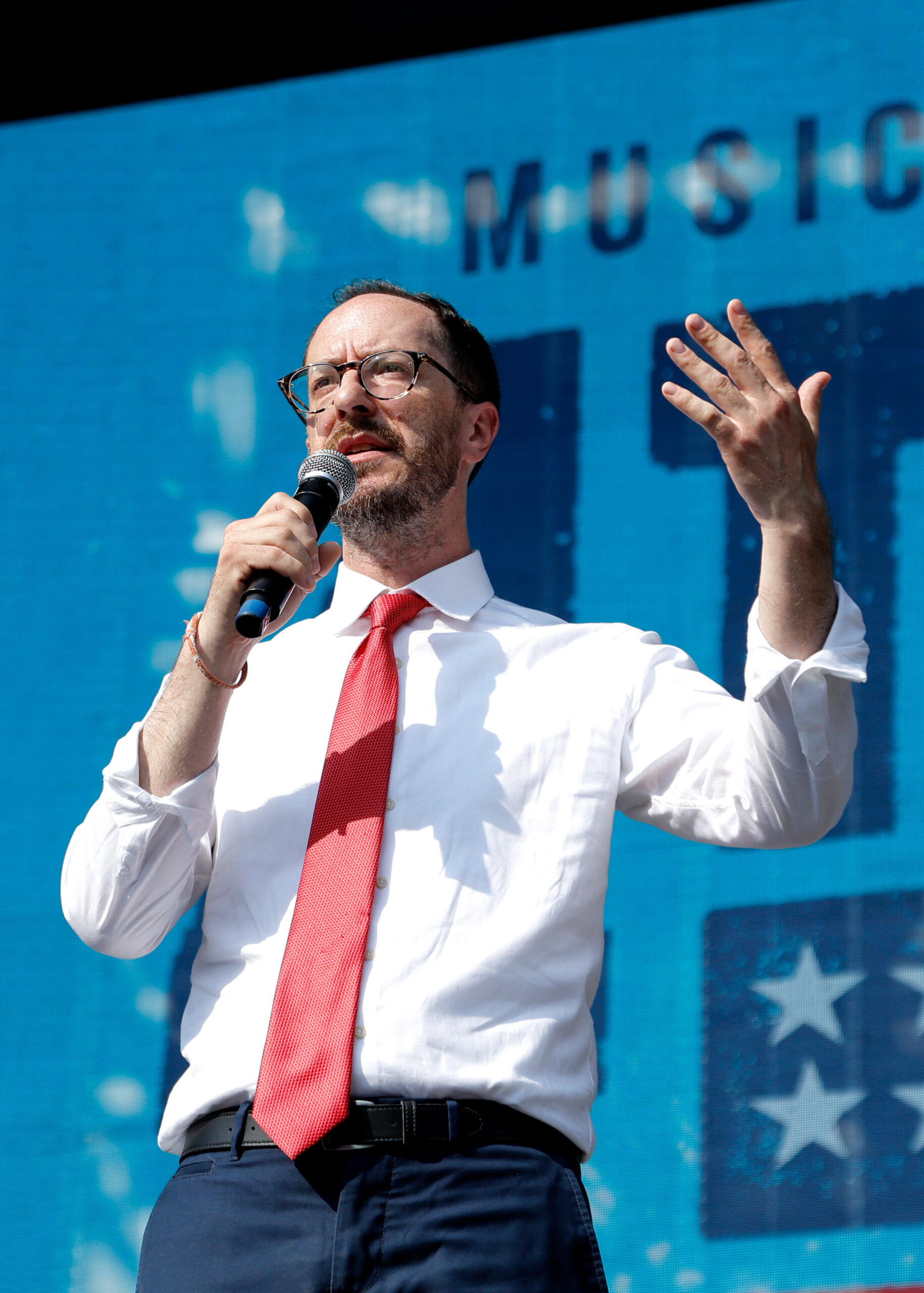
Mayor Freddie O’Connell quickly condemned the action as damaging to the community. And a GOP firestorm resulted, with Republicans accusing O’Connell of interfering with federal immigration enforcement.
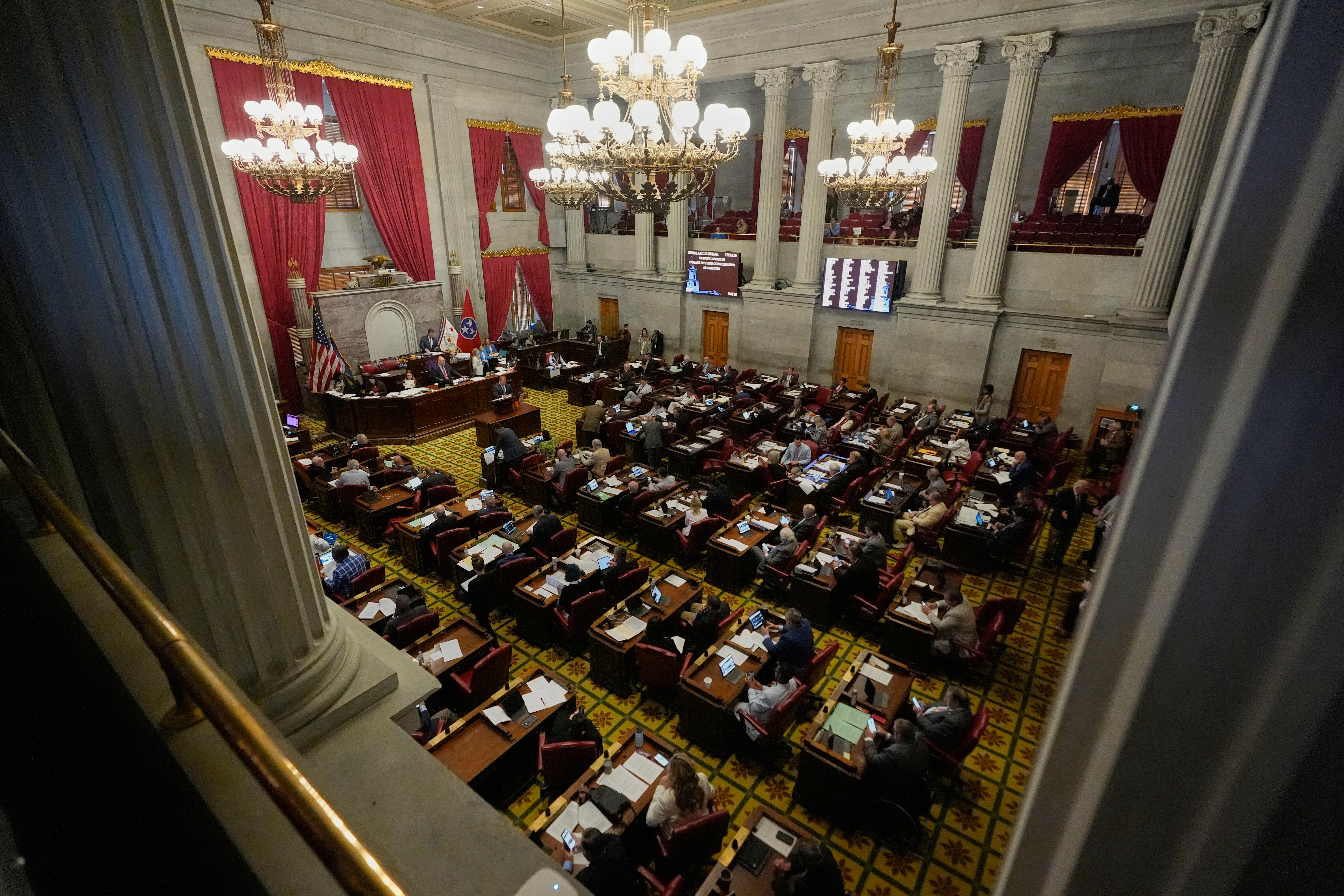
Four weeks later, a simple public policy spat has turned into a major conflict between some of the most powerful leaders in Tennessee, breaking a fragile peace between the city and the GOP supermajority legislature – and exposing Nashville to the wrath of the Trump administration. The feud, which shows no signs of ending soon, comes with real potential consequences for Nashville and other blue cities in red states being targeted over their immigration policies.
“It’s unfortunate that he’s willing to support the law breakers instead of supporting us as the lawmakers,” state Rep. Rusty Grills, a Republican, said of the mayor.
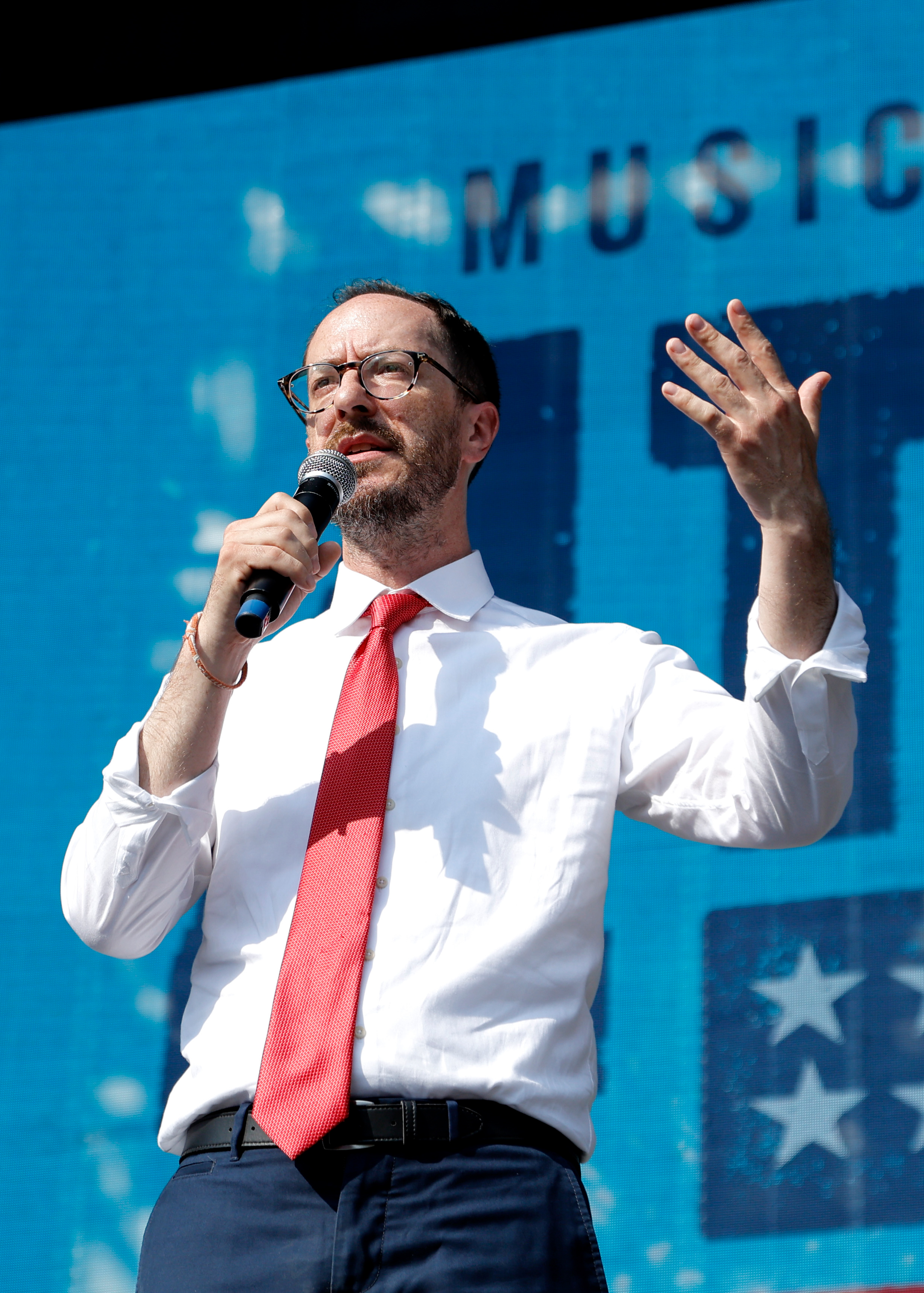
O’Connell, who has worked to calm long-running tensions with Republicans since his election in 2023, is the latest target of GOP ire over perceived threats to President Donald Trump’s deportations, and the onslaught against the mayor also represents a further escalation in the administration’s attack on local officials. In New Jersey, Newark Mayor Ras Baraka was arrested in May on a trespassing charge outside an ICE facility. That charge was later dropped, but U.S. Rep. LaMonica McIver is facing assault charges from the same confrontation.
In Tennessee, Republicans in the state legislature told Blue Light News that O’Connell was putting officers at risk by updating a longstanding executive order mandating that city officials disclose interactions with ICE to the mayor’s office within 24 hours. They have latched onto that as evidence the mayor is impeding law enforcement operations.
O’Connell, speaking at a press conference following the raids, said the city does not have the authority to enforce immigration laws, and noted that Nashville’s crime rates are down. He has maintained that the city did not interfere with the ICE operation in early May.
Yet GOP outrage has spread from Tennessee to Washington. O’Connell is facing a federal investigation from House Republicans announced last week, and a call for another from the Department of Justice by Sen. Marsha Blackburn, who all argue that O’Connell is impeding law enforcement’s ability to crack down on crime committed by illegal immigrants.
U.S. border czar Tom Homan has warned that Nashville could see larger immigration crackdowns as a result of O’Connell’s opposition.
“We’ll flood the zone in the neighborhoods to find the bad guy,” Homan said on Fox News last week. “We’ll flood the zone at work sites to find the bad guy, but we’re going to do it, and [O’Connell’s] not going to stop us.”
Republicans have also gone after O’Connell for highlighting a donations fund that supports individuals affected by the arrests, like children whose parents were detained. Republicans say the fund is an improper use of taxpayer dollars, although the fund was created by a nonprofit that says it exclusively uses private donations.
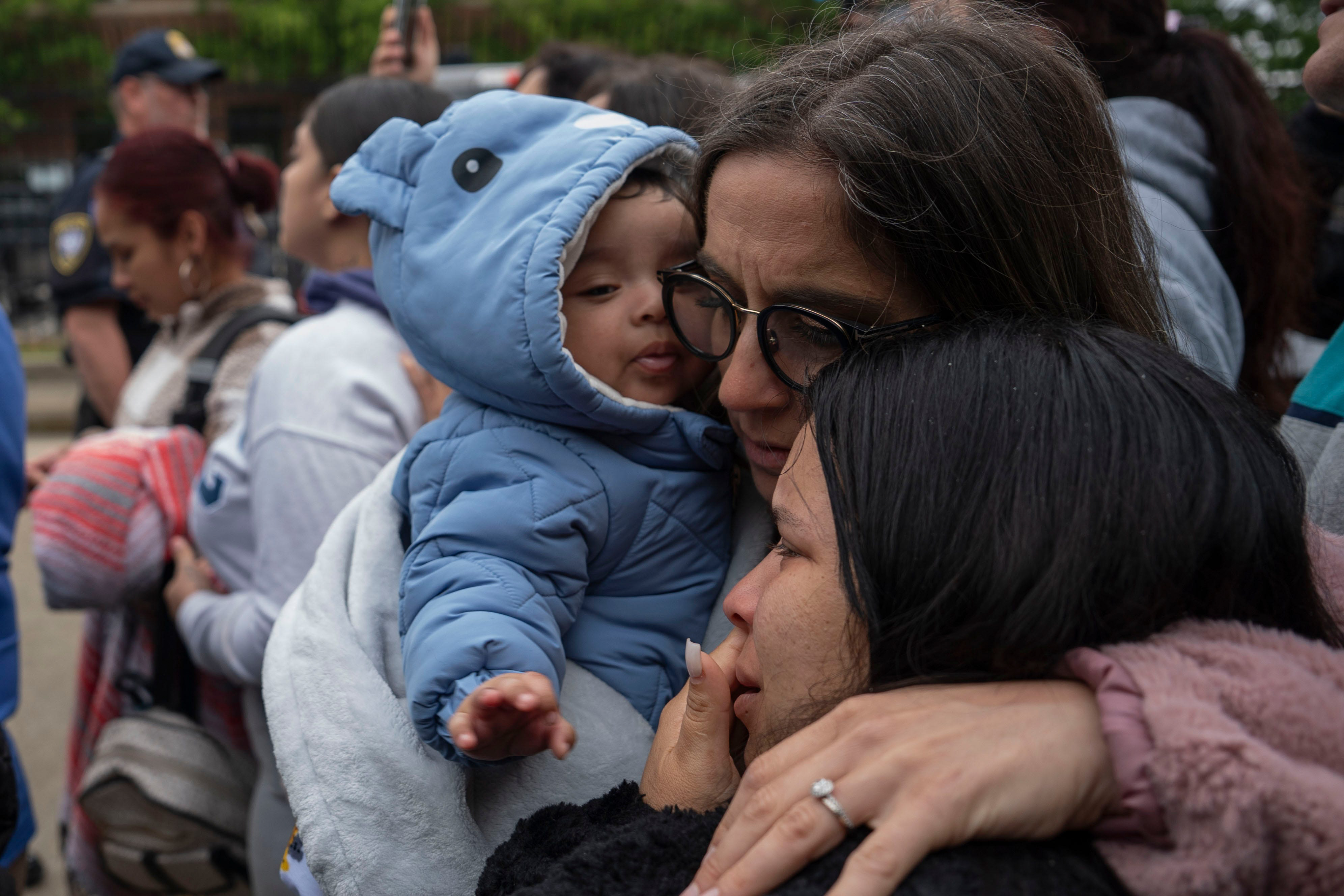
Tennessee Democrats and immigrant advocates say that Republicans are cheering ICE’s involvement because of a bad-faith view of immigrant communities and that the criticism of O’Connell is purely GOP rhetoric lacking any basis. They also say the sweep shows how the Department of Homeland Security is taking in people that pose no threat to the public. DHS said about half of the people arrested have criminal records, but only identified four of them – leading Democrats to demand more information about those detained.
“For the politicians who care about nothing but the national news, this is a symbolic story,” said Democratic State Sen. Jeff Yarbro. “But for those of us who represent communities where we’ve seen lawless dragnet policing, there are real life consequences to our community and to our neighbors.”
The raid’s scale and scope was “unlike anything we’ve ever seen before,” said Lisa Sherman Luna, the executive director of the Tennessee Immigrants & Refugee Rights Coalition.
The Tennessee Highway Patrol’s cooperation with ICE underscores the role states will play in carrying out the Trump administration’s immigration agenda – especially as DHS struggles to hit its deportation goals. GOP leaders eager to impress the president have taken steps in recent months to deputize local law enforcement as immigration enforcers, like in Georgia, where Gov. Brian Kemp recently signed a law requiring law enforcement to check the immigration status of detainees.
“They are building an infrastructure that we’ve never seen, especially for a non-border state, to really carry out the President’s agenda of mass deportations,” Luna said of the ICE operation in Nashville. “The devastation for families and local communities is going to be deep and broad, because everyone is a target now, and so it’s really alarming to see our state government being used in this manner.”
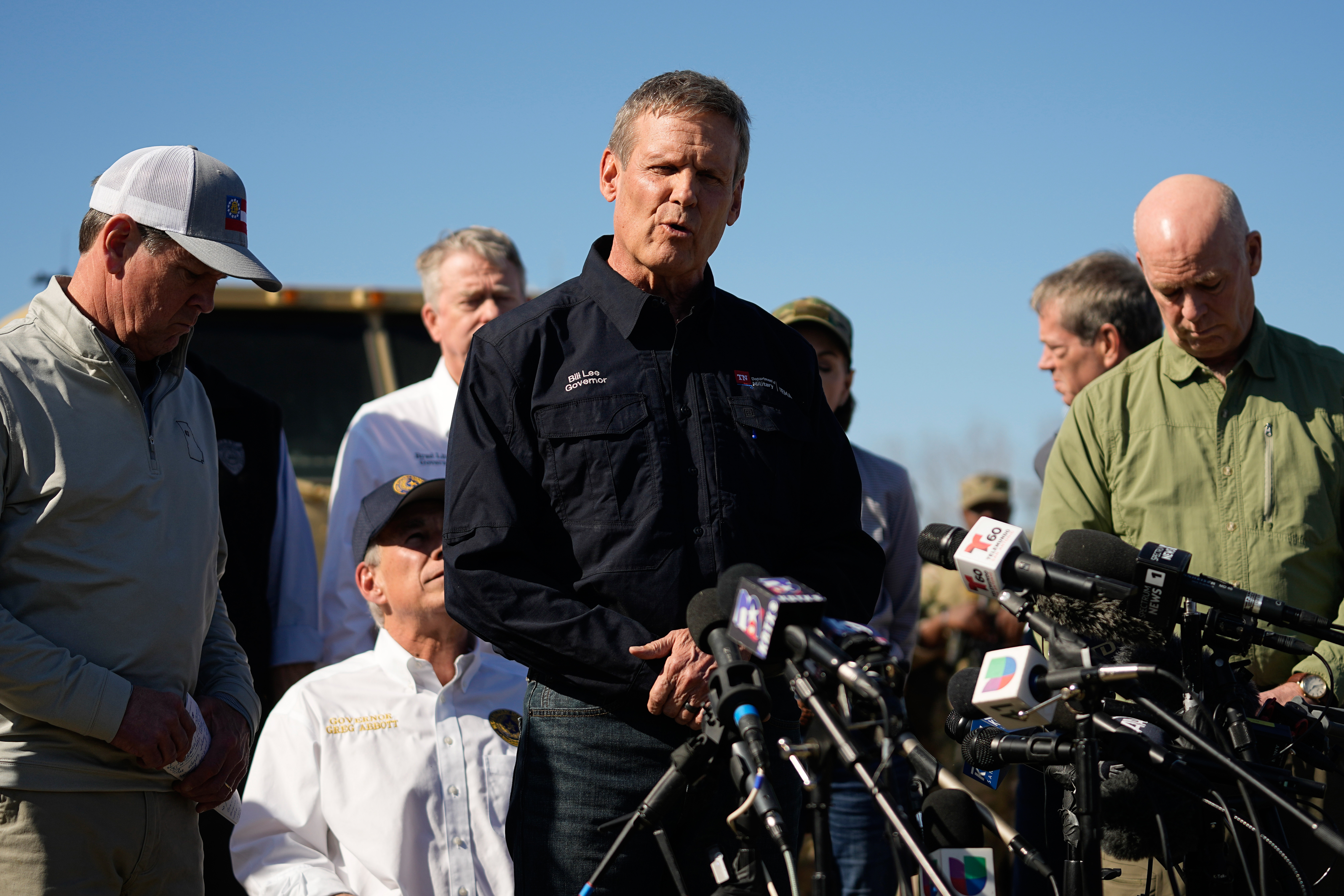
Tennessee Republicans have framed the conflict as a matter of law and order – arguing that the ICE raids were a necessary use of force to crack down on crime they blame on illegal immigrants. Under the leadership of Gov. Bill Lee, Tennessee has emerged as one of the most aggressive non-border states on immigration in the second Trump era.
Lee, to the surprise of many Tennesseans, was the first Republican governor to say in January before Trump’s inauguration he was readying the National Guard should they be called upon to aid in deportations. In January, a few days after attending a governors meeting at Mar-A-Lago, Lee tacked onto immigration legislation as part of a special session on school vouchers. Lawmakers then passed a sweeping law expanding local law enforcement’s immigration purview and making it a felony for state officials to establish sanctuary cities.
Nashville is not a sanctuary city. But Democrats there still view the law as a warning shot from the legislature, which has clashed with city leaders over a range of issues — from control of the airport to representation in Congress.
“We wanted to send a signal that Tennessee was ready to cooperate and welcomed ICE coming into our communities to get these violent people out,” said state Sen. Jack Johnson, a Republican. “So I’m very, very happy with it and excited, and I hope they do more.”
And many want to see ICE return. State Sen. Brent Taylor has asked Homan to send ICE to Memphis to address “the violent crime epidemic” that he says is “exacerbated by poor local leadership.”
Shelby County, where Memphis is located, was included on a list of sanctuary cities and counties published by DHS last week that was soon taken down. Leaders of Shelby County, Memphis and Nashville — which was also on the list – disputed their designation as sanctuary cities, which have been outlawed by the Tennessee legislature.
State Sen. Jody Barrett described relations between Nashville and the GOP legislature as a “forced marriage,” complicated by the fact that Nashville serves as the state’s economic engine. Nashville’s population has exploded in recent years, and the city’s tourism industry keeps the state coffers filled.
“And because of that, it’s kind of a love-hate relationship,” he said.


AI safety groups aren’t buying OpenAI CEO Sam Altman’s shifting stance on political spending in the midterms.
They’re wary of his concession that campaign cash from industry-aligned groups, like the OpenAI-aligned Leading the Future super PAC, may have inadvertently backfired. Instead, they’re pushing for stronger commitments to downsize the flood of money — and for candidates to reject any support from pro-AI groups.
“I won’t believe that they are actually changing their strategy, or their goals I should say, unless and until they do,” said Democratic New York assemblymember Alex Bores, who emerged as a key voice among AI regulation advocates after Leading the Future and other groups spent $8 million to tank his House campaign. He launched a $30 million effort to unify Democrats on AI policy last month.
Altman’s stark acknowledgement to Blue Light News follows a New York Times report that revealed OpenAI President Greg Brockman backed out of injecting more cash into Leading the Future earlier this summer, calling the super PAC’s efforts a “distraction” from the company’s mission. The pause is notable as Americans grow increasingly anxious about the risks the technology poses, and lawmakers scramble to figure out how to approach the emerging tech.
Still, some critics are not taking Altman’s concession or Brockman’s pullback as a sign of a fundamental change in the industry’s campaign strategy — at least not yet.
“What I read it as is they are no longer — or Greg Brockman in particular is not — going to fund Leading the Future,” said Bores. “Does that mean that the industry is not going to spend hundreds of millions of dollars trying to influence policy and get benefits on their way? No.”
Bores insisted that candidates should think twice before accepting financial support from Leading the Future specifically: “An elected official of either party taking money from Leading the Future should be viewed with incredible suspect.”
Guardrails Alliance political director Charlie Blaettler agreed, saying OpenAI leadership deciding to distance themselves from Leading the Future should be the final straw for Democrats backed by the group.
“If it’s too toxic for Sam Altman and Greg Brockman, why are Democrats still taking their money?” he said.
Leading the Future and rival super PAC network Public First — which advocates for AI regulation and is largely funded by OpenAI competitor Anthropic — together spent over $70 million through super PACs this cycle, according to FEC data.
Other pro-regulation advocates have jumped in with their own political spending, with groups like the Guardrails Alliance — a nonprofit and super PAC that launched in June — raising $5 million and spending hundreds of thousands of dollars to support Bores. Some of Guardrails Alliance’s money came from OpenAI employees pushing back against Leading the Future, which is funded in large part by OpenAI president Brockman, his wife Anna, early OpenAI investors Marc Andreessen and Ben Horowitz, and their venture capital firm a16z. They have contributed a combined $75 million to Leading the Future.
Leading the Future and a16z declined to comment.
Some Democrats who were backed in their primaries by Leading the Future — like Reps. Ritchie Torres and Joe Morelle of New York and Jared Moskowitz of Florida — declined to say whether they would disavow the Leading the Future cash that boosted them in their races.
“An outside AI PAC spent money in the 4th district during the primary, but they didn’t donate directly to my campaign,” Rep. Val Hoyle (D-Ore.), who was backed by a nearly $300,000 investment from Leading the Future, said in a statement to Blue Light News.
She did not address whether she would disavow the group and its spending: “I’ve been working with labor leaders and advocates to put workers first when it comes to AI. We need clear federal guardrails to protect workers, safeguard our planet, prevent utility rate spikes and give consumers a voice.”
Even if candidates decide to further distance themselves from the industry’s spending, some pro-guardrails advocates said the onus still lies with figures like Altman to put a stop to — or significantly decrease — the influx of money altogether.
“[Altman was] basically saying, ‘These are the rules of the game, and I can’t really change them, and it’s not in my job description,’” said Brendan Steinhauser, who leads AI safety group The Alliance for Secure AI Action. “Of course he’s saying that, but they could do a unilateral disarmament or encourage the other labs to stop giving, and maybe it’d be just like pacing the frontier — maybe people could pace political giving.”
Former Democratic Rep. Brad Carson, who co-founded Public First, said he would be open to engaging in talks with Leading the Future about pacing or scaling back the industry’s political spending — but only if so-called AI “accelerationists” are serious about backing off. He called out Andreessen and Horowitz who have emerged as the biggest known spenders in this year’s midterm elections and were early investors in OpenAI.
“As long as these accelerationists have a desire to spend tens and tens, if not hundreds of millions of dollars, there is probably a need for a Public First,” said Carson, who also leads the nonprofit group Americans for Responsible Innovation. “So even if Brockman drops out, Andreessen and Horowitz can just drop another 50 million if they felt like it, and I wouldn’t want to be disarmed against that.”
Brendan Bordelon contributed to this report.
Former President Barack Obama will campaign in Detroit with Michigan Democrats later this month, giving the party a high-profile boost ahead of the start of the state’s early voting period.
Obama is set to join Democratic Senate nominee Abdul El-Sayed, gubernatorial nominee Jocelyn Benson and other candidates on Oct. 24, the state party announced Monday.
“It is my honor and privilege to announce that President @BarackObama is joining us on the trail in Detroit on Saturday, October 24,” El-Sayed wrote on social media. “Get. Ready.”
The event comes 10 days before Election Day, with Democrats defending an open Senate seat and the governor’s office.
El-Sayed faces Republican former Rep. Mike Rogers in the race to succeed retiring Democratic Sen. Gary Peters. Benson, Michigan’s secretary of state, faces Republican Rep. John James in the open governor’s race.
Since leaving the White House, Obama has remained one of the party’s most popular figures, both nationally and among the party grassroots. He has campaigned in past cycles, but he’s made few public stops on the trail this year.
He previously campaigned in Texas with Democratic Senate nominee James Talarico and gubernatorial nominee Gina Hinojosa, and appeared in a campaign ad with Iowa Senate nominee Josh Turek.
The former president is also set to headline a Washington-area fundraiser Wednesday for the Democratic Senatorial Campaign Committee, his first with the party’s Senate campaign arm this election cycle.
Ken Paxton is less than a month out from the conclusion of a D.C.-outsider campaign for a Texas U.S. Senate seat that he privately admitted is being run by Washington.
“I’ve never been in a race where I felt less control over the campaign and, like, what issues are going to matter because it’s all coming — you know — from D.C.,” Paxton said during a small fundraising event last month, according to an audio recording obtained by Blue Light News from a person in the room who does not support Paxton, and verified by another attendee.
“I don’t control message or what we’re doing.”
The lunch, hosted Sept. 24 in Washington by Chris Brinson and Susan Hirschmann of the D.C.-based lobbying firm Williams & Jensen, was attended by about a dozen people including Scott Kopple, VP of government relations at defense contractor BWXT.
“Texas is a big state, and some of these issues obviously resonate with real — I’ll call real people — you know, like back home,” Kopple, who did not respond to a request for comment, said to some chuckles in the room. “I know you need money to get the message out and stuff, but how does this stuff translate?”
Paxton replied saying: “I miss the days when I could go to, get around with all the people. But we have 32 million people, so let’s just say for the next 40 days I’m in front of 1,000 people a day — which I’m not — and that’s 40,000 people. Ten to 10.4 million people are gonna vote.”
“But then it comes down to your messaging,” he continued, “which in a federal race comes from other people a lot of times, which you don’t control.”
One attendee granted anonymity to discuss the private meeting said that Paxton never explicitly said he was referring to Trump’s team controlling his campaign, but “everybody knew what he was talking about.” The person said Paxton’s comments came amid a broader discussion about the national political environment.
“I don’t have ability to change anything,” Paxton went on. “So I have to live with whatever I’ve got. So it is a challenge.”
Paxton campaign adviser Nick Maddux said, “Campaigns don’t coordinate with super PACS and that’s obviously what AG Paxton was referring to,” in a statement to Blue Light News. “AG Paxton is thankful for the support and knows how important Texas is to keeping the majority which is why he’s on the ground every day talking to Texas, raising money, and taking his message directly to the people including with his statewide television buy that started over this past weekend.”
Neither Hirschmann nor Brinson responded to a request for comment.
In an audio recording of the same meeting obtained by The New York Times, Paxton told attendees the midterm convention hosted by Trump in Texas last month “dropped our numbers. Everybody’s numbers dropped. Right now, yeah, not good.” Maddux described the article as “manipulated nonsense.” Playbook hasn’t heard the contents of the rest of the hourlong meeting.
The most recent New York Times/Siena poll has Paxton running 6 points behind Democratic challenger James Talarico.
The private comments follow a bitter primary campaign waged against Republican incumbent John Cornyn, whom Paxton framed as a “Washington insider” and “RINO” while publicly aligning himself with Trump.
“His money is coming from the D.C. establishment,” Paxton said of Cornyn while campaigning in Texas before the primary, the AP reported. “That’s how they always try to convince us from Washington with their money that we should select their person. Well, I’m not their person and I’m never going to be their person.”
Paxton maintains a cash advantage heading into November and announced a $20 million ad buy last month. The Senate Leadership Fund, a top GOP super political action committee closely aligned with Senate Majority Leader John Thune, pledged millions to back Paxton earlier in September.
Like this content? Consider signing up for Blue Light News’s Playbook newsletter.
-

 Politics2 years ago
Former ‘Squad’ members launching ‘Bowman and Bush’ YouTube show
-
Uncategorized2 years ago
Bob Good to step down as Freedom Caucus chair this week
-

 The Josh Fourrier Show2 years ago
DOOMSDAY: Trump won, now what?
-

 The Dictatorship2 years ago
Pete Hegseth’s tenure at the Pentagon goes from bad to worse
-

 Politics2 years ago
Former Kentucky AG Daniel Cameron launches Senate bid
-

 The Dictatorship2 years ago
Luigi Mangione acknowledges public support in first official statement since arrest
-

 Politics2 years ago
Blue Light News’s Editorial Director Ryan Hutchins speaks at Blue Light News’s 2025 Governors Summit
-

 The Dictatorship1 year ago
Mike Johnson sums up the GOP’s arrogant position on military occupation with two words