
Politics
BLN cancels Joy Reid show in major shake-up

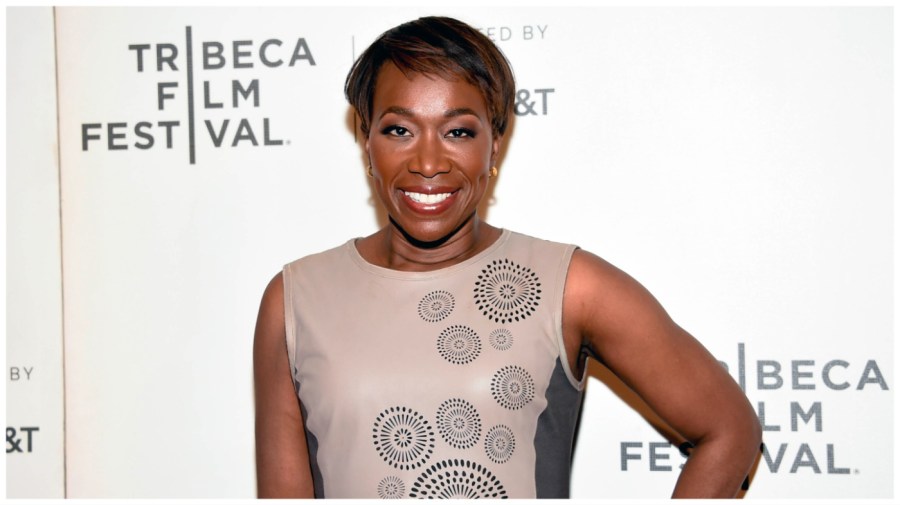
BLN is canceling Joy Reid’s evening news show as part of the network’s overhaul under the new presidential administration. Reid’s final show is planned for sometime this week, a source familiar with the changes said. She’s hosted “The ReidOut” on BLN since 2020, discussing political news and events…
Read More


President Donald Trump made major gains among Latino voters in 2024. Now, those same voters might cost Republicans control of Congress.
Fifty-nine percent of Latino registered voters prefer a Democratic-controlled Congress, compared with 35% who favor Republican control, according to a new NBC News/Telemundo poll released Sunday. That 24-point gap for Democrats is twice the party’s lead compared to the September 2024 version of the poll.
A separate CBS News/YouGov poll released Sunday also found Democrats ahead among Hispanic likely voters, with 60% backing a Democratic House candidate and 39% supporting a Republican.
The findings threaten gains the GOP made in 2024, when Trump narrowed Democrats’ long-standing advantage among Latino voters. A POLITICO analysis of that year’s election results found that Trump improved his vote share by an average of more than 6 percentage points in majority-Hispanic counties, compared with 2020.
With the midterms approaching, Republicans have made those gains central to their push to maintain control of the House. When Texas Republicans revealed their redistricting proposal last year, four of the five potential GOP pickup opportunities were in majority-Hispanic districts.
Meanwhile, Trump’s overall approval rating among Latino registered voters stands at just 27% in the NBC/Telemundo poll, while 69% disapprove. On the economy specifically, 74% of Latino voters disapprove of Trump’s handling, while 78% disapprove of how he’s dealt with cost-of-living concerns.
Nearly two-thirds, 65%, say Trump’s policies have hurt economic conditions. Inflation and cost of living rank as the most important issues facing the country for 33% of respondents, followed by government corruption at 22%. Another 10% named jobs and the economy.
Economic frustration helped drive Latino voters toward Trump in 2024, with Democrats across the country suggesting in the aftermath of his victory that he was better able to connect with the voting bloc on financial issues.
But now, Latino voters seem to favor Democrats over Republicans on the economy, 48% to 27%, and the cost of living, 45% compared to 26%.
The war with Iran, now in its seventh month, is also weighing on voters’ perceptions of energy costs. In September, the average price of diesel hit a record $6.53, according to AAA.
In the CBS survey, 91% of Hispanic registered voters attributed rising U.S. oil and gas prices to the conflict.
Trump’s immigration crackdown is also putting vulnerable Republicans on the defensive. Rep. María Elvira Salazar (R-Fla.) released an ad in English and Spanish criticizing the administration for going “too far” on immigration and saying Hispanics who backed Trump in 2024 feel “betrayed.”
In the days immediately following her ad, Trump told reporters that he still supported Salazar. “I’m very strong on the borders — and she isn’t,” Trump said. But the president later reposted a flurry of social media messages criticizing Salazar on Truth Social, including one calling for the Florida Republican’s replacement ahead of the midterms.
In the NBC/Telemundo poll, 67% of Latino voters say Trump’s immigration enforcement has gone too far, compared with 22% who say he has taken the right approach.
The White House did not immediately respond to a request for comment.
Dissatisfaction with Trump and Republicans has not translated into broadly positive views of Democrats. According to the NBC poll, Latino voters remain nearly evenly divided on the Democratic Party, with 41% viewing it positively and 42% negatively. Negative views of the GOP, meanwhile, have climbed to 62%, up from 46% in September 2024.
The NBC/Telemundo survey of 800 Latino registered voters was conducted Sept. 21-28 and has a margin of error of ±3.46%. The CBS/YouGov survey of 2,166 adults was conducted Sept. 30-Oct. 2, with a margin of error of ±2.5 points.
CONCORD, New Hampshire— Pete Buttigieg is barnstorming the nation in the final weeks before the midterms, boosting candidates in battlegrounds and even areas traditionally hostile to Democrats. And it’s helping him look beyond November.
Down the homestretch, Buttigieg is set to campaign in at least six states: North Carolina, Virginia, New Jersey, Georgia and Nevada, along with his adopted home state of Michigan, according to an itinerary shared first with Playbook by a spokesperson for Win the Era, his political group.
Buttigieg has been refining his campaign trail message as he crisscrosses the country, connecting concrete cost-of-living concerns to the more abstract need for political reform.
It’s a kind of real-world testing that helps him further define his political brand at the same time that he leverages it to “be useful,” as he so often puts it, to his party.
“I have a lot of conviction that, actually, your economic message only has credibility if you have a reform message, too,” Buttigieg said in an interview after a Rochester Opera House rally where he received a standing ovation. “Because otherwise, what you’re doing is you’re saying things that people agree with, which is great, but they might not believe that you can actually deliver it.”
He’s also building the kinds of relationships with voters and party leaders that can be useful if he runs for president in 2028, a question he was repeatedly asked. (“We’ll see,” he told one woman at the Deerfield Fair.)
“For Pete, it’s less about getting credit nationally for what he’s done for Democrats and more about building relationships in places that will be beneficial down the line,” said David Axelrod, a Buttigieg confidant.
Buttigieg’s status as an in-demand surrogate was on full display during his 48-hour swing through the Granite State, where he finished “a very, very, very close second place” to Sen. Bernie Sanders (I-Vt.) in the 2020 primary, as Buttigieg put it in Saturday evening remarks at the New Hampshire Democratic Party’s Eleanor Roosevelt Dinner in Concord.
“I couldn’t ask for a better wingman,” Rep. Chris Pappas said, introducing Buttigieg at the packed rally Friday in Rochester. “People know that he’s a trusted voice,” Stefany Shaheen, who is running for Pappas’ seat, told Blue Light News after campaigning at a book store, cafe and candy shop with Buttigieg along Elm Street in Manchester.
How Buttigieg is learning from the midterms
Buttigieg has neither a battleground governorship nor a personal fortune to wire into midterm races. What he has put on offer is himself: He’s made more than 100 endorsements this cycle, campaigning in person for roughly half of them, and stops in 37 states since he left the Transportation Department.
Buttigieg was welcomed in places where candidates shunned some of his potential rivals. He campaigned with Rob Sand and Josh Turek in Iowa as they run for governor and senator, respectively. He backed Brandon Dukes in his special election effort to flip a Pennsylvania state House seat that Trump won by 18 points. He was alone among his peers in endorsing Hartford Mayor Luke Bronin in his victory over longtime Rep. John Larson in Connecticut.
“If I can help give voice to what people are after in diverse geographies, including very conservative areas,” he said, “turns out that’s my best use of time.”
Buttigieg admitted he wasn’t certain what role he would play in the party’s midterms at the start of President Donald Trump’s second term. Now he’s processing all of the data and inputs he’s receiving along his travels.
“I’m learning a lot about our country and our party as I go, and what I’m seeing is that people have a real hunger for change,” he told Blue Light News. “First of all, in policy. Secondly, in the kind of politics that we have, and third, in the system itself.”
That’s developed into a core argument in his speeches connecting the cost of living to political reform: “If we want the kitchen table to be better off, we got to deal with the political system that is kicking the legs out from under the kitchen table,” Buttigieg said at the Rochester Opera House Friday evening.
It’s a message that can last long beyond the midterms, and Buttigieg is trying to point his party there.
“Part of what I’m really trying to push my party on is the need to have answers for ‘then what,’” he said. “There’s a big ‘then what’ for when Donald Trump leaves the political scene, but there’s an immediate ‘then what’ starting on Nov. 4.”
A Democratic Congress, he argued, needs “a compelling governing vision coming out of the gate” and should move quickly on tariffs, the minimum wage, tax fairness, health care, the Child Tax Credit and political reforms including gerrymandering.
The 2028 question
Even as he sidestepped several questions from reporters about his next moves, saying he was focused on 2026, remnants of his 2020 campaign and hints of a future one piled up. People wore “Pete for New Hampshire” buttons and T-shirts. His old playlist, including Creedence Clearwater Revival’s “Up Around the Bend,” played at the Friday night rally.
At the Roosevelt dinner the next night, in front of a sold-out crowd of over 400, Buttigieg earned a standing ovation that ended in “Pete, Pete, Pete” chants.
“Pete had a great New Hampshire organization in 2020, nearly winning,” Ray Buckley, the chair of the New Hampshire Democratic Party, told Blue Light News. “If anything, his popularity here has grown.”
Much has changed since then.
On Saturday evening, instead of walking out to Panic! At the Disco’s “High Hopes,” his ubiquitous anthem back then, or even Imagine Dragons’ “It’s Time,” which he road-tested last year, Buttigieg employed “You Get What You Give” by the New Radicals.
There have been deeper changes, too: Buttigieg is now the father of 5-year-old twins, Gus and Penelope. He is weighing whether he can run for president and remain a good and present father.
His husband, Chasten, is a “great dad” and “knows why I’m on the road.”
Back on the road, Buttigieg is winning over those who didn’t back him in 2020.
At the back of the room in Rochester on Friday night, the town’s Mayor Chuck Grassie wore a “Pete for New Hampshire” button as he took in the scene. Grassie, who backed Massachusetts Sen. Elizabeth Warren in 2020 and considers himself a “pragmatic progressive,” said Buttigieg could knit together the party’s moderate and progressive factions.
“He’s a guy I think would attract a lot of people,” Grassie said. “And a lot of people I talk to are saying, ‘You know, he’s looking better and better every day.’”
Added Grassie: “In New Hampshire, I think Pete may be the guy to beat.”
Sen. Ted Cruz fired back at JD Vance for suggesting he’s already focused on a 2028 presidential bid, calling the vice president “insecure” while insisting he’s focused on the 2026 midterms.
“In my experience, people engage in political bomb-throwing when they’re feeling insecure,” Cruz said in a phone interview Saturday. “So he’s welcome to make whatever comments he likes. I’m going to keep focusing on the midterms and helping us win on Election Day in the next 30 days.”
Cruz’s comments came in response to an NBC News interview Thursday with Vance in which the vice president suggested Cruz was prematurely eyeing a White House run.
“It is really obvious to me that, at this very moment, Ted Cruz is running for president,” Vance said. “At this moment, I’m not. I’m trying to help elect Republicans. That’s what I’m going to keep on doing.”
Vance is widely viewed as the frontrunner for the Republican presidential nomination, but Cruz has said he doesn’t believe Vance is the sure-fire nominee and suggested he might throw his own hat in the ring. “I’ll certainly be part of the discussion,” he told MS NOW in August.
On Saturday, Cruz told Blue Light News he is dedicated to helping Republicans maintain control of both chambers of Congress. He pointed to his travel this cycle to campaign with candidates in Georgia, Iowa, Nebraska, South Carolina as well as in his home state of Texas as proof. He also said he has trips planned this month to campaign with Republicans in Alaska, Florida, North Carolina and South Carolina.
“Over the last 10 years, there’s no Republican in the country who has campaigned for more Senate candidates, more House candidates, more gubernatorial candidates than I have, and this year will be no exception,” he said.
Cruz rattled off a list of a dozen GOP candidates he’s helped bolster in past years, including former Virginia Gov. Glenn Youngkin, Sen. Thom Tillis of North Carolina, U.S. House candidate Karoline Leavitt — and the vice president.
“Indeed, ironically, I spent a full day on the road with JD Vance, campaigning with him when he was running for Senate in Ohio [in 2022],” Cruz said. “I was very glad he won that race. I was very glad to help him.”
A spokesperson for Vance did not immediately respond to Cruz’s latest comments.
Vance campaigned in Texas and Florida this week and will hold a rally in Alaska on Monday.
-

 Politics2 years ago
Former ‘Squad’ members launching ‘Bowman and Bush’ YouTube show
-
Uncategorized2 years ago
Bob Good to step down as Freedom Caucus chair this week
-

 The Josh Fourrier Show2 years ago
DOOMSDAY: Trump won, now what?
-

 The Dictatorship2 years ago
Pete Hegseth’s tenure at the Pentagon goes from bad to worse
-

 Politics2 years ago
Former Kentucky AG Daniel Cameron launches Senate bid
-

 The Dictatorship2 years ago
Luigi Mangione acknowledges public support in first official statement since arrest
-

 Politics2 years ago
Blue Light News’s Editorial Director Ryan Hutchins speaks at Blue Light News’s 2025 Governors Summit
-

 The Dictatorship1 year ago
Mike Johnson sums up the GOP’s arrogant position on military occupation with two words