
The Dictatorship
‘Million-dollar bullets’ devastate communities — and drain us all

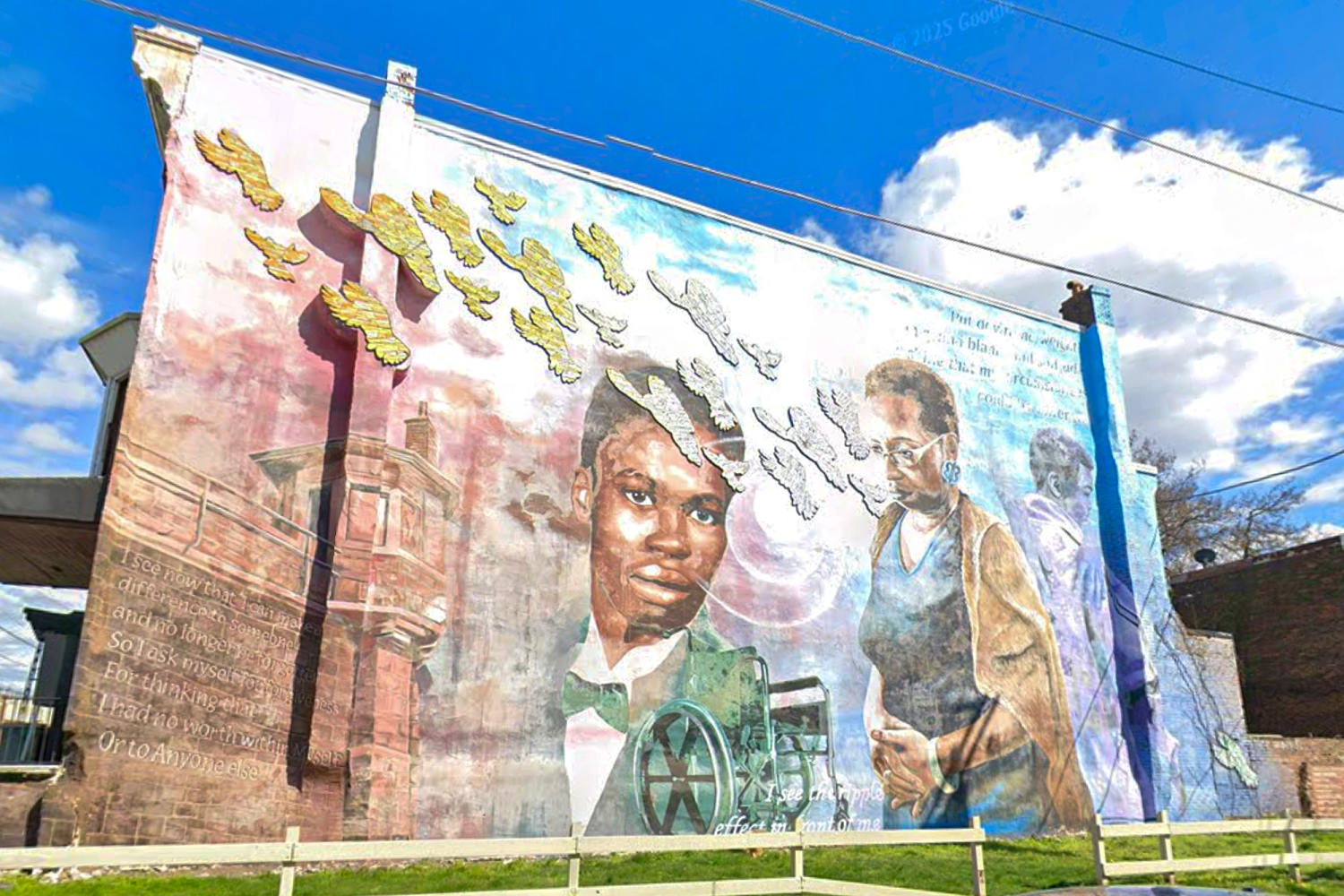
It was late July 2003 inside a small, dimly lit room at the Jefferson Moss-Magee Rehabilitation Hospital in downtown Philadelphia. And Kevin Johnson, 19, was telling me, an intern at the Daily News barely older than he was, about his nightly dream. In it, he’s on a basketball court, dribbling, passing and cutting through the lane. Then he flies through the air like he has jet packs strapped to his legs.
“It’s like I’m really playing, because I can feel everything,” he said with a toothy smile and a wheezy laugh. “I’m still paralyzed, but it doesn’t stop me.” Then, as tears tumbled down his mother’s cheeks, he said, “I’m going to try to live a regular life.”
As tears tumbled down his mother’s cheeks, he said, ‘I’m going to try to live a regular life.’
A little more than a month earlier, a group of teens tried to rob Kevin for his $150 Allen Iverson basketball jersey. He and a cousin were waiting at a trolley stop in Southwest Philly when they told him to “give it up.” When he refused, one of them pressed a gun to the back of Kevin’s neck, just inches below his skull, and pulled the trigger.
That one bullet changed everything. It knocked Kevin off his feet and into paralysis.
Something inside of me was left frozen, too. From his bedside to the writing of these words, my life and journalism career have been tethered to his spirit and the shock of all that he’d lost.
Kevin’s infectious buoyance and his courageous fight to stay alive stuck with me in deep, meaningful ways. But what I haven’t been able to escape is the incalculability of the cost that he and his family would pay for the bullet lodged in his spine. He paid with his freedom, his mobility and any future he and his family had ever hoped for. And for what? The robbers that shot him never even got the jersey they wanted so badly. The bloody rag had to be cut off Kevin’s back by paramedics.
But what they took was priceless. They robbed his mother of a loving son who was just finding his footing in the world, his siblings of an adoring brother who’d chase them up and down the block, and the world of whoever Kevin would’ve grown to become, unbound by a wheelchair.
But there were other costs, too. From the moment that bullet dug into Kevin’s body, the tally began to tick. His medical bills mounted quickly. Before the rehab facility would discharge him, the family’s bi-level row house would need to be renovated: a special outlet for his breathing machine needed to be installed, a wheelchair ramp would need to be erected, door frames needed widening, and the bathrooms needed to be overhauled. All of that or they’d have to move out. Or the unthinkable: sending Kevin to a nursing home.
He would require 24-hour care to keep him alive and a specially equipped van to transport him and his hulking new wheelchair. That was just to get him home.
Within months of the shooting, his family’s meager savings were exhausted.
The cascade of costs and consequences sparked by a bullet, purchased for as little as $0.25 a round, started an avalanche of millions.
The shooting threw off the family’s orbit in so many intangible ways. But the financial blow was a secondary injury that none of them had anticipated. In the coming years, the costs related to Kevin’s medical condition would be staggering, in the millions. There were the big-ticket items like the several-thousand-dollar wheelchair ramp and his wheelchair, which cost $35,000. Some of his medications were a few hundred dollars a month. There were adult diapers and supplies needed to keep his tracheostomy and breathing tubes clean.
The family scraped together what they could to pay some of these bills out of pocket. Kindhearted strangers helped a lot. But the bulk of the financial costs to keep Kevin alive were paid by taxpayers through public insurance. His mother, Janice, quit her job and took on the full-time job as Kevin’s caregiver.
Just one bullet. The cascade of costs and consequences sparked by a bullet, purchased for as little as $0.25 a round, started an avalanche of millions. Not just for families like Kevin’s but for all of American society.
Economists Philip Cook and Jens Ludwigwho years ago did some of the most foundational work on the economic impact of gun violence, place the societal cost of a single gunshot injury at more than $1 million. Every gun death costs us more than $5 million. Consider the approximately 100,000 people who are shot in the U.S. in any given year and the price tag becomes staggering. The vast majority of gunshot victims will survive, but many, like Kevin, will suffer catastrophic injury requiring costly medical care and rehabilitation for the rest of their lives. Thanks to medical advancements, these victims are living longer lives, multiplying those costs.
Ted Miller, an economist with the Pacific Institute for Research and Evaluationsays that when accounting for much broader direct and indirect societal costs, gun violence costs an astonishing $557 billion a year. Some conservative estimates put these costs at 2.6% of the U.S. GDP.
American taxpayers from the burbs to the battle zones shoulder millions every single day to satisfy the myriad costs of bullets hitting flesh. Taxpayers, survivors, their families and employers pay an average of $7.79 million in health care costs every day and another $30.16 million every day in police and criminal justice costs, according to Everytown for Gun Safety.
American taxpayers from the burbs to the battle zones shoulder millions every single day to satisfy the myriad costs of bullets hitting flesh.
The same group has found that employers lose about $1.47 million a day in productivity, revenue and costs to replace gun violence victims, and society writ large loses $1.34 billion daily in quality-of-life costs related to gunshots.
While these figures are mammoth, they obviously don’t consider the many hard-to-account-for costs: lives lost or ruined, homes wrecked, communities divided, emotional trauma.
Of all the questions that I had standing there in Kevin’s hospital room, listening to his mother running through the seemingly insurmountable costs of keeping Kevin alive, there is one that has begged itself from that moment to this one: How much are we willing to pay?
I’ve spent much of my career asking that same question of police, politicians, victims and perpetrators of violent crime. I’ve asked it in cities across the country. I rephrased it and reconsidered it as I grew from a cub reporter to a seasoned veteran. The question took on greater significance in the era of the Black Lives Matter movement, when the philosophical and rhetorical value of Black life was being debated in the streets and in the media in the wake of the shootings of unarmed Black men and women by police. In wrestling with these ideas, I think about Kevin’s plight and the plight of so many other young Black people in poor and working-class communities, those who suffer a disproportionate number of daily shootings.
In 1993, Ralph Green, a 16-year-old gunshot victim from Brooklynwas called before a congressional panel on gun violence. Before the shooting, he was a promising athlete whose prowess earned him starting spots on the varsity football and basketball teams as a freshman in high school. Then one day, his life came crashing down — with a bullet. In the year between the shooting and being asked to testify in Washington, he underwent 14 surgeries, including the amputation of his left leg. His hospital costs at that point had already climbed higher than $1 million.
“How many million-dollar bullets will it take before someone wakes up?” the teen asked the panel. “Aren’t these gunshots loud enough?”
The story I wrote about Kevin was one of my first front-page stories. The Philadelphia Daily News published a full front-page photo of his smiling face. I’m not sure I’ve ever been so moved by a smile as I was that day.
At the end of 2006, a malfunction with Kevin’s breathing machine left him brain-dead. It was a little more than a week before Thanksgiving, and his family made the hard decision to take him off of life support. The NBA star Allen Iverson, whose jersey Kevin was wearing when he was shot, covered the costs of his funeral.
Yet Kevin’s family continues to pay an unpayable debt.
“If I could put a cost on my feelings, my emotions, it would be in the millions,” Janice tells me, more than 15 years after Kevin was shot. “Because I lost so much when Kevin passed away, and it feels like I’m losing more every single day.”
This is an adapted excerpt of Trymaine Lee’s book, “A Thousand Ways to Die: The True Cost of Violence on Black Life in America,” which goes on sale Tuesday, Sept. 9.

Trymaine Lee is a Pulitzer Prize and Emmy Award–winning journalist whose focus is the intersection of race, power, politics and violence. He’s an BLN contributor and author of “A Thousand Ways to Die: The True Cost of Violence on Black Life in America.”



The U.S. has carried out “large-scale strikes” against multiple Islamic State targets in Syria along with partner forces, U.S. Central Command said on Saturday.
The attack is a part of an operation launched on Dec. 19, when U.S. forces struck “more than 70 targets” in central Syria as retaliation for the killing of three Americans by an ISIS gunman in early December.
“The strikes today targeted ISIS throughout Syria as part of our ongoing commitment to root out Islamic terrorism against our warfighters, prevent future attacks, and protect American and partner forces in the region,” CENTCOM said in a statement.
Tom Barrack, the Trump administration’s special envoy for Syria, announced on Saturday that he met with Syria’s new leadership in Damascus “to discuss recent developments in Aleppo and the broader path forward for Syria’s historic transition.”
The deadly attack in December marked the first fatalities of U.S. troops in the country since former President Bashar al-Assad was ousted last year. Three other U.S. service members were injured in the attack in December, and a state-run news agency reported that two members of the Syrian security forces were also wounded.
President Donald Trump said at the time that the attack by ISIS took place “in a very dangerous part of Syria, that is not fully controlled by them.” He also said Syrian President Ahmed al-Sharaa, whom he had met in November at the White House, was “extremely angry and disturbed by this attack.”
Defense Secretary Pete Hegseth said last month that the operation was “a declaration of vengeance” over the deaths of the American service members.
This is a developing story. Please check back for updates.
Clarissa-Jan Lim is a breaking news reporter for MS NOW. She was previously a senior reporter and editor at BuzzFeed News.
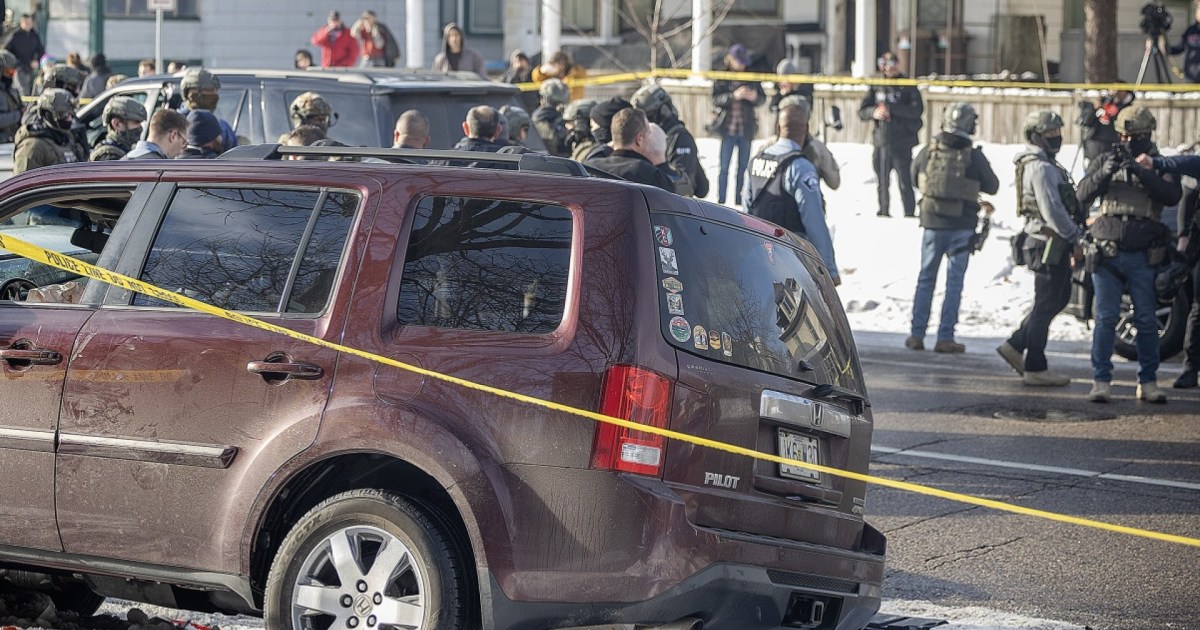
In the wake of Renee Nicole Good’s death, Americans are asking, with heightened urgency, what authority ICE and CBP agents have when they engage with U.S. citizens. And as with many areas of the law, the answer is largely, “It depends.”
Can ICE use deadly force on U.S. citizens – or ever?
When it comes to the use of force, and specifically, the use of firearms, ICE has its own specific policy that was last updated in 2023. That policy was filed in the Chicago-area litigation over ICE and CBP’s treatment of protesters, clergy, and journalists. (Interestingly, on ICE’s website, that same policy is almost entirely redacted.) This policy does not vary depending on the subject’s immigration or citizenship status. Here’s what it says:
First, the policy authorizes the use of force “only when no reasonably effective, safe, and feasible alternative appears to exist and may use only the level of force that is objectively reasonable in light of the totality of facts and circumstances confronting the officer at the time force is applied.” But the policy is equally clear that an officer does not have to meet force with equal or lesser force, does not have to wait for an attack before using force, and does not have any duty to retreat to avoid the reasonable use of force.
Second, where feasible and without creating any greater threat to his own safety or that of others, an ICE officer must attempt to “de-escalate by the use of communication or other techniques during an encounter to stabilize, slow, or reduce the intensity of a potentially violent situation without using physical force, or with a reduction in force.”
Third, ICE policy is also clear that officers have a “duty to intervene to prevent or stop a perceived use of excessive force” so long as it is safe to do so. It further states that a failure to intervene and/or report such incidents is itself misconduct — and potential grounds for discipline.
What’s the guidance if U.S. citizens are given orders by ICE?
Short of using force or deadly force, however, can ICE give orders to U.S. citizens? For example, it appears that ICE agents directed Renee Nicole Good to get out of her car shortly before she was killed.
ICE can give orders to U.S. citizens, but again, only in limited circumstances that are directly tied to the ICE agent’s immigration-related authority. For example, ICE can give orders to U.S. citizens — or even detain them temporarily — if they are obstructing or interfering with immigration enforcement activity.
These situations are often very subjective. U.S. citizens do have significantly more freedom in their interactions with ICE than non-citizens. For example, according to guidance issued by the ACLU and the City of New Yorkamong others, if ordered or detained by ICE, a U.S. citizen can ask, “Am I free to leave?” and they should then be allowed to leave on their own free will.
Can ICE agents search a car without a warrant?
ICE agents also have the authority to search a car without a warrant in limited scenarios. The Fourth Amendment includes the automobile exceptionwhich allows federal agents to search a vehicle without a warrant if there’s probable cause to believe there’s evidence to a crime or contraband. Because a car can be driven away quickly, it may not be practical to secure a warrant beforehand without jeopardizing the investigation.
But federal agents must have specific probable cause to search a car without a warrant. A hunch or a feeling that the car conceals evidence of illegal activity is not enough for a federal agent to search a car without a warrant. ICE does have broader authority to search vehicles within 100 miles of the U.S. border, but even so, these searches typically require probable cause. Notably, ICE cannot search a car without a warrant simply because they suspect someone may be an undocumented immigrant.
However, car searches are the only major exception. ICE officers require search warrants for all other searches. Without a warrant, both U.S. citizens and non-citizens can say, “I do not consent to a search,” according to guidance issued by immigration rights organizations.
What’s the guidance on U.S. citizens recording or taking photos of ICE during enforcement activities?
Civil liberties groups generally advise that under the First Amendment, U.S. citizens can record or take photos of ICE performing law enforcement activities in public places so long as the recording does not interfere with ICE activity, like an arrest. Bystanders are allowed by law to collect important information, including names and badge numbers of the ICE agent executing the immigration activity.
Some states, including Florida, Tennessee, and Louisiana, have enacted their own laws requiring observers — or anyone else — to move back 25 feet or more from law enforcement or other first responders upon their request. While other, similar laws passed by Arizona and Indiana have been struck down, the constitutionality of these states’ laws has not been determined.
Finally, citizens and non-citizens alike share one fundamental right when it comes to encounters with ICE, or any other law enforcement agency, for that matter: the right to remain silent.
Lisa Rubin is MS NOW’s senior legal reporter and a former litigator.
Fallon Gallagher is a legal affairs reporter for MS NOW.
“We Love America” is one of CBS News’ “five simple principles” under new editor-in-chief Bari Weiss. In apparent defiance of a powerful, unseen enemy that demands they not love this country, the network added on social media, “And we make no apologies for saying so. Our foundational values of liberty, equality and the rule of law make us the last best hope on Earth.”
The strangeness of a straight news outlet — whose job ostensibly is to be skeptical of the powerful, especially the government — feeling the need to distinguish itself by proclaiming “love” for America aside, it’s a reductive, Manichean sentiment. Its opponent is a strawman, and it carries the implication that there’s only one way to love America: their way.
America showed its distaste for the Blame America First crowd and voted for Donald Trump even after he attempted a self-coup, among other national disgraces.
Now, I’m not oblivious to the point CBS News is trying to make. There’s a subset of far-left Americans, particularly in academia and activism, that considers the United States to be inherently illegitimate because of its history of slavery and ethnic cleansing. Some others in left-wing spaces believe capitalism is the root of all evil, that people should be judged by their immutable characteristics in the name of “anti-racism,” that political violence is justifiable (as long as it’s from the left) and that any deviation from their radical values is problematic. I’ve been critical of some of the more prominent figures in this area, whose work I’ve found ranged from the vacuous to the merely unhelpful if justice and equality are the goals.
In 2024, America showed its distaste for the Blame America First crowd and voted for Donald Trump even after he attempted a self-coup, among other national disgraces.
But America’s backlash against far-left activists far exceeds their actual influence in government, business and culture. They did, however, make for great bogeymen in GOP campaign ads — and were often their own worst enemies. As the progressive comedian Marc Maron asked his audience in a recent special, “You do realize we annoyed the average American into fascism, right?”
Still, there are plenty of people, myself includedwho “love America” and don’t subscribe to a childish — and frankly, dangerous — “my country, right or wrong” binary.
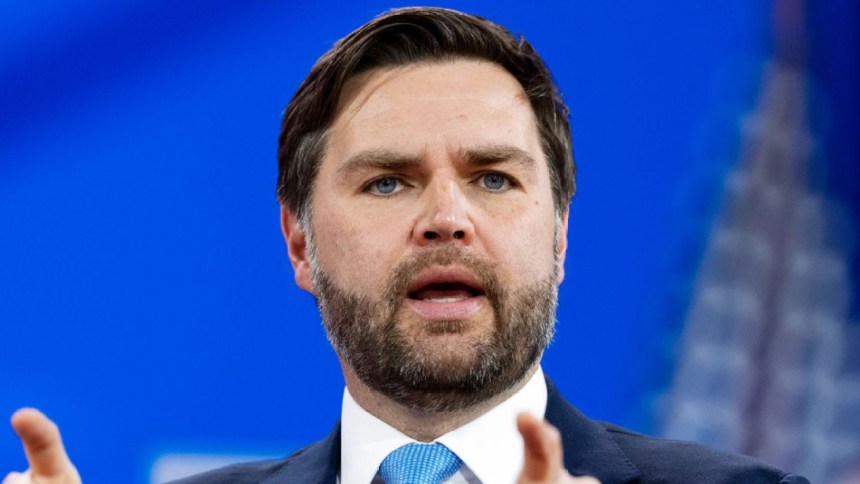
The America I love is a representative democracy where the ruling party doesn’t try to stay in power after losing an election or permanently brain-poison its followers with lies about voter fraud. The America I love respects civil liberties and due process under the law and doesn’t make exceptions in the name of meeting mass deportation quotas.
The America I love stubbornly defends freedom of speech. Its government doesn’t try to forbid the use of certain words to describe political opponents or harass news outlets with bogus litigation or ideologically-motivated regulatory threats. The America I love doesn’t deport people for their legitimate political activism.
The America I love is strong and reflective enough to grapple with even the worst of its own history. It doesn’t ban the teaching of slavery in public schools as a “divisive concept” on the grounds that it will make the children of right-wingers feel bad about their country. That’s what has happened in many Republican-led states and localities in recent years, but, if anything, the decades we’ve spent confronting America’s racist sins — and expanding the scope of civil rights — demonstrate that the country we love so dearly has the capacity to evolve for the better.
But, as the second Trump administration keeps reminding us, America also has the ability to devolve for the worse.
I don’t love that Trump’s America has renormalized gutter racismhelped in large part by the president, the vice president and many of their most influential supportersincluding the richest man in the world (who was also the biggest donor to their campaign).
As the second Trump administration keeps reminding us, America also has the ability to devolve for the worse.
Just this week, Elon Musk posted a “100” emoji to promote an X post that declared, “If White men become a minority, we will be slaughtered. … White solidarity is the only way to survive.” As of Friday, it had been viewed over 42 million times. Also this week, Vice President JD Vance, who last month touted that in America you no longer have to apologize for being white, said America has a “Somali problem,” a kind of phrasing that wouldn’t have sounded out of place in early 1930s Germany.
I don’t love that Trump’s America allowed Musk’s ludicrously destructive Department of Government Efficiency (DOGE) to destroy America’s moral and strategic advantage in “soft power,” killing USAID, which cost a pittance of our annual GDP to save millions of lives in poor countries from preventable diseases, and keep warlords and despots from filling the power vacuums.
I don’t love that in Trump’s America the executive branch ignores the Constitution, invades a sovereign country without congressional consultation and deposes its tyrannical leader with no apparent legal justificationwhile deputy White House chief of staff Stephen Miller touts the virtues of neo-colonialism. And I don’t love that Trump is threatening to seize Greenland from Denmark, our NATO ally, an ambition that seems hellbent on pointlessly destroying the rules-based international order that has made the United States a superpower since the end of World War II.
And I don’t love the fact that Musk and Vance have been enthusiastic boosters of Germany’s ascendant Nazi-sympathizing partythe Alternative for Deutschland (AfD). Nor am I proud of the fact that on Friday a DHS post on Instagram featured a recording of, “By God We’ll Have Our Home Again,” a chilling marching song known to be popular among the Proud Boys and white ethno-nationalist separatists. (I asked DHS for comment on the use of the song, but have not received a response.)
I don’t love that during Trump’s second term, it has become completely normal for masked, secret law enforcement agents to violently accost and arrest people without due process, including American citizens. As I warned in September when Trump’s campaign of extralegal killings of alleged drug traffickers in the Caribbean kicked into high gear: “President Donald Trump — whether intentionally or not — is laying the groundwork to normalize the concept of the U.S. military’s killing Americans without due process.”

ICE agent Jonathan Ross killing Renee Good in Minneapolis this week shows my fears were not unfounded. The celebratory bloodlust on the right that followed Good’s death tells me the worst is yet to come.
“We Love America” isn’t a journalistic principle, it’s barely a bumper sticker. True patriotism does not mean ignoring your country’s faults or dismissing its critics as haters or disloyal. Loving your country means taking the good with the bad. It means being proud and being embarrassed — or even appalled — when necessary.
You can love America, and also apologize for it. But if loving America means caping for the powerful, whitewashing the racists and believing that military might-makes-right, you don’t love America.
You just love saying you do.
Anthony L. Fisher is a senior editor and opinion columnist for MS NOW.
- How artificial intelligence is reshaping the future of war

- US citizens in Venezuela advised to leave ‘immediately,’ beware of militias

- Hegseth’s fight against Kelly moves into untested legal waters

- Minnesota finds itself in an unwelcome, divisive political spotlight

- Trump’s return chills embattled LGBTQ book industry: ‘They’re stepping back’

- U.S. launches fresh strikes on ISIS targets in Syria

- When it comes to ICE encounters, what are the rules — and your rights?
- The country I love doesn’t look like Trump’s America
- Australia’s hate speech crackdown is a threat to legitimate dissent
- Protests swell over ICE killing of Minneapolis woman as White House blames victim
-

 The Dictatorship11 months ago
Luigi Mangione acknowledges public support in first official statement since arrest
-

 The Dictatorship4 months ago
Mike Johnson sums up the GOP’s arrogant position on military occupation with two words
-

 Politics11 months ago
Blue Light News’s Editorial Director Ryan Hutchins speaks at Blue Light News’s 2025 Governors Summit
-

 Politics11 months ago
Former ‘Squad’ members launching ‘Bowman and Bush’ YouTube show
-

 Politics11 months ago
Former Kentucky AG Daniel Cameron launches Senate bid
-

 The Dictatorship11 months ago
Pete Hegseth’s tenure at the Pentagon goes from bad to worse
-
Uncategorized1 year ago
Bob Good to step down as Freedom Caucus chair this week
-

 Politics9 months ago
Democrat challenging Joni Ernst: I want to ‘tear down’ party, ‘build it back up’