
Congress
Mike Johnson breaks his silence on Max Miller, calls for ‘process to play out’

Speaker Mike Johnson broke days of silence on explosive allegations of domestic abuse by Rep. Max Miller, calling for investigations to play out as Miller’s former father-in-law, a GOP senator, calls him unfit for office and Republican operatives fret about losing his Ohio House seat.
“I haven’t spoken to Max about this in the last few days. Of course, I will,” Johnson said in an interview for Blue Light News’s “The Conversation” with Dasha Burns. “There’s all sorts of domestic events going on with 435 members of Congress all the time, it’s not my business to get engaged in it.”
Pressed on the severity of the claims against Miller — which include holding a gun to the head of his ex-wife, Emily Moreno, and breaking the collarbone of his daughter — Johnson called the allegations “serious” but said he would let an Ethics Committee investigation run its course. Miller denies any wrongdoing and called the claims “politically motivated” Tuesday.
“I think Max is taking them seriously. I think our colleagues are,” Johnson said. “But, again, we have to allow this process to play out. It’s just begun.”
The Ethics panel announced Tuesday it would investigate the domestic abuse claims as well as allegations of illegal drug use by Miller, who had requested the probe earlier in the day in a bid to clear his name.
Hours later, in a CNN interview, Miller said, “Speaker Mike Johnson, everyone else — they’re standing behind me.”
Asked about his name being invoked, Johnson said, “I think what Max is suggesting there is that I’ve been intellectually consistent. … We don’t take disciplinary action against members for allegations.”
“It’s, in his own words, a nasty divorce proceeding, and it’s gotten ugly and it’s gotten public,” he added. “But he’s saying the same things privately to members that he is publicly, that he denies all this. … There’s a process. The House Ethics Committee does that. We always withhold judgment on this, whether it’s Republicans or Democrats.”
Johnson’s comments came amid a campaign swing in Phoenix, where he is raising money for a pair of key races and touting legislative victories just months before the midterms. But he was also forced to address controversies plaguing Republican members that have snowballed as he and other leaders have largely stayed silent.
Johnson was more candid about the sexual harassment charges faced by Rep. Chuck Edwards of North Carolina, who is facing a censure recommendation from the Ethics Committee. The panel concluded in a report issued Monday that he engaged in “persistent unprofessional and inappropriate conduct towards two young female staffers,” lavishing them with gifts and inundating them with unwanted texts, calls and invitations.
Edwards cooperated with the probe and did not challenge the factual findings, but his lawyers argued they did not rise to the level of censure.
In the interview, Johnson said those, too, are “serious allegations” and that he spoke with Edwards briefly Tuesday. He said he plans to talk to Edwards again soon about his reelection plans.
Like Miller, Edwards is facing a vigorous and well-financed Democratic challenger in a district that usually trends Republican but is unusually competitive this year due to the national political environment and the incumbents’ ethical challenges.
Asked if Edwards should drop his reelection bid, Johnson said, “He’s got to make a big decision, and I hope he does the right thing for him and his family.” As for Miller’s seat, he said, “I’m confident we’ll hold that district.”
Johnson noted that unlike with Miller, the Ethics Committee has completed its process, even though Edwards has contested the findings endorsed by the bipartisan panel.
“So we have to let our colleagues decide the fate of that,” Johnson said. The House could vote as soon as September on the censure recommendation.
Johnson said he also plans to speak with Miller. The Ohio lawmaker has until the end of this week to drop out if Republicans want to replace his name on the ballot.
The pressure on him to drop out exploded Sunday after his ex-father-in-law, Ohio Sen. Bernie Moreno, broke months of silence and denounced Miller, saying he needed “professional help” and should not continue serving in the House. Several other Republicans followed suit — though not Johnson or other senior House GOP leaders.
Miller and Johnson have had a testy relationship in recent months. Miller told Blue Light News in May that he would not vote again for Johnson as speaker and that he “divided us with a smile.”
“I wouldn’t trust him to get out of a wet paper bag with an M4,” he said of Johnson at the time.
Asked to respond in the interview, Johnson said, “I think you could ask every other Republican — they would tell you that’s not true.”
“Max has had a lot of issues in his life. I don’t return fire. That doesn’t bother me. And there’s a lot of criticism that comes with the job,” Johnson continued. “I’m not going to use this situation to say something negative about him.”
Miller, a former aide to President Donald Trump, said in the BLN interview that Trump called him Monday and said “it’s going to be a tough race” but did not insist he drop out. Miller went on to say he would take a page out of Trump’s book from the 2016 presidential election and carry on with his campaign.
Johnson said he was not positioned to intervene if Miller continues his campaign.
“I mean, [the allegations] don’t look good right now, of course. But again, what should a speaker do in this case?” he said. “I call out alarming behavior. I try to work every day on decorum and on the ethics of the House.”
“Look, I pine for the days when we don’t have these kinds of disturbances, when we got people who act in accordance with the dignity of their office. But people have domestic disputes,” he continued. “It’s part of being flawed humans, as we are, and we have to let those processes play out.”


The ranking Democrat on the House Oversight committee is demanding the White House answer questions related to President Donald Trump’s decision to ban BLN, MS NOW and Blue Light News from the White House, calling it the president’s “most blatant, assault on press freedom.”
In a letter sent Monday to White House Communications Director Steven Cheung, Rep. Robert Garcia (D-Calif.) requested that Cheung provide by Oct. 5 a detailed account of when and how he was informed of the ban, how he responded, who was consulted before the decision, the legal justification for it, the facts the White House relied on and whether the outlets had any opportunity to respond.
“The First Amendment guarantees freedom of the press, not freedom from criticism,” wrote Garcia. “The American people need to understand what consideration—if any—the White House gave to this serious and unprecedented decision to protect the President’s ego.”
Garcia also asked for all White House staff documents and communications about the ban and for any other relevant materials to be preserved.
The White House did not immediately respond to a request for comment.
Trump on Friday announced that he was seeking to block journalists from Blue Light News, MS NOW and BLN from the White House, complaining about “constant ‘reporting’” of what he called “FICTION and LIES.” The Trump administration first denied the media outlets entry into the White House grounds on Saturday morning.
The three news organizations are now jointly suing Trump, Cheung and two other top advisers in a bid to immediately restore access for their reporters, calling the ban a “direct assault on the First Amendment.”
Daniel Lippman contributed to this report.
Michigan Republican Senate nominee Mike Rogers said Monday that the war with Iran “needs to end” to bring prices down, making him the second Republican to break with the White House on the issue that day.
“The war with Iran needs to end, and end quickly,” Rogers said in a video published Monday to social media.
“Michigan families can’t afford to wait,” he added. “Here’s what we can do now: place a temporary embargo on Diesel exports. American energy should provide relief to American families first.”
Earlier Monday, Rep. Ashley Hinson, a Republican Senate candidate in Iowa, expressed similar frustrations about the war’s impact on Iowans’ pocketbooks. Both Rogers and Hinson called for a suspension of the state and federal gas tax in their statements.
Ahead of the midterms, GOP candidates have expressed concern about the war in the Middle East, saying it has made it difficult for them to run on affordability. The war with Iran, which began in February, has led to marked increases in gas and diesel prices. On Monday, regular gas was just over $4.45 per gallon, according to AAA; diesel prices hit a record of $6.50 per gallon.
Rogers, a former representative, is facing Democrat Abdul El-Sayed in the race for a Senate seat in battleground Michigan.
Senate Appropriations Chair Susan Collins warned Monday that President Donald Trump would be defying Congress if he moves forward with empowering top political appointees to decide who gets grant funding for health research.
“Any attempt to politicize grantmaking … is contrary to congressional intent,” the Maine Republican said in a statement.
Trump wants to issue an executive order to seat White House budget director Russ Vought and National Institutes of Health director Jay Bhattacharya on a board that would decide which grants the NIH should fund, according to two administration officials granted anonymity to describe a private meeting in the Oval Office last Friday.
Following reports of that meeting, Collins noted Monday that the stopgap funding patch Congress cleared this summer bars the White House from finalizing a separate proposed rule to put political appointees in charge of approving federal grants, or “any substantially similar” plan.
The Office of Management and Budget “should not be involved in agency decisions on the awards of grants,” Collins said, adding that “imposing a political review … undermines the long-standing principle that the government funds awards based on scientific need and merit, rather than political ideology.”
Connecticut Rep. Rosa DeLauro, the House’s top Democratic appropriator, called the White House’s latest idea an attempt to “take control over federal funding, so they can use it to punish their perceived enemies and reward their friends.”
Washington Sen. Patty Murray, the Senate’s top Democratic appropriator, warned that the move would mean “a single political appointee could kill a cancer study or an Alzheimer’s trial with no scientific reason at all.”
A spokesperson for House Appropriations Chair Tom Cole did not return a request for comment regarding the Oklahoma Republican’s position.
- Abbott slaps halt on Texas data center permits
- Top House Oversight Dem demands answers to Trump’s media ban
- Mike Rogers says Iran war needs to “end quickly” amid rising prices
- The art of dealing with Trump
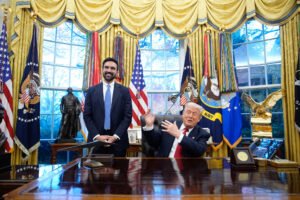
- Collins slams Trump plan to ‘politicize’ grants as defying Congress
- Big Ag and Big Oil go head-to-head over diesel export ban
- Hinson calls for end to Iran war amid soaring diesel costs
- Senior GOP appropriator pours cold water on funding Trump’s arch
- Pritzker says he’s lost 80 pounds on GLP-1 since diabetes diagnosis
- Michigan’s Gary Peters to teach at USC after retirement
-

 Politics2 years ago
Former ‘Squad’ members launching ‘Bowman and Bush’ YouTube show
-
Uncategorized2 years ago
Bob Good to step down as Freedom Caucus chair this week
-

 Politics2 years ago
Former Kentucky AG Daniel Cameron launches Senate bid
-

 The Josh Fourrier Show2 years ago
DOOMSDAY: Trump won, now what?
-

 The Dictatorship2 years ago
Luigi Mangione acknowledges public support in first official statement since arrest
-

 The Dictatorship2 years ago
Pete Hegseth’s tenure at the Pentagon goes from bad to worse
-

 Politics2 years ago
Blue Light News’s Editorial Director Ryan Hutchins speaks at Blue Light News’s 2025 Governors Summit
-

 The Dictatorship1 year ago
Mike Johnson sums up the GOP’s arrogant position on military occupation with two words