
Politics
‘Meanest people I have ever met’: Chat leak resurfaces internal fights among Young Republicans

A trove of bigoted messages between members of the Young Republicans is deepening a sharp rift among state groups across the country, further fracturing an organization that has been beset with internal discord and infighting for years.
Young Republicans chapters across the country were divided on how to respond to the texts — with some groups staying silent and others immediately denouncing the Telegram group chat revealed by POLITICO that contained racist, homophobic and antisemitic epithets.
Much of the conflict on how to respond to the texts stems from an August election over who would lead the Young Republican National Federation, the umbrella group for all the state chapters known commonly as Young Republicans.
The election essentially split Young Republicans into two groups: On one side was Hayden Padgett, a Texas Republican and current chair of the Young Republican National Federation who was running for reelection. On the other side was Peter Giunta, who led an insurgent group within the Young Republicans and who previously clashed with Padgett, in part because he challenged Padgett to be chair of the national federation in the August election. Giunta ultimately lost the election.
Giunta, however, was one of the members on the leaked text chain and had posted offensive messages, including “I love Hitler” and “If your pilot is a she and she looks ten shades darker than someone from Sicily, just end it there. Scream the no no word.” Giunta and other members of the group chat also repeatedly used homophobic slurs to refer to Padgett, with Arizona Young Republicans Chair Luke Mosiman at one point writing “RAPE HAYDEN.”
Giunta, who apologized for the texts, did not respond to a request for comment, and Mosiman declined to comment.
After Blue Light News revealed the chats, Young Republican leaders in 23 state groups who supported Padget’s reelection bid quickly released statements condemning the leaked text messages. Several used the statements as an opportunity to demonstrate their loyalty to Padgett: Leaders in Missouri, Alaska and Wisconsin, for example, noted in their statements that they opposed Giunta’s attempt to unseat Padgett in August.
By contrast, many of the state groups that previously supported Giunta were silent in the aftermath of the leak, with the exception of a handful of states including Illinois and Georgia that denounced the texts. Several also appeared to have deleted social media posts expressing support for Giunta’s campaign.
One group that endorsed Giunta and his platform over the summer, the Arizona Young Republican Federation, lambasted what it called “mob-style condemnation driven by political opportunism or personal agendas.”
“While certain voices within our movement have been quick to condemn, many of these same individuals have overlooked or ignored deeply concerning rhetoric and actions on the political left–including public celebrations of the tragic death of Charlie Kirk and Jay Jones, calling for the death of family,” the group said in a statement.
The Arizona group, led by Mosiman, also condemned the rhetoric from the Telegram chat but raised concerns about their “authenticity and context.”
The group also used the controversy as an opportunity to take a swipe at Padgett and YRNF leadership, calling out “a troubling disregard for unity and due process” from national leaders who they said failed to communicate with state leaders before releasing its statement.
When asked about criticism against his leadership, Padgett told Blue Light News that any claims of division within the organization are “baseless” while calling on Democrats to condemn violent rhetoric from members of their party.
“The YRNF unequivocally condemned the leaked messages in the Blue Light News article—full stop,” he said. “Outside of those in the sticks, every state and local Young Republican chapter stands united.”
The fight over how to respond to the text scandal ultimately exposes the deep fissures within the Young Republican National Federation, which has around 14,000 members who have historically helped the Republican Party run its ground game during elections. Past chairs include longtime Trump ally Roger Stone as well as members of Congress.
One state chair, who was granted anonymity to speak candidly about internal dynamics, said they were surprised some YRNF leaders were “not as strong in condemning the remarks” but hoped the organization could move forward as a united group.
California Young Republicans Chair Ariana Assenmacher, who was Giunta’s running mate in the August election, said in an interview she was surprised by the rhetoric used in the messages and had no knowledge of nor involvement in the group chat.
“I think it’s a very isolated event, and it’s frustrating to see something that is a very small chat being pushed as representation for Young Republicans across the country, which is obviously not the case,” Assenmacher said.
Young Republicans leaders from more than three dozen states did not respond to Blue Light News’s requests for comment or declined to comment.
YRNF has seen bitter clashes between warring factions since Padgett was elected in 2023, when the opposing slate garnered less than one-fifth of the vote. But Giunta’s campaign this year picked up significant traction among state leaders disillusioned with the incumbent leadership, winning 47 percent of the vote in August’s national leadership election.
Another state chair, who was granted anonymity due to fears of retribution, said they were not surprised by the maliciousness of the messages but added that they had “never heard anything like that from the people I am friends with.”
“I don’t like attacking our own,” they said. “We spend a lot of time fighting amongst ourselves. The August election was extremely controversial, and there were personal attacks from both sides, very very unkind stuff.”
The state chair added that YRNF has been plagued by division in recent years and that they were “absolutely sure there’s extremely unkind things” in the messages of Giunta’s opponents.
Valerie McDonnell, the youngest state legislator in New Hampshire who stepped down as a Young Republican national committeewoman in August, said she was appalled by the “repeated terrible language about other members.”
“It wasn’t just a one-off comment. It was, I believe, over a span of six months, just repeated terrible language about other members,” she said. “This just was beyond belief to see the extent of this.”
Still, the second state chair worried that ongoing divisions in the organization following the August leadership election could hamper the organization’s value to the GOP in the 2026 midterm elections.
“These are the meanest people I have ever met in my life,” the person said of their Young Republicans colleagues. “I love this organization so much, and it meant so much to me in my early- and mid-20s, and it is just different. These kids are not the same. I think they’ve grown up in politics only seeing how Trump treats people and they think that’s how you treat people.”
Samuel Benson, Faith Wardwell and Jason Beeferman contributed to this report.


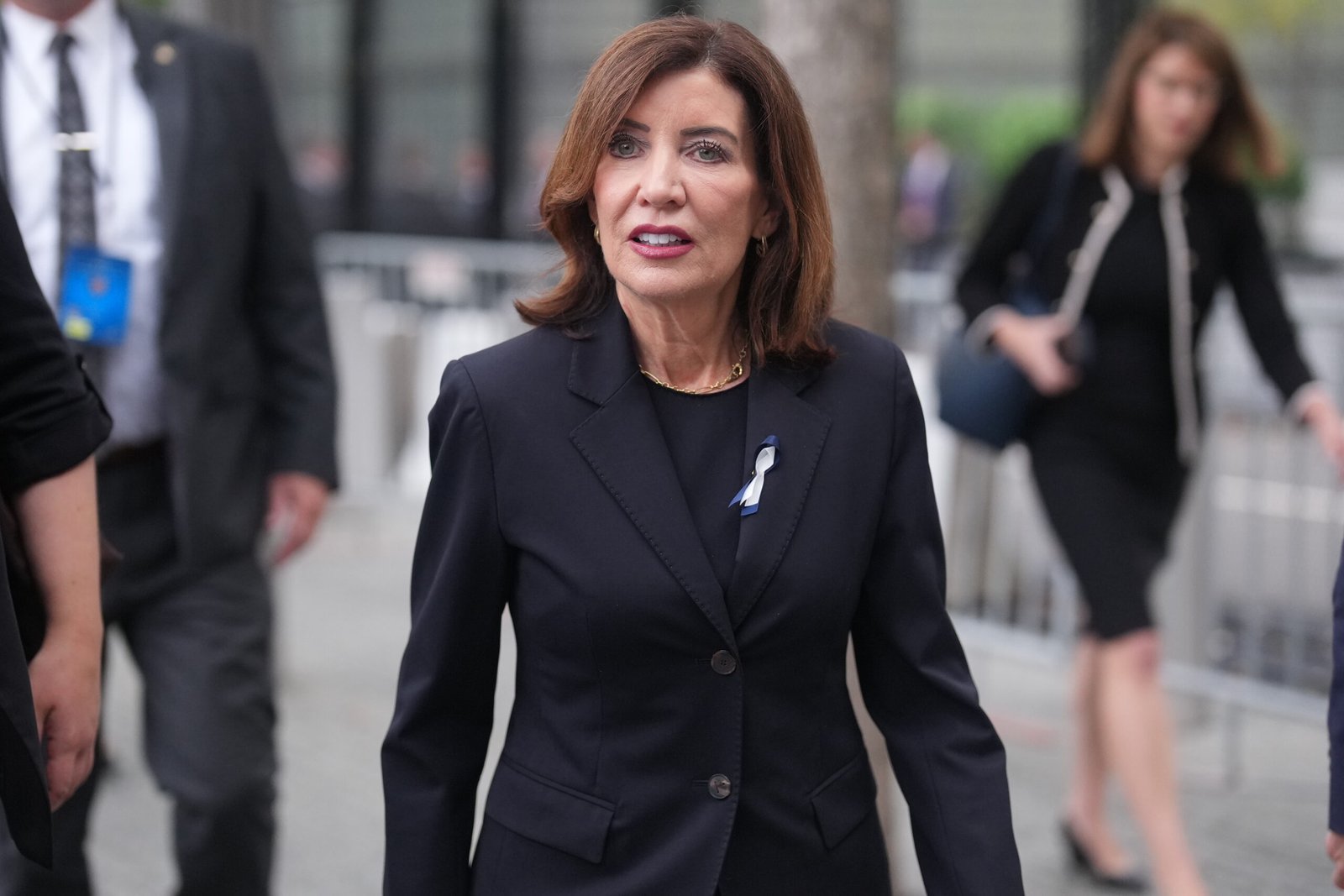

POLICING PROBLEMS: In the early days of his administration, Mayor Zohran Mamdani placed a new requirement on the NYPD: The department would have to secure permission from his office to deploy its Strategic Response Group to make arrests at protests.
The directive, which hasn’t been previously reported, shows Mamdani sought to exert significant influence over a core function of the police department. Its existence also calls into question why the mayor hasn’t more frequently used that authority to stop the SRG from being deployed at protests — since he promised as a candidate to disband the specialized unit.
The unit — which has long weathered criticism for its heavy-handed protest responses — just last week arrested activists protesting Israeli Prime Minister Benjamin Netanyahu’s appearance at the United Nations General Assembly. Several politicians allied with Mamdani were among those put in handcuffs.
When asked about those arrests, an NYPD spokesperson revealed the pre-approval policy to Playbook, confirming that the mayor’s office has the final say whenever the department wants to deploy SRG to detain protesters.
“We communicate with City Hall on this topic as we do on a host of things related to the department,” the spokesperson said.
The police spokesperson declined to comment on when exactly the mayor first instituted the SRG pre-clearance process. But a person familiar with the timing, who was granted anonymity to discuss the sensitive issue, said the policy was put in place during the first few months of Mamdani’s term.
The mayor suggested at a press conference on Monday that he didn’t see a justification for using the SRG in last week’s arrests outside the U.N. “I’ve been clear that my vision is for the disbanding of the SRG,” he told reporters when asked if he thought it was an appropriate use of police resources.
A Mamdani spokesperson declined to comment Tuesday on why the mayor didn’t use his power to call back the SRG last week if he didn’t think its deployment was justified. The spokesperson also would not say if the mayor has ever used his authority to reject a request from the NYPD for SRG intervention.
Amanda Jack, The Legal Aid Society’s policy director for criminal law reform, laced into the Mamdani administration after being informed of the existing policy.
“It is deeply troubling that City Hall has the authority to stop SRG deployments, yet continues to approve them at demonstrations, including at the protests outside the United Nations last week where the mayor himself acknowledged that the deployment was an inappropriate use of police resources,” said Jack, whose group has long advocated for abolishing the SRG. “This further confirms that regulating SRG deployments isn’t the solution. City Hall must finally make good on Mayor Mamdani’s campaign promise to disband SRG for good.”
The future of the SRG is one of several sources of friction between Mamdani and Jessica Tisch, his politically moderate NYPD commissioner. It’s also an issue that the mayor risks disillusioning his leftist base with the longer he keeps dragging his feet on fulfilling his 2025 campaign pledge.
Tisch has defended using the unit, saying it’s a key tool in the department’s network of crime-fighting strategies.
But Mamdani — a democratic socialist who, before launching his 2025 mayoral bid, supported calls to defund the NYPD — has long said the unit should be dismantled. Since taking office, he’s said he’s in active conversations with Tisch about finding a way to break up the unit, but those talks haven’t resulted in any tangible action nine months into his term.
Founded in 2015, the SRG was initially just tasked with counterterrorism work. The group’s responsibilities have since come to include responding to protests that turn chaotic or violent.
In arguing for abolishing the unit, Mamdani and other police reform advocates have pointed to SRG officers racking up disproportionately high rates of misconduct claims while responding to protests.
The SRG was subject to a court settlement in 2023 that put new guardrails around how the unit could be deployed during protests. But Mamdani and like-minded voices have contended that’s not enough and that the SRG should be broken up so it can return squarely to its original counterterrorism function.
In his remarks on Monday, Mamdani reaffirmed that view.
“I have made that promise, I will fulfill that promise,” he said. “The only question is the timeline of it.” — Chris Sommerfeldt
MARK YOUR CALENDAR: Join Blue Light News’s New York Outlook: Affordability, Industry & The Economy on Oct. 14 for live conversations about the business and policy decisions being made today — from City Hall to the State Capitol — that will shape the city’s economic future. The lineup includes New York City Council Speaker Julie Menin, New York City Economic Development Corp. CEO Anthony Shorris, Partnership for NYC CEO Steven Fulop, Citizens Budget Commission President Andrew Rein, Charles H. Revson Foundation President Maria Torres-Springer, and more. Register now to attend in person or watch the livestream.
From the Capitol

CORNELL UNDER FIRE: Gov. Kathy Hochul is calling for an independent review of Cornell University’s response to a 2024 gang rape case, as the case draws national attention and the school faces mounting criticism.
The Tompkins County district attorney said his office is reopening a criminal probe into an alleged gang rape at a Cornell fraternity house, following a civil lawsuit filed by the plaintiff in mid-September.
The plaintiff, a former Cornell student referred to as Jane Doe, alleges in the lawsuit that several men raped her at the Chi Phi house after she was coerced into consuming drugs. The lawsuit names Cornell, several Chi Phi organizations, the former president of Cornell’s Chi Phi chapter, a local bar and unnamed individuals as defendants.
The governor called for outside counsel to conduct a “transparent, independent” review of the university’s response to determine whether Cornell “met every obligation to protect its students and pursue justice.”
“I support the district attorney’s decision to reopen the criminal investigation,” she said in a statement. “But there are also serious questions about Cornell’s campus culture and its systems for prevention, reporting, and response.”
She called the allegations in the case “nothing short of horrifying.”
“For any student to come forward after an experience like this takes extraordinary courage,” Hochul said. “No student should ever be left wondering whether the institutions meant to protect them will listen and act.”
Rebecca Valli, a Cornell spokesperson, told Playbook the school plans to work with the governor and other state officials.
“Cornell shares Governor Hochul’s commitment to addressing campus culture issues, which affect universities across the nation and New York,” Valli said in a statement. “We are committed to continuing to work with state officials to advance student safety and wellbeing.” — Madina Touré
EYES ON AI: When it comes to who’s getting involved in addressing the rapid rise of artificial intelligence, Hochul offered a straightforward perspective today: the more the merrier.
Speaking to reporters after a meeting of her FutureWorks Commission, which is set to deliver recommendations by the end of the year regarding AI and the workforce, Hochul welcomed the City Council’s recently announced moves to regulate AI.
“This is an area where we need an all-hands-on-deck approach,” she said in response to a question regarding whether the Council’s proposals might overlap with the state’s. “I applaud the City Council for getting more information. … If they come up with an idea that would make sense at the state level, we’ll embrace it. We have an idea at the state level, it already covers the city. So this is an area, we’re on the same team in terms of making sure we get this right, because the risks are too high.”
Hochul said the commission is looking to address how AI is reshaping jobs, the best ways to train workers on the technology, protecting those vulnerable to job cuts and “the best ways to harness the benefits of AI for everyday New Yorkers.” Tom Perez, the co-chair of the commission and former U.S. secretary of labor, said there are “more questions than answers at this point” but he has “great optimism that we can tackle this challenge.” — Madison Fernandez
FROM THE CAMPAIGN TRAIL
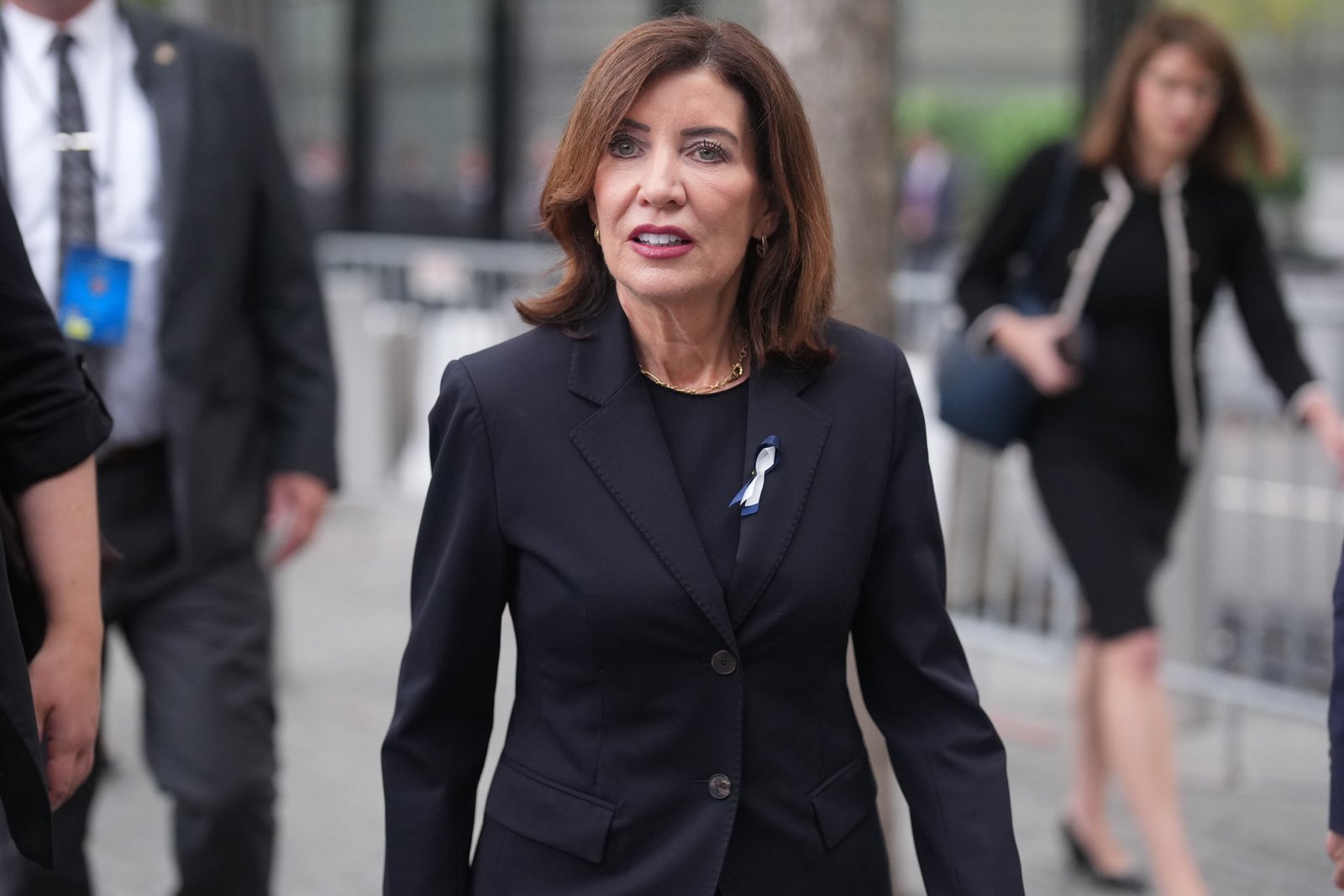
SUPER PAC SURGE: Super PACs backing Hochul have reported $4.8 million in contributions since yesterday, giving the governor a comfortable advantage over Republican Bruce Blakeman in the outside spending arms race.
Greater Empire State, a committee run by the Democratic Governors Association, received $1 million from the Greater New York Hospital Association – a perennial top spender in New York politics that gave the state Democratic Committee $1.5 million in June.
The DGA group also received $500,000 from former gas company CEO John Hess. It reported a dozen four- or five-figure donations from pediatricians and other healthcare groups as well. At least 10 of those have connections to the physician network Somos Community Care, a longtime Hochul benefactor.
Additionally, the landlord-backed New York Apartment Association gave $3 million to Leadership for New York, a pro-Hochul super PAC launched by former NYAA official Jay Martin. That committee subsequently transferred $1 million of its money to the one run by DGA. — Bill Mahoney
BROOKLYN BATTLE: The state Supreme Court’s appellate division ruled in favor of a group of self-described reformers who were looking to unseat Rodneyse Bichotte Hermelyn as chair of the Brooklyn Democratic Party.
The decision comes just hours before the executive committee is scheduled to meet to vote on the next party chair. Julio Peña III, the district leader put forth by reformers to unseat Bichotte Hermelyn, has been locked in a legal battle over Bichotte Hermelyn’s move to change the makeup of the executive committee — a maneuver she claimed would promote inclusivity, but one her opponents insisted was only carried out to pad her support before the leadership election.
A state Supreme Court judge ruled that the vote on the expansion was invalid, but Bichotte Hermelyn appealed the decision. Today’s appellate division ruling voids the expansion — seemingly a win for Peña, who has said he has enough support to win the leadership election under the unchanged structure.
But there’s still plenty up in the air. Last night, Bichotte Hermelyn said she decided not to run for another term as chair. After her announcement, City & State reported that she is backing state Assemblymember Nikki Lucas, who had not been actively running for the position.
Reformers are in court today looking to prevent this evening’s meeting from happening in light of last week’s chaotic organizational meeting. — Madison Fernandez
FROM CITY HALL

COMBAT READY: Mamdani released a highly anticipated blueprint to combat rising antisemitism today amid ongoing criticisms that he’s fueled the problem.
Under his plan, the Mayor’s Office to Combat Antisemitism will weigh in on $26 million that was allocated in this year’s budget to the Mayor’s Office for the Prevention of Hate Crimes, which has a broader mandate to fight all forms of hate.
The cash infusion will mean more money for organizations already engaged in combating antisemitism online and for supporting victims of antisemitic incidents. In particular, the city has doubled the investment in groups doing this work to $6.4 million and has earmarked $1 million for physical security at sensitive sites like synagogues. And it will work to increase visits to the Museum of Jewish Heritage for middle schoolers.
“We hold a responsibility to sustain and protect our Jewish neighbors — a responsibility that belongs to each of us,” Mamdani said in a video message accompanying the report. “That is the work we are undertaking at City Hall, and I am asking every New Yorker to join us.”
While the report generated plaudits from across the political spectrum, several prominent Jewish organizations said the mayor failed to define antisemitism and to acknowledge that some of his own rhetoric is to blame.
“While the Mayor’s plan has a number of positive elements, including some increased security funding for Jewish institutions and expanding proven programs, it fails to address a central issue that the Mayor himself has perpetuated: rhetoric that demonizes and delegitimizes Israel inevitably leads to the targeting of Jewish New Yorkers,” the UJA-Federation of New York, JCRC-NY, AJC New York and New York Board of Rabbis wrote in a joint statement.
Read more from Blue Light News’s Joe Anuta here.
BRIDGE TO HOME: NYC Health + Hospitals is opening a second site for the “Bridge to Home” program, an initiative by former Mayor Eric Adams to provide a place for homeless patients to continue healing after a hospital stay.
Patients will be able to stay as long as 12 months at the new Crown Heights site in Brooklyn, where they will have 24/7 medical support from Woodhull Hospital providers and get help applying for permanent housing.
“Bridge to Home is a bridge between getting well in the hospital and building a life in the community,” Omar Fattal, NYC Health + Hospitals’ chief behavioral health officer, said during a press conference this afternoon. “And for someone like me who spent many years working in inpatient psychiatry, it means that when we ask, ‘Where does this person go next?’, we finally have a better answer.”
Since the first “Bridge to Home” site opened in Midtown Manhattan in September 2025, 18 participants have moved into permanent housing, according to NYC Health + Hospitals.
The first resident of the Crown Heights site, which has capacity for roughly 50 program participants, moves in next week. — Maya Kaufman
IN OTHER NEWS
INFLUENCER ARMY: A group of influencers under instruction from City Hall are reportedly planning a campaign against top New York CEOs, a claim Mamdani’s administration denies. (New York Post)
ENERGY FUTURE: A flurry of new energy-intensive projects are underway in upstate New York. (Times Union)
FRUIT FUMES: Bureaucracy and politics have led to the unraveling of a years-in-the-works plan to modernize a diesel-spewing produce market in the South Bronx. (Gothamist)
Missed this morning’s New York Playbook? We forgive you. Read it here.
Politics
Democrats are running pastors for office. Republicans are attacking their religious comments.
A slate of Democrats are running for Congress leaning on their Christian bona fides. Republicans are trying to portray them as wolves in sheep’s clothing.
In Texas, Republicans are running ads blasting seminarian James Talarico for saying he’s “a Christian who hates Christianity.” In Iowa, they are going after a pair of clergy in key House races as “PINOS” — “pastors in name only,” because they “don’t profess the true gospel of Jesus Christ.” In Kansas, Republicans pan megachurch pastor Adam Hamilton as “too woke and too weak.”
“His sermons are essentially a carbon copy of the Democrat National Committee platform,” said Brent Robertson, chief of staff to Hamilton’s opponent, Sen. Roger Marshall (R-Kansas), pointing to a past sermon in which Hamilton urged followers to reduce their carbon footprint.
The closing arguments on these Democrats — as evidenced by the most recent ads — shows a concerted effort to turn their preaching against them to paint them as fake, corrupt or even blasphemous.
In Texas, MAGA Inc. is on air painting Talarico as a “liberal weirdo,” clipping Talarico’s controversial statements, like “Jesus Christ Himself was a radical feminist” and “God is non-binary.”
The Trump-aligned No Going Back PAC is on air in Iowa’s 2nd District hitting Presbyterian minister and Democrat Lindsay James as inauthentic: “When the cameras are on, Lindsay James goes into a character, a caring pastor who says what you want to hear, but when there’s no spotlight, Lindsay James shows just how radical she can be.”
And in Kansas, GOP Sen. Roger Marshall’s campaign is on air slamming Hamilton as a “slimy,” “millionaire megachurch CEO,” saying he “used faith to fatten his wallet” and “asked churchgoers to pony up for God, then use church resources for his own campaign.”
“The swamp’s got enough money changers,” the ad says.
The attacks are coming precisely because these candidates have proven to be formidable candidates in purple to red areas, using their faith backgrounds to bolster themselves against GOP accusations that they’re out of their state’s mainstream. Talarico poses Democrats’ best chance to flip a Texas Senate seat in nearly four decades. Hamilton has turned deep-red Kansas into a battleground. And James and Sarah Trone Garriott, a Lutheran minister, are running tough in a pair of Iowa districts Trump won in 2024.
Voters “understand and appreciate authenticity, and they know that faith without works is dead,” said Chaz Molder, the Democratic nominee in Tennessee’s deep-red 2nd District who leads a Sunday School class with his wife. “And just posting scripture on Sunday morning to point out that they went to church is not enough.”
But with Democrats’ clerical credibility comes a practical challenge: years and years of on-camera sermons, a treasure trove for oppo researchers. It’s become a challenge in Hamilton’s race, where Vice President JD Vance joined the pile-on earlier this month: During a visit to Iowa, he took a shot at Hamilton as having “kind of a ‘gee whiz, I’m a nice pastor’ vibe,” but said he “tells his congregation not about the gospel of Jesus Christ, but that they need to repent for their white privilege while eating beef.”
Democrats have largely brushed off the attacks. Talarico has said he’s “missed the mark” on some of his “cringey” past comments, but has doubled down on his sermonizing: “When I take on the politicians who are serving themselves and not the people, I’m doing it on biblical grounds,” he said in a sermon last weekend. A James spokesperson criticized Republicans for “desperately attacking Lindsay’s deeply held faith commitments. If it wasn’t so insulting to other Iowa Christians, it would be laughable.” Hamilton has seen clergy run to his side: 120 fellow Methodist ministers across Kansas wrote an open letter to Marshall telling him to stop attacking Hamilton’s pastoral ministry, saying the attacks “tear at the fabric that is the body of Christ.”
“We’re not the first Christians to be attacked for our faith, and we won’t let smears and lies from a couple of Washington politicians stop us from living out our values in the world,” Hamilton said in a video after Vance’s speech.
In many ways, this election marks something of a faith resurgence for the Democratic Party. While only half of Democrat- and Democrat-leaning U.S. adults identify as Christian (a 24-percentage-point decline since 2007), Democrats this cycle are running clergy, Sunday School teachers, chaplains and other devout Christians across the map.
“As a person of faith, I think that it’s time for the Democratic Party to reassert that Democrats are a big tent, and we have many elected officials from different faiths for whom faith is something very important to them,” said Ben McAdams, the Democratic nominee in Utah’s 1st District and a volunteer Sunday School teacher in his Latter-day Saint congregation in Salt Lake City. “The Republican Party of Donald Trump does not seem to be reflecting the Christian values that I grew up with.”
Doug Pagitt, executive director of progressive group Vote Common Good, counts nine clergy running for federal office this cycle as Democrats — something he hasn’t seen before.
“The idea that a faith leader, especially a white faith leader, would run as a Democrat and be forthright about it … it’s really unusual,” Pagitt said. “We’ve had candidates [in the past] whose moms were pastors, and they were nervous about mentioning that in the Democratic Party circles. But that seems to have shifted and changed.”
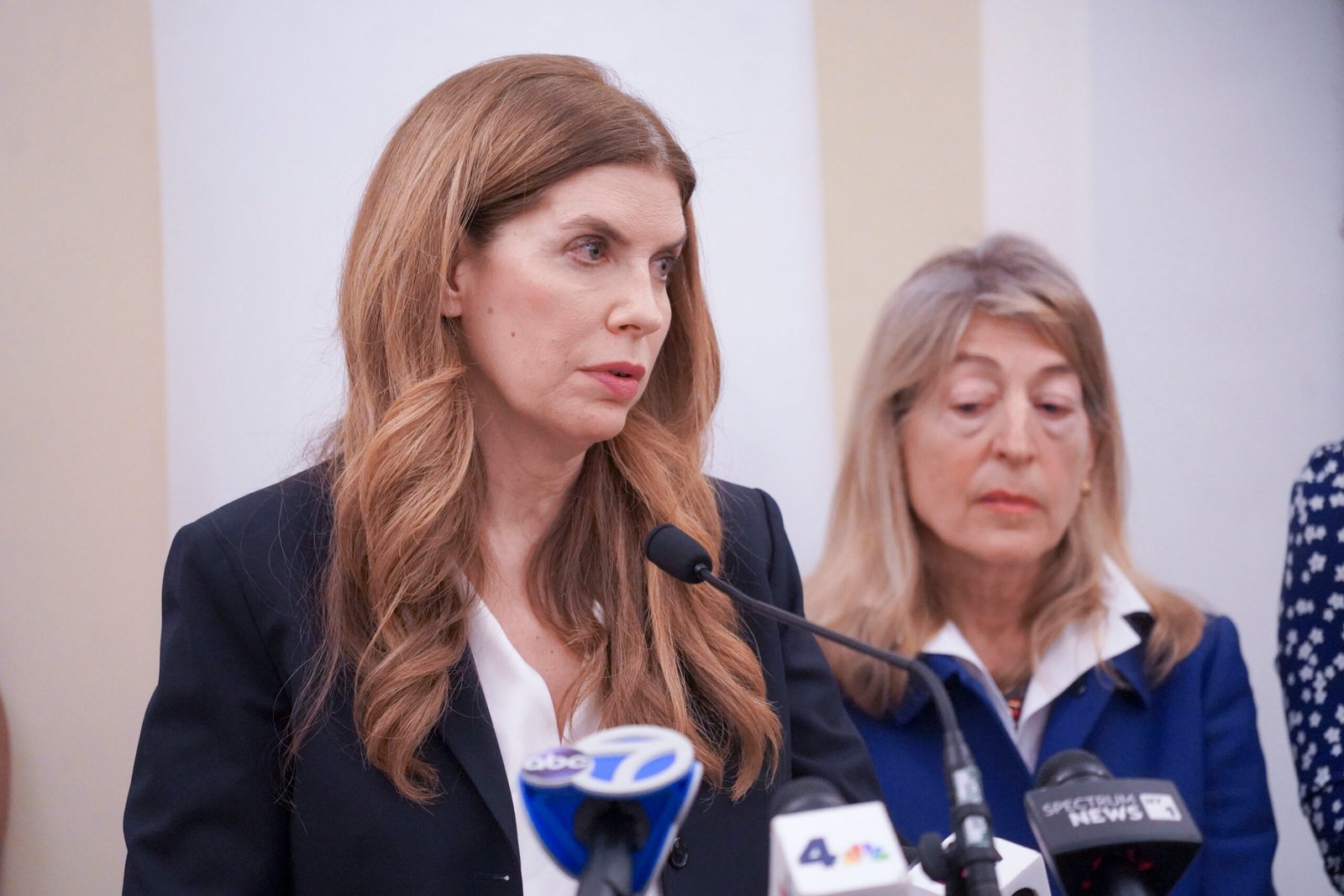
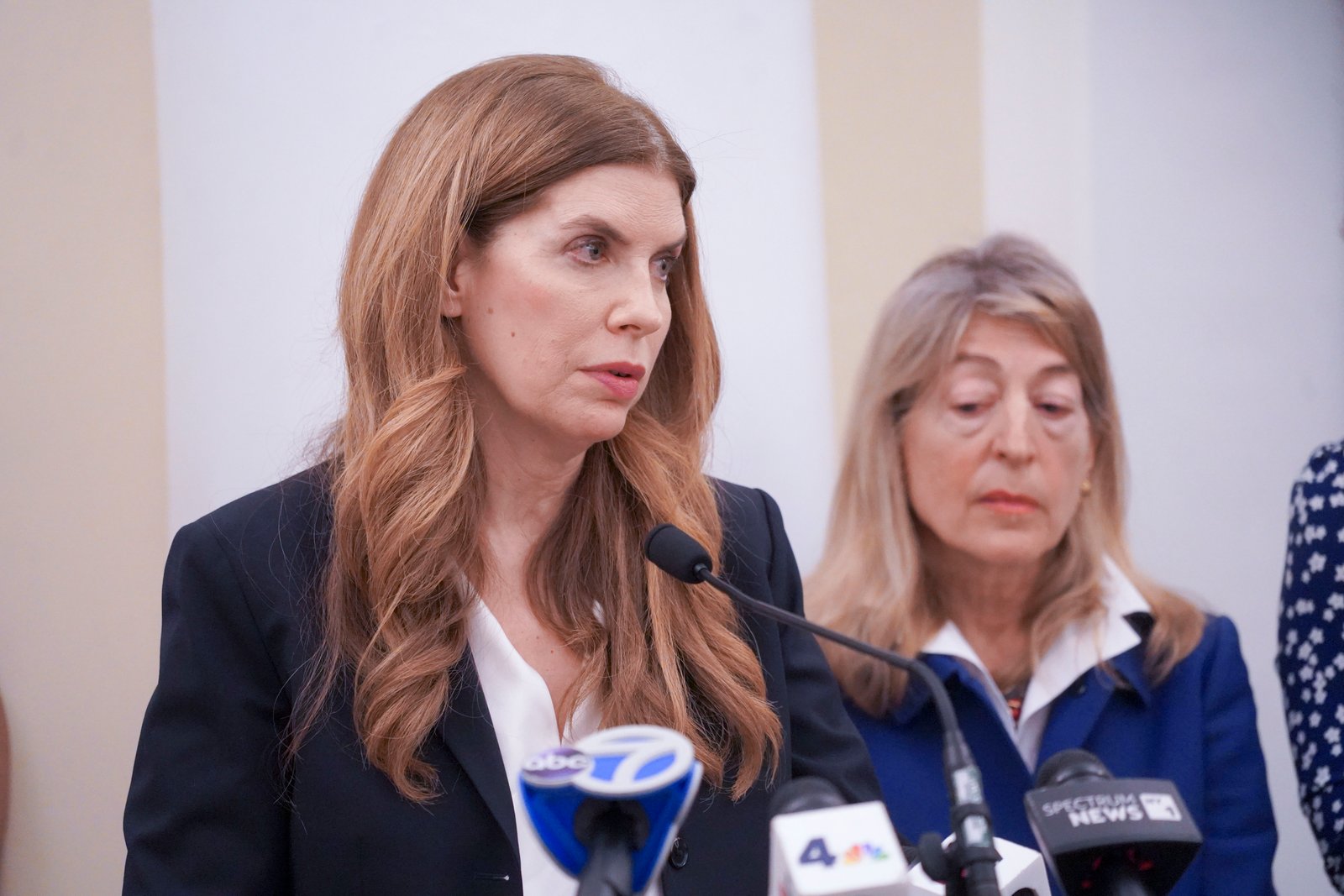
CITY HAL 9000: Amid a mad dash to try to regulate artificial intelligence, City Council Speaker Julie Menin is looking to make her mark.
The Manhattan lawmaker is planning to hold a hearing with all 51 members of the legislative body next week, and today confirmed the attendance of four major AI firms to discuss both the dangers the technology poses and a suite of Council bills that seek to protect New Yorkers.
“Leading experts and AI executives themselves are warning about the potentially grave risks of rapidly advancing AI, and governments have a responsibility to act,” Menin said in a statement announcing she issued a subpoena to SpaceXAI, the artificial intelligence company owned by Elon Musk, to compel the firm to attend.
Council hearings — even those run by lesser-known committees — are not known as concise affairs. And the notion of having all 51 members in the room to pepper AI executives with questions can only mean a marathon day with plenty of news coverage. (Remember Randy Mastro’s general counsel nomination hearing in 2024? No? You didn’t tune in for all 11 hours?)
Between the White House’s opposition to any type of AI regulation and New York City Mayor Zohran Mamdani’s desire for federal guardrails — though he has enacted an AI ban in elementary schools — a lane has opened for Menin to have her say in what has become one of the defining debates of the political moment.
Her muscular posture — her office dangled the possibility of subpoenas in front of the companies she sought for Monday’s hearing — shows she is not going to let it go to waste.
The package of bills being pursued by the Council includes a “kill switch” requirement and a new private right of action that would make it easier to sue AI companies. Menin is hoping to get input on that package Monday from artificial intelligence purveyors who agree that something needs to be done to slow the development of frontier AI models.
Google, which plans to be there Monday along with Anthropic, OpenAI and Meta, has released a white paper calling for a regulatory body that could develop safety standards along with audits for frontier AI models that are pushing the bounds of the technology. Separately, the firm has called for a regulatory framework for AI models like chatbots, which are already being used widely by the general public, and for the government to mitigate disruptions to the economy and workforce.
None of the firms have weighed in formally on the Council’s AI package, but one person with knowledge of the bills said there are early questions about how a “kill switch” activated in New York would affect a company’s services elsewhere around the globe, how the private right of action might interact with existing tort laws and whether there are downsides to retaining AI chat histories with consumers for extended periods of time.
Separately, there’s also the question of how the city’s AI bills would mesh with a separate AI regulation framework being pursued by Gov. Kathy Hochul. — Joe Anuta
From the Capitol

GATEWAY DREAMS: The long-awaited Gateway project reached a new milestone today: the start of tunnel boring under the Hudson River.
Hochul gathered with officials from New York and New Jersey to celebrate the latest stage of the development — which comes after more than a decade of planning and almost three years of construction work.
Following the “ceremonial launch” this morning, two hard-rock tunnel boring machines will be deployed this fall to construct a new rail tunnel between New Jersey and New York Penn Station. The machines are anticipated to clear about 30 feet of earth per day.
“We fought and beat efforts from the Trump administration to halt the Gateway project and today, that dream becomes a reality, with state of the art machinery operated by expert union workers starting their journey through soil and bedrock under the Hudson to Penn Station,” Hochul said in a statement. “This is a historic day for New York and a clear demonstration of our ambitions to once again be a state that dreams and builds big.”
Construction on Gateway began in late 2023, but the project previously faced a near-shutdown and temporary work stoppages after the Trump administration froze federal funds for it. The project resumed following legal action from New York and New Jersey. — Janaki Chadha
DON’T TRUST THE FILINGS: Hochul’s campaign is preemptively casting doubt on the accuracy of a disclosure report due to be filed by Republican opponent Bruce Blakeman on Friday.
If the past is any guide, the report won’t contain the definitive list of his financial activity. The campaign finance filing Blakeman submitted on July 15, for example, has since been amended on July 22, Aug. 13, Aug. 25 and Sept. 14.
As a result, a significantly different financial picture has formed compared to what was widely reported a couple months ago: Blakeman initially identified $3 million worth of contributions and $1.8 million in expenses over the spring; the latest amended version shows $4.5 million in contributions and $5 million in expenses. The total number of transactions disclosed went from 25,534 to 41,724.
Blakeman similarly resubmitted his March disclosure report four times and his January filing thrice.
“Either Blakeman wants to trick the press into reporting an inaccurate state of the race, or this guy sucks at math,” state Democratic Committee spokesperson Addison Dick said.
The Nassau County executive’s campaign did not respond to a request for comment. — Bill Mahoney
FROM CITY HALL
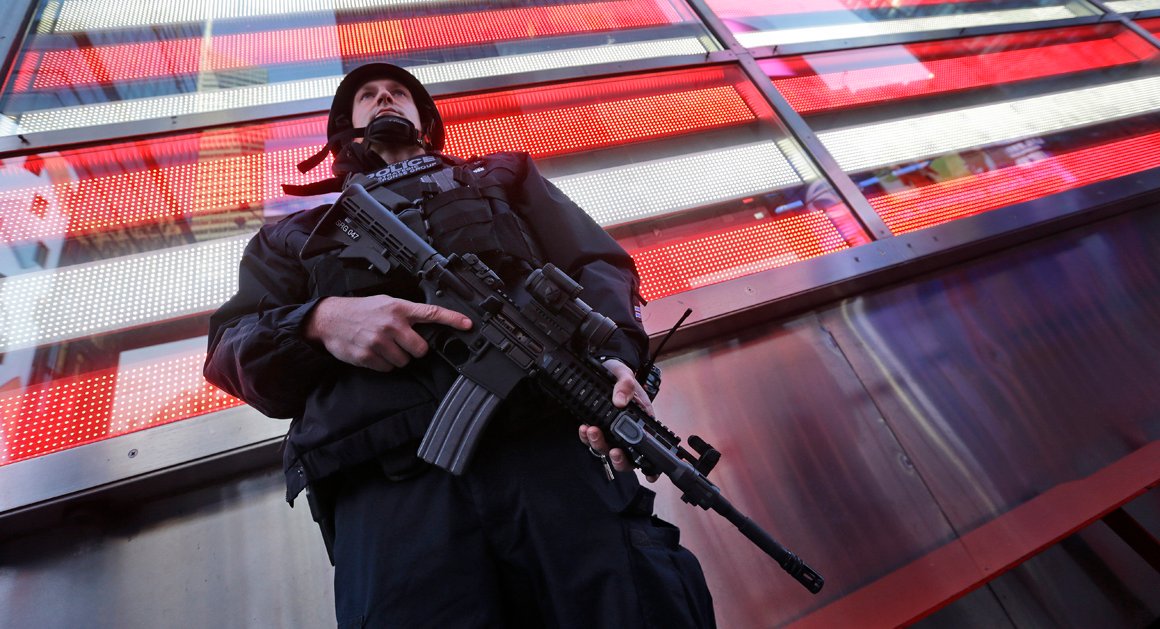
‘NOT IN AN INSHALLAH TIMELINE’: Mamdani said today he’ll release a plan “soon” for disbanding the controversial NYPD unit he pledged to get rid of last year as a candidate — and he’s leaving god out of it.
“I will fulfill that promise. The only question is the timeline of it … It’ll be not in an inshallah timeline, but an actual one,” he told reporters at a press conference in Manhattan, using the Arabic phrase for godwilling. “The critical point of it is just how to ensure we’re doing so while protecting New Yorkers’ rights and keeping New Yorkers safe, and that’s something that we’re going to share more information about soon.”
Mamdani made the comments after Playbook asked what’s causing the holdup on breaking up the NYPD’s Strategic Response Group, especially in light of the unit being deployed Thursday to arrest activists, including politicians close with the mayor, protesting Israeli Prime Minister Benjamin Netanyahu.
As a candidate last year, Mamdani was adamant that he would, if elected, abolish the SRG over concerns about its heavy-handed responses to protests.
But since taking office in January, the mayor has dragged his feet on the pledge. When asked about the status of it, he’s typically just said he’s continuing conversations with NYPD Commissioner Jessica Tisch — making today’s comments stand out.
A spokesperson for the NYPD declined to comment on Mamdani’s remarks. But the spokesperson did note that video posted to social media showed the SRG officers who effected arrests at last week’s anti-Netanyahu demonstrations acted peacefully and were joined by NYPD Community Affairs personnel who informed protesters they would be detained.
A political moderate, Tisch has defended using the SRG, once even cracking a joke that seemed aimed at highlighting the static between her and the mayor on the topic.
The fate of the SRG is among a number of issues Tisch and Mamdani have clashed on. They also hold divergent views on the issue of the NYPD’s gang database, with Mamdani promising last year to abolish it while Tisch calls it a critical tool that her department uses “every day.” — Chris Sommerfeldt
FROM THE CAMPAIGN TRAIL
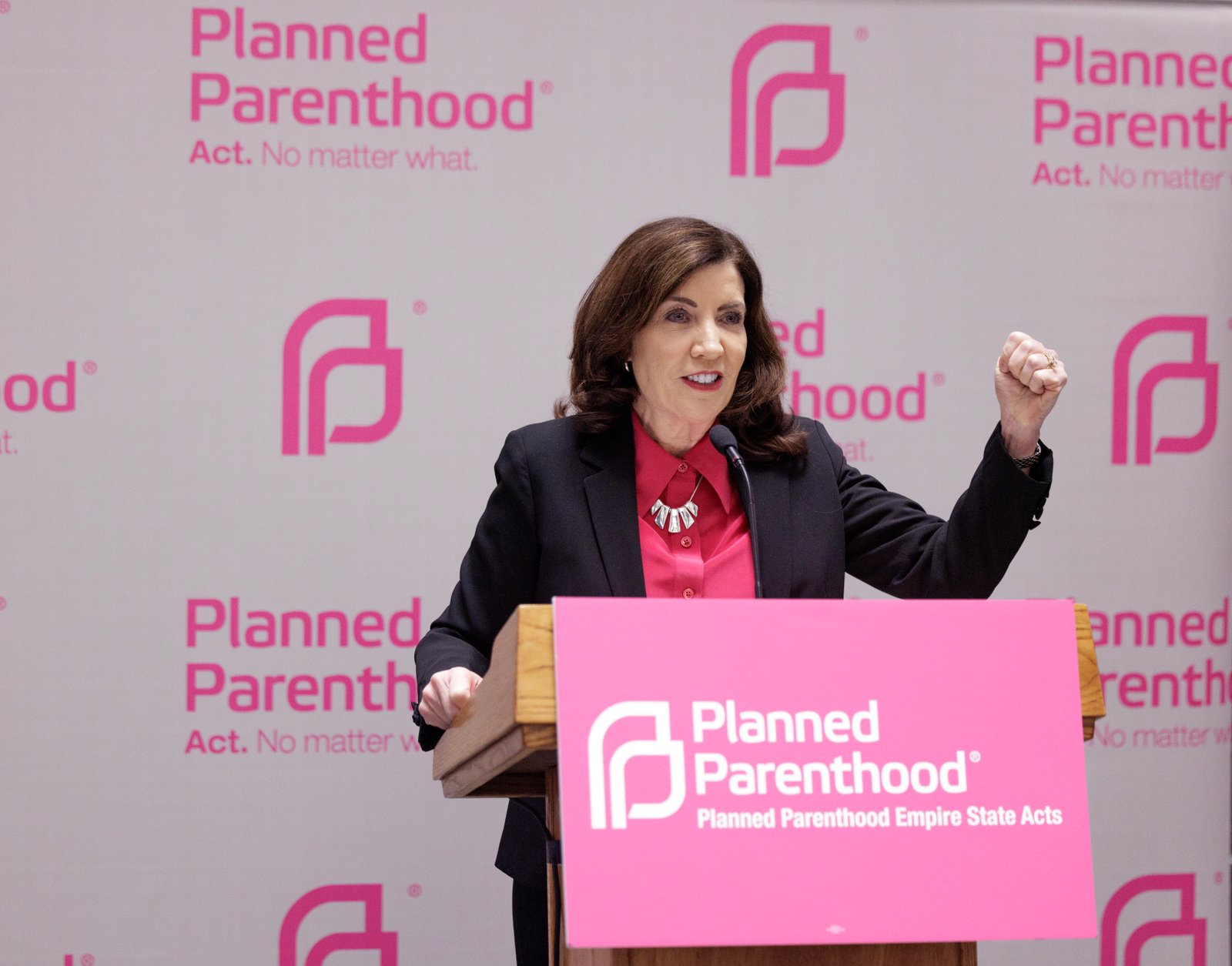
FIRST IN PLAYBOOK: Hochul picked up an endorsement today from Planned Parenthood’s PAC in her bid for a second term.
In receiving the endorsement, Hochul touted her work in declaring the state as a “safe haven” for reproductive health care, creating a first-in-the nation paid prenatal leave program and increasing the child tax credit. Planned Parenthood Empire State Votes PAC Chair Robin Chappelle Golston said that the governor “understands what is at stake during relentless federal attacks.”
The group also backed Hochul, the first female governor of New York, when she ran for a full term in 2022.
Hochul’s opponent, Nassau County Executive Bruce Blakeman, has described himself as a “pro-choice Republican.” — Madison Fernandez
IN OTHER NEWS
— ZOHRAN’S SHADOW: Hochul is counting on Mamdani to stump for her reelection campaign, but the governor’s advisers are still figuring out the best way for him to do that. (The New York Times)
— SEX ED: A new study from the New York Civil Liberties Union found that many school districts have selected an abstinence-only sex education curriculum. (Times Union)
— JOB HUNT: As New York City government continues to reel from staff vacancies, Mamdani is opening a walk-in municipal jobs center to speed up hiring. (amNewYork)
Missed this morning’s New York Playbook? We forgive you. Read it here.
- Inside Mamdani’s fraught effort to rein in the NYPD unit he pledged to end
- Cruz blocks Senate Democrats’ bid to pass AI safety bill
- Pharma’s new top lobbyist is a former House majority leader
- White House looking to Europe to release diesel from strategic reserves
- Darline Graham rips Jack Smith for obtaining her late brother’s phone records
- Federal watchdog says Trump’s $810M funding cancellation is unconstitutional
- Sen. Eric Schmitt pins down Jack Smith — as a Caitlin Clark fan
- Mike Johnson backs voluntary regulation to ‘calm the nerves’ on AI safety
- Democrats are running pastors for office. Republicans are attacking their religious comments.
- What Jack Smith plans to tell the Senate Judiciary Committee
-

 Politics2 years ago
Former ‘Squad’ members launching ‘Bowman and Bush’ YouTube show
-
Uncategorized2 years ago
Bob Good to step down as Freedom Caucus chair this week
-

 The Josh Fourrier Show2 years ago
DOOMSDAY: Trump won, now what?
-

 Politics2 years ago
Former Kentucky AG Daniel Cameron launches Senate bid
-

 The Dictatorship2 years ago
Pete Hegseth’s tenure at the Pentagon goes from bad to worse
-

 The Dictatorship2 years ago
Luigi Mangione acknowledges public support in first official statement since arrest
-

 Politics2 years ago
Blue Light News’s Editorial Director Ryan Hutchins speaks at Blue Light News’s 2025 Governors Summit
-

 The Dictatorship1 year ago
Mike Johnson sums up the GOP’s arrogant position on military occupation with two words