
Politics
Mamdani promises housing ‘transformation’

DAYS THE BUDGET IS LATE: 56
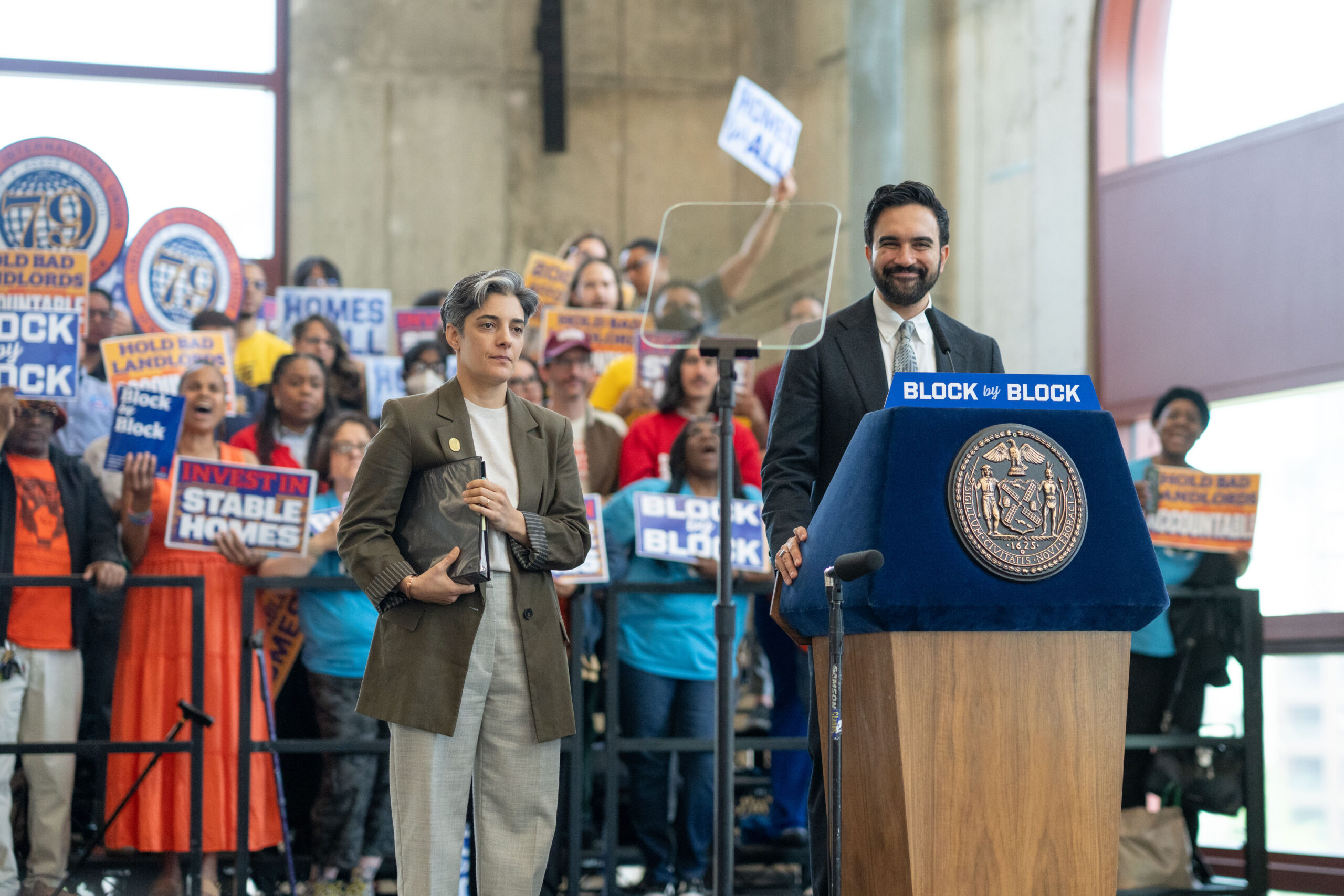
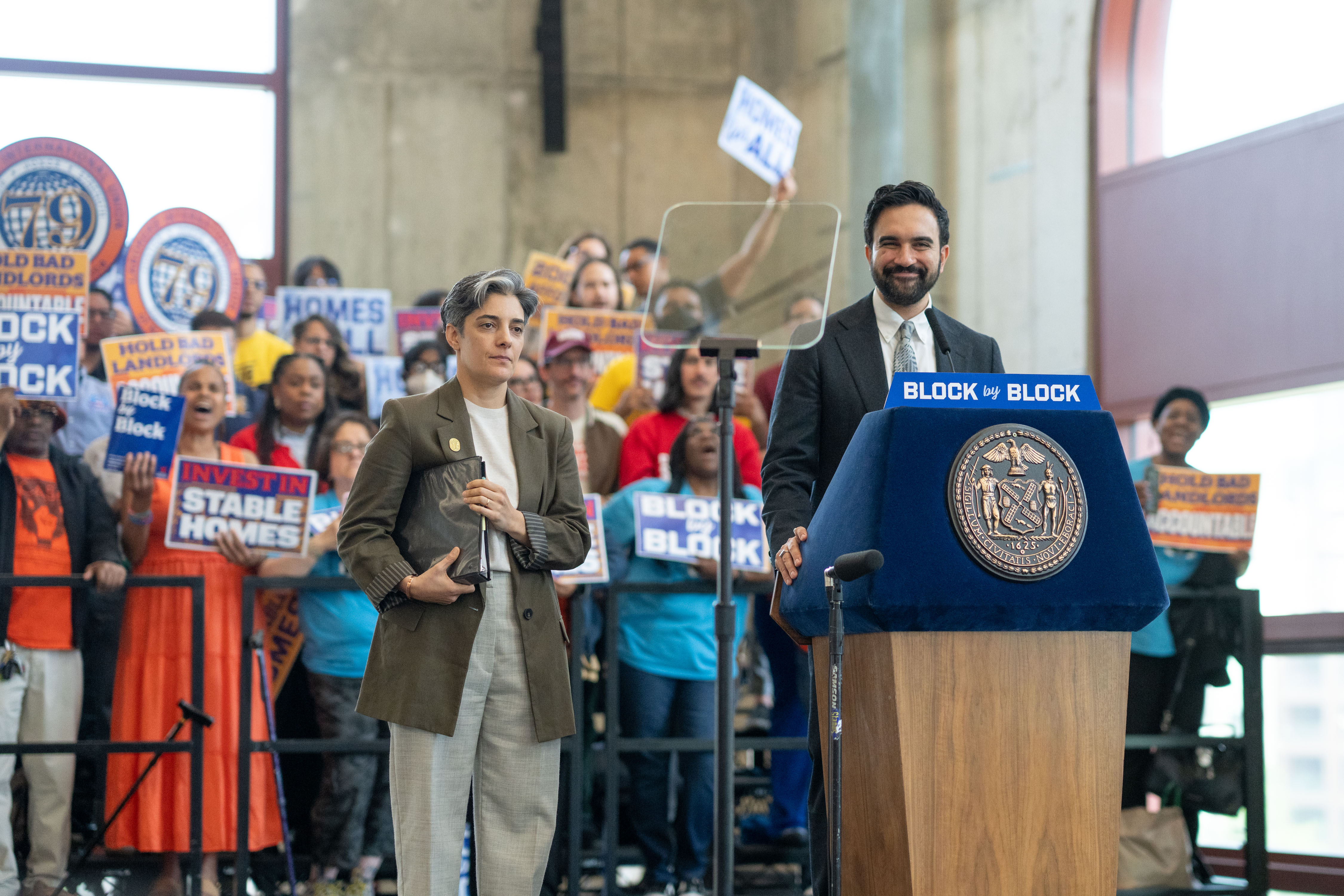
GETTING TO 200K: Mayor Zohran Mamdani released a wide-ranging housing plan today that he said will usher in the “largest municipal housing transformation this country has ever seen.”
The blueprint lays out how Mamdani plans to address the single biggest driver of the city’s affordability crisis, the central focus of the mayoral campaign that propelled him into City Hall.
While the plan lays out ambitious targets that would surpass past mayors if achieved — including the planned creation and preservation of a combined 400,000 affordable homes over a decade — it also illustrates how Mamdani is not reinventing the wheel on many housing issues, but rather leaning into or expanding policies pursued by his predecessors.
The plan seeks to tackle a range of coinciding crises: the severe shortage of available housing; a public housing system that’s crumbling and facing massive capital needs; and a rental housing stock that is experiencing growing distress as operating costs skyrocket.
“If the absence of good government created the conditions we now face, the presence of good government can build the solutions we now need,” Mamdani said in a speech announcing the plan in Brooklyn’s Gowanus section, where a city-led rezoning enacted nearly five years ago has spurred a residential building boom.
Mamdani is already encountering the limits of some of his campaign promises and moderating costly plans as his administration grapples with a strained municipal budget. On the campaign trail, the mayor said he would create 200,000 publicly-subsidized homes over a decade, tripling current rates of production. He is standing by that goal, while also pledging to preserve another 200,000 affordable homes.
“Scaling to these levels of affordable housing production will not be easy and cannot be done overnight,” the blueprint states. The administration is aiming to create some 14,000 affordable homes in fiscal year 2027, which starts July 1, while ramping up to 21,000 units per year by fiscal year 2031.
Under the blueprint released Tuesday, Mamdani’s housing department plans to finance 8,000 new affordable homes in fiscal years 2027 and 2028 — which would grow subsidized housing by more than 35 percent from the prior two years. But the plan does not spell out specifically how the administration will produce roughly 12,000 remaining units annually to get to Mamdani’s 200,000-unit goal.
Much of that additional affordable housing will rely on zoning, tax and other financing tools rather than direct city subsidies. And it would require the private sector to embrace those tools. — Janaki Chadha
From the Capitol
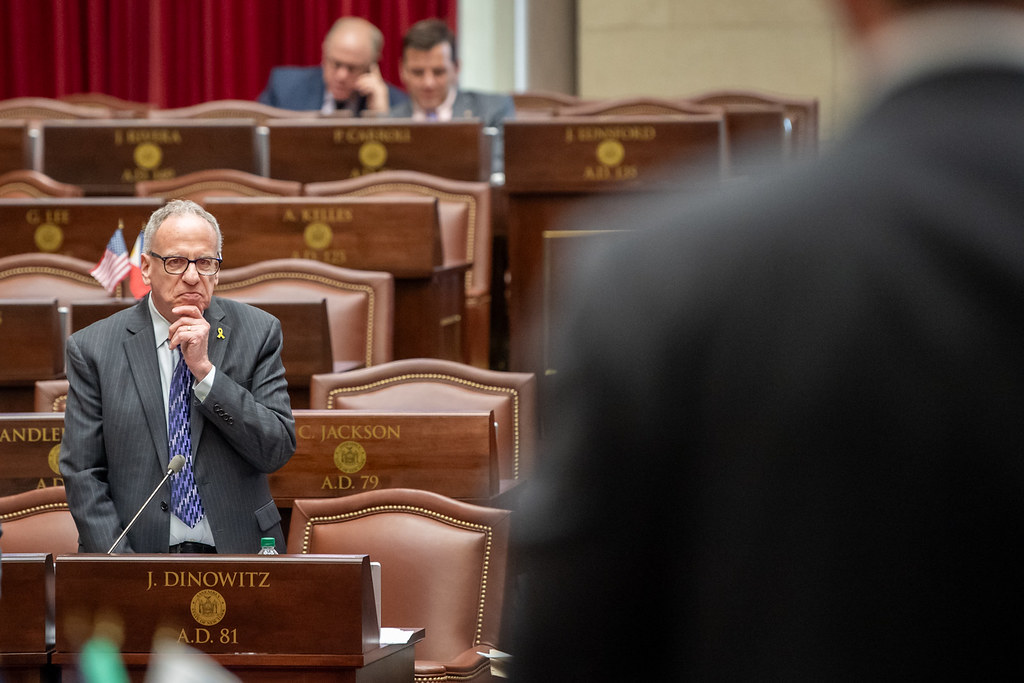
‘BIG UGLY’ VOTE: The Legislature spent the better part of today plowing through votes on the budget’s “big ugly” bill, which contains most of the hot-button issues in this year’s spending plan.
“This bill has some really good stuff in it and some really bad stuff,” said Assemblymember Jeff Dinowitz, who cited Tier VI pension plan changes when speaking about his “yes” vote. “I look forward to seeing the positive impact it’s going to have on many, many state workers.”
That was the common theme that emerged among Democratic during today’s debate — they hate the rollbacks to the climate law, but they’re also supportive of the inclusion of what Republican Assemblymember Michael Fitzpatrick dubbed “the mother of all pension sweeteners” that they reluctantly voted yes. That line of reasoning appeared especially common from members who, like Dinowitz, have Democratic primaries in four weeks and stand to face attacks for being weak on the environment.
“This is not an easy vote for me,” said Assemblymember Grace Lee, who’s running for an open Senate seat and wound up backing the bill because of Tier VI.
“I am voting yes because I refuse to deny hardworking union members and retirees the retirement security they have worked years to achieve,” Assemblymember Jessica Gonzalez-Rojas said.
Gonzalez-Rojas also took time to slam the climate law changes.
“Communities like Jackson Heights, Corona, East Elmhurst, Elmhurst, LeFrak City have already experienced the consequences of environmental injustice,” she said. “Climate change is not theoretical for our communities. It is personal.”
That might be another indication of just how much budget season has blended into primary season. Not all of those neighborhoods fall within Gonzalez-Rojas’ district — but they’re a perfect description of the Senate district where she’s challenging fellow Democrat Jessica Ramos next month. — Bill Mahoney
FROM CITY HALL

MEANWHILE, IN KNICKS WORLD: Mamdani appeared to indicate today that watch parties will be back outside Madison Square Garden during next month’s NBA finals.
“They will be there,” Mamdani said with a laugh when asked at an unrelated press conference if the partying will resume outside the iconic arena next month when the Knicks play their first NBA finals in nearly three decades.
But a Mamdani spokesperson told Playbook that the mayor wasn’t referring to official watch parties. Rather, the spokesperson said he was talking about how Knicks fans inevitably gather outside the Garden during and after games to celebrate or mourn — oftentimes in rather raucous fashion.
Whether official watch parties — replete with massive screens showing the games — will be back outside the Garden during the finals, the Mamdani spokesperson wouldn’t say, adding that plans are still being finalized.
“It’s not a question of if there will be watch parties but where,” spokesperson Dora Pekec said.
The issue could become a bone of contention for Knicks fans.
Last week, the city pulled MSG’s permit to hold its usual large-scale parties outside the arena during Knicks games due to concerns from the NYPD about public drinking and other debauchery. During one of the Knicks’ Eastern Conference Finals games against the Cleveland Cavaliers last week, six people were arrested in connection with the outdoor watch party.
The NYPD’s decision to put the kibosh on the parties may infuriate Knicks fans who are ecstatic about their team making it to the NBA finals for the first time since 1999. Mamdani, an avid Knicks fan, is already facing tension with NYPD Commissioner Jessica Tisch over how to police this summer’s World Cup, as previously reported by POLITICO, and an MSG dispute could drive a further wedge.
With the outdoor party permit scrapped, MSG hosted a watch party at Radio City Music Hall for the Knicks’ clincher against the Cavs last night.
No matter what, Mamdani said at today’s press conference that Knicks fans will be able to cheer on their team at a variety of watch parties across the city during next month’s finals.
“We’re looking forward to making sure that it is a time for New Yorkers to celebrate, it’s a time that they’re also safe,” he said. “We’re going to have a number of different kinds of watch parties, and we’ll get back to you as we keep going through those plans.”
The Knicks will face either the San Antonio Spurs or Oklahoma City Thunder in the finals next month. The first game in the series is set for June 3. — Chris Sommerfeldt
FROM THE CAMPAIGN TRAIL
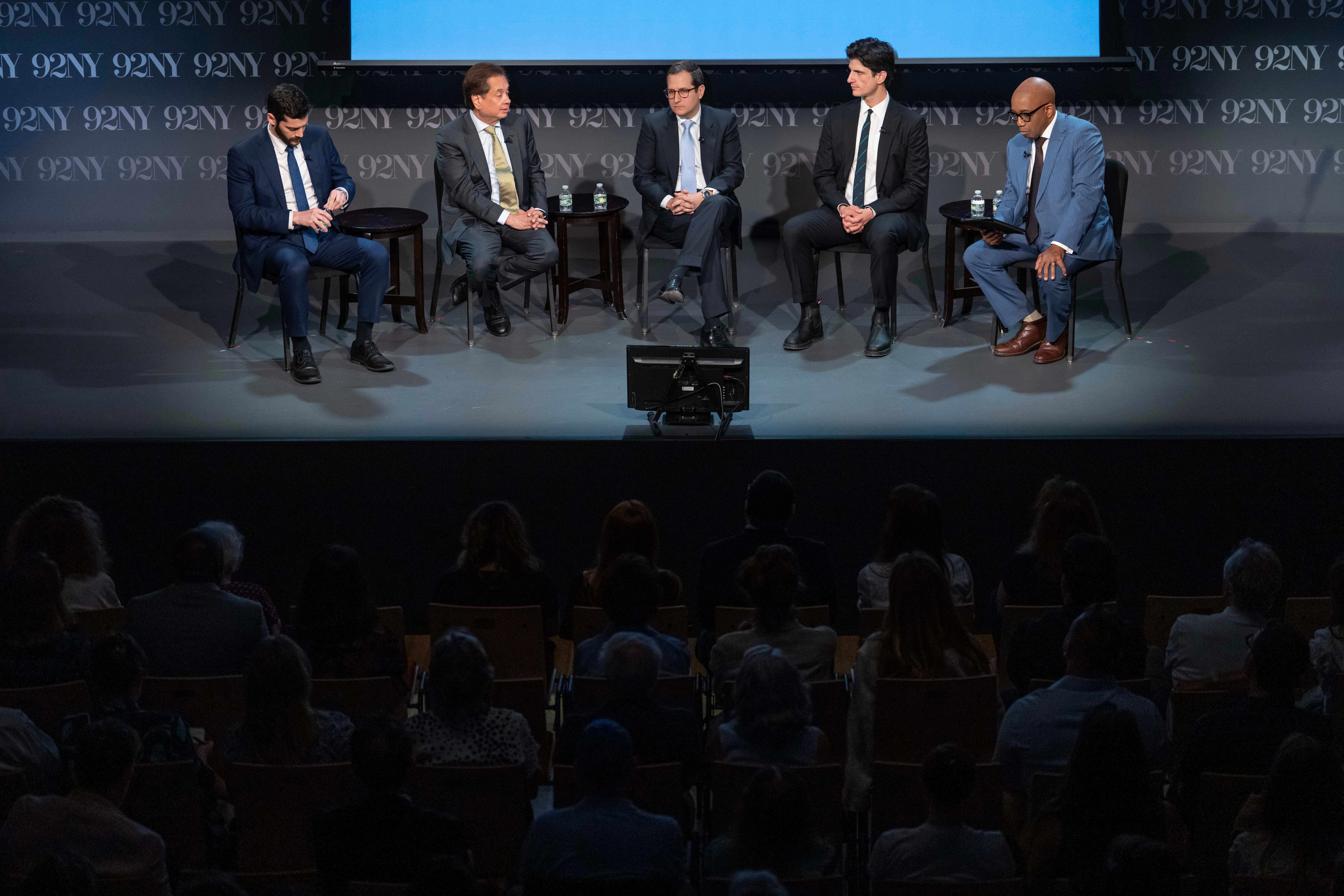
DEBATE-A-PALOOZA: Got plans in June? How about a congressional primary debate — or six?
After forums galore across the city’s competitive primaries, a slew of televised debates are on the books ahead of the June 23 election: two each for the races to replace retiring Reps. Nydia Velázquez and Jerry Nadler, and another two for Rep. Dan Goldman’s primary challenge from former City Comptroller Brad Lander.
All debates will be live at 7 p.m., with the exception of the first NY-07 debate on June 3, which will be prerecorded earlier that day and air at 7 p.m. Here’s when to block off your schedule:
— June 1: Goldman and Lander will be facing off for their first televised debate, hosted by Spectrum News NY1. NY1’s Errol Louis and Courtney Gross will moderate the program.
Goldman’s campaign has frequently criticized Lander for not agreeing to partake in seven debates.
— June 3: State Assemblymember Claire Valdez, Brooklyn Borough President Antonio Reynoso and City Council member Julie Won will take the stage as they vie for Velázquez’s seat. The debate will be hosted by NY1 and moderated by Louis and Gross. Public defender Vichal Kumar is also on the ballot, though he did not qualify for the debate.
— June 4: The four leading candidates looking to succeed Nadler will meet in a PIX11 debate: state Assemblymembers Micah Lasher and Alex Bores, Kennedy scion Jack Schlossberg and anti-Trump commentator George Conway. It will be moderated by Dan Mannarino.
— June 9: Another NY-12 debate will be hosted by NY1 and WNYC. Louis and WNYC’s Brian Lehrer and Brigid Bergin will moderate. This debate is set to feature Bores, Conway, Lasher, Schlossberg and public health practitioner Nina Schwalbe.
Schwalbe, a progressive candidate who has struggled to break through in the crowded field, has frequently criticized media coverage and events for not including her. A handful of other lesser-known candidates are also on the ballot next month.
— June 10: Valdez, Reynoso and Won will partake in a PIX11 debate, with Mannarino moderating.
— June 15: PIX11 will host Goldman and Lander for another showdown, moderated by Mannarino.
Early voting starts June 13. — Madison Fernandez
MUM-DANI: Mamdani is noncommittal about getting involved in the competitive race in what is now his home district.
When asked by PIX11’s Henry Rosoff who he’s voting for in the Democratic primary to succeed Nadler, Gracie Mansion’s newest resident laughed and said he hadn’t made a decision but is “following the race as a keen constituent.”
“At this time, I would say that I’ve focused on the two decisions I’ve made thus far,” Mamdani continued, referring to his endorsements for Lander and Valdez.
Bores recently said he would “love” to have Mamdani’s backing. Lasher, meanwhile, is getting campaign help from political strategist Morris Katz, an architect of Mamdani’s win last year. A recent Emerson College/PIX11 poll found that Mamdani has a strong approval rating, at 66 percent, among Democratic primary voters in the district. But a Mamdani endorsement could also turn off some Jewish voters — a prominent constituency in the district — who are not fans of the mayor.
“It was a pleasure to serve with both of them in Albany,” Mamdani said of Bores and Lasher. — Madison Fernandez
ENDORSEMENT CORNER: Abundance New York rolled out its voter guide on Tuesday, highlighting candidates in competitive races who the group’s executive director Catherine Vaughan said in a statement are “willing to actually build the things New York needs.”
They include Reynoso and Lander, as well as a dual-endorsement for Bores and Lasher. (The group said that between Bores and Lasher, it “cannot recommend one over the other at this time, but we may revisit as the race continues.”)
The endorsements aren’t exactly all glowing. In the rationale for Reynoso, it states that his “record has not always supported our agenda, but we have decided to take his evolution at face value and to commit to holding him to his word.”
The blurb about Lander acknowledged that the group has “concerns about [his] record and some of his current stances,” including opposing some rezonings during his time on the Council and supporting a ban on what the group described as “investor-owned ‘build-to-rent’ housing.” The guide also states that the group is “dismayed at his demand that Brooklyn Marine Terminal development be delayed; this is a NIMBY stance that seems cynically targeted at Goldman’s leadership on the issue.” Despite that, Abundance New York pointed to Lander’s “record on housing production, transit, and the local land-use machinery in this district” and said it thinks he “would prioritize the built environment issues that we champion more strongly.”
The group is also backing Drew Warshaw — the affordable housing nonprofit executive who’s one of two primary challengers to state Comptroller Tom DiNapoli — along with a handful of candidates in the state Legislature and City Council member Carl Wilson. — Madison Fernandez
IN OTHER NEWS
— THINGS GO SOUTH: Mamdani-backed congressional candidate Claire Valdez, who has called to abolish ICE, is facing scrutiny over her father’s work for a firm involved in Texas border projects. (New York Post)
— WHAT’S IN A NAME: Internal renderings for the Penn Station overhaul project show a presidential seal featuring Donald Trump’s name alongside a redesigned train hall. (Gothamist)
— ACROSS THE AISLE: Brooklyn’s Park Slope Food Co-op is split over a looming vote to boycott Israeli products from the socially conscious grocery store. (The New York Times)
Missed this morning’s New York Playbook? We forgive you. Read it here.


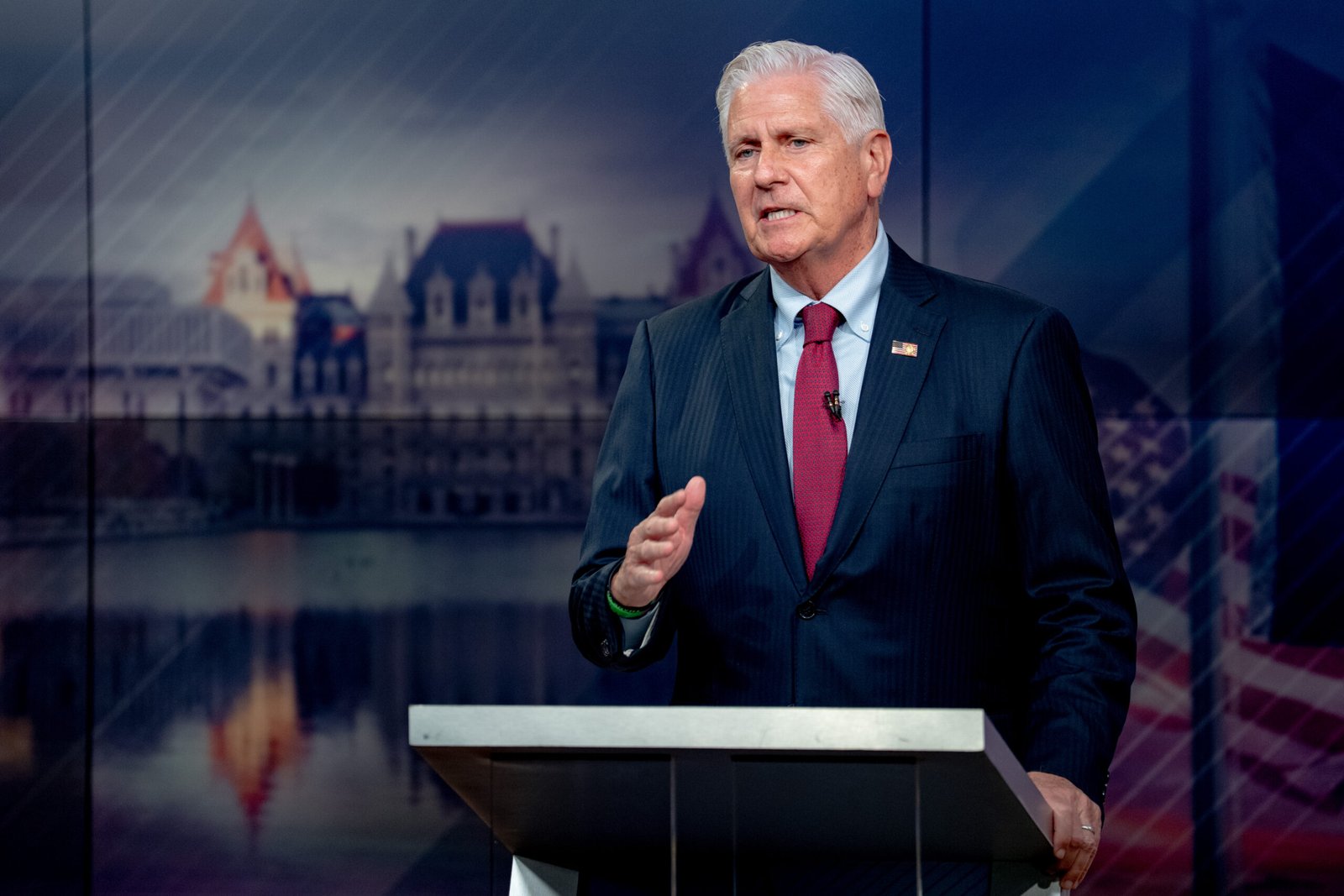
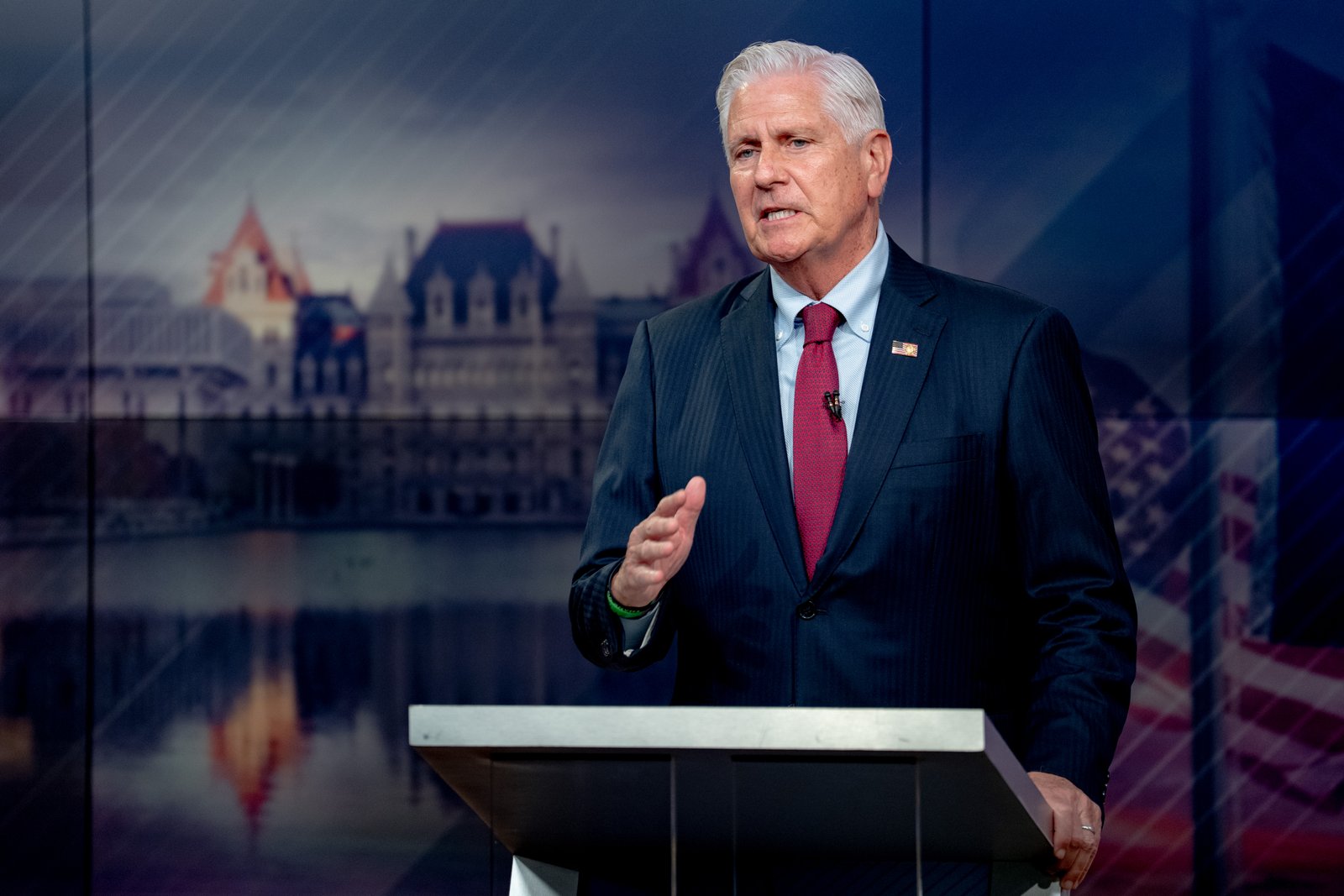
BLAKEMAN’S (LACK OF) ENERGY PLAN: GOP gubernatorial candidate Bruce Blakeman continued to hammer Gov. Kathy Hochul on rising energy costs today, promising to slash utility bills in half if he’s elected.
The Republican, however, still has not offered up a policy proposal on how he’d go about doing that.
“Kathy Hochul increased our utility rates 48 times in four years,” Blakeman said in upper Manhattan this morning.
The Washington Heights press conference, which included former Gov. George Pataki, was heavy on rhetoric and relatively light on details. Afterward, Blakeman’s campaign would not spell out how exactly he plans to cut consumer utility costs and did not respond to a request for clarification about his claim that Hochul increased utility rates 48 times. (While the state’s Public Service Commission has approved increases in major utility rate cases during Hochul’s tenure, those hikes have been less than what the utilities requested.)
“Donald Trump’s puppet, Bruce Blakeman … wants data centers raising your costs and said Trump was doing an ‘amazing job’ after he jacked up utility bills.” Hochul campaign spokesperson Sarafina Chitika said in a statement. “Two weeks from irrelevance, here’s what Blakeman won’t tell you: Governor Kathy Hochul delivered a billion dollars in energy relief, ten billion in tax relief, and made data centers pay for the energy they use.”
The Nassau County executive described meeting the owner of a Bronx diner who told him the business would need to sell 1,000 burgers a month to pay its $16,000 utility bill. Blakeman said he would legalize fracking to help New Yorkers lower their energy bills fast.
Aside from the fact that fracking doesn’t necessarily lead to lower utility bills and the reality that Blakeman would need buy-in from the state’s Democratic-dominated Legislature to do so, he insists that legalizing fracking could offer near-term relief from high energy costs.
“I met with those same individuals and companies that are doing the extraction of natural gas in Pennsylvania. They told me they can be up and running in 60 days,” Blakeman said. “If Albany has the will to reduce people’s utility bills … we can get it done in 60 days.”
He pointed to Pennsylvania, arguing that the state has lower electric bills because it allows fracking. But he neglected to mention that Pennsylvania is not part of the Regional Greenhouse Gas Initiative — the carbon trading program of 11 eastern states, which Blakeman has pledged to withdraw from if he is elected.
Pataki, the last Republican to serve as governor in the Empire State, spearheaded the creation of that initiative, which is commonly known as RGGI.
“The concept is right, but the way it’s being done in Albany is wrong,” Pataki said at the presser, accusing Albany of using RGGI as a “slush fund.”
Even if New York did withdraw from RGGI, the benefit would amount to a 5% to 6% decrease on an average New York residential household bill, according to an estimate from National Grid — barely making a dent in the 50% Blakeman is promising to slash.
Exactly how the state would cover the rest of his proposed cut remains unclear.
Affordability, though, continues to be a key concern in Washington Heights, a largely Dominican neighborhood that Mayor Zohran Mamdani did well in during his ascent to victory last year.
To drive their message home, the Republicans even attempted to make their pitch in Spanish. Pataki, much more practiced in this than Blakeman, talked about how much he loved the “barrio” when he was governor, describing Blakeman as a leader “muy fuerte.”
“Gracias, hombre grande,” Blakeman exclaimed, before touting what he views as the GOP ticket’s immigrant bonafides — Saritha Komatireddy for attorney general and Joe Hernandez for comptroller.
“Governor, your Spanish is better than my Spanish, and I grew up speaking it,” Hernandez praised Pataki. — Mona Zhang
From the Capitol
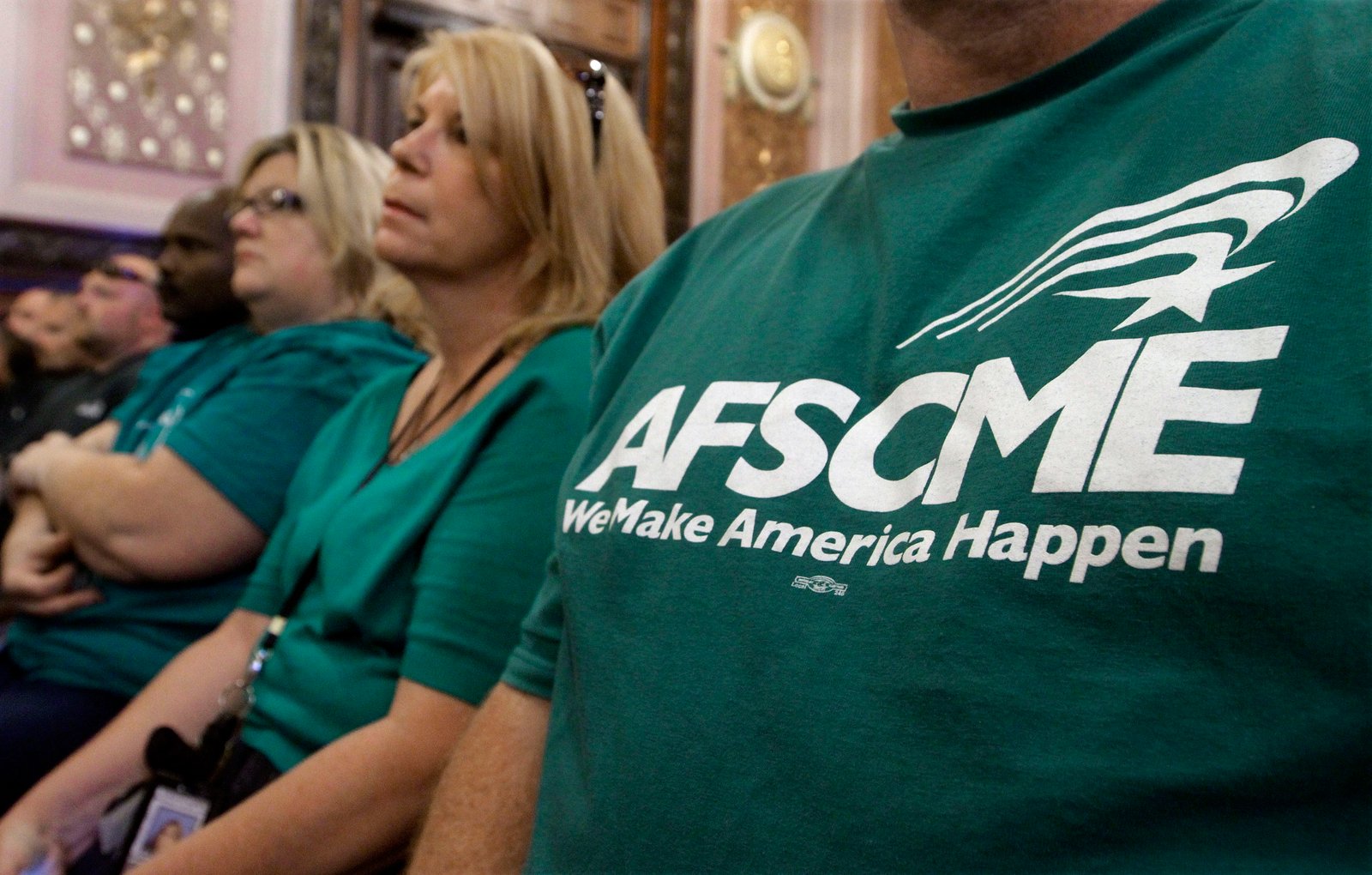
LABOR BOOSTS GOV: A coalition of public employee unions is joining the crowded roster of super PACs spending on the gubernatorial election.
The New York Accountability Coalition has received $550,000 in recent weeks from the Civil Service Employees Association, Public Employees Federation, District Council 37, and CWA District One. It’ll soon spend that money to boost Hochul.
The governor “is laser-focused on lowering costs for working families and investing in public services,” AFSCME’s Courtney Brunelle-Kim said. “Bruce Blakeman is just another pay-to-play politician. From now until Election Day, we’ll be working to ensure that voters in key districts know The Blakeman Record.”
The super PAC spent $460,000 this spring helping Comptroller Tom DiNapoli as he faced two Democratic primary challengers. — Bill Mahoney
FROM THE CAMPAIGN TRAIL
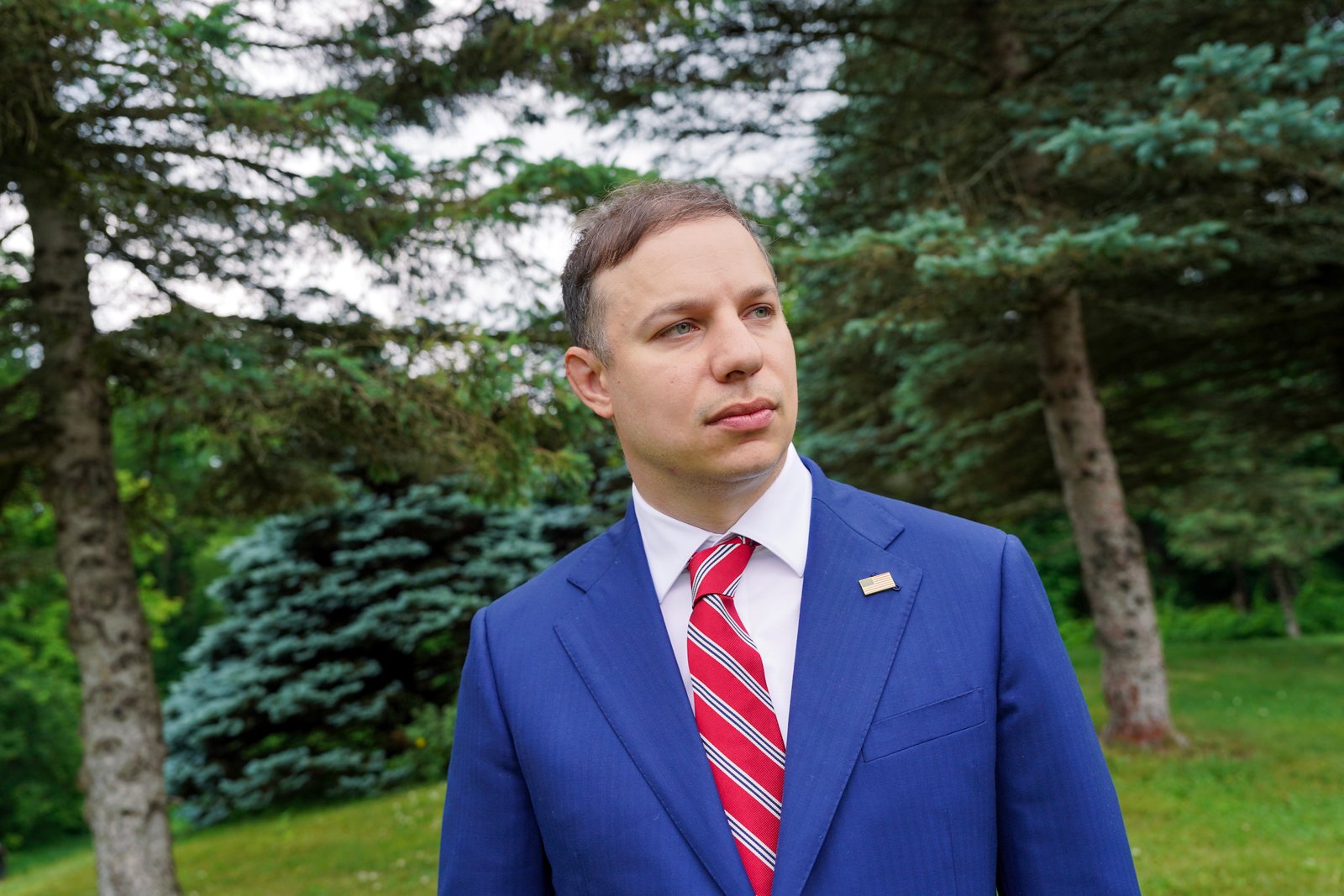
AD PULLED: A clean energy super PAC yanked a version of an ad airing in a competitive upstate House district after Republican candidate Anthony Constantino’s attorney complained the spot was defamatory.
The group Invest In Tomorrow Coalition recently began airing the spot in the sprawling North Country House seat that accused Constantino — who runs a custom sticker business — of selling anti-police merchandise.
“What do Anthony Constantino and violent anti-cop extremists have in common? They both think ‘kill the police’ is a good slogan,” the ad’s narrator says.
Constantino’s attorney last week contacted a lawyer for the super PAC alleging the contents of the ad were false and defamatory. On Saturday, the group signaled it would suspend further distribution of the current ad. So far, the PAC has spent some $243,000 in the district in the last three days, according to AdImpact.
“Anthony Constantino may lawyer up, but he can’t sticker over the truth: he’s gotten rich off selling vile merch, including hosting a listing for a ‘Kill the Police’ sticker and other anti-cop listings that are still active today,” said Chris Coffey, a spokesperson for the group. “As a token of our gratitude and recognition of his desire to spread that message, ITC PAC is putting $250,000 more behind the original ad buy to make sure all of NY-21 knows the real Anthony Constantino.”
The fight over the commercial comes as Constantino is trying to retain the seat being vacated by GOP Rep. Elise Stefanik. Polls have shown Democrat Blake Gendebien running competitively against the Republican, however, giving the race a surprising dose of uncertainty in the final two weeks. — Nick Reisman
HOUSE HUNTING: Two New York battleground districts have again moved in Democrats’ favor, according to a nonpartisan election forecaster.
Sabato’s Crystal Ball shifted Stefanik’s upstate seat from “likely Republican” to “leans Republican” today, as well as Democratic Rep. Laura Gillen’s Long Island district from “leans Democratic” to “likely Democratic.”
The Stefanik seat covers a sprawling, deep-red area — though Democrats are feeling bullish in part because of the Trump administration’s tariffs impacting farmers there.
Gillen faces a challenge from Hempstead Receiver of Taxes Jeanine Driscoll. Kamala Harris narrowly won that district in 2024, but Republicans are counting on tailwinds from Blakeman, the Nassau County executive, to boost down-ballot candidates. — Madison Fernandez
IN OTHER NEWS
— REAL ESTATE STRIKES BACK: A new organization called Built For New York hopes to promote the real estate industry’s interests in the wake of a pro-tenant political sweep in New York City. (The New York Times)
— PAC ALERT: A coalition of Jewish Democrats from the Capital Region launched a state-level PAC dedicated to supporting liberal candidates who push back on anti-Jewish and anti-Israel forces. (Jewish Insider)
— BOOZE BUCKS: Lily Fan, chair of the State Liquor Authority and a close Hochul ally, donated $40,000 to a pro-Hochul super PAC that’s run by people who lobby the liquor industry. (New York Focus)
Missed this morning’s New York Playbook? We forgive you. Read it here.
Republicans locked in tight races this November are desperately hoping the Trump administration’s last-minute gambit to send farmers $8 billion in taxpayer money will work.
President Donald Trump announced the new round of money, aimed at farmers struggling with high diesel prices, during a Monday rally for at-risk GOP Sen. Roger Marshall in Kansas. The move comes as White House officials have scrambled to address anger in farm states from Republicans. Trump’s decisions to import more foreign beef, his tariff regime and high fuel costs amid the Iran war have riled already strained farmers and ranchers — a key GOP voting bloc.
Farmers won’t know how much money to expect for several more weeks. Even then, if approved, they won’t receive the payments until late November or early December at the earliest, according to three people close to the plans, granted anonymity to share details.
With two weeks to go before the election, the new aid may also arrive too late to convince some voters.
But top Republicans are banking on the announcement to stem GOP bleeding in farm states — especially in the Midwest, where Marshall, GOP Senate nominee Ashley Hinson in Iowa and GOP Senate nominee Mike Rogers in Michigan have been struggling in their election campaigns. In some cases, they’ve broken with Trump publicly on high prices and the war.
“This will go a long way to making sure the folks that feed us have it a bit easier when they most need it,” said Rep. Derrick Van Orden, referring to the farmers in his district. The Republican is locked in a highly competitive race in a rural-heavy stretch in Wisconsin’s 3rd District.
However, the internal USDA taxpayer-funded account Trump is tapping for the payments doesn’t actually have enough money in it right now to make the payments, meaning Congress will have to approve the new funds or the administration will have to take it from another program, according to three Trump officials who were granted anonymity to discuss private conversations.
Marshall — who’s facing a tougher-than-expected reelection campaign in deep-red territory — and Rep. Austin Scott (R-Ga.) were among the Republicans who helped push for the $8 billion, according to the three Trump officials.
Marshall requested the administration allocate money to assist farmers with spiked fuel costs in a letter to Agriculture Secretary Brooke Rollins in September.
“Roger Marshall is the leader who fought for that to happen,” Trump said during the Monday rally.
Spokespeople for Marshall and for Scott did not respond to requests for comment. The White House referred Blue Light News to USDA’s announcement on the money.
USDA spokesperson Harry Fones said in a statement that the aid package is Trump’s “latest action to deliver” for farmers and the department is actively reviewing the data to determine payments.
Trump’s decision also comes after administration officials realized the president’s previous step to make off-road dyed diesel more widely available had limited benefits for farm country over other options, according to two of the Trump officials and another administration official involved in the matter. Top agriculture lobbyists further warned the dyed diesel plan could actually backfire on farmers, because they could still be required to pay taxes on the product — just further down the road.
So, Trump officials settled on the $8 billion tranche of direct money for farmers, given that similar kinds of payments to farmers — dating back during the president’s first trade war in 2018 — have quelled enough farmer and rural voter anger to shore up necessary support for Republicans during election season.
Trump officials and Republican operatives in the Midwest are banking on the money shoring up support again this cycle — especially for GOP voters who are angry but also don’t want to vote for Democrats. Trump heads this Thursday to Iowa — where top Republicans have been worried about internal polling that warned several weeks ago they could lose all three Iowa House races, key Senate races and other once-safe red seats across farm states.
“It’s going to help bring farmers’ votes out,” Sen. Chuck Grassley (R-Iowa) told Blue Light News of Trump’s plan on Tuesday.
“This is some way that the federal government can step in to help farmers for problems that they face through no fault of their own,” he said.
Most Hill Republicans weren’t given a heads-up about Trump’s announcement, including appropriators, and many hadn’t received any details from USDA as of Tuesday morning, according to two people familiar with the conversations who were granted anonymity to share private details.
Top agriculture groups have warned they’d need at least $50 billion in direct aid this fall to make farmers whole following the impacts of tariffs, weather-related disasters and other high costs linked to the Iran war’s chokehold on agricultural supplies. Farm-state Republicans are pushing to add at least $12 billion in direct farm aid payments to a separate year-end legislative package.
Monday’s aid rollout followed a number of other funding announcements made in swing rural districts. The White House doled out a first round of $12 billion in bailout funds earlier this year for growers of top agricultural commodities who were hit hard by Trump’s tariff agenda.
Alongside Republican Senate candidate Mike Collins in Georgia, Rollins announced a $3.3 billion loan to build a power plant last week. Rollins rolled out $180 million in funding for seed research alongside vulnerable Iowa Reps. Zach Nunn and Marianette Miller-Meeks earlier this month.
Trump also said he would approve long-derailed permanent year-round sales of ethanol during the Kansas rally — which would be a critical boon for corn growers across the Midwest. But the move has been long-stalled in Congress.
“With Roger Marshall in the Senate, we will make year-round E15 permanent. But if Adam Hamilton is in, I’m not doing it,” Trump said. “That’s a big deal for Kansas, actually.”
Rachel Shin contributed reporting.
Americans are fed up with data centers and Big Tech, and Republicans are poised to take more of the political blame in the Nov. 3 midterms.
The Blue Light News Poll found last week that Americans were far more likely to associate the GOP with giving tax incentives to tech companies at a time when the public’s concerns about artificial intelligence and data center sprawl are only deepening.
Nearly half of respondents — 47% — called Republicans the party of tech tax breaks, more than double the 21% who said the same for Democrats.
Voters are also far more likely to want candidates who propose stripping away tax incentives for the data centers needed to fuel the AI boom, according to the new poll, conducted by PF Global.
About a fifth of respondents said that ending those tax breaks would be among their most important tax issues in the midterms, while only 1 in 10 wanted to offer new preferences for data centers.
The top tax priorities for voters, according to the poll, are hiking taxes on billionaires and curbing breaks for big companies.
The findings come as lawmakers in both parties have scrambled to respond to the growing voter concerns over AI and data centers — and as Americans increasingly associate Silicon Valley titans with the Republican Party.
But in both Democratic and Republican-led states alike, governors have sought to put new limits on tax incentives that were already approved for data centers.
Sen. Bernie Moreno (R-Ohio) rolled out a proposal last week that would take that a step further by imposing a 100% tax on any state or local incentive offered to AI data centers.
But it’s Democrats who have gone more on the offensive about the issue.
Former Sen. Sherrod Brown, for instance, has made data center incentives a key issue as he tries to unseat Sen. Jon Husted (R-Ohio), a former state lawmaker and lieutenant governor.
“Jon Husted’s ‘deals’ gave wealthy tech companies a windfall and left Ohioans footing the bill,” Brown recently posted on social media.
Democrats have specifically homed in on Meta, which has cut its tax liability in recent years by billions of dollars as it builds out its AI products. And they have sought to tie expanded tax breaks approved by Republicans in last year’s megabill to the increase in data center construction.
The GOP enacted incentives for companies in a broad array of industries as part of the 2025 tax cuts. But Big Tech has found those tax breaks particularly useful, helping to drive a big decrease in corporate tax payments as AI spending keeps trending upward.
Meanwhile, Democrats with 2028 ambitions have floated new taxes on AI companies, while Democratic lawmakers have teed up legislation that would keep data centers from taking advantage of incentives like Opportunity Zones and bonus depreciation, both of which Republicans expanded in 2025.
In fact, Sen. Jon Ossoff (D-Ga.) recently gave last year’s megabill another new name in a recent debate with his opponent, Rep. Mike Collins (R-Ga.).
“I want to know if you will commit to voting to repeal that data center tax scam that you voted for,” Ossoff said.
It’s not clear how much the current anti-AI energy will lead to new legislative limits in the coming months. But the new poll found Americans have a real fear of the unknown with artificial intelligence.
A majority of respondents said that tech chief executives had been secretive about the potential risks of AI, while a plurality of Americans believe both that the risks of artificial intelligence development outweigh the benefits and that the government should strictly regulate the emerging technology.
- NRSC takes on $20M in loans
- Blakeman’s uptown fracking fiesta
- FEMA chief tells states to prepare to handle disasters on their own
- Trump is promising farmers $8B. Republicans are praying it will save their campaigns.
- Senate Democrats start spending in Mississippi
- Poll: Voters see Republicans as the party of Big Tech tax breaks
- Two Dans, four choices, one big headache for GOP in Alaska Senate race
- Democrats’ Musk-ask questions
- DCCC launches ads against Mike Turner in red Ohio district
- Capitol agenda: Dem gavels are coming for Elon Musk
-

 Politics2 years ago
Former ‘Squad’ members launching ‘Bowman and Bush’ YouTube show
-
Uncategorized2 years ago
Bob Good to step down as Freedom Caucus chair this week
-

 The Josh Fourrier Show2 years ago
DOOMSDAY: Trump won, now what?
-

 The Dictatorship2 years ago
Pete Hegseth’s tenure at the Pentagon goes from bad to worse
-

 Politics2 years ago
Former Kentucky AG Daniel Cameron launches Senate bid
-

 The Dictatorship2 years ago
Luigi Mangione acknowledges public support in first official statement since arrest
-

 Politics2 years ago
Blue Light News’s Editorial Director Ryan Hutchins speaks at Blue Light News’s 2025 Governors Summit
-
 Politics1 year ago
John Legend advises Trump to drop the ‘dictator s‑‑‑’ if he wants Nobel Peace Prize