
Politics
Maine Democrats grapple with who is best to take over Graham Platner’s movement

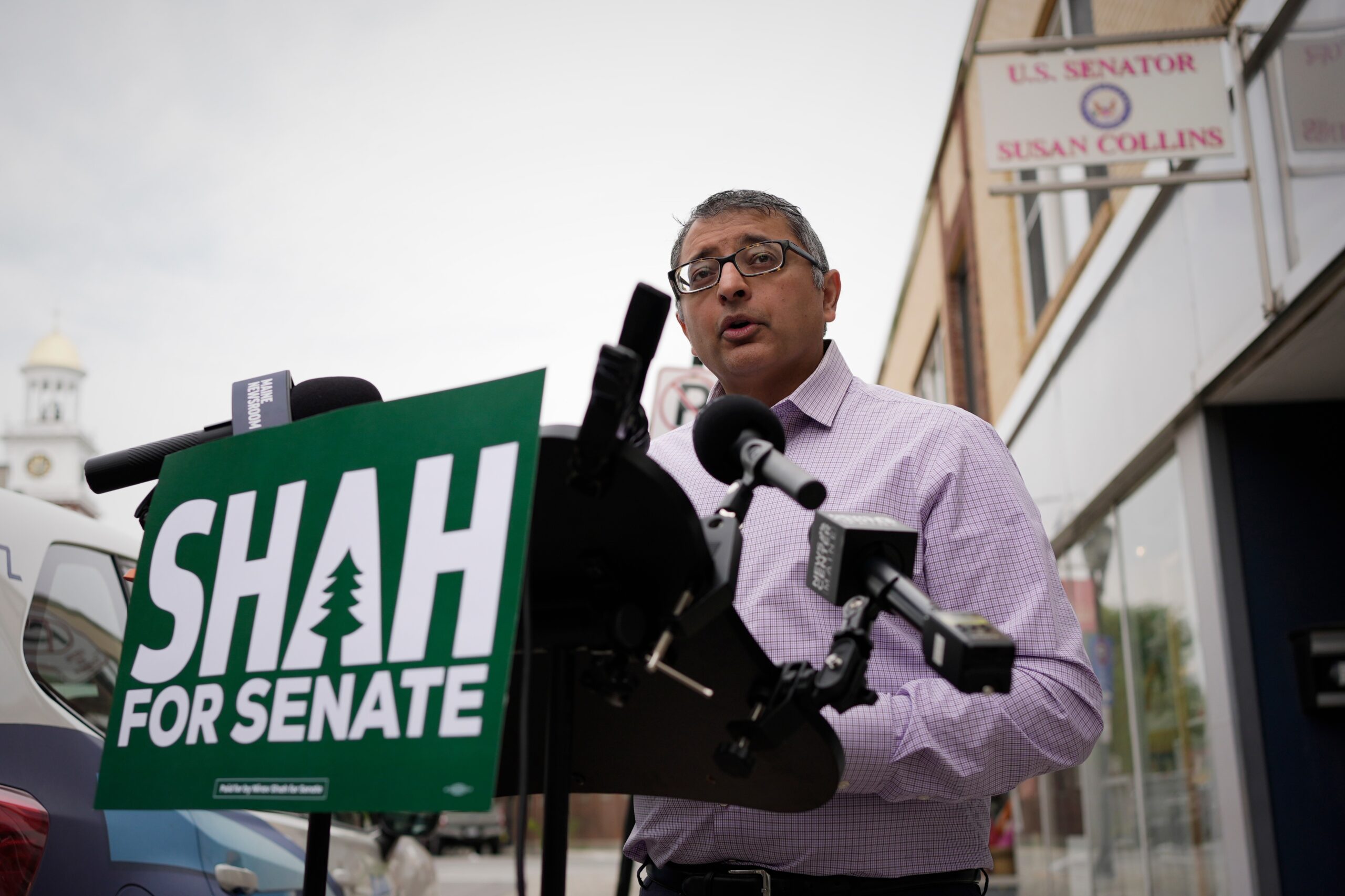
Maine Democrats want to hold onto Graham Platner’s progressive base — but they can’t agree on who is best positioned to carry the torch.
That indecision is creating a fractured field heading into an unpredictable late July nominating convention for one of the most important Senate races on the 2026 map. Now, various candidates are rushing to prove they are the most aligned with Platner’s policies, without tying themselves too closely to the disgraced oysterman.
Labor organizations and the national progressive organizing group Our Revolution are backing former Maine Senate President Troy Jackson, who campaigned with Platner during the primary and got the endorsement of Sen. Bernie Sanders (I-Vt.) for his unsuccessful gubernatorial campaign earlier this year. Rep. Ro Khanna (D-Calif.), a former Platner surrogate, is also behind Jackson, as are dozens of current and former state lawmakers.
But some state legislators and local activists who had backed Platner are flocking to Maine Secretary of State Shenna Bellows, who similarly ran as a progressive in the gubernatorial primary. And former public health official Nirav Shah is touting more progressive policy positions than he did when he ran for governor in an attempt to break off some Platner supporters. Behind the scenes, he is also working to recruit former organizers from Platner’s campaign, according to two people familiar with the strategy and granted anonymity to discuss it.
The trio of former gubernatorial candidates are the leading figures in a crowded field aiming to win over a yet-to-be-selected group of 600 Democratic delegates. Part of that task is convincing Platner’s former supporters that they will carry on the progressive advocacy and fighting spirit that made his candidacy so popular — before he was forced to resign after Blue Light News reported a woman said he had sexually assaulted her. Platner has denied the allegation.
Many of the candidates will make that pitch directly during a debate scheduled for Thursday night. And the stakes couldn’t be higher for national Democrats watching anxiously: Unseating Sen. Susan Collins (R-Maine) is an essential part of the party’s plan to take back control of the Senate this fall.
Platner convincingly won the Democratic Senate primary last month with nearly three quarters of the vote, and had a zealous base of support during the primary. But where his voters and core volunteers go next is unclear.
“People who were vocal supporters of Platner’s have moved to other candidates, and it doesn’t look to me like they moved in a block, that everyone agrees who’s the best next candidate from that movement,” said David Farmer, a Maine Democratic political strategist not involved with the Senate campaign. “And I think that in a truncated process like this, that’s to be expected.”
In just 11 days, Democrats will replace their nominee at a convention in Bangor. This weekend, they will select the delegates who will pick that candidate — a process playing out across all of the state’s 16 counties, with campaigns seeking to recruit and organize delegates who will vote in their favor.
Unions, who were a key Platner booster in his primary against Gov. Janet Mills, have largely gone to Jackson, a logger and longtime union member. The Maine AFL-CIO endorsed Jackson over the weekend, citing his support of workers’ issues in the Maine legislature, along with his track record of winning over rural and working-class voters.

Some of Platner’s biggest supporters in the state House are beginning to coalesce around Bellows, however. That includes state Rep. Valli Geiger, who had been floated by Platner as a potential replacement before she passed on a run. In a Facebook post, Geiger cited Bellows’ track record of standing up to President Donald Trump as secretary of state, along with the fact that she “did not declare as a candidate until after Graham Platner announced he was withdrawing from the race unlike the unseemly rush of so many ambitious men.”
Reached via text, Geiger declined to be interviewed about her support for Bellows.
State Rep. Gary Friedmann, who also previously endorsed Platner, said he is all-in for Bellows. While he agrees with Jackson’s stances and called his association with Sanders and Our Revolution “very compelling,” Friedmann hinted at something Democrats have voiced worry about behind the scenes: That Jackson struggles as a compelling public speaker.
“When it comes to standing up, if there’s a debate with Susan Collins, or the messaging that comes from both candidates, I think Shenna is extremely articulate and compelling,” Friedmann said.
He added: “I think that having a woman to voice that platform is gonna be very important.”
All of the candidates are still figuring out exactly how to capture Platner’s support without tying themselves too closely to him as an individual. A letter circulated by former Platner campaign volunteers that racked up hundreds of signatures as of Tuesday called for the candidate replacing him to adopt a string of progressive commitments on issues including health care, housing and ending “forever wars.” Both Jackson and Bellows signed onto the letter.
During a virtual rally hosted by Our Revolution on Monday, Jackson took time to “acknowledge what everyone on this call has been through” while asking Platner’s supporters to rally behind him, though he never mentioned the oysterman by name.
“I know that there’s real pain, anger, disappointment, and I’m not going to try and to minimize that,” Jackson said. “But look, this movement has always been bigger than one person. It’s about taking on a system rigged against working people.”
Joseph Geevarghese, who runs Our Revolution, called on the movement Platner emboldened to get involved in the delegate process outlined by the Maine Democratic Party.
“This is the perfect opportunity for us to show the establishment that we can organize and win within the system that they created, the Democratic Party process,” he said on the call.
A person close to Bellows, granted anonymity to discuss internal strategy, also acknowledged this dilemma for candidates, calling it “a really delicate dance to walk.”
“It’s not like she’s trying to be Graham Platner or be someone she’s not,” the person said. “She is able to be herself, and I think she, ideologically, is a great bridge for people who were very disheartened by what happened with Platner, but still extremely pissed off about Susan Collins and the Senate majority, and what’s happening in Washington, D.C.”
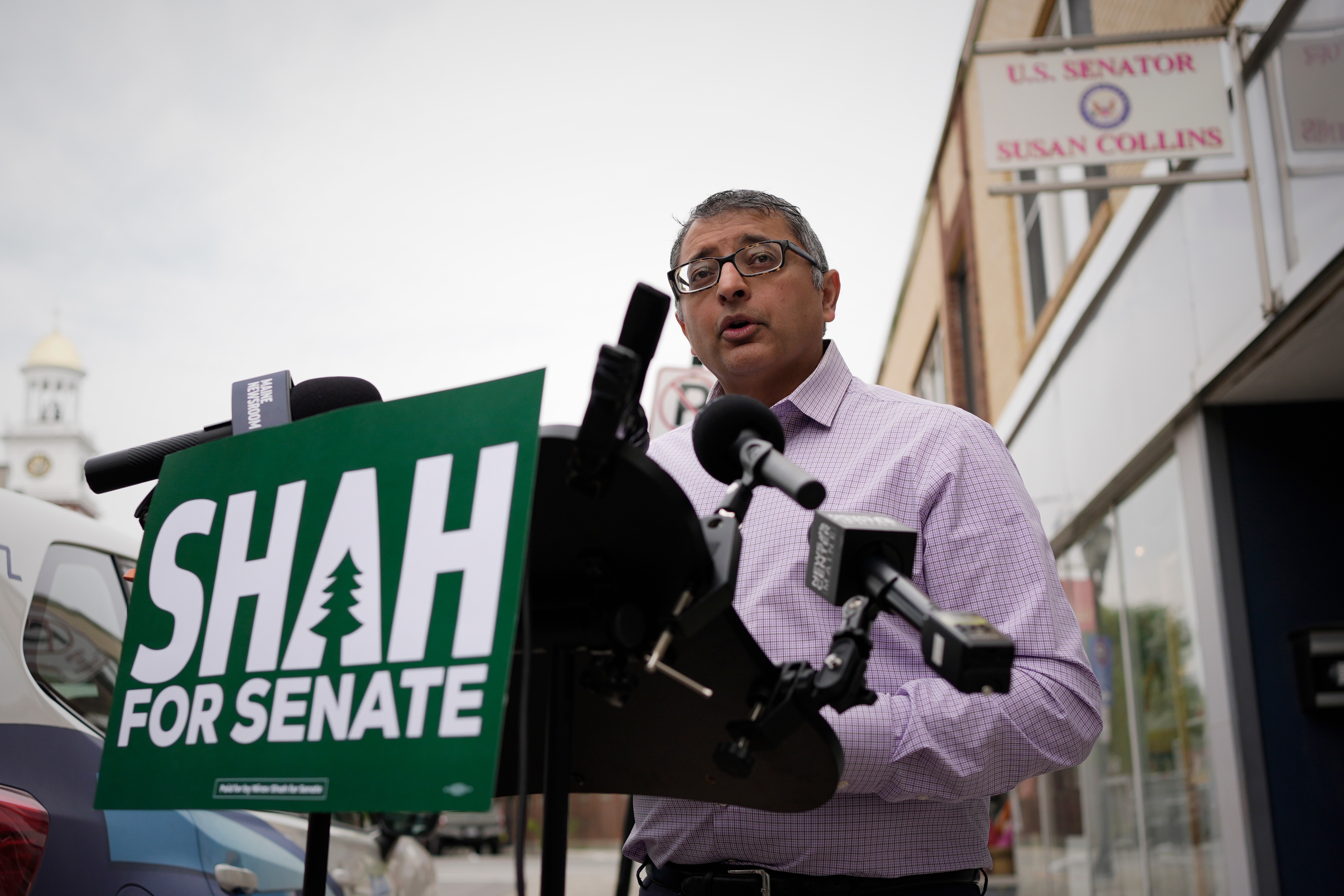
While Shah’s campaign is recruiting former Platner supporters behind the scenes, the former public health official is also making the pitch explicit in public comments.
“I want all former Platner supporters to know: you have a place in this campaign,” Shah wrote on social media shortly after he launched his candidacy last week.
Maine politics was rocked on Monday by ICE agents’ shooting of a 26-year-old man in Biddeford, with potential Senate candidates rallying around getting the federal agency out of Maine. For many Democrats, it was also a reminder of the importance of supporting the party’s eventual nominee, regardless of who it is.
Democratic State Rep. Morgan Rielly, a former supporter of Platner’s, said he told Jackson that he would support him in the primary. But more important, he said, was the goal of defeating Collins this fall.
“[The Democratic nominee] will have my full support and I will be working hard to get them elected,” Rielly said in a text message. “It’s absolutely crucial we are united and Senator Collins loses on election day.”


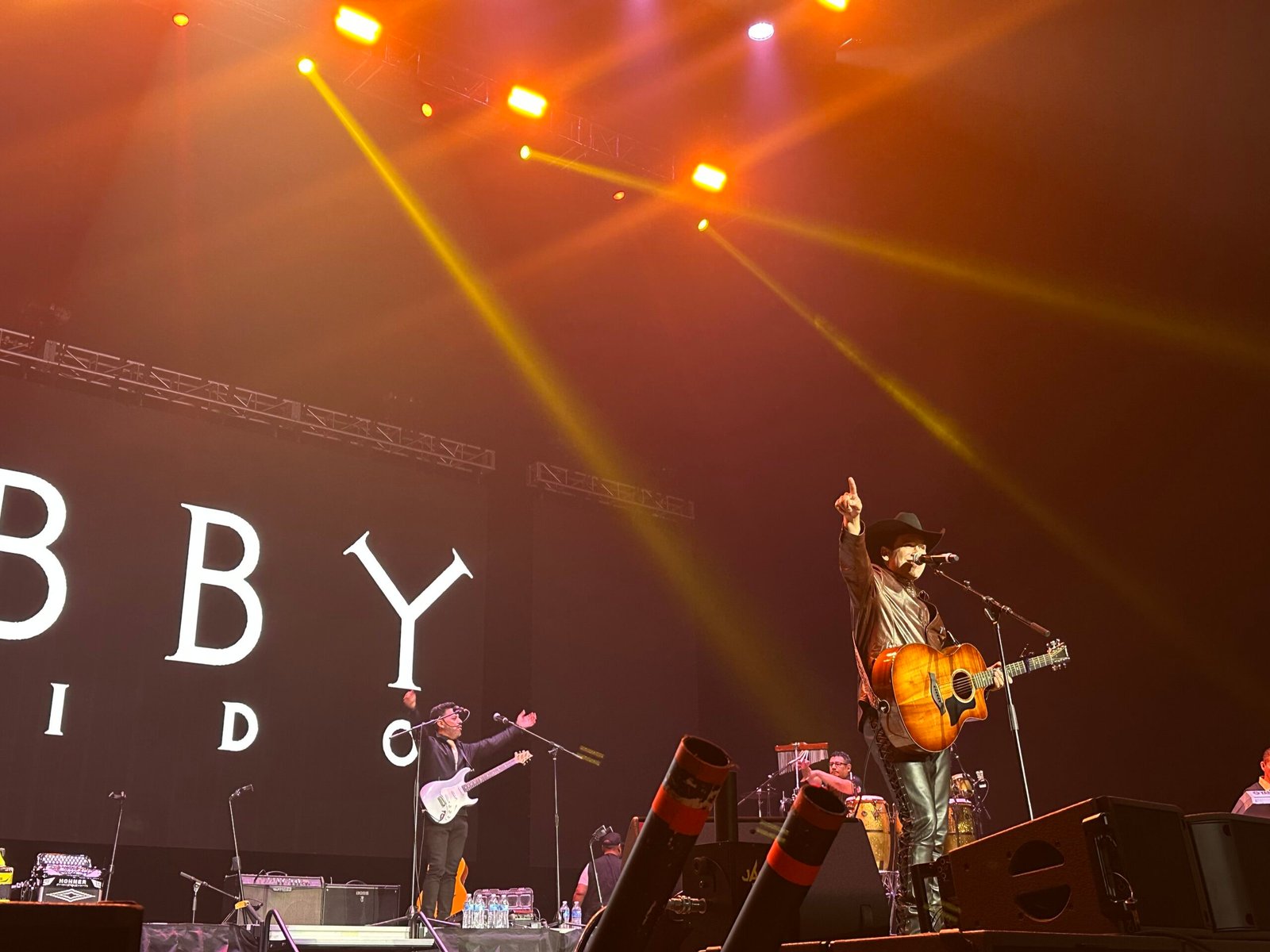
EDINBURG, Texas — A man walks out to a packed arena filled with fervent fans. Nostalgic music blasts out over the speakers as the audience of the spectacle sways and sing along. Firehouse-red campaign hats litter the heads of the devotees jammed in tight to see the show.
But this isn’t a MAGA rally, and that’s not Donald Trump hitting the stage.
On stage is Bobby Pulido, the Tejano star turned Democratic House candidate clad in head-to-toe leather and a black cowboy hat. The occasion? “La Ultima Desvelada,” what he said will be his final concert in Edinburg on Saturday night.
Pulido is trying to flip a district that has steadily, over the past decade, slipped from the grasp of the Democratic Party and became the ultimate swing test for the country’s most culturally conservative Latino voters.
If Pulido wins in Texas’ 15th District against incumbent GOP Rep. Monica De La Cruz, the Democratic Party stands to gain much more than just a seat that could make a House majority. As the party looks to rebuild with Latinos and lay the groundwork for 2028, the Tejano crooner could become a strong messenger to one of Democrats’ weakest voting blocs.
“Mexican-American men haven’t really felt like they have a home,” in either party, Pulido told Blue Light News in an interview. “It almost feels like the Latino man wants to be that provider, and he can’t fulfill that right now.”
Like many Democrats this cycle, Pulido has dialed in on affordability and an aggressive economic messaging slamming Trump’s tariffs, the war with Iran and the growing stream of big corporate money in political campaigns.
But unlike his fellow Democrats, Pulido echoes a social conservatism that has defined the region. He’s “chapado a la antigua,” he told reporters Friday — a Spanish saying for old-school or traditional.
“Those traditions of how [Latino men] were raised are going away, and I think there’s a lot of frustration,” Pulido told Blue Light News. “They want somebody to talk to them in the language of, ‘Let me go out there and work, right? So I can provide for my family.’”
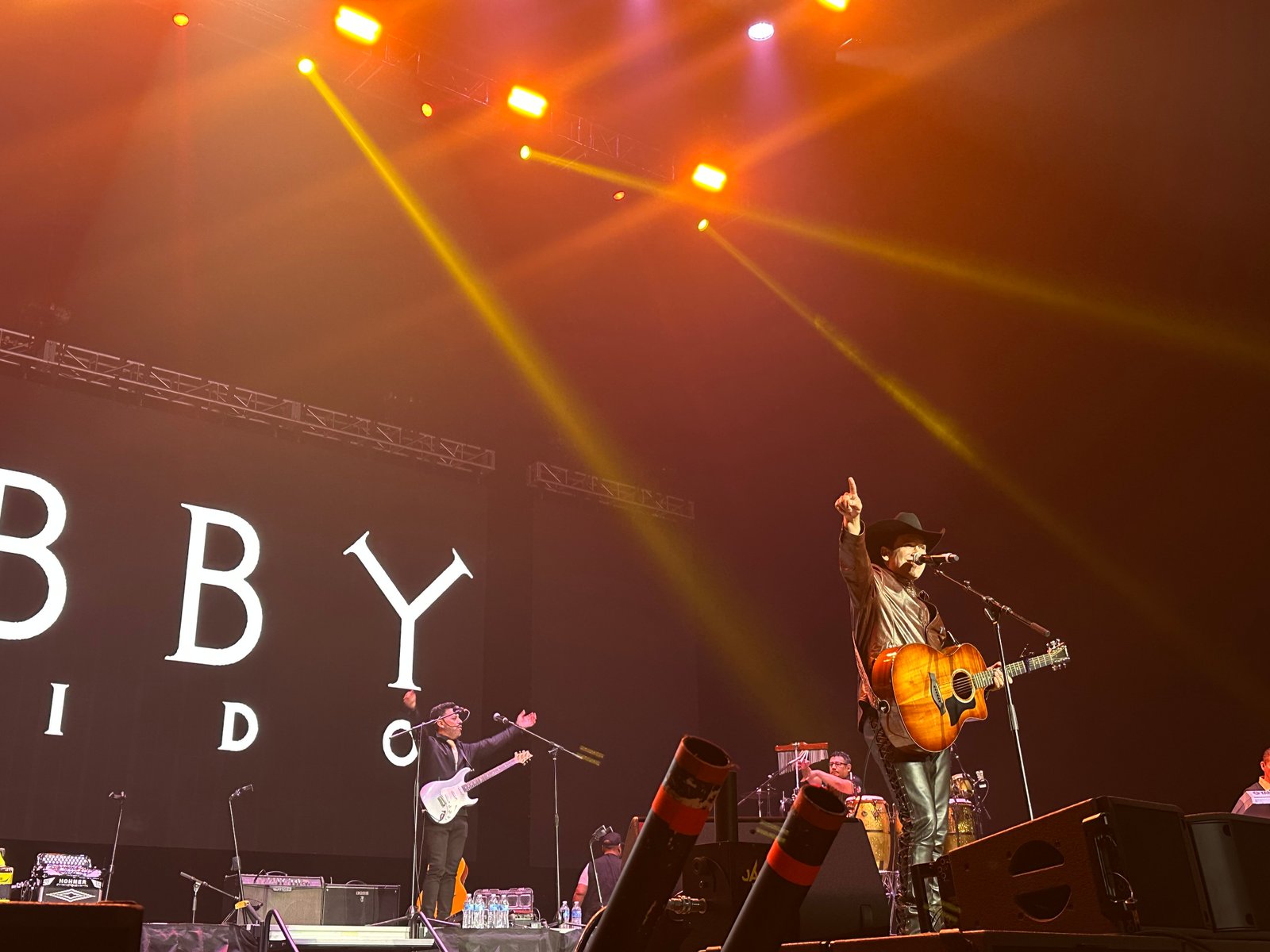
Pulido has tapped into a level of political fervor and cultural star power for which the Democratic Party has been starved. Trump won the district by a staggering 18 points in 2024 — and it was redrawn by Republicans last year. But Pulido’s near-universal name ID as an Edinburg native and music star, combined with historic headwinds buffeting, put the south Texas district on the map as one of the biggest toss-ups this cycle.
With just over two weeks to go, Pulido is in a dead heat against De La Cruz. He’s leaving behind three decades as a musician, multiple Latin Grammys and packed arenas for a shot at representing his hometown in the halls of Congress.
The 956 region knows Pulido and his family to an extent that very few would-be members of Congress could boast. They know his father, Roberto Pulido, also a famous Tejano singer who joined his son onstage. They know his uncle, a former county judge. But beyond that, with billions of streams to his name, Pulido’s 90s hits became a ubiquitous sound for the RGV. And only in the RGV would his supporters trot up to the arena on horseback, coming off the nearby expressway.
That fame, and his deep district ties, made Pulido one of the party’s most prized recruits this cycle. He’s one of the DCCC’s top candidates, with a campaign staffed in part by blue dog organizations like The Bench while also boasting the same Latino consultants as Sen. Ruben Gallego’s (D-Ariz.) 2024 Senate campaign.
And Democrats see the potential for the kind of surrogate Pulido could become on the 2028 campaign trail. Many of the party’s biggest Latino voices — and attention grabbers — are further on the left.
“What we haven’t had is someone like Bobby Pulido, who’s going to come from the moderate wing of the party, that is going to be a rock star,” Gallego told Blue Light News.
Should Pulido head to D.C. next year, he’d be joining alongside a crop of fresh progressive Democrats who have ridden the wave of democratic socialism in blue enclaves — most notably New York’s Darializa Avila Chevalier and Claire Valdez.
“We’re not going to agree on everything,” Pulido conceded. But with Texas primed to get even more electoral votes in future presidential cycles, the party’s direction has to “resonate inside the middle of the heartland,” he said.
But it’s not only electoral numbers: the early Democratic nominating calendar is heavily Latino, with both New Mexico and Nevada in the lineup. Mexican-American men could help tip the scales in either state.
Pulido knows if he pulls off the win, potential 2028 hopefuls will come flocking, asking him how to win over the Rio Grande Valley. Could he see himself backing 2028 presidential candidates if he wins? They’ll have to convince Pulido first.
“I will hold any type of endorsement or anything very close to my chest, and I will definitely make sure that I get behind somebody that has a policy that resonates with Hispanics,” Pulido said.

Since Pulido released his hit single “Desvelado” in the mid-90s to today, his hometown of Edinburg and its sister cities across the area transformed from a once-reliable blue working class district to a part of the country deeply wary of the Democratic establishment. Latino voters have embraced the economic populism of Trump and other GOP candidates who touted their more conservative values. In 2022, De La Cruz clinched the district for Republicans.
By 2024, Democrats lacked an economic message or answers for what many in the area decried as wide-open borders, Pulido told reporters on the sidelines of his rally in Mercedes on Friday.
That’s made the stakes for his races all the bigger, with the RGV becoming the ultimate bellwether.
“Bobby’s politics are different from the way that we have branded ourselves nationally as a party, but I think that’s a good thing,” said Melissa Morales of Somos PAC, which has poured millions into Pulido’s race.
But Pulido’s campaign has been marred by scandal. He’s taken heat for crude social media posts about women and gay people. Frankie Caballero, one of his former bandmates, was convicted as a child sex offender. Pulido insisted he was not aware of Caballero’s history while he was in the band as a contractor, having not done a background check. Caballero was convicted in 2014, but later returned to performing with Pulido.
De La Cruz’s campaign has made Pulido’s ties to Caballero a staple of attacks. “Bobby Pulido had his uncle drop a child rape charge against a friend so he could play in his band. Then he bailed this pedophile out of jail, brought him to a middle school, and looked the other way while he molested children in South Texas. Latinas are choosing Monica De La Cruz, a working mom fighting for their families, over a corrupt scumbag celebrity who will make life more expensive and already put a predator back on the streets because he likes his accordion,” James Shook, De La Cruz’s campaign manager, said in a statement.
Pulido was defensive over his past, but apologized for his social media posts in an interview with Blue Light News. He has given varied responses on what he knew about why Caballero went to prison. “I apologize for everything that I’ve ever joked about that offended anybody,” Pulido told Blue Light News in August. “But I can’t continue to revisit every single one.”

With hundreds flocking to Bert Ogden Arena to witness his final show, Pulido’s popularity has hardly dimmed because of it. Multiple voters in attendance who spoke with Blue Light News said they had heard the allegations about Pulido and his accordionist, but none said that it was affecting their vote.
“It’s unfortunate, but I’m not gonna hold it against Bobby,” said Joe Barrera, a musician from the Pharr-San Juan-Alamo area. Barrera, an independent, added that he’s still undecided between voting for Pulido or De La Cruz — but said he feels “it’s time for a change.”
The economy and immigration dominated the reasons why voters in the crowd pledged their support for the singer. The cost of living has gotten “re pe caro” — super expensive — Frank Trevino, a Democrat from Edinburg, told Blue Light News. He and fellow Edinburg voter Felix Sandoval said they knew Pulido’s mother and remembered Bobby as a kid. “We need to support him, God help him,” Sandoval said.
Pulido’s final show Saturday was the talk of Edinburg, from the hallways of the nearby inns to the post-concert stop at Whataburger. Clocking in at nearly two hours, it served as a greatest hits replay for the last 30 years of his life — and a trip down memory lane for many of the voters who grew up with him. “Of course I’m emotional, but I’m leaving with no regrets,” Pulido said from the stage. Pulido is simultaneously up for yet another Latin Grammy recognition this year.
And for his status as a longtime entertainer, Pulido is not a fan of the comparisons to Trump, who in his words, is “full of shit.” Yet it’s also something his campaign has been (perhaps ironically) leaning into, with “Make Quinceñeras Great Again” hats nodding to what’s become his signature campaign move.
With early voting kicking off on Monday, Pulido sharpened his closing pitch: He’s not for Democrats or Republicans — he’s for his district.
“I want to give something back to the place that’s given me so much,” Pulido said. “And if you give me the honor of representing you in Congress, I give you my word that I’ll never forget where I came from.”
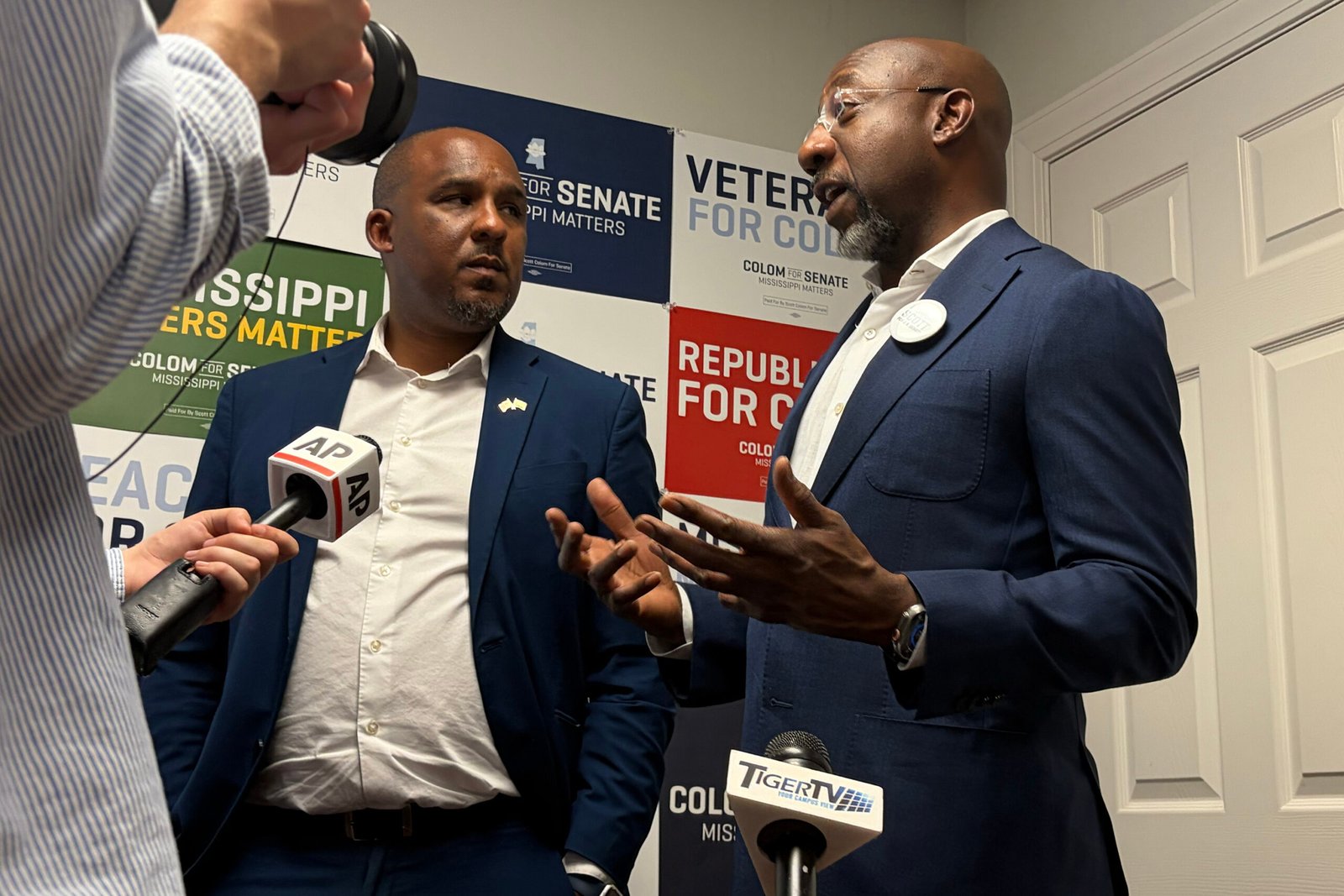
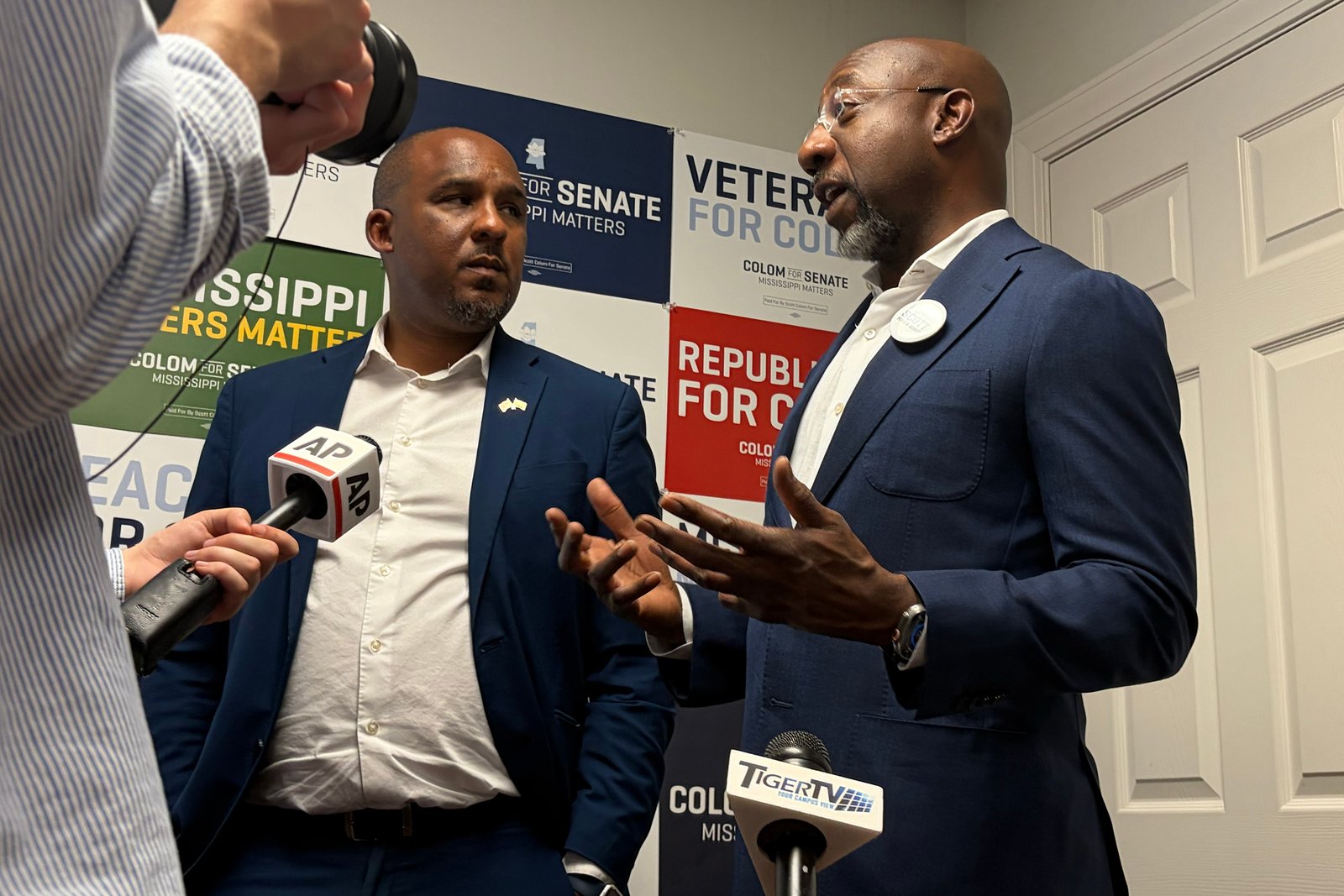
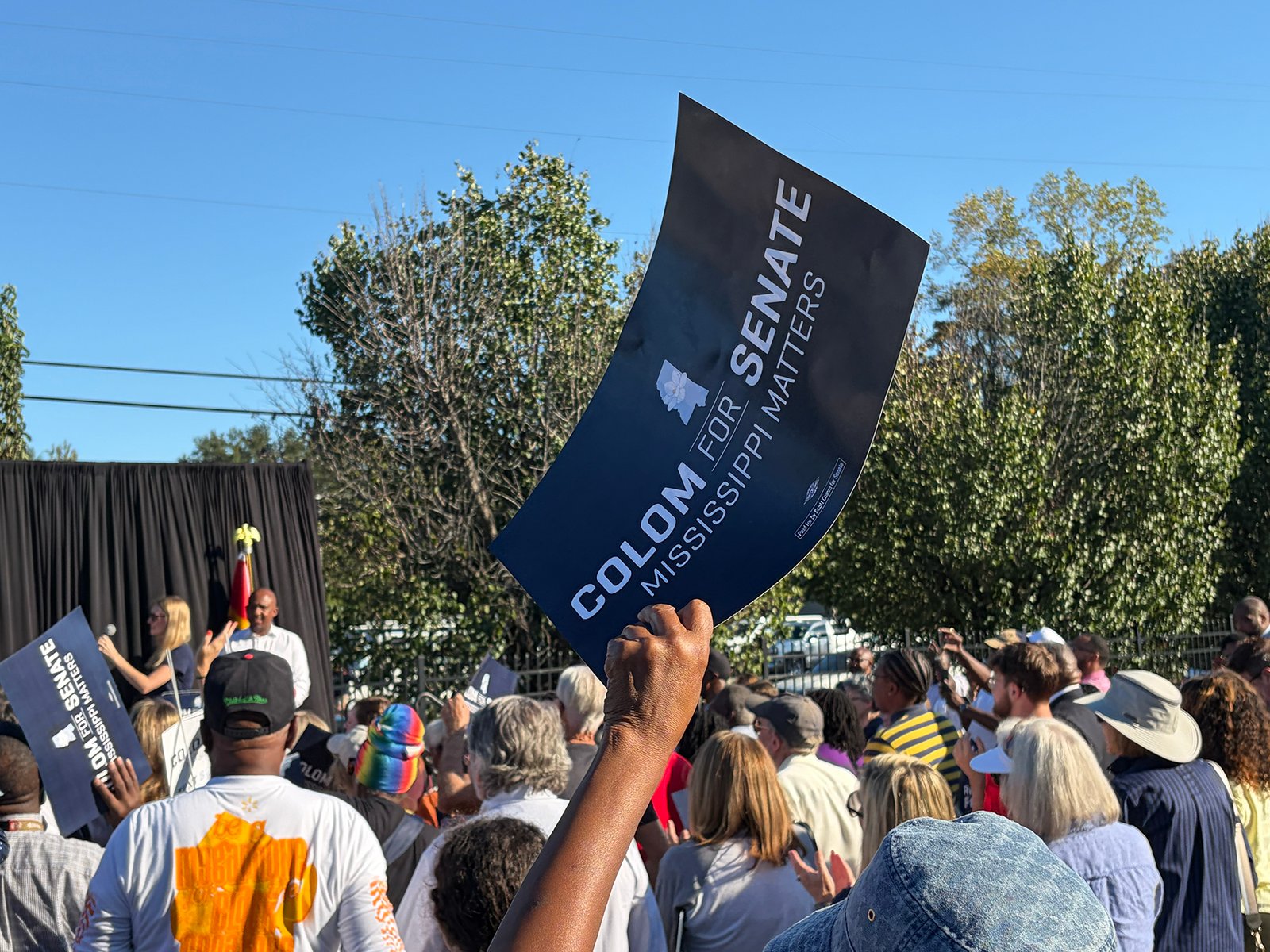
JACKSON, Mississippi — Raphael Warnock is racing to get Democrat Scott Colom elected in deep-red Mississippi. It’s part of his bigger bet on the South.
Colom, a charismatic local prosecutor, is within striking distance in the polls of unseating Republican Sen. Cindy Hyde-Smith. And in the absence of more dedicated resources, Warnock himself is trying to fill the gap by directing money and donors to the race.
He has raised over $500,000 directly into Colom’s campaign committee, according to a person with direct knowledge of his efforts, granted anonymity to share private details. And, over the course of four separate fundraisers, has tried to steer Senate Democrats’ top donors to the race.
In April, he told attendees at a Democratic donor breakfast that he thinks the party is “sleeping on” the Mississippi contest, prompting surprised laughter from the crowd, according to a recording of the event obtained by Blue Light News.
“I’m going to ask you to resist the Democratic tendency to ignore the South,” he told the assembled donors. “And for our own sake, for the sake of us having a possibility of winning over time, I think we can win in Mississippi if the conditions are just right.”
Warnock, who is also widely seen as a potential presidential contender, is trying to capitalize on an incredibly unfavorable midterm environment for the GOP that has put more and more traditionally red states into play. He has been criss-crossing not just Mississippi, but the broader South, to convince Democrats to expand into the region and shore up their support with Black voters ahead of 2028.
The time is ripe, he said, for a “new kind of Southern strategy” — a play off of former President Richard Nixon’s plan for Republicans to best Democrats in the region in the late 1960s that capitalized on white backlash to the civil rights movement.
It’s been a hard sell so far, particularly in Mississippi: Republicans control all levers of state government, and Trump handily won by 24 points in 2024. The last time Mississippians sent a Democrat to the Senate was 1982.
Even though national Democrats speak highly of Colom’s candidacy, their resources to compete on an expanded Senate battleground map are already strained, and money has been prioritized in more expensive, high-profile contests like Iowa, Alaska and Maine. The half-million Warnock has raised for Colom is 15% of the $3.5 million he’s managed to raise over the cycle.
It’s still a strategic move on Warnock’s part: An upset win by Colom would boost the Senator’s own profile as he continues to leave the door open to running for president. And even if Colom loses, the South is a treasure trove of delegates for 2028 — and Black voters dominate the region in Democratic primaries.
Pressed whether he’s interested in the White House himself, Warnock evaded, saying he’s “trying to think and pray about the highest and best use of my skills.”
“I’ve been at crossroads many times, and in the moment, I’ve always known what to do,” he added.
Other Democrats see the work as helpful regardless of what Warnock does in 2028.
“The ’28 chatter is something he will listen to, but I don’t think it’s something that’s part of a checklist he’s marching towards,” said Georgia Democratic strategist Andrew Heaton, who has worked on Warnock’s Senate campaigns. “Regardless of what happens on that front, ’28 is going to be a very busy year because — especially if he decides not to run — I think there’s no question he’s planning on running for the Senate again.”
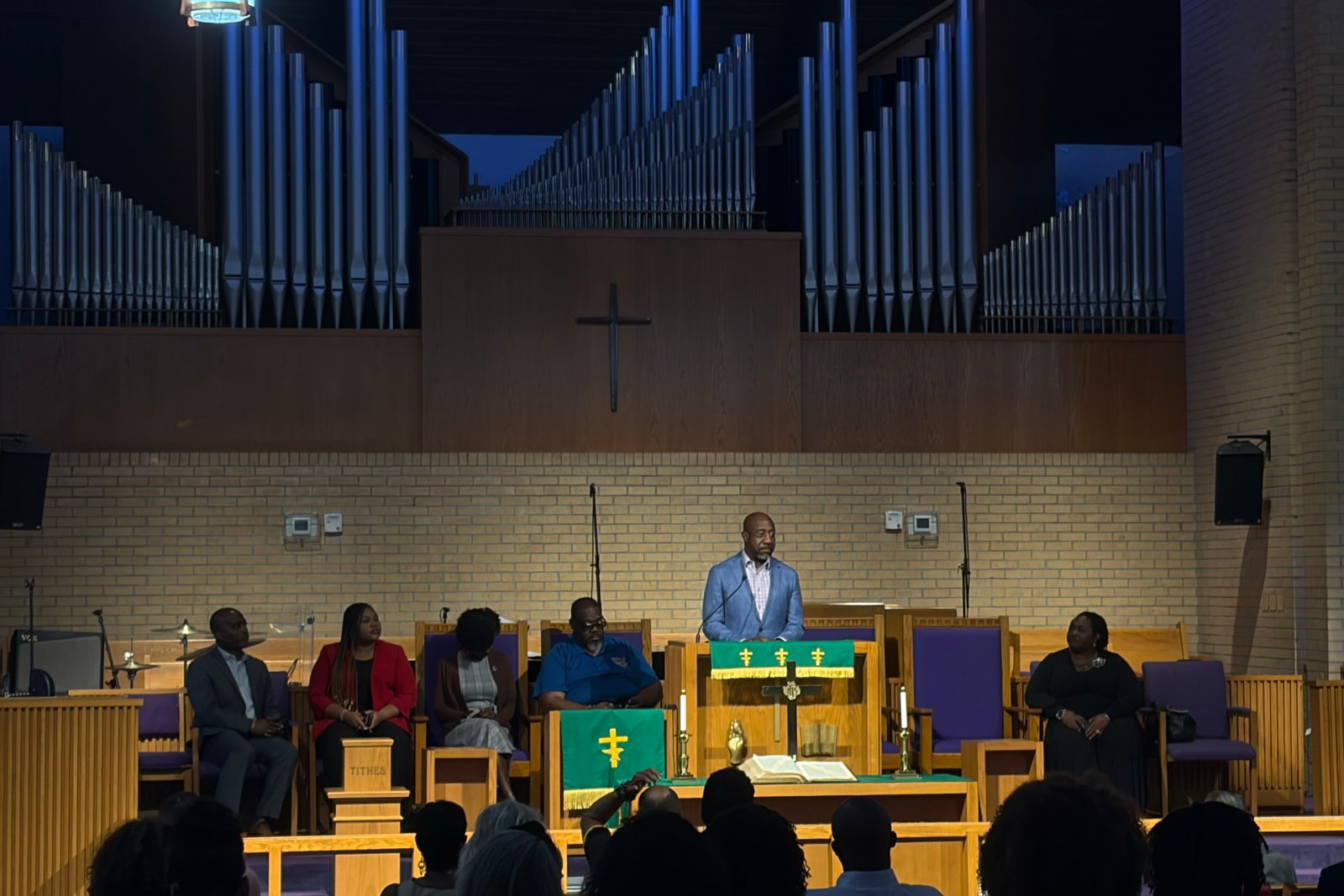
Free from the constraints of reelection this year, Warnock has traveled across the Carolinas, Mississippi and his Georgia home to support local candidates and pitch a vision of his party’s future that runs through the region that launched his political career.
In interviews with Blue Light News on the campaign trail, Warnock drew parallels between Democrats’ 2020 wins in Georgia — his own, Sen. Jon Ossoff’s and former President Joe Biden’s — and the conditions he sees emerging in the Magnolia State for Democratic growth. Those kinds of wins will disappear from the horizon if Democrats fail to invest now and in the Black voters who are core to the party’s coalition, he argued.
Mississippi, where over 35% of the population is Black, would be key to the Democratic Party’s efforts to win back voters of color, as many shifted toward Trump and Republicans in 2024. Strong Democratic candidates have reached around 45% of the vote in the state in recent years, but none have been able to punch through for a victory in Mississippi, which has a long history of extremely polarized voting along racial lines.
But in the wake of the Supreme Court’s decision to gut the Voting Rights Act, there are signs Black voters are surging to the polls in higher numbers — and some Democrats hope that could remake the state’s politics.
“It is in the interest of the party to invest in the base and have the base understand that the party understands that these are loyal Democratic voters, and Black voters want what other voters want,” said Warnock. “They want the same kind of prosperity and opportunity that all families want.”
Colom was more blunt. Asked if he equates ignoring Mississippi and its Senate race to the party ignoring Black voters, he said: “Yeah, of course, 100 percent.”
Democrats have not been averse to flooding money into traditionally red states in the final stretch of the campaign, but Mississippi has not yet made it high on that list, where Colom still faces an uphill battle to close the gap with Hyde-Smith. Building out the statewide grassroots infrastructure that has proved effective in places like Georgia takes time and resources, which have yet to land in Mississippi at a significant scale this cycle.
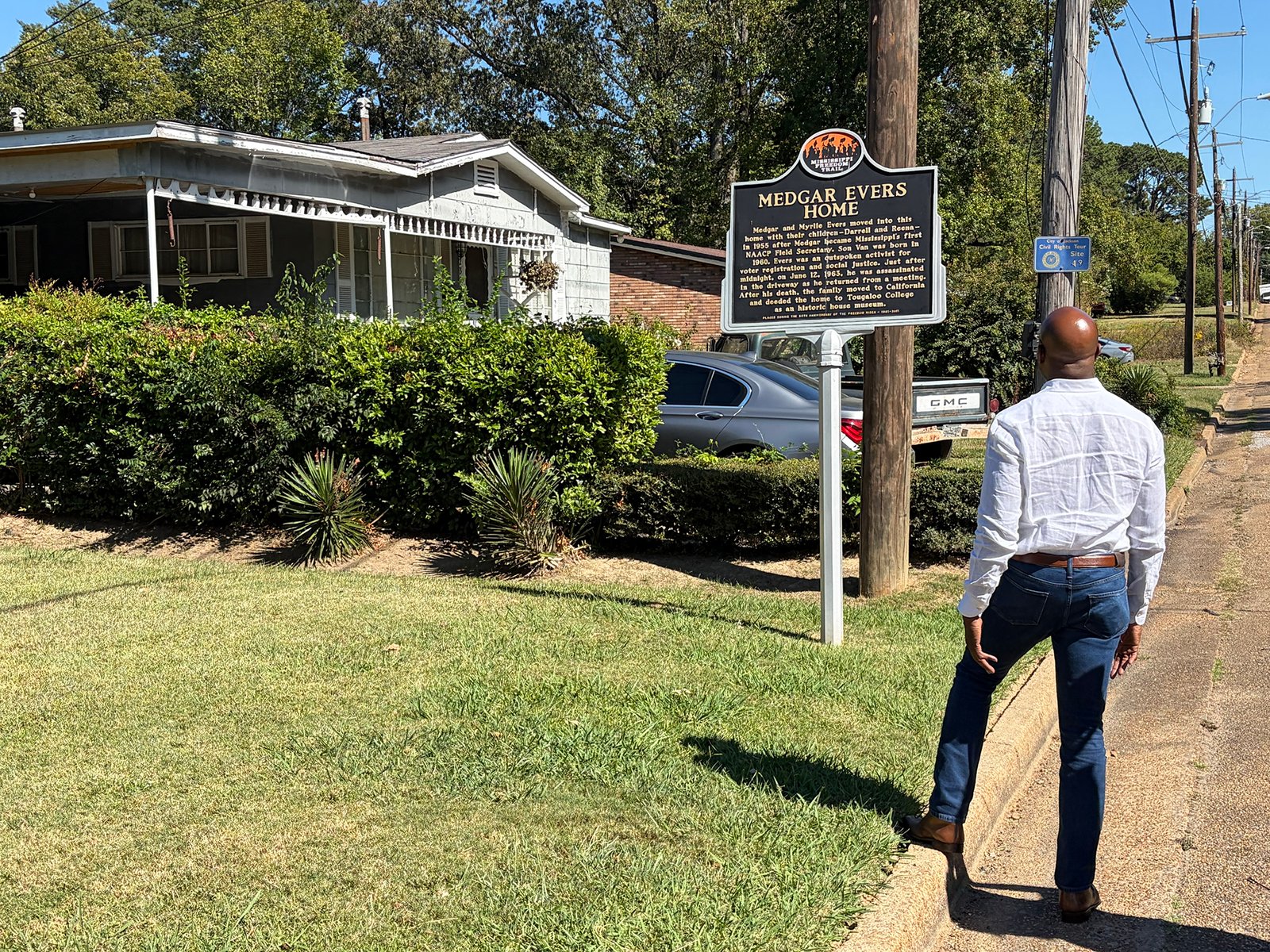
“Democrats are investing in Mississippi, but not enough. And, I think, certainly not as much as I think we should, and not as much as we could,” Warnock said in an interview between campaign stops in the state. He was in somewhat of a rush: between a fundraiser for Colom and an event with local faith leaders, Warnock wanted to visit the home of Medgar Evers, the civil rights era titan who was shot and killed in the car port of his Jackson home in 1963.
“We’re playing enough here to force the other side to compete in Mississippi, and that is an improvement, but it’s not enough,” he said.
Colom himself has begged national Democrats to focus on his race.
“Mississippi has really always been competitive. It just hasn’t got the attention, the resources it deserves,” Colom said in an interview at his campaign headquarters.
Some has come: American Bridge, a Democrat-aligned super PAC, pumped over $2 million into the race earlier this month, and earlier this week the New York Times reported that a single megadonor is set to split $7 million of his personal wealth between Colom’s race and others.
Several top Democrats have made an effort to signal their support.
Former Vice President Kamala Harris and former Secretary of Transportation Pete Buttigieg plan to visit the state before Election Day. Senate Majority Leader Chuck Schumer and his Democratic Senatorial Campaign Committee chair, Kirsten Gillibrand, have each hosted separate fundraisers for Colom, according to a source familiar with the events, granted anonymity to share private details. And Delaware Sen. Lisa Blunt Rochester, a DSCC vice-chair, campaigned with Colom in Mississippi.
Colom’s campaign committee outraised Hyde-Smith’s over the summer, posting $1.3 million to her just over $640,000. But it pales in comparison to the tens of millions that have flooded into other states.
In separate statements, spokespeople for the DSCC and Senate Majority PAC lauded Colom as a strong candidate, but said they were constrained by how much they could spend. Both groups said they were monitoring the race “closely.”
Republicans are still publicly maintaining their confidence in their hold on the seat. Jake Monssen, Hyde-Smith’s campaign manager, tied Colom to Washington Democrats in a statement and said the campaign “planned for Colom to have plenty of resources. We are executing our own campaign plan with that in mind.”
One day after his sojourn in Mississippi, Warnock was presented with a stark contrast in what Democrats are capable of when they devote resources to a Southern state. He was in North Carolina on Thursday, where Democratic Senate nominee Roy Cooper is dominating his Republican opponent, Michael Whatley, in fundraising and polling. As one of Democrats’ top candidate recruits of the cycle, Cooper has attracted significant resources and national attention from the outset of the race.
But Mississippi and North Carolina are two enormously different states, in population, income, and demographics — and that change didn’t happen overnight. Democrats began significantly investing in the state ever since President Barack Obama’s 2008 victory there and ramped up their efforts after the GOP-led state government redrew the state’s congressional maps in 2013.
“It’s taken a lot over the last 13 years,” Rep. Valerie Foushee (D-N.C.) said on the sidelines of a party canvass kickoff in Durham. “Our eye has never been taken off the ball, and because we believe that we could make that change, that we needed to be the change that we wanted to see, we have put that in action now, and we’re going to win because of it.”
GIRDWOOD, Alaska — Dan Sullivan isn’t running away from President Donald Trump like so many other vulnerable Republicans. He’s betting that walking the line instead will help him reap reelection in November.
During a candidate debate, speaking at an economic forum and in an interview with Playbook this week, Sullivan repeatedly denied chances to put distance between himself and Trump’s most unpopular policies and positions.
Has the economic pain from the war with Iran been worth it for Alaskans? “The real economic pain is when Democrats get control,” Sullivan told Blue Light News, sitting in the shadow of a well-antlered taxidermy moose head, next to a roaring fire, at a ski resort tucked up in the mountains off the Turnagain Arm southeast of Anchorage.
What about the $5,000 dividends Trump has promised voters if Republicans hold control of Congress, as he did at a rally for Sullivan in Wasilla on Tuesday? “I’ve got to look at the legislation. I don’t know,” Sullivan said. “That was the first time I heard it from him, and I would just evaluate that if and when it happens.”
Does he want to see data centers — which Trump has pushed for further development despite some pushback from local communities — pop up on Alaska’s undeveloped land? He’s not putting his foot down. “They definitely got to pay their own way in terms of energy,” Sullivan said. “They have to have local input and approval, and we’ll see.”
Still, Sullivan bristled on some issues that touch closer to home.
In light of Trump’s decision to import Russian diesel, did Sullivan think the Trump administration was being too friendly with Russia? “I thought you were asking me campaign stuff,” Sullivan replied. “Is this like a hit piece or what?”
Though his office put out a statement decrying the move, Sullivan didn’t sign a bipartisan letter calling on the president to reverse the decision, instead taking his concerns straight to the White House. “I speak to the administration all the time on the issues of high energy costs,” Sullivan said.
Art Hackney, a veteran Republican strategist in Alaska who runs a pro-Sullivan super PAC called “We Stand with Dan,” said in an interview that another part of the calculus is that Murkowski has provided a straightforward example of how Trump treats Republicans who publicly disagree with him.
“If Dan did something considered a disrespectful trigger or something, what do you think would happen? It could well have implications for things that affect Alaska’s economy.”
But Trump, for better or worse, is a centerpiece of races like Sullivan’s. The president has pleaded with voters at rallies to “pretend I’m on the ballot” — just as he did alongside Sullivan on Tuesday.
And Alaska’s tighter-than-expected Senate race is poised to be a linchpin for deciding which party holds control of the chamber. Alaska, Ohio and Iowa are the races that Trump officials view as increasingly critical to keep their majority, according to three GOP officials familiar with the Trump-aligned super PAC MAGA Inc.’s strategy, granted anonymity to candidly assess the midterms.
Sullivan only sees Trump’s presence as a boon. “I think the rally certainly helps in terms of energizing the base,” Sullivan said.
He’s proud to have the president campaign alongside him, plus Vice President JD Vance, HHS Secretary Robert F. Kennedy Jr. and Sen. Ted Cruz (R-Texas).
“I’m bringing up my people,” Sullivan said. “I’m not afraid of that.”
Polls show Sullivan tied with or trailing former Rep. Mary Peltola, one of Democrats’ top hopes to help flip the Senate. On paper, this contest shouldn’t be close: Peltola lost her House seat after just one term.
“It was Trump plus-13 two years ago, so it is not the position we’d love to be in, but we’re doing what we do to help get him across the finish line,” said Kevin Greene, the state director for Americans for Prosperity-Alaska, which has knocked on tens of thousands of doors for Sullivan.
On one such door-to-door trip with Greene in Anchorage on Thursday morning, voters across approximately a dozen houses were about evenly split between supporting Sullivan or Peltola. Only one agreed to speak on the record to Blue Light News: John Baker, a 67-year-old retiree who said he used to be a Republican but would be supporting Peltola this year.
What happened? “Donald Trump happened,” Baker said. He added that his support for Peltola was 70% because he wanted to see Democrats take the Senate and 30% because he liked her as a candidate.
Peltola, the first Alaska Native to represent the state in Congress, has centered her campaign around “fish, family, and freedom” while capitalizing on voters’ frustrations with the high cost of energy and goods, particularly in remote communities. She has focused on outreach to villages in the Alaskan bush and has largely shied away from national attention, including from the media.
The former congresswoman has some major liabilities that Sullivan often slams. Just two years ago, she lost her reelection bid after only one full term. She has sought to distance herself from the Biden administration, which remains unpopular in the state. She has a reputation for missing meetings and votes. And a New York Times report last month alleged that she created a hostile work environment and regularly used slurs and other offensive language.
Even those close to her campaign, though optimistic, acknowledge it’s still an uphill battle.
“It’s always been long odds,” said John-Henry Heckendorn, a Democratic strategist in Alaska whose firm is supporting Peltola outside of her official campaign. Peltola, he said, would have to do about twice as well as the Democratic Senate challengers in the past four cycles in order to win.
At the debate on Thursday, Peltola said she “prided” herself on being “available to Alaskan press” — though she acknowledged she has “really demurred from national attention, from national outlets.”
After the debate, Blue Light News asked Peltola: “You said you’re accessible to the press. Will you take some questions?” She smiled, then walked away quickly, with an aide saying she had a dinner to attend. “She’s hoping that the Joe Biden bunker mentality will win, and you know, maybe it will,” Sullivan told Blue Light News on Friday. “I don’t think it will. I think Alaskans can see through it.”
Peltola’s campaign declined several interview requests for this story. In an email to Blue Light News, the campaign noted that Sullivan was in the top quarter of most-absent senators, and that Peltola had to miss congressional votes when both her husband and mother died. The email also noted that Peltola helped secure the Willow oil-drilling project and has a record of bucking her fellow Democrats. Peltola has hosted at least 16 events in Alaska this month, the campaign said, and has interviewed with eight news outlets in the past week.
“Dan Sullivan has tripled his wealth in the Senate and voted fourteen times for the war in Iran that is raising costs one everything from gas to groceries, Mary has been talking with Alaskans in every corner of the state about her plan to take on the rigged system in DC, lower costs, and put Alaska first,” Harry Child, a campaign spokesperson, said in a statement to Blue Light News.
Sullivan is leaning on his strong legislative record and support for oil and gas development in the state. He has sought to tie Peltola to Senate Minority Leader Chuck Schumer, Joe Biden and Kamala Harris, and has attributed her massive fundraising edge to “lower-48 liberal millionaires and billionaires who want to turn Alaska into national parks.”
Though he’s largely embracing Trump, there’s still moments of disagreement. But even in those spaces, he’s touting his close ties to the White House and effectiveness as a Washington operator instead of pushing the president away.
Sullivan was opposed to Defense Secretary Pete Hegseth’s plan to livestream the execution of the convicted Fort Hood shooter, and told Blue Light News “there’s probably no senator weighing in more with senior White House and directly with the Secretary of War than me, saying this is not a good idea.” Trump called off the livestream on Thursday.
Trump’s approval rating here, like the country at large, is underwater. The war with Iran has hit Alaska hard, where nearly all goods are imported by plane or barge, with urban gas prices hovering around $5 per gallon and prices in the bush often double that. In a year when Republican voters may be more likely to stay home without Trump on the ballot — Democrats eye an opening.
“We have a golden opportunity with a fantastic candidate on our end and a really mediocre one on theirs,” said Alaska Democratic Party Chair Eric Croft. “I think we’ve been coming that way for a long time, and this is our chance to pump through.”
Trump on Tuesday flew more than eight hours from Washington to Wasilla, home of Sarah Palin and the Iditarod, with Interior Secretary Doug Burgum, Commerce Secretary Howard Lutnick, FCC Chair Brendan Carr and FHFA Administrator Bill Pulte in tow. He announced that Taiwan had joined South Korea in its commitments to a proposed Alaska energy pipeline — though the project is still in flux — and that the FCC will vote this month to invest an additional $162 million to expand high-speed internet in the state.
Thousands of the president’s fans piled into the ice hockey rink and thousands more gathered outside, watching Trump speak on a jumbotron. Asked by Blue Light News what he thought about Peltola, rally attendee Jeff Caswell, 59, replied: “I don’t.”
But in a state where independents outnumber Republicans, that enthusiasm may only go so far.
“Very conservative MAGA voters can’t vote for you harder,” said Scott Kendall, a veteran political strategist who worked on two of Alaska GOP Sen. Lisa Murkowski’s campaigns and was chief of staff to former Alaska Gov. Bill Walker. “Donald Trump’s support in this current climate is both a blessing and a curse,” Kendall noted.
Even some reliable Trump supporters at the rally acknowledged the outlook appeared bleak.
“I think Alaska’s turning blue,” Matt Niessink, a 45-year-old general contractor from Wasilla, said at the rally. He said he had voted for Trump three times and planned to support Republicans this year.
What did he wish the president would do differently?
“I wish he’d shut his mouth sometimes and not be such a pompous ass,” Niessink said.
- Wanted: Tech experts to help Congress regulate AI
- Wright defends Trump’s Russian diesel deal as ‘carrot’ for peace
- Democrats’ Tejano star sings to swing South Texas

- Warnock wants Democrats to focus on the South. He’s starting in Mississippi.
- Retiring GOP congressmember will ‘absolutely not’ vote for successor in at-risk seat
- Sullivan walks the line with Trump in Alaska Senate race
- Trump is hitting the campaign trail. But he’s missing from GOP ads.
- Kansas Republicans fear Roger Marshall may be running out of time
- Internal FEMA memo reveals plans to curb states’ reliance on federal aid
- House Democrat introduces bipartisan bill to block Trump’s Russian diesel deal
-

 Politics2 years ago
Former ‘Squad’ members launching ‘Bowman and Bush’ YouTube show
-
Uncategorized2 years ago
Bob Good to step down as Freedom Caucus chair this week
-

 The Josh Fourrier Show2 years ago
DOOMSDAY: Trump won, now what?
-

 The Dictatorship2 years ago
Pete Hegseth’s tenure at the Pentagon goes from bad to worse
-

 Politics2 years ago
Former Kentucky AG Daniel Cameron launches Senate bid
-

 The Dictatorship2 years ago
Luigi Mangione acknowledges public support in first official statement since arrest
-

 Politics2 years ago
Blue Light News’s Editorial Director Ryan Hutchins speaks at Blue Light News’s 2025 Governors Summit
-

 The Dictatorship1 year ago
Mike Johnson sums up the GOP’s arrogant position on military occupation with two words